Yoga is a gentle practice that is ideal for maintaining back strength and flexibility. It’s also one of the more effective tools for helping reduce low back pain, the most common source of pain and disability among older adults. https://bit.ly/3nRzFEP#HarvardHealth#Yoga
When yoga is taught in a way that accommodates feelings of safety, it can facilitate healing. Wellness consultant & YJ contributing editor Anusha Wijeyakumar shares the importance of trauma-informed yoga + practices to help regulate the nervous system.
If you’re planning to start an exercise program and wondering where to begin, start with your core first, says physical therapist Brittany Smith, DPT. People often think of the core muscles as being the abdominal muscles, but the core includes the muscles in the abdomen, back and hips, all working together as a group.
“The core muscles provide stability for the entire body as it moves,” says Smith. “These muscles are activated when you stand up, turn, bend, reach, twist, stoop and move in most other ways. Everything starts with your core.”
Strong core muscles help you maintain good posture, while weak ones can lead to slouching and slumping. Poor posture can be a cause of aches and pain, especially in the back.
Getting started with your core
To get your core muscles in shape, you need to exercise.
“Our bodies were made to move, so any physical activity is really important,” says Smith.
She recommends these specific core-strengthening exercises below.
The first one engages the deep muscles in the abdomen, called the transverse abdominis. “These muscles help hold us in a better position to stabilize our core, thereby stabilizing our arms and legs,” says Smith.
“The more you work on these muscles, the more it will become second nature to hold these muscles tight when you’re lifting grocery bags, doing yard work or any other kind of physical activity,” says Smith. This will help support your body.
Other muscles that tend to be weak are the gluteus maximus in the buttocks, and the gluteus medius and gluteus minimus on the side of the hip. The bridge and clamshell exercises can help strengthen these muscles.
Smith emphasizes that getting the proper position of these exercises correct is more important than the number of repetitions you do. “It’s better to take your time, maybe do fewer reps, but with better quality,” she says. For that reason, it can be helpful to have the guidance of a physical therapist to get started.
Move on from the core
Core exercises are the starting point of overall fitness because you need to hold those muscles engaged while you strengthen other muscles, such as the biceps in the arms or the quadriceps in the legs.
Smith suggests setting short-term goals (for about a month) and then more long-term goals. Once you have achieved short-term goals, such as getting around more easily, add other types of weight-training or resistance exercises to build muscle elsewhere.
With any exercise you do, always listen to your body, warns Smith. If you have pain other than muscle burn, take it easy. Reduce the number of repetitions, the weight or the duration of the exercises. Then build up gradually. “You don’t have to be in pain to make gains,” she says.
Beginner exercises for core strength
For each of the following, work up to one to two sets of 10 to 15 repetitions once a day.
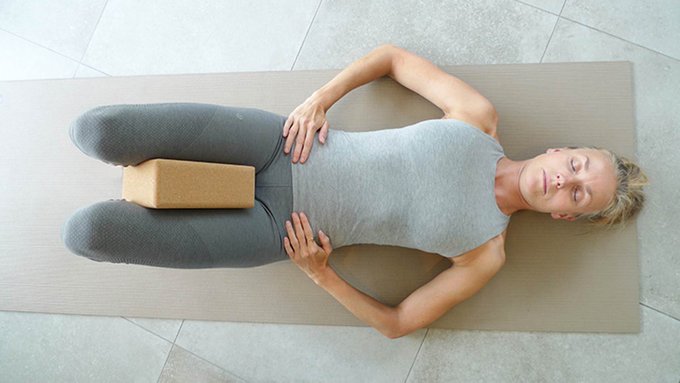
Abdominal bracing
Lie on your back with your knees bent and feet flat on the floor. Contract your abdominal muscles, and press the arch of your back down toward the floor, pulling your belly button toward your spine. Hold for 5 to 10 seconds. Make sure your lower back stays flat on the floor. Relax and repeat.
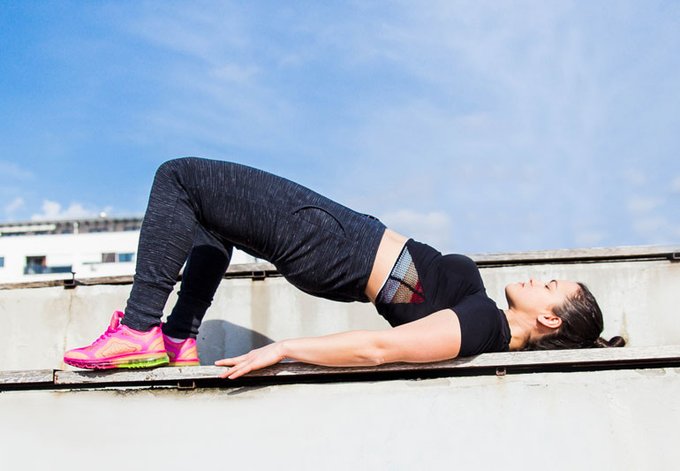
Bridge
Lie on your back with your knees bent and feet flat on the floor with your arms at your sides. Squeeze your abdominal and buttocks muscles, push your heels into the floor and slowly lift your buttocks and hips off the floor. Keep your back straight. Hold for 5 to 10 seconds.
Clamshell
Lie on your side with knees bent in line with your hips and back, draw up the top knee while keeping contact of your feet together as shown. Don’t let your pelvis roll back during the lifting movement. Hold for 5 seconds.
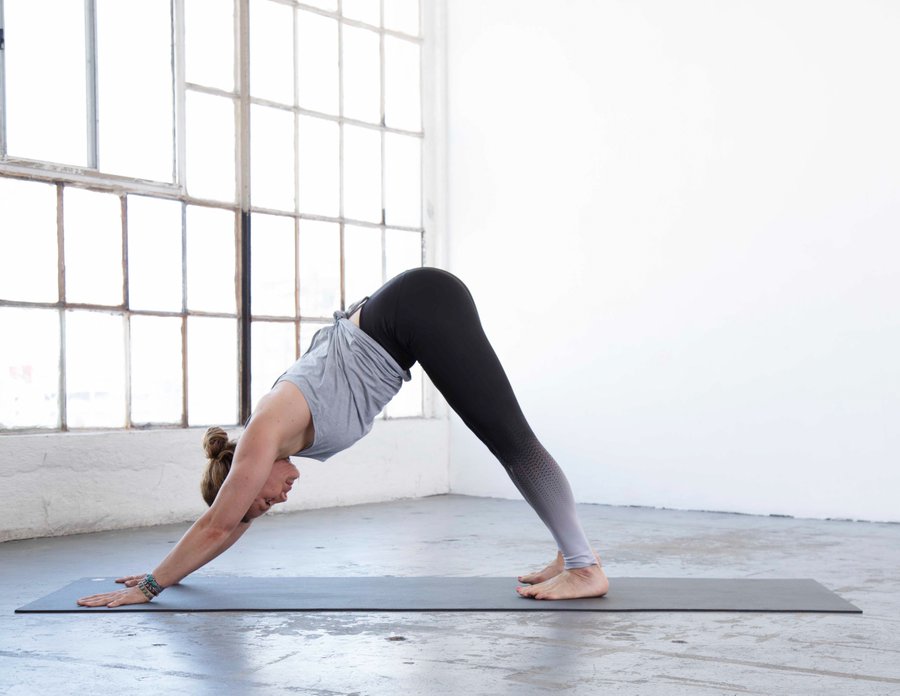
Will you downward dog today? As you grow your practice, your comfortability with downward dog will also grow! It is a full body strengthener and stimulates blood circulation. Eventually, dogward dog becomes a resting pose to help reconnect with your breath. : @MiaTogo
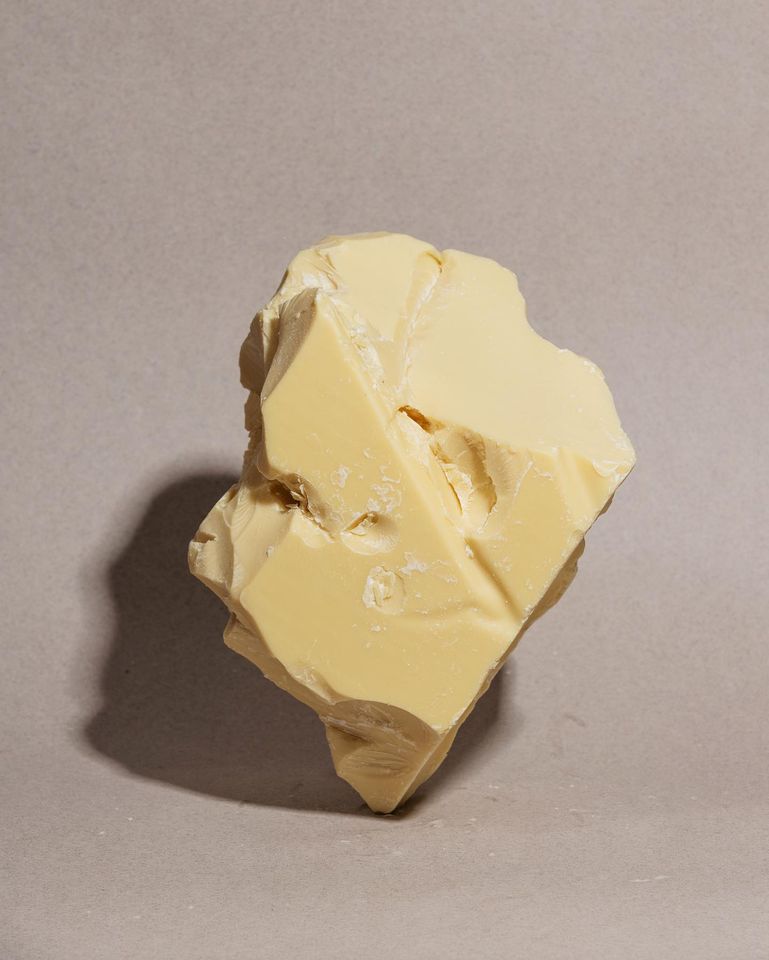
Cocoa Butter Ingredient spotlight AND a little flash sale for the day that’s in it on #worldchocolateday This is picture of the cocoa butter I use in all it’s raw, unrefined organic glory. Why use cocoa butter in skincare? A powerhouse of antioxidants, which help fight free radical damages to the skin. Filled with fatty acids, that nourish, moisturise and prevent the skin from drying out Packed with micronutrients that help reduce rashes and the appearance of scars. Naturally soothes sensitive and irritated skin In short, cocoa butter is an intensely moisturising, protective and soothing addition in skincare products. Plus the smell alone is enough to make you swoon. I add this beauty into face creams, lip balms and body butters to ensure cocoa all over from head to toe. There’ll be 10% off all cocoa-containing products on the website until midnight. #cocoaskincare#cocoabutter#irishskincare#naturalskincare
Will you downward dog today? As you grow your practice, your comfortability with downward dog will also grow! It is a full body strengthener and stimulates blood circulation. Eventually, dogward dog becomes a resting pose to help reconnect with your breath. : @MiaTogo



 yogatailor yoga app




 :
: 

 AND a little flash sale for the day that’s in it on
 Healthaware