Plank exercises, in which you assume a position and hold it, are the gold standard for working your #core while classic sit-ups and crunches have fallen out of favor. Why the shift?

Health is Wealth

Plank exercises, in which you assume a position and hold it, are the gold standard for working your #core while classic sit-ups and crunches have fallen out of favor. Why the shift?



We all want to protect our kids whether it be from falls, bumps and bruises — or avoidable infections and diseases. To help your child avoid illness, it’s important to encourage good habits and take steps to boost their immune system from an early age.
“Most of what makes a child’s immune system strong is common sense,” says pediatrician Adriane Lioudis, MD. If you keep these five tips in mind, you’ll stack the deck in your child’s favor for a healthier life.
While it’s a very personal decision (that isn’t always possible), if you are able to exclusively breastfeed your child for at least six months, it may have benefits. Some research shows that breastfeeding your child might possibly reduce allergies, Dr. Lioudis says.
Eighty percent of infections are spread by touch. Teach your little one to take the time to wash their hands after sneezing, coughing and going to the bathroom. Washing hands with warm water and soap for at least 20 seconds can remove bacteria and viruses and can reduce the chance of lung infections by up to 45%.
Follow your pediatrician’s advice when it comes to the childhood vaccination schedule. Immunizations start in infancy and continue to adulthood and prevent measles, mumps, chickenpox, rotavirus and other infections.
“Get the flu shot for your child yearly, as well,” Dr. Lioudis says. This is particularly important for children with asthma and other chronic health conditions.
Also, if your family will be traveling internationally, it’s important to seek advice from your child’s healthcare provider about any needed vaccinations.
To maximize immunity, children must get enough sleep.
Sleep requirements for each night vary by age:
Not getting enough sleep limits the body’s ability to produce proteins called cytokines that help fight infection and reduce inflammation.
A healthy diet is also important for your child’s immune system.
Dr. Lioudis recommends encouraging your child to “eat the rainbow” when it comes to fruits and vegetables. A good selection of whole grains should be part of their diet as well. Keep processed foods to a minimum. Proper food choices can help ensure that your child gets enough vitamins — such as vitamin A and E. These vitamins are needed to maintain good health and a strong immune system.
“Even if you follow these tips, your child might still get between seven and 11 colds each year,” says Dr. Lioudis. She adds that you can expect each one to last up to two weeks.
Also, keep in mind that some things billed as common “remedies” aren’t effective in boosting immunity. For example, there’s no definitive proof that large amounts of vitamin C or echinacea help prevent colds or shorten them, she says.
However, if your child has a compromised immune system, work closely with your pediatrician to find ways to improve his or her immunity. Each child needs a personalized approach because their individual immune system varies, Dr. Lioudis says.
“There’s generally a different protocol with immunocompromised children. There are some vaccines we have to add in on top of what most children have, but it’s something that we must determine on a case-by-case basis.



| If you hear the term “longevity” and think only about living longer, you’re missing half the point. “What we actually want is both more years and more of those years lived in good health,” says Dr. David Barzilai, a longevity physician and the medical editor of Harvard Health Publishing’s Special Health Report Pathways to Longevity. “Almost no one wants additional years of frailty and dependence; they want more years of feeling well, moving freely, thinking clearly, and staying engaged with the people and work they love.” To that end, recent years have seen an explosion in interest in longevity and healthy aging, largely driven by “science that’s genuinely more exciting than it was a decade ago,” says Dr. Barzilai, also a lecturer at Harvard Medical School. | |||||
While it’s clear that genetics play a role in living longer and staying healthy, lifestyle appears to be just as important. Five lifestyle patterns consistently show up in longevity research: movement, nutrition, sleep, stress management, and social connection.
“Good health is surprisingly unglamorous,” Dr. Barzilai says. “What matters most are the basics people already know about but rarely execute consistently over decades. There is no magic to it.”
Here, Dr. Barzilai expands on each of the five pillars of longevity.
Movement is the closest thing people have to a “master signal,” he says. “It improves nearly every system at once, from insulin sensitivity to brain health to bone density. And cardiorespiratory fitness is one of the strongest predictors of mortality we have ever measured.”
Dr. Barzilai recommends combining various forms of movement to maximize health, including twice-weekly resistance training and 150 minutes of moderate or 75 minutes of vigorous aerobic activity each week. “And everyday movement counts on its own,” he says. “Breaking up long stretches of sitting with two to three minutes of light activity measurably improves glucose and blood-pressure responses.”
Nutrition shapes the metabolic environment our cells live in day to day, governing blood glucose, inflammation, and the raw materials for muscle and repair, Dr. Barzilai says.
We’re living longer than ever—but are we living well?
Harvard Medical School’s Special Health Report, Pathways to Longevity, looks beyond “anti aging” hype to share what science really says about extending your healthspan—the years you stay strong, independent, and mentally sharp.
From nutrition and movement to sleep, stress, social connection, and the latest longevity drugs, this report turns complex research into clear, practical steps you can start now.
“The principles that have held up across decades of research are unglamorous and durable: build meals around whole foods,” he explains. “Get enough protein, which becomes more important, not less, as you age. And avoid the large blood glucose spikes you get from refined carbohydrate eaten on its own, which in practice means anchoring meals with protein, healthy fats, and fiber.”
Sleep is fundamental to longevity because that’s when the body takes care of essential maintenance — clearing metabolic waste from the brain, consolidating memory, and resetting the hormones that govern appetite and stress, Dr. Barzilai says.
Experts recommend adults get seven to eight hours each night. Research also shows that consistency matters more than quantity. “That is encouraging,” he says, “because a steady wake time, weekends included, is something most people can actually manage.”
Stress itself isn’t a problem, since our body’s acute stress response — which sharpens focus and fuels energy levels — can protect us from genuine threats.
“The trouble comes when it never switches off,” Dr. Barzilai says. “Chronic stress holds the body in a low-grade alarm state that, over years, wears on the cardiovascular and immune systems, disrupts sleep and metabolism, and appears to accelerate several of the underlying processes of aging.”
The most dependable ways to regulate stress are physical and social rather than purely mental, he says. “People reach for a relaxation app and overlook that movement, sufficient sleep, exposure to daylight, and time with people they trust are often the more powerful levers. Regular exercise in particular is one of the best-validated stress and mood interventions we have.”
Social connection is probably the longevity pillar people neglect most, Dr. Barzilai says. “People will track their macros and their step count to the decimal and never think to protect their friendships with the same intentionality, even though the survival data on relationships rival the data on much of what they are measuring,” he says.
If you’re feeling isolated, try to make connecting with others a regular commitment rather than a grand gesture, he says. “Begin with one recurring, low-pressure point of contact: a standing weekly call with one person, a class or volunteer commitment that puts you in the same room with the same faces again and again, a daily walk somewhere you will see neighbors. Pick one recurring contact and protect it like an appointment, and treat a few real relationships with the same seriousness you would give your blood pressure or your exercise.”
| Which pillar of longevity is most important?The habits most strongly linked to living a longer, healthier life are also some of the simplest: move regularly, eat well, sleep sufficiently, manage stress, and stay connected to others. But which one counts most? It’s impossible to gauge, says Dr. David Barzilai, a longevity physician and lecturer at Harvard Medical School.“How much each pillar matters depends heavily on where a given person is starting from,” he says. “For someone sedentary, adding movement is transformative. For someone running on five ragged hours of sleep, fixing sleep will do more than another workout. For someone isolated, rebuilding connection may be the highest-yield change of all.”“What I can say with confidence is that the most underrated pillar is social connection, and the most foundational day to day are sleep, physical activity, and nutrition, since they are the ground the others stand on,” Dr. Barzilai adds. “But the useful question is not which pillar wins in the abstract. It is which one you are personally weakest in right now, because that is where your next improvement will pay off most.” |

It’s no secret that alcohol can harm your health. But in a pop quiz, many of us would link alcohol with liver damage — not connect the dots between drinking and developing heart problems, like atrial fibrillation (AFib). We might even think that alcohol in moderation is good for the heart, thanks to the longstanding myth about red wine.
So, let’s set the record straight: Alcohol consumption, in any amount, isn’t doing your heart any favors. In fact, it may even harm your heart. One of the major reasons? It creates just the right conditions for abnormal rhythms, especially AFib, to develop or get worse.
Cardiac electrophysiologist Mohamed Kanj, MD, explains why alcohol and atrial fibrillation simply don’t mix.
When it comes to atrial fibrillation, alcohol serves up a triple whammy by:
In all these scenarios, no amount of alcohol is truly safe (more on that in a moment).
Alcohol damages your heart in ways that invite atrial fibrillation to develop. That’s true even if you’re a casual drinker — for example, you routinely have a glass of wine with dinner or throw back a couple of beers at the ballgame. Most of us would consider drinking in moderation to be pretty low risk. But that’s simply not the case when it comes to AFib.
“Drinking a little bit of alcohol every day can slowly cause changes that lead to atrial fibrillation,” Dr. Kanj warns.
These changes include:
Binge drinking, or having four or five drinks within two hours, is especially risky. Dr. Kanj shares that having too much alcohol too fast can lead to a short-term arrhythmia called holiday heart syndrome. While your heart rhythm may return to normal in a couple days, continued heavy drinking can lead to heart damage and repeated AFib episodes.
He also cautions that when you have AFib, drinking alcohol increases your risk of:
These risks are further elevated if you take blood thinners or drink heavily.
We hate to be the bearers of bad news, but no amount of alcohol — even in moderation — is truly safe if you want to avoid or manage AFib.
“From an arrhythmia standpoint, abstinence is best,” Dr. Kanj stresses.
If you’ve been diagnosed with AFib, taking a zero-alcohol approach can help you:
“The success rate for an ablation, a common heart procedure, is better for those who cut down on alcohol compared to those who continue their usual drinking,” he adds. “But the success rate is highest for those who don’t drink at all.”
If you opt for an occasional drink, Dr. Kanj offers some advice:
Cutting back on alcohol is one of the best ways to prevent atrial fibrillation or manage it once you’re diagnosed. That means it may be time to make some changes to your daily routine.
Dr. Kanj points out that for many people, avoiding alcohol can feel like a tall order because drinking and socializing often go hand in hand. You meet colleagues for happy hour. You celebrate birthdays at the bar. It can become second nature.
But he offers a challenge: “The next time you’re at a bar or restaurant, ask to see the list of nonalcoholic drinks. It’ll likely be longer than your arm. Choose one and try it in place of your usual drink. You might find it easier than you thought to go out and have fun in ways that aren’t so hard on your heart.”
You know exercise builds muscles, strengthens bones, keeps your heart healthy and your mind sharp. But it also does something that you might not think much about: It helps keep your immune system — your internal defenses against infection — in tip-top shape.
If you take time for some physical exertion each day, it helps get your body ready to attack bacteria, viruses and toxins that can sneak in and make you sick.
But how much exercise is effective? Do too little or too much, and it won’t have the best effect on your immune system.
Clinical immunologist Leonard Calabrese, DO, answers common questions about how exercise can impact your immunity and how to use your workouts to shut out a world of would-be invaders.
A: If you exercise moderately on a regular basis, it tunes up the immune system in many ways. It enhances your broad-based defenses against viral infections, such as those causing upper respiratory infections.
Working out regularly also reduces the risk of many chronic diseases such as cardiovascular, respiratory illnesses and metabolic diseases, such as type 2 diabetes.
A: Fortunately, you don’t have to push yourself to the limit to rev up your immune system. In fact, your immune system needs less of a workout than you get with your average cardio routine.
Focus on getting 20-30 minutes of moderate exercise, five days a week, and your immune system will thank you.
A: Moderate exercises, including biking or walking briskly in your neighborhood, are good ways to get your blood flowing. Swimming is also a good option for non-weight-bearing exercise for your joints.
Also try mind-body exercises such as Tai-Chi, Qi Gong and yoga, which are all options that help keep your joints flexible. These exercises also reduce chronic stress, which in itself is a powerful immune booster. These exercises can also help alleviate osteoarthritis and fibromyalgia symptoms.
A: Yes, though, the level to which it can slow your system down is still up for debate.
Research shows that exercising for more than 1.5 hours without refueling your body or giving it enough time to recover suppresses your immune responses for up to a few days. During that time, your cortisol levels rise, your white blood cell count drops and you’re more likely to develop a respiratory infection.
This problem usually affects elite athletes, such as marathon runners, most.
On the flip side, staying sedentary also increases your risk of infection, inflammation and chronic disease.
A: Yes, it can. This is a complex issue, but I like to tell my patients to do a “neck check.” If your symptoms are mostly of a mild cold without fever or lower respiratory symptoms, such as a productive cough, wheezing or shortness of breath, mild exercise can actually reduce congestion and may make you feel better.
If your symptoms are primarily in your lungs or you have a significant fever its better to rest until things settle down. Regardless, good hydration is important.
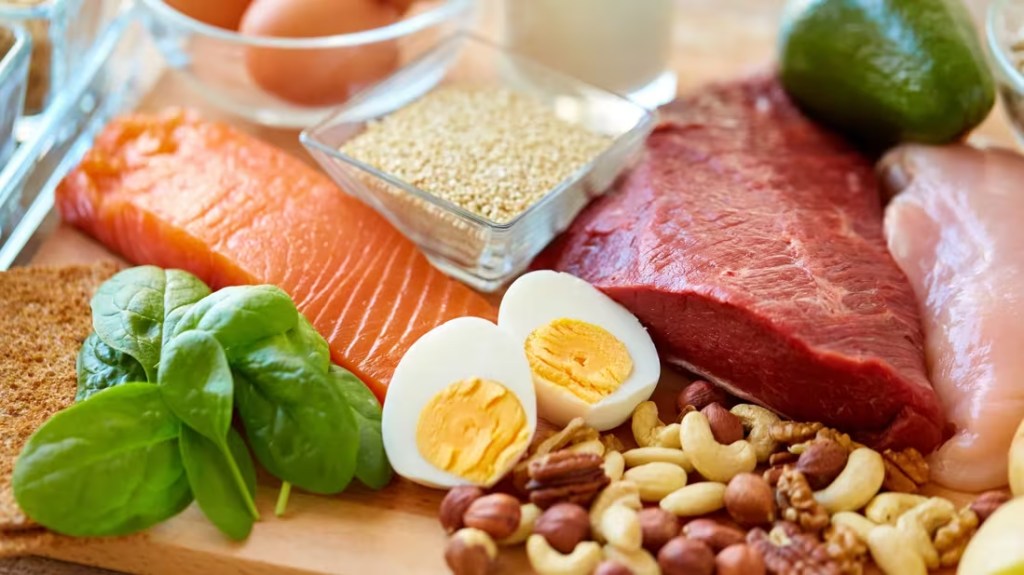
Lean meats, fish, dairy and plant proteins can help you meet your protein needs without piling on saturated fat and sugar
You have options when it comes to putting protein on your plate. Lots and lots of options. But as you’re considering what proteins to include, remember this: Not all proteins are created equal.
For example, both hot dogs and cooked lentils offer protein — but one brings a little more to the table when it comes to nutrition and your health. (It’s lentils, just to be clear.)
“There’s more to it than just getting as many grams of protein as possible,” says registered dietitian Julia Zumpano, RD, LD. “Quality matters — and a lot of us don’t regularly consume good-quality protein that enhances our overall diet.”
Foods aren’t made of protein alone. That’s why simply comparing the number of protein grams on two nutrition labels doesn’t really tell you which might be the healthier choice.
Other factors matter, too, including the food’s overall nutrient profile. Consider how much added sugar, sodium or saturated fat it contains. Look at whether it provides beneficial nutrients, like fiber, vitamins and minerals.
“Over the long term, all of these affect your health,” says Zumpano.
Ideally, she recommends getting most of your protein from a variety of whole or minimally processed foods. That can include animal-based products, as well as plant-based protein sources.
What might that look like for meals? Start with these healthy protein sources.
If you’re fishing for a healthy protein, the seas are an excellent place to start. Like other animal proteins, fish naturally provide a concentrated source of protein. Fish generally contain about 7 grams of protein per ounce, although the exact amount varies by type.
Many fish are also lower in saturated fat and higher in omega-3 fatty acids, a one-two combination that makes them a standout for heart health. They’re also packed with key nutrients like vitamin D.
“Fish is a phenomenal protein source,” says Zumpano. “Regularly swapping it in for other meat sources can help you build a healthier and more varied eating pattern.”
Red meat has a place in a healthy diet. But the key is to choose lean cuts.
Picking a leaner cut gets you protein — about 7 grams per ounce — while minimizing saturated fat. Examples of lean cuts include tenderloin, sirloin, top round and flank steak. For ground beef, opt for 90% lean or higher.
Chicken, turkey and other poultry can give you protein without all the saturated fat found in some other meat choices — but how you prepare it makes a difference.
Zumpano recommends going with skinless white meat poultry. Like fish and red meat, it provides roughly 7 grams of protein per ounce. (There’s some variation depending on what you choose.)
Prefer dark poultry meat? That’s OK! It has a place on the table. Ideally, try to choose dark varieties (like legs, thighs and wings) a little less often because they’re higher in saturated fat.
Lean toward baking, grilling or roasting your poultry, too, and go easy on adding salt. Avoid deep-frying chicken or coating it in breading to stay on the healthier side.
Dairy-based foods can be an easy way to work more protein into your day, especially at breakfast. Zumpano says she often recommends eating Greek yogurt or cottage cheese in the morning.
Greek yogurt typically packs 11 to 12 grams of protein in a half-cup serving. Cottage cheese has 12 to 14 grams of protein in a half-cup serving.
Starting the day with either can pay off later. A protein-rich breakfast can help support steadier energy, blood sugar and appetite levels, which can keep you from crashing as the hours pass by.
Eggs are another simple, whole-food protein source that traditionally shines in the morning.
But eggs can also bring a protein boost to your lunch, Zumpano says. Hard-boiled eggs make a good snack, too!
That versatility with eggs makes it easier to spread protein intake throughout your day, which maximizes your body’s ability to get the most out of it. One large egg typically has 6 grams of protein.
Plant proteins deserve a regular place on your plate — and not just if you’re vegetarian or vegan. Cooked beans, lentils and other legumes provide about 15 grams of protein per cup, along with benefits you won’t get from meat alone.
“Plant proteins offer a whole slew of powerful vitamins, minerals and antioxidants — and the fiber that’s in it aids in creating a healthy gut microbiome, digestion and regularity,” Zumpano explains.
Nuts and seeds are another easy way to add plant-based protein to your diet when you get the munchies. They offer a healthy dose of protein — on average, 6 to 7 grams per ounce — along with fiber and other nutrients.
The healthy fats found in nuts and seeds can also help manage your blood sugar and appetite throughout the day.
“A handful of nuts or seeds can be a nutrient-dense snack choice that offers far more than chips or other carb-heavy options,” notes Zumpano.
If you want to make plants the star of the meal, tofu and tempeh are excellent choices. These soy-based foods are rich in protein and have enough texture and heft to serve as meat substitutes.
Tofu typically offers between 10 and 15 grams of protein per half cup. Tempeh is higher at 15 to 20 grams.
But don’t feel like you need to go “plant-only” to use tofu and tempeh. Add them into your meal rotation with red meat, chicken and fish. “Use them to build some variety into your diet,” suggests Zumpano.
A package that screams “20 grams of protein!” doesn’t automatically make a food healthy.
Some protein choices come with lots of saturated fat or heavy processing that may make them less than ideal.
Try to limit:
You don’t need to obsess over every gram of protein when putting together meals. Instead, focus on quality, variety and nutritional balance. Zumpano recommends:
“Protein doesn’t have to feel complicated,” reinforces Zumpano. “Find some protein-rich whole foods you enjoy and build meals from there. Do that consistently and your body will get the healthy protein it needs.”