In every political party, it’s likely that there is a doctor and a scientist. These professionals should take responsibility for explaining the science behind the link between alcohol and cancer.
Quote Tweet
AlcoholAndCancer
@AlcoholCancerEU
·
9h
To minimize the risk of cancer, it’s recommended to limit alcohol consumption or avoid it altogether. #AlcoholAndCancer
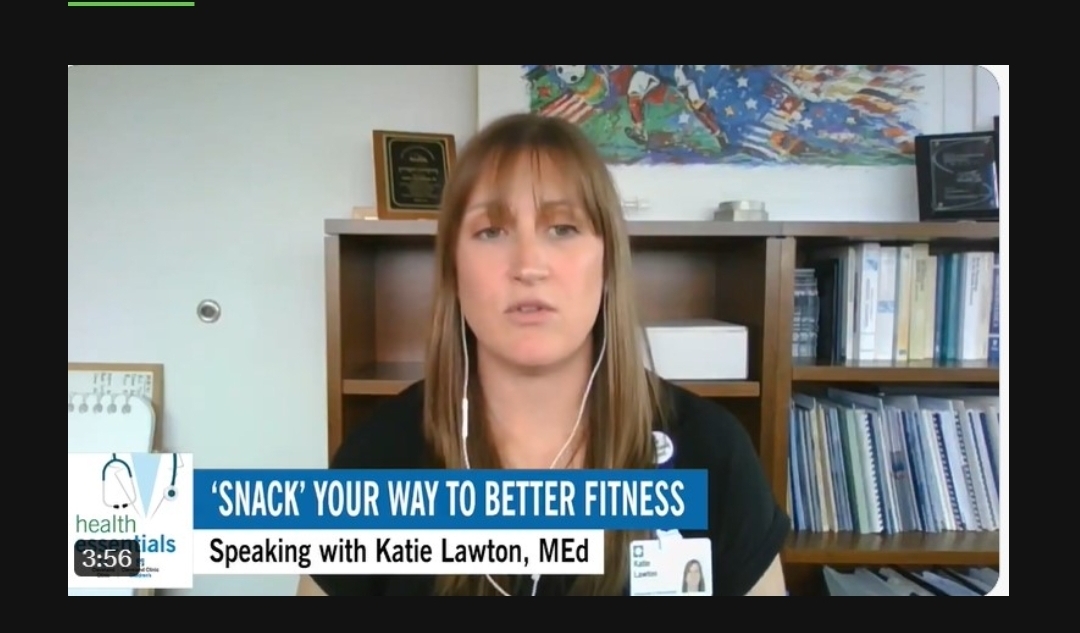
It seems that "exercise snacks" can be a good way to improve your health. Research shows that short bursts of activity done during the normal course of your day can help you build fitness – with no sweating required. Listen in as exercise physiologist Katie Lawton explains. pic.twitter.com/4dpEiWbCTM
In every political party, it’s likely that there is a doctor and a scientist. These professionals should take responsibility for explaining the science behind the link between alcohol and cancer.
Quote Tweet
AlcoholAndCancer
@AlcoholCancerEU
·
9h
To minimize the risk of cancer, it’s recommended to limit alcohol consumption or avoid it altogether. #AlcoholAndCancer
Want to tone your midsection? You can start by standing up to do ab exercises.
Surprised? That’s understandable. After all, most of us think of a few classic on-the-floor exercises when it comes to strengthening our abdominals. Crunches and sit-ups, for instance. Planks, too.
But it turns out, you can get a deeper and more thorough core workout while on your feet, says exercise physiologist Katie Lawton, MEd. Here’s how.
Standing ab exercises
The pursuit of “six-pack abs” explains the devotion to crunches and similar floor exercises. “You completely isolate the rectus abdominis muscles when you lie down and do that motion,” says Lawton. “It’s very targeted.”
That’s great for creating washboard abs. But it doesn’t do much to enhance other muscles in your middle that play an important role in day-to-day movements.
Standing ab exercises, on the other hand, engage a network of muscles within your core that you use all the time, whether it’s picking laundry up off the floor or putting cans on the top shelf in the pantry.
“Think of your core as a chain of muscles that needs to work together to get the job done,” illustrates Lawton. “When you do an ab workout from a standing position, you’re working more of the muscles in that system.”
Strengthening your core can help you:
Improve your balance
Maintain good posture
Protect your back from aches and pains
Better handle day-to-day movements that require bending, lifting and twisting
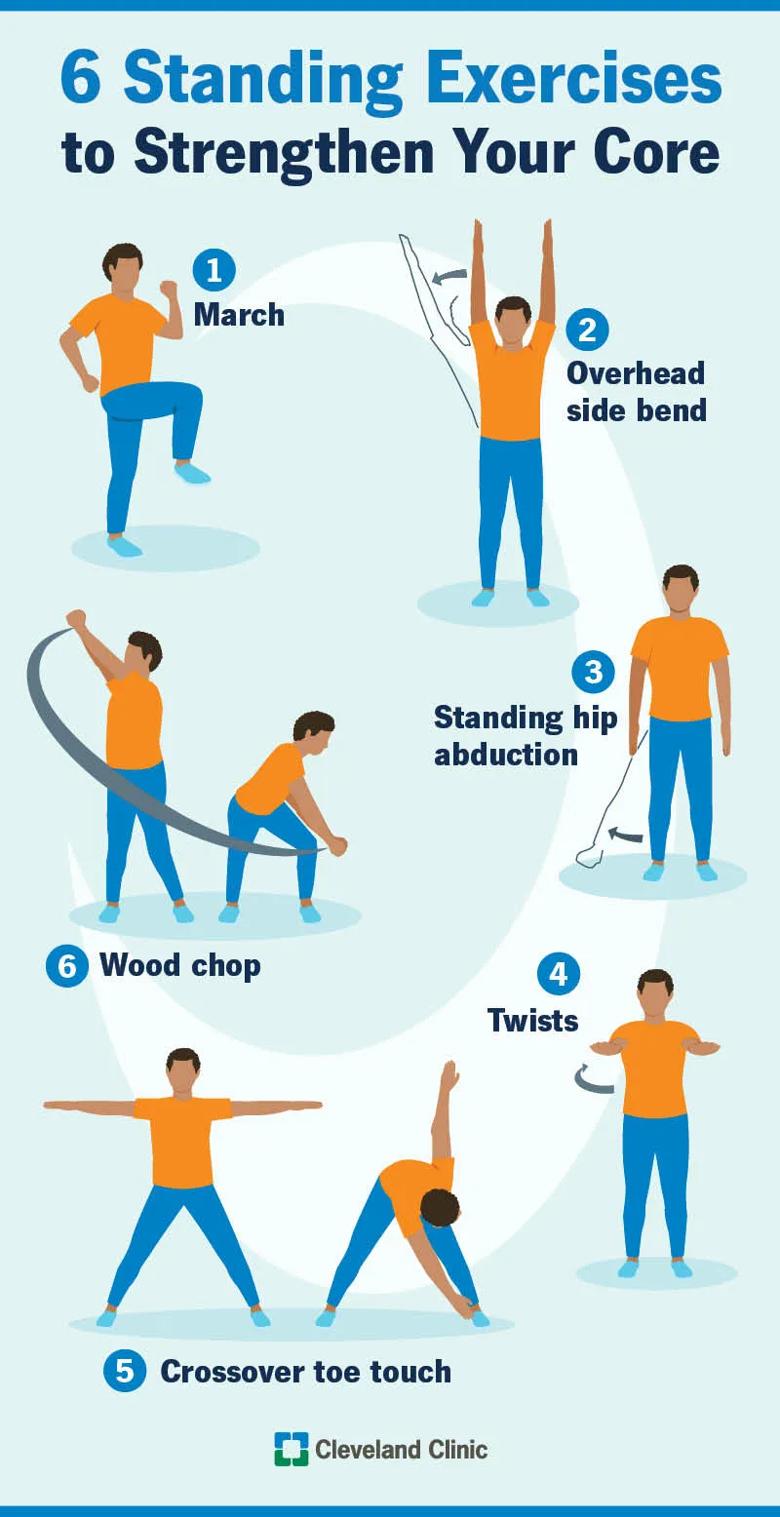
Incorporate these exercises in a standing abs workout to see those benefits.
1. March
Muscles targeted: Rectus abdominis, transverse abdominis, erector spinae and hip flexors
Start in a standing position with your feet about hip-width apart.
In an exaggerated marching motion, bring your right knee straight up and move it toward your chest until your thigh is parallel to the floor.
Return to a standing position and repeat the motion with your left leg for one set.
Continue for 10 to 15 sets.
Pro tip: Want to make the march more challenging? Then add a “twist” to your motion by moving your right knee toward your left side when you raise it. (Your left knee would go toward your right side.)
2. Overhead side bend
Muscles targeted: External and internal obliques, quadratus lumborum, deltoids and erector spinae
Stand tall with your feet hip-width apart.
Extend your arms up, palms facing each other (as if you’re signaling a touchdown).
Tilt to the right while keeping your torso and arms straight. You’ll feel a stretch on the left side of your body as your waist bends to the right.
Return to the center position and repeat the motion to the left for one set.
Continue for 10 to 15 sets.
Pro tip: “As you bend to each side, focus on engaging your core muscles to work them properly,” advises Lawton. “You’re just going to the side, too. Your torso shouldn’t lean forward at all.”
Begin in an upright position with your feet about hip-width apart.
Kick your right leg out to the side, keeping it straight. Your toes should point forward during the motion as your leg scissors out and back. “Keep the movement smooth and consistent both ways,” instructs Lawton.
Repeat 10 to 15 times and then do the same with your left leg.
Pro tip: Use a chair to steady yourself if balance is an issue. “You always want to make sure these exercises are done in the safest way possible,” emphasizes Lawton.
4. Twists
Muscles targeted: Internal and external obliques, rectus abdominis, transverse abdominis and erector spinae
Stand and plant your feet about shoulder-width apart.
Extend your arms straight out in front of you, parallel to the floor.
Rotate your upper body to the right from your midsection while trying to keep your hips facing forward.
Return to the center. Then, rotate to the left to complete one set.
Repeat 10 times.
Pro tip: Twists should be done in a slow and controlled manner. “You don’t want to be whipping back and forth,” cautions Lawton.
5. Crossover toe touch
Muscles targeted: Internal and external obliques, rectus abdominis, transverse abdominis, erector spinae, hamstrings and glutes
Begin in a standing position with your feet slightly wider than shoulder-width apart.
Extend your arms out to your side, as if forming the letter T.
Rotate your torso to the right while reaching your left hand down to tap your right foot. Most of the movement should be in your core, not your legs.
Return to the T position and repeat the motion in the opposite direction (with your right hand touching your left foot) to complete a full set.
Repeat 10 to 15 times.
Pro tip: Skip this exercise if you sometimes get lightheaded when raising your head and up and down.
6. Wood chop
Muscles targeted: Internal and external obliques, rectus abdominis, transverse abdominis, erector spinae, deltoids and latissimus dorsi
Stand with your feet positioned shoulder-width apart.
Clasp your hands together (as if holding an ax) and bring them up over your head to the right. Your torso will rotate slightly to the right as you twist.
Bring your hands down and to the left in a “chopping” motion that swings across your chest toward your left leg. Rotate your torso to the left as you take the swing. Bend your knees slightly and pivot your feet, too.
Return to the raised position. Take 10 chops.
Repeat with your hands, starting to the left and swinging to the right.
Pro tip: Tailor these exercises to your range of motion. “Move the best you can within the parameters you have,” advises Lawton. “When you start to feel that tension in your muscles, stop there. If it hurts, you’ve gone too far.”
Final thoughts
The simplicity of standing ab exercises just … well, stands out. That’s because the exercises build on natural movements that we do all the time. “That’s a big reason why they’re so effective,” says Lawton.
It’s important to safely progress these exercises as they become easier. Resistance bands, cable machines, medicine balls or free weights are all tools that can help you increase the intensity of the movements.
Dedicating a few minutes a day to these exercises can help you build core strength that supports everything you do, from walking the dog to lifting groceries.
“Standing ab exercises really don’t take a lot of time,” emphasizes Lawton.
Plus, you won’t need to find your floor mat to do them.
#Fact: Dogs are the best! Share a picture of your dog (or other pet) to celebrate all the good that pets bring to our lives to celebrate #BestFriendFridays and #NationalDogDay.
Intuitive eating is an approach to food that focuses on identifying and trusting your hunger cues. Studies show that it’s associated with: – Positive body image and self-esteem – Lower rates of disordered eating – Higher general well-being Intuitive eating isn’t a free-for-all —… pic.twitter.com/I7IYddV90a
Who doesn’t want a healthy immune system? (Raise your hand. No one?) But did you know the role your diet plays in keeping it in top shape to protect you from toxins and infections? Sadly, too many of us don’t eat enough of the fresh fruits, vegetables and other foods we need to keep ourselves healthy year-round. Healthy foods provide many substances including vitamins and minerals to keep us strong and healthy. You can’t just eat an orange or grapefruit or pop a vitamin pill and expect one quick burst of vitamin C to prevent a cold and to boost your immune system. “A truly healthy immune system depends on a balanced healthy diet over time,” says registered dietitian Maxine Smith. “It’s like training for a battle and preparing your body ahead of time so it can through a good punch when attacked by viruses, bacteria and toxins. Other lifestyle practices such as regular exercise and good sleep will better prepare you for the battle.” With some exceptions, it’s best to get your vitamins and minerals from your food rather than in pill form. Smith shares some tips for some of the top vitamins and minerals your immune system needs to perform:
1. Vitamin C Vitamin C may help prevent infections or shorten their stay. Citrus fruits are a standout, but did you know there are other good sources? It’s true! Smith recommends the following: Spinach. Kale. Bell peppers. Brussels sprouts. Strawberries. Papaya. Fun fact: vitamin C is in so many foods that most people may not need to take supplements unless a doctor advises it. Consult with your doctor before taking any vitamin C supplements
2. Vitamin E Like vitamin C, vitamin E can be a powerful antioxidant that helps your body fight off infection. This important vitamin — part of nearly 200 biochemical reactions in your body — is critical in how your immune system functions. To get your vitamin E, think high-fat plant foods such as: Almonds. Peanuts/peanut butter. Sunflower seeds. Oils such as sunflower, safflower, and soybean oil. Hazelnuts.
3. Vitamin A#
Vitamin A is an infection-fighter and comes in two forms: preformed such as in animal foods such as fish, meat and dairy or from plant carotenoids. Tuna is a great source of preformed vitamin A. When it comes to carotenoids, go colorful: Carrots. Sweet potatoes. Pumpkin. Butternut squash. Cantaloupe. Dark green leafy vegetables.
4. Vitamin D Known as the sunshine vitamin, it’s one of the most important and powerful nutrients for supporting the immune system. Food sources are limited but include: Salmon. Mackerel. Tuna. Sardines. Vitamin D fortified like milk, orange juice and cereals. In general, it’s best to get most of your vitamins from food, but vitamin D may be the exception to that rule. Talk with your doctor to find out if you need a supplement.
5. Folate/folic acid Folate is the natural form and folic acid is the synthetic form, often added to foods because of its health benefits. To get more folate, add more beans and lentils to your plate on a regular basis, as well as leafy green vegetables. Avocado is another tasty source. You can also get folic acid in fortified foods (check the label first). Enriched pasta. Enriched bread. Enriched rice.
6. Iron Iron, which helps your body carry oxygen to cells, plays a part in many of the immune system processes. It comes in different forms. Your body can more easily absorb heme iron (aka iron from animal products), which is abundant in: Red meat (limit to smaller amounts and less often). Chicken. Turkey. Canned sardines. Oysters. Clams. Mussels. Canned light tuna. If you’re a vegetarian, have no fear. You can still find iron in: Beans. Broccoli. Kale. Iron-fortified cereals.
7. Selenium Selenium seems to have a powerful effect on the immune system being important for preventing infections. Animal foods are the best sources, with the exception of Brazil nuts, that offer a whopping greater than 100% daily value in one nut. However, too much can be a problem, so keep to no more than one to two of these in a day. Look for selenium in: Seafood (tuna, halibut, sardines). Meat and liver. Poultry. Cottage cheese.
8. Zinc Zinc is needed for the production of new immune system cells. It’s found primarily in animal foods but can be also found in some vegetarian food like. Oysters. Crab. Lean meats and poultry. Baked beans. Yogurt. Chickpeas. Choose frozen when you can’t get fresh Depending on where you live and what time of year it is, you can’t always get your hands on high-quality fresh produce. Keep in mind that buying frozen is a good option and can be quite convenient in our time-crunched world. Frozen food can still boost your immune system. “Manufacturers freeze frozen fruits and veggies at ‘peak’ ripeness, which means they’ll pack a similar nutritional value as their fresh counterparts,” she says. “Just choose plain frozen foods rather than those with added sugars or sodium.” Facebook Twitter
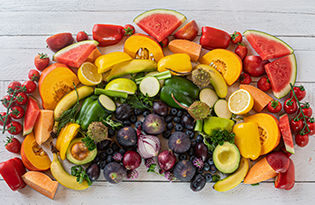
Can eating the rainbow help to reduce inflammation?
11/6/2025 by Tamara Soerense
n
Inflammation is a natural process initiated by the immune system in response to illness, trauma, toxins, physical stress and chronic disease. While acute inflammation is protective and allows our bodies to heal, it can become harmful if it persists, leading to chronic inflammation. Chronic inflammation, in turn, can lead to conditions such as arthritis, heart disease, and diabetes.
Several foods can contribute to inflammation. These include highly processed foods, refined carbohydrates, or foods high in added sugars. Conversely, other foods can help calm the immune system, decreasing inflammation.
Let’s explore which foods help lower inflammation and how they can be incorporated into an anti-inflammatory diet.
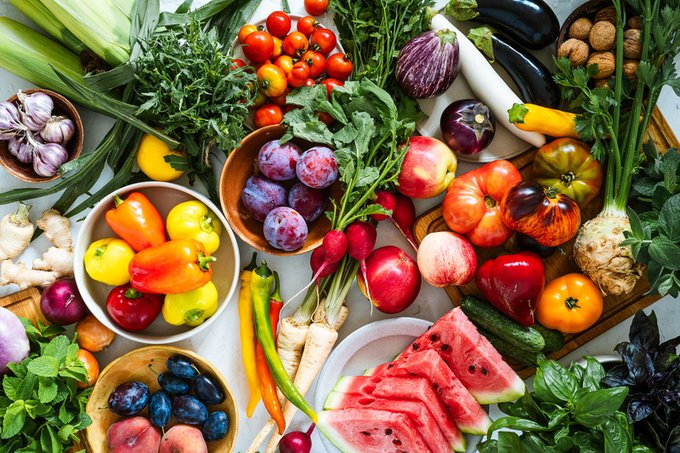
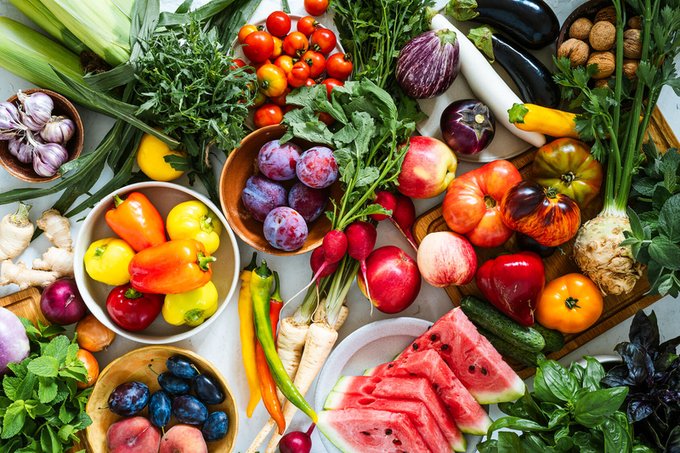
Fruits and Vegetables: Colorful fruits and vegetables naturally contain various phytonutrients and bioactive compounds that help keep inflammation in check. These foods form the foundation of the anti-inflammatory diet and can be enjoyed in abundance. For an extra boost of protection, try drizzling antioxidant-rich olive oil on your veggies..
Protein: Choose primarily from plant-based sources such as legumes, soy, nuts, and seeds, with smaller amounts from lean cuts of animal protein and fatty fish. The fats in these proteins, mainly monounsaturated and omega-3, play a significant role in combating inflammation. The American Heart Association recommends 6 to 8 ounces of fatty fish and 5 ounces of legumes, nuts, and seeds per week.
Whole grains: Whole grains contain all parts of the grain, whereas refined grains remove the germ and bran, eliminating important inflammation-reducing compounds. Of these, fiber is a bit of a superstar, shown to help reduce blood sugar and cholesterol levels. Aim for at least 50% of your grains from whole grain sources, such as rolled oats and brown rice.
Herbs and Spices: Herbs and spices add flavor to your food and help reduce oxidative stress, which can trigger inflammation. Add ginger, turmeric, clove, cinnamon, oregano, and garlic to your next meal.
What change can you make today to shift your body into a less inflamed state?
Consider adding one colorful fruit or vegetable to your diet each day. Suggestions include tomatoes, oranges, yellow bell peppers, arugula, blueberries, pumpkin and broccoli.
Tamara Soerensen completed her bachelor’s degree in biology at the University of California, Santa Barbara and her master’s in nutrition at Bastyr University. She is currently a dietetic intern at Mayo Clinic in Rochester, Minnesota. Special interests include digestive health and the utilization of diet for disease prevention.
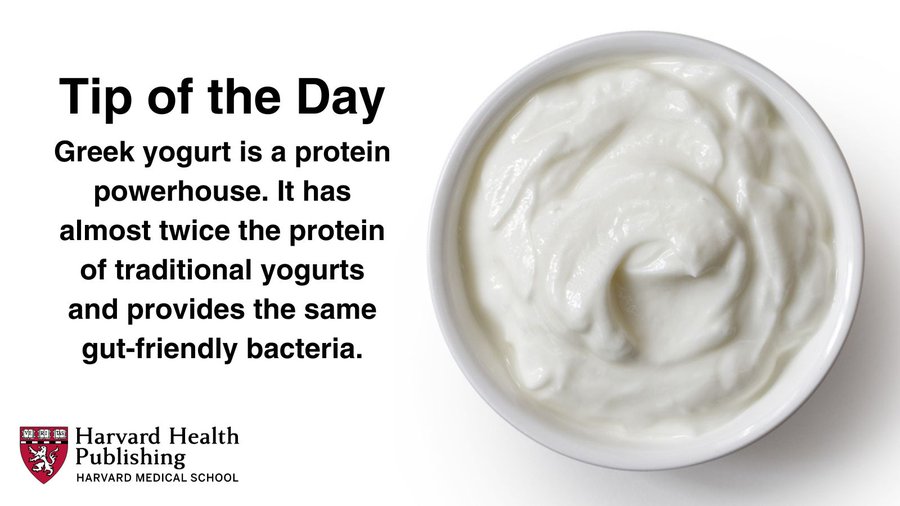
Protein in Greek yogurt: Greek yogurt is a protein powerhouse. It has almost twice the protein of traditional yogurts and provides the same gut-friendly bacteria. #HarvardHealth





















 Healthaware