Today is #WorldHeartDay, and we are shining a light on proactive cardiac health.
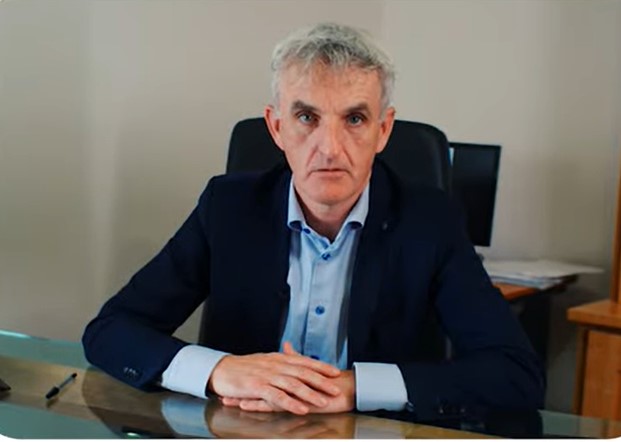
Professor Pat Nash, Consultant Cardiologist at Blackrock Health, explains the types of screening tests available for heart disease.
Professor Nash always checks key factors like smoking, diet, weight, lifestyle, exercise, and blood pressure. If there’s a strong family history, a CT Calcium Score – a powerful tool for gaining deeper insights and guiding personalised prevention strategies – might be recommended for more detail.
Knowing your risks is key to a healthy heart. Explore our cardiology services and advanced screening options: https://ow.ly/M2Fu50WP841
An eating plan that emphasizes eating A LOT of food, not a little? It isn’t too good to be true — it’s the premise behind volume eating. pic.twitter.com/gMzC25Lsdx
— Cleveland Clinic (@ClevelandClinic) July 2, 2025
March is Endometriosis Awareness Month. Did you know this condition affects 1 in 10 women?
Endometriosis can cause debilitating pain, fertility issues, and significantly impact quality of life.
Megan Davenport, MISCP, Senior Physiotherapist in Pelvic Health at Blackrock Clinic, sheds light on the condition and its symptoms:
“Endometriosis can affect women at any age, from puberty to menopause, though its impact may persist throughout life. It is not just “bad period pain”—it is a long-term condition, and each person’s experience with endometriosis is different.
Women with endometriosis experience a wide range of symptoms, with the most commonly recognised including:
– Heavy periods (needing to change pads/tampons every hour or so)
– Painful periods that interfere with daily activities
– Pelvic, abdominal or back pain, sometimes radiating down the thighs
– Pain during or after sex
– Pain with urination or having a bowel motion
Fatigue, bloating and nausea can also be experienced as well as anxiety and depression.
The health of mothers and babies is the foundation of healthy families and communities, helping ensure hopeful futures for us all.
World Health Day, celebrated on 7 April 2025, will kick off a year-long campaign on maternal and newborn health. The campaign, titled Healthy beginnings, hopeful futures, will urge governments and the health community to ramp up efforts to end preventable maternal and newborn deaths, and to prioritize women’s longer-term health and well-being.
WHO and partners will also share useful information to support healthy pregnancies and births, and better postnatal health.
This task is critical. Tragically, based on currently published estimates, close to 300 000 women lose their life due to pregnancy or childbirth each year, while over 2 million babies die in their first month of life and around 2 million more are stillborn. That’s roughly 1 preventable death every 7 seconds.
Based on current trends, a staggering 4 out of 5 countries are off track to meet targets for improving maternal survival by 2030. 1 in 3 will fail to meet targets for reducing newborn deaths.
Listening to women and supporting families
Women and families everywhere need high quality care that supports them physically and emotionally, before, during and after birth.
Health systems must evolve to manage the many health issues that impact maternal and newborn health. These not only include direct obstetric complications but also mental health conditions, noncommunicable diseases and family planning.
Additionally, women and families should be supported by laws and policies that safeguard their health and rights.
Campaign goals
To raise awareness about gaps in maternal and newborn survival and the need to prioritize women’s longer-term well-being.
To advocate for effective investments that improve the health of women and babies.
To encourage collective action to support parents as well as health professionals who provide critical care.
To provide useful health information relating to pregnancy, childbirth, and the postnatal period.
Get involved
Here’s what you can do to support the campaign:
Spread awareness: share information about the campaign using #HopefulFutures and #HealthForAll.
Participate: attend our global events to learn more about what it will take to end maternal and newborn mortality.
Donate: contribute to the WHO Foundation which supports WHO’s work to protect mothers and babies in countries around the world.
The health of mothers and babies is the foundation of healthy families and communities, helping ensure hopeful futures for us all.
World Health Day, celebrated on 7 April 2025, will kick off a year-long campaign on maternal and newborn health. The campaign, titled Healthy beginnings, hopeful futures, will urge governments and the health community to ramp up efforts to end preventable maternal and newborn deaths, and to prioritize women’s longer-term health and well-being.
WHO and partners will also share useful information to support healthy pregnancies and births, and better postnatal health.
This task is critical. Tragically, based on currently published estimates, close to 300 000 women lose their life due to pregnancy or childbirth each year, while over 2 million babies die in their first month of life and around 2 million more are stillborn. That’s roughly 1 preventable death every 7 seconds.
Based on current trends, a staggering 4 out of 5 countries are off track to meet targets for improving maternal survival by 2030. 1 in 3 will fail to meet targets for reducing newborn deaths.
Listening to women and supporting families
Women and families everywhere need high quality care that supports them physically and emotionally, before, during and after birth.
Health systems must evolve to manage the many health issues that impact maternal and newborn health. These not only include direct obstetric complications but also mental health conditions, noncommunicable diseases and family planning.
Additionally, women and families should be supported by laws and policies that safeguard their health and rights.
Campaign goals
To raise awareness about gaps in maternal and newborn survival and the need to prioritize women’s longer-term well-being.
To advocate for effective investments that improve the health of women and babies.
To encourage collective action to support parents as well as health professionals who provide critical care.
To provide useful health information relating to pregnancy, childbirth, and the postnatal period.
Get involved
Here’s what you can do to support the campaign:
Spread awareness: share information about the campaign using #HopefulFutures and #HealthForAll.
Participate: attend our global events to learn more about what it will take to end maternal and newborn mortality.
Donate: contribute to the WHO Foundation which supports WHO’s work to protect mothers and babies in countries around the world.
This World IBD Day, we’re recognising the strength of those living with Inflammatory Bowel Disease (IBD). Conditions like Crohn’s Disease and Ulcerative Colitis can be unpredictable, often bringing physical discomfort and emotional strain.
As Lorraine Cooney, Specialist Gastroenterology Dietitian and Head of Dietetics Department at Blackrock Health, Blackrock Clinic, says,
“IBD affects more than just your gut—it can impact every part of life. And diet in IBS matters! There’s no one-size-fits-all, so support should be personal. The right approach depends on your type of IBD, how active it is, any IBS-type symptoms, your nutrition status, culture and even your relationship with food. On World IBD Day, let’s raise awareness and remind people with IBD that they’re not alone.”
At Blackrock Health, our gastroenterology teams understand the impact of IBD. Across our three hospitals, we offer expert care, timely diagnostics, and ongoing support to help patients manage symptoms and take back control of their health.
If you’re living with IBD or experiencing persistent digestive issues, we’re here to help.





 Healthaware