https://www.facebook.com/share/v8MPuJgSjXrrdTFa/


Mayo Clinic Sports @mayoclinicsport 14 hours ago
Sitting vs. Standing DYK that more standing and less sitting can help you lose weight, increase productivity, and lower risk of heart disease. Take a stand for health and success today! Learn more
https://mayocl.in/2Mbvqnm


The next time you have a check-up, don’t be surprised if your doctor hands you a prescription to walk. Yes, this simple activity that you’ve been doing since you were about a year old is now being touted as “the closest thing we have to a wonder drug,” in the words of Dr. Thomas Frieden, former director of the Centers for Disease Control and Prevention.
Of course, you probably know that any physical activity, including walking, is a boon to your overall health. But walking in particular comes with a host of benefits. Here’s a list of five that may surprise you.
1. It counteracts the effects of weight-promoting genes. Harvard researchers looked at 32 obesity-promoting genes in over 12,000 people to determine how much these genes actually contribute to body weight. They then discovered that, among the study participants who walked briskly for about an hour a day, the effects of those genes were cut in half.
2. It helps tame a sweet tooth. A pair of studies from the University of Exeter found that a 15-minute walk can curb cravings for chocolate and even reduce the amount of chocolate you eat in stressful situations. And the latest research confirms that walking can reduce cravings and intake of a variety of sugary snacks.
3. It reduces the risk of developing breast cancer. Researchers already know that any kind of physical activity blunts the risk of breast cancer. But an American Cancer Society study that zeroed in on walking found that women who walked seven or more hours a week had a 14% lower risk of breast cancer than those who walked three hours or fewer per week. And walking provided this protection even for the women with breast cancer risk factors, such as being overweight or using supplemental hormones.
4. It eases joint pain. Several studies have found that walking reduces arthritis-related pain, and that walking five to six miles a week can even prevent arthritis from forming in the first place. Walking protects the joints — especially the knees and hips, which are most susceptible to osteoarthritis — by lubricating them and strengthening the muscles that support them.
5. It boosts immune function. Walking can help protect you during cold and flu season. A study of over 1,000 men and women found that those who walked at least 20 minutes a day, at least 5 days a week, had 43% fewer sick days than those who exercised once a week or less. And if they did get sick, it was for a shorter duration, and their symptoms were milder.
Image: gradyreese/Getty images
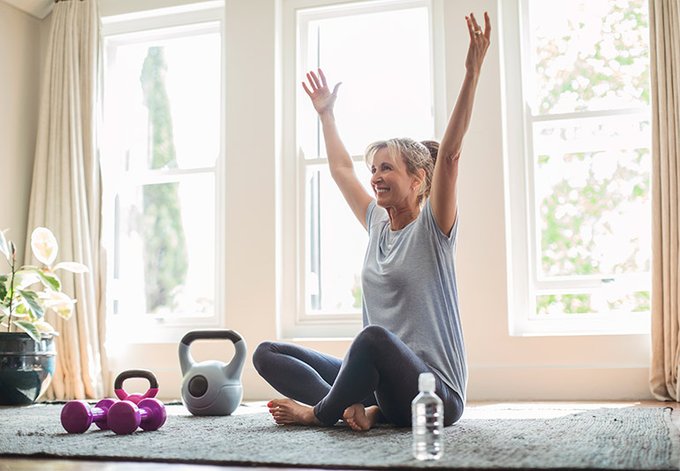

You may not realize it, but we all start losing 1 percent of muscle mass each year after age 30. That’s why your diet in later years should not look the same as it did when you were younger, says endocrinologist Susan Williams, MD.
Skipping breakfast, eating fast food and being inactive in your 20s and early 30s might not hurt your health in the short term. However, poor nutrition and lifestyle habits take their toll over time.
People who embrace good habits early on really get ahead of the game, Dr. Williams says. But it’s never too late to start eating better and taking better care of your body.
Whether you’re 30 or 50, Dr. Williams offers three important tips to get started in eating right when you are thinking about your long-term health.
RELATED: Do You Know How Much Exercise You Really Need?
A roller coaster of weight gain and loss can change your body composition and leave you with more fat mass and less lean muscle mass.
You also want to limit your snacks in between. The word “balanced” is especially important because eating a wide variety of foods will help you prevent nutritional deficiencies.
Dr. Williams suggests this simple shopping list:
Steer clear of cookies, cakes, pies, ice creams, juices and rich desserts. If that sounds like no fun, Dr. Williams advises treating these foods as treats. Save them for dining out or special occasions, but don’t make them part of your daily diet.
RELATED: Which Bread Is Best For You — Whole-Grain, Multigrain or Whole Wheat?
Eating protein and being physically active are equal partners in the quest for maximum health, Dr. Williams says. Muscles are made of protein, but simply eating protein is not enough to save them.
“Muscles in your body are a use-or-lose proposition,” she says. “You need to use them to keep them strong.”
Can’t carve out time for the gym? Try this daily routine:
Even a half hour of physical activity can make a world of difference, especially if you make it a habit in your 30s. “Don’t let your weight creep up while your muscle mass creeps down over your 30s and 40s,” Dr. Williams says. The longer you wait, the harder it will be to get started — and the more muscle you will have already lost.


The next time you have a check-up, don’t be surprised if your doctor hands you a prescription to walk. Yes, this simple activity that you’ve been doing since you were about a year old is now being touted as “the closest thing we have to a wonder drug,” in the words of Dr. Thomas Frieden, former director of the Centers for Disease Control and Prevention.
Of course, you probably know that any physical activity, including walking, is a boon to your overall health. But walking in particular comes with a host of benefits. Here’s a list of five that may surprise you.
1. It counteracts the effects of weight-promoting genes. Harvard researchers looked at 32 obesity-promoting genes in over 12,000 people to determine how much these genes actually contribute to body weight. They then discovered that, among the study participants who walked briskly for about an hour a day, the effects of those genes were cut in half.
2. It helps tame a sweet tooth. A pair of studies from the University of Exeter found that a 15-minute walk can curb cravings for chocolate and even reduce the amount of chocolate you eat in stressful situations. And the latest research confirms that walking can reduce cravings and intake of a variety of sugary snacks.
3. It reduces the risk of developing breast cancer. Researchers already know that any kind of physical activity blunts the risk of breast cancer. But an American Cancer Society study that zeroed in on walking found that women who walked seven or more hours a week had a 14% lower risk of breast cancer than those who walked three hours or fewer per week. And walking provided this protection even for the women with breast cancer risk factors, such as being overweight or using supplemental hormones.
4. It eases joint pain. Several studies have found that walking reduces arthritis-related pain, and that walking five to six miles a week can even prevent arthritis from forming in the first place. Walking protects the joints — especially the knees and hips, which are most susceptible to osteoarthritis — by lubricating them and strengthening the muscles that support them.
5. It boosts immune function. Walking can help protect you during cold and flu season. A study of over 1,000 men and women found that those who walked at least 20 minutes a day, at least 5 days a week, had 43% fewer sick days than those who exercised once a week or less. And if they did get sick, it was for a shorter duration, and their symptoms were milder.
Image: gradyreese/Getty images

Set a date, avoid triggers, and get help and support along the way
Looking to take on a sobriety challenge, like Dry January? Or maybe it’s a pregnancy that made you realize it’s time to stop drinking. Or maybe you’re just looking to improve your health, wake up hangover-free and give your liver (and your heart) a break.
Whatever your reason to quit drinking, know that you’re doing yourself a favor. Alcohol impacts our sleep, relationships, weight, risk for serious chronic conditions and more.
“Increasingly, I’m hearing from a lot of people who don’t necessarily have alcohol use disorder but who realize that they feel better when they drink less or stop drinking altogether,” says addiction psychiatrist David Streem, MD.
But you probably have questions about how to quit drinking. Is it better to wean off gradually? Go cold turkey? How will you keep up a sober lifestyle?
Whether you’re sober curious, know for sure you’re ready to quit, or fall somewhere in between, Dr. Streem shares advice for how to stop drinking. If you’re living with alcohol use disorder (also known as alcoholism), you’ll likely benefit from additional medical interventions. We’ll talk about that, too.
When you consider how to go about giving up alcohol, account for factors like how much you drink and your reasons for drinking.
“At its core, quitting drinking is a behavioral change,” Dr. Streem says. “It’s about breaking a habit and starting new habits.”
But if you’re living with alcohol use disorder, drinking is more than a habit. It’s a medical condition. People with alcohol use disorder can’t stop drinking even when it causes problems, like emotional distress or physical harm to themselves or others.
“If you drink every day — if you crave alcohol and have a compulsion to continue drinking even when the effects of alcohol are obvious — it’s best to seek medical treatment rather than stop drinking on your own,” Dr. Streem advises. “In many cases, it may not be safe for someone with alcohol use disorder to stop drinking without professional support, and you’re less likely to be successful on your own, too.”
In order to change your drinking habits, your first step is to take a close look at your current behaviors and find patterns.
Dr. Streem suggests starting with the World Health Organization’s Alcohol Use Disorders Identification Test (AUDIT). It can be a particularly helpful way to help you get a clearer understanding of your drinking habits and your relationship with alcohol. It’s a 10-question screening test that gives you research-backed, personalized advice for quitting or reducing your intake of alcohol.
Making lists can help, too. Ask yourself questions like:
Laying it all out in black and white can take time and some serious self-examination. That’s OK. Understanding your habits and your motivations to quit drinking can help you understand the change you’re making in your life and reinforce why it’s important.
Dr. Streem says that if your goal is to stop drinking altogether, you’re more likely to have success quitting all at once, rather than weaning off alcohol. But that advice changes if you’re living with alcohol use disorder.
“If a person with alcohol use disorder stops drinking suddenly, it can be dangerous,” Dr. Streem reiterates. “If you’re choosing to quit drinking for your health or for other reasons, though, you have a better chance of success if you choose a date to quit and don’t look back.”
He suggests setting a concrete start date for when you’ll quit drinking. Leading up to that date, talk with your family, friends and other important people in your life. Tell them your plan and ask for their support as you make this life change.
We all become conditioned to have certain responses to triggers throughout our lives. It’s normal for certain stimuli to cause a reaction in your mind and body without even being aware of it.
You smell a pot of chili simmering on the stove and then suddenly feel ravenously hungry. You feel your phone vibrate and then anxiously reach to see who texted. Even dogs do it — you say “walk” and they high-tail it to get their leash.
Drinking works in a similar way, Dr. Streem says. You can become conditioned to reach for a drink when your environment offers up certain cues.
So, when you’re trying to quit drinking, steering clear of triggers will help.
There’s a saying in the Alcoholics Anonymous (AA) community that sums up the triggers that can derail sobriety: “people, places and things.” And it’s not only people in recovery from alcohol use disorder who are well-advised to avoid drinking triggers when trying to quit.
People: If there are certain friends or other people in your life that you typically drink with, you may want to take some time away from them while you’re working on creating new, sober habits. At least, let them know your intentions to quit drinking so they can be supportive.
Places: Here’s another AA saying: “If you hang out in a barbershop long enough, you’re going to get a haircut.” In other words, if you go places where the alcohol is flowing — like bars or house parties — chances are, you’re going to drink. It’s almost inevitable. When you’re cutting alcohol out of your life, you’re best off if you can avoid places where alcohol is abundant.
Things: As you prepare for the date you set to quit drinking, Dr. Streem advises getting rid of all alcohol and drinking accessories (wineglasses, tumblers, flasks, cocktail recipes and so on) — the ol’ “out of sight, out of mind” technique. These physical reminders of drinking can prompt a trigger response that can be counterproductive to your goal of quitting drinking.
A sober life doesn’t have to mean more time at home as you try to block out triggers. It can mean more time for your other interests, and even new interests. More time to meet new people, catch up with old friends and try new things.
Try these alcohol-free ways to enjoy time with new (and old) friends:
Talk therapy is an important part of treatment for alcohol use disorder, but Dr. Streem says just about anyone who is making a life change, like quitting drinking, can benefit from therapy.
“You may learn things about yourself and about your relationship to this substance that you never even thought about,” he adds.
Therapy can help you understand why you drink and learn new habits so you can live a healthy lifestyle that doesn’t rely on alcohol as a crutch. It can also help you gain a new perspective as you consider how your life will change without alcohol.
If your body is used to a certain amount of alcohol, you may feel certain effects when you stop. How you feel when you stop drinking is largely based on how often and how heavily you drink. People who only drink occasionally probably won’t notice any physical or psychological symptoms. If you drank heavily, you may have some mild symptoms. People who have a severe reaction to quitting alcohol should seek emergency treatment.
Emotionally, you may feel some anxiety or sadness about ending a chapter of your life and nervousness about the future. You may feel irritable or have trouble thinking clearly.
Physically, people who drink heavily may experience some mild symptoms like:
Again, severe alcohol withdrawal symptoms, including pain, passing out, hallucinations and more may be a sign that you’re living with alcohol use disorder and should seek professional medical intervention before quitting alcohol.
If you’re living with alcohol use disorder, quitting drinking is important for your health. But quitting on your own can pose risks to your health and is unlikely to be successful. Rehabilitation facilities can help you on your path to sobriety by addressing alcohol withdrawal symptoms and becoming involved in sober living support groups, like AA.
But Dr. Streem knows that it can be hard to recognize signs of alcohol abuse in ourselves. Often, people with alcohol use disorder find that other people in their lives spot their addiction long before they do.
“If there are people around you who are encouraging you to make this change, that should be a big red flag that your alcohol use is problematic,” he says. “People often see us better than we see ourselves, so if someone is telling you that you need to stop drinking, that should be taken seriously.”
Another clue that can be an indication of an unhealthy relationship with alcohol is if you make “rules” around drinking.
“If you say things like, ‘I don’t have a drinking problem because I never drink on Mondays,’ or, ‘I only drink X or Y … never Z,’ and so on, that can be an indication of alcohol use disorder,” Dr. Streem says. “Rules are a way of trying to create an illusion of control when you are, in fact, out of control. People who don’t have an alcohol use disorder don’t make rules about drinking. They don’t have to.”
Other signs of alcohol use disorder include:
If you’re living with alcohol use disorder, treatment at a medical rehabilitation facility is your best option. Through therapy, support groups and medication, you’ll be supported on your path to recovery.
alcohol alcoholism drinking rehabilitation substance abuse
Cleveland Clinic is a non-profit academic medical center. Advertising on our site helps support our mission. We do not endorse non-Cleveland Clinic products or services.