
Take a fresh look at oatmeal – it’s not as simple as you think @American_Heart
American Heart Association
@American_Heart
·
Oats and oatmeal have powers you probably didn’t know about — like nutrients to help lower cholesterol and enough fiber to help you feel fuller longer. They just might be quiet heroes of #BetterBreakfastMonth.
(Arx0nt/Moment via Getty Images)
By Michael Merschel, American Heart Association News
Let’s admit it: Oatmeal is a total nerd. It lacks fashion sense – the color they named after it is somewhere on the drab side of beige. It’s often seen with Sesame Street’s Bert, who also loves bottle caps, paper clips and pigeons.
But when it comes to healthy eating, oatmeal and the oats it comes from can definitely hang with the cool kids at the breakfast table.
“It has many, many good qualities,” said Candida Rebello, director of the nutrition and chronic disease research program at Louisiana State University’s Pennington Biomedical Research Center in Baton Rouge.
Extensive studies have associated oats and oatmeal with plenty of heart-healthy benefits, such as lowering cholesterol (both total and “bad” LDL cholesterol) and helping with weight control.
Oatmeal has a host of vitamins and minerals. Two examples: According to the U.S. Department of Agriculture, a one-cup serving of cooked oatmeal has about 1.8 milligrams of vitamin B1, or thiamin. That’s close to 15% of what an adult needs each day. It also has 1.36 mg of manganese, which is 59% of the daily recommendation for men and 76% for women. Manganese has roles in immunity, blood clotting and the way cholesterol and blood sugar are metabolized.
But that’s not what makes oats stand out, Rebello said. That same cup of cooked oatmeal has just 166 calories and nearly 4 grams of dietary fiber.
And the type of fiber is where oats start to distinguish themselves. It’s called beta-glucan. Put that in the conversation, and it’s like the scene in a movie where oatmeal takes off its glasses and everyone realizes just how beautiful it is.
Not literally. It’s a soluble fiber, which means it dissolves in hot water, where it thickens. “When you eat oatmeal, the kind of sliminess that you see – that comes from this viscosity that beta-glucan generates,” Rebello said.
That helps you feel full longer, she said. And it helps undigested food travel farther down your digestive tract, where it feeds the friendly bacteria living there.
Beta-glucan is abundant in oats and barley and has been shown “quite unequivocally” to help maintain healthy cholesterol levels, Rebello said.
Oats also are rich phytonutrients – plant-derived substances that may boost health. One class of such phytonutrients is avenanthramides, which are found only in oats. Avenanthramides may have antioxidant and anti-inflammatory effects, although Rebello said their possible benefits are not as well-researched as those for beta-glucans.
Oats have been linked to heart-health benefits since the 1960s and come in many forms. The differences involve levels of processing.
Oats grow in an inedible casing called a hull. Inside the hull is a seedlike groat. That groat is encased in bran. “In other whole grains, like in wheat, you can remove that bran layer,” Rebello said. “But in oats, this groat is very soft, so that bran layer cannot really be removed.”
That means oats are almost always a whole-grain food, and those are a key part of a healthy eating pattern.
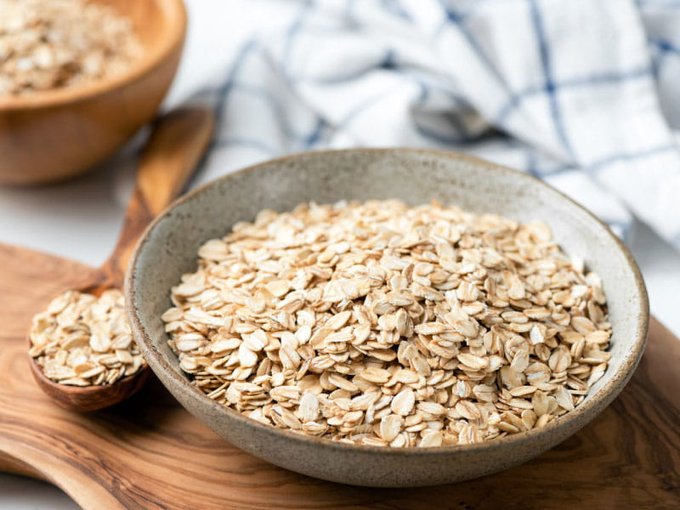
If oats are labeled “steel cut,” it simply means they were processed with a steel cutter, Rebello said. Rolled oats are steamed first, then pressed with a roller. “If the roller crushes it into thinner flake, then you get quick-cooking oats,” she said. “If it is then rolled into an even thinner flake, you get your instant oats.”
Rebello said that nutritionally, there is little difference between steel cut and rolled oats. Instant oats, however, have a higher glycemic index, meaning they raise your blood sugar faster.
When oats are ground to flour, the coarser portion is extracted and called oat bran. The beta-glucans will be concentrated in the flour rather than the bran, she said.
Oat milk is derived from oats and water, but processing may add ingredients such as sugar, salt, oil and more. Oat milk has some dietary fiber, Rebello said – commonly 2 grams per cup – but the amount of beta-glucan is rather small.
Unfortunately, Rebello ruled out sugar-filled oatmeal cookies as a healthy food (although she’s not averse to having one as a treat now and then).
How, then, to embrace oats? “Just eat regular oatmeal,” she said. Half a cup of rolled oats cooks up quickly and will keep you full a long time.
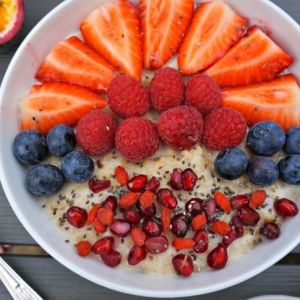
Oatmeal with your favorite fruit can be a sweet way to start the day. Cook it in low-fat milk for creaminess and add unsalted nuts to bolster its heart-health value. If you’re time-pressed in the morning, try a healthy version of overnight oats, which can be prepared the night before.
It’s important to remember that no single food, even oats, can do it all, Rebello said, noting that if you eat a nutritious breakfast but then load up on sugar and fat the rest of the day, “that’s really not going to help you much.”
But you should go ahead and invite oatmeal into your breakfast club, Rebello said. “I definitely recommend eating oats.”
If you have questions or comments about this American Heart Association News story, please email editor@heart.org.
Walking even at a “casual” pace five days a week may lower the odds of high blood pressure..@HarvardHealth

Harvard Health
@HarvardHealth
·
Walking even at a “casual” pace five days a week may lower the odds of high blood pressure in postmenopausal women, a new study finds: https://bit.ly/3oyORag #HarvardHealth #WomensHealth
Ever notice how a hug seems to make things better?

Yoga JournalVerified account @Yoga_Journal 4 hours ago
Ever notice how a hug seems to make things better? Touch is a powerful and necessary aspect of healing. http://ow.ly/TPR330mRLZ3 .
Take a fresh look at oatmeal – it’s not as simple as you think @American_Heart
American Heart Association
@American_Heart
·
Oats and oatmeal have powers you probably didn’t know about — like nutrients to help lower cholesterol and enough fiber to help you feel fuller longer. They just might be quiet heroes of #BetterBreakfastMonth.
(Arx0nt/Moment via Getty Images)
By Michael Merschel, American Heart Association News
Let’s admit it: Oatmeal is a total nerd. It lacks fashion sense – the color they named after it is somewhere on the drab side of beige. It’s often seen with Sesame Street’s Bert, who also loves bottle caps, paper clips and pigeons.
But when it comes to healthy eating, oatmeal and the oats it comes from can definitely hang with the cool kids at the breakfast table.
“It has many, many good qualities,” said Candida Rebello, director of the nutrition and chronic disease research program at Louisiana State University’s Pennington Biomedical Research Center in Baton Rouge.
Extensive studies have associated oats and oatmeal with plenty of heart-healthy benefits, such as lowering cholesterol (both total and “bad” LDL cholesterol) and helping with weight control.
Oatmeal has a host of vitamins and minerals. Two examples: According to the U.S. Department of Agriculture, a one-cup serving of cooked oatmeal has about 1.8 milligrams of vitamin B1, or thiamin. That’s close to 15% of what an adult needs each day. It also has 1.36 mg of manganese, which is 59% of the daily recommendation for men and 76% for women. Manganese has roles in immunity, blood clotting and the way cholesterol and blood sugar are metabolized.
But that’s not what makes oats stand out, Rebello said. That same cup of cooked oatmeal has just 166 calories and nearly 4 grams of dietary fiber.
And the type of fiber is where oats start to distinguish themselves. It’s called beta-glucan. Put that in the conversation, and it’s like the scene in a movie where oatmeal takes off its glasses and everyone realizes just how beautiful it is.
Not literally. It’s a soluble fiber, which means it dissolves in hot water, where it thickens. “When you eat oatmeal, the kind of sliminess that you see – that comes from this viscosity that beta-glucan generates,” Rebello said.
That helps you feel full longer, she said. And it helps undigested food travel farther down your digestive tract, where it feeds the friendly bacteria living there.
Beta-glucan is abundant in oats and barley and has been shown “quite unequivocally” to help maintain healthy cholesterol levels, Rebello said.
Oats also are rich phytonutrients – plant-derived substances that may boost health. One class of such phytonutrients is avenanthramides, which are found only in oats. Avenanthramides may have antioxidant and anti-inflammatory effects, although Rebello said their possible benefits are not as well-researched as those for beta-glucans.
Oats have been linked to heart-health benefits since the 1960s and come in many forms. The differences involve levels of processing.
Oats grow in an inedible casing called a hull. Inside the hull is a seedlike groat. That groat is encased in bran. “In other whole grains, like in wheat, you can remove that bran layer,” Rebello said. “But in oats, this groat is very soft, so that bran layer cannot really be removed.”
That means oats are almost always a whole-grain food, and those are a key part of a healthy eating pattern.
If oats are labeled “steel cut,” it simply means they were processed with a steel cutter, Rebello said. Rolled oats are steamed first, then pressed with a roller. “If the roller crushes it into thinner flake, then you get quick-cooking oats,” she said. “If it is then rolled into an even thinner flake, you get your instant oats.”
Rebello said that nutritionally, there is little difference between steel cut and rolled oats. Instant oats, however, have a higher glycemic index, meaning they raise your blood sugar faster.
When oats are ground to flour, the coarser portion is extracted and called oat bran. The beta-glucans will be concentrated in the flour rather than the bran, she said.
Oat milk is derived from oats and water, but processing may add ingredients such as sugar, salt, oil and more. Oat milk has some dietary fiber, Rebello said – commonly 2 grams per cup – but the amount of beta-glucan is rather small.
Unfortunately, Rebello ruled out sugar-filled oatmeal cookies as a healthy food (although she’s not averse to having one as a treat now and then).
How, then, to embrace oats? “Just eat regular oatmeal,” she said. Half a cup of rolled oats cooks up quickly and will keep you full a long time.
Oatmeal with your favorite fruit can be a sweet way to start the day. Cook it in low-fat milk for creaminess and add unsalted nuts to bolster its heart-health value. If you’re time-pressed in the morning, try a healthy version of overnight oats, which can be prepared the night before.
It’s important to remember that no single food, even oats, can do it all, Rebello said, noting that if you eat a nutritious breakfast but then load up on sugar and fat the rest of the day, “that’s really not going to help you much.”
But you should go ahead and invite oatmeal into your breakfast club, Rebello said. “I definitely recommend eating oats.”
If you have questions or comments about this American Heart Association News story, please email editor@heart.org.
Recipe: Spaghetti With Fresh Tomato Sauce and Roasted Vegetables @ClevelandClinic #nutrition
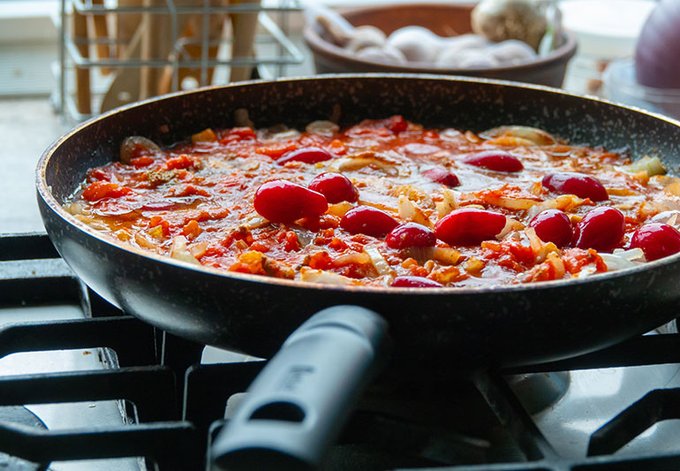
Why not try your hand at making homemade tomato sauce? The freshness of the tomatoes and the smokiness of the roasted vegetables make this a great topping for spaghetti. If you don’t have your own garden, use canned Roma tomatoes for a tasty dish that includes roasted mushrooms, broccoli and peppers.
Ingredients
Tomato sauce
Olive oil cooking spray
2 garlic cloves, minced
1 small carrot, minced
1 shallot, minced
4 cups peeled, seeded, and diced ripe tomatoes or one 28-ounce can no-salt-added diced tomatoes, drained
1/4 cup dry red wine
1 1/2 tablespoons balsamic vinegar
1/4 teaspoon crushed red pepper flakes, optional
1/4 cup chopped fresh basil
Pasta
1/2 pound whole wheat spaghetti
3/4 pound broccoli florets and stalks, peeled and cut into bite-size pieces
2 portobello mushrooms, halved and thinly sliced
1 red, yellow or orange bell pepper, seeded and coarsely chopped
1 1/2 tablespoons extra-virgin olive oil
1 1/2 tablespoons balsamic vinegar
Freshly grated pepper
2 tablespoons freshly grated Parmesan cheese
Directions
- Preheat oven to 400° F. Line a rimmed baking sheet with aluminum foil.
- To make the sauce, coat a large pot with cooking spray and saute the garlic, carrot and shallot over low heat until they begin to wilt, about 5 minutes. Stir in the tomatoes, wine, vinegar and red pepper flakes (if using). Cover and simmer slowly for 30 minutes.
- Stir in the basil and simmer for 10 minutes more. (To make a smoother sauce, cool and process in batches in either a blender or food processor.) Set aside.
- Place the broccoli, mushrooms and bell pepper on the prepared pan. Toss with oil and vinegar. Roast about 10 minutes until crisp or done to your taste. Sprinkle with pepper.
- Cook the pasta according to package directions. Drain.
- In a large serving bowl, toss the pasta with 2 cups tomato sauce. Top with the roasted vegetables and sprinkle with Parmesan cheese.
Nutrition information (per serving)
Makes 4 servings
Calories: 363
Total fat: 4 g
Protein: 15 g
Carbohydrate: 71 g
Dietary fiber: 4 g
Cholesterol: 0 mg
Sodium: 100 mg
Potassium: 93 mg
— Cleveland Clinic Healthy Heart Lifestyle Guide and Cookbook (© 2007 Broadway Books).
Recipe: Spaghetti With Fresh Tomato Sauce and Roasted Vegetables @ClevelandClinic #nutrition
Why not try your hand at making homemade tomato sauce? The freshness of the tomatoes and the smokiness of the roasted vegetables make this a great topping for spaghetti. If you don’t have your own garden, use canned Roma tomatoes for a tasty dish that includes roasted mushrooms, broccoli and peppers.
Ingredients
Tomato sauce
Olive oil cooking spray
2 garlic cloves, minced
1 small carrot, minced
1 shallot, minced
4 cups peeled, seeded, and diced ripe tomatoes or one 28-ounce can no-salt-added diced tomatoes, drained
1/4 cup dry red wine
1 1/2 tablespoons balsamic vinegar
1/4 teaspoon crushed red pepper flakes, optional
1/4 cup chopped fresh basil
Pasta
1/2 pound whole wheat spaghetti
3/4 pound broccoli florets and stalks, peeled and cut into bite-size pieces
2 portobello mushrooms, halved and thinly sliced
1 red, yellow or orange bell pepper, seeded and coarsely chopped
1 1/2 tablespoons extra-virgin olive oil
1 1/2 tablespoons balsamic vinegar
Freshly grated pepper
2 tablespoons freshly grated Parmesan cheese
Directions
- Preheat oven to 400° F. Line a rimmed baking sheet with aluminum foil.
- To make the sauce, coat a large pot with cooking spray and saute the garlic, carrot and shallot over low heat until they begin to wilt, about 5 minutes. Stir in the tomatoes, wine, vinegar and red pepper flakes (if using). Cover and simmer slowly for 30 minutes.
- Stir in the basil and simmer for 10 minutes more. (To make a smoother sauce, cool and process in batches in either a blender or food processor.) Set aside.
- Place the broccoli, mushrooms and bell pepper on the prepared pan. Toss with oil and vinegar. Roast about 10 minutes until crisp or done to your taste. Sprinkle with pepper.
- Cook the pasta according to package directions. Drain.
- In a large serving bowl, toss the pasta with 2 cups tomato sauce. Top with the roasted vegetables and sprinkle with Parmesan cheese.
Nutrition information (per serving)
Makes 4 servings
Calories: 363
Total fat: 4 g
Protein: 15 g
Carbohydrate: 71 g
Dietary fiber: 4 g
Cholesterol: 0 mg
Sodium: 100 mg
Potassium: 93 mg
— Cleveland Clinic Healthy Heart Lifestyle Guide and Cookbook (© 2007 Broadway Books).
Running decreases the risk of death, and potentially prolong life. But any exercise is good exercise.@HarvardHealth

Harvard HealthVerified account @HarvardHealth
Recent study: Running decreases the risk of death, and potentially prolong life. But any exercise is good exercise. http://hvrd.me/j2EM30c0Kde

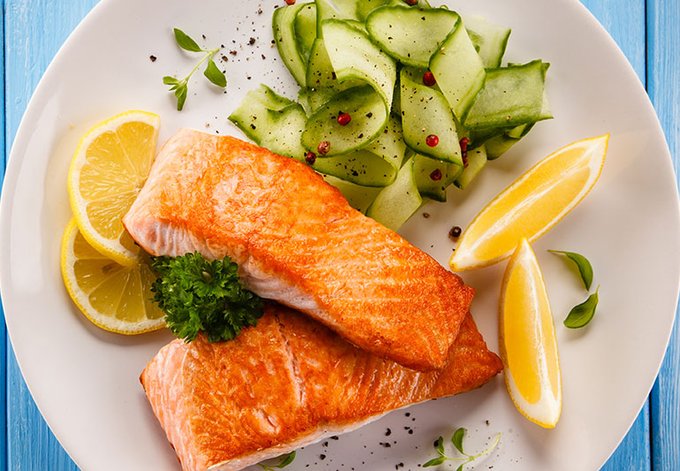
Recipe: Grilled Salmon With Cucumber Salad @ClevelandClinic
A new way to incorporate salmon into your weekend brunch
Cleveland Clinic
@ClevelandClinic
·
Filled with healthy fats and fresh ingredients, this dish will leave you feeling satisfied, nourished and ready to embrace your weekend warrior: https://cle.clinic/3BSXeDL
Walking even at a “casual” pace five days a week may lower the odds of high blood pressure..@HarvardHealth
Harvard Health
@HarvardHealth
·
Walking even at a “casual” pace five days a week may lower the odds of high blood pressure in postmenopausal women, a new study finds: https://bit.ly/3oyORag #HarvardHealth #WomensHealth
 Healthaware