https://www.facebook.com/share/v8MPuJgSjXrrdTFa/


Health is Wealth

A creamy smoothie with crunchy toppings — in a bowl!
Smoothie base
Toppings
Makes 4 servings
Serving = 3/4 cup
Calories: 160
Carbohydrate: 27 g
Sugars: 17 g
Fiber: 4 g
Saturated fat: 0.5 g
Cholesterol: 5 mg
Protein: 9 g
Sodium: 70 mg

Protect and build muscle while getting essential amino acids and calcium with this protein
Milk really does do a body good. It’s high in calcium, vitamin D and potassium. And it’s also rich in a beneficial protein called casein (pronounced ”KAY-seen“).
If you’re a regular dairy milk drinker, you’re already getting some benefits of casein. But you may want to consider adding more casein to your diet. Athletes and bodybuilders have been using casein protein powder for years. But the benefits of casein aren’t just for pro sports players.
“Protein is a vital part of any balanced diet,” says registered dietitian Elyse Homan, RD, LD. “But different proteins have different effects. Understanding how each protein works is beneficial, especially if you’re supplementing with it.”
Casein is the main protein found in dairy milk, which includes the milk from:
Casein makes up about 80% of the protein found in milk. The other 20% comes from whey protein.
“When you think of curds and whey,” Homan says, “the solid part is casein protein, and the liquid part is whey protein.”
Getting enough protein is important because protein has many jobs. It has to:
Casein and whey have a lot in common. They’re both:
The main difference is that casein is a slower-digesting protein than whey. “Casein forms a gel-like substance in your stomach,” Homan explains. “It releases more slowly than other proteins and takes longer for your body to absorb.”
Getting the recommended daily amount of protein helps you stay healthy. But casein’s slow absorption also gives it some added advantages. The health benefits of casein include:
Amino acids combine to form proteins. There are 20 amino acids that your body needs to work correctly, and they join in various ways to create different proteins.
Your body makes some of the amino acids it needs, but there are nine essential amino acids that your body can’t produce — you must get them from food. Casein is a complete protein and has all nine essential amino acids.
Your cells rely on regular “feedings” of amino acids to continually make proteins. When you go without eating overnight or during an extended fast, your cells may not get the needed amino acids. As a result, they look for those amino acids elsewhere and break down your body’s muscles to get them.
As a slow-release protein, casein provides your cells with the amino acids they need over a long period. The slow absorption consistently feeds your cells with amino acids, allowing muscles to recover instead of breaking down.
Casein contains a high amount of leucine, an amino acid that regulates metabolism (how your body changes food into energy) and helps build and repair muscles. If you don’t typically consume a lot of protein, adding more leucine-heavy protein to your diet (like casein) can help your muscles grow when also engaging in regular exercise.
The casein in milk is a good source of calcium, which is essential for teeth and bone health. Not getting enough calcium can lead to a loss of bone mass and increase your risk of osteoporosis (a disease that weakens your bones).
Casein protein powder may contain up to 50% of your recommended calcium intake — but always check the label to make sure that the protein powder is a good source of calcium.
Casein protein’s general health benefits are good for everyone. But using casein protein powder ensures you’ll get a more significant amount of casein each day. Talk to your healthcare provider about taking casein protein powder for:
A high-protein diet can help you shed excess pounds and maintain a healthy weight. Protein can help you feel full and improve your satisfaction after the meal.
Different types of proteins affect you differently after you eat them:
One study found that participants who consumed casein protein powder before a meal ate less at that meal than people who had whey protein, egg albumin (made from egg whites) or water alone.
“Our bodies only absorb so much protein at one time,” Homan clarifies. “About 30 grams of protein per meal is a good amount to consume. If you plan to have more than one serving of casein powder daily, space it out.” It may help you stave off cravings and decrease snacking between meals, too.
Bodybuilders and athletes know that protein is key for building muscle. But keeping your body’s protein levels up overnight can be challenging. That is, unless you ingest casein immediately before going to sleep.
Research shows that consuming casein protein before bed balances your body’s protein level throughout the night. When your protein level stays consistent, muscles can continue to grow and recover — even though you’re not eating.
For most people, casein doesn’t cause any side effects. But Homan says certain people may need to avoid or limit casein if they have a condition such as:
If you have a milk allergy, the proteins in milk trigger your immune system and cause it to overreact. People with a milk allergy are allergic to casein, whey or both.
A severe allergy can cause anaphylaxis. More mild symptoms of a milk allergy include:
“Casein allergies are not as common in adults as in children, but they do exist,” notes Homan. If you suspect you have a milk allergy, an allergist can do a test to figure out what you’re allergic to.
Like all dairy products, casein contains the sugar lactose. If you have lactose intolerance, your small intestine can’t digest milk sugar. When you have dairy products, you may develop symptoms including:
“Casein supplements do have lower amounts of lactose,” Homan states. “If you’d like to include casein in your diet but have a lactose sensitivity, the supplement might not trigger it. Talk to your healthcare provider if you’re interested in taking a supplement.”
People with kidney disease often need to limit their protein. Too much protein can cause too much waste in your blood. If your kidneys can’t remove the waste, the buildup of toxins can lead to serious health complications.
“People with a protein restriction, such as those with kidney disease, don’t have to avoid casein,” Homan says. “But they do need to watch how much total protein they eat. Your healthcare provider can help you figure out the right amount.”
There are two ways you can add casein to your diet:
A powdered casein supplement can help you get high amounts of it, according to Homan. The most common form of casein powder is micellar casein, or you can get a rapidly absorbing type (casein hydrolysate). One serving typically contains 24 to 27 grams of protein. Mix with water to create a protein shake, or add it to smoothies, yogurt or baked goods.
“People looking to build muscle or get more protein in their diet should talk to their healthcare provider about adding casein,” she adds. “Supplementing with casein isn’t necessary if you have a healthy, balanced diet, but it can be helpful for some people.”
The U.S. Food and Drug Administration doesn’t regulate supplements. So, it’s a good idea to look for a casein supplement that underwent third-party testing. It’s usually a sign of a higher quality product.
Anyone can benefit from casein, and you and your family probably already get it from the dairy products you consume, such as:
“Adding a dairy product to your breakfast is an easy way to get some casein every day,” Homan encourages. One glass of milk has 8 grams of protein — 6.4 grams (80%) of that protein is casein. “It’s great to start your day with a good protein source.”FACEBOOK

May 28, 2024/Pregnancy & Childbirth
Recommendations encourage breast milk exclusively for baby’s first six months and continuing to provide human milk until age 2 and beyond
How and what you feed your baby is probably one of the most basic — and yet deeply personal — decisions you’ll face when you become a parent.
You’ll hear things like “breast is best.” As in, breastfeeding (chestfeeding) is the absolute best way to nourish your baby.
And then you’ll hear the retort, “fed is best.” Meaning breast milk (human milk) and formula are both fine. As long as your baby is getting nutrients in their belly, all is well.
Then come the opinions on how long you should breastfeed. (You’re still breastfeeding? You gave up on nursing already? You fed your baby formula?)
It can feel like there’s no right way to do it. And there’s some truth to that.
Because what works for one family may not be feasible for another. But that’s OK.
Breast milk can provide certain benefits that formula can’t mimic. But breastfeeding, especially for long periods of time, might not work for everyone. Or you may have been given the impression that you’ve continued providing human milk long after others think you “should.”
No one should feel guilt, shame or otherwise crummy about how they feed their baby. Let’s face it, mom guilt is tough enough as it is.
So, we talked with board-certified breastfeeding medicine physician Heidi Szugye, DO, about breastfeeding recommendations.
Science shows that if you can give your baby human milk (either your own or a donor’s), it has its benefits. And the longer, the better, experts recommend.
The American Academy of Pediatrics (AAP) and the World Health Organization (WHO) share these recommendations for breastfeeding duration:
Previous recommendations called for providing breast milk until age 1. But these newer guidelines (implemented in 2022) are based on the understanding that human milk has benefits that continue long after baby’s first birthday. And they help to remove stigmas associated with people who choose to extend breastfeeding into toddlerhood.
“These recommendations are a call to action for everyone, and that includes hospitals, pediatricians and all physicians that are taking care of families,” Dr. Szugye states. “We want to make sure our practices and policies are set up to support people who choose to breastfeed beyond the first year of their child’s life.”
Think of the guidelines as the best-case scenario. If it works for you, your family, your child, your body and your life to breastfeed for two years or longer, you’re doing a great thing. And there’s no reason to stop until you and your child are ready.
If it doesn’t work for you, that’s OK, too. Your worth as a parent and your love for your child can’t be measured in ounces of milk.
The recommendations are based on research showing that human milk has some big benefits. And those perks continue for as long as you continue to supply it.
“Breastfeeding offers tremendous benefits — from custom-made nutrition and increased immunity to protecting you against some forms of cancer. And those benefits don’t go away as your baby ages,” Dr. Szugye shares. “We have more and more data supporting that there are benefits to breastfeeding for more than one year when possible.”
Breastfeeding can offer both you and your baby some big benefits:
| Benefits for lactating parents | Benefits for baby |
|---|---|
| Lower risk of developing conditions like Type 2 diabetes, high blood pressure, cardiovascular disease, breast cancer and ovarian cancer. | Decreased risk for ear infections, respiratory infections, gastrointestinal illnesses, SIDS, leukemia, diabetes, obesity, asthma and eczema. |
“There are a lot of immunologic factors and components to human milk,” Dr. Szugye says. “One big advantage to human milk is that you pass antibodies to the baby. So, if you’re exposed to a respiratory illness or GI illness, those antibodies are passed on to the baby and then that makes them less likely to get sick. And if they do get sick, it’s less severe. It’s almost like a built-in immunity.”
Some people can make enough milk to breastfeed for as long as they and their babies choose. But some don’t. At least not without taking some steps to keep it up.
If you suspect your supply is dwindling as your child gets older, there are ways to help promote more milk production if you want.
“Many people notice their supply drop and mistakenly assume it won’t return,” Dr. Szugye notes. “But if you want to continue to breastfeed, there are options that could help.”
If a supply boost is in order, you can try:
If two or more years of breastfeeding seems daunting, remember that you have options.
For starters, giving your child human milk doesn’t always mean latching them to your breast and nursing. That’s just one way to do it. Pumping milk and putting it in a bottle, cup or spoon are also options.
And you may find that a donor bank could be a route to explore if you don’t lactate or if you have concerns about a low milk supply. Donor milk is pasteurized, screened for drugs, medications and infections, and tested for bacterial contamination before it’s stored and made available for purchase.
“Reach out to your pediatrician or women’s healthcare provider if you’re interested in obtaining donor milk. You may need a prescription from a healthcare provider,” Dr. Szugye suggests.
Remember, too, that any amount of human milk can be a benefit. If keeping up with your baby’s breastfeeding demands becomes too high a burden, there are alternatives.
Some parents may find that supplementing with formula (or other foods and milk after baby turns 1) can help give your child some human milk, while keeping up with their nutritional needs — and not burning yourself out in the process.
“It’s not an all-or-nothing thing,” Dr. Szugye reassures. “Any amount of human milk you can give is a benefit. If it doesn’t work for you to constantly supply human milk, that’s OK. We’re all just doing our best.”
If breastfeeding is going well for both you and your child, there’s no reason to give it up until you’re both ready to.
Feeding a baby is tough work, no matter how you do it. And chances are, you’re doing a fantastic job.

| If you hear the term “longevity” and think only about living longer, you’re missing half the point. “What we actually want is both more years and more of those years lived in good health,” says Dr. David Barzilai, a longevity physician and the medical editor of Harvard Health Publishing’s Special Health Report Pathways to Longevity. “Almost no one wants additional years of frailty and dependence; they want more years of feeling well, moving freely, thinking clearly, and staying engaged with the people and work they love.” To that end, recent years have seen an explosion in interest in longevity and healthy aging, largely driven by “science that’s genuinely more exciting than it was a decade ago,” says Dr. Barzilai, also a lecturer at Harvard Medical School. | |||||
While it’s clear that genetics play a role in living longer and staying healthy, lifestyle appears to be just as important. Five lifestyle patterns consistently show up in longevity research: movement, nutrition, sleep, stress management, and social connection.
“Good health is surprisingly unglamorous,” Dr. Barzilai says. “What matters most are the basics people already know about but rarely execute consistently over decades. There is no magic to it.”
Here, Dr. Barzilai expands on each of the five pillars of longevity.
Movement is the closest thing people have to a “master signal,” he says. “It improves nearly every system at once, from insulin sensitivity to brain health to bone density. And cardiorespiratory fitness is one of the strongest predictors of mortality we have ever measured.”
Dr. Barzilai recommends combining various forms of movement to maximize health, including twice-weekly resistance training and 150 minutes of moderate or 75 minutes of vigorous aerobic activity each week. “And everyday movement counts on its own,” he says. “Breaking up long stretches of sitting with two to three minutes of light activity measurably improves glucose and blood-pressure responses.”
Nutrition shapes the metabolic environment our cells live in day to day, governing blood glucose, inflammation, and the raw materials for muscle and repair, Dr. Barzilai says.
We’re living longer than ever—but are we living well?
Harvard Medical School’s Special Health Report, Pathways to Longevity, looks beyond “anti aging” hype to share what science really says about extending your healthspan—the years you stay strong, independent, and mentally sharp.
From nutrition and movement to sleep, stress, social connection, and the latest longevity drugs, this report turns complex research into clear, practical steps you can start now.
“The principles that have held up across decades of research are unglamorous and durable: build meals around whole foods,” he explains. “Get enough protein, which becomes more important, not less, as you age. And avoid the large blood glucose spikes you get from refined carbohydrate eaten on its own, which in practice means anchoring meals with protein, healthy fats, and fiber.”
Sleep is fundamental to longevity because that’s when the body takes care of essential maintenance — clearing metabolic waste from the brain, consolidating memory, and resetting the hormones that govern appetite and stress, Dr. Barzilai says.
Experts recommend adults get seven to eight hours each night. Research also shows that consistency matters more than quantity. “That is encouraging,” he says, “because a steady wake time, weekends included, is something most people can actually manage.”
Stress itself isn’t a problem, since our body’s acute stress response — which sharpens focus and fuels energy levels — can protect us from genuine threats.
“The trouble comes when it never switches off,” Dr. Barzilai says. “Chronic stress holds the body in a low-grade alarm state that, over years, wears on the cardiovascular and immune systems, disrupts sleep and metabolism, and appears to accelerate several of the underlying processes of aging.”
The most dependable ways to regulate stress are physical and social rather than purely mental, he says. “People reach for a relaxation app and overlook that movement, sufficient sleep, exposure to daylight, and time with people they trust are often the more powerful levers. Regular exercise in particular is one of the best-validated stress and mood interventions we have.”
Social connection is probably the longevity pillar people neglect most, Dr. Barzilai says. “People will track their macros and their step count to the decimal and never think to protect their friendships with the same intentionality, even though the survival data on relationships rival the data on much of what they are measuring,” he says.
If you’re feeling isolated, try to make connecting with others a regular commitment rather than a grand gesture, he says. “Begin with one recurring, low-pressure point of contact: a standing weekly call with one person, a class or volunteer commitment that puts you in the same room with the same faces again and again, a daily walk somewhere you will see neighbors. Pick one recurring contact and protect it like an appointment, and treat a few real relationships with the same seriousness you would give your blood pressure or your exercise.”
| Which pillar of longevity is most important?The habits most strongly linked to living a longer, healthier life are also some of the simplest: move regularly, eat well, sleep sufficiently, manage stress, and stay connected to others. But which one counts most? It’s impossible to gauge, says Dr. David Barzilai, a longevity physician and lecturer at Harvard Medical School.“How much each pillar matters depends heavily on where a given person is starting from,” he says. “For someone sedentary, adding movement is transformative. For someone running on five ragged hours of sleep, fixing sleep will do more than another workout. For someone isolated, rebuilding connection may be the highest-yield change of all.”“What I can say with confidence is that the most underrated pillar is social connection, and the most foundational day to day are sleep, physical activity, and nutrition, since they are the ground the others stand on,” Dr. Barzilai adds. “But the useful question is not which pillar wins in the abstract. It is which one you are personally weakest in right now, because that is where your next improvement will pay off most.” |

August 13, 2021/Diet, Food & Fitness/Recipes
A healthy, Asian spin on your usual weeknight pasta dish
Luxurious coconut milk and peanut butter make a silky sauce — and a savory sweet topping for squash, edamame and broccoli.
1 large spaghetti squash
1 tablespoon olive oil
Sea salt and freshly ground black pepper
1/2 cup no-added-sugar peanut butter
1 cup canned light coconut milk, plus more if needed
2 garlic cloves
1 1/2 teaspoons ground ginger
1 tablespoon soy sauce
1 1/2 teaspoons rice vinegar
1 large head broccoli, cut into bite-sized florets and steamed
2 bunches Swiss chard, roughly chopped and steamed
1 cup cooked edamame
1 bunch green onions or scallions, chopped, for garnish
1/2 cup chopped peanuts, for garnish
Makes 4 servings
Calories: 591
Total fat: 40.5 g
Saturated fat: 7.9 g
Trans fat: 0 g
Cholesterol: 0 mg
Sodium: 1121.1 mg
Total Carbohydrate: 40.5 g
Fiber: 14.1 g
Sugar: 11.2 g
Protein: 27.3 g
— Skinny Liver: A Proven Program to Prevent and Reverse the New Silent Epidemic — Fatty Liver Disease by Kristin Kirkpatrick, MS, RD, with Ibrahim Hanouneh, MD (© 2017 Da Capo Lifelong Books).
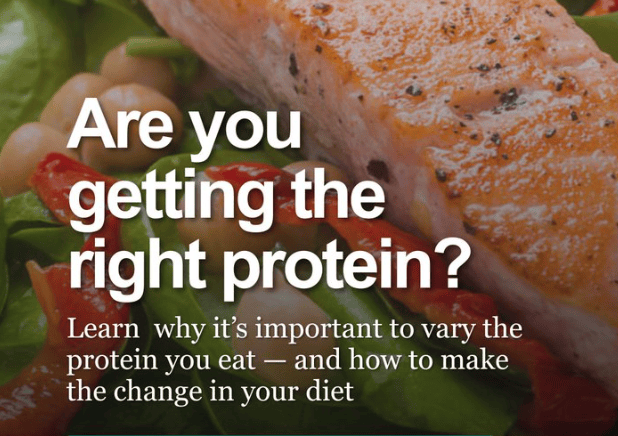
Best protein choices for healthy aging
As you get older, a protein-rich diet becomes more and more important. Protein helps prevent the loss of muscle mass that happens with aging. Foods high in protein also can support energy levels and promote overall health.
But not all proteins are the same. Here’s why it’s important to vary the protein you eat — and how to make the change in your diet.
If you’re like most Americans, you’re getting enough protein — but probably not the right kind.
Most older adults eat more than enough red meat, poultry and eggs. But they don’t eat enough of other types of healthy protein, like fish, nuts and seeds, beans, and legumes.
Many people believe they need more red meat to meet their protein needs. While red meat is a source of protein, eating too much of it can be unhealthy.
Studies suggest that diets high in red meat and processed meats, like bacon or lunch meat, can increase the risk of heart disease, high cholesterol and certain cancers.
Choosing the right sources of protein can have major health benefits.
Salmon, trout and sardines are rich in omega-3 fatty acids. These fats support heart health, lower inflammation and support brain health. Try to eat fish twice a week.
Almonds, walnuts, peanuts, chia seeds and flaxseed are not only rich in protein but also provide healthy fats and fiber. Make sure to buy nuts that aren’t salted for the best heart benefits.
Beans, lentils, chickpeas and peas are excellent plant-based sources of protein and fiber. They can help with digestion and improve gut health. Add them to soups, stews and salads for a filling and healthy meal.
If you eat meat, choose lean meats like chicken or turkey breast with no skins. You can still eat red meat, but make it a treat once in a while rather than a regular dish.
Low-fat dairy products like Greek yogurt and cheese are easy sources of protein. They also provide calcium and vitamin D, which are important for bone health.
Making small changes to your diet can have a big impact on your health:
Experiment with bean burgers and fish tacos to enjoy variety and protect your heart.
Sprinkle them on salads, yogurt or oatmeal for a delicious and nutritious boost of protein, healthy fats and fiber.
Use them in soups, stews and casseroles to add plant-based protein and fiber to your diet.
Eat Greek yogurt or low-fat cheese to reduce saturated fat intake while still benefiting from protein and essential nutrients.
Aim for 35 grams at a time.
To increase the benefit of a protein-rich diet, add resistance training to your day. You can use light dumbbells or resistance bands or do free-weight exercises like sit to stand, squats and pushups. These exercises help replace the muscle mass you lose with age.
Studies show that these exercises, when combined with protein intake, also can improve balance and walking speed. Researchers say that you’ll see the best results if you eat protein after exercise. So follow up your workout with a yogurt smoothie or a handful of nuts.
Most people can get enough protein through a healthy diet with a variety of fish, nuts, beans, lean meats and low-fat dairy. But if you’re having trouble gaining weight or if you show signs of muscle loss, your healthcare team may recommend adding a protein supplement to your food.
Milk powders, whey protein and egg whites are examples of ingredients that sneak more protein into your food. Many people enjoy protein supplement shakes as well. They can be especially helpful if you need to gain weight but have a smaller appetite.

The relationship between alcohol consumption and menstrual cycle: a review of the literature:
Alcohol use affects men and women differently, with women being more affected by the health effects of alcohol use (NIAAA, 2011). Yet, a dearth of information investigating the alcohol use in women exists (SAMSHA, 2011). In particular, one dispositional factor hypothesized to contribute to alcohol consumption in women is the menstrual cycle. However, only 13 empirical papers have considered the menstrual cycle as related to alcohol consumption in women. These studies fall out with somewhat mixed findings suggesting that the premenstrual week is associated with increased, decreased, or no change in alcohol consumption, likely due to methodological differences in menstrual cycle determination and measures of alcohol consumption. These methodological differences and possible other contributing factors are discussed here with recommendations for future research in this area. Understanding the contribution of the menstrual cycle to alcohol consumption is one step in addressing an important women’s health concern.
Keywords: Alcohol consumption, Menstrual cycle, Women, Women’s health


Note: While research on alcohol is evolving, the World Health Organization says drinking less or not at all is better for your health.
If you’ve noticed your hair thinning or that you’re losing hair more rapidly, you may be wondering whether your alcohol consumption is to blame. After all, alcohol is tied to a wide range of health issues, from liver disease to nutrient deficiencies and cardiovascular conditions — more than 200 health conditions in all.
[1] Could it also be contributing to your hair loss?
The short answer: Alcohol itself isn’t a direct, proven cause of hair loss. But excessive drinking may contribute to factors that negatively affect hair health, such as nutritional deficiencies, dehydration, hormonal disturbances, and immune system impairment.
[1]
“There’s no direct causal relationship that’s been defined. What we see instead is a suggested link, especially with androgenic alopecia, or pattern hair loss. And it may depend on the type and amount of alcohol consumed,” says Chris Adigun, MD, a dermatologist in private practice in Chapel Hill, North Carolina.
Here’s a closer look at what the science says if you’re worried about the potential role of alcohol in your hair health.
Currently, there’s no strong evidence that alcohol directly causes hair loss. But researchers have studied how drinking causes ripple effects on overall health, including indirectly influencing hair loss.
One research review that included 17 studies and more than 61,000 participants — mostly women — found that consuming higher amounts of sugary drinks and alcohol was linked to more hair shedding. The researchers even suggest that limiting alcohol may be beneficial in supporting hair health, though further research is needed to confirm the findings.
[2]
The research review isn’t able to determine the two are linked, but some clear factors are at play, says Julia Zumpano, RD, a registered dietitian at Cleveland Clinic’s Digestive Disease & Surgery Institute in Ohio.
“One probable cause could be the role these beverages play in the gut microbiome and nutrient absorption,” Zumpano says.
Excessive drinkers may also eat less nutrient-dense foods and may be deficient in nutrients crucial to hair health, such as vitamin D, iron, protein, and B12, she says. Chronic nutrient deficiency can weaken the hair’s structure and cause thinning.
[3]
Both theories are backed by research. It’s been established that chronic alcohol use is tied to malnutrition via alcohol’s effects on the small intestine’s ability to absorb key nutrients.
[4]
Genetics are another key factor, according to research. One study that looked at more than 1,100 men who were diagnosed with androgenetic alopecia found that regular drinkers had a 61 percent increased risk that their pattern hair loss would advance to moderate or severe stages.
[5]
In this case, the researchers said doctors should consider counselling patients with a genetic predisposition to hair loss to steer away from alcohol as a preventive measure.
[5]
And then there’s the stress on the body that alcohol may cause, Dr. Adigun says. Excessive drinking can disrupt sleep, trigger dehydration, and weaken the immune system, all of which can indirectly affect hair health.
[6]Should You Drink if You Have Hair Loss?
If you’re already dealing with hair thinning or shedding, do you need to stop drinking altogether? The answer depends on how much you drink and your overall health.
Based on the research, if you’re genetically predisposed to hair loss, Adigun suggests limiting alcohol consumption to avoid accelerating the process. “If someone has a family history of androgenic alopecia, for example, adding alcohol as another risk factor is inadvisable if they want to keep their hair,” she says.
But for most adults, moderate drinking — up to one drink per day for women and two for men, according to U.S. dietary guidelines — is unlikely to directly trigger hair loss, Adigun says.
[7]
If you drink excessively, cutting back may support your hair health indirectly by lessening the negative impact on your sleep, immune system, and your ability to absorb nutrients.
The term “excessive drinking” typically refers to binge drinking or heavy drinking. Binge drinking consists of consuming multiple drinks on a single occasion — 4 or more for women, 5 or more for men. Heavy drinking is defined as consuming 8 or more drinks per week for women, or 15 or more for men.
[8]
Your best bet is to meet with a dermatologist, who can help sort out the underlying causes of your hair loss — whether they’re genetic, hormonal, nutritional, or related to other health conditions. A dermatologist can run tests, identify the type of hair loss, and create a treatment approach that may combine medications, supplements, and lifestyle changes.
[9]
“Hair loss doesn’t happen in a vacuum, it’s complex. Alcohol is one piece of the puzzle, but we also need to look at genetics, lifestyle, and other contributing factors,” Adigun says.
Does Alcohol Interact With Hair Loss Medications?
If you’re taking medication for hair loss, you may wonder whether alcohol is safe. Some hair regrowth treatments don’t interact with alcohol, but others may increase your risk of side effects when combined with drinking.
Always ask your doctor or pharmacist before combining the two.
Here’s a look at some common treatments for hair loss and their potential interactions.
Topical application of minoxidil has no known alcohol interactions, but oral minoxidil may increase the risk of severe hangovers in people who are drinking heavily while taking the medication.
[10]
[11]
There are no major interactions with alcohol while taking this medication.
[12]
This medication is used off-label for female pattern hair loss. While taking it, women should stick within recommended guidelines for daily alcohol consumption — one drink per day or less. Alcohol can make some people feel dizzy or sleepy. If this happens to you, try not to drink alcohol while taking spironolactone.
[13]
[7]
Adigun also reminds people who are already exploring hair restoration options, such as topical and oral medications or injections, to try not to undermine their progress by drinking.
“If you’re doing treatments like minoxidil or [platelet-rich plasma injections] and at the same time, [you’re] drinking moderately or heavily, you’re adding a risk factor that we know increases [hair loss] severity,” she says. “Why continue a habit that worsens the condition you’re trying to treat?”
Share

