Here’s a fact that may surprise you: By the year 2020, depression is projected to be a leading social and economic burden worldwide — second only to coronary artery disease! Psychotherapy and antidepressants are effective but aren’t for everyone.
But there’s another treatment for depression that’s free and available to everyone: exercise. It will also lower your blood pressure, improve your cholesterol profile, help control blood sugar, and reduce your risk of heart disease, diabetes and common cancers. And, of course, help you achieve or maintain a healthy weight.
Walking is key to reducing the risk of death, according to a new study
By Annabel Rackham
BBC News
It has long been touted that 10,000 steps a day is the magic number you need to stay fit and healthy – but a new study shows fewer than 5,000 may be enough to see a benefit.
The analysis of more than 226,000 people around the world showed 4,000 was enough to start reducing the risk of dying prematurely of any cause.
Just over 2,300 is enough to benefit the heart and blood vessels.
The more you do, the more health benefits are seen, researchers said.
Every extra 1,000 steps beyond the 4,000 reduced the risk of dying early by 15% up to 20,000 steps.
The team from the Medical University of Lodz in Poland and Johns Hopkins University School of Medicine in the US found the walking benefits applied to all genders and ages, regardless of where they lived.
However, the biggest benefits were seen among the under-60s.
Prof Maciej Banach, from the Lodz university, said that while the number of advanced drugs for treatment was growing, they were not the only answer.
“I believe we should always emphasise that lifestyle changes, including diet and exercise, which was a main hero of our analysis, might be at least as, or even more, effective in reducing cardiovascular risk and prolonging lives,” he said.
Image caption, Walking to the shops instead of driving, or getting off the bus a couple of stops early could be enough to make a difference
According to World Health Organization data, insufficient physical activity is responsible for 3.2 million deaths each year – the fourth most frequent cause worldwide.
Honey Fine, a personal trainer and instructor for global fitness company Barry’s, emphasises the problems that come from sitting down too much.
“It can slow your metabolism and affect muscle growth and strength, which can cause aches and pains,” she tells the BBC.
“Sitting down for too long can also cause all sorts of back problems, we find this a lot with people with office jobs, that their backs are constantly put in a stressed compressed position which causes a lot more problems later on in life.”
She explains the importance of non-exercise activity thermogenesis – also known as Neat, “which in simple terms is everything we do that uses energy and burns calories”.
“Tasks like standing, carrying shopping, washing the floors, hoovering, pacing whilst walking on the phone – it’s all the little things that make us more active that help us to burn calories more efficiently,” she said.
What to know before grabbing an ice-cold beer to beat the heat:
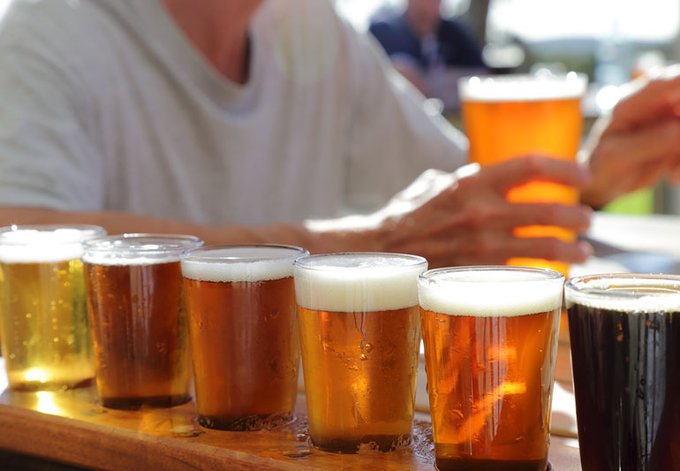
It’s a warm summer day and you’re hanging out with friends and family for the first time in over a year, celebrating being vaccinated and just being together. And to help beat the heat, you reach in the cooler for an ice-cold beer.
While that might be refreshing at the moment, though, there’s good reason to grab some water, too. The heat of summer can be brutal, sometimes, and its effects are amplified when you’ve had a little too much alcohol.
To better understand the risks you face when drinking alcohol during this hot vaccine summer, we spoke with registered dietitian Julia Zumpano, RD.
The biggest danger: dehydration
Whenever you’re outside in the heat for prolonged periods – like at the beach or picnic – you’re at risk of dehydration. Consuming alcohol only heightens that risk.
Alcohol reduces the release of the hormone vasopressin, which keeps your body fluids balanced. At the same time, alcohol is also a diuretic which means more urinating and that can lead to dehydration even without the heat. Add in all that sweat from the hot sun and it’s a recipe for dehydration disaster.
One thing Zumprano points out, too, is that caffeine – whether via coffee, soda or as a mixer for liquor – heightens that dehydration risk even further.
Dehydration can also compound certain aspects of intoxication, she notes. “Altered thinking, altered abilities to drive and make reasonable decisions or even just to have conversations are all things that intoxication can cause.”
Liquor versus beer: Is one worse than the other in the heat?
Given that alcohol content is usually higher in spirits than in your average beer, it makes sense that drinking beer instead of mixed drinks might help you avoid dehydration. But the reality is a little more complex, according to Zumpano.
“If you’re consuming liquor at a volume equivalent to the volume of beer, like 12 ounces of margaritas compared to 12 ounces of an average beer, you will get drunk a lot quicker,” she says. “But if you’re drinking what’s considered an alcoholic drink equivalent, there’s not much of a difference because your alcohol intake is the same.”
According to the National Institute of Health, one alcoholic drink equivalent, also referred to as a “standard drink,” contains around 14 grams of pure alcohol. By those measurements, an average 12-ounce can of beer contains the same amount of alcohol as a 5-ounce glass of wine or a typical shot of distilled spirits like rum, vodka, gin or whiskey.
One thing to keep an eye on, though, is the alcoholic content of your beer. While major brands generally run between 4% and 5% alcohol per 12-ounce can or bottle, certain styles of craft beer are as much as 9% alcohol per the same volume. In other words, one can of your favorite local IPA delivers almost twice the amount of alcohol to your system.
Beware a false sense of hydration
Another mistake you should avoid, Zumpano says, is thinking that drinking all that liquid rehydrates you. “If you’re drinking a lot of beer or alcoholic seltzer, it can feel like you’re drinking a lot of liquid and staying hydrated, but the alcohol offsets that because it’s the dehydrating factor,” she points out.
Not that drinking mixed drinks is any better, according to Zumpano. “If you’re drinking a sugary, sweet mixed drink, you run into the same thing. It feels like you’re staying hydrated because they go down so much smoother than drinking spirits on the rocks. But it’s the same effect as with beer: The alcohol is still dehydrating you unless you’re also drinking enough water.”
Sugar, the hidden villain
All of these drinks have other adverse health effects, too. They can pack a bunch of calories into a single serving – as many as 400 to 500 calories in some mixed drinks and craft beers – and they can come loaded with carbs.
There’s more, though. “If you’re drinking high sugar, high caloric intake beverages and you’re drinking a lot of them, they can be very filling,” Zumpano says. If you’re feeling full, you might not eat any food which can otherwise help absorb some of the alcohol.
How to counter dehydration: water, water, water
So what can you do to avoid dehydration troubles when you’re sipping your favorite boozy beverage by the pool? “To counteract the dehydration risk of alcohol,” Zumpano says, “drink 8 to 12 ounces of water for every alcoholic drink. It slows your intake, keeps you hydrated and can mitigate negative hangover effects.”
She suggests keeping a reusable water bottle with you that you can refill as the day goes on, taking time to drink the necessary water between beers or margaritas. Another option is to buy a pack of 8-ounce bottles of water and alternate with your booze. And you can always infuse your water with fruit to keep it flavorful.
“It’s also important to know what your trigger for over-consumption is,” she adds. “If you’re triggered by over-consuming beer or alcoholic seltzer, you want to be mindful of that. Try to switch a drink you have better control of and keep the water bottle handy.”
The potential dangers of kids using social media and — if you’re allowing them to use it — how to talk to them about how to stay safe, not overdo it and not take a lot of what they see on there too seriously:
Spending time on social media has become almost a way of life for most adults — scrolling through videos of cuddly cats and wacky dances for hours a day.
But is it healthy for your children to have the same habits? And how do you know if they’re being safe on social media?
Child psychologist Kate Eshleman, PsyD, discusses the potential dangers of kids using social media and — if you’re allowing them to use it — how to talk to them about how to stay safe, not overdo it and not take a lot of what they see on there too seriously.
How social media affects children
Most social media apps require users to be at least 13 years old. But in a recent poll, parents shared that 50% of children 10 to 12 years old and 33% of children 7 to 9 years old use social media apps.
If your child is currently on social media or if they’ve been asking to join, it’s important to talk to them about what social media is, what rules you have for it and how it doesn’t always show an accurate picture of someone’s life.
“Social media makes it easy to compare oneself to another,” says Dr. Eshleman. “Most people put on social media what they want you to see. And by using social media, all of us have the ability to access endless information anytime we want to and that can be very hard for kids.”
Impact on children
While experts are just beginning to understand social media’s impact on children, one study shows that children younger than 11 years old who use Instagram and Snapchat are more likely to have problematic digital behaviors like having online-only friends and visiting sites parents would disapprove of, as well as a greater chance of taking part in online harassment.
That same study says limiting how much time a child spends on social media may reduce some of the negative effects of using social media at such an early age.
Another study talks about how children who use TikTok are developing tics and having tic-like attacks. They’re experiencing a movement disorder brought on by stress and anxiety — presumably made worse by the pandemic and teens’ increased social media consumption.
In addition to problematic digital behaviors, there may be changes in children’s daily behavior at home like:
“If kids are being asked to get off social media and do their homework, then parents might see increased periods of irritability or frustration directed towards parents,” says Dr. Eshleman. “They’re being asked to do something they don’t want to do and stop doing something they enjoy.”
Dangers of social media
As a parent, it can be hard knowing what your child is doing online. There are dangers to be aware of, though, including:
“Kids don’t have the cognitive and executive functioning to think through harmful situations and why those might be a bad idea,” says Dr. Eshleman. “So sometimes they’re placing themselves in physical risk.”
What’s the solution?
Social media can have a positive effect on your child like helping them learn how to communicate with others, navigate relationships and how to manage somebody who isn’t being kind to them. So, no social media at all might not be the best (or realistic) solution for your kids.
But if you decide to let your children use social media, make sure to talk to them about expectations — both yours and theirs. Here are a few tips on how to navigate the social media world together:
Determine if your child is ready. Even if your child is old enough to join a social media platform, they might not be ready for it. As the parent, you have a good sense of their maturity level and how they interact with others like coaches and friends. If you’re unsure, Dr. Eshleman suggests doing a test period on social media. “Parents should identify their expectations and communicate those to their children,” she says. “Also, identify consequences of not following them.”
Talk to your kids. From the beginning, it’s important to have an open and honest conversation with your children on what social media is and what it can be used for. Ask why they’re interested in having an account on a particular platform and what they want to use it for. But as they start venturing into the world of social media, keep talking. “If you hear about a popular TikTok trend or that a newsworthy story is trending, talk to your children about what they think and what they’ve seen,” says Dr. Eshleman.
Limit screen time. The American Academy of Pediatrics recommends limiting screen time to two hours a day for children. Eshleman says that’s a good guideline but wants parents to also focus on the big picture — making sure your kid is still getting enough physical activity and face-to-face interactions. “It’s not always just the screen time that’s the problem,” she says. “It’s what the screen time is in place of.” You can always use a screen time app that automatically sets limits, too, to prevent arguing!
Monitor their usage. Dr. Eshleman suggests checking on what your child is consuming, whether that’s scrolling through their tablet or phone or using a social media monitoring tool. “See what apps are there and familiarize yourself with those,” she says. “Ask yourself if this tool is going to fit your goal.”
Model good behavior. Easier said than done, right? But Dr. Eshleman says practicing safe and healthy social media behaviors in front of your child can go a long way. “It’s much harder for kids to understand the potential dangers or risks of social media when parents engage in the same behaviors themselves,” she says.
The biggest takeaway? Go easy on yourself as a parent when it comes to social media and your kids. Don’t be afraid to talk to other parents about what they do or ask for help if you are struggling with how to navigate social media and keep your kids safe.
“For many parents, this is uncharted territory,” Dr. Eshleman says. “It takes time and energy, and it can be difficult for parents who are working, raising children and managing household tasks. It’s OK to ask for help.”
Moderate-to-vigorous exercise appears to boost cardiorespiratory fitness, which quantifies how well the heart & lungs supply oxygen to the muscles. Higher CRF during midlife is linked to a lower risk of heart disease later: https://bit.ly/3rEwvXe#HarvardHealth
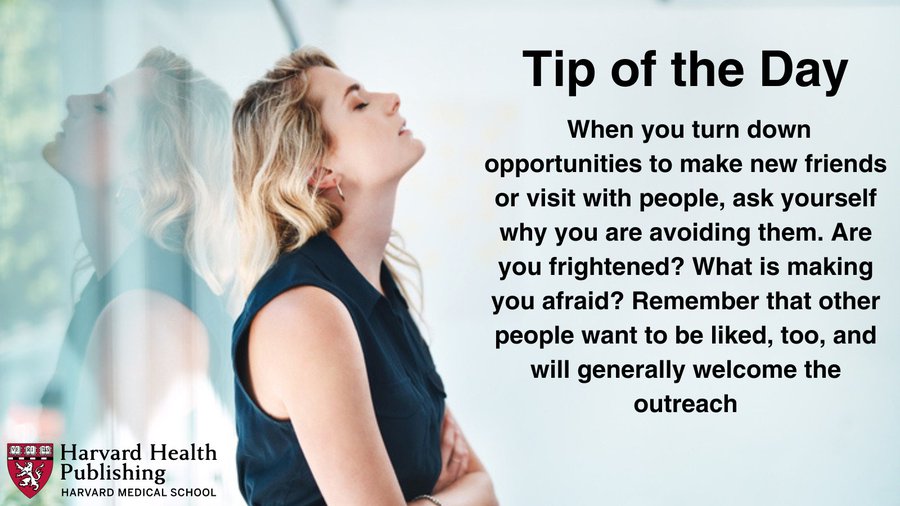
Overcome social apprehensions: When you turn down opportunities to make new friends or visit people, ask yourself why you are avoiding them. Remember that other people want to be liked, too, and will generally welcome the outreach. — #HarvardHealthTipoftheDay#HarvardHealth
Even when we have the best of intentions, we can tend to overindulge in … well, everything. Whether it’s a second helping of dinner, snacking on sweets or a venti-sized coffee, we often go a little too far. And that’s especially true — and risky — when it comes to alcohol.
Overdoing it with booze occasionally, like at a wedding or birthday party, might be fine (though your headache the next morning might make you think otherwise). But when does drinking frequently cross the line into being problematic? And what are the health risks of alcohol overconsumption? To gain some insight into these concerns, we spoke with hepatologist Jamile Wakim-Fleming, MD.
What are alcohol consumption guidelines?
It’s first best if we understand some of the dietary guidelines around alcohol. The U.S. Department of Agriculture and U.S. Department of Health and Human Services’ “Dietary Guidelines for Americans, 2020-2025” recommends adults of the legal drinking age should either not drink or limit their drinking to two drinks a day or fewer for men and one drink a day or fewer for women.
The guidelines say those who shouldn’t consume any alcohol under any circumstances include:
Anyone under the legal drinking age.
Anyone with liver disease.
Anyone who’s pregnant or might be pregnant.
Anyone with a medical condition or taking medication that has poor interactions with alcohol.
Anyone recovering from “an alcohol use disorder” or has trouble controlling their alcohol consumption.
As for how much alcohol is considered standard, the guidelines define a standard drink as:
12 ounces of 5% alcohol by volume (ABV) like beer.
8 ounces of 7% ABV like malt liquor.
5 ounces of 12% ABV like wine.
1.5 ounces of 40% ABV (or 80 proof) distilled spirits like gin, rum and whiskey.
There are nuances to consider with these guidelines, though. While major American brands of beer have a 5% ABV measurement, many popular craft beers have higher alcohol content. That IPA you love might have an ABV of 7% or higher, so keep an eye on it when you’re knocking them back at your next summer barbecue.
But, as Dr. Wakim-Fleming explains, we also have to be cautious when applying these guidelines to our own habits for several reasons that go beyond the alcohol content of your beverage.
Factors in alcohol consumption
According to Dr. Wakim-Flemings, there are a few factors to consider when it comes to alcohol affecting you because each person is different. She outlines the following as the main ones when weighing alcohol consumption.
Age. “A 50-year-old person will handle alcohol differently than someone who’s 70 years.”
Gender. “Women don’t tolerate the same amount of alcohol as men because they have less of a certain enzyme — alcohol dehydrogenase — that metabolizes the alcohol before it’s absorbed into the blood.”
Body size. If two people of different sizes intake the same amount of alcohol, the person with the smaller body carries less water and has a higher concentration of alcohol in their body, affecting the dilution.
Family history. Those who are raised in a household with parents who drink are more likely to have an adverse relationship with alcohol.
Comorbidities.Relatively healthy people will have an easier time processing alcohol than those with existing health issues.
Those factors are largely outside of our control. But other things we can control should also be considered, Dr. Wakim-Fleming advises. For instance, she says, “Drinking on an empty stomach is more toxic than if you’ve had something to eat. There’s no food to help absorb the alcohol so more goes into your blood system.”
And, again, there’s that percentage of alcohol to consider. “Remember that the percentages of alcohol vary among the types of alcohol,” she says. “Drinking 12 ounces of wine contains far more alcohol than 12 ounces of most common beers.”
How many drinks are too many?
Taking into account all of these factors, Dr. Wakim-Fleming says there are still ways to figure out where a person crosses the line into overindulging in alcohol, and separating what’s considered “binge” drinking, “heavy” drinking and “excessive” drinking.
What’s considered binge drinking?
Studies have shown that even if you only occasionally drink alcohol, drinking regularly over a long period can have negative outcomes on your health. “It’s a cumulating effect caused by drinking over time,” says Dr. Wakim-Fleming.
But a more present danger is binge drinking. According to the U.S. Centers for Disease and Prevention (CDC), binge drinking is classified for men as consuming five or more standard drinks within a few hours and four or more standard drinks within a few hours for women.
That kind of alcohol consumption can lead to severe reactions in your body, including:
Dehydration and headaches (a hangover, in other words).
Loss of motor skills that can lead to serious injuries.
The loss of judgment that comes from binge drinking can cause you to make poor choices, too, including driving under the influence, physical altercations and even further physical injury.
What’s considered excessive drinking?
Dr. Wakim-Fleming says excessive drinking is essentially the same as binge drinking. The CDC also includes underage drinking and drinking by women who are pregnant.
Most excessive drinking — more than 90%, according to the CDC — is binge drinking. Additional statistics on binge drinking from the CDC include:
More than 38 million adults in the U.S. are binge drinkers.
The average binge drinker does so around four times a month.
The average binge drinker consumes eight drinks per binge.
Most people who binge drink do not have an alcohol dependency.
Excessive drinking is something that’s thought of more in the short term, but can still be extremely damaging to your body, especially as it becomes a habit and potentially leads to more long-term, heavy drinking.
What’s considered heavy drinking?
While considered part of excessive drinking by the CDC, heavy drinking is applied to drinking over a longer period than binge drinking; while binge drinking is measured in an increment of two-to-three hours, heavy drinking is measured over a week.
“For women, heavy drinking is eight standard drinks a week or more,” says Dr. Wakim-Fleming, “While for men, it’s 15 drinks a week or more.” And, yes, multiple binges within a week do equal heavy drinking.
And no matter which category you fall into, there are consequences. “You subject your body to more health risks, to more toxicity and you begin a cycle of withdrawal problems,” she adds.
How does too much alcohol affect your body?
So, more about those consequences. “Alcohol affects the body in two ways,” says Dr. Wakim-Fleming. “The initial stage occurs right after drinking. Drinking causes inflammation of your swallowing tube [esophagus], stomach and gastrointestinal tract. Additionally, your liver is also inflamed which causes it to become enlarged and tender.”
If you stop drinking at this stage, she says, that inflammation is reversible. But if you continue to drink excessively over time or become a heavy drinker, that leads to serious complications.
Cancer
“If your drinking and inflammation continues daily, it leads to scarring and becomes irreversible, as in cirrhosis, which can lead to cancer,” notes Dr. Wakim-Fleming.
“The important thing to remember is that these organizations consider alcohol a modifiable risk factor for cancer, which means you can do something about it,” adds Dr. Wakim-Fleming. “That means following their guidelines and avoiding drinking.”
How alcohol affects your brain
You may not realize it, but the most common consequence of overconsumption of alcohol — the hangover — is the alcohol directly affecting your brain. In the immediate aftermath, your hangover can include poor concentration, lagging reflexes, headache, nausea and vomiting.
Over time, though, excessive amounts of alcohol do far more damage to your brain, resulting in consequences beyond just an unpleasant morning after. “You can end up with alcohol dementia and a type of nerve damage we call neuropathy,” cautions Dr. Wakim-Fleming.
Chronic alcoholism has also been linked to poor diets, which deprive your body of necessary vitamins and nutrients, which can compound issues with many parts of your body, including your brain and central nervous system.
How alcohol affects your heart
Alcohol can adversely affect muscles, and your heart is a muscle. Heavy drinking can lead to a poor diet, which means your muscles are using empty calories from alcohol rather than healthy foods.
The result can be a dilated heart muscle and, eventually, dilated cardiomyopathy. Your heart weakens and can’t pump blood as strongly, which can cause your kidneys to retain more fluid. That can lead to fluid build-up in your extremities and lungs, and even to congested heart failure.
How alcohol affects your liver
Excessive and heavy drinking can lead to cirrhosis and liver cancer. But, says Dr. Wakim-Fleming, the risks go beyond that.
Cirrhosis of the liver, which causes scar tissue that prevents your liver from functioning properly, is often caused by alcoholism. “Because that scarring affects the ability of the liver to function, it can lead to life-threatening conditions. And that’s why alcohol is one of the most common reasons for a liver transplant.”
Will one night of drinking impact your overall health?
Excessive drinking in one night can lead to acute damage and cause alcohol poisoning, which has severe consequences including, at its most extreme, death.
But if you drink only occasionally and in moderation — say, a glass of wine with dinner or a beer at a ballgame — it’s not going to create long-term damage. It’s all about moderation and avoiding chronic use, says Dr. Wakim-Fleming.
And while following recommended guidelines is important, it’s also about knowing yourself and your limits. “We don’t have personalized medicine when it comes to alcohol because everyone responds differently,” she says.
Even if you’re not overdoing it, consider taking a break or several breaks throughout the year. “Any break is good because your body needs time to reduce that inflammation. Taking a month or two off from consuming alcohol can help,” she suggests.
“Know your body, know your personal and family history and know your limits,” she continues. “Know what’s good for you because what works for others won’t necessarily work for you. Take charge of your health and if you need, seek help, whether from family, friends or other support groups and always discuss with your doctor.”
health.clevelandclinic.org
How Much Alcohol Is Too Much?
Learn how much alcohol is overdoing it in one sitting or over time.
Overcome social apprehensions: When you turn down opportunities to make new friends or visit people, ask yourself why you are avoiding them. Remember that other people want to be liked, too, and will generally welcome the outreach. — #HarvardHealthTipoftheDay#HarvardHealth










 Healthaware