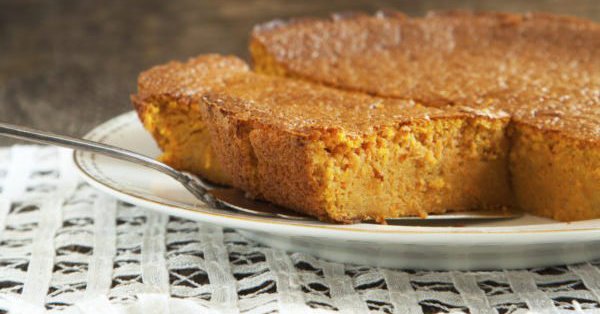
Try our lighter carrot cake, which the entire family will love. It has just the right texture, like a slightly sweetened, light corn bread. It’s great on its own or with a dollop of frozen whipped topping or nonfat ice cream.
Ingredients
No-stick baking spray with flour
1 cup unbleached all-purpose flour
½ cup whole wheat flour
½ cup granulated sugar substitute
¼ cup packed light brown sugar
¼ cup nonfat dry milk
1 ¼ teaspoons baking soda
1 ½ teaspoons baking powder
1 teaspoon ground cinnamon
¼ teaspoon ground cloves
½ teaspoon ground nutmeg
½ teaspoon ground allspice
¼ cup canola oil
1 large egg
¾ cup egg substitute
1 ½ cups finely grated carrots
2 tablespoons finely chopped walnuts
2 tablespoons golden raisins
One 6-ounce can unsweetened crushed pineapple, drained
2 tablespoons confectioners’ sugar, optional
Directions
Preheat the oven to 350ºF. Coat a 10-inch pan with baking spray.
Sift the white and whole wheat flours into a large bowl. Add the sugar substitute, brown sugar, dry milk, baking soda, baking powder and spices. Stir to mix well. Using the medium setting of an electric mixer, beat in the oil, egg and egg substitute until the batter is smooth. Fold in the carrots, walnuts, raisins and pineapple.
Spread the batter into the prepared pan and bake for 30 minutes, until a toothpick inserted in the center of the cake comes out clean. Cool in the pan. Remove the outer ring of the pan and sift confectioners’ sugar over the top, if desired. Serve at room temperature.
Dietitian’s Note: Never has carrot cake tasted so good, and been so guiltless! When compared to traditional carrot cake with icing, you save 180 calories, 12 grams of fat, and 4 grams of saturated fat.
Blackrock Health Womens Health Centre is officially open at 2-5 Warrington Place, Dublin 2!
From gynaecology to menopause, cardiology to pelvic health – we offer a wide range of services for every stage of your health journey.
Don’t delay your well-being and book your appointment today.
You can access our clinic directly through our website, or with a referral from your GP. Learn more about our patient-centred approach and book an appointment here: https://ow.ly/jGy850XsMvR
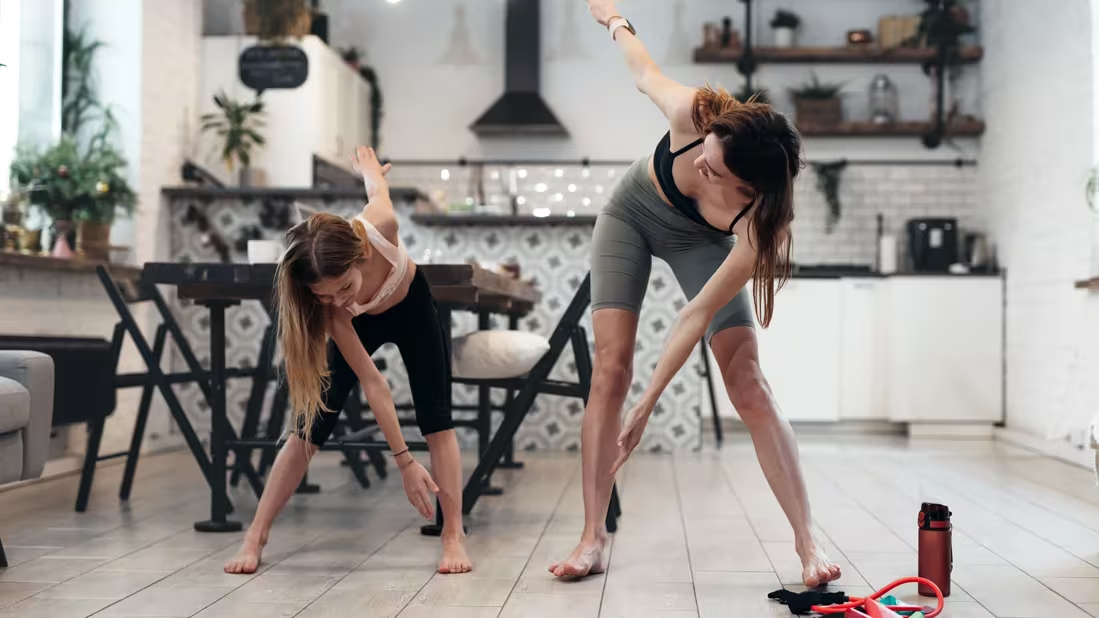
Want to tone your midsection? You can start by standing up to do ab exercises.
Surprised? That’s understandable. After all, most of us think of a few classic on-the-floor exercises when it comes to strengthening our abdominals. Crunches and sit-ups, for instance. Planks, too.
But it turns out, you can get a deeper and more thorough core workout while on your feet, says exercise physiologist Katie Lawton, MEd. Here’s how.
Standing ab exercises
The pursuit of “six-pack abs” explains the devotion to crunches and similar floor exercises. “You completely isolate the rectus abdominis muscles when you lie down and do that motion,” says Lawton. “It’s very targeted.”
That’s great for creating washboard abs. But it doesn’t do much to enhance other muscles in your middle that play an important role in day-to-day movements.
Standing ab exercises, on the other hand, engage a network of muscles within your core that you use all the time, whether it’s picking laundry up off the floor or putting cans on the top shelf in the pantry.
“Think of your core as a chain of muscles that needs to work together to get the job done,” illustrates Lawton. “When you do an ab workout from a standing position, you’re working more of the muscles in that system.”
Strengthening your core can help you:
Improve your balance
Maintain good posture
Protect your back from aches and pains
Better handle day-to-day movements that require bending, lifting and twisting
Incorporate these exercises in a standing abs workout to see those benefits.
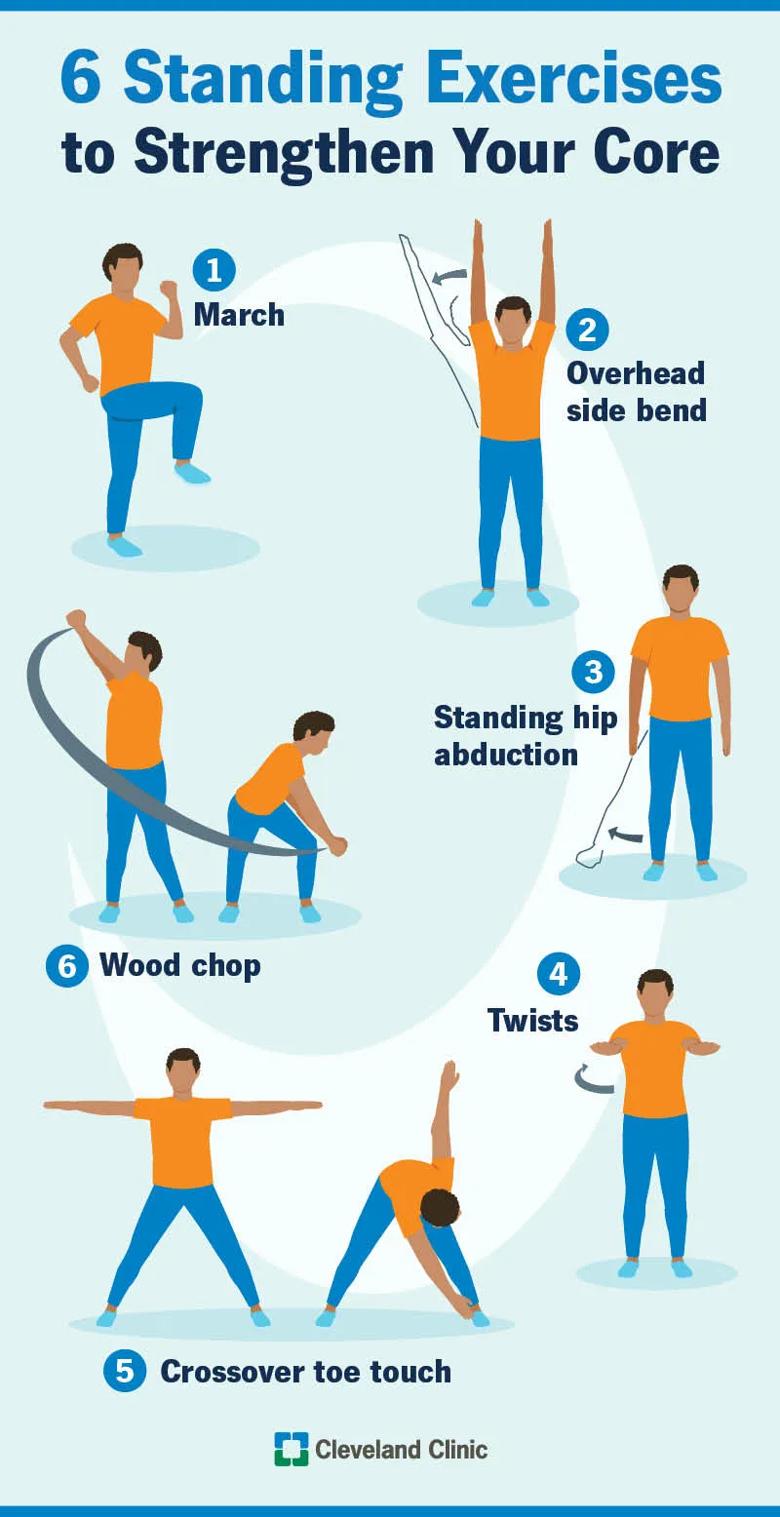
1. March
Muscles targeted: Rectus abdominis, transverse abdominis, erector spinae and hip flexors
Start in a standing position with your feet about hip-width apart.
In an exaggerated marching motion, bring your right knee straight up and move it toward your chest until your thigh is parallel to the floor.
Return to a standing position and repeat the motion with your left leg for one set.
Continue for 10 to 15 sets.
Pro tip: Want to make the march more challenging? Then add a “twist” to your motion by moving your right knee toward your left side when you raise it. (Your left knee would go toward your right side.)
2. Overhead side bend
Muscles targeted: External and internal obliques, quadratus lumborum, deltoids and erector spinae
Stand tall with your feet hip-width apart.
Extend your arms up, palms facing each other (as if you’re signaling a touchdown).
Tilt to the right while keeping your torso and arms straight. You’ll feel a stretch on the left side of your body as your waist bends to the right.
Return to the center position and repeat the motion to the left for one set.
Continue for 10 to 15 sets.
Pro tip: “As you bend to each side, focus on engaging your core muscles to work them properly,” advises Lawton. “You’re just going to the side, too. Your torso shouldn’t lean forward at all.”
Begin in an upright position with your feet about hip-width apart.
Kick your right leg out to the side, keeping it straight. Your toes should point forward during the motion as your leg scissors out and back. “Keep the movement smooth and consistent both ways,” instructs Lawton.
Repeat 10 to 15 times and then do the same with your left leg.
Pro tip: Use a chair to steady yourself if balance is an issue. “You always want to make sure these exercises are done in the safest way possible,” emphasizes Lawton.
4. Twists
Muscles targeted: Internal and external obliques, rectus abdominis, transverse abdominis and erector spinae
Stand and plant your feet about shoulder-width apart.
Extend your arms straight out in front of you, parallel to the floor.
Rotate your upper body to the right from your midsection while trying to keep your hips facing forward.
Return to the center. Then, rotate to the left to complete one set.
Repeat 10 times.
Pro tip: Twists should be done in a slow and controlled manner. “You don’t want to be whipping back and forth,” cautions Lawton.
5. Crossover toe touch
Muscles targeted: Internal and external obliques, rectus abdominis, transverse abdominis, erector spinae, hamstrings and glutes
Begin in a standing position with your feet slightly wider than shoulder-width apart.
Extend your arms out to your side, as if forming the letter T.
Rotate your torso to the right while reaching your left hand down to tap your right foot. Most of the movement should be in your core, not your legs.
Return to the T position and repeat the motion in the opposite direction (with your right hand touching your left foot) to complete a full set.
Repeat 10 to 15 times.
Pro tip: Skip this exercise if you sometimes get lightheaded when raising your head and up and down.
6. Wood chop
Muscles targeted: Internal and external obliques, rectus abdominis, transverse abdominis, erector spinae, deltoids and latissimus dorsi
Stand with your feet positioned shoulder-width apart.
Clasp your hands together (as if holding an ax) and bring them up over your head to the right. Your torso will rotate slightly to the right as you twist.
Bring your hands down and to the left in a “chopping” motion that swings across your chest toward your left leg. Rotate your torso to the left as you take the swing. Bend your knees slightly and pivot your feet, too.
Return to the raised position. Take 10 chops.
Repeat with your hands, starting to the left and swinging to the right.
Pro tip: Tailor these exercises to your range of motion. “Move the best you can within the parameters you have,” advises Lawton. “When you start to feel that tension in your muscles, stop there. If it hurts, you’ve gone too far.”
Final thoughts
The simplicity of standing ab exercises just … well, stands out. That’s because the exercises build on natural movements that we do all the time. “That’s a big reason why they’re so effective,” says Lawton.
It’s important to safely progress these exercises as they become easier. Resistance bands, cable machines, medicine balls or free weights are all tools that can help you increase the intensity of the movements.
Dedicating a few minutes a day to these exercises can help you build core strength that supports everything you do, from walking the dog to lifting groceries.
“Standing ab exercises really don’t take a lot of time,” emphasizes Lawton.
Plus, you won’t need to find your floor mat to do them.
Can eating the rainbow help to reduce inflammation?
11/6/2025 by Tamara Soerense
n
Inflammation is a natural process initiated by the immune system in response to illness, trauma, toxins, physical stress and chronic disease. While acute inflammation is protective and allows our bodies to heal, it can become harmful if it persists, leading to chronic inflammation. Chronic inflammation, in turn, can lead to conditions such as arthritis, heart disease, and diabetes.
Several foods can contribute to inflammation. These include highly processed foods, refined carbohydrates, or foods high in added sugars. Conversely, other foods can help calm the immune system, decreasing inflammation.
Let’s explore which foods help lower inflammation and how they can be incorporated into an anti-inflammatory diet.
Fruits and Vegetables: Colorful fruits and vegetables naturally contain various phytonutrients and bioactive compounds that help keep inflammation in check. These foods form the foundation of the anti-inflammatory diet and can be enjoyed in abundance. For an extra boost of protection, try drizzling antioxidant-rich olive oil on your veggies..
Protein: Choose primarily from plant-based sources such as legumes, soy, nuts, and seeds, with smaller amounts from lean cuts of animal protein and fatty fish. The fats in these proteins, mainly monounsaturated and omega-3, play a significant role in combating inflammation. The American Heart Association recommends 6 to 8 ounces of fatty fish and 5 ounces of legumes, nuts, and seeds per week.
Whole grains: Whole grains contain all parts of the grain, whereas refined grains remove the germ and bran, eliminating important inflammation-reducing compounds. Of these, fiber is a bit of a superstar, shown to help reduce blood sugar and cholesterol levels. Aim for at least 50% of your grains from whole grain sources, such as rolled oats and brown rice.
Herbs and Spices: Herbs and spices add flavor to your food and help reduce oxidative stress, which can trigger inflammation. Add ginger, turmeric, clove, cinnamon, oregano, and garlic to your next meal.
What change can you make today to shift your body into a less inflamed state?
Consider adding one colorful fruit or vegetable to your diet each day. Suggestions include tomatoes, oranges, yellow bell peppers, arugula, blueberries, pumpkin and broccoli.
Tamara Soerensen completed her bachelor’s degree in biology at the University of California, Santa Barbara and her master’s in nutrition at Bastyr University. She is currently a dietetic intern at Mayo Clinic in Rochester, Minnesota. Special interests include digestive health and the utilization of diet for disease prevention.
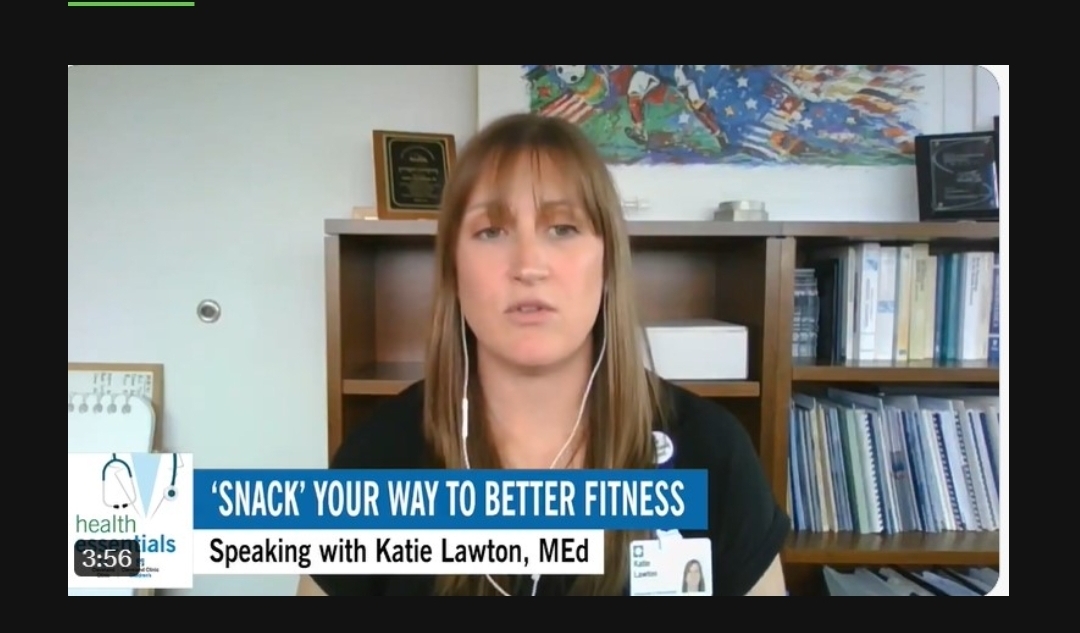
It seems that "exercise snacks" can be a good way to improve your health. Research shows that short bursts of activity done during the normal course of your day can help you build fitness – with no sweating required. Listen in as exercise physiologist Katie Lawton explains. pic.twitter.com/4dpEiWbCTM
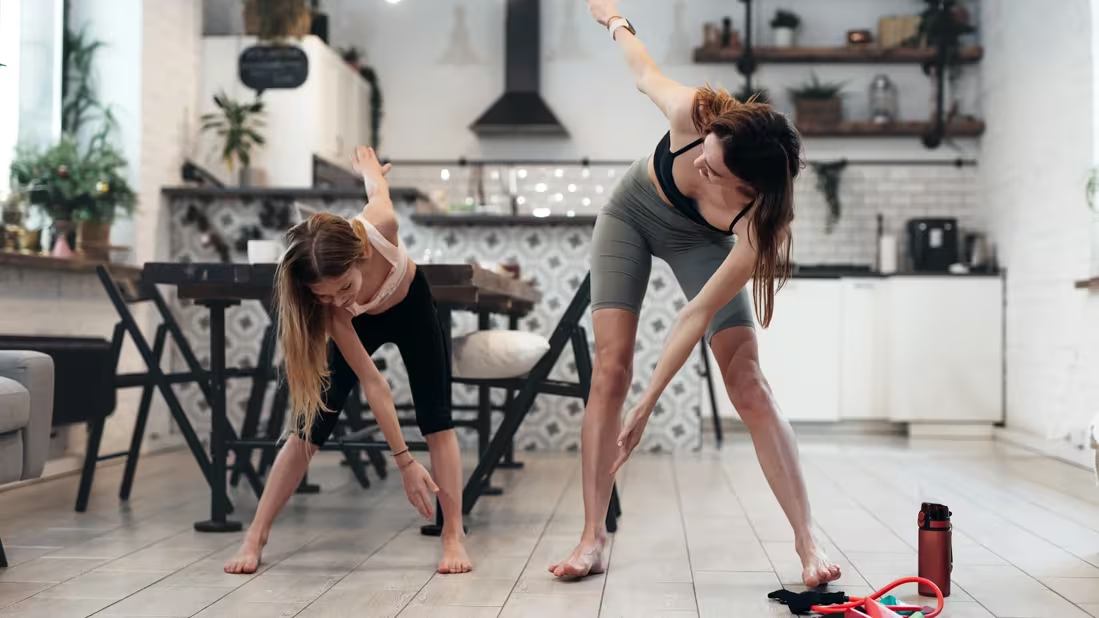
Want to tone your midsection? You can start by standing up to do ab exercises.
Surprised? That’s understandable. After all, most of us think of a few classic on-the-floor exercises when it comes to strengthening our abdominals. Crunches and sit-ups, for instance. Planks, too.
But it turns out, you can get a deeper and more thorough core workout while on your feet, says exercise physiologist Katie Lawton, MEd. Here’s how.
Standing ab exercises
The pursuit of “six-pack abs” explains the devotion to crunches and similar floor exercises. “You completely isolate the rectus abdominis muscles when you lie down and do that motion,” says Lawton. “It’s very targeted.”
That’s great for creating washboard abs. But it doesn’t do much to enhance other muscles in your middle that play an important role in day-to-day movements.
Standing ab exercises, on the other hand, engage a network of muscles within your core that you use all the time, whether it’s picking laundry up off the floor or putting cans on the top shelf in the pantry.
“Think of your core as a chain of muscles that needs to work together to get the job done,” illustrates Lawton. “When you do an ab workout from a standing position, you’re working more of the muscles in that system.”
Strengthening your core can help you:
Improve your balance
Maintain good posture
Protect your back from aches and pains
Better handle day-to-day movements that require bending, lifting and twisting
Incorporate these exercises in a standing abs workout to see those benefits.
1. March
Muscles targeted: Rectus abdominis, transverse abdominis, erector spinae and hip flexors
Start in a standing position with your feet about hip-width apart.
In an exaggerated marching motion, bring your right knee straight up and move it toward your chest until your thigh is parallel to the floor.
Return to a standing position and repeat the motion with your left leg for one set.
Continue for 10 to 15 sets.
Pro tip: Want to make the march more challenging? Then add a “twist” to your motion by moving your right knee toward your left side when you raise it. (Your left knee would go toward your right side.)
2. Overhead side bend
Muscles targeted: External and internal obliques, quadratus lumborum, deltoids and erector spinae
Stand tall with your feet hip-width apart.
Extend your arms up, palms facing each other (as if you’re signaling a touchdown).
Tilt to the right while keeping your torso and arms straight. You’ll feel a stretch on the left side of your body as your waist bends to the right.
Return to the center position and repeat the motion to the left for one set.
Continue for 10 to 15 sets.
Pro tip: “As you bend to each side, focus on engaging your core muscles to work them properly,” advises Lawton. “You’re just going to the side, too. Your torso shouldn’t lean forward at all.”
Begin in an upright position with your feet about hip-width apart.
Kick your right leg out to the side, keeping it straight. Your toes should point forward during the motion as your leg scissors out and back. “Keep the movement smooth and consistent both ways,” instructs Lawton.
Repeat 10 to 15 times and then do the same with your left leg.
Pro tip: Use a chair to steady yourself if balance is an issue. “You always want to make sure these exercises are done in the safest way possible,” emphasizes Lawton.
4. Twists
Muscles targeted: Internal and external obliques, rectus abdominis, transverse abdominis and erector spinae
Stand and plant your feet about shoulder-width apart.
Extend your arms straight out in front of you, parallel to the floor.
Rotate your upper body to the right from your midsection while trying to keep your hips facing forward.
Return to the center. Then, rotate to the left to complete one set.
Repeat 10 times.
Pro tip: Twists should be done in a slow and controlled manner. “You don’t want to be whipping back and forth,” cautions Lawton.
5. Crossover toe touch
Muscles targeted: Internal and external obliques, rectus abdominis, transverse abdominis, erector spinae, hamstrings and glutes
Begin in a standing position with your feet slightly wider than shoulder-width apart.
Extend your arms out to your side, as if forming the letter T.
Rotate your torso to the right while reaching your left hand down to tap your right foot. Most of the movement should be in your core, not your legs.
Return to the T position and repeat the motion in the opposite direction (with your right hand touching your left foot) to complete a full set.
Repeat 10 to 15 times.
Pro tip: Skip this exercise if you sometimes get lightheaded when raising your head and up and down.
6. Wood chop
Muscles targeted: Internal and external obliques, rectus abdominis, transverse abdominis, erector spinae, deltoids and latissimus dorsi
Stand with your feet positioned shoulder-width apart.
Clasp your hands together (as if holding an ax) and bring them up over your head to the right. Your torso will rotate slightly to the right as you twist.
Bring your hands down and to the left in a “chopping” motion that swings across your chest toward your left leg. Rotate your torso to the left as you take the swing. Bend your knees slightly and pivot your feet, too.
Return to the raised position. Take 10 chops.
Repeat with your hands, starting to the left and swinging to the right.
Pro tip: Tailor these exercises to your range of motion. “Move the best you can within the parameters you have,” advises Lawton. “When you start to feel that tension in your muscles, stop there. If it hurts, you’ve gone too far.”
Final thoughts
The simplicity of standing ab exercises just … well, stands out. That’s because the exercises build on natural movements that we do all the time. “That’s a big reason why they’re so effective,” says Lawton.
It’s important to safely progress these exercises as they become easier. Resistance bands, cable machines, medicine balls or free weights are all tools that can help you increase the intensity of the movements.
Dedicating a few minutes a day to these exercises can help you build core strength that supports everything you do, from walking the dog to lifting groceries.
“Standing ab exercises really don’t take a lot of time,” emphasizes Lawton.
Plus, you won’t need to find your floor mat to do them.
Cabbage often—and unfairly—gets overlooked, with flashier veggies and protein-dense superfoods getting all the attention. But as far as nutritional food options go, the leafy green is pretty hard to beat. A staple in different cuisines (American coleslaw! Middle Eastern malfouf! Chinese suan la bai cai!), cabbage has been a longtime favorite amongst global chefs.
“Much of this stems from its versatility,” Woldy Reyes, chef and author of the cookbook In the Kusina: My Seasonal Filipino Cooking, tells Vogue. “We are seeing a growing trend of chefs utilizing it as a centerpiece, such as cabbage steaks, rather than as a side dish. The culinary appeal has never been stronger.”
“Its popularity stems from its ability to transform,” adds Tatiana Mora, chef of plant-based Michelin star restaurant Mita. “It can be eaten raw, fermented, steamed, roasted, or sautéed, consistently providing flavor, texture, and nutrition. I love it because it is a noble vegetable that grows easily, keeps well, and can be used almost entirely, making it perfect for a conscious and respectful approach to cooking.”
It’s accessible, easy to cook, and delicious. Here are all the reasons cabbage deserves a seat at your table (get it?) in 2026.
What is cabbage?
Cabbage is a leafy green that is part of the brassica plant family (which also includes broccoli, cauliflower, brussels sprouts, and kale), says Amy Shapiro, RD, registered dietitian and founder of Real Nutrition. It comes in several varieties, but the most common ones you’ll see are green, red (or purple), and savoy. What makes cabbage different from other leafy greens is its density and durability. “It’s heartier, stores longer, and holds up well to cooking, fermenting, and shredding,” Shapiro says. “Nutritionally, it shares many benefits with other cruciferous vegetables, but it’s often milder in flavor and more versatile across cuisines.”
The Benefits
Besides its versatility, one of the main benefits of cabbage is its many nutrients. Shapiro lists other main benefits of the leafy green:
Supports Gut Health
Shapiro says that, because cabbage contains fiber and other compounds that support digestion, eating this leafy green can benefit the gut bacteria and boost gut health.
Anti-Inflammatory Properties
Cabbage is also rich in antioxidants and phytonutrients that studies have shown can reduce inflammation, she says.
Boosts Heart Health
Along with fiber, cabbage has potassium, which supports healthy cholesterol levels and blood pressure. Cabbage also has vitamin K, which is essential for blood clotting (and bone health). Shapiro points to red cabbage in particular, which she says contains antioxidants called anthocyanins that studies have shown can improve brain and heart health.
Regulates Blood Sugar
Cabbage is low in calories and carbs while being high in fiber, which can help stabilize glucose levels in the body.
The invisible workload of parenting can leave you stuck in mental loops:
🍼 “Which nappy cream again?” 🥦 “Is this snack okay?” 📱 “Should I Google that rash one more time?”
Anna Mathur reminds us: decision fatigue is real, and you’re not alone. Tap the link in our bio to learn more about how you can tackle decision fatigue and how Anna’s new book The Good Decision Diary can help.
Cabbage often—and unfairly—gets overlooked, with flashier veggies and protein-dense superfoods getting all the attention. But as far as nutritional food options go, the leafy green is pretty hard to beat. A staple in different cuisines (American coleslaw! Middle Eastern malfouf! Chinese suan la bai cai!), cabbage has been a longtime favorite amongst global chefs.
“Much of this stems from its versatility,” Woldy Reyes, chef and author of the cookbook In the Kusina: My Seasonal Filipino Cooking, tells Vogue. “We are seeing a growing trend of chefs utilizing it as a centerpiece, such as cabbage steaks, rather than as a side dish. The culinary appeal has never been stronger.”
“Its popularity stems from its ability to transform,” adds Tatiana Mora, chef of plant-based Michelin star restaurant Mita. “It can be eaten raw, fermented, steamed, roasted, or sautéed, consistently providing flavor, texture, and nutrition. I love it because it is a noble vegetable that grows easily, keeps well, and can be used almost entirely, making it perfect for a conscious and respectful approach to cooking.”
It’s accessible, easy to cook, and delicious. Here are all the reasons cabbage deserves a seat at your table (get it?) in 2026.
What is cabbage?
Cabbage is a leafy green that is part of the brassica plant family (which also includes broccoli, cauliflower, brussels sprouts, and kale), says Amy Shapiro, RD, registered dietitian and founder of Real Nutrition. It comes in several varieties, but the most common ones you’ll see are green, red (or purple), and savoy. What makes cabbage different from other leafy greens is its density and durability. “It’s heartier, stores longer, and holds up well to cooking, fermenting, and shredding,” Shapiro says. “Nutritionally, it shares many benefits with other cruciferous vegetables, but it’s often milder in flavor and more versatile across cuisines.”
The Benefits
Besides its versatility, one of the main benefits of cabbage is its many nutrients. Shapiro lists other main benefits of the leafy green:
Supports Gut Health
Shapiro says that, because cabbage contains fiber and other compounds that support digestion, eating this leafy green can benefit the gut bacteria and boost gut health.
Anti-Inflammatory Properties
Cabbage is also rich in antioxidants and phytonutrients that studies have shown can reduce inflammation, she says.
Boosts Heart Health
Along with fiber, cabbage has potassium, which supports healthy cholesterol levels and blood pressure. Cabbage also has vitamin K, which is essential for blood clotting (and bone health). Shapiro points to red cabbage in particular, which she says contains antioxidants called anthocyanins that studies have shown can improve brain and heart health.
Regulates Blood Sugar
Cabbage is low in calories and carbs while being high in fiber, which can help stabilize glucose levels in the body.
If you’re stressed and sore, you may think there’s nothing you can do but take some over-the-counter pain relievers and plow through your day. But licensed massage therapist, Victoria Bodner, LMT, says you don’t have to grin and bear it.
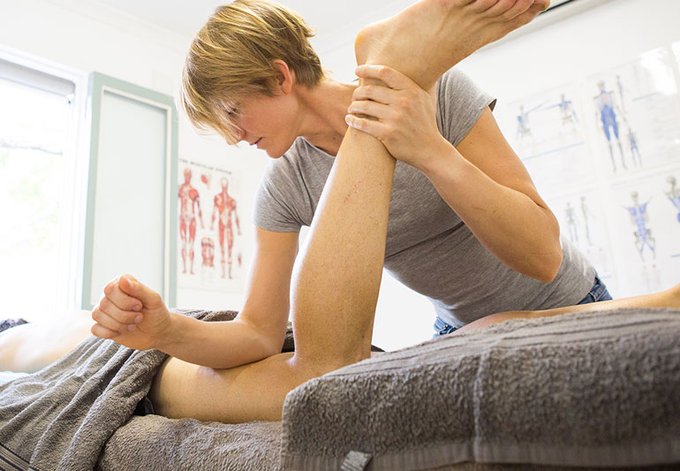
Massage is a great tool for relaxation, pain relief, easing muscle tension and more, says Bodner. Learn more about the common types of massage and their benefits.
What is massage therapy?
Performed by a licensed massage therapist, massage therapy involves using different pressures, movements and techniques to manipulate muscles and other soft tissues in the body. With a goal of slowing down your nervous system, massage therapy can be used to release stress and tension, provide relief from symptoms, heal injuries and support wellness.
Types of massage therapy
Massages come in all shapes and sizes. Here are some of the offerings you might find on a massage therapy menu.
Swedish massage
Feeling stressed? A Swedish massage is the classic go-to for major relaxation. Swedish massage is typically a full-body massage that uses a gentle touch. It’s a good pick for people new to massages. “It can help calm your nervous system. Swedish massage is also a good avenue for encouraging a relaxed emotional state of mind which can directly impact your muscles,” says Bodner.
Deep tissue massage
Your muscles can get tight from repeated use — even from something less active like sitting, driving or hunching over your laptop. “Deep tissue massage gets into your muscles and tendons to release that tightness,” Bodner says. It’s good for people with injuries, general muscle tightness and chronic muscle pain.
Sports massage
Sports massages are similar to deep-tissue massages, but they zero in on the muscles that take a beating when you play sports or do another repetitive physical activity. “Athletes and dancers use their bodies differently than the average person,” Bodner says. “A massage therapist with experience in sports massage can get in there to break up muscle tightness and address sports injuries.”
Trigger point massage
A knot in your neck or a tight spot in your back is known as a trigger point. “A trigger point is a tiny muscle spasm or tight spot in the tissue,” Bodner explains. In a trigger-point massage, the massage therapist uses focused and direct pressure to target those spots. This increases blood flow to the areas, helping them release. This type of massage can also be helpful for people with chronic pain.
Myofascial release
The fascia is a web of connective tissue under the skin. “It supports the muscles and allows us to move freely,” Bodner explains. When you get a myofascial release, your massage therapist will knead and stretch the muscles and fascia to work out tension and tightness. “It’s a form of deep stretching often used together with other therapeutic massage techniques,” she says. “It’s great for opening up tightness in your neck, shoulders and your upper and lower back.”
Lymphatic massage
Lymphatic fluid has several important functions, including maintaining fluid levels and removing waste products from the body. Lymphatic massage uses a gentle touch to help lymphatic fluid flow more freely through the body. “Lymphatic massage is great for people with inflammation — including people with illnesses like arthritis, as well as people who have had mastectomies, which often involve removing the lymph nodes,” Bodner says.
Prenatal massage
Prenatal massages are great for helping moms-to-be relax and can help address the aches and pains of growing a baby. “Prenatal massages are wonderful for taking pressure off the hips and can help with swelling in the feet and legs,” Bodner says. “And when mom is relaxed and feeling well, the baby benefits, too.”
Health benefits of massage
Massage therapy may be beneficial for anyone but has been noted to help those who various conditions like cancer, heart disease, stomach problems and fibromyalgia. You should make sure you talk to your therapist about any medical issues prior to your first session. Here are some of the benefits of massage therapy.
Reduces stress and anxiety
That feeling of calm after a massage can aid in reducing stress and anxiety, a study found. Your body has two nervous systems: a sympathetic nervous system that drives your “fight or flight” response in stressful situations and a parasympathetic nervous system that focuses on routine and day-to-day operations that lead to relaxation and rest. A massage is thought to increase your parasympathetic response, which can decrease feelings of anxiety.
Improves sleep
Getting a massage can decrease cortisol (a stress hormone) and increase levels of serotonin and dopamine, neurotransmitters known to stabilize your mood. Studies have shown that massage therapy is beneficial for those who have insomnia related to menopause and congestive heart failure.
Lessens pain and muscle tension
A variety of studies have looked into how massage may help lessen pain like acute back pain, neck pain, headaches and knee pain. The results show that relief may be short-term, rather than long-term and in some cases receiving a 60-minute massage multiple times per week had better results than fewer or shorter massages.
Improves immune function
Can a massage boost your immune system? A study suggests that regular massages increase your body’s level of white blood cells, which work to combat viruses.
Relieves constipation
A study shows that for those dealing with constipation after surgery, an abdominal massage may help with bowel movements.
Lessens fibromyalgia symptoms
From sleep, memory and mood, studies have shown that using massage over the course of five weeks may improve symptoms of fibromyalgia, a chronic illness that causes muscle and joint pain and fatigue.
Relieves cancer pain
For people undergoing cancer treatments, the physical and emotional toll is great. Many have turned to massage to help lessen cancer pain, increase relaxation and improve quality of life. There have been a variety of studies, some that say massage therapy doesn’t improve cancer pain and others that show a positive impact.
Who should try massage therapy?
Many of us can benefit from a massage — it’s a great way to improve wellness, help with pain and more. If you have a medical condition, you should check with your doctor and have a conversation with your massage therapist. For those who are pregnant, a prenatal massage can help alleviate pain and swelling.
“There are so many good reasons to see a massage therapist,” Bodner says.
Not sure what type of massage is right for you? You don’t have to zero in on the perfect massage before booking an appointment. In fact, massage therapists often mix and match techniques to address your unique concerns.
“The different types of massage aren’t exclusive from one another,” Bodner says. “A massage therapist uses a combination of techniques to help you relax, get rid of tight muscles and address other concerns.”