Learn how to do a glute bridge for leg and butt strength from exercise physiologist Katie Lawton, MEd. pic.twitter.com/AZbMSdsjFZ
— Cleveland Clinic (@ClevelandClinic) July 29, 2025


Harvard HealthVerified account @HarvardHealth
Another reason to include that cup of #coffee in your morning routine – coffee may help your skin stay healthy! #HarvardHealth http://bit.ly/2zn0MyF

Try our lighter carrot cake, which the entire family will love. It has just the right texture, like a slightly sweetened, light corn bread. It’s great on its own or with a dollop of frozen whipped topping or nonfat ice cream.
No-stick baking spray with flour
1 cup unbleached all-purpose flour
½ cup whole wheat flour
½ cup granulated sugar substitute
¼ cup packed light brown sugar
¼ cup nonfat dry milk
1 ¼ teaspoons baking soda
1 ½ teaspoons baking powder
1 teaspoon ground cinnamon
¼ teaspoon ground cloves
½ teaspoon ground nutmeg
½ teaspoon ground allspice
¼ cup canola oil
1 large egg
¾ cup egg substitute
1 ½ cups finely grated carrots
2 tablespoons finely chopped walnuts
2 tablespoons golden raisins
One 6-ounce can unsweetened crushed pineapple, drained
2 tablespoons confectioners’ sugar, optional
Makes 12 servings.
Serving: 1 slice
Calories: 120 (33% calories from fat)
Fat: 4.5g
Saturated Fat: 0g
Protein: 3g
Carbohydrates: 17g
Dietary Fiber: 1g
Cholesterol: 15mg
Sodium: 180mg
Potassium: 125mg
Dietitian’s Note: Never has carrot cake tasted so good, and been so guiltless! When compared to traditional carrot cake with icing, you save 180 calories, 12 grams of fat, and 4 grams of saturated fat.

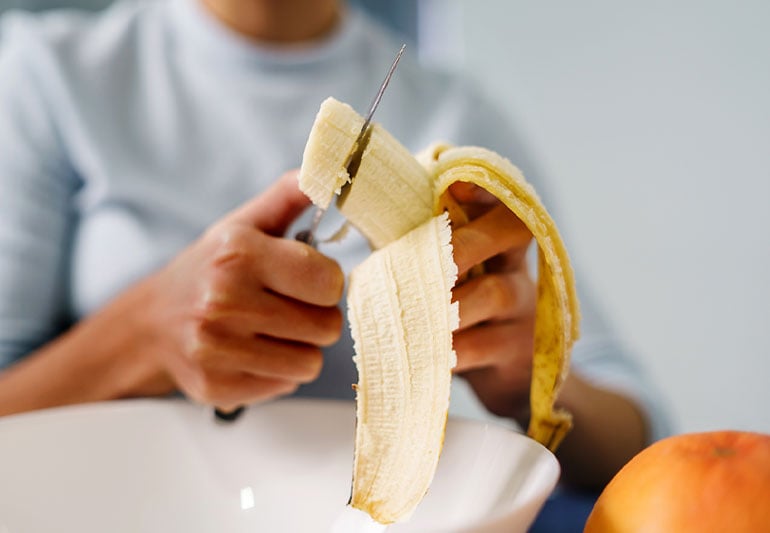
Some have called bananas “nature’s perfect snack,” and it’s easy to see why. The curvy yellow fruits come conveniently packaged, travel well in a lunch bag or purse and are incredibly versatile. They make a great smoothie mixer or a tasty topper on cereal or oatmeal and even have their very own category of (delicious!) muffins and bread.
“Absolutely,” says registered dietitian Elyse Homan, RD, LD. “They’re full of nutrients and easy on the gut. Very few people have problems digesting bananas.”
So, what are you eating when you peel and enjoy? A medium-sized ripe banana contains:
From vitamins to minerals to fiber, bananas are good for you, with lots of nutrition to offer. Plus, they’re easy to digest, reiterates Homan. Here’s a breakdown of banana’s most notable nutritional benefits:
With 3 grams (g) of fiber, a banana supplies nearly 10% of what you need in a day, based on a 2,000-calorie daily diet, according to the U.S. Department of Agriculture (USDA) dietary guidelines.
You hear “fiber” and probably automatically think of digestion. It’s true — fiber is great for your gut. It helps keep things moving in your intestines, and most of us probably need to eat more.
But fiber also impacts your health in other ways. Researchers who looked at data from nearly 200 studies found that people who ate 25 to 29 g of fiber a day had up to a 30% decreased risk of:
Vitamin C (ascorbic acid) is a nutrient that helps your body absorb iron and boosts your immune system’s ability to fight illness. Adults need 75 to 90 milligrams (mg) per day. A banana delivers about 10 mg of vitamin C.
Vitamin C is one of many antioxidants you can get from food. Antioxidants are important because they cancel out free radicals in your body. Free radicals can build up and damage your cells, leading to disease. But antioxidants like vitamin C keep free radicals in check.
Your body needs vitamin B6 for:
“One banana will give you one-quarter to one-third of the vitamin B6 you need in a day,” says Homan.
The USDA recommended daily intake of potassium for adults is 4,700 to 5,000 mg. A banana supplies you with about 422 mg, or a little less than 10% of what you need per day.
Potassium, a mineral, does a lot for your body. It’s essential for the proper function of your:
Getting enough potassium also keeps your blood pressure in a healthy range. Potassium, which lowers blood pressure, balances out sodium, which raises blood pressure.
Homan says potassium also benefits your vascular system — the network of blood vessels and lymph vessels that run through your body’s tissues and organs — and reduces your risk of:
A single medium-sized banana offers about 32 mg of the mineral magnesium, which fulfills around 8% to 10% of your daily magnesium requirement.
Magnesium is involved in many processes in your body, including:
Green, or unripe, bananas are high in resistant starch. “Your body can’t digest resistant starch,” notes Homan. “Instead, it’s a prebiotic that promotes the growth of good bacteria in your colon.” Prebiotics improve digestive health and can be helpful if you’re experiencing diarrhea.
“I often hear patients say they avoid bananas since they’ve heard the fruit is too high in sugar,” says Homan. As bananas ripen, much of the resistant starch changes to sugar. But the health benefits of antioxidants and fiber outweigh the naturally occurring sugar. For those worried about blood sugar levels, pair bananas with a protein source such as peanut butter or a cheese stick for better control.
A small word of warning about unripe bananas: “If you’re not used to eating resistant starch, start slowly to let your body get used to it. Some people can experience constipation, gas and bloating at first,” adds Homan.
Another plus of this fruit? In addition to all the health benefits of bananas, they’re less expensive than many other fruits.

It’s a warm summer day and you’re hanging out with friends and family for the first time in over a year, celebrating being vaccinated and just being together. And to help beat the heat, you reach in the cooler for an ice-cold beer.
While that might be refreshing at the moment, though, there’s good reason to grab some water, too. The heat of summer can be brutal, sometimes, and its effects are amplified when you’ve had a little too much alcohol.
To better understand the risks you face when drinking alcohol during this hot vaccine summer, we spoke with registered dietitian Julia Zumpano, RD.
Whenever you’re outside in the heat for prolonged periods – like at the beach or picnic – you’re at risk of dehydration. Consuming alcohol only heightens that risk.
Alcohol reduces the release of the hormone vasopressin, which keeps your body fluids balanced. At the same time, alcohol is also a diuretic which means more urinating and that can lead to dehydration even without the heat. Add in all that sweat from the hot sun and it’s a recipe for dehydration disaster.
One thing Zumprano points out, too, is that caffeine – whether via coffee, soda or as a mixer for liquor – heightens that dehydration risk even further.
Dehydration can also compound certain aspects of intoxication, she notes. “Altered thinking, altered abilities to drive and make reasonable decisions or even just to have conversations are all things that intoxication can cause.”
Given that alcohol content is usually higher in spirits than in your average beer, it makes sense that drinking beer instead of mixed drinks might help you avoid dehydration. But the reality is a little more complex, according to Zumpano.
“If you’re consuming liquor at a volume equivalent to the volume of beer, like 12 ounces of margaritas compared to 12 ounces of an average beer, you will get drunk a lot quicker,” she says. “But if you’re drinking what’s considered an alcoholic drink equivalent, there’s not much of a difference because your alcohol intake is the same.”
According to the National Institute of Health, one alcoholic drink equivalent, also referred to as a “standard drink,” contains around 14 grams of pure alcohol. By those measurements, an average 12-ounce can of beer contains the same amount of alcohol as a 5-ounce glass of wine or a typical shot of distilled spirits like rum, vodka, gin or whiskey.
One thing to keep an eye on, though, is the alcoholic content of your beer. While major brands generally run between 4% and 5% alcohol per 12-ounce can or bottle, certain styles of craft beer are as much as 9% alcohol per the same volume. In other words, one can of your favorite local IPA delivers almost twice the amount of alcohol to your system.
Another mistake you should avoid, Zumpano says, is thinking that drinking all that liquid rehydrates you. “If you’re drinking a lot of beer or alcoholic seltzer, it can feel like you’re drinking a lot of liquid and staying hydrated, but the alcohol offsets that because it’s the dehydrating factor,” she points out.
Not that drinking mixed drinks is any better, according to Zumpano. “If you’re drinking a sugary, sweet mixed drink, you run into the same thing. It feels like you’re staying hydrated because they go down so much smoother than drinking spirits on the rocks. But it’s the same effect as with beer: The alcohol is still dehydrating you unless you’re also drinking enough water.”
All of these drinks have other adverse health effects, too. They can pack a bunch of calories into a single serving – as many as 400 to 500 calories in some mixed drinks and craft beers – and they can come loaded with carbs.
There’s more, though. “If you’re drinking high sugar, high caloric intake beverages and you’re drinking a lot of them, they can be very filling,” Zumpano says. If you’re feeling full, you might not eat any food which can otherwise help absorb some of the alcohol.
So what can you do to avoid dehydration troubles when you’re sipping your favorite boozy beverage by the pool? “To counteract the dehydration risk of alcohol,” Zumpano says, “drink 8 to 12 ounces of water for every alcoholic drink. It slows your intake, keeps you hydrated and can mitigate negative hangover effects.”
She suggests keeping a reusable water bottle with you that you can refill as the day goes on, taking time to drink the necessary water between beers or margaritas. Another option is to buy a pack of 8-ounce bottles of water and alternate with your booze. And you can always infuse your water with fruit to keep it flavorful.
“It’s also important to know what your trigger for over-consumption is,” she adds. “If you’re triggered by over-consuming beer or alcoholic seltzer, you want to be mindful of that. Try to switch a drink you have better control of and keep the water bottle handy.”

Harvard HealthVerified account @HarvardHealth
Did you know that adding color to your meals will help you live a longer, healthier life? http://bit.ly/2RINEN3 #HarvardHealth #nutrition