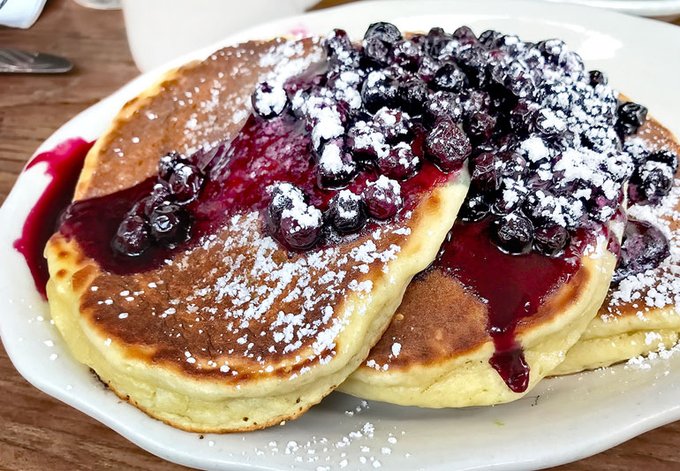
Do you miss seeing a stack of pancakes on the brunch table? Now you don’t have to. These grain-free, sugar-free, dairy-free pancakes are the perfect guilt-free treat. They’re easy to make, and the whole family will love them. Yum!
Ingredients
3 large omega-3 eggs ¾ cup almond milk ½ tablespoon freshly squeezed lemon juice 1 teaspoon pure vanilla extract ½ cup coconut flour ½ teaspoon baking powder ½ teaspoon baking soda Pinch of sea salt ¼ cup roughly chopped walnuts coconut oil, for greasing the skillet (about ¼ cup) 1 pint fresh blueberries ½ cup arrowroot 1 teaspoon cinnamon
Directions
In a large bowl, whisk the eggs and then add the almond milk, lemon juice, and vanilla. Whisk until well-blended. In a separate bowl, mix together the coconut flour, cinnamon, baking powder, baking soda, salt and arrowroot. Add the dry ingredients to the wet mixture, ¼ cup at a time, while continuously whisking. Once combined, gently fold in the walnuts.
Grease a large skillet and place over medium heat. Once the skillet is hot, use a ladle to pour 3-inch pancakes onto the skillet. Cook until bubbles appear, then flip. The pancake should cook on each side for about 2-3 minutes. Repeat with rest of the batter. Add a tablespoon or more of coconut oil to the hot griddle, as needed.
Make a blueberry sauce by simmering the blueberries in a small saucepan with 2 tablespoons of water for 10 minutes before serving.
To serve, place 3 pancakes on a plate and top each stack with the blueberry sauce.
Nutritional information (per serving)
Makes 2-3 servings.
Calories 423 Total Fat 19 g Protein 12 g Fiber 14 g Sugar 14 g Sodium 416 mg
If you’re planning to start an exercise program and wondering where to begin, start with your core first, says physical therapist Brittany Smith, DPT. People often think of the core muscles as being the abdominal muscles, but the core includes the muscles in the abdomen, back and hips, all working together as a group.
“The core muscles provide stability for the entire body as it moves,” says Smith. “These muscles are activated when you stand up, turn, bend, reach, twist, stoop and move in most other ways. Everything starts with your core.”
Strong core muscles help you maintain good posture, while weak ones can lead to slouching and slumping. Poor posture can be a cause of aches and pain, especially in the back.
Getting started with your core
To get your core muscles in shape, you need to exercise.
“Our bodies were made to move, so any physical activity is really important,” says Smith.
She recommends these specific core-strengthening exercises below.
The first one engages the deep muscles in the abdomen, called the transverse abdominis. “These muscles help hold us in a better position to stabilize our core, thereby stabilizing our arms and legs,” says Smith.
“The more you work on these muscles, the more it will become second nature to hold these muscles tight when you’re lifting grocery bags, doing yard work or any other kind of physical activity,” says Smith. This will help support your body.
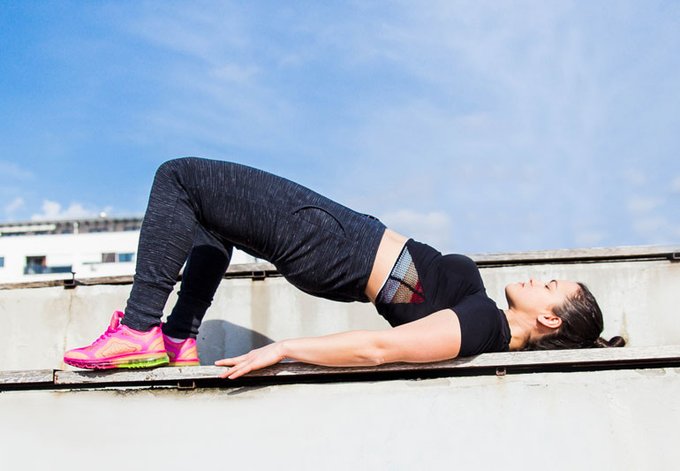
Other muscles that tend to be weak are the gluteus maximus in the buttocks, and the gluteus medius and gluteus minimus on the side of the hip. The bridge and clamshell exercises can help strengthen these muscles.
Smith emphasizes that getting the proper position of these exercises correct is more important than the number of repetitions you do. “It’s better to take your time, maybe do fewer reps, but with better quality,” she says. For that reason, it can be helpful to have the guidance of a physical therapist to get started.
Move on from the core
Core exercises are the starting point of overall fitness because you need to hold those muscles engaged while you strengthen other muscles, such as the biceps in the arms or the quadriceps in the legs.
Smith suggests setting short-term goals (for about a month) and then more long-term goals. Once you have achieved short-term goals, such as getting around more easily, add other types of weight-training or resistance exercises to build muscle elsewhere.
With any exercise you do, always listen to your body, warns Smith. If you have pain other than muscle burn, take it easy. Reduce the number of repetitions, the weight or the duration of the exercises. Then build up gradually. “You don’t have to be in pain to make gains,” she says.
Beginner exercises for core strength
For each of the following, work up to one to two sets of 10 to 15 repetitions once a day.
Abdominal bracing
Lie on your back with your knees bent and feet flat on the floor. Contract your abdominal muscles, and press the arch of your back down toward the floor, pulling your belly button toward your spine. Hold for 5 to 10 seconds. Make sure your lower back stays flat on the floor. Relax and repeat.
Bridge
Lie on your back with your knees bent and feet flat on the floor with your arms at your sides. Squeeze your abdominal and buttocks muscles, push your heels into the floor and slowly lift your buttocks and hips off the floor. Keep your back straight. Hold for 5 to 10 seconds.
Clamshell
Lie on your side with knees bent in line with your hips and back, draw up the top knee while keeping contact of your feet together as shown. Don’t let your pelvis roll back during the lifting movement. Hold for 5 seconds.
There is no magic pill to reverse the aging process. But if you want to counter the biological mechanisms that drive age-related conditions, like the accumulation of senescent cells, you will need to exercise.
Vitamin C, also known as ascorbic acid, is a powerful micronutrient that plays a key role in keeping your body healthy. Here we’ll explore some myths and truths about this vital micronutrient. #HarvardHealth
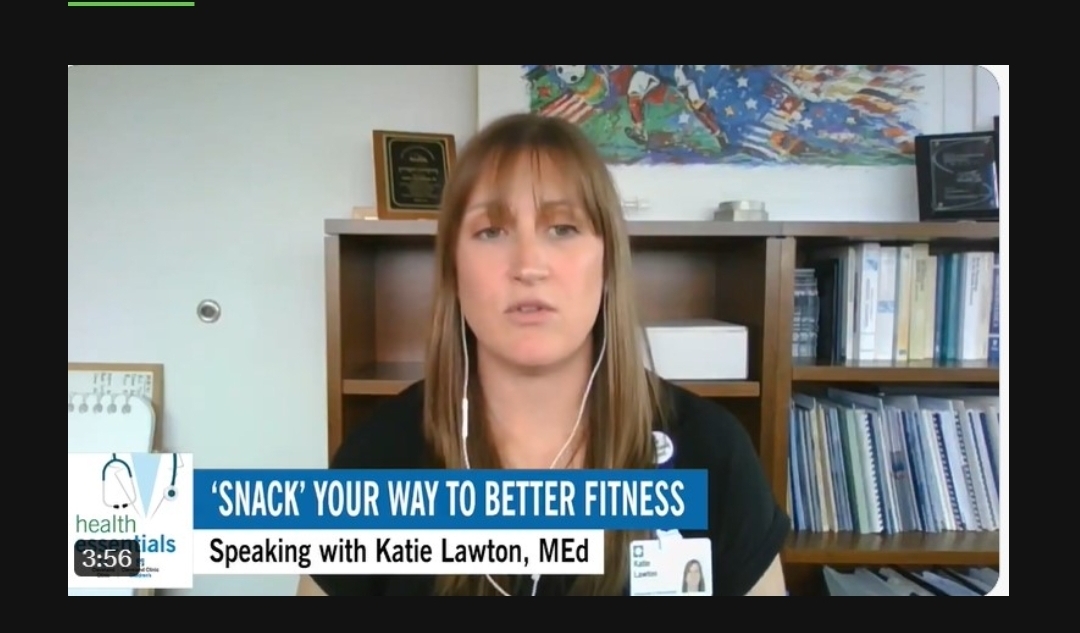
It seems that "exercise snacks" can be a good way to improve your health. Research shows that short bursts of activity done during the normal course of your day can help you build fitness – with no sweating required. Listen in as exercise physiologist Katie Lawton explains. pic.twitter.com/4dpEiWbCTM





 Healthaware