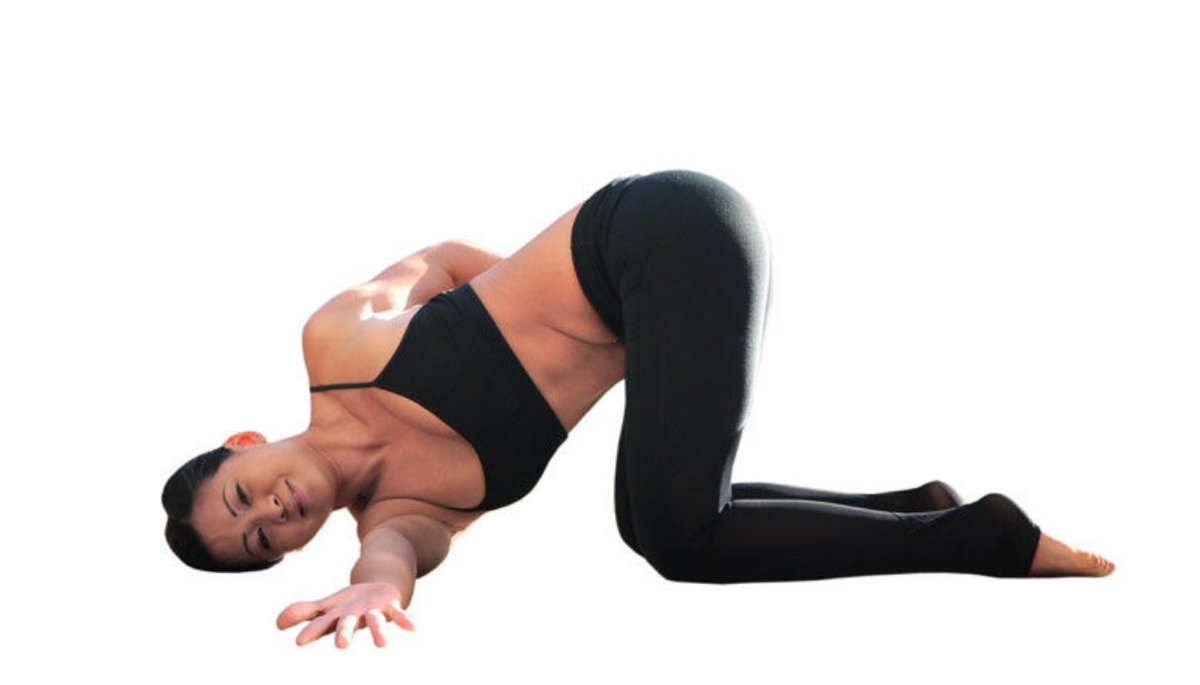
Strong core muscles help you maintain good posture. Why a strong core is important + exercises to try. @ClevelandClinic

cleveland evrything starts wit your core

If you’re planning to start an exercise program and wondering where to begin, start with your core first, says physical therapist Brittany Smith, DPT. People often think of the core muscles as being the abdominal muscles, but the core includes the muscles in the abdomen, back and hips, all working together as a group.

“The core muscles provide stability for the entire body as it moves,” says Smith. “These muscles are activated when you stand up, turn, bend, reach, twist, stoop and move in most other ways. Everything starts with your core.”

Strong core muscles help you maintain good posture, while weak ones can lead to slouching and slumping. Poor posture can be a cause of aches and pain, especially in the back.

Getting started with your core

To get your core muscles in shape, you need to exercise.

“Our bodies were made to move, so any physical activity is really important,” says Smith.

She recommends these specific core-strengthening exercises below.

The first one engages the deep muscles in the abdomen, called the transverse abdominis. “These muscles help hold us in a better position to stabilize our core, thereby stabilizing our arms and legs,” says Smith.

“The more you work on these muscles, the more it will become second nature to hold these muscles tight when you’re lifting grocery bags, doing yard work or any other kind of physical activity,” says Smith. This will help support your body.

Other muscles that tend to be weak are the gluteus maximus in the buttocks, and the gluteus medius and gluteus minimus on the side of the hip. The bridge and clamshell exercises can help strengthen these muscles.

Smith emphasizes that getting the proper position of these exercises correct is more important than the number of repetitions you do. “It’s better to take your time, maybe do fewer reps, but with better quality,” she says. For that reason, it can be helpful to have the guidance of a physical therapist to get started.

Move on from the core

Core exercises are the starting point of overall fitness because you need to hold those muscles engaged while you strengthen other muscles, such as the biceps in the arms or the quadriceps in the legs.

Smith suggests setting short-term goals (for about a month) and then more long-term goals. Once you have achieved short-term goals, such as getting around more easily, add other types of weight-training or resistance exercises to build muscle elsewhere.

With any exercise you do, always listen to your body, warns Smith. If you have pain other than muscle burn, take it easy. Reduce the number of repetitions, the weight or the duration of the exercises. Then build up gradually. “You don’t have to be in pain to make gains,” she says.

Beginner exercises for core strength

For each of the following, work up to one to two sets of 10 to 15 repetitions once a day.

Abdominal bracing

Lie on your back with your knees bent and feet flat on the floor. Contract your abdominal muscles, and press the arch of your back down toward the floor, pulling your belly button toward your spine. Hold for 5 to 10 seconds. Make sure your lower back stays flat on the floor. Relax and repeat.

Bridge

Lie on your back with your knees bent and feet flat on the floor with your arms at your sides. Squeeze your abdominal and buttocks muscles, push your heels into the floor and slowly lift your buttocks and hips off the floor. Keep your back straight. Hold for 5 to 10 seconds.

Clamshell

Lie on your side with knees bent in line with your hips and back, draw up the top knee while keeping contact of your feet together as shown. Don’t let your pelvis roll back during the lifting movement. Hold for 5 seconds.

https://health.clevelandclinic.org/planning-to-start-exercising-start-with-your-core-first/?utm_medium=social&utm_source=twitter&utm_campaign=cc+tweets

Our best balance boosters #physiotherapy😉 @HarvardHealth

harvard balance boosters

Harvard Health
@HarvardHealth

Our best balance boosters. bit.ly/2rkMG0N #HarvardHealth

Image: Jacob Ammentorp Lund/iStock

Many older adults focus on exercise and diet to stay healthy. But one of the worst offenders to health—poor balance—is often an afterthought. “I see a lot of older adults who are nonchalant about balance,” says Liz Moritz, a physical therapist at Harvard-affiliated Brigham and Women’s Hospital.

Unfortunately, imbalance is a common cause of falls, which send millions of people in the United States to emergency departments each year with broken hips and head injuries. But there are many things you can do to improve your balance. The strategies below are some of the most effective.

Physical therapy

Physical therapy for balance focuses on the ability of the joints and brain to communicate, the balance system in the ear (the vestibular system), and vision. “We coordinate all three with exercises such as standing on one foot, first with the eyes open, and then with the eyes closed. We also work on joint flexibility, walking, and lower-extremity exercises on one or two legs,” says Moritz. Other exercises that boost balance include chair stands (see “Move of the month”) and squats. Make sure you get training before attempting these exercises at home.

Muscle strengthening

“Core strength is very important for balance. If the abdominal muscles in your core are weak, they cannot support your limbs, especially when you’re walking. If the gluteal muscles in your buttocks and hips aren’t strong, they won’t be able to propel you forward,” says Moritz. Muscle strengthening can help. Moritz suggests starting with gentle core exercises like a pelvic tilt (lie on the floor with your knees bent up, then roll your pelvis up) and then moving to more intense exercises such as wall planks (stand six inches from a wall, keeping your body rigid, then lean forward with your forearms flat against the wall, and hold the position for 20 seconds). Leg lifts will strengthen the gluteal muscles, and adding resistance bands to leg lifts makes the exercise even more effective.

Tai chi and yoga

“Tai chi and yoga are exercises that make you pay attention to the control and quality of movement, rather than the quantity, which improves your balance,” says Moritz. In tai chi, you practice slow, flowing motions and shift your weight from one limb to another. Yoga incorporates a series of focused postures and breathing. Both exercises increase flexibility, range of motion, leg and core strength, and reflexes. The result: you become better at balancing in a number of different positions, which helps you avoid falling if you encounter uneven pavement or obstacles in your path.

Vision correction

“If you can’t see where you’re going, your fall risk goes up,” says Moritz. “A lot of people I treat for balance are here be-cause they tripped when they didn’t see something on the floor.” The fix may be as simple as a new eyeglasses prescription. Get a comprehensive, dilated eye exam every one or two years if you’re 65 or older, every one to three years if you’re age 55 to 64, and every two to four years if you’re 40 to 54. If you have an increased risk for other eye conditions, you may need an eye exam more often.

Assistive walking devices

A cane or a walker can complement your balance and give you more stability and confidence walking. But don’t buy a device on your own. “If it’s too high or too low, that can cause a fall. You need to get it measured, and you need training to learn how to use it,” says Moritz. Training takes just a few physical therapy sessions. Walkers are available with wheels intended for different terrain, lockable brakes, seats, baskets, and other features such as headlights. Canes are available with various handgrips and bases.

https://www.health.harvard.edu/staying-healthy/our-best-balance-boosters?utm_content=bufferbc3b8&utm_medium=social&utm_source=facebook&utm_campaign=buffer

Stress Dreams: Why Do We Have Them ― and How to Stop? @ClevelandClinic

Learning to control stress is your best defense against these anxiety-ridden dreams

Contributors: Michelle Drerup, PsyD, DBSM and Alexa Kane, PsyD.

There are a lot of areas of sleep that science and medicine can understand and explain. But dreams are an entirely different territory, as the question ‘why we dream’ remains largely unanswered.

Vivid and frequent dreaming is often left open to interpretation through things like dream dictionaries and discussing with friends. Did that dream about your ex-boss really mean you have pent-up guilt and anxiety about your last job? Frequently having stress or anxiety-ridden dreams is usually a red flag for real life stress and the role it’s playing on your body. If you’re constantly waking up panicking in a cold sweat over a dream, it’s time to get your thoughts and stress in order.

Stress: we all have it, but it doesn’t have to control us

Stress is an emotional, physical or mental tension that results from something that’s outside of us.

Some of the bigger stressors or stressful life events include moving to a new place, changing roles at school or work, relationship issues or losing a family member. Stress can cause sleep difficulties, including insomnia, by making it difficult to fall asleep and stay asleep. This impacts the quality of rest. Stress can also cause hyperarousal, which can upset the balance between sleep and wakefulness.

Being stressed is associated with poor sleep in general, and may trigger more frequent dreams. So it’s not uncommon to experience a distressing dream prior to a big event like a job interview, taking an exam or an important appointment.

And although there’s limited research about controlling the content of dreams, anxiety dreams can generally be a result of increased stress during our day-to-day lives. Daily stress can also increase the frequency of these dreams.

The good news? You have a great deal of control over your stress. If you learn to better manage stress in your life, you’ll likely decrease anxiety-ridden dreams and improve your sleep.

Here are four simple strategies to help your mind and body relax before turning in for the night:

  • Spend time winding down before bed: This can be thought of as a “buffer zone,” which is a period of time to allow the activating processes in the brain to wind down and allow your sleep system to take over. It’s generally a good rule of thumb to start about an hour before bedtime. During this time, engage in relaxing activities that you enjoy like reading or listening to music.
  • Schedule “worry time”: If you’re finding it difficult to control your worrying prior to bedtime, scheduling a specific time when you’re allowed to worry may help. Find a time that’s convenient for you and write down your concerns. Limit the time to a specific amount and stick to it by planning something to do afterward. For example, you can plan 15 minutes in the evening, before your favorite TV show.
  • Think of your bedroom as a place just for sleep, sex and pleasant activities: Try to limit the time you spend in bed worrying or being anxious. If you find yourself lying awake in bed stressed out, leave the bedroom and spend time in another room until you feel sleepy.
  • Practice relaxation techniques: There are other ways to relax while getting ready for bed, such as breathing exercises, guided imagery and progressive muscle relaxation movements. (You can even check out free apps that help guide you through these exercises.) These techniques can be some of the most critical aspects of stress management and you can use them close to bedtime or throughout your day.

When you wake up panicking at 3 a.m.

We’ve all been there – a nightmare or stress dream causes you to wake up. The next thing you know you’re lying there overthinking your finances and everything you have to do the next day.

When this happens, what can you do to get back to sleep?

  • Stop watching the clock: Counting the minutes will only heighten your distress. Turn your alarm clock around and don’t pick up your phone.
  • Try to relax your body: Use a relaxation strategy that helped prior to bed to relax your body and mind.
  • Get out of bed: If you can’t fall back to sleep after a stressful dream, then try getting out of bed to help decrease the frustration. Don’t spend time in bed hopelessly trying to get back to sleep or interpreting your dream. (If your dream caused you anxiety, you may find yourself attempting to interpret it. But this can further increase the worry. This process will result in your brain associating your bed with stress and not sleeping well.)  Once you leave your bed, find an activity that is uninteresting or boring. When you start to get drowsy, go back to bed.

Since dreams obviously aren’t measurable, there’s no real answer to what meaning they hold in our day-to-day life. But we do know that we generally have control over daily stress, which can trigger weird or anxiety-clad dreams. Learning to control the crazy and manage your stress is your best defense to help you sleep peacefully

FACEBOOKTWITTERLINKEDINPINTERESTEmaildreams

Is Hot Yoga Right for Me? @ClevelandClinic

Most people understand the basic health benefits of yoga: flexibility, stress relief and muscle strength, just to name a few. But why is it different when you turn up the heat? Is the increase in degrees a gimmick or is it actually beneficial to your health?

What is hot yoga, anyway?

Hot yoga is exactly what it sounds like — yoga practiced in a hot environment. Most hot yoga classes have an increased room temperature set anywhere between 90 and 105 degrees Fahrenheit. That’s quite a difference compared to normal room temperature (68 to 72 degrees Fahrenheit). Why so hot? The heat helps lubricate tendons and ligaments, making it easier to fold into certain stretches and poses. “The heat allows participants to get a deeper stretch because their body is warmer and they can move into the poses a little deeper,” says yoga instructor Jennifer Sauer.

The potential pros of hot yoga are:

  • Increased flexibility.
  • Muscle-building.
  • Body-toning.
  • Reduced stress.
  • Detoxification.
  • Weight loss.
  • Reduced pain.

On the flip side, it can also be easy to overdo it in a hot yoga class. Because of the high temperature in the room, you might not realize how hard you’re working and you could end up taking stretches too far before your body is ready.

The potential cons of hot yoga are:

  • Dehydration.
  • Higher risk of injury.
  • Dizziness.
  • Lightheadedness.
  • Trouble breathing.

Hot yoga should be something that you ease into. So taking some regular yoga classes first and getting an idea of your current flexibility level is recommended. Beginner yoga classes also help build on your knowledge of the poses and sequences.

“While people have reported pain relief, detoxification and weight loss from hot yoga, scientific research is limited,” Sauer says. “It’s safe to say that hot yoga is more vigorous than traditional practices,” she notes, “but the jury is still out on overall calorie burn and weight loss.”

When you combine hotter temperatures with extra exertion, your body is working harder and therefore increasing your heart rate. So, ultimately, you are burning a good amount of calories during your hot yoga session — the data just doesn’t exist yet for hot yoga specifically.

Who should avoid hot yoga?

Like other types of exercise, hot yoga isn’t for everyone. Hot yoga is not suggested for those who are pregnant or have a heart condition. The heat can also aggravate asthma.

Sauer recommends looking out for side effects such as dizziness, lightheadedness and not being able to take a deep breath in. “If that happens, return to a stable position or leave the studio until you feel better,” she says. “It’s important to stay hydrated and listen to your body.”

Think you’re ready to give it a shot?

When it comes to hot yoga — try attending a few basic or beginner yoga classes first. Then when you feel comfortable, try incorporating a heated class.   

Here’s how to find the best yoga class for you.

“There are different styles of yoga, so if you try a class that doesn’t appeal to you, try another type of yoga or a different instructor,” Sauer says. “The heat isn’t for everyone — and that’s perfectly OK!”

A Strong Core is Your Best Guard Against Back Pain @ClevelandClinic

A group of adults are taking a fitness class together at the gym. They are working out on exercise mats and are holding a high plank.

A physical therapist answers your questions

If you suffer from back pain, you’ve probably heard that strengthening your core can bring you some relief. But is this always true? And if so, how do you do it? We spoke with Cleveland Clinic physical therapist Patti Mariano, DPT, to find out.

Q: What is your core?

When most people think about the core of the body they think of the abdominal or six-pack area just below the ribs. While the abdominal muscles are an important part of the core, we consider other areas important, too.

Your core includes:

  • Front abdominal muscles — the rectus abdominis
  • Muscles along the side of your body — the internal and external obliques
  • A deep muscle that wraps around the front — the transverse abdominis
  • Muscles in your back that are located between your spine bones and run along your spine — the erector spinae and multifidi

Your core also includes the diaphragm and muscles of the pelvic floor. I also consider the gluteal muscles as core muscles.

Q: What is the relationship between core strength and back pain?

Theoretically, if your muscles around the low back are weak, your body will rely more on passive structures, including ligaments — the tissue that connects bone to bone — as well as the spinal bones or discs, which lie between the spinal bones, for stability, which can cause pain.

But some studies have shown that specific core exercises are not any more beneficial than general exercise for low back pain. What we know is that exercise in general can help, and focusing on core muscles may provide some additional benefit.

Q: What are some exercises for the core that can help with back pain?

Here are my top five:

  • Side plank — Sit on the floor with your right hand below your right shoulder and feet stacked. Lift your body, keeping your legs long, abdominals engaged and feet stacked. Hold. Repeat on the other side. You can modify this pose by dropping your bottom knee to the floor for extra support.
  • Plank — Kneel on all fours. Pull in your abdomen and step your feet behind you until your legs are straight. Keep your hands directly under your shoulders and your neck straight. Hold your abdomen and legs tight and avoid letting your lower back sag. Hold and breathe for 30 seconds. You can modify this pose by lowering your knees.
  • Bird dog — Kneel  on all fours. Reach one arm out in front of you, draw in your abdomen, and extend the opposite leg long behind you. Repeat on the other side.
  • Scissors — Lie on your back with your arms at your sides and legs pointed straight into the air above your hips. Press your lower back into the mat and tighten your abdomen. Lower your right leg until it’s a few inches from the floor. Raise your right leg up and begin lowering your left leg the same way. Continue switching right and left.
  • Upward dog — Lie face down with head slightly lifted and hands palm-down under your shoulders. Point your toes. Exhale, then press through your hands and the tops of your feet and raise your body and legs up until your arms are straight and your body and legs are off the ground. Keep your neck relaxed and long and thigh muscles tight as you hold and breathe.

For the plank exercises, start by holding them for 15 seconds to 30 seconds. For bird dog and scissors, try three sets of eight or 10 repetitions. For upward dog, do one set of 10 repetitions.

Q: Can you injure your back by trying to strengthen your core?

Any exercise performed incorrectly, whether it is core-strengthening or otherwise, has the potential to cause discomfort.

Twisting exercises or even incorrectly completing the exercises cited above can cause pain in the low back. But it’s highly unlikely that one repetition of an exercise will seriously harm your body, unless it’s an exercise using a very heavy weight.

The best way to keep your body safe is to listen to body cues such as pain during and immediately after an exercise, and the next day after exercising.

Q: When should you talk to a doctor about your back pain?

If any of the following is going on you should consult with your doctor:

  • Your pain has been going on for longer than a month, despite resting from activities that make it worse.
  • Your pain is getting worse.
  • Your pain wakes you from sleep.
  • Your pain is in your low back but also is going down one or both of your legs.
  • You notice that one leg is becoming weaker than the other.

Q: Where should you turn if you want help in creating a plan to address back pain?

Physical therapists train as musculoskeletal experts — they are the experts on muscles, bones and human movement. These professionals are the most qualified, aside from an orthopedic doctor, to assess back problems.

Since there are many factors that impact low back pain and many types of low back pain, it is a good idea to visit at least one time with a physical therapist for an evaluation and subsequent plan of care. This will give you an individually tailored plan with exercises that progress safely.

The idea of core strengthening, while beneficial, is just one piece of the low back pain puzzle.

https://health.clevelandclinic.org/2016/07/strong-core-best-guard-back-pain/


Your immune system keeps you healthy by protecting you from disease -@ClevelandClinic


Cleveland Clinic

@ClevelandClinic
·


Your immune system keeps you healthy by protecting you from disease – or, if you do get sick, helping you fight off illness. Neha Vyas, MD, shares tips on how to boost your immune system. Listen for more tips: https://cle.clinic/3s5EVc1