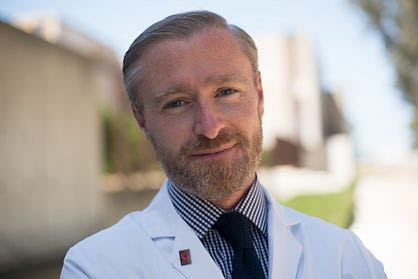
Researchers don’t know as much about the direct effects of long-term stress on blood pressure.  But they do know that stress can impact lifestyle habits and increase your risk of heart disease and other chronic health issues. Luke Laffin, MD. @ClevelandClinic

How Stress Is Linked to High Blood Pressure

Daily stressors can increase BP in the moment, as well as contribute to habits that can feed long-term hypertension

Feeling stressed? If so, you’re hardly alone, given that stress has been called the health epidemic of the 21st century. But have you ever wondered what all this stress means for your blood pressure?

The answer, it turns out, is more complex than you might think. Let’s take a closer look with preventive cardiologist Luke Laffin, MD.

Does stress raise blood pressure?

Stressful moments can totally send your blood pressure (BP) skyrocketing. You feel it deep in your core, too, as your heart thumps harder and your nerves jangle with a fight-or-flight response.

“If we’re in a stressful situation, the normal physiologic response is to increase blood pressure,” explains Dr. Laffin. “But your body can handle these sorts of acute changes in blood pressure pretty well.”

And once the immediate stressor is gone, your BP should return to its typical level.

Of course, not all stress clocks out like it’s a shift worker. Chronic stress tends to linger — and that can contribute to a long list of physical symptoms, including high blood pressure (hypertension).

The connection between stress and hypertension

Researchers don’t know as much about the direct effects of long-term stress on blood pressure. But they do know that stress can impact lifestyle habits and increase your risk of heart disease and other chronic health issues.

“Stress itself doesn’t necessarily cause sustained elevations in blood pressure,” says Dr. Laffin. “But it often has an impact on lifestyle factors, which can absolutely contribute to long-term elevations in blood pressure.”

When you’re chronically stressed, you can fall into habits that can lead to higher blood pressure and increase your risk of heart disease. These include:

  • Sleeping too little, too much or poorly
  • Not exercising as much
  • Make unhealthy food choices
  • Smoking
  • Drinking alcohol

It can be difficult to see when acute stress transitions to chronic stress. But seemingly “temporary” stressors that last for weeks can turn into chronic stressors that need to be addressed for the sake of your heart health.

“What we’re really worried about is chronically elevated blood pressure,” states Dr. Laffin.

Can lowering stress lower your BP?

Finding ways to better manage your stress can help keep your blood pressure from rising and staying at elevated levels, suggests Dr. Laffin. He suggests:

  • Focusing on fitness: “Working out regularly is a great way to feel better, decrease stress levels and better adapt to difficult situations,” says Dr. Laffin. The positive effects of exercise on heart health are also important for your blood pressure.
  • Catching ZZZs: The quantity and quality of your sleep matter for your BP. “For stable blood pressure, you need to get about six to eight hours of uninterrupted sleep at night,” he advises.
  • Minimizing stressors: To reduce stress, you need to address its causes. Of course, that can be easier said than done when stressors involve your job or family. In these cases, additional steps, like therapy, may help you find coping strategies.
  • Adopting a heart-healthy diet: Foods high in sodium and saturated fats can increase blood pressure even before you add stress to the mix. Embracing a Mediterranean-style diet and eating more antioxidant-rich foods can help keep your BP down.
  • Calming techniques: Various forms of meditation can help you calm your mind and tamp down stress. There’s evidence that mindfulness-based stress reduction can lower BP within a few months.

Medications like beta-blockers may also be an option if stress seems to be driving blood pressure into danger zones. Antihypertensives can help bring down high blood pressure, too.

“But managing stress-related hypertension usually comes down to lifestyle,” clarifies Dr. Laffin. “Diet, exercise, sleep — those are all factors that play a big role in keeping your heart healthy.”

Brownout vs. Blackout from drinking @ClevelandClinic #encephalopathy

Excess alcohol and substance use can cause temporary and permanent memory loss

What are blackouts and brownouts?

Blackouts involve complete memory loss caused by your brain’s inability to record new memories for a period of time due to the effects of excessive alcohol, substance misuse or some other condition.

But sometimes, auditory or visual cues can help a person piece together memories of what happened during a blackout. These cues could come in the form of texts, pictures or conversations with people who were present while you were blacked out. The medical term for blackouts is called transient loss of consciousness (TLOC).

The difference between a brownout and a blackout is that brownouts involve partial memory loss. With a brownout, you may be able to remember certain details from the period of time you were affected, but other portions of time can’t be recalled.

“The hippocampus is a part of your brain that takes our experiences and the awareness of all our senses and processes those into memories,” explains Dr. Streem. “It’s sensitive, and it’s the same part of the brain that deteriorates in people with Alzheimer’s disease.”

Excessive alcohol use isn’t the only thing that can cause blackouts or brownouts. Substance misuse on its own or with alcohol can increase your likelihood of experiencing a blackout. Hypnotics or sedatives and benzodiazepines like flunitrazepam (also known as Rohypnol or roofies) can also lead to blackouts or brownouts.

There are other medical conditions that cause blackouts or brownouts, too, including:

“Anything that causes damage to the brain, whether temporary or permanent, can cause memory loss if the damage is in the right spot,” states Dr. Streem.

Is a blackout the same as passing out?

Blackouts are not the same as passing out. When you pass out or faint, you experience a temporary loss of consciousness.

“When you’re passed out, you’re not awake. A blackout happens to someone who’s still conscious but they’re not coding any new memories,” explains Dr. Streem. “A person who has a blackout is still awake and they have some ability to think, but other parts of their brain may not be working well enough. Often, this is because of intoxication.”

Understanding these definitions and the difference between blackouts and passing out is incredibly important, as it may be difficult for other people to recognize someone is having a blackout because of their seemingly aware state.

How much alcohol can cause a blackout?

How much alcohol or substance use is needed to cause a blackout varies based on a person’s height, weight, sensitivity and assigned sex at birth.

“We know females absorb more alcohol in their bloodstream than males,” says Dr. Streem. “But for most people, it’s going to involve more than the legal blood alcohol limit. In almost all states in the U.S., the blood alcohol limit for driving is .08. Blackouts usually appear at blood alcohol levels that are twice the legal limit or higher.”

Studies have shown that young adults under the age of 25 are particularly vulnerable to experiencing blackouts. Additionally, blackouts may occur at far lower thresholds among younger populations. That’s largely because the parts of your brain responsible for decision-making aren’t fully matured until around age 25. Despite this, intentional binge drinking has been a common practice among young adults.

Regardless of age, recent studies show more frequent blackout experiences are related to an increase in memory lapse and cognitive difficulties even after alcohol misuse is corrected. This means that even after a blackout occurs, you can continue to experience memory loss and other difficulties recalling memories.

Blackout effects on your body

If you’re experiencing a blackout or brownout, you’re at higher risk for falling, injury and unwanted or unsafe sexual experiences. A person who is blacked out may also throw up while sleeping, which could lead to an increased risk of choking or suffocating.

It can be hard to determine when you’re going to have a blackout or brownout. But some signs it may be happening to you in the moment include:

  • Difficulty standing.
  • Nausea.
  • Lightheadedness.
  • Loss of vision or shrinking of your field of view.

Other signs of substance-related blackouts, specifically blackouts caused by sedatives, hypnotics or benzodiazepines, include:

  • Loss of bowel or bladder control.
  • Difficulty breathing.
  • Feeling drunk when you haven’t consumed alcohol or consumed less than your usual amount.
  • Sudden body temperature changes.
  • Sudden increase in dizziness, disorientation, loss of vision or difficulty speaking.

“Hypnotic drugs are prone to cause this kind of impairment and memory loss,” states Dr. Streem. “Sadly, people sometimes use them to take advantage of other people.”

Strategies for managing blackouts

A blackout ends when your body has absorbed the alcohol you consumed and your brain is able to make memories again. Sleep often helps this process along.

Alcohol is dehydrating by nature, so making sure you’re drinking plenty of water and staying hydrated is important. Being aware of potential signs of intoxication can also be helpful in understanding your limitations.

But what if you end up having a blackout anyway?

“The experience of a blackout can sometimes be an opportunity to learn about our bodies and our brains, and what we can and can’t handle,” says Dr. Streem. “But the most important thing to do when you have a blackout is to try and piece together as best we can what happened and whether we were injured. It also might be necessary to try to assess whether you’ve been taken advantage of in some way.”

If you think you’ve been injured, sexually or physically assaulted, it’s important that you get medical attention immediately and talk to the police about everything you can remember.

Other measures you can take to reduce the likelihood of blackouts and brownouts and increase your own safety include:

  • Drinking with people you trust.
  • Pairing up with a close friend or group of friends and leaving together.
  • Not drinking on an empty stomach.
  • Not taking drinks from other people.
  • Opening containers yourself or watching your drink being poured.
  • Taking your drink with you when leaving a room.
  • Not drinking anything that tastes or smells odd.
  • Asking for help when you start to feel drunk or intoxicated.

“There’s no way to prevent a blackout or brownout from happening other than to stop consuming so much alcohol or other substances that cause them,” says Dr. Streem. “Beyond that, safety and general physical care can be very helpful in making sure this doesn’t happen to you.”

Can stripping down for bedtime help you catch some ZZZs?  Michelle Drerup, PsyD, DBSM. @ClevelandClinic

Cleveland Clinic

Is It Healthy To Sleep Naked?

Wearing no clothes could lead to cooler skin temperatures that put ZZZs within reach

Many people believe they were born with the only pajamas needed for a good night’s sleep, but here’s the naked truth: No research directly confirms that sleeping in the buff leads to better slumber.

There is, however, some validity behind the idea of sleeping naked — namely regarding how a cooler skin temperature improves sleep quality.

So, should you consider stripping down at bedtime before sliding under the sheets? Let’s look at the potential benefits (and risks) with behavioral sleep disorders specialist Michelle Drerup, PsyD, DBSM.

Is sleeping naked better?

There are some possible perks to nude sleeping … so, maybe? Here are a few reasons why you might want to slip off your clothes before slipping off to sleep.

Falling asleep faster

Your body naturally works to lower its thermostat to doze off at night through its circadian rhythm, which regulates your sleep/wake cycle. The faster you cool off, the faster you typically catch some ZZZs, says Dr. Drerup.

That’s also one of the reasons why sleep experts recommended that you keep your bedroom temperature between 60 degrees Fahrenheit and 67 degrees Fahrenheit (15.5 degrees Celsius to 19.44 degrees Celsius) for optimal snoozing.

Improved sleep quality

Ever toss and turn in bed because you’re too hot? Sleeping naked certainly removes any possibility of pajama-induced overheating interfering with a good night’s rest. It’s the absolute final move in shedding layers to stay cool.

“There’s no question that cooler is better than warmer for overall sleeping,” says Dr. Drerup.

And getting enough rest is key to … well, just about everything in day-to-day life. Waking up refreshed can help you manage stress more effectively, improve focus, boost performance and make you a more pleasant person.

For women: reduced risk of yeast infections

Tight-fitting underwear can trap heat and moisture between your legs. What makes a yeast infection thrive? Yep — heat and moisture.

Sleeping naked (or even in loose-fitting cotton bottoms) allows for some air circulation around your vagina. Keeping the area cooler and drier may help reduce your chances of getting a yeast infection, too. 

For men: potential fertility boost

Heat isn’t a friend of male fertility. Regular exposure to higher temperatures for your testicles can cause sperm counts to drop. Wearing underwear that keeps things packed tight doesn’t exactly offer a cooling effect.

Studies show that men who wear boxers have a higher sperm count than their buddies in briefs. So if loose-fitting boxes help that much, imagine what 8 hours of no clothing might do.

Reasons to keep your PJs on

Sleepwalkers may want to give the idea some extra thought to going au natural to avoid any potential awkward encounters, notes Dr. Drerup.

And if you’re not a fan of doing laundry, consider this: Your washing schedule for bedding may need to increase with more skin-to-sheet contact. (Gross fact: The skin cells you shed in a day can feed 1 million dust mites. You don’t want to turn your bed into their buffet.)

Can you be cool and clothed?

Going to bed “nearly” naked while wearing lightweight and loose-fitting garments can bring you similar quality sleep results as taking everything off. “Tank tops and boxer-style briefs don’t possess a ton of warming qualities,” says Dr. Drerup.

And while being cool is desirable for sleep, you also don’t want to be cold. There’s even evidence that wearing socks to bed to warm your tootsies can help you drift off to sleep.

So, which is it: off or on?

Ultimately, what you wear to sleep is a personal choice. “There’s no proven benefit or harm to sleeping naked,” says Dr. Drerup. “Just do what feels right and then rest easy with your decision.”

Pets help raise their owners’ fitness levels, improve blood pressure, cholesterol and blood sugar levels, and boost overall happiness and well-being. @American_Heart

Pets help raise their owners’ fitness levels, improve blood pressure, cholesterol and blood sugar levels, and boost overall happiness and well-being. @American_Heart

Dr.Paddy Barrett – The Truth About Alcohol and Health

Why the idea that “a little red wine is good for your heart” doesn’t hold up anymore.

I used to drink.

A lot more than I should have.

And while I had some seriously good times when I was drinking, it came at a huge cost.

Brutal hangovers. Terrible sleep. Wrecked weekends.

Even a broken back.

(But that’s a story for another day.)

I still drink.

But just very little these days.

As a cardiologist, I am asked almost every day if ‘Alcohol is good or bad for your health?’.

Let’s find out.

Alcohol Is A Toxin.

There is no getting away from the fact that, at its most basic chemical foundation, alcohol is a toxin.

Globally, alcohol is responsible for 3 million deaths per year; in the United States, it is the third leading cause of preventable death¹².

Alcohol is a factor in³:

  • 30% of suicides
  • 40% of fatal burn injuries
  • 50% of fatal drownings
  • 50% of homicides
  • 65% of fatal falls
  • 29% of fatal road traffic accidents

Alcohol is a factor in 1 in 5 emergency department presentations⁴.

No pun intended, but these statistics make for some sober reading.

‘Red Wine Is Good For Your Heart.’

Now come on.

Did you really think that was true?

I have heard this phrase over and over again in my clinical practice.

High levels of exercise are good for your heart, but oddly enough, most people seem to be far less enthusiastic about this approach than regular alcohol consumption.

Let’s see what the data says.

Up until very recently, it was believed that drinking 1-2 drinks per day was actually protective when it came to dying prematurely⁵.

This data was based on observational studies that cannot fully control for all confounders and can therefore not infer causality.

When you examine the people who drink only 1 to 2 drinks per day, you consistently find that they are much less likely to smoke, be overweight or engage in any other risky health behaviours.

So in truth, it probably wasn’t the alcohol that was driving the effect.

More recent studies have attempted to control for this variable more carefully, and the relationship is clear.

The more you drink.

The higher the risk.

Take coronary artery disease. Higher alcohol intake equates to a higher risk.

The same applies to high blood pressure⁶.

The same applies to stroke⁷.

The list goes on⁸:

  • Atrial fibrillation – Higher risk.
  • Sudden death – Higher risk.
  • Heart failure – Higher risk.
  • Liver, Breast, Colorectal, Oropharyngeal Cancer – Higher Risk⁹.

You get the point.

With all this information to hand, why is it then that I and billions of others continue to drink alcohol?…

Subscribe to Dr Paddy Barrett to unlock the rest.

Become a paying subscriber of Dr Paddy Barrett to get access to this post and other subscriber-only content.

Upgrade to paid

A subscription gets you:

Subscriber Only Posts & Access To Full Archive
25% Discount On Live Education Sessions & AMA’s
Discounts On Courses & Live Education Sessions & AMA’s

Dr.Paddy Barrett – The Truth About Alcohol and Health

Why the idea that “a little red wine is good for your heart” doesn’t hold up anymore.

I used to drink.

A lot more than I should have.

And while I had some seriously good times when I was drinking, it came at a huge cost.

Brutal hangovers. Terrible sleep. Wrecked weekends.

Even a broken back.

(But that’s a story for another day.)

I still drink.

But just very little these days.

As a cardiologist, I am asked almost every day if ‘Alcohol is good or bad for your health?’.

Let’s find out.

Alcohol Is A Toxin.

There is no getting away from the fact that, at its most basic chemical foundation, alcohol is a toxin.

Globally, alcohol is responsible for 3 million deaths per year; in the United States, it is the third leading cause of preventable death¹².

Alcohol is a factor in³:

  • 30% of suicides
  • 40% of fatal burn injuries
  • 50% of fatal drownings
  • 50% of homicides
  • 65% of fatal falls
  • 29% of fatal road traffic accidents

Alcohol is a factor in 1 in 5 emergency department presentations⁴.

No pun intended, but these statistics make for some sober reading.

‘Red Wine Is Good For Your Heart.’

Now come on.

Did you really think that was true?

I have heard this phrase over and over again in my clinical practice.

High levels of exercise are good for your heart, but oddly enough, most people seem to be far less enthusiastic about this approach than regular alcohol consumption.

Let’s see what the data says.

Up until very recently, it was believed that drinking 1-2 drinks per day was actually protective when it came to dying prematurely⁵.

This data was based on observational studies that cannot fully control for all confounders and can therefore not infer causality.

When you examine the people who drink only 1 to 2 drinks per day, you consistently find that they are much less likely to smoke, be overweight or engage in any other risky health behaviours.

So in truth, it probably wasn’t the alcohol that was driving the effect.

More recent studies have attempted to control for this variable more carefully, and the relationship is clear.

The more you drink.

The higher the risk.

Take coronary artery disease. Higher alcohol intake equates to a higher risk.

The same applies to high blood pressure⁶.

The same applies to stroke⁷.

The list goes on⁸:

  • Atrial fibrillation – Higher risk.
  • Sudden death – Higher risk.
  • Heart failure – Higher risk.
  • Liver, Breast, Colorectal, Oropharyngeal Cancer – Higher Risk⁹.

You get the point.

With all this information to hand, why is it then that I and billions of others continue to drink alcohol?…

Subscribe to Dr Paddy Barrett to unlock the rest.

Become a paying subscriber of Dr Paddy Barrett to get access to this post and other subscriber-only content.

Upgrade to paid

A subscription gets you:

Subscriber Only Posts & Access To Full Archive
25% Discount On Live Education Sessions & AMA’s
Discounts On Courses & Live Education Sessions & AMA’s

These crispy sweet potato wedges come out Cajun spicy and sweet. They’re also really healthy. They’re loaded with antioxidants and phytonutrients and are a great source of beta-carotene.

Recipe: Baked Cajun Sweet Potato Fries

Swap regular fries for these delicious, and nutritious, potato wedges

These crispy sweet potato wedges come out Cajun spicy and sweet. Don’t tell anyone but they’re also really healthy. They’re loaded with antioxidants and phytonutrients and are a great source of beta-carotene. Another plus? As complex carbs, they digest slowly and raise blood sugars gradually — keeping you from a spike and drop-off.

Ingredients

  • 2 sweet potatoes, cut into wedges (about 8 wedges per potato)
  • 1 tablespoon olive oil
  • 2 tablespoons Cajun seasoning

Directions

  1. Preheat oven to 425 F.
  2. In a large mixing bowl, combine the sweet potatoes, oil and Cajun seasoning. Mix well to evenly coat wedges.
  3. Spread the wedges in a single layer on one (or two, if needed) ungreased baking sheets.
  4. Bake for 30 minutes or until crispy and brown on one side.
  5. Flip fries over and bake for another 30 minutes or until the wedges are crispy on the outside and tender inside.

Ingredient health benefits

Nutrition information (per serving)

Serving = 1 cup

Calories: 110
Total fat: 5g
Saturated fat: 0.5g
Trans fat: 0g
Protein: 2g
Carbohydrate: 16g
Dietary fiber: 3g
Sugar: 5g
Cholesterol: 0mg
Sodium: 57mg

Why Avocados Are a Healthy — and Delicious — Addition to Your Diet @ClevelandClinic


Cleveland Clinic

@ClevelandClinic

Avocados are jam-packed with nutrients and vitamins and can make a delicious, nutritious addition to your diet.

Millenials may get flak for being the “avocado toast generation,” but honestly, they may be onto something! Avocados are as nutritious as they are delicious, and they’re jam-packed with vitamins and nutrients.

Avocados include vitamins C, E, K1, B6 and folate, plus essential minerals like potassium and copper. They’re low in sugar, loaded with fiber and high in monosaturated fats, aka “good” fats. Oh, and did we mention that they taste great and they’re super versatile?!

Registered dietitian Julia Zumpano, RD, LD, shares a few more good reasons to give these wrinkly green fruits a second look — plus, how to add them to your regular rotation.

Are avocados good for you?

“Avocados are a great addition to a healthy diet,” Zumpano confirms, “and there are hundreds of varieties to choose from, ranging from big to small and wrinkly to smooth.”

What they have in common: A big round pit, creamy green flesh and a whole lot of nutrients crammed into a handy, pear-shaped package.

Just don’t go overboard. Avocados are packed with nutrients, but they’re also packed with calories. A 50-gram portion — about a third of a medium-sized avocado — has about 75 calories. And an entire large avocado can add upward of 400 calories to your daily diet.

Like most things, Zumpano says, moderation is key. “As long as you’re paying attention to portion sizes, avocados are very healthy foods to include in your food repertoire.”

Benefits of avocados

Whether you’re adding a slice to a salad or sandwich or using them as an ingredient in a more complicated recipe, Zumpano says avocados have a lot going for them health-wise.

Here are some of the many nutrients and vitamins packed into just a single avocado:

High in ‘good’ fats

You might’ve heard that avocados are high in fat — and that’s true, but it doesn’t mean you should avoid them! A medium avocado has 22 grams of fat, which includes 15 grams of monounsaturated fats, aka “good” fats.

“Avocados are rich in heart-healthy monounsaturated fats, which help lower your LDL, or ‘bad’ cholesterol,” Zumpano says. “Low LDL levels reduce your risk of heart disease and stroke.”

The American Heart Association says most of the fats you eat should be monounsaturated or polyunsaturated, confirming that avocados fit the bill as part of a healthy diet.

You can even swap avocado in for less-healthy fats in your home cooking. Here are some additional ways you can add this smooth, creamy fruit to your diet.

  • Spread avocado on a sandwich in place of mayonnaise.
  • Instead of dunking veggies into dips made with cheese or sour cream, try guacamole.
  • Forego shredded cheese on your salad and add avocado slices instead.
  • In baking recipes, replace butter or oil with mashed avocado, like in these chocolatey avocado brownie bites.

“If you use avocado to replace other fats, you can enjoy the flavor and nutrients and also cut down on saturated fats,” Zumpano says.

Lots of vitamins

Let’s talk vitamins: In simple terms, avocados have a lot of them! Here are the vitamins that are most abundant in avocados and what they do for your health:

  • Vitamin K1, or phylloquinone, is important for blood clotting, which helps stop wounds from bleeding. It also plays a role in strengthening your bones. For most adults, the daily recommended amount of vitamin K ranges from 90 to120 micrograms. Half an avocado has about 21 mcg.
  • Vitamin C, aka ascorbic acid, helps keep your immune system healthy. It also plays a role in the health of your tissues, blood vessels, bones and more. Depending on your age and sex, you need anywhere from 75 to 120 milligrams of vitamin C per day; half an avocado has about 10 mg.
  • Vitamin E, or alpha-tocopherol, is a powerful antioxidant that prevents cell damage and helps maintain muscle function. Most adults only need 15 mg of vitamin C per day, and half an avocado will give you about 4 mg of it.
  • Vitamin B6, also known as pyridoxine, helps your body convert food into energy. You only need a small amount of vitamin B6 each day (just 1.2 to 2 mg, depending on your age and sex), but half an avocado has about .25 mg, putting you well on your way to that daily goal.
  • Folateis a B vitamin that’s important for normal cell function and tissue growth. It helps your body form red blood cells and DNA, which is especially critical when you’re pregnant (but still important if you’re not). Half an avocado has about 20% of your daily recommended amount.

Low in sugar

Though most fruits are high in natural sugars, avocados rank very low on the sweetness scale. “A whole avocado has under 1.5 grams of sugar, while one medium apple, by comparison, has about 19 grams,” Zumpano points out. (Psst: It’s important to note that not all sugars are created equal! Fruit is still super-healthy.)

High in fiber

Avocados are a good source of fiber, which is a type of carbohydrate that your body can’t break down. You need both soluble and insoluble fiber — and lucky for you, avocados have both.

“Fiber can lower cholesterol and blood sugar, keep you regular and help you feel full and satisfied after a meal,” Zumpano states. Most adults need 25 to 35 grams of fiber per day, depending on your age and sex. Half an avocado provides about 7 grams.

Packed with potassium

Surprise! “Avocados actually contain more potassium than bananas,” Zumpano reveals. Half a large avocado provides about 485 mg of potassium, while a whole banana provides about 420 mg. (Most adults need 2,600 to 3,400 mg per day.)

This essential mineral is beneficial for blood pressure control and heart health. Low blood potassium can increase your blood pressure, raise your risk of kidney stones and even pull calcium out of your bones.

Increases your copper intake

Think past pennies: Copper is actually an essential trace mineral that your body needs in order to function correctly. Most Americans don’t get enough of it in their diets, but half an avocado will get you 20% of your daily recommended amount.

“Copper helps your body metabolize iron, and it plays a role in a healthy immune system and nervous system,” Zumpano explains.

Tips for enjoying avocados

“A perfectly ripe avocado is slightly firm but not rock-hard,” Zumpano says. “If it’s not ripe but you can’t wait to eat it, store it in a paper bag on the counter until it gives a little when you squeeze it.”

A ripe-but-not-too-ripe avocado is a time-limited treasure, so dive right in and get creative with your avocado creations, or embrace the millennial method and enjoy some avocado toast.

But if you need to store it for a couple of days, just be sure to keep it in the fridge — not submerged in water, as some TikTokkers recommend. Some people call it a “food hack,” but it can easily lead to foodborne illness.

“You can even freeze avocado slices if you’re worried you won’t use them in time,” Zumpano suggests. “Then, you can easily throw them into a smoothie.”