Registered dietitian Lara Whitson, RD, LD, shares how watermelon is actually healthy for you, along with five watermelon recipes.
Is watermelon healthy?
Watermelon is 92% water. No surprise there, considering it’s in the name. But more than keeping you hydrated during hot summer days, watermelon has a number of other health benefits. It’s packed with antioxidants like lycopene that can help protect against chronic diseases like diabetes and cardiovascular disease.
And when eaten regularly as part of a healthy balanced diet, it can help make you feel fuller longer. With a low amount of calories, sodium and cholesterol, alongside higher amounts of calcium, vitamin C and magnesium, watermelon is one fruit you don’t want to miss out on year-round. Even the rind and its seeds offer some benefits.
“You can stir-fry the rinds with other vegetables and add spices to the seeds, like you might do with pumpkin seeds, for an easy and healthful snack,” says Whitson.
Watermelon basil granita
This shaved ice dessert gets a fruity twist with watermelon chunks. It also pulls in star ingredients like fresh lime juice and basil leaves, which offer their own health benefits for a refreshing mid-afternoon sweet escape.
Watermelon, tomato and herb salad with feta
Calorie-conscious dishes can still go big on flavor. This refreshing salad, perfect for picnics and cookouts, pairs watermelon with tomatoes bountiful in benefits, alongside red wine vinegar, fresh mint, almonds and feta cheese.
Fresh watermelon fruit smoothie
This is just one of several ways to crank up your chill summer drinks: Puree 1-1 1/2 cups chopped watermelon with 1 cup ice and a little water or fresh juice for a sip-worthy smoothie as you soak in the sun.
Watermelon salad with cucumber, tomato and almonds
This recipe doubles down on the use of veggies by incorporating beefsteak tomatoes, cucumber, a fresh ear of corn and basil, along with a hearty serving of watermelon for a subtly sweet finish.
Fruit salad spring rolls
Not only is this sweet snack filling, but it also puts a dessert-like twist on classic Vietnamese and Thai spring rolls. By wrapping julienned watermelon, green apple and pineapple in spring roll wrappers made from rice paper, and creating a dipping sauce with Greek yogurt and tahini, this recipe makes for a great palate cleanser for any summer cookout.
Registered dietitian Lara Whitson, RD, LD, shares how watermelon is actually healthy for you, along with five watermelon recipes.
Is watermelon healthy?
Watermelon is 92% water. No surprise there, considering it’s in the name. But more than keeping you hydrated during hot summer days, watermelon has a number of other health benefits. It’s packed with antioxidants like lycopene that can help protect against chronic diseases like diabetes and cardiovascular disease.
And when eaten regularly as part of a healthy balanced diet, it can help make you feel fuller longer. With a low amount of calories, sodium and cholesterol, alongside higher amounts of calcium, vitamin C and magnesium, watermelon is one fruit you don’t want to miss out on year-round. Even the rind and its seeds offer some benefits.
“You can stir-fry the rinds with other vegetables and add spices to the seeds, like you might do with pumpkin seeds, for an easy and healthful snack,” says Whitson.
Watermelon basil granita
This shaved ice dessert gets a fruity twist with watermelon chunks. It also pulls in star ingredients like fresh lime juice and basil leaves, which offer their own health benefits for a refreshing mid-afternoon sweet escape.
Watermelon, tomato and herb salad with feta
Calorie-conscious dishes can still go big on flavor. This refreshing salad, perfect for picnics and cookouts, pairs watermelon with tomatoes bountiful in benefits, alongside red wine vinegar, fresh mint, almonds and feta cheese.
Fresh watermelon fruit smoothie
This is just one of several ways to crank up your chill summer drinks: Puree 1-1 1/2 cups chopped watermelon with 1 cup ice and a little water or fresh juice for a sip-worthy smoothie as you soak in the sun.
Watermelon salad with cucumber, tomato and almonds
This recipe doubles down on the use of veggies by incorporating beefsteak tomatoes, cucumber, a fresh ear of corn and basil, along with a hearty serving of watermelon for a subtly sweet finish.
Fruit salad spring rolls
Not only is this sweet snack filling, but it also puts a dessert-like twist on classic Vietnamese and Thai spring rolls. By wrapping julienned watermelon, green apple and pineapple in spring roll wrappers made from rice paper, and creating a dipping sauce with Greek yogurt and tahini, this recipe makes for a great palate cleanser for any summer cookout.
“When you create a meal centered around vegetables, you’re taking steps to improve and maximize your health,” says Liz Moore, registered dietitian at Beth Israel Deaconess Medical Center. Try these three meals today. — #HarvardHealth#Diet#Nutrition
Meatless Mondays, meet summer’s bounty: a wide variety of colorful, fresh summer vegetables now available in grocery stores, backyard gardens, and farmer’s markets. We’re talking sunshiny golden corn on the cob, deep purple eggplant, red beets, peppers of all hues, not to mention tomatoes, zucchini, green beans, cucumbers, and more. With a bit of simple prep, they’re ready to take center stage on your plate, reinforcing the joy of summer.
“Vegetables in our diet provide many benefits. And when you create a meal centered around them, you’re taking steps to improve and maximize your health,” says Liz Moore, the author of a heart-healthy cookbook and a registered dietitian at Harvard-affiliated Beth Israel Deaconess Medical Center.
Centering healthy vegetables on your plate
Making vegetables the stars of a meal is part of the “veg-centric” movement, which teaches people how to elevate even average vegetables to creative entrées and side dishes. The trend gives vegetables bold flavors by grilling, layering, caramelizing, or roasting them — steps you can take with a backyard grill or stovetop skillet.
Summer veggie meals have lots of important health perks. “Vegetables such as eggplant and beets of all colors are rich in fiber, Moore says. “Eating a high-fiber diet helps lower cholesterol and is linked to heart health, digestive health, and helping to maintain stable blood sugar levels. For those trying to lose weight, vegetables are low in calories and provide volume, which helps keep you full.”
Summer vegetables also have a wide variety of essential vitamins, minerals, and phytochemicals (beneficial plant chemicals) like flavonoids. “For example, carotenoids in cooked tomatoes are rich in lycopene, which is associated with inhibiting cancer growth and boosting the immune system. And beets are a good source of folate and potassium,” Moore says.
Three easy summer vegetable meals
Wondering what to do with the colorful harvest available to you? Moore suggests keeping it simple by making a meal of vegetables paired with whole grains or legumes (beans or lentils). Here are three meals that fill the bill.
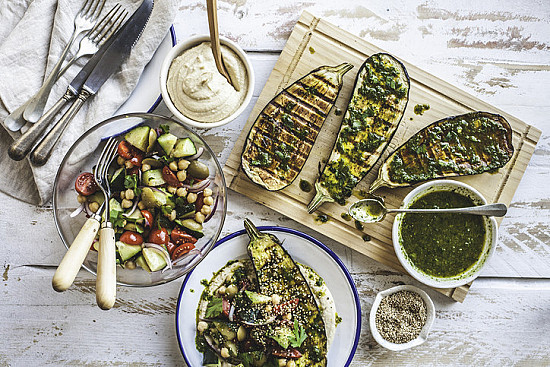
Grilled eggplant steak with cucumber, tomato, onion, chickpea, and feta salad
Slice an eggplant (from root to stem) into three-inch thick “steaks.” On each side, drizzle olive oil and a little black pepper. Grill on both sides until tender.
Dice two tomatoes, one cucumber, and half a red onion. Add a can of rinsed, drained chickpeas. Toss with a dressing of olive oil, a little red wine vinegar, and oregano to taste.
Serve the salad over the eggplant steak. Top with some diced feta cheese, if you like.
Veggie pita pocket with gazpacho
Put a couple of tomatoes, a cucumber, a green pepper, half a red onion, some bread crusts, and a little olive oil into a blender. Blend until chunky or finer, as you prefer. Add salt, pepper, and cumin to taste, blending for a few more seconds. Chill for 30 minutes.
Open a whole-wheat pita and spread a tablespoon of hummus inside. Add slices of zucchini and carrots, and some arugula, salad greens, or other vegetables that appeal to you.
Serve the pita with half a cup of the gazpacho.
Quinoa-stuffed red peppers
Based on a recipe from BIDMC’s CardioVascular Institute’s Hungry Heart Cookbook by Liz Moore, RD, LDN
Cut peppers in half, remove seeds, and lay them open side up on a dish.
Mix cooked quinoa, diced tomatoes, and corn off the cob (you can grill the corn first and cut off the kernels for a special summer flair). Add low-fat grated cheddar cheese, canned (rinsed) black beans, one egg, and some spices to taste, such as a bit of cumin, chili powder, salt, and pepper.
Use the mixture to stuff the peppers evenly, and then cook them on the grill in a grilling basket for about 30 minutes. You can also cook them in the oven at 350° F on a cookie sheet or in a roasting pan, checking at 30 minutes to see if they are done.
Other ideas include
grilled veggie kebabs with chunks of eggplant, zucchini, cherry tomatoes, and mushrooms. Serve on a bed of lettuce and add a little goat cheese.
whole-wheat pasta with a mix of sautéed vegetables that appeal to you.
salad with green leaf lettuce, raw green beans, cherry tomatoes, Kalamata or black olives, and half a hard-boiled egg. Top with a dressing you enjoy.
Which combinations of summer vegetables you choose can depend on cost, taste preferences, and how much time you want to spend cooking. If you’re in a hurry, go with a salad. If you have more time, try grilling or sautéing vegetables.
Finally, be open to inspiration from the bounty you see at the market. “Focus on getting a variety of colors in the vegetables you choose. The more colors there are on the plate, the more nutrients you’ll be consuming,” Moore says. “And try something new. Explore vegetables you’ve never tried before or new methods of cooking. Think of it as one of summer’s glorious adventures.”
Heidi Godman is the executive editor of the Harvard Health Letter. Before coming to the Health Letter, she was an award-winning television news anchor and medical reporter for 25 years. Heidi was named a journalism fellow … See Full Bio
Filled with healthy fats and fresh ingredients, this dish will leave you feeling satisfied, nourished and ready to embrace your weekend warrior: https://cle.clinic/3BSXeDL
A top-down view of a chocolate smoothie bowl (thick smoothie served in a bowl with a spoon) garnished with chia seeds, large coconut flakes and cacao nibs. Healthy vegan breakfast. The smoothie portion contains banana, chocolate, almond milk and ice.
This pudding is packed with health-promoting chia seeds, almond milk, cinnamon, cocoa, coconut flakes and dried fruit. It’s the perfect chocolate treat.
Ingredients
½ cup Chia seeds
1 cup vanilla almond milk, unsweetened
1 cup 2% milk (may use all almond for non-dairy option)
1½ tablespoons honey
1 tablespoon cocoa powder, unsweetened
1 teaspoon cinnamon
1 teaspoon vanilla extract
2 tablespoons coconut flakes, unsweetened
2 tablespoons dried tart cherries, or other unsweetened dried fruit
Directions
Place chia seeds, milks, honey, cocoa, cinnamon and vanilla in a glass container with a tight lid.
Seal and shake well to combine. Refrigerate for at least 5 hours or overnight.
Serve topped with coconut flakes and dried fruit to garnish.
Note: For a smoother texture, blend pudding in a high power blender before refrigerating. Be sure to blend well to avoid a gritty texture.
Nutrition information
Makes 6 servings
Each 1/2 cup serving contains:
Calories 140
Total fat 7g
Saturated fat 2g
Trans fat 0g
Protein 4g
Total carbohydrate 16g
Fiber 6g
Sugar 7g
Cholesterol 5mg
Sodium 150mg
This bright, lemony salad is best made with farm-fresh asparagus, which is dressed and eaten raw here. Look for stalks that are bright green with firm, tight tips. Buy it in season from your local farmer’s market.
Ingredients
1 pound fresh asparagus 1 tablespoon fresh lemon juice 1 tablespoon extra virgin olive oil 1/8 teaspoon kosher salt 1/8 teaspoon freshly ground black pepper 1 tablespoon shaved Parmesan 8 fresh chives
Directions
Break off the tough ends of the asparagus and discard.
Use a vegetable peeler to make long thin ribbons of asparagus. Add to a large bowl.
In a small bowl, whisk together the lemon juice, oil, salt and pepper. Drizzle over the asparagus ribbons and toss well.
Use the vegetable peeler to shave thin strips from a piece of fresh Parmesan (about 1 tablespoon) and scatter over the salad.
Use kitchen shears to cut the chives into small pieces directly over the salad.
Nutritional information (per serving)
Makes 4 servings
Calories: 70 Total fat: 4 g Saturated fat: 1 g Trans fat: 0 g Protein: 4 g Total carbohydrate: 7 g Fiber: 3 g Sugar: 2 g Cholesterol: 0 mg Sodium: 95 mg
—Developed by Sara Quessenberry for Cleveland Clinic Wellness.
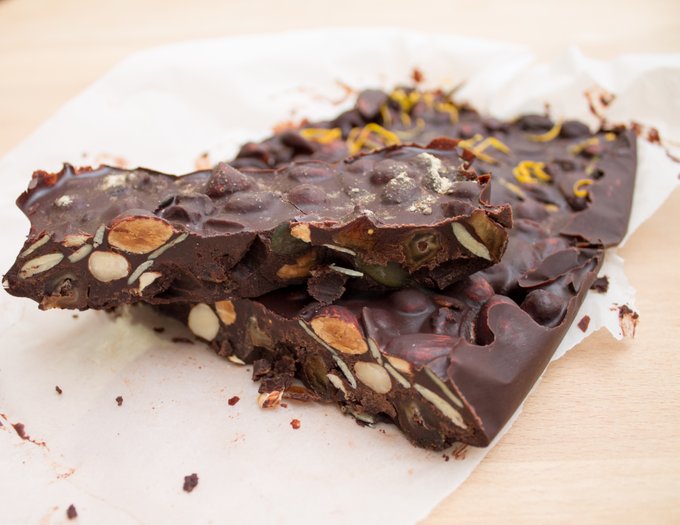
Recipe: Chocolate Bark With Espresso and Toasted Nuts
Each serving only contains 70 calories
health.clevelandclinic.org
This deliciously indulgent chocolate bark recipe offers heart-healthy dark chocolate with toasted walnuts, pecans and almonds — and no added sugar! And each serving contains only 70 calories.
Ingredients
10 ounces dark chocolate (70% cocoa bittersweet chocolate)
2 teaspoons instant espresso powder
1/2 cup walnut pieces, toasted
1/2 cup pecan pieces, toasted
1/2 cup almond slices, toasted
Directions
Combine chocolate and espresso and place over a double boiler.
Heat on a low flame and stir until chocolate is about three-quarters of the way melted.
Remove from heat and stir until smooth.
Transfer to a mixing bowl, toss in the toasted nuts and mix well.
On a cookie sheet lined with parchment paper, spread the mix and chill in the refrigerator for about 30 minutes, or until it sets.
Break into pieces and serve.
Nutrition information (per serving)
Makes 35 servings Serving = 1/2 ounce
Calories: 70 Sodium: 15 mg Sugar: 4 g Cholesterol: 0 mg Saturated fat: 2 g Fiber: 1 g Protein: 1 g Carbohydrate: 5 g
#MayoClinicRecipes: Smoked #Gouda and vegetable poached #EggSandwich —Try this great sandwich for breakfast or a brunch this weekend. You can also roast peppers by placing them directly over a gas burner or grill for 5 to 10 minutes. Enjoy! https://mayocl.in/2umGUda