
@ClevelandClinic
·
Stretches to loosen up those tight back muscles:

Health is Wealth
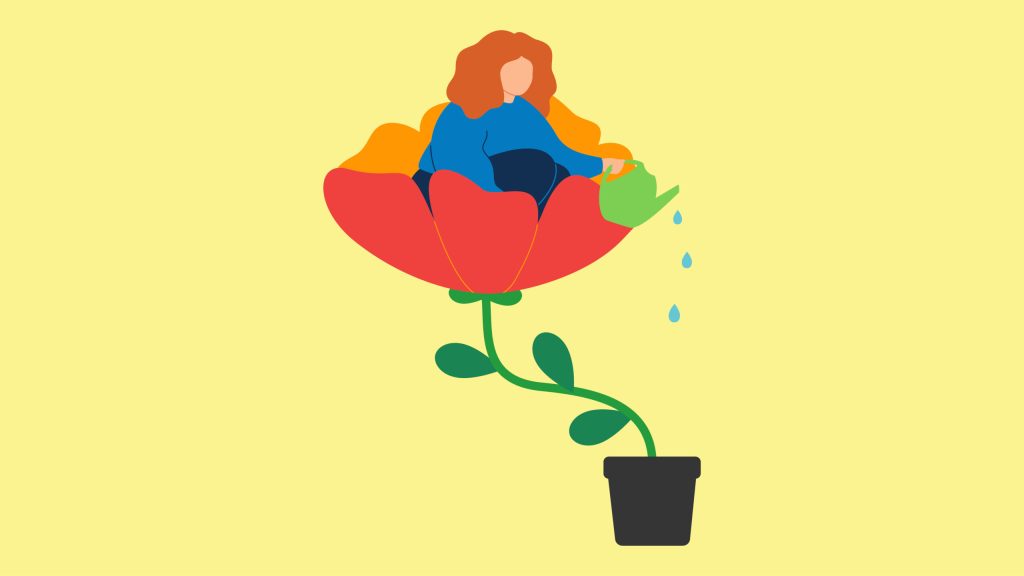
There is perhaps no greater feeling than love. When you feel appreciated, respected and supported, it can do wonders for your physical, mental and emotional health — and that’s true whether you’re long past the honeymoon phase or you’re holding on for dear life in an otherwise exciting situationship. And even the greatest, most supportive friendships can empower you to take on exciting new adventures and embrace the good things happening all around you. But how often do we stop and think about all the ways we should and can show up for ourselves?
Registered psychotherapist Natacha Duke, MA, RP, explains how self-love can change your life for the better, along with small ways you can practice self-love every single day.
“Self-love” might take on different meanings for different people depending on the circumstances of their situation and what they need most at the time. Duke says that when we talk about self-love, we often refer to embracing and upholding psychological concepts like self-respect, self-value, self-esteem and self-worth. But ultimately, self-love revolves most around self-compassion: It’s the intentional choice to show up for yourself, support your needs and wants, and honor your limitations.
“I think there’s a real shift in psychology toward self-compassion and really being able to look at loving yourself and treating yourself the way you would your own best friend, and being able to really show up for yourself when you’re struggling or when things are not going your way,” she adds.
When you practice self-love, rather than imposing self-criticism, regret, shame or guilt or avoiding uncomfortable emotions, you’re choosing instead to focus on the opposite. You’re honoring the emotions you feel, even the ones that are uncomfortable. You’re participating in self-soothing activities, embracing helpful coping mechanisms and supporting yourself with a growing awareness that this difficult time, too, shall pass. As a result, you come to discover that you are not your own worst enemy, but your own best friend.
“Self-love is about replacing that harsh inner critic with a really kind and compassionate voice,” reaffirms Duke. “The ability to practice self-compassion is a really good way to define self-love.”
“Self-compassion is something you can learn, and the more you practice the act of self-compassion, the more prominent these activities will become in your day-to-day life,” says Duke.
Here are some helpful tips for making self-compassion and self-love a part of your daily routine.
You can love yourself and, at the same time, want to make improvements. Upholding the balance between those good and “bad” feelings is where the magic happens.
“With other people, we tend to be much more forgiving than with ourselves,” notes Duke. “What you want to try to do is be able to hold the things you love about yourself and things that you don’t like about yourself simultaneously.”
That means if you feel lonely, it’s OK to acknowledge your loneliness. If you’re grieving, it’s OK to sit with that until you’re ready to move forward. If you’re angry about not making the changes you want to make, your anger is valid, too. Feel what you feel, and then act when you’re ready to act. But try not to take your feelings out on yourself.
“You don’t have to abandon yourself or turn on yourself or criticize yourself,” says Duke. “But you can appreciate that everyone has difficulties, and being there for yourself is one way you can cultivate self-love and self-compassion.”
“Even just checking in with yourself on a regular basis can be helpful,” says Duke.
As part of a daily process, self-love can look different on any given day. Some days, you may want to surround yourself with other people who make you feel good about socializing. Other days, you may want to shutter the doors, turn out the lights and snuggle up with a good book until you feel ready to come out of your cave.
Self-love could be taking the extra time to sleep in when you’re exhausted. Or it could look like ordering take-out instead of cooking dinner because it’s convenient and less time-consuming on a busy day. Whatever it is, self-love is an action you intentionally take that’s meant to be guilt-free without an ounce of judgment.
“It’s really important to be able to check in with yourself and ask, ‘How am I doing today? What is it that I might need today? What does self-love look like on this particular day?’” explains Duke.
“Some days, it might be going for a walk or it might be talking to someone you trust and unloading. But whatever it is, it’s really important to do that self-assessment, even for five minutes, to ask yourself what you need to feel like you’re supporting yourself.”
If you’re not sure where to start, try setting your intentions at the beginning of your day or try journaling to find out what you’re missing.
“One question that can be really helpful is, ‘What do I need more of?’” suggests Duke. “Normally, I find that people can answer that question. If you can’t, that’s OK. It might come out through further reflection by talking to a friend or talking to a therapist. But that’s usually a question that people can answer, and that can be a really nice place to start when you’re doing an inventory.”
Duke also recommends creating a list of everything you’re grateful for when you’re trying to determine which areas you’d like to ramp up your self-love and self-compassion.
“When we look at what we’re grateful for, we’re also in a better place mentally to then think about what we want to work on and really try to set some goals,” she adds.
On your darkest days, try your best to show up for yourself even in the smallest ways.
“Acknowledge that this is a hard day, a hard moment, a hard week or a hard time, give it that space, and then be there for yourself the way you would be there for your best friend,” says Duke.
“It might involve taking things a little bit slower that day. It might involve making yourself a nice breakfast, doing something small for yourself or scheduling something you look forward to. That’s a big one that people often miss: Having that something to look forward to.”
The holidays can be triggering for people — and yes, Valentine’s Day, too.
“Holidays in general tend to exacerbate what we already feel,” explains Duke. “If you are feeling lonely or if you are feeling depressed, this is going to bring it out more. So, doing a little bit of planning ahead of time can help if you know this will be triggering for you.”
Again, self-love looks different for everyone, but it’s worth asking yourself what you need in the days and weeks leading up to an event — a holiday, birthday or anniversary — that will serve you well when the event arrives.
If you’re single and you don’t want to be alone, maybe schedule a night out with your friends. If you’re grieving the loss of a loved one, maybe take the time to memorialize them by doing something they loved or setting aside some time to reflect and reconnect with their memory.
Whatever you decide to do, the key is doing something that makes you feel good and honors your intentions as you go into the day that you’re anxious about.
When the day of worry has passed, it’s good to return and re-assess how your act of self-love paid off. Was it better or worse than you thought? Did you feel your mood improve or worsen? How would you have done things differently given another go?
These are all good questions to ask as you continue to revisit the idea of self-love, particularly as it relates to holidays and important events. Having more information and building your self-awareness allows you to be better prepared next time similar circumstances arise, and it helps you get closer to your goal of supporting yourself through both good and difficult times.
Asking for what you want and expecting others to respect and honor your limitations is an act of self-love. Setting healthy boundaries can be difficult at times, but it does get easier the more you do it.
“Having self-respect and being able to be assertive when the situation calls for it and ask for what you want is a demonstration that how you feel and what you think about matters,” reinforces Duke.
“That relational piece can be a real expression of self-love, and so can boundaries when someone is not treating you in accordance with your values.”
Knowing when to walk away and let one-sided relationships end is also an act of self-love — one that pays dividends in the long run. When you start to surround yourself with people who love and support you for who you are, you’ll be amazed by how far healthy relationships can carry you.
Self-love can be a helpful practice for everyone, even for those who think everything is going right and those in the longest long-term relationships.
“It’s really hard to show up for the people that you love if you’re not engaging in a reasonable degree of self-love,” says Duke. “Whether it’s because of low self-esteem or it’s because you’re so busy that you consider self-love a luxury, if you’re not making time to take care of yourself, it’s really hard to show up in relationships as your best self and to just show up for the world.”
In fact, research suggests self-compassion can have a direct positive effect on your overall physical health and well-being. A 2021 meta-analysis found that self-compassion, particularly among younger adults, can promote better physical health.
And a 2023 study found that higher levels of self-compassion were associated with lower levels of psychological distress. When combined with higher levels of compassion for others, higher levels of self-compassion resulted in better overall mental health.
“If you have good mental well-being, you’re going to have less stress hormones, less risk for depression, cancer, heart disease — all these other illnesses,” says Duke. “The more we practice self-love and self-compassion, the more improved our lives can be in the long term.”

Chartered Society of Physiotherapy
·
‘We can see the impact untreated back pain is having on patients, the NHS and the wider economy with so many now out of work. ‘We urgently need more physiotherapy staff’.
in
on how back pain is driving a UK health ‘crisis’.
Chartered Society of Physiotherapy
·
‘We can see the impact untreated back pain is having on patients, the NHS and the wider economy with so many now out of work. ‘We urgently need more physiotherapy staff’.
in
on how back pain is driving a UK health ‘crisis’.
Chartered Society of Physiotherapy
·
‘We can see the impact untreated back pain is having on patients, the NHS and the wider economy with so many now out of work. ‘We urgently need more physiotherapy staff’.
in
on how back pain is driving a UK health ‘crisis’.
https://www.instagram.com/reel/Cs38Vg2AMYT/?igshid=MTc4MmM1YmI2Ng==
 clevelandclinic

Recipe: Spanish Omelet With Veggies and Cheese
Omelets are a great choice for a one-skillet meal, and our recipe delivers on nutrition and taste! This meatless dinner option provides 100% of your daily vitamin C and is a good source of calcium.
Makes 5 servings
Calories: 290
Total fat: 6 g
Saturated fat: 2.5 g
Trans fat: 0 g
Cholesterol: 120mg
Sodium: 250 mg
Total carbohydrate: 43 g
Fiber: 6 g
Sugars: 5 g
Protein: 18 g
— Recipe courtesy of Digestive Disease Health Team Dietitians.


 healthcareatoz
