Generally, anything that’s good for your overall health will be good for your bones, too. Being proactive about your bone health is key to making them solid and strong for the long haul. These strategies in particular can help prevent low bone density and bone loss, the longer you focus on them.
The health of mothers and babies is the foundation of healthy families and communities, helping ensure hopeful futures for us all.
World Health Day, celebrated on 7 April 2025, will kick off a year-long campaign on maternal and newborn health. The campaign, titled Healthy beginnings, hopeful futures, will urge governments and the health community to ramp up efforts to end preventable maternal and newborn deaths, and to prioritize women’s longer-term health and well-being.
WHO and partners will also share useful information to support healthy pregnancies and births, and better postnatal health.
This task is critical. Tragically, based on currently published estimates, close to 300 000 women lose their life due to pregnancy or childbirth each year, while over 2 million babies die in their first month of life and around 2 million more are stillborn. That’s roughly 1 preventable death every 7 seconds.
Based on current trends, a staggering 4 out of 5 countries are off track to meet targets for improving maternal survival by 2030. 1 in 3 will fail to meet targets for reducing newborn deaths.
Listening to women and supporting families
Women and families everywhere need high quality care that supports them physically and emotionally, before, during and after birth.
Health systems must evolve to manage the many health issues that impact maternal and newborn health. These not only include direct obstetric complications but also mental health conditions, noncommunicable diseases and family planning.
Additionally, women and families should be supported by laws and policies that safeguard their health and rights.
Campaign goals
To raise awareness about gaps in maternal and newborn survival and the need to prioritize women’s longer-term well-being.
To advocate for effective investments that improve the health of women and babies.
To encourage collective action to support parents as well as health professionals who provide critical care.
To provide useful health information relating to pregnancy, childbirth, and the postnatal period.
Get involved
Here’s what you can do to support the campaign:
Spread awareness: share information about the campaign using #HopefulFutures and #HealthForAll.
Participate: attend our global events to learn more about what it will take to end maternal and newborn mortality.
Donate: contribute to the WHO Foundation which supports WHO’s work to protect mothers and babies in countries around the world.
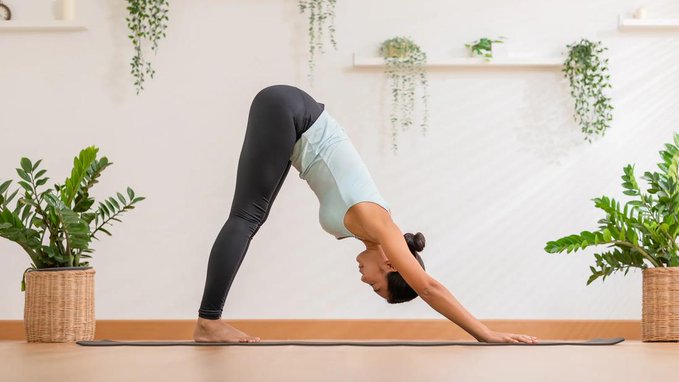
This transitional and restorative yoga pose provides a full-body stretch
Physical therapist Dawn Lorring, PT, MPT, walks through the steps of how to do downward dog correctly and shares its many benefits.
From beginner’s yoga to more advanced practices, downward dog is one of the most popular poses…with a few common misconceptions.
Rounding your back, placing your feet too far apart or putting too much weight into your wrists can all create a deeper stretch than intended — which increases your risk of injury.
Physical therapist Dawn Lorring, PT, MPT, walks through the steps of how to do downward dog correctly and shares its many benefits.
What is downward dog?
Downward dog (also known as downward facing dog, facing dog pose or Adho Mukha Svanasana in Sanskrit) is a foundational yoga pose. It’s often used as a transition between movements, like sun salutations. It’s also a form of active resting, active stretching and strengthening. This allows you to check in with yourself and re-evaluate your intentions during your practice.
You do downward facing dog by putting your body into an inverted V-shape (or pyramid), as if there were a straight line that runs through the top of your head up your spine and out of your butt toward the ceiling.
How to properly do downward facing dog
Facing dog pose won’t usually be your first movement when doing yoga. Before trying it, it’s best to loosen up your muscles and joints and find ways to work it into your overall yoga practice.
Once you’re warmed up and ready to go, follow these steps:
Start on all fours with your hands shoulder-width apart and your knees in line directly behind your hips.
Spreading your fingers wide, press down into your hands and tuck your toes (almost like you’re using them to grip the floor beneath you).
As you exhale, bring your hips up and back, as if there’s a string pulling your butt toward the ceiling, so your body creates an inverted V-shape (or pyramid).
Focus on straightening your back, not rounding it, so your head and neck are relaxed between your upper arms. It helps to focus on pressing through your arms to “push” the ground away from you and keep your arms active.
Keep your legs straight and, if it’s comfortable for you to do so, try to drop your heels down to the floor.
Adjust your posture by shifting your weight between your hands and feet until you sink comfortably into the position.
Hold this pose for 10 to 15 seconds at a time, making sure to breathe throughout.
For a more relaxed stretch, bend your knees a little and readjust your posture as needed.
When you’re done, exhale and move into your next pose or slowly lower yourself to the floor to enter child’s pose.
“Downward facing dog isn’t about keeping your heels on the ground or holding it for long periods of time,” clarifies Lorring. “It’s really about making sure you’re going to a place that’s comfortable for you, so you can adjust your body as often as you need in this pose.”
Facing dog pose variations
If you have a hard time getting down on your hands and knees, try this wall variation:
Face the wall and place both your hands out in front of you so your palms are flat and your fingers are stretched out.
Keeping your head and back straight and your hands on the wall in front of you, slowly walk your legs backward.
As you move, walk your hands down the wall so you hinge at your hips and look directly at the floor.
Keeping your head and neck relaxed, hold this pose for 10 to 15 seconds before slowly returning to stand.
If you feel stress or discomfort in your wrists, you can modify by rolling up a towel or the edge of your yoga mat and placing the roll under the heels of your hands. This will decrease some of that pressure.
For a more challenging stretch that deeply engages your hips and hamstrings:
While in the downward facing dog position, lift one leg up and stretch it toward the ceiling.
For a deeper stretch, bend your outstretched leg back and over your body, so your knee is facing away from you.
Repeat this process with the other leg, holding the pose for as long as you feel comfortable on either side.
Downward dog benefits
Downward facing dog provides a full body stretch, while also strengthening and working your:
Adho Mukha Svanasana helps improve your flexibility and control, and provides you a moment of active rest. It also increases blood flow to your head and upper body when you’re in the inverted V position. But because of this, you should talk to your yoga instructor, athletic trainer or healthcare provider before starting this position if you have:
“Facing dog pose tries to improve flexibility but also builds the strength to control that flexibility,” says Lorring. “If you’re feeling excessive stress to a certain part of your body, then you’re probably holding the pose for too long or you’re trying to go into a range that you’re not ready for. We can help you get there.”
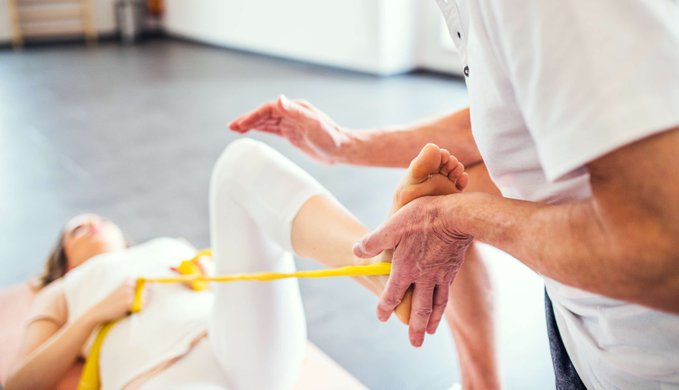
Physiotherapists rarely get a mention, but they improve the lives of millions of people every single year and so many of us would struggle without them. Huge thanks to every single one of you.
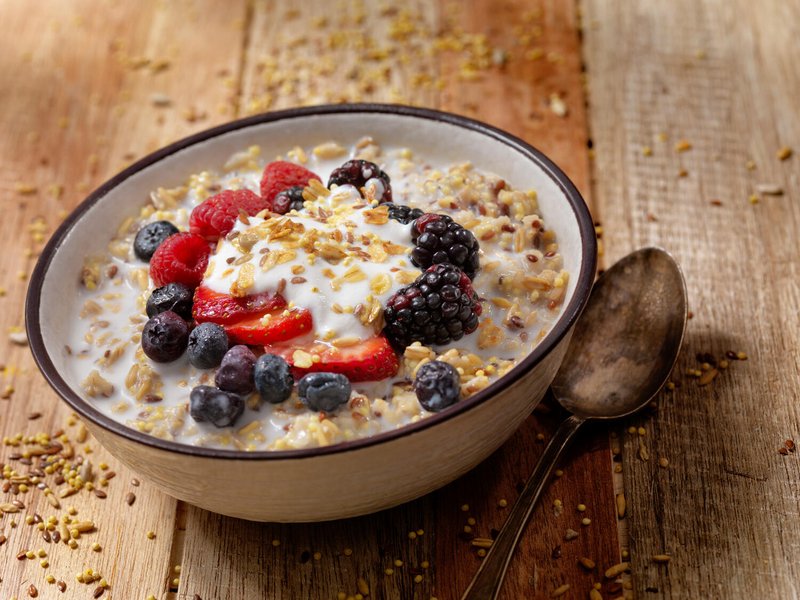
Start your day with a hearty and nutritious 6-grain hot cereal that will keep you energized and satisfied. Prepare a big batch over the weekend and enjoy a warm, comforting breakfast all week long. Top it with your favorite fruits or a dollop of yogurt for added natural sweetness.
Servings: 14 Serving Size: ½ cup
Nutritional Information Per Serving
114 calories
1 g total fat
0 g saturated fat
0 g transfat
0 g monounsaturated fat
0 mg cholesterol
74 mg sodium
21 g total carbohydrate
3 g dietary fiber
0 g total sugars
4 g protein
Ingredients
½ cup uncooked pearl barley
½ cup uncooked red wheat berries
½ cup uncooked brown rice
¼ cup uncooked steel cut oats
3 tablespoons uncooked quinoa
2 tablespoons of flaxseed
½ teaspoon kosher salt
1 ½ quarts water
Directions
In a large saucepan, combine the barley, wheat berries, rice, oats, quinoa, flaxseed and salt.
Pour water over ingredients, stir and bring to a boil over medium heat.
Reduce heat to low and simmer for 45 minutes, stirring occasionally.
Dietitian’s tip:
Make a big batch of this cereal on the weekend and reheat all week. Top with fruit or yogurt to add natural sweetness.
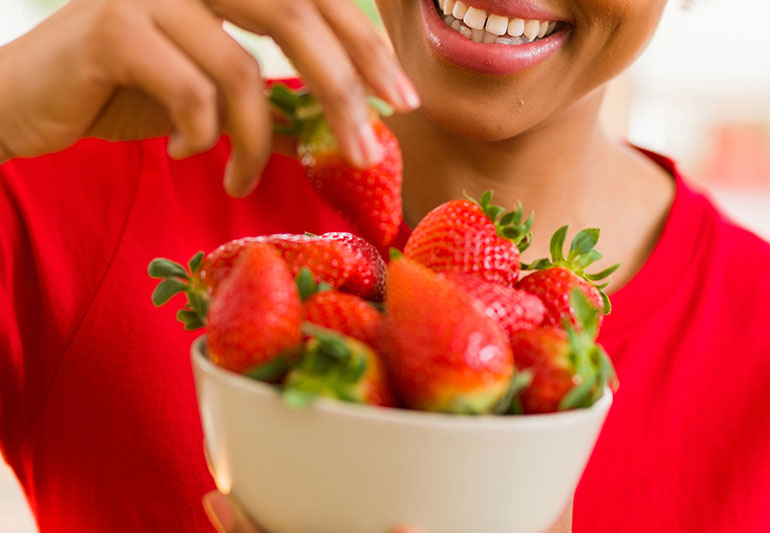
Strawberries are an iconic summer fruit — delicious in lemonade, on shortcakes or just straight out of the basket. And it turns out they may be the sweetest way to stay healthy, too. Registered dietitian Bailey Flora, MS, RDN, LD, explains the benefits of strawberries and what nutrients they contain that make strawberries so good for you.
Why are strawberries good for you?
“Strawberries give you a lot of nutritional value for very few calories,” says Flora. “They’re tasty but naturally low in sugar. That’s a combination that’s hard to beat.”
For starters, strawberries are loaded with vitamin C. Eight medium strawberries contain 160% of your daily recommended amount — the amount that the U.S. Food and Drug Administration (FDA) recommends you eat every day. That’s more vitamin C than you get from an orange, the fruit famous for its vitamin C.
Strawberries are also packed with antioxidants, which protect cells from damage. The primary antioxidant in strawberries is anthocyanin, which gives the fruit its color. The amount of anthocyanin in strawberries increases as the fruit ripens. So, the redder the berry, the more antioxidants it contains.
Strawberries also have fiber and several other important vitamins and minerals, including manganese, potassium and folic acid. And strawberries have less natural sugar than other popular fruits such as apples and bananas.
Health benefits of strawberries
Strawberries are a nutrient-rich snack that can:
1. Boosts brain power
As your brain ages, it can lose some of its mental sharpness. But according to research, eating strawberries protects your brain’s processing powers as you get older.
The Nurses’ Health Study measured brain function in more than 16,000 participants over six years. It found that people who ate the most blueberries and strawberries had less cognitive decline — their thinking and processing abilities didn’t weaken as much. They had the brain power of someone up to two and a half years younger.
Researchers believe the protective effects are due to the antioxidants that safeguard cells. Some of the antioxidants in strawberries also reduce systemic inflammation, when your body is in a state of constant inflammation (swelling and irritation). Systemic inflammation is a key factor in the development of Alzheimer’s disease.
2. Strengthens your immune system
Strawberries are a great source of vitamin C (ascorbic acid), which you need to get from food, as your body can’t produce it. In rare cases, people who don’t get enough of this crucial vitamin develop scurvy, a disease that causes bleeding, bruising and anemia.
Vitamin C plays an important role in wound healing. And it may prevent and treat respiratory and systemic infections too. Research shows that vitamin C increases the production of:
T-cells, which remove infected and cancerous cells.
B-cells, which create antibodies so your body can better defend against germs in the future.
Vitamin C is also anti-inflammatory, lowering your stress response triggered by illness or just your busy life. To ward off germs, researchers suggest getting 100 to 200 milligrams (mg) of vitamin C a day — and more when you’re sick. As eating eight medium strawberries gives you 160 mg, it takes just a handful of berries to help keep your immune system in good shape.
“There isn’t enough evidence to say whether vitamin C can prevent colds and the flu,” says Flora. “And it can be more beneficial to choose vitamin-C-rich foods like strawberries over vitamin C supplements, as you get additional health benefits. With strawberries, that includes fiber and other phytonutrients and vitamins that cannot be replicated in a vitamin supplement.”
3. Protects heart health
Flora says that popping a few strawberries in your mouth isn’t just a way to stave off hunger — it’s also a heart-healthy food choice. Research shows that strawberries can help prevent several conditions that can lead to heart disease and stroke, as well as diabetes, which increases the likelihood of heart disease. Eating more strawberries can help you:
Lower cholesterol
In one small study, participants consumed two drinks a day, each made with 25 milligrams of freeze-dried strawberry powder blended with water. That’s about the same as eating 3.5 cups of fresh strawberries a day. After a month, the participants’ total cholesterol was 5% lower.
The cholesterol-lowering results of that study were echoed in another study that gave participants the same amount of freeze-dried strawberry powder. But this time, they consumed the drink for two months. Researchers compared the results to a group that just drank more water. Those who sipped the strawberry drink saw their cholesterol decrease by 10%.
Decrease triglycerides
Triglycerides are fats found in your blood. Having high triglycerides increases your risk of heart disease. And when triglycerides break down, they leave byproducts that trigger inflammation, attracting sticky deposits to blood-vessel walls. That material can clog your arteries (atherosclerosis), explains Flora.
But eating a pound of strawberries a day may reduce triglycerides by 20%. That’s the result of one study, which also found that strawberries reduced total cholesterol by 8%.
4. Reduces inflammation
Widespread internal inflammation contributes to multiple diseases, including heart disease. Lifestyle factors like a poor diet, low physical activity and smoking can lead to inflammation.
Eating more strawberries is a step in the right direction to boost your heart health, says Flora. That’s because the most prevalent antioxidants in strawberries are anthocyanins, known for their anti-inflammatory effects.
5. Helps manage blood sugar
Too much glucose (sugar in your blood) is a risk factor for Type 2 diabetes, making you more likely to develop heart disease, too. If you’re watching your blood sugar levels, strawberries are a good way to satisfy your sweet tooth.
In a Finnish study, people who ate strawberries with a piece of white bread released 26% less insulin compared with eating bread with a cucumber. Participants also ate the bread with other berries, including raspberries and cranberries. Only strawberries weakened the post-meal blood sugar spike.
Strawberries are a great addition to a healthy diet, especially when you eat them on their own — Flora advises laying off the calorie-laden whipped cream, cake or ice cream. (Sorry!) They’re delicious, full of good-for-you nutrients and low in sugar. Try this strawberry smoothie. (Surprise — it’s green!) And for a strawberry treat that’s not too sweet, make these strawberry pretzel squares at your next get-together.FACEBOOKTWITTER







 Healthaware