
Recipe: Oats and Honey Bread @ClevelandClinic

A homemade loaf that’s sure to impress and please

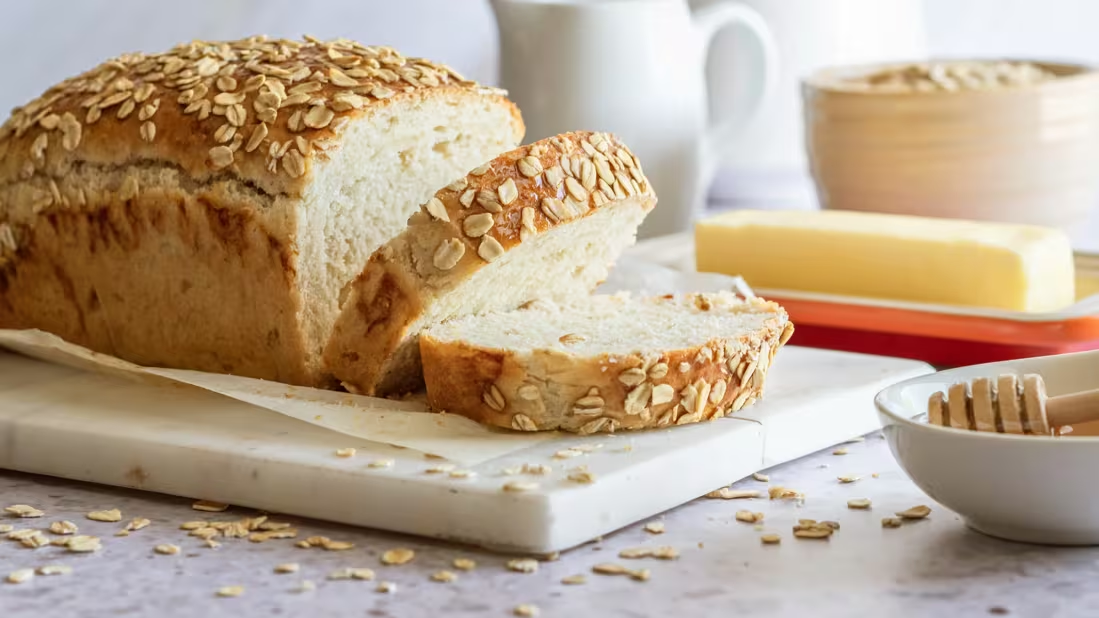
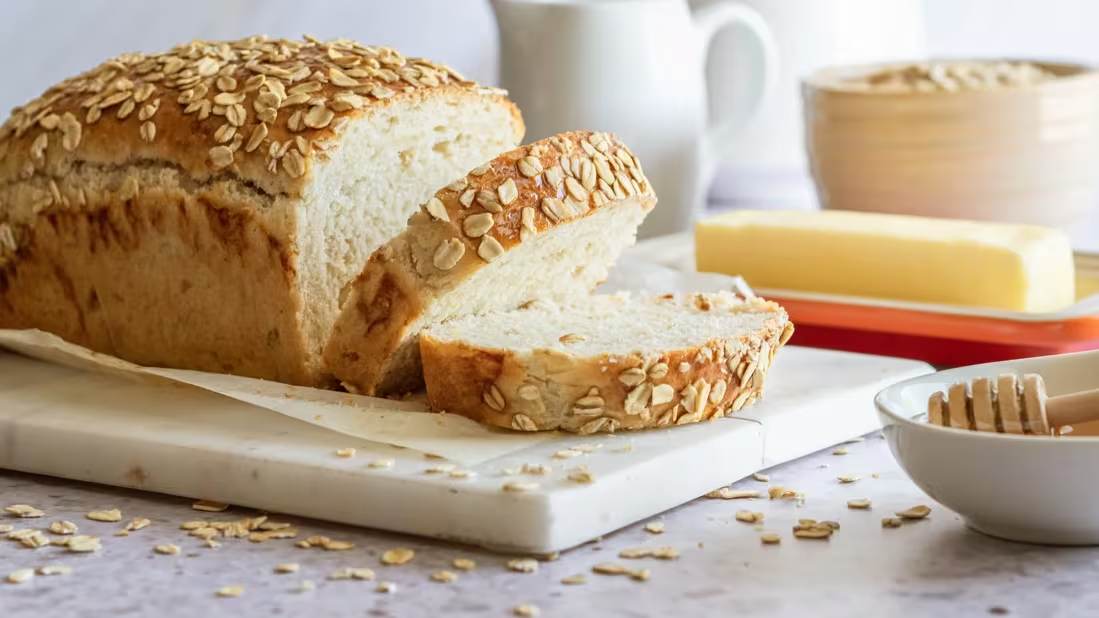
Whether you prefer to knead and bake it in the oven or use your bread machine, this recipe will be a family favorite. Oats and honey add flavor to traditional bread, giving it an extra kick your family will love. The quick oats are healthy and add texture, and the slight honey-sweet taste is sure to please!

Ingredients

  • 2 teaspoons of olive oil
  • 1 3/4 cups warm unsweetened almond milk (directions below)
  • 2 packets of active dry yeast (or 1 1/2 tablespoons)
  • 3/4 cup quick-cooking oats and additional for garnish
  • 1/3 cup honey
  • 3 tablespoons vegetable oil
  • 2 1/2 teaspoon salt
  • 5 cups (approximately) all-purpose flour, or try a 50/50 white and wheat blend for added flavor
  • 1 large egg

Directions

  1. In a microwave, heat the almond milk for 1 minute and 40 seconds to be very hot. Let sit to reduce temperature to 100 to 110 F.
  2. In a stand mixer or large bowl, add the hot milk. Stir in beaten egg, honey, oil and salt. Add the yeast until fully mixed.
  3. Slowly add in the flour and oats to the large bowl of liquid mixture and mix on low. You should use a bread attachment if using a stand mixer.
  4. Coat another large bowl with oil. Transfer the dough to the bowl and turn it to coat.
  5. Cover with plastic wrap (spray with cooking spray first to keep it from sticking to the dough), then cover with a kitchen towel and let rise at room temperature until doubled in volume, about 1 hour.
  6. Oil two 8 1/2-inch x 4 1/2-inch x 2 1/2-inch loaf pans.
  7. Punch down the dough; shape into two loaves. Place one loaf in each pan. Cover and let rise in a warm, draft-free area until almost doubled in volume, about 20 minutes.
  8. Preheat oven to 350 F.
  9. Sprinkle with additional oats for garnish.
  10. Bake until brown on top and tester inserted into center comes out clean, about 40 minutes. Cool completely.

Ingredient health benefits

  • Olive oil: This cooking oil is as ancient as it is nutritious! Olive oil is loaded with unsaturated fats that help raise your “good” (HDL) cholesterol while lowering your “bad” (LDL) cholesterol. And they’re not the only heart-healthy compounds in town: Polyphenols help lower inflammation that can lead to certain health conditions in the long term, like cancer and heart disease. Olive oil also has fat-soluble vitamins like vitamins D and K for strong bones and muscles and healthy blood cells.
  • Almond milk: A vegan-friendly dairy alternative, almond milk is a good source of vitamin E. This essential vitamin is famous for promoting your skin health, but it protects your eyes and immune system from disease as well. Almond milk is also a lower-calorie option compared to cow’s milk, if that’s something you want to keep an eye on.
  • Oats: When it comes to whole grains, oats just may be the GOAT (grain of all time). They’re packed with digestion-friendly fiber and vitamin B5 (pantothenic acid) to help lower your cholesterol levels, making them a smart choice for your heart. Oats also have magnesium, phosphorus, iron and copper, and they’re high in manganese. These minerals are important for supporting the health of your bones and blood cells. You can also count on vitamin B1 (thiamine) and zinc to keep your immune cells in peak condition.
  • Honey: It’s not just a sweet deal for your taste buds! Honey is full of antioxidants like polyphenols and flavonoids, which help protect your cells from harm. They do this by fighting inflammation and free radicals, tiny particles that damage your cells and contribute to disease if left unchecked.
  • Eggs: They’re easy to add to just about any recipe, but are eggs really all they’re cracked up to be? The answer is yes! Scrambled or sunny side up, eggs are a meat-free complete protein, meaning that they have you covered for all the amino acids you need and can’t make by yourself. They also have luteinvitamin A, vitamin E and vitamin B12 — all of which are excellent for your eyes and vision! And last but not least, there’s vitamin B9 (folate) for head-to-toe health.

Nutrition information (per serving)

Serving = 2 slices
Each loaf makes about 16 slices

Calories: 100
Protein: 2.2 g
Carbohydrates: 16 g
Fat: 2.2 g (0.7 g saturated fat)
Calcium: 6 mg

Recipe: Oats and Honey Bread @ClevelandClinic

A homemade loaf that’s sure to impress and please

Whether you prefer to knead and bake it in the oven or use your bread machine, this recipe will be a family favorite. Oats and honey add flavor to traditional bread, giving it an extra kick your family will love. The quick oats are healthy and add texture, and the slight honey-sweet taste is sure to please!

Ingredients

  • 2 teaspoons of olive oil
  • 1 3/4 cups warm unsweetened almond milk (directions below)
  • 2 packets of active dry yeast (or 1 1/2 tablespoons)
  • 3/4 cup quick-cooking oats and additional for garnish
  • 1/3 cup honey
  • 3 tablespoons vegetable oil
  • 2 1/2 teaspoon salt
  • 5 cups (approximately) all-purpose flour, or try a 50/50 white and wheat blend for added flavor
  • 1 large egg

Directions

  1. In a microwave, heat the almond milk for 1 minute and 40 seconds to be very hot. Let sit to reduce temperature to 100 to 110 F.
  2. In a stand mixer or large bowl, add the hot milk. Stir in beaten egg, honey, oil and salt. Add the yeast until fully mixed.
  3. Slowly add in the flour and oats to the large bowl of liquid mixture and mix on low. You should use a bread attachment if using a stand mixer.
  4. Coat another large bowl with oil. Transfer the dough to the bowl and turn it to coat.
  5. Cover with plastic wrap (spray with cooking spray first to keep it from sticking to the dough), then cover with a kitchen towel and let rise at room temperature until doubled in volume, about 1 hour.
  6. Oil two 8 1/2-inch x 4 1/2-inch x 2 1/2-inch loaf pans.
  7. Punch down the dough; shape into two loaves. Place one loaf in each pan. Cover and let rise in a warm, draft-free area until almost doubled in volume, about 20 minutes.
  8. Preheat oven to 350 F.
  9. Sprinkle with additional oats for garnish.
  10. Bake until brown on top and tester inserted into center comes out clean, about 40 minutes. Cool completely.

Ingredient health benefits

  • Olive oil: This cooking oil is as ancient as it is nutritious! Olive oil is loaded with unsaturated fats that help raise your “good” (HDL) cholesterol while lowering your “bad” (LDL) cholesterol. And they’re not the only heart-healthy compounds in town: Polyphenols help lower inflammation that can lead to certain health conditions in the long term, like cancer and heart disease. Olive oil also has fat-soluble vitamins like vitamins D and K for strong bones and muscles and healthy blood cells.
  • Almond milk: A vegan-friendly dairy alternative, almond milk is a good source of vitamin E. This essential vitamin is famous for promoting your skin health, but it protects your eyes and immune system from disease as well. Almond milk is also a lower-calorie option compared to cow’s milk, if that’s something you want to keep an eye on.
  • Oats: When it comes to whole grains, oats just may be the GOAT (grain of all time). They’re packed with digestion-friendly fiber and vitamin B5 (pantothenic acid) to help lower your cholesterol levels, making them a smart choice for your heart. Oats also have magnesium, phosphorus, iron and copper, and they’re high in manganese. These minerals are important for supporting the health of your bones and blood cells. You can also count on vitamin B1 (thiamine) and zinc to keep your immune cells in peak condition.
  • Honey: It’s not just a sweet deal for your taste buds! Honey is full of antioxidants like polyphenols and flavonoids, which help protect your cells from harm. They do this by fighting inflammation and free radicals, tiny particles that damage your cells and contribute to disease if left unchecked.
  • Eggs: They’re easy to add to just about any recipe, but are eggs really all they’re cracked up to be? The answer is yes! Scrambled or sunny side up, eggs are a meat-free complete protein, meaning that they have you covered for all the amino acids you need and can’t make by yourself. They also have luteinvitamin A, vitamin E and vitamin B12 — all of which are excellent for your eyes and vision! And last but not least, there’s vitamin B9 (folate) for head-to-toe health.

Nutrition information (per serving)

Serving = 2 slices
Each loaf makes about 16 slices

Calories: 100
Protein: 2.2 g
Carbohydrates: 16 g
Fat: 2.2 g (0.7 g saturated fat)
Calcium: 6 mg

Take a fresh look at oatmeal – it’s not as simple as you think @American_Heart


American Heart Association

@American_Heart
·


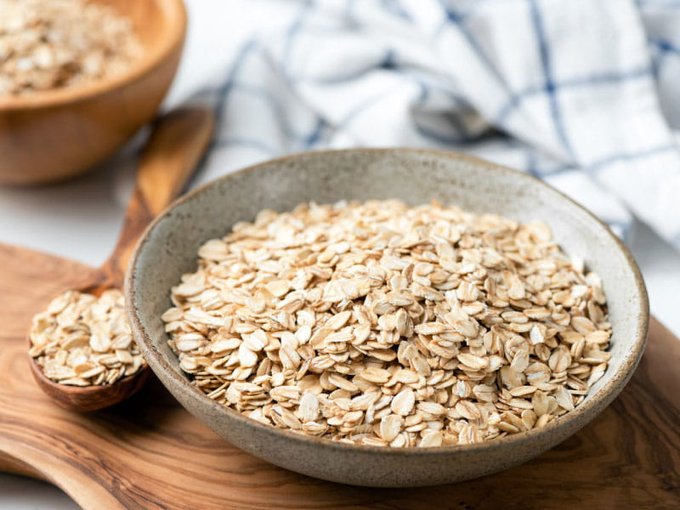
Oats and oatmeal have powers you probably didn’t know about — like nutrients to help lower cholesterol and enough fiber to help you feel fuller longer. They just might be quiet heroes of #BetterBreakfastMonth.

(Arx0nt/Moment via Getty Images)

By Michael Merschel, American Heart Association News

Let’s admit it: Oatmeal is a total nerd. It lacks fashion sense – the color they named after it is somewhere on the drab side of beige. It’s often seen with Sesame Street’s Bert, who also loves bottle caps, paper clips and pigeons.

But when it comes to healthy eating, oatmeal and the oats it comes from can definitely hang with the cool kids at the breakfast table.

“It has many, many good qualities,” said Candida Rebello, director of the nutrition and chronic disease research program at Louisiana State University’s Pennington Biomedical Research Center in Baton Rouge.

Extensive studies have associated oats and oatmeal with plenty of heart-healthy benefits, such as lowering cholesterol (both total and “bad” LDL cholesterol) and helping with weight control.

Oatmeal has a host of vitamins and minerals. Two examples: According to the U.S. Department of Agriculture, a one-cup serving of cooked oatmeal has about 1.8 milligrams of vitamin B1, or thiamin. That’s close to 15% of what an adult needs each day. It also has 1.36 mg of manganese, which is 59% of the daily recommendation for men and 76% for women. Manganese has roles in immunity, blood clotting and the way cholesterol and blood sugar are metabolized.

But that’s not what makes oats stand out, Rebello said. That same cup of cooked oatmeal has just 166 calories and nearly 4 grams of dietary fiber.

And the type of fiber is where oats start to distinguish themselves. It’s called beta-glucan. Put that in the conversation, and it’s like the scene in a movie where oatmeal takes off its glasses and everyone realizes just how beautiful it is.

Not literally. It’s a soluble fiber, which means it dissolves in hot water, where it thickens. “When you eat oatmeal, the kind of sliminess that you see – that comes from this viscosity that beta-glucan generates,” Rebello said.

That helps you feel full longer, she said. And it helps undigested food travel farther down your digestive tract, where it feeds the friendly bacteria living there.

Beta-glucan is abundant in oats and barley and has been shown “quite unequivocally” to help maintain healthy cholesterol levels, Rebello said.

Oats also are rich phytonutrients – plant-derived substances that may boost health. One class of such phytonutrients is avenanthramides, which are found only in oats. Avenanthramides may have antioxidant and anti-inflammatory effects, although Rebello said their possible benefits are not as well-researched as those for beta-glucans.

Oats have been linked to heart-health benefits since the 1960s and come in many forms. The differences involve levels of processing.

Oats grow in an inedible casing called a hull. Inside the hull is a seedlike groat. That groat is encased in bran. “In other whole grains, like in wheat, you can remove that bran layer,” Rebello said. “But in oats, this groat is very soft, so that bran layer cannot really be removed.”

That means oats are almost always a whole-grain food, and those are a key part of a healthy eating pattern.

If oats are labeled “steel cut,” it simply means they were processed with a steel cutter, Rebello said. Rolled oats are steamed first, then pressed with a roller. “If the roller crushes it into thinner flake, then you get quick-cooking oats,” she said. “If it is then rolled into an even thinner flake, you get your instant oats.”

Rebello said that nutritionally, there is little difference between steel cut and rolled oats. Instant oats, however, have a higher glycemic index, meaning they raise your blood sugar faster.

When oats are ground to flour, the coarser portion is extracted and called oat bran. The beta-glucans will be concentrated in the flour rather than the bran, she said.

Oat milk is derived from oats and water, but processing may add ingredients such as sugar, salt, oil and more. Oat milk has some dietary fiber, Rebello said – commonly 2 grams per cup – but the amount of beta-glucan is rather small.

Unfortunately, Rebello ruled out sugar-filled oatmeal cookies as a healthy food (although she’s not averse to having one as a treat now and then).

How, then, to embrace oats? “Just eat regular oatmeal,” she said. Half a cup of rolled oats cooks up quickly and will keep you full a long time.

Oatmeal with your favorite fruit can be a sweet way to start the day. Cook it in low-fat milk for creaminess and add unsalted nuts to bolster its heart-health value. If you’re time-pressed in the morning, try a healthy version of overnight oats, which can be prepared the night before.

It’s important to remember that no single food, even oats, can do it all, Rebello said, noting that if you eat a nutritious breakfast but then load up on sugar and fat the rest of the day, “that’s really not going to help you much.”

But you should go ahead and invite oatmeal into your breakfast club, Rebello said. “I definitely recommend eating oats.”

If you have questions or comments about this American Heart Association News story, please email editor@heart.org.
Take a fresh look at oatmeal – it’s not as simple as you think @American_Heart


American Heart Association

@American_Heart
·


Oats and oatmeal have powers you probably didn’t know about — like nutrients to help lower cholesterol and enough fiber to help you feel fuller longer. They just might be quiet heroes of #BetterBreakfastMonth.

(Arx0nt/Moment via Getty Images)

By Michael Merschel, American Heart Association News

Let’s admit it: Oatmeal is a total nerd. It lacks fashion sense – the color they named after it is somewhere on the drab side of beige. It’s often seen with Sesame Street’s Bert, who also loves bottle caps, paper clips and pigeons.

But when it comes to healthy eating, oatmeal and the oats it comes from can definitely hang with the cool kids at the breakfast table.

“It has many, many good qualities,” said Candida Rebello, director of the nutrition and chronic disease research program at Louisiana State University’s Pennington Biomedical Research Center in Baton Rouge.

Extensive studies have associated oats and oatmeal with plenty of heart-healthy benefits, such as lowering cholesterol (both total and “bad” LDL cholesterol) and helping with weight control.

Oatmeal has a host of vitamins and minerals. Two examples: According to the U.S. Department of Agriculture, a one-cup serving of cooked oatmeal has about 1.8 milligrams of vitamin B1, or thiamin. That’s close to 15% of what an adult needs each day. It also has 1.36 mg of manganese, which is 59% of the daily recommendation for men and 76% for women. Manganese has roles in immunity, blood clotting and the way cholesterol and blood sugar are metabolized.

But that’s not what makes oats stand out, Rebello said. That same cup of cooked oatmeal has just 166 calories and nearly 4 grams of dietary fiber.

And the type of fiber is where oats start to distinguish themselves. It’s called beta-glucan. Put that in the conversation, and it’s like the scene in a movie where oatmeal takes off its glasses and everyone realizes just how beautiful it is.

Not literally. It’s a soluble fiber, which means it dissolves in hot water, where it thickens. “When you eat oatmeal, the kind of sliminess that you see – that comes from this viscosity that beta-glucan generates,” Rebello said.

That helps you feel full longer, she said. And it helps undigested food travel farther down your digestive tract, where it feeds the friendly bacteria living there.

Beta-glucan is abundant in oats and barley and has been shown “quite unequivocally” to help maintain healthy cholesterol levels, Rebello said.

Oats also are rich phytonutrients – plant-derived substances that may boost health. One class of such phytonutrients is avenanthramides, which are found only in oats. Avenanthramides may have antioxidant and anti-inflammatory effects, although Rebello said their possible benefits are not as well-researched as those for beta-glucans.

Oats have been linked to heart-health benefits since the 1960s and come in many forms. The differences involve levels of processing.

Oats grow in an inedible casing called a hull. Inside the hull is a seedlike groat. That groat is encased in bran. “In other whole grains, like in wheat, you can remove that bran layer,” Rebello said. “But in oats, this groat is very soft, so that bran layer cannot really be removed.”

That means oats are almost always a whole-grain food, and those are a key part of a healthy eating pattern.

If oats are labeled “steel cut,” it simply means they were processed with a steel cutter, Rebello said. Rolled oats are steamed first, then pressed with a roller. “If the roller crushes it into thinner flake, then you get quick-cooking oats,” she said. “If it is then rolled into an even thinner flake, you get your instant oats.”

Rebello said that nutritionally, there is little difference between steel cut and rolled oats. Instant oats, however, have a higher glycemic index, meaning they raise your blood sugar faster.

When oats are ground to flour, the coarser portion is extracted and called oat bran. The beta-glucans will be concentrated in the flour rather than the bran, she said.

Oat milk is derived from oats and water, but processing may add ingredients such as sugar, salt, oil and more. Oat milk has some dietary fiber, Rebello said – commonly 2 grams per cup – but the amount of beta-glucan is rather small.

Unfortunately, Rebello ruled out sugar-filled oatmeal cookies as a healthy food (although she’s not averse to having one as a treat now and then).

How, then, to embrace oats? “Just eat regular oatmeal,” she said. Half a cup of rolled oats cooks up quickly and will keep you full a long time.

Oatmeal with your favorite fruit can be a sweet way to start the day. Cook it in low-fat milk for creaminess and add unsalted nuts to bolster its heart-health value. If you’re time-pressed in the morning, try a healthy version of overnight oats, which can be prepared the night before.

It’s important to remember that no single food, even oats, can do it all, Rebello said, noting that if you eat a nutritious breakfast but then load up on sugar and fat the rest of the day, “that’s really not going to help you much.”

But you should go ahead and invite oatmeal into your breakfast club, Rebello said. “I definitely recommend eating oats.”

If you have questions or comments about this American Heart Association News story, please email editor@heart.org.
Take a fresh look at oatmeal – it’s not as simple as you think @American_Heart


American Heart Association

@American_Heart
·


Oats and oatmeal have powers you probably didn’t know about — like nutrients to help lower cholesterol and enough fiber to help you feel fuller longer. They just might be quiet heroes of #BetterBreakfastMonth.

(Arx0nt/Moment via Getty Images)

By Michael Merschel, American Heart Association News

Let’s admit it: Oatmeal is a total nerd. It lacks fashion sense – the color they named after it is somewhere on the drab side of beige. It’s often seen with Sesame Street’s Bert, who also loves bottle caps, paper clips and pigeons.

But when it comes to healthy eating, oatmeal and the oats it comes from can definitely hang with the cool kids at the breakfast table.

“It has many, many good qualities,” said Candida Rebello, director of the nutrition and chronic disease research program at Louisiana State University’s Pennington Biomedical Research Center in Baton Rouge.

Extensive studies have associated oats and oatmeal with plenty of heart-healthy benefits, such as lowering cholesterol (both total and “bad” LDL cholesterol) and helping with weight control.

Oatmeal has a host of vitamins and minerals. Two examples: According to the U.S. Department of Agriculture, a one-cup serving of cooked oatmeal has about 1.8 milligrams of vitamin B1, or thiamin. That’s close to 15% of what an adult needs each day. It also has 1.36 mg of manganese, which is 59% of the daily recommendation for men and 76% for women. Manganese has roles in immunity, blood clotting and the way cholesterol and blood sugar are metabolized.

But that’s not what makes oats stand out, Rebello said. That same cup of cooked oatmeal has just 166 calories and nearly 4 grams of dietary fiber.

And the type of fiber is where oats start to distinguish themselves. It’s called beta-glucan. Put that in the conversation, and it’s like the scene in a movie where oatmeal takes off its glasses and everyone realizes just how beautiful it is.

Not literally. It’s a soluble fiber, which means it dissolves in hot water, where it thickens. “When you eat oatmeal, the kind of sliminess that you see – that comes from this viscosity that beta-glucan generates,” Rebello said.

That helps you feel full longer, she said. And it helps undigested food travel farther down your digestive tract, where it feeds the friendly bacteria living there.

Beta-glucan is abundant in oats and barley and has been shown “quite unequivocally” to help maintain healthy cholesterol levels, Rebello said.

Oats also are rich phytonutrients – plant-derived substances that may boost health. One class of such phytonutrients is avenanthramides, which are found only in oats. Avenanthramides may have antioxidant and anti-inflammatory effects, although Rebello said their possible benefits are not as well-researched as those for beta-glucans.

Oats have been linked to heart-health benefits since the 1960s and come in many forms. The differences involve levels of processing.

Oats grow in an inedible casing called a hull. Inside the hull is a seedlike groat. That groat is encased in bran. “In other whole grains, like in wheat, you can remove that bran layer,” Rebello said. “But in oats, this groat is very soft, so that bran layer cannot really be removed.”

That means oats are almost always a whole-grain food, and those are a key part of a healthy eating pattern.

If oats are labeled “steel cut,” it simply means they were processed with a steel cutter, Rebello said. Rolled oats are steamed first, then pressed with a roller. “If the roller crushes it into thinner flake, then you get quick-cooking oats,” she said. “If it is then rolled into an even thinner flake, you get your instant oats.”

Rebello said that nutritionally, there is little difference between steel cut and rolled oats. Instant oats, however, have a higher glycemic index, meaning they raise your blood sugar faster.

When oats are ground to flour, the coarser portion is extracted and called oat bran. The beta-glucans will be concentrated in the flour rather than the bran, she said.

Oat milk is derived from oats and water, but processing may add ingredients such as sugar, salt, oil and more. Oat milk has some dietary fiber, Rebello said – commonly 2 grams per cup – but the amount of beta-glucan is rather small.

Unfortunately, Rebello ruled out sugar-filled oatmeal cookies as a healthy food (although she’s not averse to having one as a treat now and then).

How, then, to embrace oats? “Just eat regular oatmeal,” she said. Half a cup of rolled oats cooks up quickly and will keep you full a long time.

Oatmeal with your favorite fruit can be a sweet way to start the day. Cook it in low-fat milk for creaminess and add unsalted nuts to bolster its heart-health value. If you’re time-pressed in the morning, try a healthy version of overnight oats, which can be prepared the night before.

It’s important to remember that no single food, even oats, can do it all, Rebello said, noting that if you eat a nutritious breakfast but then load up on sugar and fat the rest of the day, “that’s really not going to help you much.”

But you should go ahead and invite oatmeal into your breakfast club, Rebello said. “I definitely recommend eating oats.”

If you have questions or comments about this American Heart Association News story, please email editor@heart.org.

Beta-glucan is abundant in oats and barley and has been shown “quite unequivocally” to help maintain healthy cholesterol levels, @American_Heart


American Heart Association

@American_Heart
·


Oats and oatmeal have powers you probably didn’t know about — like nutrients to help lower cholesterol and enough fiber to help you feel fuller longer. They just might be quiet heroes of #BetterBreakfastMonth.

(Arx0nt/Moment via Getty Images)

By Michael Merschel, American Heart Association News

Let’s admit it: Oatmeal is a total nerd. It lacks fashion sense – the color they named after it is somewhere on the drab side of beige. It’s often seen with Sesame Street’s Bert, who also loves bottle caps, paper clips and pigeons.

But when it comes to healthy eating, oatmeal and the oats it comes from can definitely hang with the cool kids at the breakfast table.

“It has many, many good qualities,” said Candida Rebello, director of the nutrition and chronic disease research program at Louisiana State University’s Pennington Biomedical Research Center in Baton Rouge.

Extensive studies have associated oats and oatmeal with plenty of heart-healthy benefits, such as lowering cholesterol (both total and “bad” LDL cholesterol) and helping with weight control.

Oatmeal has a host of vitamins and minerals. Two examples: According to the U.S. Department of Agriculture, a one-cup serving of cooked oatmeal has about 1.8 milligrams of vitamin B1, or thiamin. That’s close to 15% of what an adult needs each day. It also has 1.36 mg of manganese, which is 59% of the daily recommendation for men and 76% for women. Manganese has roles in immunity, blood clotting and the way cholesterol and blood sugar are metabolized.

But that’s not what makes oats stand out, Rebello said. That same cup of cooked oatmeal has just 166 calories and nearly 4 grams of dietary fiber.

And the type of fiber is where oats start to distinguish themselves. It’s called beta-glucan. Put that in the conversation, and it’s like the scene in a movie where oatmeal takes off its glasses and everyone realizes just how beautiful it is.

Not literally. It’s a soluble fiber, which means it dissolves in hot water, where it thickens. “When you eat oatmeal, the kind of sliminess that you see – that comes from this viscosity that beta-glucan generates,” Rebello said.

That helps you feel full longer, she said. And it helps undigested food travel farther down your digestive tract, where it feeds the friendly bacteria living there.

Beta-glucan is abundant in oats and barley and has been shown “quite unequivocally” to help maintain healthy cholesterol levels, Rebello said.

Oats also are rich phytonutrients – plant-derived substances that may boost health. One class of such phytonutrients is avenanthramides, which are found only in oats. Avenanthramides may have antioxidant and anti-inflammatory effects, although Rebello said their possible benefits are not as well-researched as those for beta-glucans.

Oats have been linked to heart-health benefits since the 1960s and come in many forms. The differences involve levels of processing.

Oats grow in an inedible casing called a hull. Inside the hull is a seedlike groat. That groat is encased in bran. “In other whole grains, like in wheat, you can remove that bran layer,” Rebello said. “But in oats, this groat is very soft, so that bran layer cannot really be removed.”

That means oats are almost always a whole-grain food, and those are a key part of a healthy eating pattern.

If oats are labeled “steel cut,” it simply means they were processed with a steel cutter, Rebello said. Rolled oats are steamed first, then pressed with a roller. “If the roller crushes it into thinner flake, then you get quick-cooking oats,” she said. “If it is then rolled into an even thinner flake, you get your instant oats.”

Rebello said that nutritionally, there is little difference between steel cut and rolled oats. Instant oats, however, have a higher glycemic index, meaning they raise your blood sugar faster.

When oats are ground to flour, the coarser portion is extracted and called oat bran. The beta-glucans will be concentrated in the flour rather than the bran, she said.

Oat milk is derived from oats and water, but processing may add ingredients such as sugar, salt, oil and more. Oat milk has some dietary fiber, Rebello said – commonly 2 grams per cup – but the amount of beta-glucan is rather small.

Unfortunately, Rebello ruled out sugar-filled oatmeal cookies as a healthy food (although she’s not averse to having one as a treat now and then).

How, then, to embrace oats? “Just eat regular oatmeal,” she said. Half a cup of rolled oats cooks up quickly and will keep you full a long time.

Oatmeal with your favorite fruit can be a sweet way to start the day. Cook it in low-fat milk for creaminess and add unsalted nuts to bolster its heart-health value. If you’re time-pressed in the morning, try a healthy version of overnight oats, which can be prepared the night before.

It’s important to remember that no single food, even oats, can do it all, Rebello said, noting that if you eat a nutritious breakfast but then load up on sugar and fat the rest of the day, “that’s really not going to help you much.”

But you should go ahead and invite oatmeal into your breakfast club, Rebello said. “I definitely recommend eating oats.”

If you have questions or comments about this American Heart Association News story, please email editor@heart.org.

Take a fresh look at oatmeal – it’s not as simple as you think


American Heart Association

@American_Heart
·


Oats and oatmeal have powers you probably didn’t know about — like nutrients to help lower cholesterol and enough fiber to help you feel fuller longer. They just might be quiet heroes of #BetterBreakfastMonth.

(Arx0nt/Moment via Getty Images)

By Michael Merschel, American Heart Association News

Let’s admit it: Oatmeal is a total nerd. It lacks fashion sense – the color they named after it is somewhere on the drab side of beige. It’s often seen with Sesame Street’s Bert, who also loves bottle caps, paper clips and pigeons.

But when it comes to healthy eating, oatmeal and the oats it comes from can definitely hang with the cool kids at the breakfast table.

“It has many, many good qualities,” said Candida Rebello, director of the nutrition and chronic disease research program at Louisiana State University’s Pennington Biomedical Research Center in Baton Rouge.

Extensive studies have associated oats and oatmeal with plenty of heart-healthy benefits, such as lowering cholesterol (both total and “bad” LDL cholesterol) and helping with weight control.

Oatmeal has a host of vitamins and minerals. Two examples: According to the U.S. Department of Agriculture, a one-cup serving of cooked oatmeal has about 1.8 milligrams of vitamin B1, or thiamin. That’s close to 15% of what an adult needs each day. It also has 1.36 mg of manganese, which is 59% of the daily recommendation for men and 76% for women. Manganese has roles in immunity, blood clotting and the way cholesterol and blood sugar are metabolized.

But that’s not what makes oats stand out, Rebello said. That same cup of cooked oatmeal has just 166 calories and nearly 4 grams of dietary fiber.

And the type of fiber is where oats start to distinguish themselves. It’s called beta-glucan. Put that in the conversation, and it’s like the scene in a movie where oatmeal takes off its glasses and everyone realizes just how beautiful it is.

Not literally. It’s a soluble fiber, which means it dissolves in hot water, where it thickens. “When you eat oatmeal, the kind of sliminess that you see – that comes from this viscosity that beta-glucan generates,” Rebello said.

That helps you feel full longer, she said. And it helps undigested food travel farther down your digestive tract, where it feeds the friendly bacteria living there.

Beta-glucan is abundant in oats and barley and has been shown “quite unequivocally” to help maintain healthy cholesterol levels, Rebello said.

Oats also are rich phytonutrients – plant-derived substances that may boost health. One class of such phytonutrients is avenanthramides, which are found only in oats. Avenanthramides may have antioxidant and anti-inflammatory effects, although Rebello said their possible benefits are not as well-researched as those for beta-glucans.

Oats have been linked to heart-health benefits since the 1960s and come in many forms. The differences involve levels of processing.

Oats grow in an inedible casing called a hull. Inside the hull is a seedlike groat. That groat is encased in bran. “In other whole grains, like in wheat, you can remove that bran layer,” Rebello said. “But in oats, this groat is very soft, so that bran layer cannot really be removed.”

That means oats are almost always a whole-grain food, and those are a key part of a healthy eating pattern.

If oats are labeled “steel cut,” it simply means they were processed with a steel cutter, Rebello said. Rolled oats are steamed first, then pressed with a roller. “If the roller crushes it into thinner flake, then you get quick-cooking oats,” she said. “If it is then rolled into an even thinner flake, you get your instant oats.”

Rebello said that nutritionally, there is little difference between steel cut and rolled oats. Instant oats, however, have a higher glycemic index, meaning they raise your blood sugar faster.

When oats are ground to flour, the coarser portion is extracted and called oat bran. The beta-glucans will be concentrated in the flour rather than the bran, she said.

Oat milk is derived from oats and water, but processing may add ingredients such as sugar, salt, oil and more. Oat milk has some dietary fiber, Rebello said – commonly 2 grams per cup – but the amount of beta-glucan is rather small.

Unfortunately, Rebello ruled out sugar-filled oatmeal cookies as a healthy food (although she’s not averse to having one as a treat now and then).

How, then, to embrace oats? “Just eat regular oatmeal,” she said. Half a cup of rolled oats cooks up quickly and will keep you full a long time.

Oatmeal with your favorite fruit can be a sweet way to start the day. Cook it in low-fat milk for creaminess and add unsalted nuts to bolster its heart-health value. If you’re time-pressed in the morning, try a healthy version of overnight oats, which can be prepared the night before.

It’s important to remember that no single food, even oats, can do it all, Rebello said, noting that if you eat a nutritious breakfast but then load up on sugar and fat the rest of the day, “that’s really not going to help you much.”

But you should go ahead and invite oatmeal into your breakfast club, Rebello said. “I definitely recommend eating oats.”

If you have questions or comments about this American Heart Association News story, please email editor@heart.org.