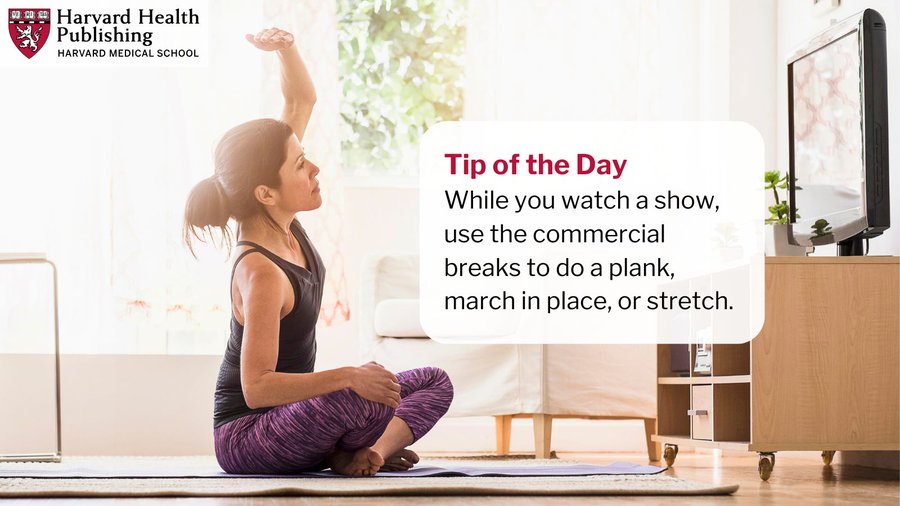

Add more exercise into your day: While you watch a show, use the commercial breaks to do a plank, march in place, or stretch. #HarvardHealth #TipoftheDay https://bit.ly/41Xbvis

Health is Wealth
Add more exercise into your day: While you watch a show, use the commercial breaks to do a plank, march in place, or stretch. #HarvardHealth #TipoftheDay https://bit.ly/41Xbvis

·
Taking care of body and mind doesn’t have to be complicated. Consider these simple, expert-recommended health habits today. https://mayocl.in/42dvfgj


In the study shown above, females start to accrue an increased risk at greater than two drinks per day on average and males at greater than four drinks per day.
These findings shouldn’t come as a surprise to anyone.
Surprisingly, on average, individuals who consume less than two drinks per day appear to have better outcomes than those who do not drink at all. This is where things start to get a little counterintuitive, and the story of alcohol being beneficial for you starts to appear.
This relationship is known as a ‘U’ shaped curve where those in the middle have the best outcomes, and those on the edges have worse outcomes. A kind of ‘Goldilocks’ relationship; “Not too hot. Not too cold. Just right.”
How might we explain this?
Enter the darling of the 1990s, Resveratrol. This compound in red wine spawned the mantra that red wine was ‘good for your heart’. This was based on research that suggested that it might reduce cholesterol levels, among other things.
But to consume the levels of Resveratrol tested in some of the animal studies that demonstrated benefit, you would have to drink 40 litres of wine…… Per day.
Not exactly a feasible strategy. Even with the best will in the world.
Let’s look at a more plausible explanation.
Data on alcohol consumption and outcomes are almost always based on observational data, not randomised controlled trials. This means that other factors or ‘confounders’ may explain the difference between the groups, not the alcohol consumption alone.
When you look at the trials that suggest a benefit of modest alcohol consumption, you will often find that this group tend to exercise more, smoke less, be in a higher socioeconomic bracket etc. This is referred to as a ‘healthy user bias’ and is likely to explain the difference between the groups.
Most trials try to correct or adjust for these confounders, but in truth, it is very hard to do. A recent publication looked at this problem and attempted to (as much as possible) correct for these ‘healthy user’ bias factors and then compare outcomes between alcohol consumption groups. The results were a little more in line with what we might expect.
Those in the lowest alcohol consumption category had the best lifestyle factors overall. When these healthy factors were corrected for, any benefit seen with modest alcohol consumption disappeared. What remained was a linear relationship between alcohol consumption and coronary artery disease5. Much more what you might expect.

Research like this and other studies is where the more recent media reports of ‘any’ alcohol being bad for you have come.
So, alcohol is a toxin. But, as Paracelsus notes:
“The dose makes the poison.”
Even water consumed to excess can be lethal.
We know that excess alcohol consumption is harmful. But I don’t think there was any great uncertainty around that point.
The key takeaway is that modest alcohol consumption is unlikely to be ‘beneficial’ to you. As much as you loved the idea that red wine was good for your heart, we can say with reasonable confidence that this is not the case.
The real question we need to answer is whether consuming modest amounts of alcohol is considerably worse for you when it comes to heart disease and death from any cause.
Based on the literature to date, it seems that the incremental risk for modest amounts of weekly alcohol consumption is likely to be small. But that doesn’t mean there are no downsides.
Sleep
One of the main reasons I significantly reduced my alcohol consumption was its effect on my sleep. If I drink more than one drink, I find that the quality of my sleep gets worse. I am much more likely to wake in the middle of the night and feel the effects the following day. But that’s just my personal experience.
Although alcohol is likely to make you fall asleep faster, it impacts your sleep quality6. Additionally, alcohol also reduces the percentage of REM sleep a person gets overnight7.
A workaround for me is to consume any alcohol during the daytime, so my sleep is unlikely to be affected, and if I am going to have a drink, I make sure it is worthwhile. I.e. I am with friends, or it is a high-quality drink. No more drinks on airplanes for me. Mainly because you lose about 30% of your sense of smell and taste in a pressurised cabin and therefore you are less likely to enjoy your drink8. Why do you think they serve you tomato juice and the fact that you think it’s tolerable?!
Humans have been consuming alcohol as far back as the ancient Egyptians, and some evidence suggests the Chinese were consuming alcohol as far back as 7000 B.C. So I don’t see alcohol disappearing any time soon.
The question we all need to ask is:
How much are we realistically drinking on a daily or weekly basis &
Is it likely to be doing us harm?
Only you can answer that question.
The only way to be certain you are doing no harm is to eliminate alcohol entirely. But life is full of risks, some of which we can control, some we cannot.
And some risks are worth taking.
Want to eliminate all road traffic accidents worldwide?
Simple.
Ban cars.
But at what cost?
The risks of driving are a risk most of us are willing to take.
Alcohol has risks.
We must all aim to minimise those risks.
Whatever that means for you, only you can decide.
Mokdad, A.H.; Marks, J.S.; Stroup, D.F.; and Gerberding, J.L. Actual causes of death in the United States, 2000. JAMA 291(10):1238–1245, 2004. Erratum in JAMA 293(3):298, 2005.
Centers for Disease Control and Prevention (CDC). Alcohol and Public Health: Alcohol-Related Disease Impact (ARDI). Annual Average for United States 2011–2015 Alcohol-Attributable Deaths Due to Excessive Alcohol Use, All Ages.
Alcohol Dosing and Total Mortality in Men and Women: An Updated Meta-analysis of 34 Prospective Studies. Arch Intern Med.2006;166(22):2437–2445. doi:10.1001/archinte.166.22.2437
Biddinger KJ, Emdin CA, Haas ME, et al. Association of Habitual Alcohol Intake With Risk of Cardiovascular Disease. JAMA Netw Open. 2022;5(3):e223849. doi:10.1001/jamanetworkopen.2022.3849
Britton, A., Fat, L.N. & Neligan, A. The association between alcohol consumption and sleep disorders among older people in the general population. Sci Rep 10, 5275 (2020). https://doi.org/10.1038/s41598-020-62227-0
Ebrahim IO, Shapiro CM, Williams AJ, Fenwick PB. Alcohol and sleep I: effects on normal sleep. Alcohol Clin Exp Res. 2013 Apr;37(4):539-49. doi: 10.1111/acer.12006.
Burdack-Freitag, Andrea & Bullinger, Dino & Mayer, Florian & Breuer, Klaus. (2010). Odor and taste perception at normal and low atmospheric pressure in a simulated aircraft cabin. Journal für Verbraucherschutz und Lebensmittelsicherheit. 6. 95-109. 10.1007/s00003-010-0630-y.

This bright, lemony salad is best made with farm-fresh asparagus, which is dressed and eaten raw here. Look for stalks that are bright green with firm, tight tips. Buy it in season from your local farmer’s market.
1 pound fresh asparagus
1 tablespoon fresh lemon juice
1 tablespoon extra virgin olive oil
1/8 teaspoon kosher salt
1/8 teaspoon freshly ground black pepper
1 tablespoon shaved Parmesan
8 fresh chives
Makes 4 servings
Calories: 70
Total fat: 4 g
Saturated fat: 1 g
Trans fat: 0 g
Protein: 4 g
Total carbohydrate: 7 g
Fiber: 3 g
Sugar: 2 g
Cholesterol: 0 mg
Sodium: 95 mg
— Developed by Sara Quessenberry for Cleveland Clinic Wellness.


A creamy smoothie with crunchy toppings — in a bowl!
Smoothie base
Toppings
Makes 4 servings
Serving = 3/4 cup
Calories: 160
Carbohydrate: 27 g
Sugars: 17 g
Fiber: 4 g
Saturated fat: 0.5 g
Cholesterol: 5 mg
Protein: 9 g
Sodium: 70 mg
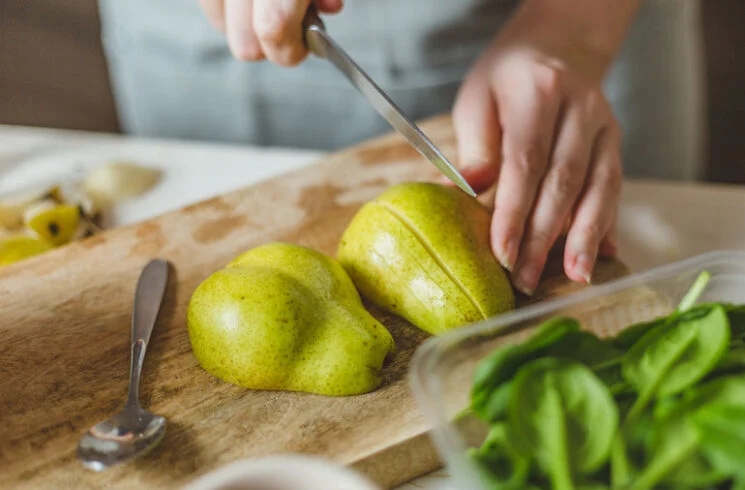
Ironically, not every pear is “pear-shaped.” One variety, Asian pears, is actually shaped like an apple. But no matter their shape, all pears are rich in disease-fighting nutrients.
“Pears are so healthy, and most people tolerate them very well,” says registered dietitian Beth Czerwony, RD, LD. “They’re terrific for your digestion and have other impressive health benefits. They’re a perfect snack if you’re craving something sweet.”
Pears are members of the Rosaceae plant family, along with apples, apricots, cherries, peaches and several other fruits and berries. Pears can range in texture, color, crispness, juiciness and sweetness. Common varieties you may find in the grocery store include:
Are pears good for you? Absolutely. Pears are a great source of antioxidants, fiber, potassium and vitamin C. But they’re not just full of nutrients — they also may lower your risk of some diseases. Here are five ways pears boost your health.
Like most fruit, pears are a source of good nutrition. One medium pear has approximately:
A medium pear also gives you:
Nobody enjoys the dreaded crash that happens after sugary foods spike your blood glucose. Steady blood sugar means a steady supply of energy, which is healthier for your body. Blood sugar management is even more important if you have diabetes.
Czerwony says pears may help stabilize blood sugar and even reduce your risk of Type 2 diabetes. How? Fiber, for starters. A medium pear offers nearly one-quarter of the fiber you need in a day. Fiber helps keep blood sugar steadier by slowing your body’s absorption of sugar.
Pears also contain anthocyanin, an antioxidant. An observational study suggests a link between eating anthocyanin-rich foods and a lower risk of Type 2 diabetes.
Another study showed that eating pears could significantly lower your odds of developing Type 2 diabetes. For each serving of pears eaten per week, researchers found a 3% lower risk of Type 2 diabetes.
In addition, pears are a low-glycemic food, which means they won’t spike your blood sugar like sugary foods and some fruits can.
Fiber adds bulk to and softens your stool, which helps things move along in your gut. Lots of foods contain fiber, but pears are a particularly excellent source.
A single pear contains 6 grams of fiber (more than 20% of what an adult needs in a day). And pectin, a type of fiber in pears, has some specific benefits. Pectin is a soluble fiber known to help:
To reap the fibrous benefit of pears, don’t skip the skin. “Pear skin contains a significant amount of the fruit’s total fiber content,” notes Czerwony.
Inflammation happens when your immune system tries to protect you from something — an infection, a toxin or some other offender. Some temporary inflammation is actually a healthy response to these things. But when inflammation hangs around, it can contribute to diseases such as Alzheimer’s, asthma, cancer and Type 2 diabetes.
Antioxidants are nutrients that can prevent some of the cell damage that leads to inflammation. Pears are rich in powerful types of antioxidants called flavonoids.
Research shows that flavonoids can reduce inflammation and lower the risk of:
Pears are an excellent part of a heart-healthy diet. Nutrients in pears that can benefit your heart include:
In addition, a study examining the effects of fruit and vegetable consumption suggests eating pears lowers your risk of stroke. And one large clinical trial showed a link between eating pears and a lower risk of dying from heart disease.
“In general, fresh fruits are best because they have the highest amount of nutrients,” explains Czerwony. “Frozen is usually a close second to fresh. The heat of canning, though, can break down certain nutrients.”
But don’t avoid canned pears completely. They’re still good for you. She advises looking for pears in water rather than syrup, which adds unneeded sugar.
“You might be surprised by what you can do with fresh pears,” she adds. “Think of how you use apples — sliced raw, in pies or baked — and you can do all those things with pears.”
Try making this poached pear dessert, include pears in your stuffing or make some interesting salads with pears.

 Healthaware