
health.clevelandclinic.org
18 Foods with Collagen Boosting Benefits
Here’s what to eat to boost your collagen

Health is Wealth
health.clevelandclinic.org
18 Foods with Collagen Boosting Benefits
Here’s what to eat to boost your collagen
Danielle NierenbergVerified account @DaniNierenberg 34 minutes ago
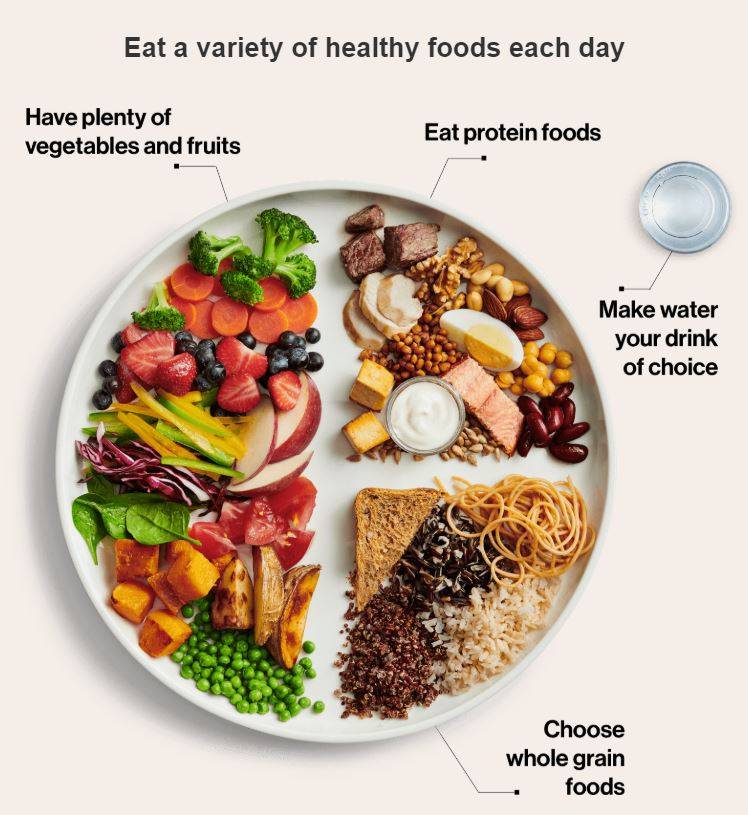
JUST RELEASED: Canada’s long-anticipated revised food guide! Specifically, the new food guide suggests eating plenty of vegetables and fruits, choosing whole grains, and eating “protein foods.” The image is an example recommended daily diet. Learn more: https://food-guide.canada.ca/en/
Yoga JournalVerified account @Yoga_Journal 2 hours ago
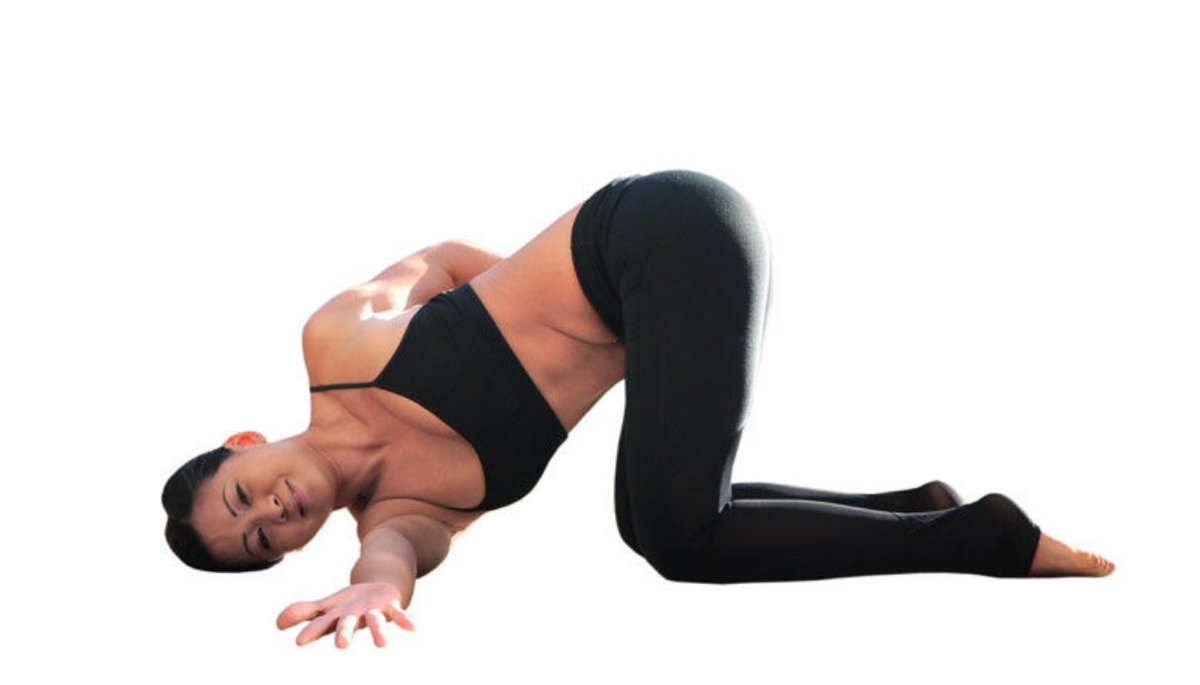
Sleep-Better Yoga: This twisting, hip-opening, feel-good flow will melt the stress of the day. #yogaforsleep #yogaforstress http://ow.ly/zOLo30jbWXP

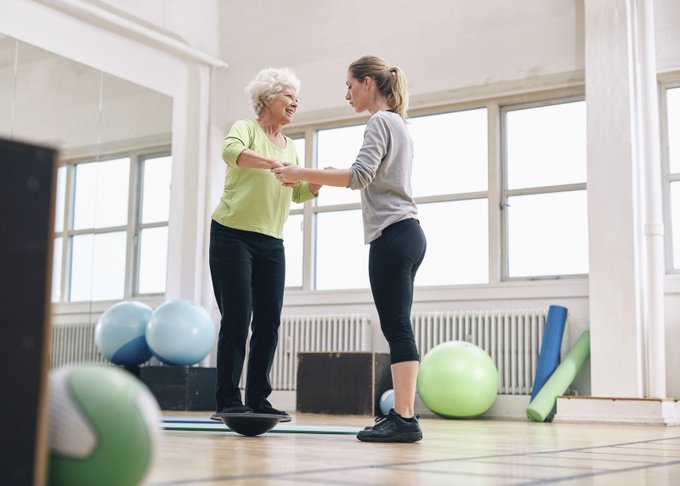

Image: Jacob Ammentorp Lund/iStock
Many older adults focus on exercise and diet to stay healthy. But one of the worst offenders to health—poor balance—is often an afterthought. “I see a lot of older adults who are nonchalant about balance,” says Liz Moritz, a physical therapist at Harvard-affiliated Brigham and Women’s Hospital.
Unfortunately, imbalance is a common cause of falls, which send millions of people in the United States to emergency departments each year with broken hips and head injuries. But there are many things you can do to improve your balance. The strategies below are some of the most effective.
Physical therapy for balance focuses on the ability of the joints and brain to communicate, the balance system in the ear (the vestibular system), and vision. “We coordinate all three with exercises such as standing on one foot, first with the eyes open, and then with the eyes closed. We also work on joint flexibility, walking, and lower-extremity exercises on one or two legs,” says Moritz. Other exercises that boost balance include chair stands (see “Move of the month”) and squats. Make sure you get training before attempting these exercises at home.
“Core strength is very important for balance. If the abdominal muscles in your core are weak, they cannot support your limbs, especially when you’re walking. If the gluteal muscles in your buttocks and hips aren’t strong, they won’t be able to propel you forward,” says Moritz. Muscle strengthening can help. Moritz suggests starting with gentle core exercises like a pelvic tilt (lie on the floor with your knees bent up, then roll your pelvis up) and then moving to more intense exercises such as wall planks (stand six inches from a wall, keeping your body rigid, then lean forward with your forearms flat against the wall, and hold the position for 20 seconds). Leg lifts will strengthen the gluteal muscles, and adding resistance bands to leg lifts makes the exercise even more effective.
“Tai chi and yoga are exercises that make you pay attention to the control and quality of movement, rather than the quantity, which improves your balance,” says Moritz. In tai chi, you practice slow, flowing motions and shift your weight from one limb to another. Yoga incorporates a series of focused postures and breathing. Both exercises increase flexibility, range of motion, leg and core strength, and reflexes. The result: you become better at balancing in a number of different positions, which helps you avoid falling if you encounter uneven pavement or obstacles in your path.
“If you can’t see where you’re going, your fall risk goes up,” says Moritz. “A lot of people I treat for balance are here be-cause they tripped when they didn’t see something on the floor.” The fix may be as simple as a new eyeglasses prescription. Get a comprehensive, dilated eye exam every one or two years if you’re 65 or older, every one to three years if you’re age 55 to 64, and every two to four years if you’re 40 to 54. If you have an increased risk for other eye conditions, you may need an eye exam more often.
A cane or a walker can complement your balance and give you more stability and confidence walking. But don’t buy a device on your own. “If it’s too high or too low, that can cause a fall. You need to get it measured, and you need training to learn how to use it,” says Moritz. Training takes just a few physical therapy sessions. Walkers are available with wheels intended for different terrain, lockable brakes, seats, baskets, and other features such as headlights. Canes are available with various handgrips and bases.
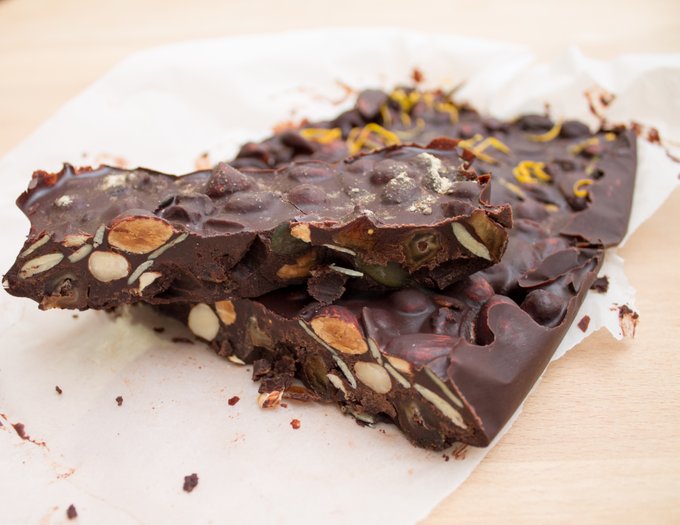

This deliciously indulgent chocolate bark recipe offers heart-healthy dark chocolate with toasted walnuts, pecans and almonds — and no added sugar! And each serving contains only 70 calories.
Makes 35 servings
Serving = 1/2 ounce
Calories: 70
Sodium: 15 mg
Sugar: 4 g
Cholesterol: 0 mg
Saturated fat: 2 g
Fiber: 1 g
Protein: 1 g
Carbohydrate: 5 g




Learning to control stress is your best defense against these anxiety-ridden dreams
Contributors: Michelle Drerup, PsyD, DBSM and Alexa Kane, PsyD.
There are a lot of areas of sleep that science and medicine can understand and explain. But dreams are an entirely different territory, as the question ‘why we dream’ remains largely unanswered.
Vivid and frequent dreaming is often left open to interpretation through things like dream dictionaries and discussing with friends. Did that dream about your ex-boss really mean you have pent-up guilt and anxiety about your last job? Frequently having stress or anxiety-ridden dreams is usually a red flag for real life stress and the role it’s playing on your body. If you’re constantly waking up panicking in a cold sweat over a dream, it’s time to get your thoughts and stress in order.
Stress is an emotional, physical or mental tension that results from something that’s outside of us.
Some of the bigger stressors or stressful life events include moving to a new place, changing roles at school or work, relationship issues or losing a family member. Stress can cause sleep difficulties, including insomnia, by making it difficult to fall asleep and stay asleep. This impacts the quality of rest. Stress can also cause hyperarousal, which can upset the balance between sleep and wakefulness.
Being stressed is associated with poor sleep in general, and may trigger more frequent dreams. So it’s not uncommon to experience a distressing dream prior to a big event like a job interview, taking an exam or an important appointment.
And although there’s limited research about controlling the content of dreams, anxiety dreams can generally be a result of increased stress during our day-to-day lives. Daily stress can also increase the frequency of these dreams.
The good news? You have a great deal of control over your stress. If you learn to better manage stress in your life, you’ll likely decrease anxiety-ridden dreams and improve your sleep.
Here are four simple strategies to help your mind and body relax before turning in for the night:
We’ve all been there – a nightmare or stress dream causes you to wake up. The next thing you know you’re lying there overthinking your finances and everything you have to do the next day.
When this happens, what can you do to get back to sleep?
Since dreams obviously aren’t measurable, there’s no real answer to what meaning they hold in our day-to-day life. But we do know that we generally have control over daily stress, which can trigger weird or anxiety-clad dreams. Learning to control the crazy and manage your stress is your best defense to help you sleep peacefully

 Healthaware