Harvard Health
@HarvardHealth
·
Walking even at a “casual” pace five days a week may lower the odds of high blood pressure in postmenopausal women, a new study finds: https://bit.ly/3oyORag #HarvardHealth #WomensHealth


Harvard HealthVerified account @HarvardHealth
Recent study: Running decreases the risk of death, and potentially prolong life. But any exercise is good exercise. http://hvrd.me/j2EM30c0Kde


·
“When you create a meal centered around vegetables, you’re taking steps to improve and maximize your health,” says Liz Moore, registered dietitian at Beth Israel Deaconess Medical Center. Try these three meals today. — #HarvardHealth #Diet #Nutrition
Meatless Mondays, meet summer’s bounty: a wide variety of colorful, fresh summer vegetables now available in grocery stores, backyard gardens, and farmer’s markets. We’re talking sunshiny golden corn on the cob, deep purple eggplant, red beets, peppers of all hues, not to mention tomatoes, zucchini, green beans, cucumbers, and more. With a bit of simple prep, they’re ready to take center stage on your plate, reinforcing the joy of summer.
“Vegetables in our diet provide many benefits. And when you create a meal centered around them, you’re taking steps to improve and maximize your health,” says Liz Moore, the author of a heart-healthy cookbook and a registered dietitian at Harvard-affiliated Beth Israel Deaconess Medical Center.
Making vegetables the stars of a meal is part of the “veg-centric” movement, which teaches people how to elevate even average vegetables to creative entrées and side dishes. The trend gives vegetables bold flavors by grilling, layering, caramelizing, or roasting them — steps you can take with a backyard grill or stovetop skillet.
Summer veggie meals have lots of important health perks. “Vegetables such as eggplant and beets of all colors are rich in fiber, Moore says. “Eating a high-fiber diet helps lower cholesterol and is linked to heart health, digestive health, and helping to maintain stable blood sugar levels. For those trying to lose weight, vegetables are low in calories and provide volume, which helps keep you full.”
Summer vegetables also have a wide variety of essential vitamins, minerals, and phytochemicals (beneficial plant chemicals) like flavonoids. “For example, carotenoids in cooked tomatoes are rich in lycopene, which is associated with inhibiting cancer growth and boosting the immune system. And beets are a good source of folate and potassium,” Moore says.
Wondering what to do with the colorful harvest available to you? Moore suggests keeping it simple by making a meal of vegetables paired with whole grains or legumes (beans or lentils). Here are three meals that fill the bill.
Grilled eggplant steak with cucumber, tomato, onion, chickpea, and feta salad
Veggie pita pocket with gazpacho
Quinoa-stuffed red peppers
Based on a recipe from BIDMC’s CardioVascular Institute’s Hungry Heart Cookbook by Liz Moore, RD, LDN
Other ideas include
Which combinations of summer vegetables you choose can depend on cost, taste preferences, and how much time you want to spend cooking. If you’re in a hurry, go with a salad. If you have more time, try grilling or sautéing vegetables.
Finally, be open to inspiration from the bounty you see at the market. “Focus on getting a variety of colors in the vegetables you choose. The more colors there are on the plate, the more nutrients you’ll be consuming,” Moore says. “And try something new. Explore vegetables you’ve never tried before or new methods of cooking. Think of it as one of summer’s glorious adventures.”

Heidi Godman, Executive Editor, Harvard Health Letter
Heidi Godman is the executive editor of the Harvard Health Letter. Before coming to the Health Letter, she was an award-winning television news anchor and medical reporter for 25 years. Heidi was named a journalism fellow … See Full Bio


·
Protein in Greek yogurt: Greek yogurt is a protein powerhouse. It has almost twice the protein of traditional yogurts and provides the same gut-friendly bacteria. #HarvardHealth


·
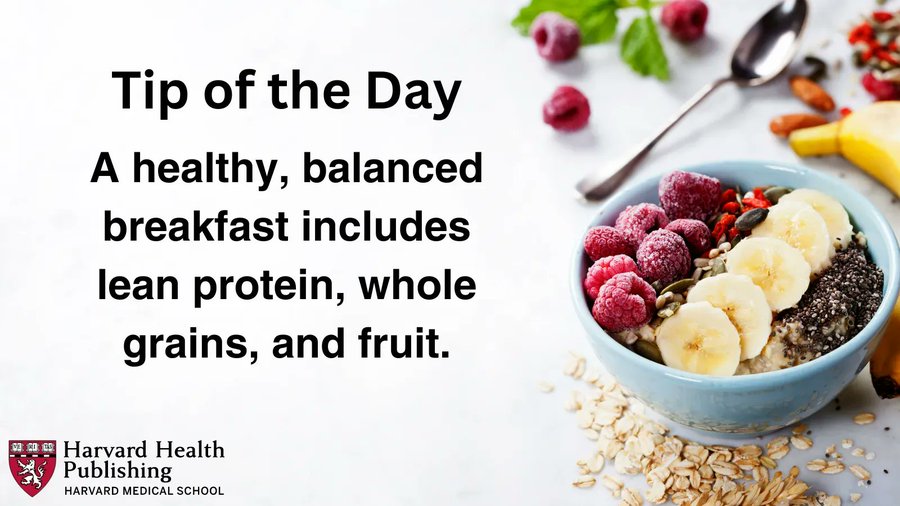
Tip of the day: Include the right food categories in your breakfast. A healthy, balanced breakfast includes lean protein, whole grains, and fruit. — #HarvardHealthTipoftheDay #HarvardHealth #HealthyBreakfast #Breakfast

Tropical fruits are those native to warm, tropical climates and include everyday favorites such as bananas and oranges. Here, we’re highlighting a few slightly more exotic choices that deserve a place on your shopping list at least once in a while. Try these suggestions when you’re craving something sweet for a snack or after dinner.

Pineapple. Sure, canned pineapple is convenient, but the flavor of a fresh pineapple is far more vibrant. Try pineapple chunks tossed with chopped fresh mint.

Mango. The pale orange, creamy flesh of ripe mango has a sweet, slightly spicy or pine-like flavor, according to some people. To serve, slice the mango close to the pit, then score the flesh crosswise, as shown above. If you like spicy food, sprinkle with a little chili powder.

Papaya. These large, pear-shaped fruits have reddish-orange flesh with a flavor akin to a melon with a faint floral quality. If you like, you can eat the black seeds, which have a peppery bite. Scoop the flesh out with a melon baller or spoon. A squeeze of fresh lime juice helps temper the sweetness.

A modest uptick in the amount of fruit and vegetables you eat can help ward off type 2 diabetes, according to a study published online July 8, 2020, by The BMJ. From a much larger study involving some 340,000 people from eight European countries, scientists selected 9,754 participants who were newly diagnosed with diabetes over a decade. Researchers compared the fruit and vegetable intakes of these people to those of about 13,000 participants who remained diabetes-free during the study period. Researchers also measured blood levels of seven key plant-derived nutrients, including vitamin C and brightly colored antioxidant pigments called carotenoids. People with the highest intakes of fruit and vegetables and the highest blood levels of the plant-derived nutrients were 25% to 50% less likely to get diabetes during the study period, compared with those who ate the least of these food groups or had the lowest nutrient levels. Even better, it didn’t take a whole lot of extra green, red, yellow, and orange on the plate to make a dent in diabetes risk. The equivalent of only two-thirds of a medium apple or just over one-third of a cup of mixed fruit each day offered protection.
Image: © RomoloTavani/Getty Images

Harvard Health @HarvardHealth·
Among all fruits, #bananas are one of best sources of potassium, with about 450 milligrams (mg) per banana. https://bit.ly/39sYzFj#HarvardHealth