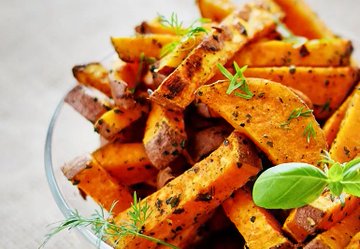
These crispy sweet potato wedges come out Cajun spicy and sweet. They’re also really healthy. They’re loaded with antioxidants and phytonutrients and are a great source of beta-carotene.

Recipe: Baked Cajun Sweet Potato Fries

Swap regular fries for these delicious, and nutritious, potato wedges

These crispy sweet potato wedges come out Cajun spicy and sweet. Don’t tell anyone but they’re also really healthy. They’re loaded with antioxidants and phytonutrients and are a great source of beta-carotene. Another plus? As complex carbs, they digest slowly and raise blood sugars gradually — keeping you from a spike and drop-off.

Ingredients

  • 2 sweet potatoes, cut into wedges (about 8 wedges per potato)
  • 1 tablespoon olive oil
  • 2 tablespoons Cajun seasoning

Directions

  1. Preheat oven to 425 F.
  2. In a large mixing bowl, combine the sweet potatoes, oil and Cajun seasoning. Mix well to evenly coat wedges.
  3. Spread the wedges in a single layer on one (or two, if needed) ungreased baking sheets.
  4. Bake for 30 minutes or until crispy and brown on one side.
  5. Flip fries over and bake for another 30 minutes or until the wedges are crispy on the outside and tender inside.

Ingredient health benefits

Nutrition information (per serving)

Serving = 1 cup

Calories: 110
Total fat: 5g
Saturated fat: 0.5g
Trans fat: 0g
Protein: 2g
Carbohydrate: 16g
Dietary fiber: 3g
Sugar: 5g
Cholesterol: 0mg
Sodium: 57mg

Berry Smoothie Bowl 🤪 😍 @ClevelandClinic. creamy, crunchy

Recipe: Berry Smoothie Bowl

A creamy smoothie with crunchy toppings — in a bowl!

Ingredients

Smoothie base

  • 1 1/2 cups plain yogurt
  • 1 banana, frozen
  • 1/2 cup orange juice
  • 1 cup berries of your choice
  • 1 tablespoon flaxseeds
  • 1 scoop vanilla plant-based protein powder, optional

Toppings

  • 1 tablespoon slivered almonds
  • 1 teaspoon chia seeds
  • 1 tablespoon pomegranate seeds

Directions

  1. Blend all base ingredients together until smooth, adjusting for sweetness and thickness.
  2. Serve immediately in a large bowl with toppings.

Ingredient health benefits

  • Yogurt: With probiotics and prebiotics to go around, yogurt is a great way to show your stomach some love. Yogurt is also a complete protein, which means it has all nine essential amino acids that your body needs to function properly (but can’t make on its own). And, most famously, it has calcium to keep your bones happy and healthy.
  • Bananas: Most everyone knows that bananas are a great source of potassium, but there’s so much more to this zany-looking fruit than popular knowledge conveys. Bananas also have magnesium and vitamin B6, which help regulate blood pressure and metabolism. And they have fiber to keep your gut working properly.
  • Flaxseed: This little seed really is worth the hype. Flaxseed is a source of omega-3 fatty acids (omega-3s, for short), which are vital for your body to function as it should. Flaxseed also has fiber and antioxidants that fight damaging free radicals and chronic inflammation.
  • Almonds: This nut may seem ordinary, but its benefits certainly aren’t. Almonds are rich in calcium and unsaturated fats that raise your “good” (HDL) cholesterol. Your brain will also thank you for the flavonoids and vitamin E.
  • Chia seeds: Another tiny seed with plenty of perks, chia seeds improve your digestion and promote the growth of good bacteria that keep your gut healthy. Their quirky ability to expand in fluid can help you stay fuller for longer when they’re in your stomach juices, which can be helpful if you’re trying to lose weight.
  • Pomegranate seeds: These little gems are as good for you as they taste. The squishy packets around the seeds contain juice that’s high in antioxidants, which might support the health of your heart. Pomegranate juice may also have cancer-fighting abilities, but research is ongoing. Still, incorporating pomegranates into a hearty, nutritious diet wouldn’t hurt!

Nutrition information (per serving)

Makes 4 servings
Serving = 3/4 cup

Calories: 160
Carbohydrate: 27 g
Sugars: 17 g
Fiber: 4 g
Saturated fat: 0.5 g
Cholesterol: 5 mg
Protein: 9 g
Sodium: 70 mg

Bananas nature’s perfect snack @ClevelandClinic #therapeutic

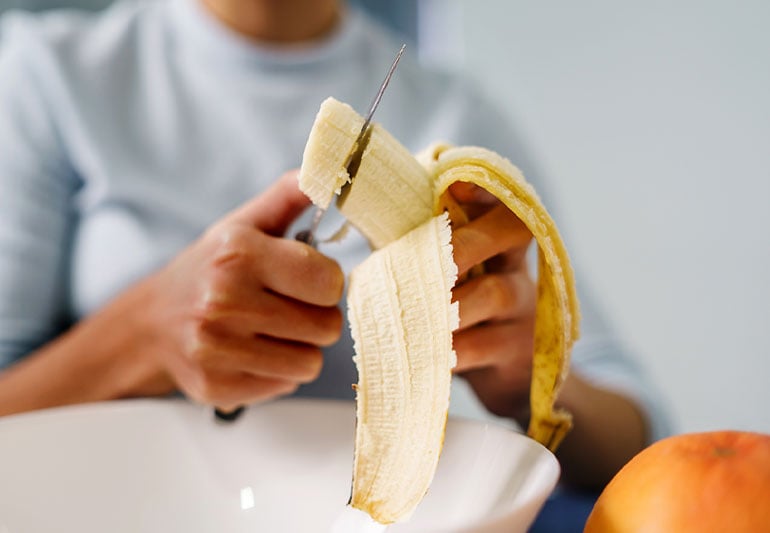
Some have called bananas “nature’s perfect snack,” and it’s easy to see why. The curvy yellow fruits come conveniently packaged, travel well in a lunch bag or purse and are incredibly versatile. They make a great smoothie mixer or a tasty topper on cereal or oatmeal and even have their very own category of (delicious!) muffins and bread.

Are bananas healthy?

 “Absolutely,” says registered dietitian Elyse Homan, RD, LD. “They’re full of nutrients and easy on the gut. Very few people have problems digesting bananas.”

So, what are you eating when you peel and enjoy? A medium-sized ripe banana contains:

  • 105 calories.
  • 1 gram of protein.
  • 28 grams of carbohydrates.
  • 15 grams of (natural) sugar.
  • 3 grams of fiber.
  • Less than 1 gram of fat.

Health benefits of eating bananas

From vitamins to minerals to fiber, bananas are good for you, with lots of nutrition to offer. Plus, they’re easy to digest, reiterates Homan. Here’s a breakdown of banana’s most notable nutritional benefits:

1. Fiber for improved digestion and disease prevention

With 3 grams (g) of fiber, a banana supplies nearly 10% of what you need in a day, based on a 2,000-calorie daily diet, according to the U.S. Department of Agriculture (USDA) dietary guidelines.

You hear “fiber” and probably automatically think of digestion. It’s true — fiber is great for your gut. It helps keep things moving in your intestines, and most of us probably need to eat more.

But fiber also impacts your health in other ways. Researchers who looked at data from nearly 200 studies found that people who ate 25 to 29 g of fiber a day had up to a 30% decreased risk of:

  • Colorectal cancer.
  • Heart disease.
  • High blood pressure.
  • High cholesterol.
  • Stroke.
  • Type 2 diabetes.

2. Vitamin C for better immune health

Vitamin C (ascorbic acid) is a nutrient that helps your body absorb iron and boosts your immune system’s ability to fight illness. Adults need 75 to 90 milligrams (mg) per day. A banana delivers about 10 mg of vitamin C.

Vitamin C is one of many antioxidants you can get from food. Antioxidants are important because they cancel out free radicals in your body. Free radicals can build up and damage your cells, leading to disease. But antioxidants like vitamin C keep free radicals in check.

3. Vitamin B6 for improved metabolism and more

Your body needs vitamin B6 for:

  • Appetite regulation.
  • Immune system functions.
  • Metabolic processes.
  • Nervous system health.
  • Sleep regulation.

“One banana will give you one-quarter to one-third of the vitamin B6 you need in a day,” says Homan.

4. Potassium for organ health and lower blood pressure

The USDA recommended daily intake of potassium for adults is 4,700 to 5,000 mg. A banana supplies you with about 422 mg, or a little less than 10% of what you need per day.

Potassium, a mineral, does a lot for your body. It’s essential for the proper function of your:

  • Heart.
  • Kidneys.
  • Muscles.
  • Nerves.

Getting enough potassium also keeps your blood pressure in a healthy range. Potassium, which lowers blood pressure, balances out sodium, which raises blood pressure.

Homan says potassium also benefits your vascular system — the network of blood vessels and lymph vessels that run through your body’s tissues and organs — and reduces your risk of:

  • Heart disease.
  • Kidney failure.
  • Stroke.

5. Magnesium for improved blood pressure, blood sugar and more

A single medium-sized banana offers about 32 mg of the mineral magnesium, which fulfills around 8% to 10% of your daily magnesium requirement.

Magnesium is involved in many processes in your body, including:

  • Blood pressure.
  • Blood sugar levels.
  • Building proteins.
  • Maintaining bone.
  • Muscle function.
  • Nerve function.

Bananas and resistant starch

Green, or unripe, bananas are high in resistant starch. “Your body can’t digest resistant starch,” notes Homan. “Instead, it’s a prebiotic that promotes the growth of good bacteria in your colon.” Prebiotics improve digestive health and can be helpful if you’re experiencing diarrhea.

“I often hear patients say they avoid bananas since they’ve heard the fruit is too high in sugar,” says Homan. As bananas ripen, much of the resistant starch changes to sugar. But the health benefits of antioxidants and fiber outweigh the naturally occurring sugar. For those worried about blood sugar levels, pair bananas with a protein source such as peanut butter or a cheese stick for better control.

A small word of warning about unripe bananas: “If you’re not used to eating resistant starch, start slowly to let your body get used to it. Some people can experience constipation, gas and bloating at first,” adds Homan.

Another plus of this fruit? In addition to all the health benefits of bananas, they’re less expensive than many other fruits.

Recipe: Spring Veggie + Grain Bowl.@ClevelandClinic #healthaware

An easy way to lighten up your diet


Cleveland Clinic

@ClevelandClinic


This clean, light, flavorful meal is perfect any time of day! Look for local veggies, and you’ll know spring has truly sprung.
Ready for a spring-cleaning that doesn’t involve baseboards or windows? After a chilly winter filled with hearty soups and stews, there’s nothing like spring vegetables to lighten your, err, load.
Our Spring Veggie + Grain Bowl features ribbons of tender, sweet asparagus and carrots on a bed of fluffy quinoa. Radishes and jalapeño, plus a simple, light dressing of tahini, lemon juice and garlic, add zing and tang — plus loads of nutrients. This vegan dish makes a clean, light, flavorful lunch or dinner — or even breakfast. Look for local veggies, and you’ll know spring has truly sprung.
Ingredients
1 cup quinoa
3 tablespoons tahini, well stirred
3 tablespoons water
2 tablespoons fresh lemon juice
1 small clove garlic, minced
¼ teaspoon kosher salt
12 asparagus spears
3 carrots
6 radishes
1 jalapeño, seeds removed if desired
½ cup fresh parsley leaves
Directions
In a medium saucepan, combine the quinoa with 2 cups of water over medium-high heat and let come to a boil. Stir once, cover with a tight-fitting lid, and reduce the heat to low. Cook for 15 minutes, until the water is absorbed. Remove from the heat and fluff with a fork. Let stand, covered, for 5 minutes more.
In a small bowl, whisk together the tahini, water, lemon juice, garlic and salt.
Using a vegetable peeler, peel the asparagus and carrots into long ribbons. Thinly slice the radishes and jalapeño.
Divide the quinoa among bowls and add the vegetables. Drizzle on the dressing and scatter the parsley leaves over the top.
Nutritional information (per serving)
Makes 4 servings.
376 calories, 20 g total fat, 3 g saturated fat, 13 g protein, 39 g carbohydrate, 6 g dietary fiber, 3 g sugar, 0 g added sugar, 0 mg cholesterol, 112 mg sodium
Source: Developed by Sara Quessenberry for Cleveland Clinic Wellness

Recipe: Salmon Marsala @ClevelandClinic

This recipe switches up chicken marsala by swapping in salmon. It’s a great way to get delicious and healthy fish on the menu. You should be able to find Marsala wine in the cooking wines or condiments section of your local grocery store.

Ingredients

  • 1 tablespoon olive oil
  • 1 onion, cut into wedges
  • 1 teaspoon minced garlic
  • 10 fresh mushrooms, sliced (or one 7-ounce can of sliced mushrooms, drained)
  • 4 (4 ounces each) skinless salmon filets
  • 1/3 cup Marsala wine
  • 2/3 cup chicken broth (1/3 less sodium)
  • 1/4 teaspoon salt (optional)
  • 4 teaspoons cornstarch
  • 4 grinds of fresh ground pepper

Directions

  1. Prep the onions and mushrooms.
  2. Heat oil in nonstick skillet over medium-high heat; add onion, garlic and mushrooms to the skillet and begin sautéing.
  3. Add the salmon filets to the skillet, cooking for 10 minutes per inch of thickness (turn them over midway in the cooking time).
  4. Mix together the wine, broth, cornstarch and fresh ground pepper; when the fish is nearly done (you can tell by twisting the center of the thickest part — if it flakes easily, it’s done), add the wine/broth mixture to the salmon.
  5. Stir gently, as the liquid turns into a thick gravy within one minute. Serve over whole-grain pasta or brown rice, with steamed asparagus or vegetable of your choice.

Ingredient health benefits

  • Olive oil: Olive oil is one of those ingredients that’s actually worth the hoopla. It has fat-soluble vitamins like vitamins D and K, which support your bones and blood cells. It’s also home to unsaturated fats that help decrease your LDL (“bad”) cholesterol and increase your HDL (“good”) cholesterol, helping your heart stay happy. And if you need another reason to use olive oil beyond this recipe, it has polyphenols and other antioxidants to fight inflammation and free radicals, keeping your cells in peak condition and helping to prevent diseases down the road.
  • Onions: They may not be the most “a-peel-ing” ingredient in the produce aisle, but looks can be deceiving. Onions have prebiotics and fiber to feed your “good” gut bacteria and support healthy digestion. And that’s not all those layers have to offer! There are also vitamin C and flavonoids that help lower inflammation while boosting your immunity.
  • Garlic: Like onions, these alliums aren’t the most exciting of foods. But “unremarkable” doesn’t mean “devoid of nutrition.” On the contrary, garlic is considered a superfood! Aside from keeping vampires away, eating garlic may strengthen your immunity as part of a well-balanced eating plan. It might also help regulate your blood pressure, and certain natural compounds in garlic can lower inflammation and protect your cells from damage.
  • Mushrooms: They may not be plants or animals, but mushrooms are just as nutritious! They’re packed with antioxidants like selenium and zinc that promote healing and may enhance your immune cells’ ability to fight diseases like cancer. Mushrooms are also a surprising source of B vitamins — like vitamins B3,B5 and B6 — which are crucial for creating and fixing DNA, as well as helping your body turn the food you eat into usable energy. Even your heart can benefit from the potassium found in these fantastic fungi, which helps regulate your blood pressure and keep the beat.
  • Salmon: Not just for the bears! This hearty fish is a complete protein that’s pescatarian-friendly, meaning it has all the amino acids your body needs to keep moving. Salmon is also low in mercury content and high in omega-3s, heart-helpful fats that are essential for your head-to-toe health. And that’s not all for omega-3s! They also double as an anti-inflammatory that promotes your immune system.

Nutrition information (per serving)

Makes 4 servings

Calories: 450
Fat: 12 g
Fiber: 9 g
Sodium: 147 mg (doesn’t include the optional salt)
Carbohydrates: 44 g
Protein: 37 g

— Recipe courtesy of Speaking of Women’s Health.

Recipe: Asparagus Salad With Lemon and Parmesan @ClevelandClinic

This bright, lemony salad is best made with farm-fresh asparagus, which is dressed and eaten raw here. Look for stalks that are bright green with firm, tight tips. Buy it in season from your local farmer’s market.

Ingredients

1 pound fresh asparagus
1 tablespoon fresh lemon juice
1 tablespoon extra virgin olive oil
1/8 teaspoon kosher salt
1/8 teaspoon freshly ground black pepper
1 tablespoon shaved Parmesan
8 fresh chives

Directions

  1. Break off the tough ends of the asparagus and discard.
  2. Use a vegetable peeler to make long thin ribbons of asparagus. Add to a large bowl.
  3. In a small bowl, whisk together the lemon juice, oil, salt and pepper. Drizzle over the asparagus ribbons and toss well.
  4. Use the vegetable peeler to shave thin strips from a piece of fresh Parmesan (about 1 tablespoon) and scatter over the salad.
  5. Use kitchen shears to cut the chives into small pieces directly over the salad.

Nutritional information (per serving)

Makes 4 servings

Calories: 70
Total fat: 4 g
Saturated fat: 1 g
Trans fat: 0 g
Protein: 4 g
Total carbohydrate: 7 g
Fiber: 3 g
Sugar: 2 g
Cholesterol: 0 mg
Sodium: 95 mg

— Developed by Sara Quessenberry for Cleveland Clinic Wellness.

English peas in pod pasta recipe with mint and grated Parmigiano Reggiano.@ClevelandClinic #heartaware

There is something special about using fresh peas straight out of the pod. This recipe was inspired by our root-to-stem philosophy of cooking: It always seems like such a waste to throw away the pea pods, but they are relatively inedible. To make use of the pods, we’ve pureed them into a spring-fresh pasta sauce. Remember: Pasta for breakfast is a great choice, especially when it’s loaded with healthful pea protein.

Ingredients

Kosher salt
1 pound fresh English peas in pods (yields about 1 cup shelled peas and about 3 ½ cups pods)
½ cup water
¼ cup extra-virgin olive oil
2 small spring onions or 2 large shallots, chopped
2 small spring garlic (whites) or 3 garlic cloves, minced
2 tablespoons Greek yogurt (optional)
12 ounces whole grain pasta, such as linguine, rigatoni or small shells
Freshly ground black pepper
¼ cup fresh mint (peppermint preferred), thinly sliced
Espelette pepper to taste (optional)
Grated Parmigiano Reggiano cheese (optional)

Directions

  1. Bring a large pot of water to boil and add enough salt to make it salty like the sea.
  2. Meanwhile, wash the peas. Pull off the stem ends: remove the peas and place in a small bowl. Reserve the pods.
  3. Fill a bowl with cold water. Set aside. Add the empty pea pods to the pot of boiling water and cook for 5 minutes. Using a slotted spoon or spider, remove the pods from the boiling water and transfer to the bowl of cold water to cool quickly. Drain the pea pods and add to a Vitamix or high-speed blender. Add ½ cup water. Puree for 2 to 3 minutes.
  4. Place a fine strainer over a bowl and add the pea pod puree to the strainer, pressing on the solids to release as much puree as possible into the bowl. Discard the solids in the strainer. Reserve the puree in the bowl; season to taste with salt and pepper.
  5. Cook the pasta in the pot of boiling water until al dente, stirring occasionally.
  6. Meanwhile, in a large skillet, heat the olive oil over medium heat. Add the onions and garlic and sauté until softened, 3 to 4 minutes. Add the peas and cook 2 minutes. Stir in the reserved pea pod puree and Greek yogurt, if using, and cook just until heated through. (Don’t overcook the peas or puree as the sauce will turn brown).
  7. Using tongs or a spider, transfer the pasta to the sauce in the skillet. Toss until combined. Season to taste with salt and pepper. Transfer the pasta to the serving bowl. Add the basil and mint. Serve with Espelette pepper and grated Parmigiano Reggiano cheese, if using.

Nutritional info (per serving)

Makes 4 servings.

Calories: 554 kcal
Total fiber: 12 g
Soluble fiber: 0.1 g
Protein: 15.5 g
Total fat: 16.7 g
Saturated fat: 2.0 g
Healthy fats: 12.1 g
Carbohydrates: 84 g
Sugars: 7.7 g
Added sugars: 0 g
Sodium: 178 mg
Potassium: 433 mg
Magnesium: 14 mg
Calcium: 134 mg

Source: The What to Eat When Cookbook by Michael F. Roizen, MD, Michael Crupain, MD, MPH and Jim Perko, Sr, CEC, AAC.

Recipe: Garden Omelet @ClevelandClinic

Full of superfoods to power your day

This superfood omelet is full of nutrient-rich veggies. Brussels sprouts and kale provide folate and glucosinolates. Seaweeds are full of minerals and avocados are loaded with healthy monounsaturated and saturated fats.
Ingredients
2 large kale leaves, stemmed and halved lengthwise
4 Brussels sprouts, trimmed and halved
3 large pasture-raised eggs
5 large pasture-raised egg whites
freshly ground black pepper and sea salt, to taste
2 tablespoons extra-virgin olive oil
6 crimini mushrooms, sliced
1/4 cup chopped fresh cilantro
1/4 cup chopped fresh dill
2 (1/2-ounce) packages roasted seaweed snacks (see note*)
2 cups baby spinach
1 avocado, peeled, pitted and sliced, for garnish
1 teaspoon white truffle oil (optional, for garnish)
Note: If you can’t find roasted seaweed snacks, you can substitute 1 ounce plain nori. Before using nori, brush it with a tiny bit of oil and toast it in a lightly oiled skillet over medium-heat for 10 to 15 seconds on each side. Cut into 3-inch squares before using in the omelet.
Directions
Bring a large pot of water to a boil over high-heat. When it boils, add a large pinch of sea salt. Drop in the kale leaves and Brussels sprouts and blanch just until they turn a brighter shade of green, 2 to 3 minutes. Drain well.
Crack the 3 eggs into a medium mixing bowl, and then add the 5 egg whites. Whisk the eggs together and season with salt and black pepper, to taste.
Heat the oil in a large nonstick pan over medium-heat. Add the eggs and immediately turn the heat down to low. Stir to scramble the eggs, tilting the pan to distribute them in an even layer.
As soon as the eggs are no longer runny, arrange the Brussels sprouts on one side of the omelet and scatter the mushrooms over them. Add the kale and sprinkle the cilantro and dill on top. Cover the herbs all with the seaweed snacks and top with the spinach.
Cover the pan and cook over the lowest possible heat for 5 minutes.
Fold the omelet in half and then cut it into 4 sections. Garnish each portion with a few slices of avocado and a drizzle of truffle oil, if using. Serve immediately.
Nutritional information
Each slice of omelet contains:
Calories 248
Fat 18g
Saturated fat 3g
Cholesterol 123mg
Fiber 6g
Protein 14g
Carbohydrate 12g
Sodium 120mg


Facebook

Twitter

Does #honey work to soothe a sore throat and cough? Yes, says family medicine physician Elizabeth Rainbolt, MD.@ClevelandClinic

Honey for Your Sore Throat and Cough

The natural at-home remedy can soothe irritation and decrease inflammation

t feels faint at first — there’s a little tickle or scratch at the back of your throat.

Then, it hurts or even burns when you swallow.

Ugh, you’ve got a sore throat, and a cough isn’t far behind.

You’re taking cough syrup and lozenges in an attempt to get some relief. But what about using honey for sore throat symptoms? Does this natural home remedy actually work to soothe a sore throat and cough?

Yes, says family medicine physician Elizabeth Rainbolt, MD.

Dr. Rainbolt explains how honey works and when and how to use it.

Honey for a sore throat

It’s common to get a sore throat every now and then. You may have a sore throat due to the following:

In addition to having other symptoms like nasal congestion, fatigue and fever, you may develop a cough.

Honey has a long history of being used as a natural remedy. And one remedy is to soothe sore throats and help alleviate a cough.

“Research shows that honey has some antimicrobial and anti-inflammation properties. Honey can help by decreasing inflammation and irritation in your throat,” explains Dr. Rainbolt. “Another study shows that honey may reduce mucus secretion. So, you can use honey for cough symptoms as well, whether it’s a wet or dry cough.”

Is it safe for children?

Giving honey to a child under 1-year-old isn’t recommended, warns Dr. Rainbolt.

“There’s concern for an infant botulism, a serious illness that’s caused by Clostridium botulinum,” she continues. “While it’s a rare occurrence, honey can contain spores that cause botulism. It attacks the body’s nervous system and children under one are more vulnerable.”

How to use for a sore throat

Most sore throats tend to get better within a week, but during that time, adults can take a spoonful (about 1 teaspoon) of honey for a cough and sore throat.

You can also dilute half a teaspoon to 1 teaspoon of honey in warm water or tea. This method is also recommended for children older than 1.

“You can use it with any kind of herbal tea or warm water with lemon juice, which can be soothing as well,” says Dr. Rainbolt.

So, how often can you use this home remedy? Dr. Rainbolt recommends using honey no more than four or five times a day.

And part of that reasoning is that honey does contain sugar.

“If you’re concerned about your sugar intake, then I recommend using honey more sparingly,” she says. “I would just use it at night to give you some relief before you go to bed.”

And can you use both honey and traditional cold medicine?

Yes, says Dr. Rainbolt.

“If it seems like the honey isn’t helping on its own, then you can certainly do both honey and medication, if medicine is something that you are able to take,” she notes.

Is honey safe to use?

Honey can be a helpful tool for those who can’t take traditional cold medications — for example, children under 6 years old or individuals with health conditions like high blood pressure or cardiovascular disease.

Overall, honey can be a good way to help soothe your sore throat and cough. It doesn’t come with some of the side effects that over-the-counter medications have like drowsiness.

So, can you just buy any honey you see on the grocery store shelf?

Yes, but you might want to make sure it’s been pasteurized. The pasteurization process removes any crystallization and unwanted yeast. It also improves honey’s texture and color, while extending its shelf life.

Dr. Rainbolt also mentions that some people think using local honey, which tends to be unpasteurized or raw, can come with extra benefits.

“There’s a thought that if you use local honey, you are exposed to some of the area’s natural allergens in a positive way,” she explains. “The idea is that it will help with allergies you have.”

The next time your throat starts to tickle, reach for honey and see if it helps.

“Think of honey as a first line of defense for those over 1 year old,” says Dr. Rainbolt. “Honey is something that pretty much everyone can try. And it’s been shown to work as well as some cough suppressant medications. It’s a nice alternative.”