
·
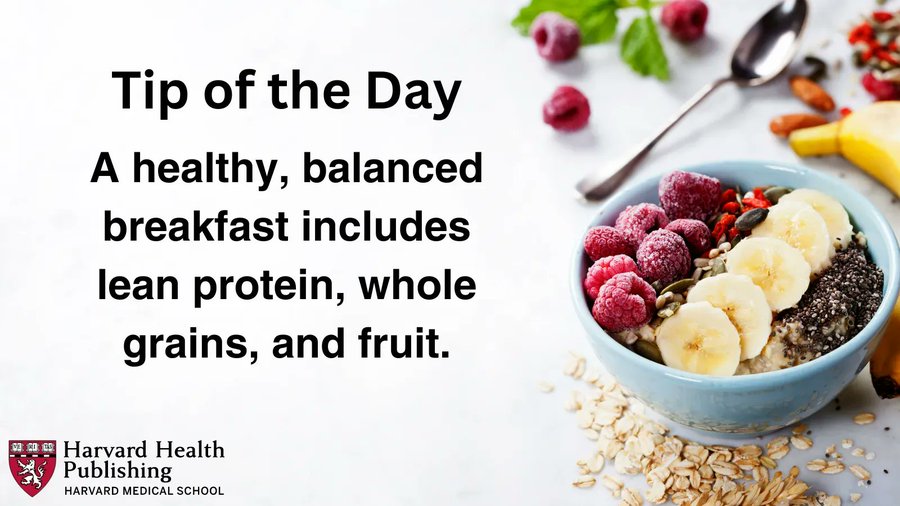
Tip of the day: Include the right food categories in your breakfast. A healthy, balanced breakfast includes lean protein, whole grains, and fruit. — #HarvardHealthTipoftheDay #HarvardHealth #HealthyBreakfast #Breakfast

Health is Wealth
·
Tip of the day: Include the right food categories in your breakfast. A healthy, balanced breakfast includes lean protein, whole grains, and fruit. — #HarvardHealthTipoftheDay #HarvardHealth #HealthyBreakfast #Breakfast


Any extra calorie burn from exercising in cold or hot temps is minimal
Everyone has their preferences for how they want to exercise. Some like to wear layers and turn up the heat when pumping iron. Others like to run for miles, no matter how cold it is outside. But have you ever given any thought to how many calories you’re burning when it’s cold or hot — and if one burns more calories than the other?
Sports medicine physician Matthew Kampert, DO, shares how temperature can affect physical fitness and which temps are best for your workouts.
It takes a lot of energy — in the form of calories — to keep you alive. Even when you’re at rest, your body is constantly burning calories to do vital things like keep your heart beating.
It also takes calories to keep your core body temperature at about 98.6 degrees Fahrenheit (37 degrees Celsius). If your body gets too hot or too cold, it burns extra calories to get your core body temperature back to a healthy range. This process is called thermoregulation.
“The harder your muscles work, the more calories you burn,” says Dr. Kampert. “So, if you’re exercising in hotter or colder weather, your body has to work harder to regulate its temperature while you’re exercising.”
Both cold and hot weather can slightly increase the number of calories your body burns. But for most people, the difference is so small that it won’t have much impact on weight loss. It’s the workout itself that’s responsible for burning most of your calories.
Dr. Kampert explains how calorie burn changes in both cold and hot environments.
In colder environments, your body works to keep your core temperature from dropping. To do that, it first tries to conserve heat. If that’s not enough, it starts generating more heat. This process involves several different mechanisms, such as:
“Your muscles require energy every time they move, even when it’s an involuntary action like shivering,” explains Dr. Kampert. “You may burn a few extra calories when you’re cold, but the increase is small and isn’t enough to make exercising in cold weather a weight-loss strategy.”
Plus, without proper protection and enough layering, long-term exposure to cold weather could lead to injury and impact dexterity, flexibility and muscle strength.
Some people intentionally exercise in the heat or wear extra layers to make themselves sweat more, thinking it will help them burn more calories. But sweating doesn’t always equal an increase in calorie burn. It’s simply your body’s way of cooling itself down through thermoregulation.
When your body overheats, it works to lower your core temperature to healthy levels. It does this primarily through:
“Sweat evaporates more easily in hot, dry environments,” says Dr. Kampert. “In humid environments, the air is already saturated with water vapor, so it becomes harder for your body to cool itself down and harder to exercise.”
Trying to make yourself sweat more by exercising in extreme heat or wearing heavy clothing isn’t an effective weight-loss strategy. Instead, it can increase your risk of:
Working out in extreme temperatures poses significant risk for older adults, young children and others with a reduced ability to regulate body temperature.
Check in with your healthcare provider before exercising in cold or hot temps if you:
“If your goal is to burn more calories, the intensity, duration and consistency of your workout matter far more than the temperature of your surroundings,” stresses Dr. Kampert. “When exercising, focus on training safely and be prepared for inclement weather.”
Avoid wearing too many layers or accessories on your next cold run. Excess sweat can cool your body too quickly after exercising, making you feel colder. Instead, Dr. Kampert suggests wearing:
When it comes to the heat, stick to clothing that’s:
In either case, you want to stay hydrated and take things slow. If you feel dizzy or distressed, or if something doesn’t feel right, stop what you’re doing and head inside for recovery.
“Exercising in extreme temperatures increases the intensity of a workout, but it comes with its own set of risks and won’t increase how many calories you’re burning in any significant way,” reiterates Dr. Kampert. “If you’re looking to burn more calories, try progressing your workouts by increasing the amount of sets, reps or weight you’re lifting.”

If you suffer from back pain, you’ve probably heard that strengthening your core can bring you some relief. But is this always true? And if so, how do you do it? We spoke with Cleveland Clinic physical therapist Patti Mariano, DPT, to find out.
When most people think about the core of the body they think of the abdominal or six-pack area just below the ribs. While the abdominal muscles are an important part of the core, we consider other areas important, too.
Your core includes:
Your core also includes the diaphragm and muscles of the pelvic floor. I also consider the gluteal muscles as core muscles.
Theoretically, if your muscles around the low back are weak, your body will rely more on passive structures, including ligaments — the tissue that connects bone to bone — as well as the spinal bones or discs, which lie between the spinal bones, for stability, which can cause pain.
But some studies have shown that specific core exercises are not any more beneficial than general exercise for low back pain. What we know is that exercise in general can help, and focusing on core muscles may provide some additional benefit.
Here are my top five:
For the plank exercises, start by holding them for 15 seconds to 30 seconds. For bird dog and scissors, try three sets of eight or 10 repetitions. For upward dog, do one set of 10 repetitions.
Any exercise performed incorrectly, whether it is core-strengthening or otherwise, has the potential to cause discomfort.
Twisting exercises or even incorrectly completing the exercises cited above can cause pain in the low back. But it’s highly unlikely that one repetition of an exercise will seriously harm your body, unless it’s an exercise using a very heavy weight.
The best way to keep your body safe is to listen to body cues such as pain during and immediately after an exercise, and the next day after exercising.
If any of the following is going on you should consult with your doctor:
Physical therapists train as musculoskeletal experts — they are the experts on muscles, bones and human movement. These professionals are the most qualified, aside from an orthopedic doctor, to assess back problems.
Since there are many factors that impact low back pain and many types of low back pain, it is a good idea to visit at least one time with a physical therapist for an evaluation and subsequent plan of care. This will give you an individually tailored plan with exercises that progress safely.
The idea of core strengthening, while beneficial, is just one piece of the low back pain puzzle.
https://health.clevelandclinic.org/2016/07/strong-core-best-guard-back-pain/


Perhaps it’s unsurprising, given + + marketing, there’s an assumption health supplements are beneficial. They are not. Water & a balanced diet are the only health supplements we need (vast majority of cases). VAT on health supplements via @IrishTimes
irishtimes.com
·
Tip of the day: Include the right food categories in your breakfast. A healthy, balanced breakfast includes lean protein, whole grains, and fruit. — #HarvardHealthTipoftheDay #HarvardHealth #HealthyBreakfast #Breakfast
August 24, 2026/Diet, Food & Fitness/Nutrition
The best choices are high in omega-3s and protein and low in mercury
Fish has earned its reputation as one of the healthiest proteins you can put on your plate. But with so many options in the seafood case, it can be hard to know which ones deserve a spot in your shopping cart.
“It can get overwhelming sometimes with so many choices,” says registered dietitian Julia Zumpano, RD, LD. “The key is choosing fish that give you the most nutritional benefit while limiting your mercury exposure.”
Fish is packed with lean protein, but its biggest nutritional advantage is omega-3 fatty acids. These healthy fats can help support heart and brain health and lower inflammation, among other benefits.
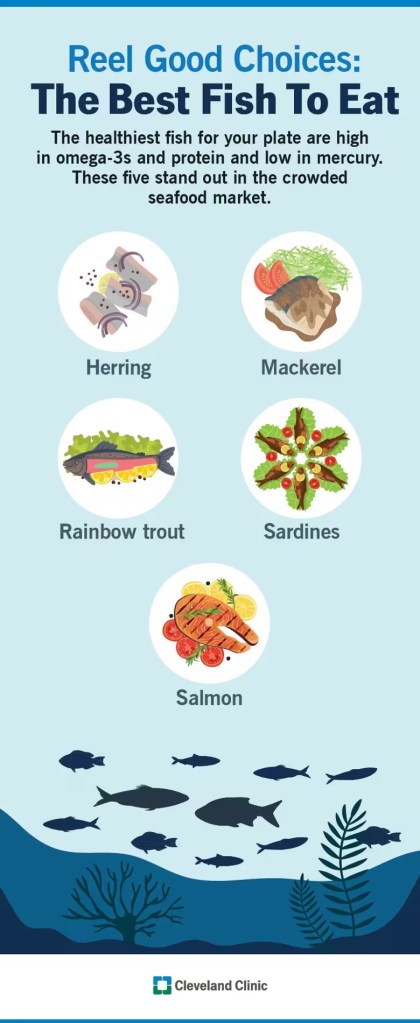
Zumpano’s top choices for fish are all high in omega-3s and protein, as well as other vitamins and nutrients.
They’re also low in mercury, a toxic metal that brings health concerns in high amounts.
Here are five fish choices to search out at the market.
Don’t let their tiny size fool you: “Sardines offer big health benefits,” says Zumpano.
A 3-ounce serving provides about 2 grams of omega-3 fatty acids — one of the highest amounts of any fish. They’re also a good source of calcium and vitamin D, essential nutrients your body needs to work right.
Another perk? They’re inexpensive and easy to keep on hand. You can buy sardines packed in olive oil or tomato sauce and add them to:
If you’re watching your sodium intake, compare nutrition labels and choose lower-sodium varieties when possible.
Herring is another oily fish loaded with omega-3s. While it contains slightly less omega-3 than sardines, herring still delivers plenty of heart-healthy fats. It’s also swimming in vitamin B12 and vitamin D.
Depending on your preferences, herring can be eaten:
“Herring has a stronger, fishier flavor because it’s rich in those healthy oils,” Zumpano notes. “If you’re trying it for the first time, using mustard and dill is a traditional preparation that’s a great place to start.”
Mackerel is another excellent source of omega-3s and lean protein, but there’s one important catch: Not all mackerel is created equal.
It’s best to choose the smaller Atlantic or Spanish mackerel, which are relatively low in mercury, clarifies Zumpano. And pass on king mackerel, a larger predator fish that contains much higher mercury levels.
Mackerel is tasty grilled, baked or poached. The fish pairs well with vegetables, salads and whole grains for a balanced meal.
No list of healthy fish would be complete without salmon. Popular with diners for its rich and meaty texture, salmon is another excellent source of protein, omega-3 fatty acids and key vitamins.
When it comes to nutritional value, wild salmon holds a slight edge over responsibly raised farmed salmon, notes Zumpano. But both are excellent choices.
“If you have the opportunity to choose wild Pacific salmon, it’s a great option,” she adds. “But don’t be afraid to eat farm-raised Atlantic salmon if that’s what’s available or fits your budget.”
Rainbow trout is another option in the seafood case that checks a lot of good-for-your-health boxes. It’s rich in lean protein and omega-3 fatty acids while also providing important key vitamins and nutrients.
“Rainbow trout has a mild flavor and soft texture, too, so it’s easy to work into meals,” says Zumpano. Try it baked, grilled or pan-seared. It goes nicely with veggies, salads or whole grains for a balanced plate.
No fish is completely “bad” for you, given the protein and other nutrients they offer. But some are worth eating less often because they’re lower in omega-3s or potentially higher in mercury or other contaminants.
This list includes:
While fish consumption in the United States has risen in recent years, most Americans still don’t eat from the seas often enough, says Zumpano. That adds up to a lot of people missing out on an important source of omega-3 fatty acids.
In general, health experts recommend that adults eat two 4-ounce servings of fish per week as part of a healthy and balanced diet. (Pregnant or breastfeeding women should limit it to one serving per week, given the mentioned mercury concerns.)
Zumpano recommends adding a variety of seafood to your meals. If you’re looking for choices other than the fish cited here, check out the “best choices” list put together by the U.S. Food and Drug Administration (FDA).
“Fish is one of the healthiest sources of protein you can eat,” reiterates Zumpano. “When you choose fish that’s high in omega-3s and lower in mercury, you’re getting the greatest nutritional benefit.”

Any extra calorie burn from exercising in cold or hot temps is minimal
Everyone has their preferences for how they want to exercise. Some like to wear layers and turn up the heat when pumping iron. Others like to run for miles, no matter how cold it is outside. But have you ever given any thought to how many calories you’re burning when it’s cold or hot — and if one burns more calories than the other?
Sports medicine physician Matthew Kampert, DO, shares how temperature can affect physical fitness and which temps are best for your workouts.
It takes a lot of energy — in the form of calories — to keep you alive. Even when you’re at rest, your body is constantly burning calories to do vital things like keep your heart beating.
It also takes calories to keep your core body temperature at about 98.6 degrees Fahrenheit (37 degrees Celsius). If your body gets too hot or too cold, it burns extra calories to get your core body temperature back to a healthy range. This process is called thermoregulation.
“The harder your muscles work, the more calories you burn,” says Dr. Kampert. “So, if you’re exercising in hotter or colder weather, your body has to work harder to regulate its temperature while you’re exercising.”
Both cold and hot weather can slightly increase the number of calories your body burns. But for most people, the difference is so small that it won’t have much impact on weight loss. It’s the workout itself that’s responsible for burning most of your calories.
Dr. Kampert explains how calorie burn changes in both cold and hot environments.
In colder environments, your body works to keep your core temperature from dropping. To do that, it first tries to conserve heat. If that’s not enough, it starts generating more heat. This process involves several different mechanisms, such as:
“Your muscles require energy every time they move, even when it’s an involuntary action like shivering,” explains Dr. Kampert. “You may burn a few extra calories when you’re cold, but the increase is small and isn’t enough to make exercising in cold weather a weight-loss strategy.”
Plus, without proper protection and enough layering, long-term exposure to cold weather could lead to injury and impact dexterity, flexibility and muscle strength.
Some people intentionally exercise in the heat or wear extra layers to make themselves sweat more, thinking it will help them burn more calories. But sweating doesn’t always equal an increase in calorie burn. It’s simply your body’s way of cooling itself down through thermoregulation.
When your body overheats, it works to lower your core temperature to healthy levels. It does this primarily through:
“Sweat evaporates more easily in hot, dry environments,” says Dr. Kampert. “In humid environments, the air is already saturated with water vapor, so it becomes harder for your body to cool itself down and harder to exercise.”
Trying to make yourself sweat more by exercising in extreme heat or wearing heavy clothing isn’t an effective weight-loss strategy. Instead, it can increase your risk of:
Working out in extreme temperatures poses significant risk for older adults, young children and others with a reduced ability to regulate body temperature.
Check in with your healthcare provider before exercising in cold or hot temps if you:
“If your goal is to burn more calories, the intensity, duration and consistency of your workout matter far more than the temperature of your surroundings,” stresses Dr. Kampert. “When exercising, focus on training safely and be prepared for inclement weather.”
Avoid wearing too many layers or accessories on your next cold run. Excess sweat can cool your body too quickly after exercising, making you feel colder. Instead, Dr. Kampert suggests wearing:
When it comes to the heat, stick to clothing that’s:
In either case, you want to stay hydrated and take things slow. If you feel dizzy or distressed, or if something doesn’t feel right, stop what you’re doing and head inside for recovery.
“Exercising in extreme temperatures increases the intensity of a workout, but it comes with its own set of risks and won’t increase how many calories you’re burning in any significant way,” reiterates Dr. Kampert. “If you’re looking to burn more calories, try progressing your workouts by increasing the amount of sets, reps or weight you’re lifting.”
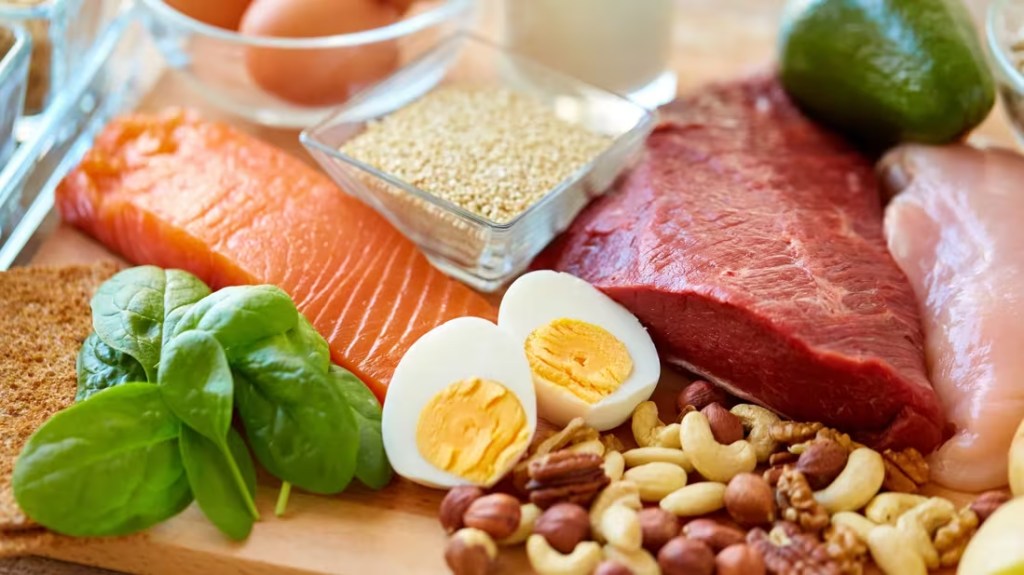
Lean meats, fish, dairy and plant proteins can help you meet your protein needs without piling on saturated fat and sugar
You have options when it comes to putting protein on your plate. Lots and lots of options. But as you’re considering what proteins to include, remember this: Not all proteins are created equal.
For example, both hot dogs and cooked lentils offer protein — but one brings a little more to the table when it comes to nutrition and your health. (It’s lentils, just to be clear.)
“There’s more to it than just getting as many grams of protein as possible,” says registered dietitian Julia Zumpano, RD, LD. “Quality matters — and a lot of us don’t regularly consume good-quality protein that enhances our overall diet.”
Foods aren’t made of protein alone. That’s why simply comparing the number of protein grams on two nutrition labels doesn’t really tell you which might be the healthier choice.
Other factors matter, too, including the food’s overall nutrient profile. Consider how much added sugar, sodium or saturated fat it contains. Look at whether it provides beneficial nutrients, like fiber, vitamins and minerals.
“Over the long term, all of these affect your health,” says Zumpano.
Ideally, she recommends getting most of your protein from a variety of whole or minimally processed foods. That can include animal-based products, as well as plant-based protein sources.
What might that look like for meals? Start with these healthy protein sources.
If you’re fishing for a healthy protein, the seas are an excellent place to start. Like other animal proteins, fish naturally provide a concentrated source of protein. Fish generally contain about 7 grams of protein per ounce, although the exact amount varies by type.
Many fish are also lower in saturated fat and higher in omega-3 fatty acids, a one-two combination that makes them a standout for heart health. They’re also packed with key nutrients like vitamin D.
“Fish is a phenomenal protein source,” says Zumpano. “Regularly swapping it in for other meat sources can help you build a healthier and more varied eating pattern.”
Red meat has a place in a healthy diet. But the key is to choose lean cuts.
Picking a leaner cut gets you protein — about 7 grams per ounce — while minimizing saturated fat. Examples of lean cuts include tenderloin, sirloin, top round and flank steak. For ground beef, opt for 90% lean or higher.
Chicken, turkey and other poultry can give you protein without all the saturated fat found in some other meat choices — but how you prepare it makes a difference.
Zumpano recommends going with skinless white meat poultry. Like fish and red meat, it provides roughly 7 grams of protein per ounce. (There’s some variation depending on what you choose.)
Prefer dark poultry meat? That’s OK! It has a place on the table. Ideally, try to choose dark varieties (like legs, thighs and wings) a little less often because they’re higher in saturated fat.
Lean toward baking, grilling or roasting your poultry, too, and go easy on adding salt. Avoid deep-frying chicken or coating it in breading to stay on the healthier side.
Dairy-based foods can be an easy way to work more protein into your day, especially at breakfast. Zumpano says she often recommends eating Greek yogurt or cottage cheese in the morning.
Greek yogurt typically packs 11 to 12 grams of protein in a half-cup serving. Cottage cheese has 12 to 14 grams of protein in a half-cup serving.
Starting the day with either can pay off later. A protein-rich breakfast can help support steadier energy, blood sugar and appetite levels, which can keep you from crashing as the hours pass by.
Eggs are another simple, whole-food protein source that traditionally shines in the morning.
But eggs can also bring a protein boost to your lunch, Zumpano says. Hard-boiled eggs make a good snack, too!
That versatility with eggs makes it easier to spread protein intake throughout your day, which maximizes your body’s ability to get the most out of it. One large egg typically has 6 grams of protein.
Plant proteins deserve a regular place on your plate — and not just if you’re vegetarian or vegan. Cooked beans, lentils and other legumes provide about 15 grams of protein per cup, along with benefits you won’t get from meat alone.
“Plant proteins offer a whole slew of powerful vitamins, minerals and antioxidants — and the fiber that’s in it aids in creating a healthy gut microbiome, digestion and regularity,” Zumpano explains.
Nuts and seeds are another easy way to add plant-based protein to your diet when you get the munchies. They offer a healthy dose of protein — on average, 6 to 7 grams per ounce — along with fiber and other nutrients.
The healthy fats found in nuts and seeds can also help manage your blood sugar and appetite throughout the day.
“A handful of nuts or seeds can be a nutrient-dense snack choice that offers far more than chips or other carb-heavy options,” notes Zumpano.
If you want to make plants the star of the meal, tofu and tempeh are excellent choices. These soy-based foods are rich in protein and have enough texture and heft to serve as meat substitutes.
Tofu typically offers between 10 and 15 grams of protein per half cup. Tempeh is higher at 15 to 20 grams.
But don’t feel like you need to go “plant-only” to use tofu and tempeh. Add them into your meal rotation with red meat, chicken and fish. “Use them to build some variety into your diet,” suggests Zumpano.
A package that screams “20 grams of protein!” doesn’t automatically make a food healthy.
Some protein choices come with lots of saturated fat or heavy processing that may make them less than ideal.
Try to limit:
You don’t need to obsess over every gram of protein when putting together meals. Instead, focus on quality, variety and nutritional balance. Zumpano recommends:
“Protein doesn’t have to feel complicated,” reinforces Zumpano. “Find some protein-rich whole foods you enjoy and build meals from there. Do that consistently and your body will get the healthy protein it needs.”


