From beginner’s yoga to more advanced practices, downward dog is one of the most popular poses…with a few common misconceptions. Physical therapist Dawn Lorring, PT, MPT @ClevelandClinic

Take a ‘Paws’ With Downward Dog

This transitional and restorative yoga pose provides a full-body stretch

Physical therapist Dawn Lorring, PT, MPT, walks through the steps of how to do downward dog correctly and shares its many benefits.

From beginner’s yoga to more advanced practices, downward dog is one of the most popular poses…with a few common misconceptions.

Rounding your back, placing your feet too far apart or putting too much weight into your wrists can all create a deeper stretch than intended — which increases your risk of injury.

Physical therapist Dawn Lorring, PT, MPT, walks through the steps of how to do downward dog correctly and shares its many benefits.

What is downward dog?

Downward dog (also known as downward facing dog, facing dog pose or Adho Mukha Svanasana in Sanskrit) is a foundational yoga pose. It’s often used as a transition between movements, like sun salutations. It’s also a form of active resting, active stretching and strengthening. This allows you to check in with yourself and re-evaluate your intentions during your practice.

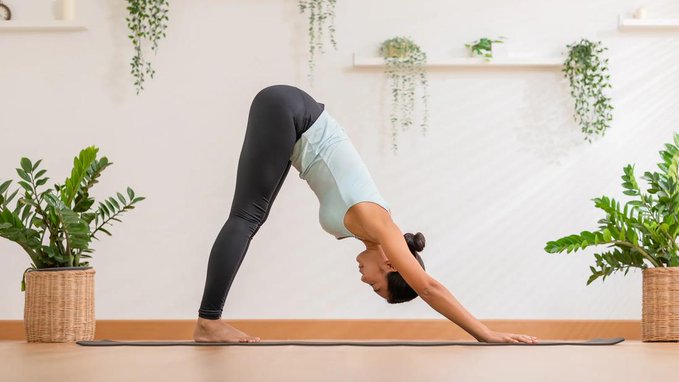
You do downward facing dog by putting your body into an inverted V-shape (or pyramid), as if there were a straight line that runs through the top of your head up your spine and out of your butt toward the ceiling.

How to properly do downward facing dog

Facing dog pose won’t usually be your first movement when doing yoga. Before trying it, it’s best to loosen up your muscles and joints and find ways to work it into your overall yoga practice.

Once you’re warmed up and ready to go, follow these steps:

  1. Start on all fours with your hands shoulder-width apart and your knees in line directly behind your hips.
  2. Spreading your fingers wide, press down into your hands and tuck your toes (almost like you’re using them to grip the floor beneath you).
  3. As you exhale, bring your hips up and back, as if there’s a string pulling your butt toward the ceiling, so your body creates an inverted V-shape (or pyramid).
  4. Focus on straightening your back, not rounding it, so your head and neck are relaxed between your upper arms. It helps to focus on pressing through your arms to “push” the ground away from you and keep your arms active.
  5. Engage your core muscles and pull your tummy in.
  6. Keep your legs straight and, if it’s comfortable for you to do so, try to drop your heels down to the floor.
  7. Adjust your posture by shifting your weight between your hands and feet until you sink comfortably into the position.
  8. Hold this pose for 10 to 15 seconds at a time, making sure to breathe throughout.
  9. For a more relaxed stretch, bend your knees a little and readjust your posture as needed.
  10. When you’re done, exhale and move into your next pose or slowly lower yourself to the floor to enter child’s pose.

“Downward facing dog isn’t about keeping your heels on the ground or holding it for long periods of time,” clarifies Lorring. “It’s really about making sure you’re going to a place that’s comfortable for you, so you can adjust your body as often as you need in this pose.”

Facing dog pose variations

If you have a hard time getting down on your hands and knees, try this wall variation:

  1. Face the wall and place both your hands out in front of you so your palms are flat and your fingers are stretched out.
  2. Keeping your head and back straight and your hands on the wall in front of you, slowly walk your legs backward.
  3. As you move, walk your hands down the wall so you hinge at your hips and look directly at the floor.
  4. Keeping your head and neck relaxed, hold this pose for 10 to 15 seconds before slowly returning to stand.
  5. If you feel stress or discomfort in your wrists, you can modify by rolling up a towel or the edge of your yoga mat and placing the roll under the heels of your hands. This will decrease some of that pressure.

For a more challenging stretch that deeply engages your hips and hamstrings:

  1. While in the downward facing dog position, lift one leg up and stretch it toward the ceiling.
  2. For a deeper stretch, bend your outstretched leg back and over your body, so your knee is facing away from you.
  3. Repeat this process with the other leg, holding the pose for as long as you feel comfortable on either side.

Downward dog benefits

Downward facing dog provides a full body stretch, while also strengthening and working your:

Adho Mukha Svanasana helps improve your flexibility and control, and provides you a moment of active rest. It also increases blood flow to your head and upper body when you’re in the inverted V position. But because of this, you should talk to your yoga instructor, athletic trainer or healthcare provider before starting this position if you have:

“Facing dog pose tries to improve flexibility but also builds the strength to control that flexibility,” says Lorring. “If you’re feeling excessive stress to a certain part of your body, then you’re probably holding the pose for too long or you’re trying to go into a range that you’re not ready for. We can help you get there.”

From beginner’s yoga to more advanced practices, downward dog is one of the most popular poses…with a few common misconceptions. Physical therapist Dawn Lorring, PT, MPT @ClevelandClinic

Take a ‘Paws’ With Downward Dog

This transitional and restorative yoga pose provides a full-body stretch

Physical therapist Dawn Lorring, PT, MPT, walks through the steps of how to do downward dog correctly and shares its many benefits.

From beginner’s yoga to more advanced practices, downward dog is one of the most popular poses…with a few common misconceptions.

Rounding your back, placing your feet too far apart or putting too much weight into your wrists can all create a deeper stretch than intended — which increases your risk of injury.

Physical therapist Dawn Lorring, PT, MPT, walks through the steps of how to do downward dog correctly and shares its many benefits.

What is downward dog?

Downward dog (also known as downward facing dog, facing dog pose or Adho Mukha Svanasana in Sanskrit) is a foundational yoga pose. It’s often used as a transition between movements, like sun salutations. It’s also a form of active resting, active stretching and strengthening. This allows you to check in with yourself and re-evaluate your intentions during your practice.

You do downward facing dog by putting your body into an inverted V-shape (or pyramid), as if there were a straight line that runs through the top of your head up your spine and out of your butt toward the ceiling.

How to properly do downward facing dog

Facing dog pose won’t usually be your first movement when doing yoga. Before trying it, it’s best to loosen up your muscles and joints and find ways to work it into your overall yoga practice.

Once you’re warmed up and ready to go, follow these steps:

  1. Start on all fours with your hands shoulder-width apart and your knees in line directly behind your hips.
  2. Spreading your fingers wide, press down into your hands and tuck your toes (almost like you’re using them to grip the floor beneath you).
  3. As you exhale, bring your hips up and back, as if there’s a string pulling your butt toward the ceiling, so your body creates an inverted V-shape (or pyramid).
  4. Focus on straightening your back, not rounding it, so your head and neck are relaxed between your upper arms. It helps to focus on pressing through your arms to “push” the ground away from you and keep your arms active.
  5. Engage your core muscles and pull your tummy in.
  6. Keep your legs straight and, if it’s comfortable for you to do so, try to drop your heels down to the floor.
  7. Adjust your posture by shifting your weight between your hands and feet until you sink comfortably into the position.
  8. Hold this pose for 10 to 15 seconds at a time, making sure to breathe throughout.
  9. For a more relaxed stretch, bend your knees a little and readjust your posture as needed.
  10. When you’re done, exhale and move into your next pose or slowly lower yourself to the floor to enter child’s pose.

“Downward facing dog isn’t about keeping your heels on the ground or holding it for long periods of time,” clarifies Lorring. “It’s really about making sure you’re going to a place that’s comfortable for you, so you can adjust your body as often as you need in this pose.”

Facing dog pose variations

If you have a hard time getting down on your hands and knees, try this wall variation:

  1. Face the wall and place both your hands out in front of you so your palms are flat and your fingers are stretched out.
  2. Keeping your head and back straight and your hands on the wall in front of you, slowly walk your legs backward.
  3. As you move, walk your hands down the wall so you hinge at your hips and look directly at the floor.
  4. Keeping your head and neck relaxed, hold this pose for 10 to 15 seconds before slowly returning to stand.
  5. If you feel stress or discomfort in your wrists, you can modify by rolling up a towel or the edge of your yoga mat and placing the roll under the heels of your hands. This will decrease some of that pressure.

For a more challenging stretch that deeply engages your hips and hamstrings:

  1. While in the downward facing dog position, lift one leg up and stretch it toward the ceiling.
  2. For a deeper stretch, bend your outstretched leg back and over your body, so your knee is facing away from you.
  3. Repeat this process with the other leg, holding the pose for as long as you feel comfortable on either side.

Downward dog benefits

Downward facing dog provides a full body stretch, while also strengthening and working your:

Adho Mukha Svanasana helps improve your flexibility and control, and provides you a moment of active rest. It also increases blood flow to your head and upper body when you’re in the inverted V position. But because of this, you should talk to your yoga instructor, athletic trainer or healthcare provider before starting this position if you have:

“Facing dog pose tries to improve flexibility but also builds the strength to control that flexibility,” says Lorring. “If you’re feeling excessive stress to a certain part of your body, then you’re probably holding the pose for too long or you’re trying to go into a range that you’re not ready for. We can help you get there.”

Running is great exercise. A dietitian talks about what runners should eat ― and when ― for optimal nutrition and performance. @HopkinsMedicine

If you run regularly, whether it’s an easy jog around the block to stay fit or an intense training regimen to prepare for a marathon, you need proper nutrition.

Here are some tips to help keep runners well-nourished and ready to win.

Foods for Runners and Joggers

A good diet can boost your physical health and help you meet your fitness goals. Make sure your meals emphasize the following basic components:

  • Fruit and vegetables for vitamins, minerals and antioxidants
  • Lean protein such as fish, poultry, beans, lentils and tofu
  • Healthy fats such as olive oil, avocado and nuts
  • Healthy carbohydrates such as rice, whole grain breads/pastas and oatmeal

Individuals may have different optimal balances, but in general, people who include running or jogging as part of their fitness regimen should get 60% to 70% of their calories from carbohydrates, with lean protein and healthy fats each accounting for 15% to 20% of their remaining calories.

Don’t skimp on carbohydrates

Although low carbohydrate diets are popular go-to’s for people wanting to lose weight, they’re not ideal for distance runners, who thrive on carbohydrates for endurance.

That is why very low carbohydrate diets, such as the ketogenic diet, plus running is not a good idea. Experts do not recommend keto to runners unless they have been told by their doctor that this a medically safe option for them and they are being monitored while in ketosis.

Distance runners need more carbs than people who aren’t training. Undereating carbohydrates can be hard on your body and affect your recovery after your run.

Here’s why: Running uses both glucose in the blood and your stores of glycogen. Glucose is the form of sugar that circulates in the bloodstream, and glycogen is the sugar stored in your liver and muscles that acts as the primary fuel for endurance exercise.

Eating plenty of carbs helps ensure that these energy stores are ready to support your training. When those stores get too low, runners are more likely to run out of energy and “burn out” or “hit a wall” while training.

Running Diet — Vitamins and Minerals

Running changes your body and your nutritional needs. Often when people start a running regimen, they are trying to lose weight or get in shape quickly, and they don’t realize they need to adjust their diet.

Especially in women runners, dietitians report seeing a tendency to overdo the running while not eating enough, and this can have an effect on health if they do not adequately replenish lost vitamins and minerals in their diet.

For women in particular, calcium and vitamin D are essential for bone health to avoid loss of bone mineral density and the risk of stress fractures.

For more vitamin D, include these foods in your meals:

  • Vitamin D-fortified dairy and almond, soy or rice based beverages
  • Eggs
  • Cereal fortified with vitamin D
  • Tuna
  • Salmon

For more calcium, try:

  • Yogurt and cheese
  • Tofu
  • Edamame
  • Almonds
  • Canned fish with bones (such as sardines)

Iron deficiency can affect women and even have an impact on their running performance. Menstruation puts people at higher risk of iron deficiency, and if iron isn’t replenished in the diet, decreases in hemoglobin can occur and bring on anemia. Hemoglobin is what carries oxygen throughout the body, including the muscles, so if there is a deficit, the muscles may feel the effect of insufficient oxygen during exercise.

Iron-rich foods include:

  • Poultry and other meat
  • Legumes, such as peas and beans
  • Dark, leafy green vegetables such as kale
  • Dried fruits and raisins
  • Iron-fortified breads and cereals

Dietitians recommend eating eating iron rich foods in combination with foods high in vitamin C, such as citrus, bell peppers or berries, since vitamin C helps increase the body’s absorption of iron.

What to Eat Before Running ― and When

The best time to eat a full meal is about two to three hours before you hit the road, track or trail. Have a good source of carbs paired with protein, making sure the meal focuses on a healthy carb source.

If it’s been more than three to four hours since you’ve eaten, a carbohydrate-rich snack a half-hour before running can ensure you have adequate glucose available before you head out. Directly before a run, it’s best to stick with easy-to-digest carbohydrates to avoid gastrointestinal [GI] distress such as cramping or diarrhea.

Try these:

  • Bananas
  • Applesauce
  • Crackers, pretzels or cereal
  • White bread
  • Potatoes

Glucose Boosters for Long Distance Runners

If you are training for a marathon or distance event and are going to be out for over an hour, you will want to bring some fuel with you. Energy drinks, gel tubes and other sources of quick blood-glucose boosters are available, but you can also use something as simple as fruit snacks.

Try practicing with these items as you train so you can pick the formulas that are best for you, and you can work on accessing and ingesting them smoothly without breaking stride.

What foods should runners avoid?

Before a run or the night before a big race, Eidel recommends going easy on:

  • Spicy foods or foods overly high in fat, which can cause GI upset
  • Foods that are very high in fiber, which can cause gas and cramping
  • Caffeine ― Although it is tempting to grab a caffeine boost right before a run, runners should remember that for some people, caffeine can stimulate the GI tract, which can result in diarrhea or the need for an emergency bathroom break

Does carb-loading work?

It might. Carb loading is the practice of eating a lot of carbohydrates ― particularly those that are easily absorbed, such as white bread, pasta and rice ― for 24 to 48 hours before a big race or distance run, to shore up your body’s stores of glycogen and lessen the risk of burnout before finishing the event.

Some studies show carb loading is beneficial for people preparing for a race, but it’s important to make sure during that time you’re also allowing your body to rest and giving it time to store what you are ingesting. The number of carbohydrate grams will be differ from person to person, but in general, evidence shows carb loading can be beneficial prior to a distance event.

In contrast, casual runners likely do not need to carb load. Ensuring that their day-to-day diets include extra carbohydrates can be sufficient.

What to Eat After a Run

It’s common for people not to feel hungry after a run, but a snack or light meal of complex carbohydrates and protein within the first hour after running can help replenish glycogen stores and to support recovery and rebuild stressed muscles. For example:

  • Peanut butter and banana
  • Egg on toast
  • Sandwich with deli meat
  • Pasta with meat or plant-based protein
  • Veggie burger on a bun
  • Protein shake or smoothie

Running to Lose Weight

If you’re interested in running as part of a weight loss plan, getting adequate nutrition is a must. Even casual running or jogging burns calories and can be hard on the body. Runners can become undernourished at first because they don’t understand how much energy they’re burning when they run and what they need to properly recover.

Eating enough is also essential to building muscles, which can aid in fat burning ― a plus for people working on achieving or maintaining a healthy weight.

For optimal weight loss, your plan should not rely on running alone but also include strength training and proper nutrition.

Listen to your body

If you run regularly, you should pay attention to the effects of what you eat and when, especially on running performance. Learning what works best for you can take some time and a little trial and error, but it is worth it, since running, jogging and other regular aerobic exercise offers so many health advantages.

Always feel free to consult a dietitian or doctor, and listen to your body if you’re not keeping up with your training goals.

Intuitive eating is an approach to food that focuses on identifying and trusting your hunger cues @ClevelandClinic

Researchers don’t know as much about the direct effects of long-term stress on blood pressure.  But they do know that stress can impact lifestyle habits and increase your risk of heart disease and other chronic health issues. Luke Laffin, MD. @ClevelandClinic

How Stress Is Linked to High Blood Pressure

Daily stressors can increase BP in the moment, as well as contribute to habits that can feed long-term hypertension

Feeling stressed? If so, you’re hardly alone, given that stress has been called the health epidemic of the 21st century. But have you ever wondered what all this stress means for your blood pressure?

The answer, it turns out, is more complex than you might think. Let’s take a closer look with preventive cardiologist Luke Laffin, MD.

Does stress raise blood pressure?

Stressful moments can totally send your blood pressure (BP) skyrocketing. You feel it deep in your core, too, as your heart thumps harder and your nerves jangle with a fight-or-flight response.

“If we’re in a stressful situation, the normal physiologic response is to increase blood pressure,” explains Dr. Laffin. “But your body can handle these sorts of acute changes in blood pressure pretty well.”

And once the immediate stressor is gone, your BP should return to its typical level.

Of course, not all stress clocks out like it’s a shift worker. Chronic stress tends to linger — and that can contribute to a long list of physical symptoms, including high blood pressure (hypertension).

The connection between stress and hypertension

Researchers don’t know as much about the direct effects of long-term stress on blood pressure. But they do know that stress can impact lifestyle habits and increase your risk of heart disease and other chronic health issues.

“Stress itself doesn’t necessarily cause sustained elevations in blood pressure,” says Dr. Laffin. “But it often has an impact on lifestyle factors, which can absolutely contribute to long-term elevations in blood pressure.”

When you’re chronically stressed, you can fall into habits that can lead to higher blood pressure and increase your risk of heart disease. These include:

  • Sleeping too little, too much or poorly
  • Not exercising as much
  • Make unhealthy food choices
  • Smoking
  • Drinking alcohol

It can be difficult to see when acute stress transitions to chronic stress. But seemingly “temporary” stressors that last for weeks can turn into chronic stressors that need to be addressed for the sake of your heart health.

“What we’re really worried about is chronically elevated blood pressure,” states Dr. Laffin.

Can lowering stress lower your BP?

Finding ways to better manage your stress can help keep your blood pressure from rising and staying at elevated levels, suggests Dr. Laffin. He suggests:

  • Focusing on fitness: “Working out regularly is a great way to feel better, decrease stress levels and better adapt to difficult situations,” says Dr. Laffin. The positive effects of exercise on heart health are also important for your blood pressure.
  • Catching ZZZs: The quantity and quality of your sleep matter for your BP. “For stable blood pressure, you need to get about six to eight hours of uninterrupted sleep at night,” he advises.
  • Minimizing stressors: To reduce stress, you need to address its causes. Of course, that can be easier said than done when stressors involve your job or family. In these cases, additional steps, like therapy, may help you find coping strategies.
  • Adopting a heart-healthy diet: Foods high in sodium and saturated fats can increase blood pressure even before you add stress to the mix. Embracing a Mediterranean-style diet and eating more antioxidant-rich foods can help keep your BP down.
  • Calming techniques: Various forms of meditation can help you calm your mind and tamp down stress. There’s evidence that mindfulness-based stress reduction can lower BP within a few months.

Medications like beta-blockers may also be an option if stress seems to be driving blood pressure into danger zones. Antihypertensives can help bring down high blood pressure, too.

“But managing stress-related hypertension usually comes down to lifestyle,” clarifies Dr. Laffin. “Diet, exercise, sleep — those are all factors that play a big role in keeping your heart healthy.”

A delicious Greek appetizer with our healthier twist! @ClevelandClinic #spanakopitas

This savory Greek appetizer is usually made with a lot of butter and a lot of feta cheese, which is delicious, but not really heart-healthy. Our just-as-delicious recipe offers a lighter, heart-healthier alternative!

Ingredients

  • Olive oil cooking spray
  • 1 small onion, minced
  • One 10-ounce package frozen, chopped spinach
  • 1/3 cup crumbled reduced-fat feta cheese
  • 1/4 cup 1% cottage cheese
  • 1/8 teaspoon ground nutmeg
  • 1 1/2 tablespoons chopped fresh dill
  • Freshly ground pepper
  • 1 tablespoon egg substitute
  • 5 sheets frozen phyllo dough, thawed
  • Refrigerated butter-flavored cooking spray

Directions

  1. Preheat the oven to 350 F. Coat a baking sheet with olive oil cooking spray.
  2. Coat a large nonstick skillet with olive oil cooking spray. Add the onion and spinach; saute over medium-high heat until the spinach is thawed and the onion begins to wilt, 8 to 10 minutes. Stir frequently to break up clumps of spinach. Add the feta and cottage cheese along with the nutmeg, dill, pepper and egg substitute; mix well. Remove from heat and cool for 5 minutes.
  3. Cut the phyllo dough into four lengthwise strips, covering the dough you’re not using with a damp tea towel so it doesn’t dry out. Coat each strip with the butter-flavored spray. Place a tablespoon of spinach mix on top of a strip of dough and fold over to make a triangle; continue folding over as if folding a flag. Place on the prepared baking sheet. Repeat, using all the remaining phyllo and filling. Coat each triangle with the butter-flavored spray. Bake for about 20 minutes, until browned. Serve warm.

Nutrition information (per serving)

Makes 20 pieces (10 servings/2 pieces serving)

Calories: 50
Total fat: 1.5 g
Protein: 3 g
Carbohydrate: 7 g
Dietary fiber: 0 g
Cholesterol: 0 mg
Sodium: 180 mg
Potassium: 60 mg

 Cleveland Clinic Healthy Heart Lifestyle Guide and Cookbook (© 2007 Broadway Books).

Why a strong core is important + exercises to try. @ClevelandClinic

cleveland evrything starts wit your core

If you’re planning to start an exercise program and wondering where to begin, start with your core first, says physical therapist Brittany Smith, DPT. People often think of the core muscles as being the abdominal muscles, but the core includes the muscles in the abdomen, back and hips, all working together as a group.

“The core muscles provide stability for the entire body as it moves,” says Smith. “These muscles are activated when you stand up, turn, bend, reach, twist, stoop and move in most other ways. Everything starts with your core.”

Strong core muscles help you maintain good posture, while weak ones can lead to slouching and slumping. Poor posture can be a cause of aches and pain, especially in the back.

Getting started with your core

To get your core muscles in shape, you need to exercise.

“Our bodies were made to move, so any physical activity is really important,” says Smith.

She recommends these specific core-strengthening exercises below.

The first one engages the deep muscles in the abdomen, called the transverse abdominis. “These muscles help hold us in a better position to stabilize our core, thereby stabilizing our arms and legs,” says Smith.

“The more you work on these muscles, the more it will become second nature to hold these muscles tight when you’re lifting grocery bags, doing yard work or any other kind of physical activity,” says Smith. This will help support your body.

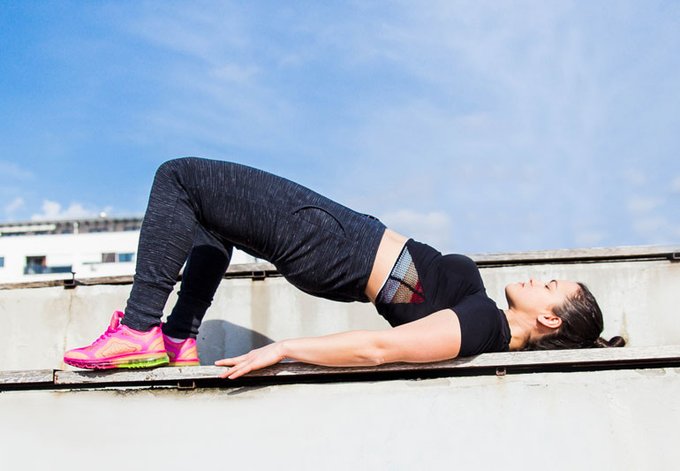
Other muscles that tend to be weak are the gluteus maximus in the buttocks, and the gluteus medius and gluteus minimus on the side of the hip. The bridge and clamshell exercises can help strengthen these muscles.

Smith emphasizes that getting the proper position of these exercises correct is more important than the number of repetitions you do. “It’s better to take your time, maybe do fewer reps, but with better quality,” she says. For that reason, it can be helpful to have the guidance of a physical therapist to get started.

Move on from the core

Core exercises are the starting point of overall fitness because you need to hold those muscles engaged while you strengthen other muscles, such as the biceps in the arms or the quadriceps in the legs.

Smith suggests setting short-term goals (for about a month) and then more long-term goals. Once you have achieved short-term goals, such as getting around more easily, add other types of weight-training or resistance exercises to build muscle elsewhere.

With any exercise you do, always listen to your body, warns Smith. If you have pain other than muscle burn, take it easy. Reduce the number of repetitions, the weight or the duration of the exercises. Then build up gradually. “You don’t have to be in pain to make gains,” she says.

Beginner exercises for core strength

For each of the following, work up to one to two sets of 10 to 15 repetitions once a day.

Abdominal bracing

Lie on your back with your knees bent and feet flat on the floor. Contract your abdominal muscles, and press the arch of your back down toward the floor, pulling your belly button toward your spine. Hold for 5 to 10 seconds. Make sure your lower back stays flat on the floor. Relax and repeat.

Bridge

Lie on your back with your knees bent and feet flat on the floor with your arms at your sides. Squeeze your abdominal and buttocks muscles, push your heels into the floor and slowly lift your buttocks and hips off the floor. Keep your back straight. Hold for 5 to 10 seconds.

Clamshell

Lie on your side with knees bent in line with your hips and back, draw up the top knee while keeping contact of your feet together as shown. Don’t let your pelvis roll back during the lifting movement. Hold for 5 seconds.

https://health.clevelandclinic.org/planning-to-start-exercising-start-with-your-core-first/?utm_medium=social&utm_source=twitter&utm_campaign=cc+tweets

Can stripping down for bedtime help you catch some ZZZs?  Michelle Drerup, PsyD, DBSM. @ClevelandClinic

Cleveland Clinic

Is It Healthy To Sleep Naked?

Wearing no clothes could lead to cooler skin temperatures that put ZZZs within reach

Many people believe they were born with the only pajamas needed for a good night’s sleep, but here’s the naked truth: No research directly confirms that sleeping in the buff leads to better slumber.

There is, however, some validity behind the idea of sleeping naked — namely regarding how a cooler skin temperature improves sleep quality.

So, should you consider stripping down at bedtime before sliding under the sheets? Let’s look at the potential benefits (and risks) with behavioral sleep disorders specialist Michelle Drerup, PsyD, DBSM.

Is sleeping naked better?

There are some possible perks to nude sleeping … so, maybe? Here are a few reasons why you might want to slip off your clothes before slipping off to sleep.

Falling asleep faster

Your body naturally works to lower its thermostat to doze off at night through its circadian rhythm, which regulates your sleep/wake cycle. The faster you cool off, the faster you typically catch some ZZZs, says Dr. Drerup.

That’s also one of the reasons why sleep experts recommended that you keep your bedroom temperature between 60 degrees Fahrenheit and 67 degrees Fahrenheit (15.5 degrees Celsius to 19.44 degrees Celsius) for optimal snoozing.

Improved sleep quality

Ever toss and turn in bed because you’re too hot? Sleeping naked certainly removes any possibility of pajama-induced overheating interfering with a good night’s rest. It’s the absolute final move in shedding layers to stay cool.

“There’s no question that cooler is better than warmer for overall sleeping,” says Dr. Drerup.

And getting enough rest is key to … well, just about everything in day-to-day life. Waking up refreshed can help you manage stress more effectively, improve focus, boost performance and make you a more pleasant person.

For women: reduced risk of yeast infections

Tight-fitting underwear can trap heat and moisture between your legs. What makes a yeast infection thrive? Yep — heat and moisture.

Sleeping naked (or even in loose-fitting cotton bottoms) allows for some air circulation around your vagina. Keeping the area cooler and drier may help reduce your chances of getting a yeast infection, too. 

For men: potential fertility boost

Heat isn’t a friend of male fertility. Regular exposure to higher temperatures for your testicles can cause sperm counts to drop. Wearing underwear that keeps things packed tight doesn’t exactly offer a cooling effect.

Studies show that men who wear boxers have a higher sperm count than their buddies in briefs. So if loose-fitting boxes help that much, imagine what 8 hours of no clothing might do.

Reasons to keep your PJs on

Sleepwalkers may want to give the idea some extra thought to going au natural to avoid any potential awkward encounters, notes Dr. Drerup.

And if you’re not a fan of doing laundry, consider this: Your washing schedule for bedding may need to increase with more skin-to-sheet contact. (Gross fact: The skin cells you shed in a day can feed 1 million dust mites. You don’t want to turn your bed into their buffet.)

Can you be cool and clothed?

Going to bed “nearly” naked while wearing lightweight and loose-fitting garments can bring you similar quality sleep results as taking everything off. “Tank tops and boxer-style briefs don’t possess a ton of warming qualities,” says Dr. Drerup.

And while being cool is desirable for sleep, you also don’t want to be cold. There’s even evidence that wearing socks to bed to warm your tootsies can help you drift off to sleep.

So, which is it: off or on?

Ultimately, what you wear to sleep is a personal choice. “There’s no proven benefit or harm to sleeping naked,” says Dr. Drerup. “Just do what feels right and then rest easy with your decision.”