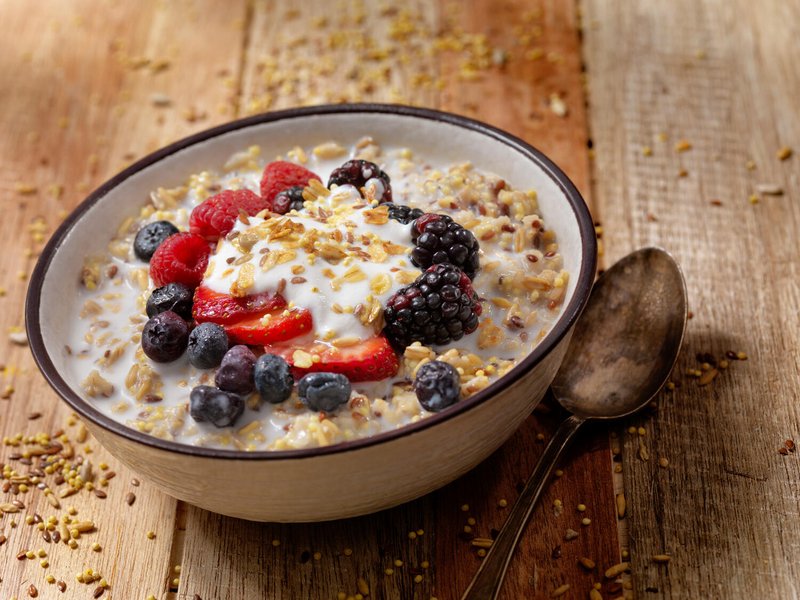
Start your day with a hearty and nutritious 6-grain hot cereal that will keep you energized and satisfied. Prepare a big batch over the weekend and enjoy a warm, comforting breakfast all week long. Top it with your favorite fruits or a dollop of yogurt for added natural sweetness.
Servings: 14 Serving Size: ½ cup
Nutritional Information Per Serving
114 calories
1 g total fat
0 g saturated fat
0 g transfat
0 g monounsaturated fat
0 mg cholesterol
74 mg sodium
21 g total carbohydrate
3 g dietary fiber
0 g total sugars
4 g protein
Ingredients
½ cup uncooked pearl barley
½ cup uncooked red wheat berries
½ cup uncooked brown rice
¼ cup uncooked steel cut oats
3 tablespoons uncooked quinoa
2 tablespoons of flaxseed
½ teaspoon kosher salt
1 ½ quarts water
Directions
In a large saucepan, combine the barley, wheat berries, rice, oats, quinoa, flaxseed and salt.
Pour water over ingredients, stir and bring to a boil over medium heat.
Reduce heat to low and simmer for 45 minutes, stirring occasionally.
Dietitian’s tip:
Make a big batch of this cereal on the weekend and reheat all week. Top with fruit or yogurt to add natural sweetness.
Go inside the operating room for open-heart surgery. Dr. Eric Roselli gives us a behind-the-scenes look at a complex procedure. pic.twitter.com/YAqVrVclyQ
We all want to protect our kids whether it be from falls, bumps and bruises — or avoidable infections and diseases. To help your child avoid illness, it’s important to encourage good habits and take steps to boost their immune system from an early age.
“Most of what makes a child’s immune system strong is common sense,” says pediatrician Adriane Lioudis, MD. If you keep these five tips in mind, you’ll stack the deck in your child’s favor for a healthier life.
1. For newborns, consider breastfeeding
While it’s a very personal decision (that isn’t always possible), if you are able to exclusively breastfeed your child for at least six months, it may have benefits. Some research shows that breastfeeding your child might possibly reduce allergies, Dr. Lioudis says.
2. Promote regular hand washing
Eighty percent of infections are spread by touch. Teach your little one to take the time to wash their hands after sneezing, coughing and going to the bathroom. Washing hands with warm water and soap for at least 20 seconds can remove bacteria and viruses and can reduce the chance of lung infections by up to 45%.
“Get the flu shot for your child yearly, as well,” Dr. Lioudis says. This is particularly important for children with asthma and other chronic health conditions.
Also, if your family will be traveling internationally, it’s important to seek advice from your child’s healthcare provider about any needed vaccinations.
4. Make sleep a priority
To maximize immunity, children must get enough sleep.
Babies between 0 and 3 months need 14 to 17 hours of sleep. Those between 4 and 12 months need 12 to 16 hours of sleep.
Children between the ages of 1 and 2 need between 11 and 14 hours.
Kids between the ages of 3 and 5 should get from10 to 13 hours.
Children ages 6 to 12 should get between 9 and 12 hours.
Teens between the ages of 13 to 18 need 8 to 10 hours.
Not getting enough sleep limits the body’s ability to produce proteins called cytokines that help fight infection and reduce inflammation.
5. Encourage a healthy diet
A healthy diet is also important for your child’s immune system.
Dr. Lioudis recommends encouraging your child to “eat the rainbow” when it comes to fruits and vegetables. A good selection of whole grains should be part of their diet as well. Keep processed foods to a minimum. Proper food choices can help ensure that your child gets enough vitamins — such as vitamin A and E. These vitamins are needed to maintain good health and a strong immune system.
You can’t avoid all illness, but some kids need extra protection
“Even if you follow these tips, your child might still get between seven and 11 colds each year,” says Dr. Lioudis. She adds that you can expect each one to last up to two weeks.
Also, keep in mind that some things billed as common “remedies” aren’t effective in boosting immunity. For example, there’s no definitive proof that large amounts of vitamin C or echinacea help prevent colds or shorten them, she says.
However, if your child has a compromised immune system, work closely with your pediatrician to find ways to improve his or her immunity. Each child needs a personalized approach because their individual immune system varies, Dr. Lioudis says.
“There’s generally a different protocol with immunocompromised children. There are some vaccines we have to add in on top of what most children have, but it’s something that we must determine on a case-by-case basis.
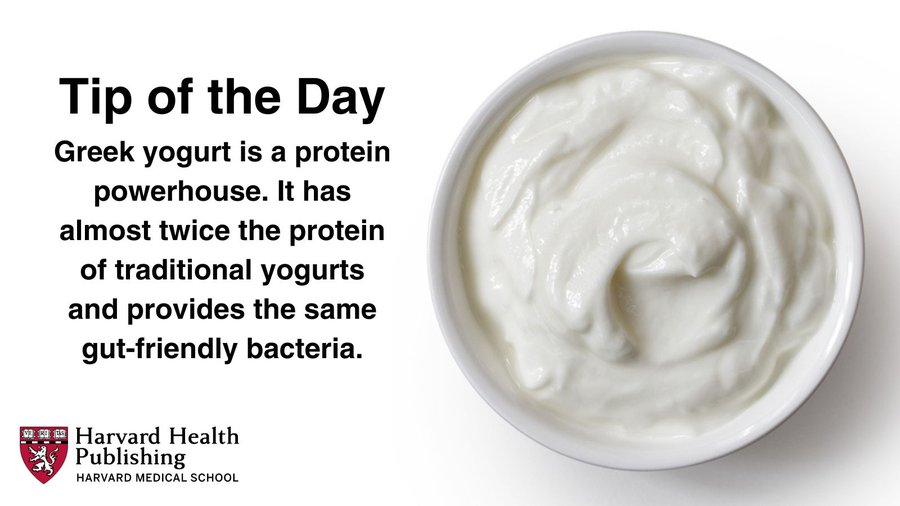
Protein in Greek yogurt: Greek yogurt is a protein powerhouse. It has almost twice the protein of traditional yogurts and provides the same gut-friendly bacteria. #HarvardHealth
A salad combination you may not have thought of, but will now be hooked on
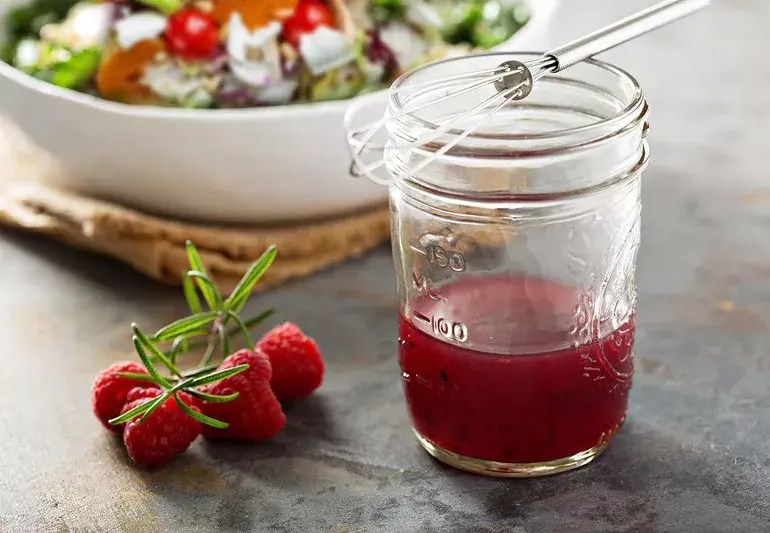
This salad is a perfect addition to a large dinner menu when you have guests over for dinner and have a lot of other dishes to prepare. It’s bright and flavorful, and you can make the dressing a day or two ahead to prep!
Ingredients
Dressing
1 1/2 cups frozen raspberries, thawed 2 to 4 tablespoons orange juice (depending on thickness desired) 1 tablespoon white wine vinegar 1 teaspoon sugar 1 tablespoon orange zest 4 tablespoons chopped fresh chives
Salad
1 pound romaine lettuce, washed, dried and torn into bite-sized pieces 1 pound radicchio, washed, dried, shredded 3 carrots, peeled and grated 1 cup mandarin oranges, drained, patted dry 20 cherry tomatoes, quartered
Directions
Assemble salad ingredients in salad bowl and toss.
Put all ingredients for the dressing in food processor or blender (except for 2 tablespoons chives), and process.
After all is processed, stir in the remaining 2 tablespoons chives.
Pour over salad just before serving and toss.
Nutrition information (per serving)
Calories: 107 Total fat: 0.5 g Saturated fat: 0.1 g Protein: 3 g Carbohydrate: 25 g Fiber: 5.4 g Sodium: 37 mg
—Recipe developed and copyrighted by Kristine Napier, MPH, RD, LD.
You go to the store to pick up some apples. Seems simple enough — until you’re faced with a dozen different varieties in the produce aisle. You want the healthiest apple, so which one will keep the doctor away? Dietitian Mira Ilic, RD, LD, reveals the juicy details about this popular fruit. Big difference in taste, not nutrition Apples have slightly different nutrients depending on their type and color. For instance, Red Delicious apples have polyphenols that are exclusively found in dark red fruits. Polyphenols are plant compounds that may help prevent cancer, heart disease and other conditions. But if the thought of biting into a Red Delicious isn’t appealing, don’t worry. Any apple you buy will deliver a punch of health-boosting nutrients. “The nutritional differences among apple varieties are small,” says Ilic. “But the taste differences are big. Don’t choose an apple based on a small nutrient difference if you don’t like the taste.” Choose fresh and local apples Whatever apple variety you pick, make sure it’s fresh. Old apples aren’t as nutritious, don’t taste as good and could be rotten. “Choose a firm apple with no bruises,” says Ilic. “Look for bright color, keeping in mind that some apple varieties are naturally more colorful. Fresh apples usually have a nice aroma, too.” Whenever possible, go with local apples. The less your apple had to travel, the more nutritious it is when it gets to you. July through October is prime apple season in the U.S. During these months, local apples are easy to find. When you choose apples in the off-season, check the sticker for its country of origin. If your apple traveled a long distance, it probably lost some of its nutrition in transport. Try to choose apples that come from a nearby country. “We don’t have the option to eat local apples year-round,” Ilic says. “In the off-season, we have to get apples from other parts of the world. No matter where they come from, wash them thoroughly.” You don’t need any chemicals or tools to wash your apples. Wash your hands first. Then wash your apple with running water. Gently scrub the skin with a cloth or brush. Are organic apples healthier? Some organic fruits may be slightly more nutritious than conventionally grown ones. But you don’t need to buy organic apples. They tend to cost more, which can be a downside if you’re sticking to a grocery budget. “Growers use different growing practices for organic apples and while pesticides are used on conventionally grown apples, some organic growers may actually use pesticides approved for organic farming,” explains Ilic. “The government has guidelines about what pesticides growers can use. Both types are safe and nutritious. Just wash them well if you’re still concerned about pesticide residue or you can peel your apples, but you’ll lose some nutrients and fiber found in the skin.” Have fun with apple sampling With so many apple varieties, you’re bound to find one you like. Hold an apple sampling by picking a few different types. Cut them into bite-sized pieces, put them on a plate and label them. Have your family members try the different apples and choose their favorite. An apple sampling can be a fun way to get kids to eat more apples, too. Kids often like having some control over the types of foods they eat. All apples are amazing Whether your favorite is a sour Granny Smith or a sweet Honeycrisp, you can’t go wrong with apples. “All apples are a good source of fiber, including pectin, which may help lower cholesterol,” Ilic says. “They also contain phytochemicals like polyphenols, which are antioxidants linked to multiple health benefits. Some studies have suggested that apples may also help reduce the risk of some cancers.” Bottom line: An apple a day is a healthy habit, so don’t stress about picking the right one. “Eat the apples you like because they’re all healthy,” Ilic says. FACEBOOK TWITTER LINKEDIN PINTEREST Email applesfiber
Will you downward dog today? As you grow your practice, your comfortability with downward dog will also grow! It is a full body strengthener and stimulates blood circulation. Eventually, dogward dog becomes a resting pose to help reconnect with your breath. : @MiaTogo
Registered dietitian Lara Whitson, RD, LD, shares how watermelon is actually healthy for you, along with five watermelon recipes.
Is watermelon healthy?
Watermelon is 92% water. No surprise there, considering it’s in the name. But more than keeping you hydrated during hot summer days, watermelon has a number of other health benefits. It’s packed with antioxidants like lycopene that can help protect against chronic diseases like diabetes and cardiovascular disease.
And when eaten regularly as part of a healthy balanced diet, it can help make you feel fuller longer. With a low amount of calories, sodium and cholesterol, alongside higher amounts of calcium, vitamin C and magnesium, watermelon is one fruit you don’t want to miss out on year-round. Even the rind and its seeds offer some benefits.
“You can stir-fry the rinds with other vegetables and add spices to the seeds, like you might do with pumpkin seeds, for an easy and healthful snack,” says Whitson.
Watermelon basil granita
This shaved ice dessert gets a fruity twist with watermelon chunks. It also pulls in star ingredients like fresh lime juice and basil leaves, which offer their own health benefits for a refreshing mid-afternoon sweet escape.
Watermelon, tomato and herb salad with feta
Calorie-conscious dishes can still go big on flavor. This refreshing salad, perfect for picnics and cookouts, pairs watermelon with tomatoes bountiful in benefits, alongside red wine vinegar, fresh mint, almonds and feta cheese.
Fresh watermelon fruit smoothie
This is just one of several ways to crank up your chill summer drinks: Puree 1-1 1/2 cups chopped watermelon with 1 cup ice and a little water or fresh juice for a sip-worthy smoothie as you soak in the sun.
Watermelon salad with cucumber, tomato and almonds
This recipe doubles down on the use of veggies by incorporating beefsteak tomatoes, cucumber, a fresh ear of corn and basil, along with a hearty serving of watermelon for a subtly sweet finish.
Fruit salad spring rolls
Not only is this sweet snack filling, but it also puts a dessert-like twist on classic Vietnamese and Thai spring rolls. By wrapping julienned watermelon, green apple and pineapple in spring roll wrappers made from rice paper, and creating a dipping sauce with Greek yogurt and tahini, this recipe makes for a great palate cleanser for any summer cookout.
A good option for a simple but special #ValentinesDay dinner is baked salmon (or another fish variety), along with a whole grain such as farro, two types of roasted vegetables, and chocolate-dipped strawberries for dessert: https://bit.ly/33MmUG6#HarvardHealth









 Healthaware