Skip to content
Healthaware

Healthaware

Health is Wealth

  • Home

Tag: core strength

Posted on May 23, 2023October 7, 2024

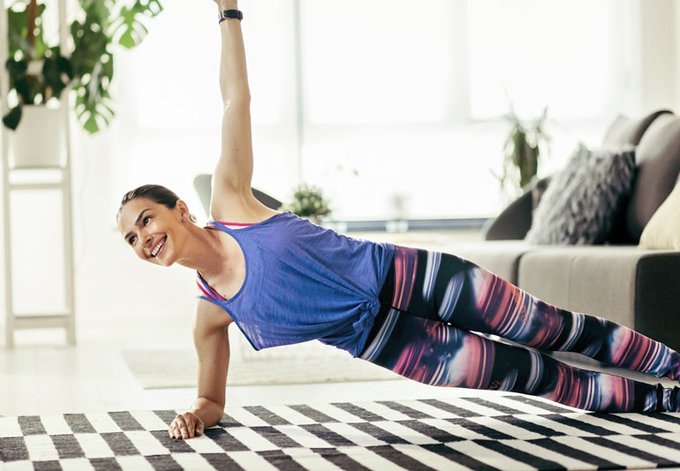
Plank exercises for strengthening your core @HarvardHealth  #physiotherapy

Harvard Health@HarvardHealth·9h

Plank exercises, in which you assume a position and hold it, are the gold standard for working your #core while classic sit-ups and crunches have fallen out of favor. Why the shift?

https://bit.ly/3CEQRmQ

#HarvardHealth#exercise

Posted on May 20, 2023

Why a Strong Core Can Help Reduce Low Back Pain @ClevelandClinic #healthaware #physiotherapy

cleveland back pain a physical therapist

Cleveland Clinic
@ClevelandClinic
·

5m

Back pain is a complex problem, but can strengthening core muscles with targeted exercise provide some relief?

If you suffer from back pain, you’ve probably heard that strengthening your core can bring you some relief. But is this always true? And if so, how do you do it? Physical therapist Patti Mariano Kopasakis, PT, DPT, SCS, answers common questions about what we should know about strengthening your core muscle group.

Q: What is your core?

When most people think about the core of the body they think of the abdominal or six-pack area just below the ribs. While the abdominal muscles are an important part of the core, we consider other areas important, too.

Your core includes:

  • Front abdominal muscles — the rectus abdominis.
  • Muscles along the side of your body — the internal and external obliques.
  • A deep muscle that wraps around the front — the transverse abdominal.
  • Muscles in your back that are located between your spine bones and run along your spine — the erector spinae and multifidi.

Your core also includes your diaphragm, muscles of the pelvic floor, hip flexors, and gluteal muscles.

Q: What is the relationship between core strength and back pain?

Theoretically, if your muscles around the low back are weak, your body will rely more on passive structures for stability, including ligaments — the tissue that connects bone to bone — as well as the spinal bones or discs which lie between the spinal bones. This can cause pain.

But some studies have shown that specific core exercises are not any more beneficial than general exercise for low back pain. What we know is that exercise in general can help, and focusing on core muscles may provide some additional benefit.

Q: What are some exercises for the core that can help with back pain?

Here are my top five:

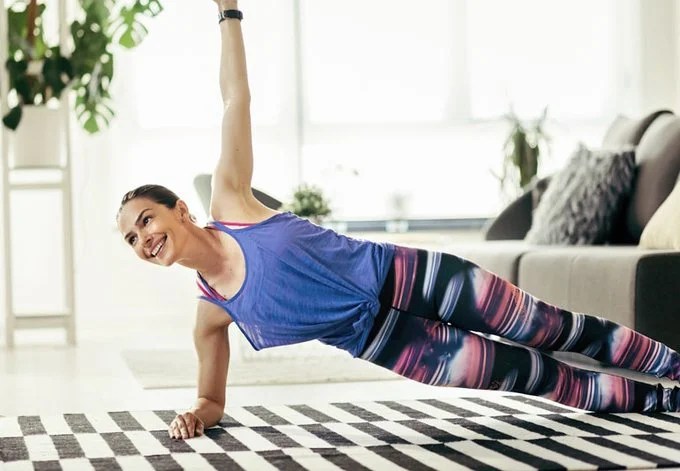
  •  Side plank — Sit on the floor with your right hand below your right shoulder and feet stacked. Lift your body, keeping your legs long, abdominals engaged and feet stacked. Hold. Repeat on the other side. You can modify this pose by dropping your bottom knee to the floor for extra support.
  • Plank — Kneel on all fours. Pull in your abdomen and step your feet behind you until your legs are straight. Keep your hands directly under your shoulders and your neck straight. Hold your abdomen and legs tight and avoid letting your lower back sag. Hold and breathe for 30 seconds. You can modify this pose by lowering your knees.
  • Bird dog — Kneel  on all fours. Reach one arm out in front of you, draw in your abdomen, and extend the opposite leg long behind you. Repeat on the other side.
  • Marches — Lie on your back with knees bent. Take a deep breath in and as you breathe out draw your belly muscles in as if tightening a belt. As you do this lift one leg a few inches from the floor. Return to starting position and switch sides. Repeat for 8-10 repetitions on each side. 3 sets.
  • Upward dog — Lie face down with head slightly lifted and hands palm-down under your shoulders. Point your toes. Exhale, then press through your hands and the tops of your feet and raise your body and legs up until your arms are straight and your body and legs are off the ground. Keep your neck relaxed and long and thigh muscles tight as you hold and breathe.

For the plank exercises, start by holding them for 15 seconds to 30 seconds. For bird dog and scissors, try three sets of eight or 10 repetitions. For upward dog, do one set of 10 repetitions.

Q: Can you injure your back by trying to strengthen your core?

Any exercise performed incorrectly, whether it is core-strengthening or otherwise, has the potential to cause discomfort.

Twisting exercises or even incorrectly completing the exercises cited above can cause pain in the low back. But it’s highly unlikely that one repetition of an exercise will seriously harm your body, unless it’s an exercise using a very heavy weight.

The best way to keep your body safe is to listen to body cues such as pain during and immediately after an exercise, and the next day after exercising.

Q: When should you talk to a doctor about your back pain?

If any of the following is going on you should consult with your doctor:

  • Your pain has been going on for longer than a month, despite resting from activities that make it worse.
  • Your pain is getting worse.
  • Your pain wakes you from sleep.
  • Your pain is in your low back but also is going down one or both of your legs.
  • You notice that one leg is becoming weaker than the other.

Q: Where should you turn if you want help in creating a plan to address back pain?

Physical therapists train as musculoskeletal experts — they are the experts on muscles, bones and human movement. These professionals are the most qualified, aside from an orthopedic doctor, to assess back problems.

Since there are many factors that impact low back pain and many types of low back pain, it is a good idea to visit at least one time with a physical therapist for an evaluation and subsequent plan of care. This will give you an individually tailored plan with exercises that progress safely. The idea of core strengthening, while beneficial, is just one piece of the low back pain puzzle.

Posted on May 15, 2023May 15, 2023

5 surprising benefits of walking: @HarvardHealth #healthaware #physiotherapy


Harvard Health

@HarvardHealth
·
22h


5 surprising benefits of #walking: Any physical activity is a boon to your overall health. But walking in particular comes with a host of benefits. https://bit.ly/3uyNvhI #HarvardHealth

The next time you have a check-up, don’t be surprised if your doctor hands you a prescription to walk. Yes, this simple activity that you’ve been doing since you were about a year old is now being touted as “the closest thing we have to a wonder drug,” in the words of Dr. Thomas Frieden, former director of the Centers for Disease Control and Prevention.

Of course, you probably know that any physical activity, including walking, is a boon to your overall health. But walking in particular comes with a host of benefits. Here’s a list of five that may surprise you.

1. It counteracts the effects of weight-promoting genes. Harvard researchers looked at 32 obesity-promoting genes in over 12,000 people to determine how much these genes actually contribute to body weight. They then discovered that, among the study participants who walked briskly for about an hour a day, the effects of those genes were cut in half.

2. It helps tame a sweet tooth. A pair of studies from the University of Exeter found that a 15-minute walk can curb cravings for chocolate and even reduce the amount of chocolate you eat in stressful situations. And the latest research confirms that walking can reduce cravings and intake of a variety of sugary snacks.

3. It reduces the risk of developing breast cancer. Researchers already know that any kind of physical activity blunts the risk of breast cancer. But an American Cancer Society study that zeroed in on walking found that women who walked seven or more hours a week had a 14% lower risk of breast cancer than those who walked three hours or fewer per week. And walking provided this protection even for the women with breast cancer risk factors, such as being overweight or using supplemental hormones.

4. It eases joint pain. Several studies have found that walking reduces arthritis-related pain, and that walking five to six miles a week can even prevent arthritis from forming in the first place. Walking protects the joints — especially the knees and hips, which are most susceptible to osteoarthritis — by lubricating them and strengthening the muscles that support them.

5. It boosts immune function. Walking can help protect you during cold and flu season. A study of over 1,000 men and women found that those who walked at least 20 minutes a day, at least 5 days a week, had 43% fewer sick days than those who exercised once a week or less. And if they did get sick, it was for a shorter duration, and their symptoms were milder.

Image: gradyreese/Getty images

Posted on April 5, 2023

5 surprising benefits of walking: @HarvardHealth #healthaware


Harvard Health

@HarvardHealth
·
22h


5 surprising benefits of #walking: Any physical activity is a boon to your overall health. But walking in particular comes with a host of benefits. https://bit.ly/3uyNvhI #HarvardHealth

The next time you have a check-up, don’t be surprised if your doctor hands you a prescription to walk. Yes, this simple activity that you’ve been doing since you were about a year old is now being touted as “the closest thing we have to a wonder drug,” in the words of Dr. Thomas Frieden, former director of the Centers for Disease Control and Prevention.

Of course, you probably know that any physical activity, including walking, is a boon to your overall health. But walking in particular comes with a host of benefits. Here’s a list of five that may surprise you.

1. It counteracts the effects of weight-promoting genes. Harvard researchers looked at 32 obesity-promoting genes in over 12,000 people to determine how much these genes actually contribute to body weight. They then discovered that, among the study participants who walked briskly for about an hour a day, the effects of those genes were cut in half.

2. It helps tame a sweet tooth. A pair of studies from the University of Exeter found that a 15-minute walk can curb cravings for chocolate and even reduce the amount of chocolate you eat in stressful situations. And the latest research confirms that walking can reduce cravings and intake of a variety of sugary snacks.

3. It reduces the risk of developing breast cancer. Researchers already know that any kind of physical activity blunts the risk of breast cancer. But an American Cancer Society study that zeroed in on walking found that women who walked seven or more hours a week had a 14% lower risk of breast cancer than those who walked three hours or fewer per week. And walking provided this protection even for the women with breast cancer risk factors, such as being overweight or using supplemental hormones.

4. It eases joint pain. Several studies have found that walking reduces arthritis-related pain, and that walking five to six miles a week can even prevent arthritis from forming in the first place. Walking protects the joints — especially the knees and hips, which are most susceptible to osteoarthritis — by lubricating them and strengthening the muscles that support them.

5. It boosts immune function. Walking can help protect you during cold and flu season. A study of over 1,000 men and women found that those who walked at least 20 minutes a day, at least 5 days a week, had 43% fewer sick days than those who exercised once a week or less. And if they did get sick, it was for a shorter duration, and their symptoms were milder.

Image: gradyreese/Getty images

Posted on January 29, 2023

In honor of #NationalPediatricianDay @MountSinaiNYC

Mount Sinai Health System

@MountSinaiNYC

·

18h

In honor of #NationalPediatricianDay here are a few photos of some of our amazing Pediatricians here at Mount Sinai and our community practices. Thank you for all you do for our patients and their families!

@MountSinaiPeds

Posted on January 17, 2023

Our best balance boosters #physiotherapy😉 @HarvardHealth

harvard balance boosters

Harvard Health
@HarvardHealth
·

14h

Our best balance boosters. http://bit.ly/2rkMG0N #HarvardHealth

Image: Jacob Ammentorp Lund/iStock

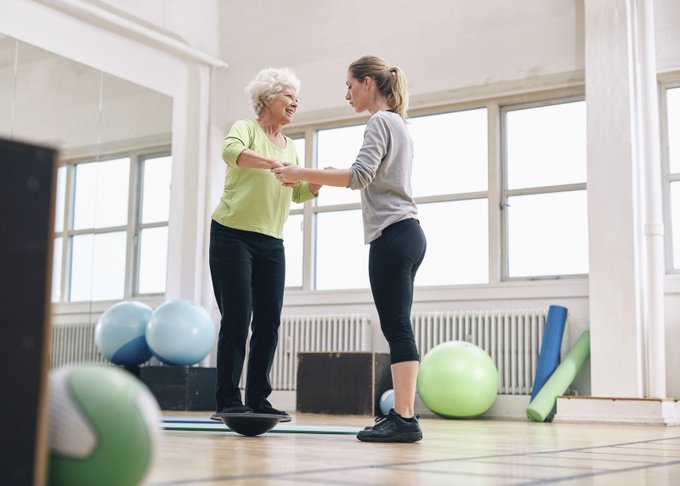
Many older adults focus on exercise and diet to stay healthy. But one of the worst offenders to health—poor balance—is often an afterthought. “I see a lot of older adults who are nonchalant about balance,” says Liz Moritz, a physical therapist at Harvard-affiliated Brigham and Women’s Hospital.

Unfortunately, imbalance is a common cause of falls, which send millions of people in the United States to emergency departments each year with broken hips and head injuries. But there are many things you can do to improve your balance. The strategies below are some of the most effective.

Physical therapy

Physical therapy for balance focuses on the ability of the joints and brain to communicate, the balance system in the ear (the vestibular system), and vision. “We coordinate all three with exercises such as standing on one foot, first with the eyes open, and then with the eyes closed. We also work on joint flexibility, walking, and lower-extremity exercises on one or two legs,” says Moritz. Other exercises that boost balance include chair stands (see “Move of the month”) and squats. Make sure you get training before attempting these exercises at home.

Muscle strengthening

“Core strength is very important for balance. If the abdominal muscles in your core are weak, they cannot support your limbs, especially when you’re walking. If the gluteal muscles in your buttocks and hips aren’t strong, they won’t be able to propel you forward,” says Moritz. Muscle strengthening can help. Moritz suggests starting with gentle core exercises like a pelvic tilt (lie on the floor with your knees bent up, then roll your pelvis up) and then moving to more intense exercises such as wall planks (stand six inches from a wall, keeping your body rigid, then lean forward with your forearms flat against the wall, and hold the position for 20 seconds). Leg lifts will strengthen the gluteal muscles, and adding resistance bands to leg lifts makes the exercise even more effective.

Tai chi and yoga

“Tai chi and yoga are exercises that make you pay attention to the control and quality of movement, rather than the quantity, which improves your balance,” says Moritz. In tai chi, you practice slow, flowing motions and shift your weight from one limb to another. Yoga incorporates a series of focused postures and breathing. Both exercises increase flexibility, range of motion, leg and core strength, and reflexes. The result: you become better at balancing in a number of different positions, which helps you avoid falling if you encounter uneven pavement or obstacles in your path.

Vision correction

“If you can’t see where you’re going, your fall risk goes up,” says Moritz. “A lot of people I treat for balance are here be-cause they tripped when they didn’t see something on the floor.” The fix may be as simple as a new eyeglasses prescription. Get a comprehensive, dilated eye exam every one or two years if you’re 65 or older, every one to three years if you’re age 55 to 64, and every two to four years if you’re 40 to 54. If you have an increased risk for other eye conditions, you may need an eye exam more often.

Assistive walking devices

A cane or a walker can complement your balance and give you more stability and confidence walking. But don’t buy a device on your own. “If it’s too high or too low, that can cause a fall. You need to get it measured, and you need training to learn how to use it,” says Moritz. Training takes just a few physical therapy sessions. Walkers are available with wheels intended for different terrain, lockable brakes, seats, baskets, and other features such as headlights. Canes are available with various handgrips and bases.

https://www.health.harvard.edu/staying-healthy/our-best-balance-boosters?utm_content=bufferbc3b8&utm_medium=social&utm_source=facebook&utm_campaign=buffer

Posted on January 13, 2023

Yoga is a gentle practice that helps to reduce low back pain. @HarvardHealth


Harvard Health

@HarvardHealth
·
3h


Yoga is a gentle practice that is ideal for maintaining back strength and flexibility. It’s also one of the more effective tools for helping reduce low back pain, the most common source of pain and disability among older adults. https://bit.ly/3nRzFEP #HarvardHealth #Yoga
Posted on December 6, 2022December 6, 2022

Plank exercises for strengthening your core @HarvardHealth

Harvard Health@HarvardHealth·9h

Plank exercises, in which you assume a position and hold it, are the gold standard for working your #core while classic sit-ups and crunches have fallen out of favor. Why the shift?

https://bit.ly/3CEQRmQ

#HarvardHealth#exercise

Posted on October 20, 2022

Yoga is a gentle practice that helps to reduce low back pain. @HarvardHealth


Harvard Health

@HarvardHealth
·
3h


Yoga is a gentle practice that is ideal for maintaining back strength and flexibility. It’s also one of the more effective tools for helping reduce low back pain, the most common source of pain and disability among older adults. https://bit.ly/3nRzFEP #HarvardHealth #Yoga
Posted on June 4, 2022June 4, 2022

Looking to firm up your abs and strengthen your core? @ClevelandClinic

health.clevelandclinic.org
Try These Ab Workouts to Strengthen Your Core
Break a sweat with these ab exercises

Posts pagination

Previous page Page 1 Page 2 Page 3 Page 4 … Page 10 Next page

Tags

  • Alcohol
  • Cleveland Clinic
  • Depression
  • diet
  • exercise
  • Female health
  • fitness
  • Harvard Health
  • Healthaware
  • heartaware
  • heart health
  • nutrition
  • physical activity
  • physiotherapy
  • yoga

Recent Posts

  • Milk really does do a body good. It’s high in calcium, vitamin D and potassium. And it’s also rich in a beneficial protein called casein! @ClevelandClinic
  • “Piglet?” said Pooh. “Yes Pooh?” said Piglet. “Do you ever have days when everything feels… Not Very Okay At All?
  • Running is great exercise. A dietitian talks about what runners should eat ― and when ― for optimal nutrition and performance. @HopkinsMedicine
  • Running is good for you  👍🙏  #BlackrockHealth
  • Physiotherapists allowed to refer patients for medical radiological procedures for the first time @RCSI_Irl
  • “Avoid Alcoholic Drinks” in the new European Code Against Cancer (5th edition) #alcohol Trauma
  • Our best balance boosters #physiotherapy😉 @HarvardHealth
  • 3 ways alcohol may be contributing to your back pain @ClevelandClinic
  • Take a fresh look at oatmeal – it’s not as simple as you think @American_Heart
  • Be Kind and Patient with New Mums 🩷@motherandbaby
  • Vitamin D is one of the most powerful nutrients for supporting the immune system @ClevelandClinic  🌞
  • Yes alcohol affects hormones in women by increasing estrogen and cortisol, and decreasing progesterone, Source: AI
  • Bananas nature’s perfect snack @ClevelandClinic #therapeutic
  • This fresh English Pea Pasta recipe is loaded with healthful pea protein and flavored with garlic, mint and grated Parmigiano Reggiano.@ClevelandClinic
  • Try our lighter carrot cake recipe.@clevelandclinic #homebaking
  • The best medicine for back pain may be good old-fashioned movement and exercise. @HarvardHealth
  • ‘Life is like riding a bicycle. To keep your balance, you must keep moving..@thecsp
  • Recipe: Perfect Chocolate Chia Pudding Sweet mix of coconut, cherries and chocolate @ClevelandClinic #foodaware #womenshealth
  • Cherry blossoms are the national flower of Japan, representing a time of renewal and optimism. @StPatricks #mentalhealth
  • All the Reasons You Should Eat Strawberries. @ClevelandClinic #healthaware
Blog at WordPress.com.
  • Subscribe Subscribed
    • Healthaware
    • Join 1,722 other subscribers
    • Already have a WordPress.com account? Log in now.
    • Healthaware
    • Subscribe Subscribed
    • Sign up
    • Log in
    • Report this content
    • View site in Reader
    • Manage subscriptions
    • Collapse this bar
 

Loading Comments...