What to know before grabbing an ice-cold beer to beat the heat:
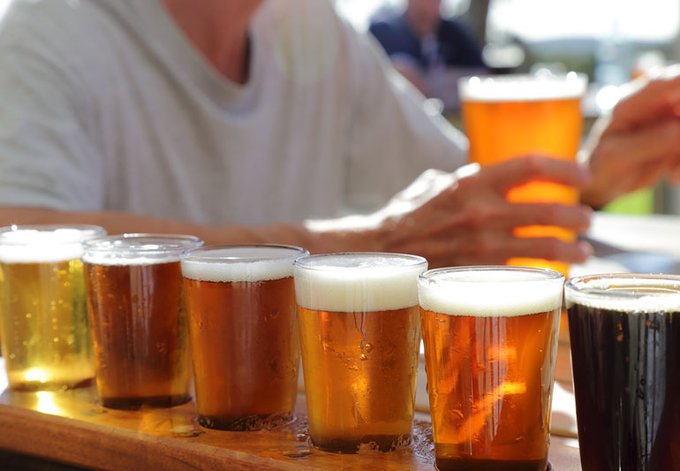
It’s a warm summer day and you’re hanging out with friends and family for the first time in over a year, celebrating being vaccinated and just being together. And to help beat the heat, you reach in the cooler for an ice-cold beer.
While that might be refreshing at the moment, though, there’s good reason to grab some water, too. The heat of summer can be brutal, sometimes, and its effects are amplified when you’ve had a little too much alcohol.
To better understand the risks you face when drinking alcohol during this hot vaccine summer, we spoke with registered dietitian Julia Zumpano, RD.
The biggest danger: dehydration
Whenever you’re outside in the heat for prolonged periods – like at the beach or picnic – you’re at risk of dehydration. Consuming alcohol only heightens that risk.
Alcohol reduces the release of the hormone vasopressin, which keeps your body fluids balanced. At the same time, alcohol is also a diuretic which means more urinating and that can lead to dehydration even without the heat. Add in all that sweat from the hot sun and it’s a recipe for dehydration disaster.
One thing Zumprano points out, too, is that caffeine – whether via coffee, soda or as a mixer for liquor – heightens that dehydration risk even further.
Dehydration can also compound certain aspects of intoxication, she notes. “Altered thinking, altered abilities to drive and make reasonable decisions or even just to have conversations are all things that intoxication can cause.”
Liquor versus beer: Is one worse than the other in the heat?
Given that alcohol content is usually higher in spirits than in your average beer, it makes sense that drinking beer instead of mixed drinks might help you avoid dehydration. But the reality is a little more complex, according to Zumpano.
“If you’re consuming liquor at a volume equivalent to the volume of beer, like 12 ounces of margaritas compared to 12 ounces of an average beer, you will get drunk a lot quicker,” she says. “But if you’re drinking what’s considered an alcoholic drink equivalent, there’s not much of a difference because your alcohol intake is the same.”
According to the National Institute of Health, one alcoholic drink equivalent, also referred to as a “standard drink,” contains around 14 grams of pure alcohol. By those measurements, an average 12-ounce can of beer contains the same amount of alcohol as a 5-ounce glass of wine or a typical shot of distilled spirits like rum, vodka, gin or whiskey.
One thing to keep an eye on, though, is the alcoholic content of your beer. While major brands generally run between 4% and 5% alcohol per 12-ounce can or bottle, certain styles of craft beer are as much as 9% alcohol per the same volume. In other words, one can of your favorite local IPA delivers almost twice the amount of alcohol to your system.
Beware a false sense of hydration
Another mistake you should avoid, Zumpano says, is thinking that drinking all that liquid rehydrates you. “If you’re drinking a lot of beer or alcoholic seltzer, it can feel like you’re drinking a lot of liquid and staying hydrated, but the alcohol offsets that because it’s the dehydrating factor,” she points out.
Not that drinking mixed drinks is any better, according to Zumpano. “If you’re drinking a sugary, sweet mixed drink, you run into the same thing. It feels like you’re staying hydrated because they go down so much smoother than drinking spirits on the rocks. But it’s the same effect as with beer: The alcohol is still dehydrating you unless you’re also drinking enough water.”
Sugar, the hidden villain
All of these drinks have other adverse health effects, too. They can pack a bunch of calories into a single serving – as many as 400 to 500 calories in some mixed drinks and craft beers – and they can come loaded with carbs.
There’s more, though. “If you’re drinking high sugar, high caloric intake beverages and you’re drinking a lot of them, they can be very filling,” Zumpano says. If you’re feeling full, you might not eat any food which can otherwise help absorb some of the alcohol.
How to counter dehydration: water, water, water
So what can you do to avoid dehydration troubles when you’re sipping your favorite boozy beverage by the pool? “To counteract the dehydration risk of alcohol,” Zumpano says, “drink 8 to 12 ounces of water for every alcoholic drink. It slows your intake, keeps you hydrated and can mitigate negative hangover effects.”
She suggests keeping a reusable water bottle with you that you can refill as the day goes on, taking time to drink the necessary water between beers or margaritas. Another option is to buy a pack of 8-ounce bottles of water and alternate with your booze. And you can always infuse your water with fruit to keep it flavorful.
“It’s also important to know what your trigger for over-consumption is,” she adds. “If you’re triggered by over-consuming beer or alcoholic seltzer, you want to be mindful of that. Try to switch a drink you have better control of and keep the water bottle handy.”
Even when we have the best of intentions, we can tend to overindulge in … well, everything. Whether it’s a second helping of dinner, snacking on sweets or a venti-sized coffee, we often go a little too far. And that’s especially true — and risky — when it comes to alcohol.
Overdoing it with booze occasionally, like at a wedding or birthday party, might be fine (though your headache the next morning might make you think otherwise). But when does drinking frequently cross the line into being problematic? And what are the health risks of alcohol overconsumption? To gain some insight into these concerns, we spoke with hepatologist Jamile Wakim-Fleming, MD.
What are alcohol consumption guidelines?
It’s first best if we understand some of the dietary guidelines around alcohol. The U.S. Department of Agriculture and U.S. Department of Health and Human Services’ “Dietary Guidelines for Americans, 2020-2025” recommends adults of the legal drinking age should either not drink or limit their drinking to two drinks a day or fewer for men and one drink a day or fewer for women.
The guidelines say those who shouldn’t consume any alcohol under any circumstances include:
Anyone under the legal drinking age.
Anyone with liver disease.
Anyone who’s pregnant or might be pregnant.
Anyone with a medical condition or taking medication that has poor interactions with alcohol.
Anyone recovering from “an alcohol use disorder” or has trouble controlling their alcohol consumption.
As for how much alcohol is considered standard, the guidelines define a standard drink as:
12 ounces of 5% alcohol by volume (ABV) like beer.
8 ounces of 7% ABV like malt liquor.
5 ounces of 12% ABV like wine.
1.5 ounces of 40% ABV (or 80 proof) distilled spirits like gin, rum and whiskey.
There are nuances to consider with these guidelines, though. While major American brands of beer have a 5% ABV measurement, many popular craft beers have higher alcohol content. That IPA you love might have an ABV of 7% or higher, so keep an eye on it when you’re knocking them back at your next summer barbecue.
But, as Dr. Wakim-Fleming explains, we also have to be cautious when applying these guidelines to our own habits for several reasons that go beyond the alcohol content of your beverage.
Factors in alcohol consumption
According to Dr. Wakim-Flemings, there are a few factors to consider when it comes to alcohol affecting you because each person is different. She outlines the following as the main ones when weighing alcohol consumption.
Age. “A 50-year-old person will handle alcohol differently than someone who’s 70 years.”
Gender. “Women don’t tolerate the same amount of alcohol as men because they have less of a certain enzyme — alcohol dehydrogenase — that metabolizes the alcohol before it’s absorbed into the blood.”
Body size. If two people of different sizes intake the same amount of alcohol, the person with the smaller body carries less water and has a higher concentration of alcohol in their body, affecting the dilution.
Family history. Those who are raised in a household with parents who drink are more likely to have an adverse relationship with alcohol.
Comorbidities.Relatively healthy people will have an easier time processing alcohol than those with existing health issues.
Those factors are largely outside of our control. But other things we can control should also be considered, Dr. Wakim-Fleming advises. For instance, she says, “Drinking on an empty stomach is more toxic than if you’ve had something to eat. There’s no food to help absorb the alcohol so more goes into your blood system.”
And, again, there’s that percentage of alcohol to consider. “Remember that the percentages of alcohol vary among the types of alcohol,” she says. “Drinking 12 ounces of wine contains far more alcohol than 12 ounces of most common beers.”
How many drinks are too many?
Taking into account all of these factors, Dr. Wakim-Fleming says there are still ways to figure out where a person crosses the line into overindulging in alcohol, and separating what’s considered “binge” drinking, “heavy” drinking and “excessive” drinking.
What’s considered binge drinking?
Studies have shown that even if you only occasionally drink alcohol, drinking regularly over a long period can have negative outcomes on your health. “It’s a cumulating effect caused by drinking over time,” says Dr. Wakim-Fleming.
But a more present danger is binge drinking. According to the U.S. Centers for Disease and Prevention (CDC), binge drinking is classified for men as consuming five or more standard drinks within a few hours and four or more standard drinks within a few hours for women.
That kind of alcohol consumption can lead to severe reactions in your body, including:
Dehydration and headaches (a hangover, in other words).
Loss of motor skills that can lead to serious injuries.
The loss of judgment that comes from binge drinking can cause you to make poor choices, too, including driving under the influence, physical altercations and even further physical injury.
What’s considered excessive drinking?
Dr. Wakim-Fleming says excessive drinking is essentially the same as binge drinking. The CDC also includes underage drinking and drinking by women who are pregnant.
Most excessive drinking — more than 90%, according to the CDC — is binge drinking. Additional statistics on binge drinking from the CDC include:
More than 38 million adults in the U.S. are binge drinkers.
The average binge drinker does so around four times a month.
The average binge drinker consumes eight drinks per binge.
Most people who binge drink do not have an alcohol dependency.
Excessive drinking is something that’s thought of more in the short term, but can still be extremely damaging to your body, especially as it becomes a habit and potentially leads to more long-term, heavy drinking.
What’s considered heavy drinking?
While considered part of excessive drinking by the CDC, heavy drinking is applied to drinking over a longer period than binge drinking; while binge drinking is measured in an increment of two-to-three hours, heavy drinking is measured over a week.
“For women, heavy drinking is eight standard drinks a week or more,” says Dr. Wakim-Fleming, “While for men, it’s 15 drinks a week or more.” And, yes, multiple binges within a week do equal heavy drinking.
And no matter which category you fall into, there are consequences. “You subject your body to more health risks, to more toxicity and you begin a cycle of withdrawal problems,” she adds.
How does too much alcohol affect your body?
So, more about those consequences. “Alcohol affects the body in two ways,” says Dr. Wakim-Fleming. “The initial stage occurs right after drinking. Drinking causes inflammation of your swallowing tube [esophagus], stomach and gastrointestinal tract. Additionally, your liver is also inflamed which causes it to become enlarged and tender.”
If you stop drinking at this stage, she says, that inflammation is reversible. But if you continue to drink excessively over time or become a heavy drinker, that leads to serious complications.
Cancer
“If your drinking and inflammation continues daily, it leads to scarring and becomes irreversible, as in cirrhosis, which can lead to cancer,” notes Dr. Wakim-Fleming.
“The important thing to remember is that these organizations consider alcohol a modifiable risk factor for cancer, which means you can do something about it,” adds Dr. Wakim-Fleming. “That means following their guidelines and avoiding drinking.”
How alcohol affects your brain
You may not realize it, but the most common consequence of overconsumption of alcohol — the hangover — is the alcohol directly affecting your brain. In the immediate aftermath, your hangover can include poor concentration, lagging reflexes, headache, nausea and vomiting.
Over time, though, excessive amounts of alcohol do far more damage to your brain, resulting in consequences beyond just an unpleasant morning after. “You can end up with alcohol dementia and a type of nerve damage we call neuropathy,” cautions Dr. Wakim-Fleming.
Chronic alcoholism has also been linked to poor diets, which deprive your body of necessary vitamins and nutrients, which can compound issues with many parts of your body, including your brain and central nervous system.
How alcohol affects your heart
Alcohol can adversely affect muscles, and your heart is a muscle. Heavy drinking can lead to a poor diet, which means your muscles are using empty calories from alcohol rather than healthy foods.
The result can be a dilated heart muscle and, eventually, dilated cardiomyopathy. Your heart weakens and can’t pump blood as strongly, which can cause your kidneys to retain more fluid. That can lead to fluid build-up in your extremities and lungs, and even to congested heart failure.
How alcohol affects your liver
Excessive and heavy drinking can lead to cirrhosis and liver cancer. But, says Dr. Wakim-Fleming, the risks go beyond that.
Cirrhosis of the liver, which causes scar tissue that prevents your liver from functioning properly, is often caused by alcoholism. “Because that scarring affects the ability of the liver to function, it can lead to life-threatening conditions. And that’s why alcohol is one of the most common reasons for a liver transplant.”
Will one night of drinking impact your overall health?
Excessive drinking in one night can lead to acute damage and cause alcohol poisoning, which has severe consequences including, at its most extreme, death.
But if you drink only occasionally and in moderation — say, a glass of wine with dinner or a beer at a ballgame — it’s not going to create long-term damage. It’s all about moderation and avoiding chronic use, says Dr. Wakim-Fleming.
And while following recommended guidelines is important, it’s also about knowing yourself and your limits. “We don’t have personalized medicine when it comes to alcohol because everyone responds differently,” she says.
Even if you’re not overdoing it, consider taking a break or several breaks throughout the year. “Any break is good because your body needs time to reduce that inflammation. Taking a month or two off from consuming alcohol can help,” she suggests.
“Know your body, know your personal and family history and know your limits,” she continues. “Know what’s good for you because what works for others won’t necessarily work for you. Take charge of your health and if you need, seek help, whether from family, friends or other support groups and always discuss with your doctor.”
health.clevelandclinic.org
How Much Alcohol Is Too Much?
Learn how much alcohol is overdoing it in one sitting or over time.
Try our lighter carrot cake, which the entire family will love. It has just the right texture, like a slightly sweetened, light corn bread. It’s great on its own or with a dollop of frozen whipped topping or nonfat ice cream.
Ingredients
No-stick baking spray with flour
1 cup unbleached all-purpose flour
½ cup whole wheat flour
½ cup granulated sugar substitute
¼ cup packed light brown sugar
¼ cup nonfat dry milk
1 ¼ teaspoons baking soda
1 ½ teaspoons baking powder
1 teaspoon ground cinnamon
¼ teaspoon ground cloves
½ teaspoon ground nutmeg
½ teaspoon ground allspice
¼ cup canola oil
1 large egg
¾ cup egg substitute
1 ½ cups finely grated carrots
2 tablespoons finely chopped walnuts
2 tablespoons golden raisins
One 6-ounce can unsweetened crushed pineapple, drained
2 tablespoons confectioners’ sugar, optional
Directions
Preheat the oven to 350ºF. Coat a 10-inch pan with baking spray.
Sift the white and whole wheat flours into a large bowl. Add the sugar substitute, brown sugar, dry milk, baking soda, baking powder and spices. Stir to mix well. Using the medium setting of an electric mixer, beat in the oil, egg and egg substitute until the batter is smooth. Fold in the carrots, walnuts, raisins and pineapple.
Spread the batter into the prepared pan and bake for 30 minutes, until a toothpick inserted in the center of the cake comes out clean. Cool in the pan. Remove the outer ring of the pan and sift confectioners’ sugar over the top, if desired. Serve at room temperature.
Dietitian’s Note: Never has carrot cake tasted so good, and been so guiltless! When compared to traditional carrot cake with icing, you save 180 calories, 12 grams of fat, and 4 grams of saturated fat.
Taking short breaks throughout the day is beneficial for your mental health. Cleveland Clinic Yoga Program Manager, Judi Bar, shares stretches you can do wherever you are. #NationalYogaMonthpic.twitter.com/hIdb9GQkQO
Exercise is a vital part of a healthy lifestyle. But if you’ve gotten out of the habit of being active — or have never found an exercise routine that works — it might feel like an impossible task to get started. Luckily, it’s never too late to figure out a workout routine. Here’s how to start exercising — and tips to stay motivated when all you want to do is hang out on the couch instead. What should I include in my exercise program? Every exercise session should include a warm-up, a conditioning phase and a cool-down phase. The warm-up In a nutshell, a warm-up helps your body adjust slowly from rest to exercise. Making this part of your routine reduces the stress on your heart and muscles, and slowly increases your breathing, circulation (heart rate) and body temperature. A warm-up can also help improve your flexibility and reduce muscle soreness. The best warm-up includes stretching, range of motion activities and beginning the activity at a low-intensity level. Conditioning phase The conditioning phase follows the warm-up and is the time when you’re burning calories and moving and grooving. During the conditioning phase, you should monitor the intensity of your activity. The intensity is how hard you’re exercising, which can be measured by checking your heart rate. Over time, you can work on increasing the duration of the activity. The duration is how long you exercise during one session. Cool-down phase The cool-down phase is the last phase of your exercise session. It allows your body to gradually recover from the conditioning phase. Your heart rate and blood pressure will return to near-resting values. However, a cool down does not mean tosit down. In fact, for safety reasons, don’t sit, stand still or lie down right after exercise. This might cause you to feel dizzy, lightheaded or have heart palpitations (fluttering in your chest). The best cool down is to slowly decrease the intensity of your activity. You might also do some of the same stretching activities you did in the warm up. General exercise guidelines In general, experts recommend doing a five-minute warm up, including stretching exercises, before any aerobic activity, and include a five- to 10-minute cool down after the activity. Stretching can be done while standing or sitting. Here are some other things to keep in mind when starting a workout routine: Determine the best exercise routine for your lifestyle Not everybody likes to hop out of bed in the morning and go for a run. Figuring out a routine that fits your lifestyle can help you be more successful. Here are some questions you can think about before choosing a routine: What physical activities do I enjoy? Do I prefer group or individual activities? What programs best fit my schedule? Do I have physical conditions that limit my choice of exercise? What goals do I have in mind? (These might include losing weight, strengthening muscles or improving flexibility, for example.) Don’t try and exercise too much too fast Gradually increase your activity level, especially if you haven’t been exercising regularly. Guidelines around how often to exercise also differ depending on your age, any health conditions you have and your fitness history. Set big and small goals — and be specific If you’re looking to reach a particular goal, exercise specialist Ben Kuharik suggests setting mini goals to achieve along the way. This ensures your motivation stays strong over the long haul. Setting a specific goal is also important. “For example, if you want to lose some weight, it’s hard to be motivated or stick to a plan,” he says. “That’s because you don’t have the excitement in knowing you are getting closer to achieving it.” Having smaller goals or milestones to reach in between the big ones keeps you on track. “If you want to lose 8 pounds in two months — and you set a mini goal of losing 1 pound a week in the process — you get the sense of accomplishment that reaffirms your efforts,” Kuharik says. “And this can snowball into achieving even greater goals.” This also applies if you fall short of your goal. “If you only lose 7 pounds in two months, you’re still 7 pounds down than when you started,” Kuharik affirms. “You’ll feel great about the progress you’ve already made.” Schedule exercise into your daily routine Plan to exercise at the same time every day, such as in the mornings when you have more energy or right after work. Add a variety of exercises so you don’t get bored. Where exercise is concerned, something is also always better than nothing. “Not every day will go as planned,” Kuharik notes. “If you unexpectedly have a tight schedule or are even just having an off day, doing half of your planned workout that day is much more rewarding and beneficial than skipping it altogether.” Exercise at a steady pace Keep a pace that allows you to still talk during the activity. Be sure not to overdo it! You can measure the intensity of your exercise using the Rated Perceived Exertion (RPE) scale. The RPE scale runs from 0 to 10 and rates how easy or difficult you find an activity. For example, 0 (nothing at all) would be how you feel when sitting in a chair; 10 (very, very heavy) is how you feel at the end of an exercise stress test or after a very difficult activity. In most cases, you should exercise at a level that feels 3 (moderate) to 4 (somewhat heavy). Keep an exercise record Keep a record of how much and when you exercise. This can help you look at goal-setting, as well as get a sense of how much activity you’re doing in a given week. Time your eating and drinking properly Wait at least one and a half hours after eating a meal before exercising. When drinking liquids during exercise, remember to follow any fluid restriction guidelines you might have. Only buy what you need Exercise doesn’t have to put a strain on your wallet. Avoid buying expensive equipment or health club memberships unless you’re sure you’ll use them regularly. But you’ll want to dress for the weather (if working out outside) and wear protective footwear. Sneakers are the one thing you should prioritize, as you want to make sure your feet are protected. Stick with it If you exercise regularly, it’ll soon become part of your lifestyle. Make exercise a lifetime commitment. Finding an exercise “buddy” can also help you stay motivated. Don’t forget to have fun Exercising should be fun and not feel like a chore. “Consistency is key — but to do something consistently, it’s important to find a way to enjoy it,” Kuharik says. So, above all, choose an activity you enjoy! You’ll be more likely to stick with an exercise program if you don’t dread working out. “Try to look at exercise as an opportunity to get away from stress, clear your mind and leave nagging thoughts at the door,” Kuharik encourages. “With this in mind, over time, you will look forward to giving your mind a break and feeling good after a great workout session!” Exercise: Where To Start You should always talk to your doctor before starting an exercise routine. Together, you can figure out a plan to ease into regular physical activity. And walking and climbing stairs are two easy ways to start an exercise program. Walking guidelines Start with a short walk. See how far you can go before you become breathless. Stop and rest whenever you’re short of breath. Count the number of steps you take while you inhale. Then exhale for twice as many steps. For example, if you inhale while taking two steps, exhale through pursed lips while taking the next four steps. Learn to walk so breathing in and exhaling out become a habit once you find a comfortable breathing rate. Try to increase your walking distance. When setting specific goals, you might find you can go farther every day. Many people find that an increase of 10 feet a day is a good goal. Set reasonable goals. Don’t walk so far that you can’t get back to your starting point without difficulty breathing. Remember, if you’re short of breath after limited walking, stop and rest. Never overdo it. Always stop and rest for two or three minutes when you start to become short of breath. Stair climbing Hold the handrail lightly to keep your balance and help yourself climb. Take your time. Step up while exhaling or breathing out with pursed lips. Place your whole foot flat on each step. Go up two steps with each exhalation. Inhale or breathe in while taking a rest before the next step. Going downstairs is much easier. Hold the handrail and place each foot flat on the step. Count the number of steps you take while inhaling, and take twice as many steps while exhaling. Whichever activity you choose, remember, even a little exercise is better than none! FACEBOOK TWITTER LINKEDIN PINTEREST Email aerobic exerciseexerciseexercise and heart healthexercise planmoderate exercise
You likely know that drinking alcohol too often or to excess isn’t a good idea, health-wise. But when it comes to alcohol and heart health, you may have heard different sides. Is drinking all that bad for your heart? Can a glass of wine help reduce your risk of heart disease — or make it worse?
First things first: If you drink alcohol, you should do so in moderation to avoid alcohol-related heart issues. And you should never intentionally use alcohol to try to reduce your risk of heart disease.
To further explore the relationship between your ticker and your favorite glass of merlot or IPA, we chatted with cardiologist Leslie Cho, MD.
Ways alcohol can impact heart health
Here are some of the effects of alcohol on your heart:
Increased heart rate
One of the most important things your heart does is keep a rhythm. On average, a regular heart rate is about 60 to 100 beats per minute when your body is at rest. But alcohol can lead to your heart rate temporarily jumping up in speed, and if it goes over 100 beats per minute, it can cause a condition called tachycardia. Too many episodes of tachycardia could lead to more serious issues like heart failure or going into irregular rhythms, which can cause heart attack and stroke.
Raises blood pressure
That fourth drink at the bar may feel like it’s relaxing you, but it’s actually affecting your body differently than you might think. Alcohol can affect your blood pressure, causing it to go up temporarily. This is especially true when you engage in binge drinking (that’s defined as four or more drinks within two hours for women and people assigned female at birth, and five or more drinks within two hours for men and people assigned male at birth).
And sure, we’ve all had a night here or there where we’ve had one too many and we know it. But it’s important to make sure those nights of overindulgence are the exception and not the rule. If you’re not sure, make a note to tune into how much you’re having over the course of the next month or so. If it’s more than recommended, try to consciously pace your drinking to help reduce the spike in your blood pressure that excessive alcohol causes.
And if you have a history of high blood pressure, it’s best to avoid alcohol completely or drink only occasionally, and in moderation.
Irregular heartbeat
Whether it’s a glass of red wine with your turkey or toasting champagne for the new year, alcohol definitely becomes more present during the holiday season. And while enjoying celebratory spirits in moderation is alright for most people, it’s important to be aware you can fall victim to holiday heart syndrome if you overdo it. This is when overeating and overindulging in alcohol lead to an irregular heartbeat.
Holiday heart syndrome can happen if you don’t typically drink alcohol, but then have a few at a holiday party or if you binge drink. This can cause you to develop an irregular heartbeat, called atrial fibrillation, which can increase your risk of stroke, heart attack and heart failure.
Prolonged drinking can cause alcoholic cardiomyopathy
The short-term effects of alcohol (headache, nausea, you know the rest) are easy to pinpoint. But there are ways that alcohol affects your body over time that are important to understand. One of the long-term effects of alcohol on your heart is alcoholic cardiomyopathy. This is when your heart-pumping function gets weaker and your heart gets larger due to changes from heavy alcohol use over a long period of time.
OK, don’t panic. If you’re an occasional drinker, there’s no cause for worry. But it may be worthwhile learning about what counts as binge drinking and whether or not you may be drinking too much and don’t even know it.
Is some level of alcohol safe or beneficial?
It’s true, red wine is a better choice than hard liquor. But can a trip to the wine bar boost your heart health?
You should never consider wine or any other alcohol as a way to lower your heart disease risk. And, in fact, the study also showed that drinking one or fewer drinks per day was related to the lowest likelihood of dying from a stroke. However, Dr. Cho points out that more recent data shows that there may be no amount of alcohol that is truly safe. “The myth that wine is beneficial for heart health is no longer true,” she states.
“It’s not a good idea to start drinking alcohol in an effort to lower your risk of heart disease,” Dr. Cho continues. “It’s better not to drink any alcohol at all.”
It’s also important to know that the ways in which alcohol affects your heart will vary from person to person, depending on your age and other conditions you may have.
Age
Let’s face it, a hangover in your mid-40s doesn’t feel the same as one in your early 20s. This is because your age plays a factor in how well you tolerate alcohol. While some people develop a tolerance to alcohol over time, this isn’t true for everyone — and this ability doesn’t last forever, Dr. Cho notes.
“As we get older, our ability to clear alcohol definitely decreases and our sensitivity to alcohol probably increases,” she explains. “Also as we get older, we end up having more diseases, so we could be on medicines that can interfere with the way our bodies metabolize alcohol.”
Other medical conditions
In many ways, your medical history (and present) can tell you a lot about your future with alcohol. That means, if you’re living with other medical conditions and/or taking certain medications, this will all have an impact on how alcohol affects you.
“Certain health conditions can make drinking alcohol more dangerous,” Dr. Cho says.
For example, some people who are on cholesterol-lowering medicines may experience muscle aches when they drink alcohol. Because alcohol and cholesterol medicine both are processed through your liver, they are, in a sense, competing for clearance. So, it’s important to think about your overall health and talk to a healthcare provider about your personal risk factors.
“Alcohol is made out of sugar,” Dr. Cho points out. “So, if you’re predisposed to diabetes or if high triglycerides are one of your issues, it’s not a good idea to drink alcohol.”
Dr. Cho also warns that if you have liver dysfunction or take other medicines that are processed through the liver, your risks might be different. Talk to your healthcare provider about how alcohol might interact with your prescription medicines.
The last thing you want is for that casual drink after work or glass of wine at dinner to negatively impact your heart health. There’s a way to have a healthy, balanced relationship with alcohol that lets you enjoy a drink occasionally and celebrate with friends and family. But your heart is an important organ that should also be cared for, so be sure to drink in moderation, learn about binge drinking and know what your body can (and can’t) tolerate before opening that tab.FACEBOOKTWITTERLINKEDINPINTERESTEmailalcoholalcohol and healthalcoholic beveragesbinge drinkingheart health
A group of adults are taking a fitness class together at the gym. They are working out on exercise mats and are holding a high plank.
A physical therapist answers your questions
If you suffer from back pain, you’ve probably heard that strengthening your core can bring you some relief. But is this always true? And if so, how do you do it? We spoke with Cleveland Clinic physical therapist Patti Mariano, DPT, to find out.
Q: What is your core?
When most people think about the core of the body they think of the abdominal or six-pack area just below the ribs. While the abdominal muscles are an important part of the core, we consider other areas important, too.
Your core includes:
Front abdominal muscles — the rectus abdominis
Muscles along the side of your body — the internal and external obliques
A deep muscle that wraps around the front — the transverse abdominis
Muscles in your back that are located between your spine bones and run along your spine — the erector spinae and multifidi
Your core also includes the diaphragm and muscles of the pelvic floor. I also consider the gluteal muscles as core muscles.
Q: What is the relationship between core strength and back pain?
Theoretically, if your muscles around the low back are weak, your body will rely more on passive structures, including ligaments — the tissue that connects bone to bone — as well as the spinal bones or discs, which lie between the spinal bones, for stability, which can cause pain.
But some studies have shown that specific core exercises are not any more beneficial than general exercise for low back pain. What we know is that exercise in general can help, and focusing on core muscles may provide some additional benefit.
Q: What are some exercises for the core that can help with back pain?
Here are my top five:
Side plank — Sit on the floor with your right hand below your right shoulder and feet stacked. Lift your body, keeping your legs long, abdominals engaged and feet stacked. Hold. Repeat on the other side. You can modify this pose by dropping your bottom knee to the floor for extra support.
Plank — Kneel on all fours. Pull in your abdomen and step your feet behind you until your legs are straight. Keep your hands directly under your shoulders and your neck straight. Hold your abdomen and legs tight and avoid letting your lower back sag. Hold and breathe for 30 seconds. You can modify this pose by lowering your knees.
Bird dog — Kneel on all fours. Reach one arm out in front of you, draw in your abdomen, and extend the opposite leg long behind you. Repeat on the other side.
Scissors — Lie on your back with your arms at your sides and legs pointed straight into the air above your hips. Press your lower back into the mat and tighten your abdomen. Lower your right leg until it’s a few inches from the floor. Raise your right leg up and begin lowering your left leg the same way. Continue switching right and left.
Upward dog — Lie face down with head slightly lifted and hands palm-down under your shoulders. Point your toes. Exhale, then press through your hands and the tops of your feet and raise your body and legs up until your arms are straight and your body and legs are off the ground. Keep your neck relaxed and long and thigh muscles tight as you hold and breathe.
For the plank exercises, start by holding them for 15 seconds to 30 seconds. For bird dog and scissors, try three sets of eight or 10 repetitions. For upward dog, do one set of 10 repetitions.
Q: Can you injure your back by trying to strengthen your core?
Any exercise performed incorrectly, whether it is core-strengthening or otherwise, has the potential to cause discomfort.
Twisting exercises or even incorrectly completing the exercises cited above can cause pain in the low back. But it’s highly unlikely that one repetition of an exercise will seriously harm your body, unless it’s an exercise using a very heavy weight.
The best way to keep your body safe is to listen to body cues such as pain during and immediately after an exercise, and the next day after exercising.
Q: When should you talk to a doctor about your back pain?
If any of the following is going on you should consult with your doctor:
Your pain has been going on for longer than a month, despite resting from activities that make it worse.
Your pain is getting worse.
Your pain wakes you from sleep.
Your pain is in your low back but also is going down one or both of your legs.
You notice that one leg is becoming weaker than the other.
Q: Where should you turn if you want help in creating a plan to address back pain?
Physical therapists train as musculoskeletal experts — they are the experts on muscles, bones and human movement. These professionals are the most qualified, aside from an orthopedic doctor, to assess back problems.
Since there are many factors that impact low back pain and many types of low back pain, it is a good idea to visit at least one time with a physical therapist for an evaluation and subsequent plan of care. This will give you an individually tailored plan with exercises that progress safely.
The idea of core strengthening, while beneficial, is just one piece of the low back pain puzzle.
Taking short breaks throughout the day is beneficial for your mental health. Cleveland Clinic Yoga Program Manager, Judi Bar, shares stretches you can do wherever you are. #NationalYogaMonthpic.twitter.com/hIdb9GQkQO
There is something special about using fresh peas straight out of the pod. This recipe was inspired by our root-to-stem philosophy of cooking: It always seems like such a waste to throw away the pea pods, but they are relatively inedible. To make use of the pods, we’ve pureed them into a spring-fresh pasta sauce. Remember: Pasta for breakfast is a great choice, especially when it’s loaded with healthful pea protein.
Ingredients
Kosher salt 1 pound fresh English peas in pods (yields about 1 cup shelled peas and about 3 ½ cups pods) ½ cup water ¼ cup extra-virgin olive oil 2 small spring onions or 2 large shallots, chopped 2 small spring garlic (whites) or 3 garlic cloves, minced 2 tablespoons Greek yogurt (optional) 12 ounces whole grain pasta, such as linguine, rigatoni or small shells Freshly ground black pepper ¼ cup fresh mint (peppermint preferred), thinly sliced Espelette pepper to taste (optional) Grated Parmigiano Reggiano cheese (optional)
Directions
Bring a large pot of water to boil and add enough salt to make it salty like the sea.
Meanwhile, wash the peas. Pull off the stem ends: remove the peas and place in a small bowl. Reserve the pods.
Fill a bowl with cold water. Set aside. Add the empty pea pods to the pot of boiling water and cook for 5 minutes. Using a slotted spoon or spider, remove the pods from the boiling water and transfer to the bowl of cold water to cool quickly. Drain the pea pods and add to a Vitamix or high-speed blender. Add ½ cup water. Puree for 2 to 3 minutes.
Place a fine strainer over a bowl and add the pea pod puree to the strainer, pressing on the solids to release as much puree as possible into the bowl. Discard the solids in the strainer. Reserve the puree in the bowl; season to taste with salt and pepper.
Cook the pasta in the pot of boiling water until al dente, stirring occasionally.
Meanwhile, in a large skillet, heat the olive oil over medium heat. Add the onions and garlic and sauté until softened, 3 to 4 minutes. Add the peas and cook 2 minutes. Stir in the reserved pea pod puree and Greek yogurt, if using, and cook just until heated through. (Don’t overcook the peas or puree as the sauce will turn brown).
Using tongs or a spider, transfer the pasta to the sauce in the skillet. Toss until combined. Season to taste with salt and pepper. Transfer the pasta to the serving bowl. Add the basil and mint. Serve with Espelette pepper and grated Parmigiano Reggiano cheese, if using.
Nutritional info (per serving)
Makes 4 servings.
Calories: 554 kcal Total fiber: 12 g Soluble fiber: 0.1 g Protein: 15.5 g Total fat: 16.7 g Saturated fat: 2.0 g Healthy fats: 12.1 g Carbohydrates: 84 g Sugars: 7.7 g Added sugars: 0 g Sodium: 178 mg Potassium: 433 mg Magnesium: 14 mg Calcium: 134 mg
Source: The What to Eat When Cookbook by Michael F. Roizen, MD, Michael Crupain, MD, MPH and Jim Perko, Sr, CEC, AAC.
After a night of one too many cocktails, you wake up dehydrated with a stitch in your side. Is that pang your kidneys crying “uncle?”
Drinking alcohol to excess is linked to several health problems, including liver disease and an increased risk of some cancers (not to mention risks from drunk driving or accidental injuries while intoxicated).
But the relationship between alcohol and your kidneys is a bit more nuanced. Kidney specialist Shane A. Bobart, MD, FASN, breaks down this troublesome pairing.
Alcohol’s effect on kidneys
Your kidneys have an important role to fill. They filter waste from your blood, regulate the balance of water and minerals in your body and produce hormones.
When you drink heavily, your kidneys have to work harder to filter out the alcohol. And in rare cases, binge drinking — five or more drinks at a time — can cause a sudden drop in kidney function called acute kidney injury. This serious condition occurs when toxins from alcohol build up in your blood so fast your kidneys can’t maintain the proper fluid balance. Though it’s reversible with treatment, it can increase the risk of developing chronic kidney disease.
Regular, heavy alcohol use can also be harmful to your kidneys over time. According to the National Kidney Foundation, regular heavy drinking can double the risk of chronic kidney disease. The risk is even higher in people who drink heavily and also smoke.
Alcohol risks: A body out of balance
Heavy drinking also has an indirect effect on kidney health. “The body is a big domino set,” says Dr. Bobart. “If you have one part of your body that’s not in balance, it can cause problems in many other parts of the body.”
Drinking heavily can increase the risk of high blood pressure and Type 2 diabetes, for example. Both of those conditions are the mostcommon causes of chronic kidney disease in the United States.
Chronic alcohol use is also a major cause of liver disease. When your liver isn’t functioning well, it can impair blood flow to your kidneys. “Liver disease can have significant impacts on the kidneys,” says Dr. Bobart.
Kidney pain, kidney stones and kidney infections: an alcohol link?
What about the kidney pain some people claim to feel after a night of drinking? According to Dr. Bobart, there’s no research to suggest a link between alcohol and kidney pain. But alcohol acts as a diuretic and can leave you dehydrated.
Similarly, there’s minimal evidence to suggest that alcohol increases the risk of kidney stones or kidney infections. “We do know that people who don’t drink enough fluids have a greater chance of developing kidney stones.” So, people who drink heavily and are often dehydrated may be at greater risk — though the science of alcohol’s role in kidney stones is still unclear, he adds.
What is clear is that heavy drinking takes a toll on your organs, kidneys included. Many people drink more than they realize. In the U.S., heavy drinking is defined as:
For women: More than seven drinks per week or more than three drinks in a single day.
For men: More than 14 drinks per week, or more than four drinks in a single day.
“I urge anyone who has any trouble with alcohol to seek medical help,” says Dr. Bobart. “Doing so is nothing to be ashamed of. We have a lot of avenues to help people, and there are resources out there to get people the help they need.”