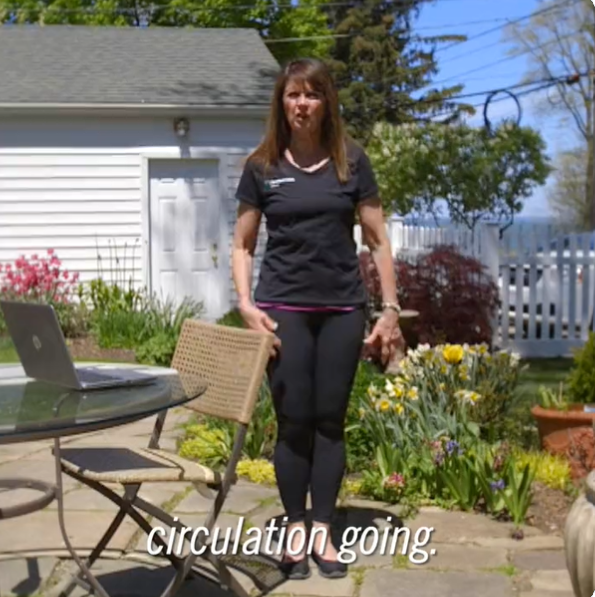
Taking short breaks throughout the day is beneficial for your mental health. Cleveland Clinic Yoga Program Manager, Judi Bar, shares stretches you can do wherever you are. #NationalYogaMonthpic.twitter.com/hIdb9GQkQO
Recipe: Chocolate Bark With Espresso and Toasted Nuts
Each serving only contains 70 calories
health.clevelandclinic.org
This deliciously indulgent chocolate bark recipe offers heart-healthy dark chocolate with toasted walnuts, pecans and almonds — and no added sugar! And each serving contains only 70 calories.
Ingredients
10 ounces dark chocolate (70% cocoa bittersweet chocolate)
2 teaspoons instant espresso powder
1/2 cup walnut pieces, toasted
1/2 cup pecan pieces, toasted
1/2 cup almond slices, toasted
Directions
Combine chocolate and espresso and place over a double boiler.
Heat on a low flame and stir until chocolate is about three-quarters of the way melted.
Remove from heat and stir until smooth.
Transfer to a mixing bowl, toss in the toasted nuts and mix well.
On a cookie sheet lined with parchment paper, spread the mix and chill in the refrigerator for about 30 minutes, or until it sets.
Break into pieces and serve.
Nutrition information (per serving)
Makes 35 servings Serving = 1/2 ounce
Calories: 70 Sodium: 15 mg Sugar: 4 g Cholesterol: 0 mg Saturated fat: 2 g Fiber: 1 g Protein: 1 g Carbohydrate: 5 g
There are a lot of areas of sleep that science and medicine can understand and explain. But dreams are an entirely different territory, as the question ‘why we dream’ remains largely unanswered.
Vivid and frequent dreaming is often left open to interpretation through things like dream dictionaries and discussing with friends. Did that dream about your ex-boss really mean you have pent-up guilt and anxiety about your last job? Frequently having stress or anxiety-ridden dreams is usually a red flag for real life stress and the role it’s playing on your body. If you’re constantly waking up panicking in a cold sweat over a dream, it’s time to get your thoughts and stress in order.
Stress: we all have it, but it doesn’t have to control us
Stress is an emotional, physical or mental tension that results from something that’s outside of us.
Some of the bigger stressors or stressful life events include moving to a new place, changing roles at school or work, relationship issues or losing a family member. Stress can cause sleep difficulties, including insomnia, by making it difficult to fall asleep and stay asleep. This impacts the quality of rest. Stress can also cause hyperarousal, which can upset the balance between sleep and wakefulness.
Being stressed is associated with poor sleep in general, and may trigger more frequent dreams. So it’s not uncommon to experience a distressing dream prior to a big event like a job interview, taking an exam or an important appointment.
And although there’s limited research about controlling the content of dreams, anxiety dreams can generally be a result of increased stress during our day-to-day lives. Daily stress can also increase the frequency of these dreams.
The good news? You have a great deal of control over your stress. If you learn to better manage stress in your life, you’ll likely decrease anxiety-ridden dreams and improve your sleep.
Here are four simple strategies to help your mind and body relax before turning in for the night:
Spend time winding down before bed: This can be thought of as a “buffer zone,” which is a period of time to allow the activating processes in the brain to wind down and allow your sleep system to take over. It’s generally a good rule of thumb to start about an hour before bedtime. During this time, engage in relaxing activities that you enjoy like reading or listening to music.
Schedule “worry time”: If you’re finding it difficult to control your worrying prior to bedtime, scheduling a specific time when you’re allowed to worry may help. Find a time that’s convenient for you and write down your concerns. Limit the time to a specific amount and stick to it by planning something to do afterward. For example, you can plan 15 minutes in the evening, before your favorite TV show.
Think of your bedroom as a place just for sleep, sex and pleasant activities: Try to limit the time you spend in bed worrying or being anxious. If you find yourself lying awake in bed stressed out, leave the bedroom and spend time in another room until you feel sleepy.
Practice relaxation techniques: There are other ways to relax while getting ready for bed, such as breathing exercises, guided imagery and progressive muscle relaxation movements. (You can even check out free apps that help guide you through these exercises.) These techniques can be some of the most critical aspects of stress management and you can use them close to bedtime or throughout your day.
When you wake up panicking at 3 a.m.
We’ve all been there – a nightmare or stress dream causes you to wake up. The next thing you know you’re lying there overthinking your finances and everything you have to do the next day.
When this happens, what can you do to get back to sleep?
Stop watching the clock: Counting the minutes will only heighten your distress. Turn your alarm clock around and don’t pick up your phone.
Try to relax your body: Use a relaxation strategy that helped prior to bed to relax your body and mind.
Get out of bed: If you can’t fall back to sleep after a stressful dream, then try getting out of bed to help decrease the frustration. Don’t spend time in bed hopelessly trying to get back to sleep or interpreting your dream. (If your dream caused you anxiety, you may find yourself attempting to interpret it. But this can further increase the worry. This process will result in your brain associating your bed with stress and not sleeping well.) Once you leave your bed, find an activity that is uninteresting or boring. When you start to get drowsy, go back to bed.
Since dreams obviously aren’t measurable, there’s no real answer to what meaning they hold in our day-to-day life. But we do know that we generally have control over daily stress, which can trigger weird or anxiety-clad dreams. Learning to control the crazy and manage your stress is your best defense to help you sleep peacefully
Dealing With Someone Addicted to Alcohol: 9 Tips To Cope
Be honest, be safe and don’t blame yourself
It starts with a beer, a glass of wine or a cocktail. Then there’s another … and another … and another. You watch as your family member or friend slowly changes with each tip of the bottle.
It’s a routine you’ve witnessed repeatedly — and it never gets less painful to watch. So, what can you do? Addiction psychiatrist Akhil Anand, MD, offers these tips to help you persevere.
1. Don’t blame yourself
Caring about someone with an alcohol addiction can lead to worry and sleepless nights. You might spend a lot of time thinking about your actions as it relates to their addiction, says Dr. Anand.
If that describes you, take a step back. “You are not responsible for what someone else does,” reassures Dr. Anand. “It’s their decision to use alcohol. Don’t carry that weight.”
2. Protect yourself
“Angry drunk” isn’t just a phrase. It’s often a reality that grows more concerning with every downed glass. Studies show that the risk of a situation turning violent is five times higher when alcohol enters the mix.
If you’re going to engage someone who’s been drinking and shown flashes of violence, don’t do it alone. Bring someone you can trust with you, advises Dr. Anand.
And if you feel threatened, call the police. “Don’t put yourself in danger,” stresses Dr. Anand.
3. Talk to someone
Being close to someone addicted to alcohol can bring an immense amount of stress into your life. A lot of emotions — frustration, sadness, bitterness and more — may whirl through your mind.
Talking to an addiction counselor can help you better understand the situation and work through your feelings. Programs like Al-anon, Alateen and Families Anonymous offer opportunities for emotional support.
“Don’t forget to take care of yourself,” says Dr. Anand. “It’s not easy when your life intersects with someone dealing with an addiction. It’s important to find an outlet where you can talk about it.”
4. Learn to say ‘no’
When someone gets too drunk or hungover to fulfill their basic responsibilities in life, they often rely on those around them to get the job done. And all too often, their friends and family pick up the slack.
But that attempt to be helpful can send the wrong message: “If you take care of problems for them over and over again, they never see or feel the consequences of their drinking,” explains Dr. Anand.
So, take a step back and let them deal with the after-effects of their addictive behavior.
5. Don’t cover up bad behavior
Did a night of excessive drinking leave cans or bottles littering your living room floor? Or splatters of vomit in the bathroom? Don’t rush to clean it up. Let the person who made that mess see it.
“It’s not your duty to hide the results of their drinking so they avoid feeling any sort of embarrassment,” says Dr. Anand.
6. Avoid negotiations
It’s natural to want someone you care about to stop drinking so heavily. Odds are, your desire is no secret, either — which is why you should be wary if that person tries to “trade” a change in addictive behavior for something.
“You cannot negotiate someone into sobriety,” says Dr. Anand. “They need to take the action — and it should not be dependent on you somehow making it worthwhile for them.”
7. Be honest
Don’t make excuses for someone’s addiction or downplay it. “Be open and honest,” encourages Dr. Anand. “Communicate in a way that is calm and constructive but not emotional.”
8. Limit expectations
Celebrate if a friend or loved one with an addiction takes a step toward rehabilitation … but don’t be surprised by a stumble. Relapse rates are common among those who seek treatment for an addiction.
An addiction is a brain disorder, after all, and not something that’s easily resolved. It can take 10 or more attempts at treatment before someone makes progress on overcoming an addiction.
“It’s best to know that going in,” says Dr. Anand, “because it’s very hard to watch it happen.”
9. Stay positive
Coping with someone addicted to alcohol isn’t easy. It can test your patience and shatter your feelings. But try to separate the person from the addiction. Do your best to understand that they’re dealing with an illness.
“Let them know that you care,” says Dr. Anand. “Offer unconditional love and give them positive affirmations. Be there for them as much as you can — but make sure you take care of yourself, too.”
To hear more from Dr. Anand on this topic, listen to the Health Essentials Podcast episode “How To Help Someone With an Alcohol Addiction.” New episodes of the Health Essentials Podcast are available every Wednesday.
Most people understand the basic health benefits of yoga: flexibility, stress relief and muscle strength, just to name a few. But why is it different when you turn up the heat? Is the increase in degrees a gimmick or is it actually beneficial to your health?
What is hot yoga, anyway?
Hot yoga is exactly what it sounds like — yoga practiced in a hot environment. Most hot yoga classes have an increased room temperature set anywhere between 90 and 105 degrees Fahrenheit. That’s quite a difference compared to normal room temperature (68 to 72 degrees Fahrenheit). Why so hot? The heat helps lubricate tendons and ligaments, making it easier to fold into certain stretches and poses. “The heat allows participants to get a deeper stretch because their body is warmer and they can move into the poses a little deeper,” says yoga instructor Jennifer Sauer.
The potential pros of hot yoga are:
Increased flexibility.
Muscle-building.
Body-toning.
Reduced stress.
Detoxification.
Weight loss.
Reduced pain.
On the flip side, it can also be easy to overdo it in a hot yoga class. Because of the high temperature in the room, you might not realize how hard you’re working and you could end up taking stretches too far before your body is ready.
The potential cons of hot yoga are:
Dehydration.
Higher risk of injury.
Dizziness.
Lightheadedness.
Trouble breathing.
Hot yoga should be something that you ease into. So taking some regular yoga classes first and getting an idea of your current flexibility level is recommended. Beginner yoga classes also help build on your knowledge of the poses and sequences.
“While people have reported pain relief, detoxification and weight loss from hot yoga, scientific research is limited,” Sauer says. “It’s safe to say that hot yoga is more vigorous than traditional practices,” she notes, “but the jury is still out on overall calorie burn and weight loss.”
When you combine hotter temperatures with extra exertion, your body is working harder and therefore increasing your heart rate. So, ultimately, you are burning a good amount of calories during your hot yoga session — the data just doesn’t exist yet for hot yoga specifically.
Who should avoid hot yoga?
Like other types of exercise, hot yoga isn’t for everyone. Hot yoga is not suggested for those who are pregnant or have a heart condition. The heat can also aggravate asthma.
Sauer recommends looking out for side effects such as dizziness, lightheadedness and not being able to take a deep breath in. “If that happens, return to a stable position or leave the studio until you feel better,” she says. “It’s important to stay hydrated and listen to your body.”
Think you’re ready to give it a shot?
When it comes to hot yoga — try attending a few basic or beginner yoga classes first. Then when you feel comfortable, try incorporating a heated class.
“There are different styles of yoga, so if you try a class that doesn’t appeal to you, try another type of yoga or a different instructor,” Sauer says. “The heat isn’t for everyone — and that’s perfectly OK!”
Exercise is a vital part of a healthy lifestyle. But if you’ve gotten out of the habit of being active — or have never found an exercise routine that works — it might feel like an impossible task to get started. Luckily, it’s never too late to figure out a workout routine. Here’s how to start exercising — and tips to stay motivated when all you want to do is hang out on the couch instead. What should I include in my exercise program? Every exercise session should include a warm-up, a conditioning phase and a cool-down phase. The warm-up In a nutshell, a warm-up helps your body adjust slowly from rest to exercise. Making this part of your routine reduces the stress on your heart and muscles, and slowly increases your breathing, circulation (heart rate) and body temperature. A warm-up can also help improve your flexibility and reduce muscle soreness. The best warm-up includes stretching, range of motion activities and beginning the activity at a low-intensity level. Conditioning phase The conditioning phase follows the warm-up and is the time when you’re burning calories and moving and grooving. During the conditioning phase, you should monitor the intensity of your activity. The intensity is how hard you’re exercising, which can be measured by checking your heart rate. Over time, you can work on increasing the duration of the activity. The duration is how long you exercise during one session. Cool-down phase The cool-down phase is the last phase of your exercise session. It allows your body to gradually recover from the conditioning phase. Your heart rate and blood pressure will return to near-resting values. However, a cool down does not mean tosit down. In fact, for safety reasons, don’t sit, stand still or lie down right after exercise. This might cause you to feel dizzy, lightheaded or have heart palpitations (fluttering in your chest). The best cool down is to slowly decrease the intensity of your activity. You might also do some of the same stretching activities you did in the warm up. General exercise guidelines In general, experts recommend doing a five-minute warm up, including stretching exercises, before any aerobic activity, and include a five- to 10-minute cool down after the activity. Stretching can be done while standing or sitting. Here are some other things to keep in mind when starting a workout routine: Determine the best exercise routine for your lifestyle Not everybody likes to hop out of bed in the morning and go for a run. Figuring out a routine that fits your lifestyle can help you be more successful. Here are some questions you can think about before choosing a routine: What physical activities do I enjoy? Do I prefer group or individual activities? What programs best fit my schedule? Do I have physical conditions that limit my choice of exercise? What goals do I have in mind? (These might include losing weight, strengthening muscles or improving flexibility, for example.) Don’t try and exercise too much too fast Gradually increase your activity level, especially if you haven’t been exercising regularly. Guidelines around how often to exercise also differ depending on your age, any health conditions you have and your fitness history. Set big and small goals — and be specific If you’re looking to reach a particular goal, exercise specialist Ben Kuharik suggests setting mini goals to achieve along the way. This ensures your motivation stays strong over the long haul. Setting a specific goal is also important. “For example, if you want to lose some weight, it’s hard to be motivated or stick to a plan,” he says. “That’s because you don’t have the excitement in knowing you are getting closer to achieving it.” Having smaller goals or milestones to reach in between the big ones keeps you on track. “If you want to lose 8 pounds in two months — and you set a mini goal of losing 1 pound a week in the process — you get the sense of accomplishment that reaffirms your efforts,” Kuharik says. “And this can snowball into achieving even greater goals.” This also applies if you fall short of your goal. “If you only lose 7 pounds in two months, you’re still 7 pounds down than when you started,” Kuharik affirms. “You’ll feel great about the progress you’ve already made.” Schedule exercise into your daily routine Plan to exercise at the same time every day, such as in the mornings when you have more energy or right after work. Add a variety of exercises so you don’t get bored. Where exercise is concerned, something is also always better than nothing. “Not every day will go as planned,” Kuharik notes. “If you unexpectedly have a tight schedule or are even just having an off day, doing half of your planned workout that day is much more rewarding and beneficial than skipping it altogether.” Exercise at a steady pace Keep a pace that allows you to still talk during the activity. Be sure not to overdo it! You can measure the intensity of your exercise using the Rated Perceived Exertion (RPE) scale. The RPE scale runs from 0 to 10 and rates how easy or difficult you find an activity. For example, 0 (nothing at all) would be how you feel when sitting in a chair; 10 (very, very heavy) is how you feel at the end of an exercise stress test or after a very difficult activity. In most cases, you should exercise at a level that feels 3 (moderate) to 4 (somewhat heavy). Keep an exercise record Keep a record of how much and when you exercise. This can help you look at goal-setting, as well as get a sense of how much activity you’re doing in a given week. Time your eating and drinking properly Wait at least one and a half hours after eating a meal before exercising. When drinking liquids during exercise, remember to follow any fluid restriction guidelines you might have. Only buy what you need Exercise doesn’t have to put a strain on your wallet. Avoid buying expensive equipment or health club memberships unless you’re sure you’ll use them regularly. But you’ll want to dress for the weather (if working out outside) and wear protective footwear. Sneakers are the one thing you should prioritize, as you want to make sure your feet are protected. Stick with it If you exercise regularly, it’ll soon become part of your lifestyle. Make exercise a lifetime commitment. Finding an exercise “buddy” can also help you stay motivated. Don’t forget to have fun Exercising should be fun and not feel like a chore. “Consistency is key — but to do something consistently, it’s important to find a way to enjoy it,” Kuharik says. So, above all, choose an activity you enjoy! You’ll be more likely to stick with an exercise program if you don’t dread working out. “Try to look at exercise as an opportunity to get away from stress, clear your mind and leave nagging thoughts at the door,” Kuharik encourages. “With this in mind, over time, you will look forward to giving your mind a break and feeling good after a great workout session!” Exercise: Where To Start You should always talk to your doctor before starting an exercise routine. Together, you can figure out a plan to ease into regular physical activity. And walking and climbing stairs are two easy ways to start an exercise program. Walking guidelines Start with a short walk. See how far you can go before you become breathless. Stop and rest whenever you’re short of breath. Count the number of steps you take while you inhale. Then exhale for twice as many steps. For example, if you inhale while taking two steps, exhale through pursed lips while taking the next four steps. Learn to walk so breathing in and exhaling out become a habit once you find a comfortable breathing rate. Try to increase your walking distance. When setting specific goals, you might find you can go farther every day. Many people find that an increase of 10 feet a day is a good goal. Set reasonable goals. Don’t walk so far that you can’t get back to your starting point without difficulty breathing. Remember, if you’re short of breath after limited walking, stop and rest. Never overdo it. Always stop and rest for two or three minutes when you start to become short of breath. Stair climbing Hold the handrail lightly to keep your balance and help yourself climb. Take your time. Step up while exhaling or breathing out with pursed lips. Place your whole foot flat on each step. Go up two steps with each exhalation. Inhale or breathe in while taking a rest before the next step. Going downstairs is much easier. Hold the handrail and place each foot flat on the step. Count the number of steps you take while inhaling, and take twice as many steps while exhaling. Whichever activity you choose, remember, even a little exercise is better than none! FACEBOOK TWITTER LINKEDIN PINTEREST Email aerobic exerciseexerciseexercise and heart healthexercise planmoderate exercise
Taking short breaks throughout the day is beneficial for your mental health. Cleveland Clinic Yoga Program Manager, Judi Bar, shares stretches you can do wherever you are. #NationalYogaMonthpic.twitter.com/hIdb9GQkQO
A group of adults are taking a fitness class together at the gym. They are working out on exercise mats and are holding a high plank.
A physical therapist answers your questions
If you suffer from back pain, you’ve probably heard that strengthening your core can bring you some relief. But is this always true? And if so, how do you do it? We spoke with Cleveland Clinic physical therapist Patti Mariano, DPT, to find out.
Q: What is your core?
When most people think about the core of the body they think of the abdominal or six-pack area just below the ribs. While the abdominal muscles are an important part of the core, we consider other areas important, too.
Your core includes:
Front abdominal muscles — the rectus abdominis
Muscles along the side of your body — the internal and external obliques
A deep muscle that wraps around the front — the transverse abdominis
Muscles in your back that are located between your spine bones and run along your spine — the erector spinae and multifidi
Your core also includes the diaphragm and muscles of the pelvic floor. I also consider the gluteal muscles as core muscles.
Q: What is the relationship between core strength and back pain?
Theoretically, if your muscles around the low back are weak, your body will rely more on passive structures, including ligaments — the tissue that connects bone to bone — as well as the spinal bones or discs, which lie between the spinal bones, for stability, which can cause pain.
But some studies have shown that specific core exercises are not any more beneficial than general exercise for low back pain. What we know is that exercise in general can help, and focusing on core muscles may provide some additional benefit.
Q: What are some exercises for the core that can help with back pain?
Here are my top five:
Side plank — Sit on the floor with your right hand below your right shoulder and feet stacked. Lift your body, keeping your legs long, abdominals engaged and feet stacked. Hold. Repeat on the other side. You can modify this pose by dropping your bottom knee to the floor for extra support.
Plank — Kneel on all fours. Pull in your abdomen and step your feet behind you until your legs are straight. Keep your hands directly under your shoulders and your neck straight. Hold your abdomen and legs tight and avoid letting your lower back sag. Hold and breathe for 30 seconds. You can modify this pose by lowering your knees.
Bird dog — Kneel on all fours. Reach one arm out in front of you, draw in your abdomen, and extend the opposite leg long behind you. Repeat on the other side.
Scissors — Lie on your back with your arms at your sides and legs pointed straight into the air above your hips. Press your lower back into the mat and tighten your abdomen. Lower your right leg until it’s a few inches from the floor. Raise your right leg up and begin lowering your left leg the same way. Continue switching right and left.
Upward dog — Lie face down with head slightly lifted and hands palm-down under your shoulders. Point your toes. Exhale, then press through your hands and the tops of your feet and raise your body and legs up until your arms are straight and your body and legs are off the ground. Keep your neck relaxed and long and thigh muscles tight as you hold and breathe.
For the plank exercises, start by holding them for 15 seconds to 30 seconds. For bird dog and scissors, try three sets of eight or 10 repetitions. For upward dog, do one set of 10 repetitions.
Q: Can you injure your back by trying to strengthen your core?
Any exercise performed incorrectly, whether it is core-strengthening or otherwise, has the potential to cause discomfort.
Twisting exercises or even incorrectly completing the exercises cited above can cause pain in the low back. But it’s highly unlikely that one repetition of an exercise will seriously harm your body, unless it’s an exercise using a very heavy weight.
The best way to keep your body safe is to listen to body cues such as pain during and immediately after an exercise, and the next day after exercising.
Q: When should you talk to a doctor about your back pain?
If any of the following is going on you should consult with your doctor:
Your pain has been going on for longer than a month, despite resting from activities that make it worse.
Your pain is getting worse.
Your pain wakes you from sleep.
Your pain is in your low back but also is going down one or both of your legs.
You notice that one leg is becoming weaker than the other.
Q: Where should you turn if you want help in creating a plan to address back pain?
Physical therapists train as musculoskeletal experts — they are the experts on muscles, bones and human movement. These professionals are the most qualified, aside from an orthopedic doctor, to assess back problems.
Since there are many factors that impact low back pain and many types of low back pain, it is a good idea to visit at least one time with a physical therapist for an evaluation and subsequent plan of care. This will give you an individually tailored plan with exercises that progress safely.
The idea of core strengthening, while beneficial, is just one piece of the low back pain puzzle.
There is something special about using fresh peas straight out of the pod. This recipe was inspired by our root-to-stem philosophy of cooking: It always seems like such a waste to throw away the pea pods, but they are relatively inedible. To make use of the pods, we’ve pureed them into a spring-fresh pasta sauce. Remember: Pasta for breakfast is a great choice, especially when it’s loaded with healthful pea protein.
Ingredients
Kosher salt 1 pound fresh English peas in pods (yields about 1 cup shelled peas and about 3 ½ cups pods) ½ cup water ¼ cup extra-virgin olive oil 2 small spring onions or 2 large shallots, chopped 2 small spring garlic (whites) or 3 garlic cloves, minced 2 tablespoons Greek yogurt (optional) 12 ounces whole grain pasta, such as linguine, rigatoni or small shells Freshly ground black pepper ¼ cup fresh mint (peppermint preferred), thinly sliced Espelette pepper to taste (optional) Grated Parmigiano Reggiano cheese (optional)
Directions
Bring a large pot of water to boil and add enough salt to make it salty like the sea.
Meanwhile, wash the peas. Pull off the stem ends: remove the peas and place in a small bowl. Reserve the pods.
Fill a bowl with cold water. Set aside. Add the empty pea pods to the pot of boiling water and cook for 5 minutes. Using a slotted spoon or spider, remove the pods from the boiling water and transfer to the bowl of cold water to cool quickly. Drain the pea pods and add to a Vitamix or high-speed blender. Add ½ cup water. Puree for 2 to 3 minutes.
Place a fine strainer over a bowl and add the pea pod puree to the strainer, pressing on the solids to release as much puree as possible into the bowl. Discard the solids in the strainer. Reserve the puree in the bowl; season to taste with salt and pepper.
Cook the pasta in the pot of boiling water until al dente, stirring occasionally.
Meanwhile, in a large skillet, heat the olive oil over medium heat. Add the onions and garlic and sauté until softened, 3 to 4 minutes. Add the peas and cook 2 minutes. Stir in the reserved pea pod puree and Greek yogurt, if using, and cook just until heated through. (Don’t overcook the peas or puree as the sauce will turn brown).
Using tongs or a spider, transfer the pasta to the sauce in the skillet. Toss until combined. Season to taste with salt and pepper. Transfer the pasta to the serving bowl. Add the basil and mint. Serve with Espelette pepper and grated Parmigiano Reggiano cheese, if using.
Nutritional info (per serving)
Makes 4 servings.
Calories: 554 kcal Total fiber: 12 g Soluble fiber: 0.1 g Protein: 15.5 g Total fat: 16.7 g Saturated fat: 2.0 g Healthy fats: 12.1 g Carbohydrates: 84 g Sugars: 7.7 g Added sugars: 0 g Sodium: 178 mg Potassium: 433 mg Magnesium: 14 mg Calcium: 134 mg
Source: The What to Eat When Cookbook by Michael F. Roizen, MD, Michael Crupain, MD, MPH and Jim Perko, Sr, CEC, AAC.








 Healthaware