There are many health benefits related to abstaining from alcohol. If you’re looking to cut back or stop drinking altogether, here are 11 tips that can help. #HarvardHealth
Are you concerned about your alcohol intake? Maybe you feel that you’re drinking too much or too often. Perhaps it’s a habit you’d like to better control.
It’s always wise to check with your doctor — she should be able to help you decide whether it is best for you to cut back or to abstain. People who are dependent on alcohol, or have other medical or mental health problems, should stop drinking completely.
But many people may benefit simply by cutting back. If your doctor suggests that you curb your drinking, the National Institute on Alcohol Abuse and Alcoholism (NIAAA) suggests that the following steps may be helpful:
Put it in writing. Making a list of the reasons to curtail your drinking — such as feeling healthier, sleeping better, or improving your relationships — can motivate you.
Set a drinking goal. Set a limit on how much you will drink. You should keep your drinking below the recommended guidelines: no more than one standard drink per day for women and for men ages 65 and older, and no more than two standard drinks per day for men under 65. These limits may be too high for people who have certain medical conditions or for some older adults. Your doctor can help you determine what’s right for you.
Keep a diary of your drinking. For three to four weeks, keep track of every time you have a drink. Include information about what and how much you drank as well as where you were. Compare this to your goal. If you’re having trouble sticking to your goal, discuss it with your doctor or another health professional.
Don’t keep alcohol in your house. Having no alcohol at home can help limit your drinking.
Drink slowly. Sip your drink. Drink soda, water, or juice after having an alcoholic beverage. Never drink on an empty stomach.
Choose alcohol-free days. Decide not to drink a day or two each week. You may want to abstain for a week or a month to see how you feel physically and emotionally without alcohol in your life. Taking a break from alcohol can be a good way to start drinking less.
Watch for peer pressure. Practice ways to say no politely. You do not have to drink just because others are, and you shouldn’t feel obligated to accept every drink you’re offered. Stay away from people who encourage you to drink.
Keep busy. Take a walk, play sports, go out to eat, or catch a movie. When you’re at home, pick up a new hobby or revisit an old one. Painting, board games, playing a musical instrument, woodworking — these and other activities are great alternatives to drinking.
Ask for support. Cutting down on your drinking may not always be easy. Let friends and family members know that you need their support. Your doctor, counselor, or therapist may also be able to offer help.
Guard against temptation. Steer clear of people and places that make you want to drink. If you associate drinking with certain events, such as holidays or vacations, develop a plan for managing them in advance. Monitor your feelings. When you’re worried, lonely, or angry, you may be tempted to reach for a drink. Try to cultivate new, healthy ways to cope with stress.
Be persistent. Most people who successfully cut down or stop drinking altogether do so only after several attempts. You’ll probably have setbacks, but don’t let them keep you from reaching your long-term goal. There’s really no final endpoint, as the process usually requires ongoing effort.
Even small amounts of alcohol—a single drink per day—has been linked to a higher risk of developing #AFib, a potentially dangerous irregular heart rhythm. https://bit.ly/2XRMkif#HarvardHealth
Set a date, avoid triggers, and get help and support along the way
Looking to take on a sobriety challenge, like Dry January? Or maybe it’s a pregnancy that made you realize it’s time to stop drinking. Or maybe you’re just looking to improve your health, wake up hangover-free and give your liver (and your heart) a break.
“Increasingly, I’m hearing from a lot of people who don’t necessarily have alcohol use disorder but who realize that they feel better when they drink less or stop drinking altogether,” says addiction psychiatrist David Streem, MD.
But you probably have questions about how to quit drinking. Is it better to wean off gradually? Go cold turkey? How will you keep up a sober lifestyle?
Whether you’re sober curious, know for sure you’re ready to quit, or fall somewhere in between, Dr. Streem shares advice for how to stop drinking. If you’re living with alcohol use disorder (also known as alcoholism), you’ll likely benefit from additional medical interventions. We’ll talk about that, too.
Tips for quitting alcohol
When you consider how to go about giving up alcohol, account for factors like how much you drink and your reasons for drinking.
“At its core, quitting drinking is a behavioral change,” Dr. Streem says. “It’s about breaking a habit and starting new habits.”
But if you’re living with alcohol use disorder, drinking is more than a habit. It’s a medical condition. People with alcohol use disorder can’t stop drinking even when it causes problems, like emotional distress or physical harm to themselves or others.
“If you drink every day — if you crave alcohol and have a compulsion to continue drinking even when the effects of alcohol are obvious — it’s best to seek medical treatment rather than stop drinking on your own,” Dr. Streem advises. “In many cases, it may not be safe for someone with alcohol use disorder to stop drinking without professional support, and you’re less likely to be successful on your own, too.”
1. Understand your relationship with alcohol
In order to change your drinking habits, your first step is to take a close look at your current behaviors and find patterns.
Dr. Streem suggests starting with the World Health Organization’s Alcohol Use Disorders Identification Test (AUDIT). It can be a particularly helpful way to help you get a clearer understanding of your drinking habits and your relationship with alcohol. It’s a 10-question screening test that gives you research-backed, personalized advice for quitting or reducing your intake of alcohol.
Making lists can help, too. Ask yourself questions like:
How often am I drinking? And how much at a time?
In what situations or moods am I more likely to drink?
Who do I typically drink with?
What days and times of day am I most likely to drink?
Why do I drink?
How is alcohol affecting my life? My health? My relationships? My work?
Laying it all out in black and white can take time and some serious self-examination. That’s OK. Understanding your habits and your motivations to quit drinking can help you understand the change you’re making in your life and reinforce why it’s important.
2. Set a date (and stick to it)
Dr. Streem says that if your goal is to stop drinking altogether, you’re more likely to have success quitting all at once, rather than weaning off alcohol. But that advice changes if you’re living with alcohol use disorder.
“If a person with alcohol use disorder stops drinking suddenly, it can be dangerous,” Dr. Streem reiterates. “If you’re choosing to quit drinking for your health or for other reasons, though, you have a better chance of success if you choose a date to quit and don’t look back.”
He suggests setting a concrete start date for when you’ll quit drinking. Leading up to that date, talk with your family, friends and other important people in your life. Tell them your plan and ask for their support as you make this life change.
3. Be aware of your triggers
We all become conditioned to have certain responses to triggers throughout our lives. It’s normal for certain stimuli to cause a reaction in your mind and body without even being aware of it.
You smell a pot of chili simmering on the stove and then suddenly feel ravenously hungry. You feel your phone vibrate and then anxiously reach to see who texted. Even dogs do it — you say “walk” and they high-tail it to get their leash.
Drinking works in a similar way, Dr. Streem says. You can become conditioned to reach for a drink when your environment offers up certain cues.
So, when you’re trying to quit drinking, steering clear of triggers will help.
There’s a saying in the Alcoholics Anonymous (AA) community that sums up the triggers that can derail sobriety: “people, places and things.” And it’s not only people in recovery from alcohol use disorder who are well-advised to avoid drinking triggers when trying to quit.
People: If there are certain friends or other people in your life that you typically drink with, you may want to take some time away from them while you’re working on creating new, sober habits. At least, let them know your intentions to quit drinking so they can be supportive.
Places: Here’s another AA saying: “If you hang out in a barbershop long enough, you’re going to get a haircut.” In other words, if you go places where the alcohol is flowing — like bars or house parties — chances are, you’re going to drink. It’s almost inevitable. When you’re cutting alcohol out of your life, you’re best off if you can avoid places where alcohol is abundant.
Things: As you prepare for the date you set to quit drinking, Dr. Streem advises getting rid of all alcohol and drinking accessories (wineglasses, tumblers, flasks, cocktail recipes and so on) — the ol’ “out of sight, out of mind” technique. These physical reminders of drinking can prompt a trigger response that can be counterproductive to your goal of quitting drinking.
4. Find community
A sober life doesn’t have to mean more time at home as you try to block out triggers. It can mean more time for your other interests, and even new interests. More time to meet new people, catch up with old friends and try new things.
Try these alcohol-free ways to enjoy time with new (and old) friends:
Suggest going for a bike ride with a co-worker instead of hitting up happy hour.
Catch up with friends at a coffee shop instead of a club. (It’s easier to have a conversation that way, too!)
Enroll in a class: Try ballroom dancing, knitting, creative writing … whatever piques your interest.
Join a volunteer group.
5. Consider professional support
Talk therapy is an important part of treatment for alcohol use disorder, but Dr. Streem says just about anyone who is making a life change, like quitting drinking, can benefit from therapy.
“You may learn things about yourself and about your relationship to this substance that you never even thought about,” he adds.
Therapy can help you understand why you drink and learn new habits so you can live a healthy lifestyle that doesn’t rely on alcohol as a crutch. It can also help you gain a new perspective as you consider how your life will change without alcohol.
6. Check in with your body for signs of detox
If your body is used to a certain amount of alcohol, you may feel certain effects when you stop. How you feel when you stop drinking is largely based on how often and how heavily you drink. People who only drink occasionally probably won’t notice any physical or psychological symptoms. If you drank heavily, you may have some mild symptoms. People who have a severe reaction to quitting alcohol should seek emergency treatment.
Emotionally, you may feel some anxiety or sadness about ending a chapter of your life and nervousness about the future. You may feel irritable or have trouble thinking clearly.
Physically, people who drink heavily may experience some mild symptoms like:
Headaches.
Clammy skin.
Trouble sleeping.
Nausea or lack of appetite.
Shakiness.
Again, severe alcohol withdrawal symptoms, including pain, passing out, hallucinations and more may be a sign that you’re living with alcohol use disorder and should seek professional medical intervention before quitting alcohol.
Recognize the signs of alcohol use disorder
If you’re living with alcohol use disorder, quitting drinking is important for your health. But quitting on your own can pose risks to your health and is unlikely to be successful. Rehabilitation facilities can help you on your path to sobriety by addressing alcohol withdrawal symptoms and becoming involved in sober living support groups, like AA.
But Dr. Streem knows that it can be hard to recognize signs of alcohol abuse in ourselves. Often, people with alcohol use disorder find that other people in their lives spot their addiction long before they do.
“If there are people around you who are encouraging you to make this change, that should be a big red flag that your alcohol use is problematic,” he says. “People often see us better than we see ourselves, so if someone is telling you that you need to stop drinking, that should be taken seriously.”
Another clue that can be an indication of an unhealthy relationship with alcohol is if you make “rules” around drinking.
“If you say things like, ‘I don’t have a drinking problem because I never drink on Mondays,’ or, ‘I only drink X or Y … never Z,’ and so on, that can be an indication of alcohol use disorder,” Dr. Streem says. “Rules are a way of trying to create an illusion of control when you are, in fact, out of control. People who don’t have an alcohol use disorder don’t make rules about drinking. They don’t have to.”
Other signs of alcohol use disorder include:
Continuing to drink even if it causes distress or harm to you or others.
Drinking more or longer than you planned.
Feeling irritable or cranky when you’re not drinking.
Frequent hangovers.
Getting into dangerous situations when you’re drinking (for example, driving, having unsafe sex or falling).
Giving up activities so you can drink.
Having cravings for alcohol.
Having repeated problems with work, school, relationships or the law because of drinking.
Needing to drink more and more to get the same effect.
Not being able to stop drinking once you’ve started.
Spending a lot of time drinking or recovering from drinking.
Wanting to cut back but not being able to.
Obsessing over alcohol.
If you’re living with alcohol use disorder, treatment at a medical rehabilitation facility is your best option. Through therapy, support groups and medication, you’ll be supported on your path to recovery.
Cleveland Clinic is a non-profit academic medical center. Advertising on our site helps support our mission. We do not endorse non-Cleveland Clinic products or services.
You likely know that drinking alcohol too often or to excess isn’t a good idea, health-wise. But when it comes to alcohol and heart health, you may have heard different sides. Is drinking all that bad for your heart? Can a glass of wine help reduce your risk of heart disease — or make it worse?
First things first: If you drink alcohol, you should do so in moderation to avoid alcohol-related heart issues. And you should never intentionally use alcohol to try to reduce your risk of heart disease.
To further explore the relationship between your ticker and your favorite glass of merlot or IPA, we chatted with cardiologist Leslie Cho, MD.
Ways alcohol can impact heart health
Here are some of the effects of alcohol on your heart:
Increased heart rate
One of the most important things your heart does is keep a rhythm. On average, a regular heart rate is about 60 to 100 beats per minute when your body is at rest. But alcohol can lead to your heart rate temporarily jumping up in speed, and if it goes over 100 beats per minute, it can cause a condition called tachycardia. Too many episodes of tachycardia could lead to more serious issues like heart failure or going into irregular rhythms, which can cause heart attack and stroke.
Raises blood pressure
That fourth drink at the bar may feel like it’s relaxing you, but it’s actually affecting your body differently than you might think. Alcohol can affect your blood pressure, causing it to go up temporarily. This is especially true when you engage in binge drinking (that’s defined as four or more drinks within two hours for women and people assigned female at birth, and five or more drinks within two hours for men and people assigned male at birth).
And sure, we’ve all had a night here or there where we’ve had one too many and we know it. But it’s important to make sure those nights of overindulgence are the exception and not the rule. If you’re not sure, make a note to tune into how much you’re having over the course of the next month or so. If it’s more than recommended, try to consciously pace your drinking to help reduce the spike in your blood pressure that excessive alcohol causes.
And if you have a history of high blood pressure, it’s best to avoid alcohol completely or drink only occasionally, and in moderation.
Irregular heartbeat
Whether it’s a glass of red wine with your turkey or toasting champagne for the new year, alcohol definitely becomes more present during the holiday season. And while enjoying celebratory spirits in moderation is alright for most people, it’s important to be aware you can fall victim to holiday heart syndrome if you overdo it. This is when overeating and overindulging in alcohol lead to an irregular heartbeat.
Holiday heart syndrome can happen if you don’t typically drink alcohol, but then have a few at a holiday party or if you binge drink. This can cause you to develop an irregular heartbeat, called atrial fibrillation, which can increase your risk of stroke, heart attack and heart failure.
Prolonged drinking can cause alcoholic cardiomyopathy
The short-term effects of alcohol (headache, nausea, you know the rest) are easy to pinpoint. But there are ways that alcohol affects your body over time that are important to understand. One of the long-term effects of alcohol on your heart is alcoholic cardiomyopathy. This is when your heart-pumping function gets weaker and your heart gets larger due to changes from heavy alcohol use over a long period of time.
OK, don’t panic. If you’re an occasional drinker, there’s no cause for worry. But it may be worthwhile learning about what counts as binge drinking and whether or not you may be drinking too much and don’t even know it.
Is some level of alcohol safe or beneficial?
It’s true, red wine is a better choice than hard liquor. But can a trip to the wine bar boost your heart health?
You should never consider wine or any other alcohol as a way to lower your heart disease risk. And, in fact, the study also showed that drinking one or fewer drinks per day was related to the lowest likelihood of dying from a stroke. However, Dr. Cho points out that more recent data shows that there may be no amount of alcohol that is truly safe. “The myth that wine is beneficial for heart health is no longer true,” she states.
“It’s not a good idea to start drinking alcohol in an effort to lower your risk of heart disease,” Dr. Cho continues. “It’s better not to drink any alcohol at all.”
It’s also important to know that the ways in which alcohol affects your heart will vary from person to person, depending on your age and other conditions you may have.
Age
Let’s face it, a hangover in your mid-40s doesn’t feel the same as one in your early 20s. This is because your age plays a factor in how well you tolerate alcohol. While some people develop a tolerance to alcohol over time, this isn’t true for everyone — and this ability doesn’t last forever, Dr. Cho notes.
“As we get older, our ability to clear alcohol definitely decreases and our sensitivity to alcohol probably increases,” she explains. “Also as we get older, we end up having more diseases, so we could be on medicines that can interfere with the way our bodies metabolize alcohol.”
Other medical conditions
In many ways, your medical history (and present) can tell you a lot about your future with alcohol. That means, if you’re living with other medical conditions and/or taking certain medications, this will all have an impact on how alcohol affects you.
“Certain health conditions can make drinking alcohol more dangerous,” Dr. Cho says.
For example, some people who are on cholesterol-lowering medicines may experience muscle aches when they drink alcohol. Because alcohol and cholesterol medicine both are processed through your liver, they are, in a sense, competing for clearance. So, it’s important to think about your overall health and talk to a healthcare provider about your personal risk factors.
“Alcohol is made out of sugar,” Dr. Cho points out. “So, if you’re predisposed to diabetes or if high triglycerides are one of your issues, it’s not a good idea to drink alcohol.”
Dr. Cho also warns that if you have liver dysfunction or take other medicines that are processed through the liver, your risks might be different. Talk to your healthcare provider about how alcohol might interact with your prescription medicines.
The last thing you want is for that casual drink after work or glass of wine at dinner to negatively impact your heart health. There’s a way to have a healthy, balanced relationship with alcohol that lets you enjoy a drink occasionally and celebrate with friends and family. But your heart is an important organ that should also be cared for, so be sure to drink in moderation, learn about binge drinking and know what your body can (and can’t) tolerate before opening that tab.FACEBOOKTWITTERLINKEDINPINTERESTEmailalcoholalcohol and healthalcoholic beveragesbinge drinkingheart health
You likely know that drinking alcohol too often or to excess isn’t a good idea, health-wise. But when it comes to alcohol and heart health, you may have heard different sides. Is drinking all that bad for your heart? Can a glass of wine help reduce your risk of heart disease — or make it worse?
First things first: If you drink alcohol, you should do so in moderation to avoid alcohol-related heart issues. And you should never intentionally use alcohol to try to reduce your risk of heart disease.
To further explore the relationship between your ticker and your favorite glass of merlot or IPA, we chatted with cardiologist Leslie Cho, MD.
Ways alcohol can impact heart health
Here are some of the effects of alcohol on your heart:
Increased heart rate
One of the most important things your heart does is keep a rhythm. On average, a regular heart rate is about 60 to 100 beats per minute when your body is at rest. But alcohol can lead to your heart rate temporarily jumping up in speed, and if it goes over 100 beats per minute, it can cause a condition called tachycardia. Too many episodes of tachycardia could lead to more serious issues like heart failure or going into irregular rhythms, which can cause heart attack and stroke.
Raises blood pressure
That fourth drink at the bar may feel like it’s relaxing you, but it’s actually affecting your body differently than you might think. Alcohol can affect your blood pressure, causing it to go up temporarily. This is especially true when you engage in binge drinking (that’s defined as four or more drinks within two hours for women and people assigned female at birth, and five or more drinks within two hours for men and people assigned male at birth).
And sure, we’ve all had a night here or there where we’ve had one too many and we know it. But it’s important to make sure those nights of overindulgence are the exception and not the rule. If you’re not sure, make a note to tune into how much you’re having over the course of the next month or so. If it’s more than recommended, try to consciously pace your drinking to help reduce the spike in your blood pressure that excessive alcohol causes.
And if you have a history of high blood pressure, it’s best to avoid alcohol completely or drink only occasionally, and in moderation.
Irregular heartbeat
Whether it’s a glass of red wine with your turkey or toasting champagne for the new year, alcohol definitely becomes more present during the holiday season. And while enjoying celebratory spirits in moderation is alright for most people, it’s important to be aware you can fall victim to holiday heart syndrome if you overdo it. This is when overeating and overindulging in alcohol lead to an irregular heartbeat.
Holiday heart syndrome can happen if you don’t typically drink alcohol, but then have a few at a holiday party or if you binge drink. This can cause you to develop an irregular heartbeat, called atrial fibrillation, which can increase your risk of stroke, heart attack and heart failure.
Prolonged drinking can cause alcoholic cardiomyopathy
The short-term effects of alcohol (headache, nausea, you know the rest) are easy to pinpoint. But there are ways that alcohol affects your body over time that are important to understand. One of the long-term effects of alcohol on your heart is alcoholic cardiomyopathy. This is when your heart-pumping function gets weaker and your heart gets larger due to changes from heavy alcohol use over a long period of time.
OK, don’t panic. If you’re an occasional drinker, there’s no cause for worry. But it may be worthwhile learning about what counts as binge drinking and whether or not you may be drinking too much and don’t even know it.
Is some level of alcohol safe or beneficial?
It’s true, red wine is a better choice than hard liquor. But can a trip to the wine bar boost your heart health?
You should never consider wine or any other alcohol as a way to lower your heart disease risk. And, in fact, the study also showed that drinking one or fewer drinks per day was related to the lowest likelihood of dying from a stroke. However, Dr. Cho points out that more recent data shows that there may be no amount of alcohol that is truly safe. “The myth that wine is beneficial for heart health is no longer true,” she states.
“It’s not a good idea to start drinking alcohol in an effort to lower your risk of heart disease,” Dr. Cho continues. “It’s better not to drink any alcohol at all.”
It’s also important to know that the ways in which alcohol affects your heart will vary from person to person, depending on your age and other conditions you may have.
Age
Let’s face it, a hangover in your mid-40s doesn’t feel the same as one in your early 20s. This is because your age plays a factor in how well you tolerate alcohol. While some people develop a tolerance to alcohol over time, this isn’t true for everyone — and this ability doesn’t last forever, Dr. Cho notes.
“As we get older, our ability to clear alcohol definitely decreases and our sensitivity to alcohol probably increases,” she explains. “Also as we get older, we end up having more diseases, so we could be on medicines that can interfere with the way our bodies metabolize alcohol.”
Other medical conditions
In many ways, your medical history (and present) can tell you a lot about your future with alcohol. That means, if you’re living with other medical conditions and/or taking certain medications, this will all have an impact on how alcohol affects you.
“Certain health conditions can make drinking alcohol more dangerous,” Dr. Cho says.
For example, some people who are on cholesterol-lowering medicines may experience muscle aches when they drink alcohol. Because alcohol and cholesterol medicine both are processed through your liver, they are, in a sense, competing for clearance. So, it’s important to think about your overall health and talk to a healthcare provider about your personal risk factors.
“Alcohol is made out of sugar,” Dr. Cho points out. “So, if you’re predisposed to diabetes or if high triglycerides are one of your issues, it’s not a good idea to drink alcohol.”
Dr. Cho also warns that if you have liver dysfunction or take other medicines that are processed through the liver, your risks might be different. Talk to your healthcare provider about how alcohol might interact with your prescription medicines.
The last thing you want is for that casual drink after work or glass of wine at dinner to negatively impact your heart health. There’s a way to have a healthy, balanced relationship with alcohol that lets you enjoy a drink occasionally and celebrate with friends and family. But your heart is an important organ that should also be cared for, so be sure to drink in moderation, learn about binge drinking and know what your body can (and can’t) tolerate before opening that tab.FACEBOOKTWITTERLINKEDINPINTERESTEmailalcoholalcohol and healthalcoholic beveragesbinge drinkingheart health
Dealing With Someone Addicted to Alcohol: 9 Tips To Cope
Be honest, be safe and don’t blame yourself
It starts with a beer, a glass of wine or a cocktail. Then there’s another … and another … and another. You watch as your family member or friend slowly changes with each tip of the bottle.
It’s a routine you’ve witnessed repeatedly — and it never gets less painful to watch. So, what can you do? Addiction psychiatrist Akhil Anand, MD, offers these tips to help you persevere.
1. Don’t blame yourself
Caring about someone with an alcohol addiction can lead to worry and sleepless nights. You might spend a lot of time thinking about your actions as it relates to their addiction, says Dr. Anand.
If that describes you, take a step back. “You are not responsible for what someone else does,” reassures Dr. Anand. “It’s their decision to use alcohol. Don’t carry that weight.”
2. Protect yourself
“Angry drunk” isn’t just a phrase. It’s often a reality that grows more concerning with every downed glass. Studies show that the risk of a situation turning violent is five times higher when alcohol enters the mix.
If you’re going to engage someone who’s been drinking and shown flashes of violence, don’t do it alone. Bring someone you can trust with you, advises Dr. Anand.
And if you feel threatened, call the police. “Don’t put yourself in danger,” stresses Dr. Anand.
3. Talk to someone
Being close to someone addicted to alcohol can bring an immense amount of stress into your life. A lot of emotions — frustration, sadness, bitterness and more — may whirl through your mind.
Talking to an addiction counselor can help you better understand the situation and work through your feelings. Programs like Al-anon, Alateen and Families Anonymous offer opportunities for emotional support.
“Don’t forget to take care of yourself,” says Dr. Anand. “It’s not easy when your life intersects with someone dealing with an addiction. It’s important to find an outlet where you can talk about it.”
4. Learn to say ‘no’
When someone gets too drunk or hungover to fulfill their basic responsibilities in life, they often rely on those around them to get the job done. And all too often, their friends and family pick up the slack.
But that attempt to be helpful can send the wrong message: “If you take care of problems for them over and over again, they never see or feel the consequences of their drinking,” explains Dr. Anand.
So, take a step back and let them deal with the after-effects of their addictive behavior.
5. Don’t cover up bad behavior
Did a night of excessive drinking leave cans or bottles littering your living room floor? Or splatters of vomit in the bathroom? Don’t rush to clean it up. Let the person who made that mess see it.
“It’s not your duty to hide the results of their drinking so they avoid feeling any sort of embarrassment,” says Dr. Anand.
6. Avoid negotiations
It’s natural to want someone you care about to stop drinking so heavily. Odds are, your desire is no secret, either — which is why you should be wary if that person tries to “trade” a change in addictive behavior for something.
“You cannot negotiate someone into sobriety,” says Dr. Anand. “They need to take the action — and it should not be dependent on you somehow making it worthwhile for them.”
7. Be honest
Don’t make excuses for someone’s addiction or downplay it. “Be open and honest,” encourages Dr. Anand. “Communicate in a way that is calm and constructive but not emotional.”
8. Limit expectations
Celebrate if a friend or loved one with an addiction takes a step toward rehabilitation … but don’t be surprised by a stumble. Relapse rates are common among those who seek treatment for an addiction.
An addiction is a brain disorder, after all, and not something that’s easily resolved. It can take 10 or more attempts at treatment before someone makes progress on overcoming an addiction.
“It’s best to know that going in,” says Dr. Anand, “because it’s very hard to watch it happen.”
9. Stay positive
Coping with someone addicted to alcohol isn’t easy. It can test your patience and shatter your feelings. But try to separate the person from the addiction. Do your best to understand that they’re dealing with an illness.
“Let them know that you care,” says Dr. Anand. “Offer unconditional love and give them positive affirmations. Be there for them as much as you can — but make sure you take care of yourself, too.”
To hear more from Dr. Anand on this topic, listen to the Health Essentials Podcast episode “How To Help Someone With an Alcohol Addiction.” New episodes of the Health Essentials Podcast are available every Wednesday.
Did you know that drinking alcohol can increase the risk of breast cancer? Or that there are strong links between alcohol & mental health challenges? This #WomensHealthWeek, learn about reducing the potential harm of alcohol on your health & wellbeing. https://fare.org.au/resources/alcohol-effects/…



 Are you going to manage to avoid alcohol this month?
  What will you have instead?
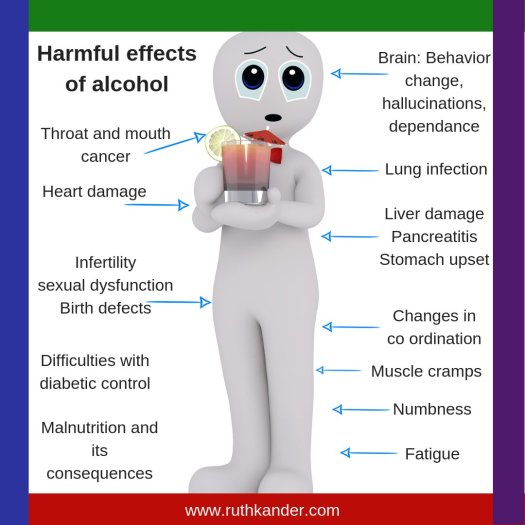
  Have you drunk too much in the holidays? Fact sheet all about the effects of alcohol. http://ow.ly/juXx30n8rkq