Blackrock Health Womens Health Centre is officially open at 2-5 Warrington Place, Dublin 2!
From gynaecology to menopause, cardiology to pelvic health – we offer a wide range of services for every stage of your health journey.
Don’t delay your well-being and book your appointment today.
You can access our clinic directly through our website, or with a referral from your GP. Learn more about our patient-centred approach and book an appointment here: https://ow.ly/jGy850XsMvR
Wearing no clothes could lead to cooler skin temperatures that put ZZZs within reach
Many people believe they were born with the only pajamas needed for a good night’s sleep, but here’s the naked truth: No research directly confirms that sleeping in the buff leads to better slumber.
There is, however, some validity behind the idea of sleeping naked — namely regarding how a cooler skin temperature improves sleep quality.
So, should you consider stripping down at bedtime before sliding under the sheets? Let’s look at the potential benefits (and risks) with behavioral sleep disorders specialist Michelle Drerup, PsyD, DBSM.
Is sleeping naked better?
There are some possible perks to nude sleeping … so, maybe? Here are a few reasons why you might want to slip off your clothes before slipping off to sleep.
Falling asleep faster
Your body naturally works to lower its thermostat to doze off at night through its circadian rhythm, which regulates your sleep/wake cycle. The faster you cool off, the faster you typically catch some ZZZs, says Dr. Drerup.
That’s also one of the reasons why sleep experts recommended that you keep your bedroom temperature between 60 degrees Fahrenheit and 67 degrees Fahrenheit (15.5 degrees Celsius to 19.44 degrees Celsius) for optimal snoozing.
Improved sleep quality
Ever toss and turn in bed because you’re too hot? Sleeping naked certainly removes any possibility of pajama-induced overheating interfering with a good night’s rest. It’s the absolute final move in shedding layers to stay cool.
“There’s no question that cooler is better than warmer for overall sleeping,” says Dr. Drerup.
And getting enough rest is key to … well, just about everything in day-to-day life. Waking up refreshed can help you manage stress more effectively, improve focus, boost performance and make you a more pleasant person.
For women: reduced risk of yeast infections
Tight-fitting underwear can trap heat and moisture between your legs. What makes a yeast infection thrive? Yep — heat and moisture.
Sleeping naked (or even in loose-fitting cotton bottoms) allows for some air circulation around your vagina. Keeping the area cooler and drier may help reduce your chances of getting a yeast infection, too.
For men: potential fertility boost
Heat isn’t a friend of male fertility. Regular exposure to higher temperatures for your testicles can cause sperm counts to drop. Wearing underwear that keeps things packed tight doesn’t exactly offer a cooling effect.
Studies show that men who wear boxers have a higher sperm count than their buddies in briefs. So if loose-fitting boxes help that much, imagine what 8 hours of no clothing might do.
Reasons to keep your PJs on
Sleepwalkers may want to give the idea some extra thought to going au natural to avoid any potential awkward encounters, notes Dr. Drerup.
And if you’re not a fan of doing laundry, consider this: Your washing schedule for bedding may need to increase with more skin-to-sheet contact. (Gross fact: The skin cells you shed in a day can feed 1 million dust mites. You don’t want to turn your bed into their buffet.)
Can you be cool and clothed?
Going to bed “nearly” naked while wearing lightweight and loose-fitting garments can bring you similar quality sleep results as taking everything off. “Tank tops and boxer-style briefs don’t possess a ton of warming qualities,” says Dr. Drerup.
And while being cool is desirable for sleep, you also don’t want to be cold. There’s even evidence that wearing socks to bed to warm your tootsies can help you drift off to sleep.
So, which is it: off or on?
Ultimately, what you wear to sleep is a personal choice. “There’s no proven benefit or harm to sleeping naked,” says Dr. Drerup. “Just do what feels right and then rest easy with your decision.”
This dairy product can help you lose weight, manage blood sugar and strengthen bones
Cottage cheese doesn’t typically receive a lot of attention. It gets left out from the fancy cheese counter at the grocery store. It doesn’t make the cut for a charcuterie (meat and cheese) board. And it isn’t typically included in recipes for favorite foods such as pizza, grilled cheese or baked ziti.
It’s a soft, white, fresh cheese that’s different in texture and taste than more popular cheddar, Parmesan and blue cheeses. But cottage cheese holds a prominent place in the dairy aisle for good reasons, says registered dietitian Julia Zumpano, RD, LD.
“It’s a portable food that’s easy to add to your diet,” she says. “And cottage cheese offers lots of health benefits.”
As a dairy product, cottage cheese is a great calcium source, which is important for bone health. Having healthier bones makes you less likely to get osteoporosis (weak bones). Cottage cheese in your diet can even help with your blood sugar levels.
Thinking about giving cottage cheese a go? Zumpano explains what you need to know.
Is cottage cheese healthy?
Cottage cheese is low in calories while providing protein and vital nutrients, Zumpano says, making it one of the healthiest cheeses you can eat. It’s made by curdling pasteurized (sterilized) cow’s milk — when milk turns acidic, the milk protein separates and forms curds (clumps). These loose curds serve as the base for cottage cheese.
Depending on the fat content of curdled dairy milk, cottage cheese is available as nonfat, low fat (1% or 2%) or whole fat. The milk type affects the nutritional content.
“To get the most bang for your buck, choose a low-fat or even full-fat cottage cheese,” Zumpano advises. “Nonfat cottage cheese may sound like a good idea, but it contains less protein and won’t be as satisfying.” Full-fat cottage has 1.5 grams more of saturated fat when compared to 2% but can be the most satisfying.
Health benefits of cottage cheese
Cottage cheese may be mild in flavor, but it packs a punch when it comes to potential health benefits. Some of the many benefits of cottage cheese include:
Provides good nutrition
A 100-gram serving (just under a half cup) of low-fat (2%) cottage cheese provides:
Three factors make cottage cheese a great choice if you’re looking to lose pounds or maintain your weight:
High in protein:Research finds that eating a high-protein diet helps curb your appetite and manage hormones associated with appetite, digestion and insulin release.
Low in fat: Full-fat cottage cheese contains less fat than some other cheeses (4% fat versus 30% fat in cheddar), and its high protein makes it an excellent low-fat option.
Provides calcium:Studies show that increasing calcium can help you lose weight when combined with a calorie-restricted diet.
Cottage cheese isn’t the only dairy food to provide these advantages. Greek yogurt can also check these boxes. But if you’re deciding between the two, Zumpano recommends cottage cheese. “Full-fat cottage cheese and full-fat Greek yogurt have the same amount of fat, but cottage cheese has 25% more protein.”
Provides essential amino acids
Cottage cheese is rich in casein (pronounced “KAY-seen”) protein. It’s a complete protein that provides essential amino acids, which are all the building blocks of protein that your body needs.
Amino acids help your body work smoothly. They affect your:
Phosphorus is critical for proper bone development and strength, especially during growth spurts or when healing from a fracture.
Protein helps maintain bone mineral density and can reduce the risk of fractures.
“Bone health is critical as you age,” Zumpano shares. “Adding cottage cheese to your diet is an easy way to strengthen them.”
Helps you control blood sugar levels
Plain cottage cheese is low in carbohydrates, making it a great option for anyone watching their blood sugar. The slow-digesting casein protein in cottage cheese also helps prevent blood sugar spikes.
“To get this benefit of cottage cheese, choose plain cottage cheese,” Zumpano recommends. “Avoid cottage cheese pre-packaged with fruit and check the label for added sugar.”
Contributes to a balanced gut
Probiotics are live microorganisms that can improve the balance of good and bad bacteria in your gut (gut microbiota). The curdling process used to produce cottage cheese adds beneficial bacteria that can promote better gut health. But unlike Greek and regular yogurt, which almost always contain probiotics, not all cottage cheese is created equal.
“If you want cottage cheese that provides probiotics,” Zumpano says, “check the label to see if it says it contains ‘live and active cultures.’”
Promotes muscle development
The slow-release protein in cottage cheese doesn’t just help with digestion. It’s also important for building muscle tissue and helping your muscles recover after a workout.
“Casein protein provides your cells with amino acids consistently over a longer period, which helps muscles recover instead of breaking down,” Zumpano explains. Consider having cottage cheese after a workout to get the maximum benefit for your muscles.
Reduces your risk of some cancers
Research shows that increasing dairy intake may lower your risk for some (though not all) cancers. “There’s still a lot to learn about the connection between dairy and cancer prevention,” Zumpano states. “But it’s clear there are protective benefits to including dairy in a balanced diet.”
Experts believe getting more calcium may offer protection from:
Bladder cancer.
Breast cancer.
Colorectal cancer.
Stomach (gastric) cancer.
Tips for adding cottage cheese to your diet
The United States Department of Agriculture (USDA) recommends that adults get three cups of dairy daily. Cottage cheese can help you reach that goal.
When you incorporate cottage cheese into your diet, remember to:
Check the nutrition label: Single-serve containers of cottage cheese may vary in size and nutritional content.
Consider your lactose tolerance: The lactose in cheese decreases with age. As a fresh, unripened cheese, cottage cheese often contains more lactose than aged cheeses. If you have lactose intolerance, consider a cottage cheese that’s lactose-free.
Keep an eye on sodium: Cottage cheese can be high in sodium, so opt for low-sodium or sodium-free cottage cheese to protect yourself from high blood pressure and heart disease.
Get creative: There are many ways to eat more cottage cheese. Consider adding cottage cheese to your eggs or pancake mix. Bake it into muffins or cakes. Or use it as a substitute for sour cream or ricotta cheese.
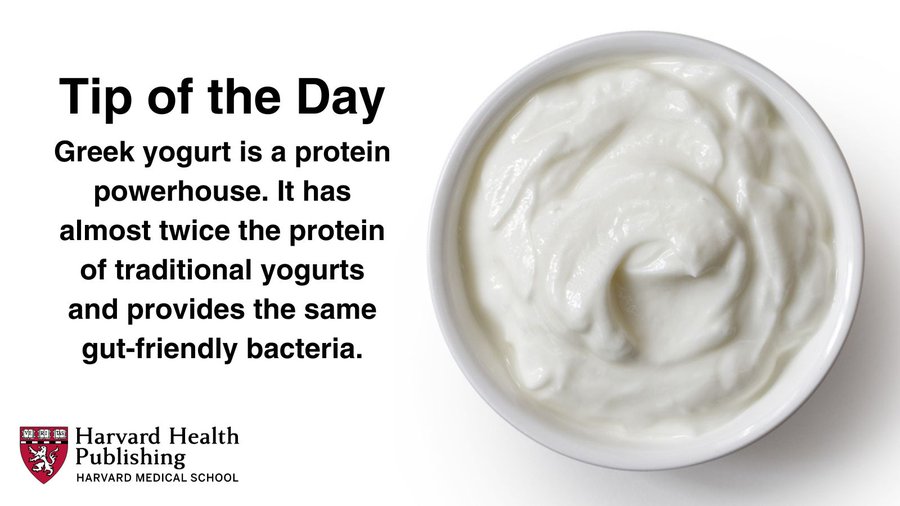
Protein in Greek yogurt: Greek yogurt is a protein powerhouse. It has almost twice the protein of traditional yogurts and provides the same gut-friendly bacteria. #HarvardHealth
Vitamin C, also known as ascorbic acid, is a powerful micronutrient that plays a key role in keeping your body healthy. Here we’ll explore some myths and truths about this vital micronutrient. #HarvardHealth
Strawberries give you a lot of nutritional value for very few calories! They are tasty but naturally low in sugar. That’s a combination that’s hard to beat! 🍓5w
enhancehealthllcLike we needed more reasons to love strawberries?! Thanks for sharing! 👏🍓💙
Strawberries give you a lot of nutritional value for very few calories! They are tasty but naturally low in sugar. That’s a combination that’s hard to beat! 🍓5w
enhancehealthllcLike we needed more reasons to love strawberries?! Thanks for sharing! 👏🍓💙










 Healthaware