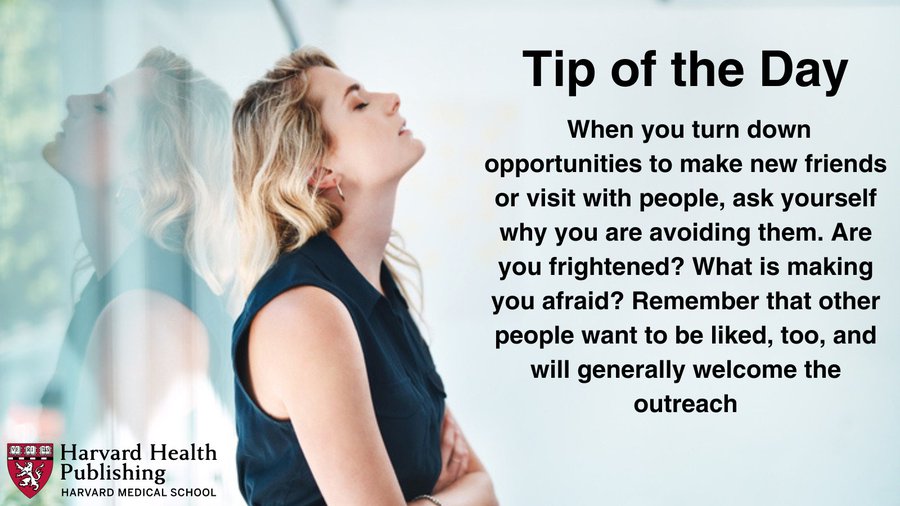
Overcome social apprehensions: When you turn down opportunities to make new friends or visit people, ask yourself why you are avoiding them. Remember that other people want to be liked, too, and will generally welcome the outreach. — #HarvardHealthTipoftheDay#HarvardHealth
Overcome social apprehensions: When you turn down opportunities to make new friends or visit people, ask yourself why you are avoiding them. Remember that other people want to be liked, too, and will generally welcome the outreach. — #HarvardHealthTipoftheDay#HarvardHealth
There are many health benefits related to abstaining from alcohol. If you’re looking to cut back or stop drinking altogether, here are 11 tips that can help. #HarvardHealth
Are you concerned about your alcohol intake? Maybe you feel that you’re drinking too much or too often. Perhaps it’s a habit you’d like to better control.
It’s always wise to check with your doctor — she should be able to help you decide whether it is best for you to cut back or to abstain. People who are dependent on alcohol, or have other medical or mental health problems, should stop drinking completely.
But many people may benefit simply by cutting back. If your doctor suggests that you curb your drinking, the National Institute on Alcohol Abuse and Alcoholism (NIAAA) suggests that the following steps may be helpful:
Put it in writing. Making a list of the reasons to curtail your drinking — such as feeling healthier, sleeping better, or improving your relationships — can motivate you.
Set a drinking goal. Set a limit on how much you will drink. You should keep your drinking below the recommended guidelines: no more than one standard drink per day for women and for men ages 65 and older, and no more than two standard drinks per day for men under 65. These limits may be too high for people who have certain medical conditions or for some older adults. Your doctor can help you determine what’s right for you.
Keep a diary of your drinking. For three to four weeks, keep track of every time you have a drink. Include information about what and how much you drank as well as where you were. Compare this to your goal. If you’re having trouble sticking to your goal, discuss it with your doctor or another health professional.
Don’t keep alcohol in your house. Having no alcohol at home can help limit your drinking.
Drink slowly. Sip your drink. Drink soda, water, or juice after having an alcoholic beverage. Never drink on an empty stomach.
Choose alcohol-free days. Decide not to drink a day or two each week. You may want to abstain for a week or a month to see how you feel physically and emotionally without alcohol in your life. Taking a break from alcohol can be a good way to start drinking less.
Watch for peer pressure. Practice ways to say no politely. You do not have to drink just because others are, and you shouldn’t feel obligated to accept every drink you’re offered. Stay away from people who encourage you to drink.
Keep busy. Take a walk, play sports, go out to eat, or catch a movie. When you’re at home, pick up a new hobby or revisit an old one. Painting, board games, playing a musical instrument, woodworking — these and other activities are great alternatives to drinking.
Ask for support. Cutting down on your drinking may not always be easy. Let friends and family members know that you need their support. Your doctor, counselor, or therapist may also be able to offer help.
Guard against temptation. Steer clear of people and places that make you want to drink. If you associate drinking with certain events, such as holidays or vacations, develop a plan for managing them in advance. Monitor your feelings. When you’re worried, lonely, or angry, you may be tempted to reach for a drink. Try to cultivate new, healthy ways to cope with stress.
Be persistent. Most people who successfully cut down or stop drinking altogether do so only after several attempts. You’ll probably have setbacks, but don’t let them keep you from reaching your long-term goal. There’s really no final endpoint, as the process usually requires ongoing effort.
Too much refined sugar can cause a cascade of medical problems; too much social media can also affect health — especially mental health, writes #HarvardHealth contributor Sharon Levy. Here’s how: https://bit.ly/3EI7ijy
Falls can have very serious consequences as we age. Each year, more than 25 percent of adults 65 or older have a fall, and 3 million are treated in emergency departments for fall injuries, according to the Centers for Disease Control and Prevention.
Fall Risks
The risk of falling in older adults is usually related to combination of factors, including:
Balance and/or walking problems. Balance can be affected by vision changes, vestibular problems and altered sensation in the feet.
The use of multiple medications. Studies indicate that when individuals take five or more medicines, the risk of falls increases.
Home hazards (including dim lighting and trip hazards)
Positional low blood pressure (such as orthostatic hypotension, when blood pressure drops upon standing.
Feet and footwear issues
Falls often occur in the bathroom when sitting or standing from the toilet or shower, or at night in a dark bedroom when getting up quickly and tripping on the way to the bathroom.
Exercises to Prevent Falls
While it’s not possible to completely prevent a fall, exercises that focus on balance and strength training can reduce the risk of falling. “We treat elderly adults for injuries sustained from falls, and other patients who feel unsteady while walking or standing and are fearful of falling,” says Lora Stutzman, a physical therapist with the Johns Hopkins Rehabilitation Network. “These exercises can help improve balance and build strength to help prevent future falls.”
For older adults, activities such as squatting, standing up from a chair and walking may be difficult or cause them to feel unsteady, which increases their risk of falling. The following exercises are intended for those who have a low risk of fall and are able to stand on their own without support from others. Always talk to your doctor or physical therapist first before starting new exercises, especially if you have weak balance.
Stutzman demonstrates two exercises below.
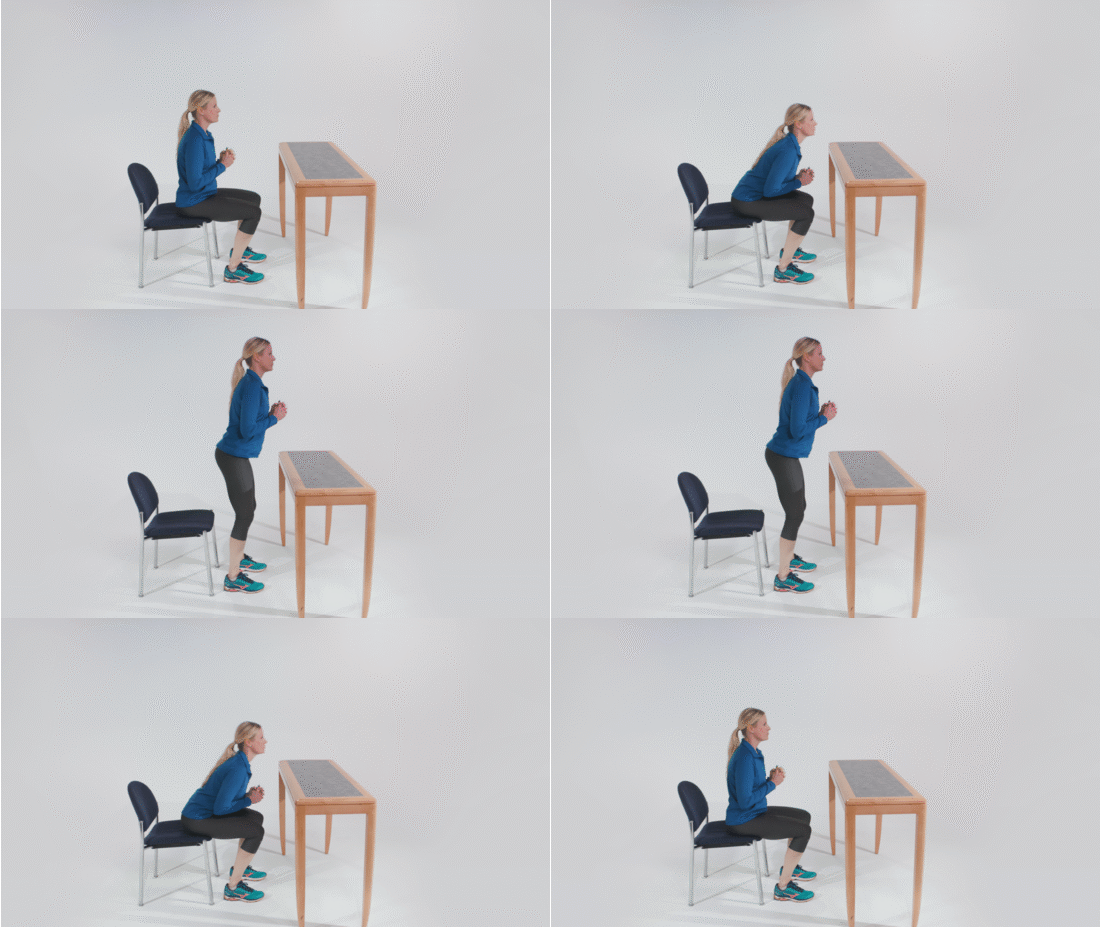
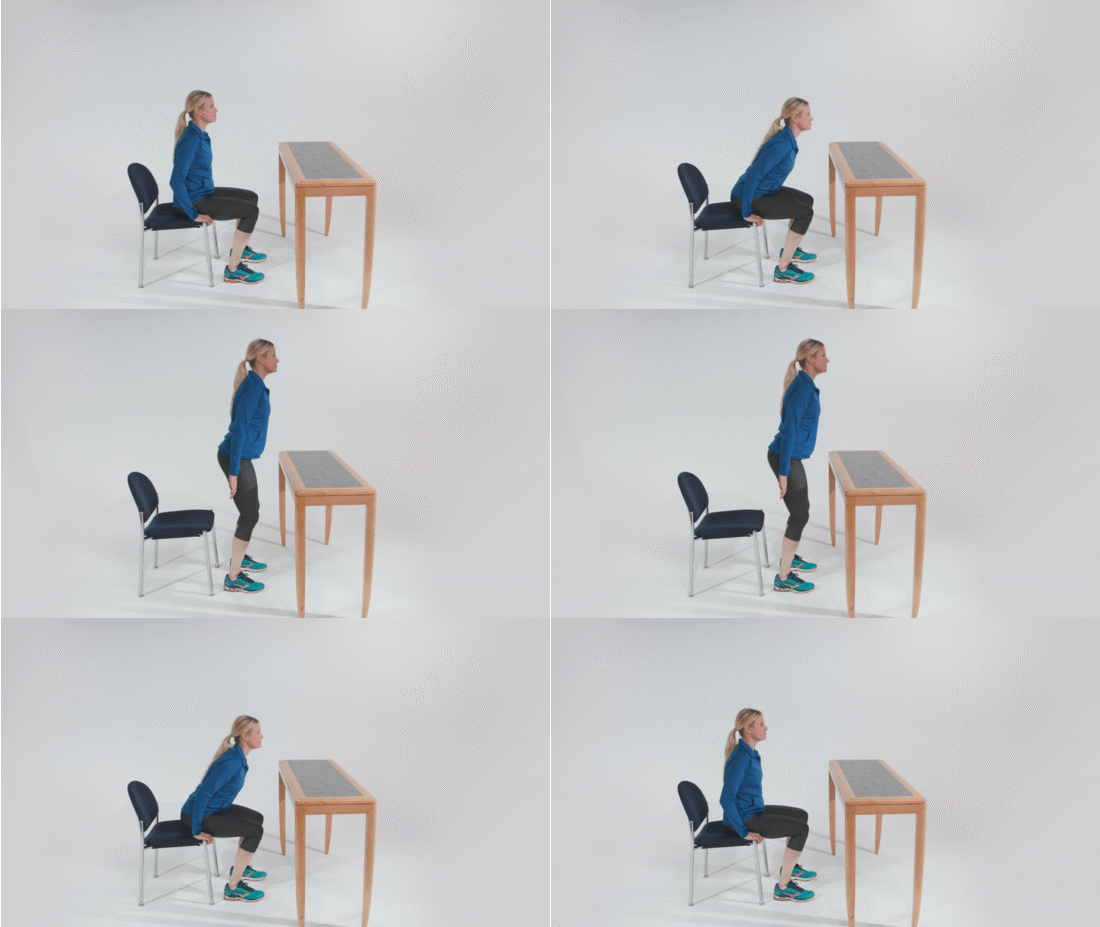
Sit-to-Stand Exercise
The sit-to-stand exercise builds leg strength and improves body mechanics and balance, which are all important in reducing falls.
1. Start by sitting on a sturdy chair of standard height, and make sure that it won’t slide or roll. You should be able to sit comfortably with your feet flat on the ground. Have a sturdy support surface in front of you, such as a countertop, so that you can reach to it for support if you start to feel unsteady when standing. Scoot forward so your buttocks is positioned at the front of the seat.
2. Lean your chest forward over your toes, shifting your body weight forward. Squeeze your gluteal muscles and slowly rise to a stable standing position.
3. Slowly sit back down to the starting position and repeat 10 times.
4. If necessary, place your hands on the arms or seat of the chair and push through your hands to help stand and sit. The goal is to not use your hands at all.
Perform 10 repetitions, twice a day. For an advanced version, hold hand weights to add resistance.
If you have pain in your knees, back or hips, discontinue and talk to your doctor or physical therapist.
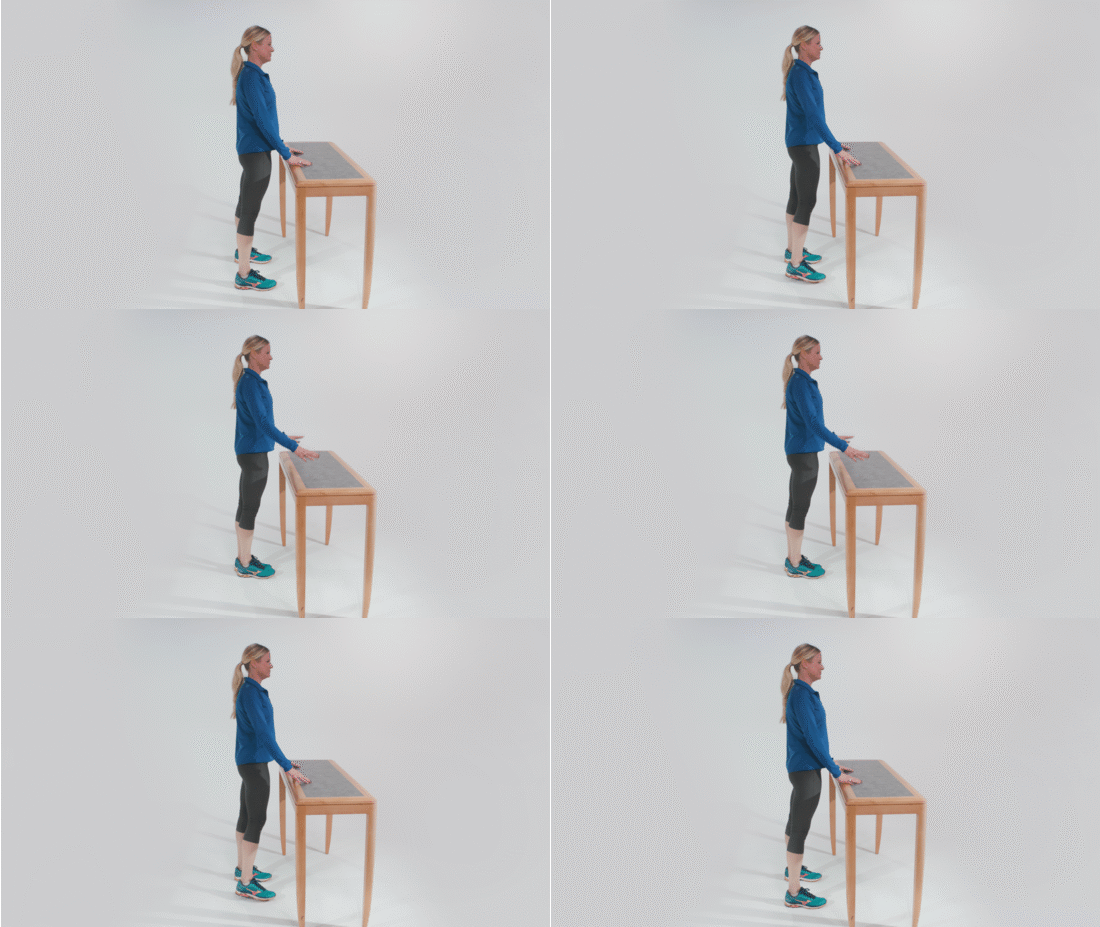
Balance Exercise
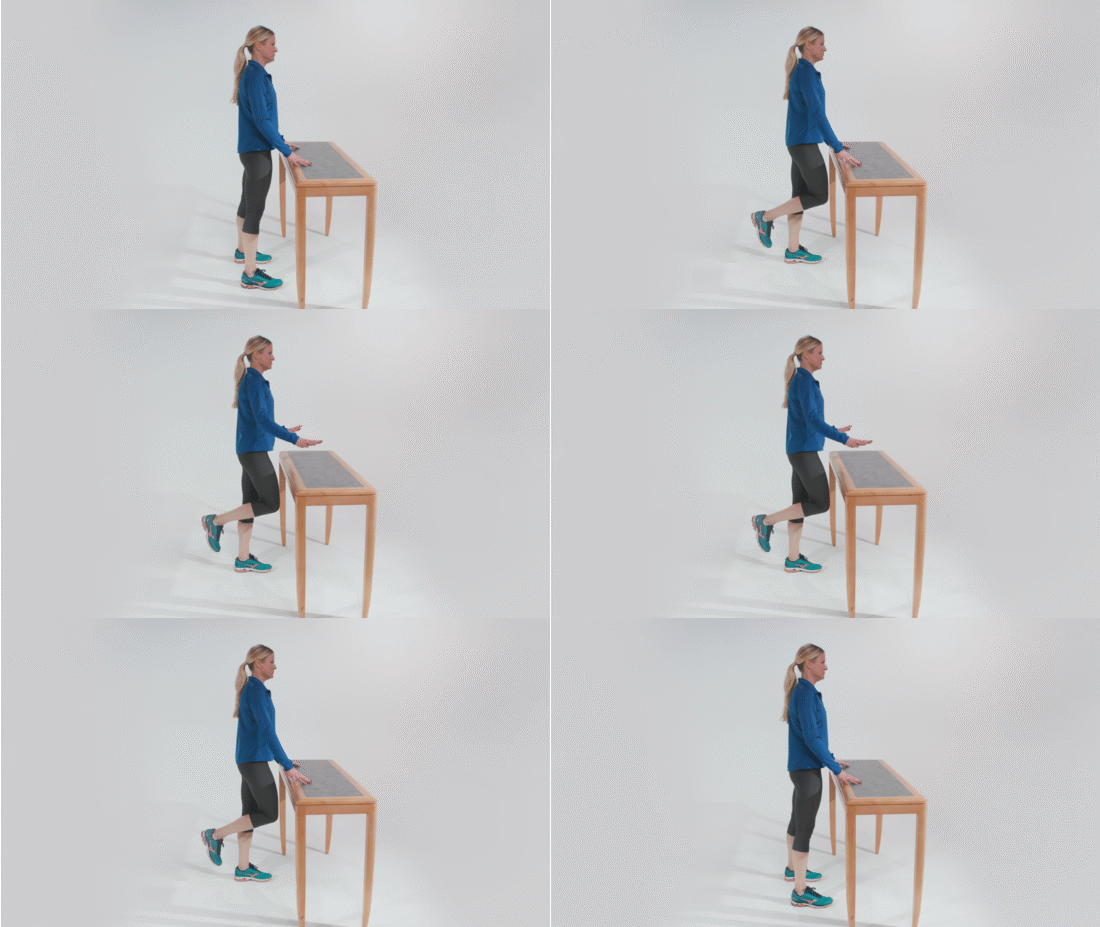
This series of exercises helps if your balance is unsteady. Make sure you have someone with you in case you lose balance.
To begin, stand in a corner or have a kitchen counter in front of you to reach out to in case you start losing balance.
1. Feet apart: Stand with feet about shoulder-width apart, eyes open, and hold steady for 10 seconds, working your way up to 30 seconds.
If you find yourself swaying or reaching for the wall or counter frequently, just keep working on this exercise until you can do it with minimal swaying or support. Once you can hold this position firmly for 30 seconds, move on to the next exercise.
2. Feet together: Stand with feet together, eyes open, and hold steady 10 seconds, working your way up to 30 seconds.
Once you can do this exercise for 30 seconds with minimal swaying or support, move on to the next one.
3. One foot: Stand on one foot, eyes open, and hold steady 10 seconds, working up to 30 seconds. Switch to the other foot.
4. Eyes closed: If you can perform the first three exercises safely and with little support, try to do each one with your eyes closed. Hold for 10 seconds, working up to 30 seconds.
The goal for each exercise is to hold the position for 10 seconds and progress to 30 seconds, five repetitions (including five per leg on the one-foot exercise), two times a day.
Additional Steps to Prevent Falls
Remember, it’s important to talk to your doctor or physical therapist about fall prevention.
Discuss medications and changes in your exercise routine.
Tell your doctor if you fall.
Ask a friend or family member to help check your home for trip hazards.
“Keep in mind,” adds Stutzman, “it is always best to have company at home with you while exercising for safety and supervision and in case you need help.”










 Healthaware