This savory Greek appetizer is usually made with a lot of butter and a lot of feta cheese, which is delicious, but not really heart-healthy. Our just-as-delicious recipe offers a lighter, heart-healthier alternative!
Ingredients
Olive oil cooking spray
1 small onion, minced
One 10-ounce package frozen, chopped spinach
1/3 cup crumbled reduced-fat feta cheese
1/4 cup 1% cottage cheese
1/8 teaspoon ground nutmeg
1 1/2 tablespoons chopped fresh dill
Freshly ground pepper
1 tablespoon egg substitute
5 sheets frozen phyllo dough, thawed
Refrigerated butter-flavored cooking spray
Directions
Preheat the oven to 350 F. Coat a baking sheet with olive oil cooking spray.
Coat a large nonstick skillet with olive oil cooking spray. Add the onion and spinach; saute over medium-high heat until the spinach is thawed and the onion begins to wilt, 8 to 10 minutes. Stir frequently to break up clumps of spinach. Add the feta and cottage cheese along with the nutmeg, dill, pepper and egg substitute; mix well. Remove from heat and cool for 5 minutes.
Cut the phyllo dough into four lengthwise strips, covering the dough you’re not using with a damp tea towel so it doesn’t dry out. Coat each strip with the butter-flavored spray. Place a tablespoon of spinach mix on top of a strip of dough and fold over to make a triangle; continue folding over as if folding a flag. Place on the prepared baking sheet. Repeat, using all the remaining phyllo and filling. Coat each triangle with the butter-flavored spray. Bake for about 20 minutes, until browned. Serve warm.
Nutrition information (per serving)
Makes 20 pieces (10 servings/2 pieces serving)
Calories: 50 Total fat: 1.5 g Protein: 3 g Carbohydrate: 7 g Dietary fiber: 0 g Cholesterol: 0 mg Sodium: 180 mg Potassium: 60 mg
Why not try your hand at making homemade tomato sauce? The freshness of the tomatoes and the smokiness of the roasted vegetables make this a great topping for spaghetti. If you don’t have your own garden, use canned Roma tomatoes for a tasty dish that includes roasted mushrooms, broccoli and peppers.
Ingredients
Tomato sauce
Olive oil cooking spray 2 garlic cloves, minced 1 small carrot, minced 1 shallot, minced 4 cups peeled, seeded, and diced ripe tomatoes or one 28-ounce can no-salt-added diced tomatoes, drained 1/4 cup dry red wine 1 1/2 tablespoons balsamic vinegar 1/4 teaspoon crushed red pepper flakes, optional 1/4 cup chopped fresh basil
Pasta
1/2 pound whole wheat spaghetti 3/4 pound broccoli florets and stalks, peeled and cut into bite-size pieces 2 portobello mushrooms, halved and thinly sliced 1 red, yellow or orange bell pepper, seeded and coarsely chopped 1 1/2 tablespoons extra-virgin olive oil 1 1/2 tablespoons balsamic vinegar Freshly grated pepper 2 tablespoons freshly grated Parmesan cheese
Directions
Preheat oven to 400° F. Line a rimmed baking sheet with aluminum foil.
To make the sauce, coat a large pot with cooking spray and saute the garlic, carrot and shallot over low heat until they begin to wilt, about 5 minutes. Stir in the tomatoes, wine, vinegar and red pepper flakes (if using). Cover and simmer slowly for 30 minutes.
Stir in the basil and simmer for 10 minutes more. (To make a smoother sauce, cool and process in batches in either a blender or food processor.) Set aside.
Place the broccoli, mushrooms and bell pepper on the prepared pan. Toss with oil and vinegar. Roast about 10 minutes until crisp or done to your taste. Sprinkle with pepper.
Cook the pasta according to package directions. Drain.
In a large serving bowl, toss the pasta with 2 cups tomato sauce. Top with the roasted vegetables and sprinkle with Parmesan cheese.
Nutrition information (per serving)
Makes 4 servings
Calories: 363 Total fat: 4 g Protein: 15 g Carbohydrate: 71 g Dietary fiber: 4 g Cholesterol: 0 mg Sodium: 100 mg Potassium: 93 mg
This bright, lemony salad is best made with farm-fresh asparagus, which is dressed and eaten raw here. Look for stalks that are bright green with firm, tight tips. Buy it in season from your local farmer’s market.
Ingredients
1 pound fresh asparagus 1 tablespoon fresh lemon juice 1 tablespoon extra virgin olive oil 1/8 teaspoon kosher salt 1/8 teaspoon freshly ground black pepper 1 tablespoon shaved Parmesan 8 fresh chives
Directions
Break off the tough ends of the asparagus and discard.
Use a vegetable peeler to make long thin ribbons of asparagus. Add to a large bowl.
In a small bowl, whisk together the lemon juice, oil, salt and pepper. Drizzle over the asparagus ribbons and toss well.
Use the vegetable peeler to shave thin strips from a piece of fresh Parmesan (about 1 tablespoon) and scatter over the salad.
Use kitchen shears to cut the chives into small pieces directly over the salad.
Nutritional information (per serving)
Makes 4 servings
Calories: 70 Total fat: 4 g Saturated fat: 1 g Trans fat: 0 g Protein: 4 g Total carbohydrate: 7 g Fiber: 3 g Sugar: 2 g Cholesterol: 0 mg Sodium: 95 mg
—Developed by Sara Quessenberry for Cleveland Clinic Wellness.
This superfood omelet is full of nutrient-rich veggies. Brussels sprouts and kale provide folate and glucosinolates. Seaweeds are full of minerals and avocados are loaded with healthy monounsaturated and saturated fats. Ingredients 2 large kale leaves, stemmed and halved lengthwise 4 Brussels sprouts, trimmed and halved 3 large pasture-raised eggs 5 large pasture-raised egg whites freshly ground black pepper and sea salt, to taste 2 tablespoons extra-virgin olive oil 6 crimini mushrooms, sliced 1/4 cup chopped fresh cilantro 1/4 cup chopped fresh dill 2 (1/2-ounce) packages roasted seaweed snacks (see note*) 2 cups baby spinach 1 avocado, peeled, pitted and sliced, for garnish 1 teaspoon white truffle oil (optional, for garnish) Note: If you can’t find roasted seaweed snacks, you can substitute 1 ounce plain nori. Before using nori, brush it with a tiny bit of oil and toast it in a lightly oiled skillet over medium-heat for 10 to 15 seconds on each side. Cut into 3-inch squares before using in the omelet. Directions Bring a large pot of water to a boil over high-heat. When it boils, add a large pinch of sea salt. Drop in the kale leaves and Brussels sprouts and blanch just until they turn a brighter shade of green, 2 to 3 minutes. Drain well. Crack the 3 eggs into a medium mixing bowl, and then add the 5 egg whites. Whisk the eggs together and season with salt and black pepper, to taste. Heat the oil in a large nonstick pan over medium-heat. Add the eggs and immediately turn the heat down to low. Stir to scramble the eggs, tilting the pan to distribute them in an even layer. As soon as the eggs are no longer runny, arrange the Brussels sprouts on one side of the omelet and scatter the mushrooms over them. Add the kale and sprinkle the cilantro and dill on top. Cover the herbs all with the seaweed snacks and top with the spinach. Cover the pan and cook over the lowest possible heat for 5 minutes. Fold the omelet in half and then cut it into 4 sections. Garnish each portion with a few slices of avocado and a drizzle of truffle oil, if using. Serve immediately. Nutritional information Each slice of omelet contains: Calories 248 Fat 18g Saturated fat 3g Cholesterol 123mg Fiber 6g Protein 14g Carbohydrate 12g Sodium 120mg Facebook Twitter
Avocados are jam-packed with nutrients and vitamins and can make a delicious, nutritious addition to your diet.
Millenials may get flak for being the “avocado toast generation,” but honestly, they may be onto something! Avocados are as nutritious as they are delicious, and they’re jam-packed with vitamins and nutrients.
Avocados include vitamins C, E, K1, B6 and folate, plus essential minerals like potassium and copper. They’re low in sugar, loaded with fiber and high in monosaturated fats, aka “good” fats. Oh, and did we mention that they taste great and they’re super versatile?!
Registered dietitian Julia Zumpano, RD, LD, shares a few more good reasons to give these wrinkly green fruits a second look — plus, how to add them to your regular rotation.
Are avocados good for you?
“Avocados are a great addition to a healthy diet,” Zumpano confirms, “and there are hundreds of varieties to choose from, ranging from big to small and wrinkly to smooth.”
What they have in common: A big round pit, creamy green flesh and a whole lot of nutrients crammed into a handy, pear-shaped package.
Just don’t go overboard. Avocados are packed with nutrients, but they’re also packed with calories. A 50-gram portion — about a third of a medium-sized avocado — has about 75 calories. And an entire large avocado can add upward of 400 calories to your daily diet.
Like most things, Zumpano says, moderation is key. “As long as you’re paying attention to portion sizes, avocados are very healthy foods to include in your food repertoire.”
Benefits of avocados
Whether you’re adding a slice to a salad or sandwich or using them as an ingredient in a more complicated recipe, Zumpano says avocados have a lot going for them health-wise.
Here are some of the many nutrients and vitamins packed into just a single avocado:
High in ‘good’ fats
You might’ve heard that avocados are high in fat — and that’s true, but it doesn’t mean you should avoid them! A medium avocado has 22 grams of fat, which includes 15 grams of monounsaturated fats, aka “good” fats.
“Avocados are rich in heart-healthy monounsaturated fats, which help lower your LDL, or ‘bad’ cholesterol,” Zumpano says. “Low LDL levels reduce your risk of heart disease and stroke.”
The American Heart Association says most of the fats you eat should be monounsaturated or polyunsaturated, confirming that avocados fit the bill as part of a healthy diet.
You can even swap avocado in for less-healthy fats in your home cooking. Here are some additional ways you can add this smooth, creamy fruit to your diet.
Spread avocado on a sandwich in place of mayonnaise.
Instead of dunking veggies into dips made with cheese or sour cream, try guacamole.
Forego shredded cheese on your salad and add avocado slices instead.
In baking recipes, replace butter or oil with mashed avocado, like in these chocolatey avocado brownie bites.
“If you use avocado to replace other fats, you can enjoy the flavor and nutrients and also cut down on saturated fats,” Zumpano says.
Lots of vitamins
Let’s talk vitamins: In simple terms, avocados have a lot of them! Here are the vitamins that are most abundant in avocados and what they do for your health:
Vitamin K1, or phylloquinone, is important for blood clotting, which helps stop wounds from bleeding. It also plays a role in strengthening your bones. For most adults, the daily recommended amount of vitamin K ranges from 90 to120 micrograms. Half an avocado has about 21 mcg.
Vitamin C, aka ascorbic acid, helps keep your immune system healthy. It also plays a role in the health of your tissues, blood vessels, bones and more. Depending on your age and sex, you need anywhere from 75 to 120 milligrams of vitamin C per day; half an avocado has about 10 mg.
Vitamin E, or alpha-tocopherol, is a powerful antioxidant that prevents cell damage and helps maintain muscle function. Most adults only need 15 mg of vitamin C per day, and half an avocado will give you about 4 mg of it.
Vitamin B6, also known as pyridoxine, helps your body convert food into energy. You only need a small amount of vitamin B6 each day (just 1.2 to 2 mg, depending on your age and sex), but half an avocado has about .25 mg, putting you well on your way to that daily goal.
Folateis a B vitamin that’s important for normal cell function and tissue growth. It helps your body form red blood cells and DNA, which is especially critical when you’re pregnant (but still important if you’re not). Half an avocado has about 20% of your daily recommended amount.
Low in sugar
Though most fruits are high in natural sugars, avocados rank very low on the sweetness scale. “A whole avocado has under 1.5 grams of sugar, while one medium apple, by comparison, has about 19 grams,” Zumpano points out. (Psst: It’s important to note that not all sugars are created equal! Fruit is still super-healthy.)
High in fiber
Avocados are a good source of fiber, which is a type of carbohydrate that your body can’t break down. You need both soluble and insoluble fiber — and lucky for you, avocados have both.
“Fiber can lower cholesterol and blood sugar, keep you regular and help you feel full and satisfied after a meal,” Zumpano states. Most adults need 25 to 35 grams of fiber per day, depending on your age and sex. Half an avocado provides about 7 grams.
Packed with potassium
Surprise! “Avocados actually contain more potassium than bananas,” Zumpano reveals. Half a large avocado provides about 485 mg of potassium, while a whole banana provides about 420 mg. (Most adults need 2,600 to 3,400 mg per day.)
This essential mineral is beneficial for blood pressure control and heart health. Low blood potassium can increase your blood pressure, raise your risk of kidney stones and even pull calcium out of your bones.
Increases your copper intake
Think past pennies: Copper is actually an essential trace mineral that your body needs in order to function correctly. Most Americans don’t get enough of it in their diets, but half an avocado will get you 20% of your daily recommended amount.
“Copper helps your body metabolize iron, and it plays a role in a healthy immune system and nervous system,” Zumpano explains.
Tips for enjoying avocados
“A perfectly ripe avocado is slightly firm but not rock-hard,” Zumpano says. “If it’s not ripe but you can’t wait to eat it, store it in a paper bag on the counter until it gives a little when you squeeze it.”
A ripe-but-not-too-ripe avocado is a time-limited treasure, so dive right in and get creative with your avocado creations, or embrace the millennial method and enjoy some avocado toast.
But if you need to store it for a couple of days, just be sure to keep it in the fridge — not submerged in water, as some TikTokkers recommend. Some people call it a “food hack,” but it can easily lead to foodborne illness.
“You can even freeze avocado slices if you’re worried you won’t use them in time,” Zumpano suggests. “Then, you can easily throw them into a smoothie.”
Who says pumpkin spice is only exciting in latte form?
Don’t just reserve pumpkin for pumpkin spice lattes and pie! These easy spice cookies are a great way to spread the pumpkin love throughout the entire season.
If you don’t have any aluminum-free baking powder in your cupboard, pick some up the next time you go shopping. Aluminum may pose potential risks to your health as a neurotoxin. While the dose of aluminum is what makes the poison, some studies show a relationship between aluminum that is stored in your body and neuro-disorders (such as Alzheimer’s disease.) Limiting exposure to all metals is a protective measure we can take to optimize our health.
Ingredients
1 cup pumpkin puree, fresh or canned 1 tablespoon pure maple syrup 1/3 cup unsweetened applesauce 1 teaspoon pure vanilla extract 1/4 cup vegan palm shortening or melted coconut oil 1 cup oat flour 1/2 cup almond flour 1/2 teaspoon baking soda 1/2 teaspoon aluminum-free baking powder 1 teaspoon ground cinnamon 1/2 teaspoon pumpkin pie spice Pinch sea salt 1/2 cup chopped pecans 1/4 cup mini chocolate chips
Directions
Preheat oven to 350°F.
Mix the pumpkin, syrup, applesauce, vanilla and shortening (or oil if using) in a large bowl. Alternatively, place in a blender and blend until combined.
In a separate medium bowl sift the oat flour, almond flour, baking soda, baking powder and spices together.
Add the dry ingredients to the pumpkin mixture and mix to combine. Then fold in the pecans and chocolate chips.
Scoop 1 tablespoon of batter onto a large baking pan lined with parchment paper. Repeat until all batter is used. Place baking pan into the oven and bake for 20 to 25 minutes, or until just slightly firm. Remove the cookies from the oven and serve warm or room temperature.
Store uneaten cookies in a sealed glass container at room temperature for two days or in the refrigerator for up to five days.
Nutrition information (per serving)
Makes 3 dozen cookies
Calories: 43 Total fat: 2 g Saturated fat: 2 g Cholesterol: 0 mg Fiber: 1 g Protein: 1 g Carbohydrate: 5 g Sodium: 25 mg
This tasty, filling Italian soup is packed with nutrient-rich veggies, heart-healthy olive oil and fiber-friendly legumes. Enjoy it all year long — let it warm you up in the fall and winter, and fill it with fresh vegetables from your garden in the summer.
Ingredients
¼ cup olive oil
1 clove garlic, minced (or 1/8 teaspoon garlic powder)
1-1/3 cups coarsely chopped onion
1-1/2 cups coarsely chopped celery and leaves
1 can (6 ounces) tomato paste
1 tablespoon chopped fresh parsley
1 cup sliced carrots, fresh or frozen
4-3/4 cups shredded cabbage
1 can (16 ounces) tomatoes, cut up
1 cup canned red kidney beans, drained and rinsed
1-1/2 cups frozen peas
1-1/2 cups fresh green beans
Dash hot sauce
11 cups water
2 cups uncooked spaghetti noodles
Directions
Heat oil in a 4-quart saucepan.
Add garlic, onion and celery, and sauté about 5 minutes.
Add all remaining ingredients except spaghetti, and stir until ingredients are well-mixed.
Bring to a boil. Reduce heat, cover and simmer about 45 minutes or until vegetables are tender.
Add uncooked spaghetti and simmer 2-3 minutes only.
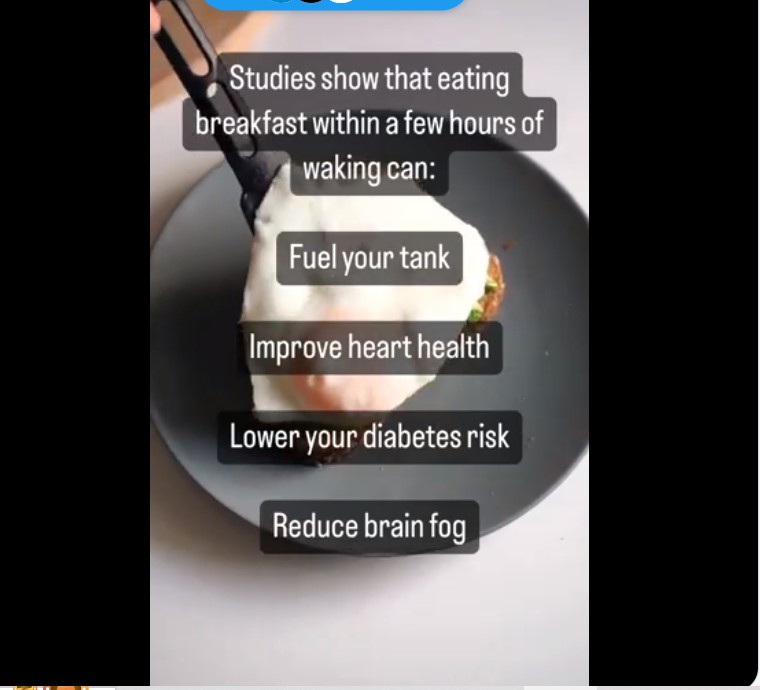
The term “breakfast” means breaking the fast. And at some point in our day, all of us do that, whether it’s at 7 a.m. or noon. Ideally, the recommendation is to put some food in your belly within two hours of getting up for the day.
This savory Greek appetizer is usually made with a lot of butter and a lot of feta cheese, which is delicious, but not really heart-healthy. Our just-as-delicious recipe offers a lighter, heart-healthier alternative!
Ingredients
Olive oil cooking spray
1 small onion, minced
One 10-ounce package frozen, chopped spinach
1/3 cup crumbled reduced-fat feta cheese
1/4 cup 1% cottage cheese
1/8 teaspoon ground nutmeg
1 1/2 tablespoons chopped fresh dill
Freshly ground pepper
1 tablespoon egg substitute
5 sheets frozen phyllo dough, thawed
Refrigerated butter-flavored cooking spray
Directions
Preheat the oven to 350 F. Coat a baking sheet with olive oil cooking spray.
Coat a large nonstick skillet with olive oil cooking spray. Add the onion and spinach; saute over medium-high heat until the spinach is thawed and the onion begins to wilt, 8 to 10 minutes. Stir frequently to break up clumps of spinach. Add the feta and cottage cheese along with the nutmeg, dill, pepper and egg substitute; mix well. Remove from heat and cool for 5 minutes.
Cut the phyllo dough into four lengthwise strips, covering the dough you’re not using with a damp tea towel so it doesn’t dry out. Coat each strip with the butter-flavored spray. Place a tablespoon of spinach mix on top of a strip of dough and fold over to make a triangle; continue folding over as if folding a flag. Place on the prepared baking sheet. Repeat, using all the remaining phyllo and filling. Coat each triangle with the butter-flavored spray. Bake for about 20 minutes, until browned. Serve warm.
Nutrition information (per serving)
Makes 20 pieces (10 servings/2 pieces serving)
Calories: 50 Total fat: 1.5 g Protein: 3 g Carbohydrate: 7 g Dietary fiber: 0 g Cholesterol: 0 mg Sodium: 180 mg Potassium: 60 mg