You might not be worried about the flu, but it’s a serious illness that merits proactive measures. Here’s why you should get the flu vaccine and when to get it @ClevelandClinic #kidshealth

Healthcare providers across the country are bracing for another season of treating respiratory viruses like the flu, respiratory syncytial virus (RSV) and COVID-19.

And while the flu might not seem like something to worry about, it’s a virus we should all be prepared for. So, you may be wondering, Should I get a flu shot?

“Influenza is a very serious disease, and during a normal flu season, around 40,000 or more people die from it,” says infectious disease specialist Kristin Englund, MD. “So, with any preventable disease, we should do everything we can to protect ourselves.”

Getting your flu vaccine is vital to not just keeping you and your family healthy, but also relieving our over-burdened healthcare system.

To learn more about the importance of getting the flu vaccine, we talked to Dr. Englund, along with infectious disease clinical pharmacist Kaitlyn Rivard, PharmD.

Why the vaccine matters

First of all, Dr. Englund notes that it’s just good practice to get a flu shot every year. She adds that the vaccine’s prevention-geared properties are key.

“When people get influenza or get the flu, it’s not only just the symptoms that they have, like a cough, fever and an infection in the lungs,” she says. “It taxes the body and really puts a lot of stress on all of the other systems.”

That can cause some serious complications, she continues. “You can have a heart attack or even a stroke as a side effect from having influenza. So, we want to make sure that we’re keeping everybody healthy from all of these complications.”

Dr. Englund says that a flu shot is especially important this year because other respiratory viruses like COVID-19 and RSV will be circulating.

“We’re going to have influenza, RSV and COVID-19 coexisting and there’s a lot of overlap between the symptoms,” she states. “We also anticipate that there will be some people who have co-infections, which could be difficult.”

When to get the flu vaccine

We bet you’re now wondering: So, when should I get a flu shot?

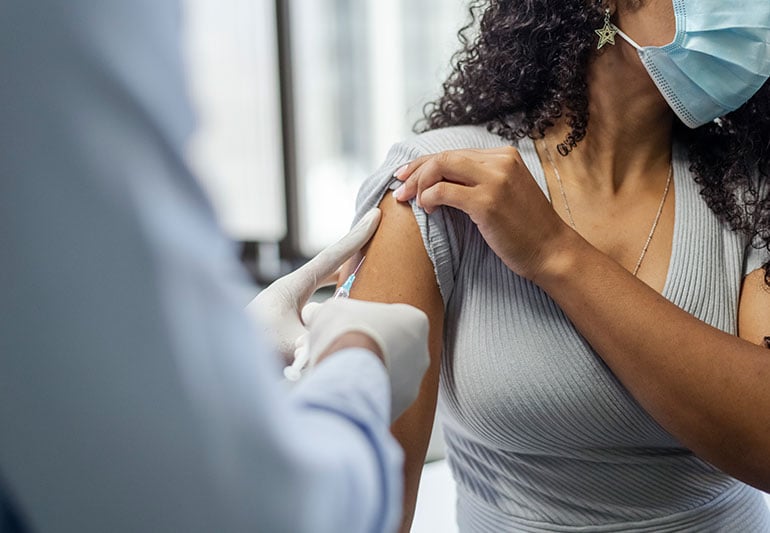
Dr. Englund and Dr. Rivard advise getting a flu vaccine as soon as it becomes available. Many healthcare providers, including the Cleveland Clinic, begin offering the flu vaccine at the beginning of September.

And in case you were wondering, the flu vaccine doesn’t interfere with the COVID-19 vaccine or the RSV vaccine.

“All available COVID-19 and RSV vaccines can be given at the same time as the flu vaccine,” clarifies Dr. Rivard. “If someone is coming in for their flu shot and they’re eligible for a COVID-19 vaccine or RSV vaccine but haven’t received it yet, we can offer that. In fact, both the CDC [U.S. Centers for Disease Control and Prevention] and the Advisory Committee on Immunization Practices recommend co-administering almost any two vaccines together.”

She adds that there are very few instances in which certain vaccines can’t be administered at the same time, noting that children often receive multiple vaccines during one visit to their pediatrician.

And there’s no concern about overloading our immune systems with multiple vaccines.

“We’re exposed to things that stimulate our immune system all the time,” Dr. Englund says. “Our immune system is constantly responding to various exposures even if you don’t realize it.”

Why it’s important to get a flu shot every year

One reason it’s so important to get your annual flu shot is this: Protecting yourself is a lot easier than treating the flu.

“There are some treatments available for the flu that are evolving,” Dr. Englund says. “But to avoid the disease altogether or to only have a mild case because you’ve been vaccinated is much better than trying to treat it. Prevention is best.”

And that goes equally for kids — it’s also crucial to get them vaccinated for the flu.

“It’s important for children to get the flu vaccine, too, because the circulation of flu in children, if nothing else, puts adults at risk, too,” emphasizes Dr. Englund.

Influenza is a serious disease and it’s unpredictable, and otherwise healthy children are unfortunately hospitalized and die every year because of it. So, even for normal, healthy children, it’s really important to get vaccinated every year.”


You might not be worried about the flu, but it’s a serious illness that merits proactive measures. Here’s why you should get the flu vaccine and when to get it @ClevelandClinic #kidshealth

Healthcare providers across the country are bracing for another season of treating respiratory viruses like the flu, respiratory syncytial virus (RSV) and COVID-19.

And while the flu might not seem like something to worry about, it’s a virus we should all be prepared for. So, you may be wondering, Should I get a flu shot?

“Influenza is a very serious disease, and during a normal flu season, around 40,000 or more people die from it,” says infectious disease specialist Kristin Englund, MD. “So, with any preventable disease, we should do everything we can to protect ourselves.”

Getting your flu vaccine is vital to not just keeping you and your family healthy, but also relieving our over-burdened healthcare system.

To learn more about the importance of getting the flu vaccine, we talked to Dr. Englund, along with infectious disease clinical pharmacist Kaitlyn Rivard, PharmD.

Why the vaccine matters

First of all, Dr. Englund notes that it’s just good practice to get a flu shot every year. She adds that the vaccine’s prevention-geared properties are key.

“When people get influenza or get the flu, it’s not only just the symptoms that they have, like a cough, fever and an infection in the lungs,” she says. “It taxes the body and really puts a lot of stress on all of the other systems.”

That can cause some serious complications, she continues. “You can have a heart attack or even a stroke as a side effect from having influenza. So, we want to make sure that we’re keeping everybody healthy from all of these complications.”

Dr. Englund says that a flu shot is especially important this year because other respiratory viruses like COVID-19 and RSV will be circulating.

“We’re going to have influenza, RSV and COVID-19 coexisting and there’s a lot of overlap between the symptoms,” she states. “We also anticipate that there will be some people who have co-infections, which could be difficult.”

When to get the flu vaccine

We bet you’re now wondering: So, when should I get a flu shot?

Dr. Englund and Dr. Rivard advise getting a flu vaccine as soon as it becomes available. Many healthcare providers, including the Cleveland Clinic, begin offering the flu vaccine at the beginning of September.

And in case you were wondering, the flu vaccine doesn’t interfere with the COVID-19 vaccine or the RSV vaccine.

“All available COVID-19 and RSV vaccines can be given at the same time as the flu vaccine,” clarifies Dr. Rivard. “If someone is coming in for their flu shot and they’re eligible for a COVID-19 vaccine or RSV vaccine but haven’t received it yet, we can offer that. In fact, both the CDC [U.S. Centers for Disease Control and Prevention] and the Advisory Committee on Immunization Practices recommend co-administering almost any two vaccines together.”

She adds that there are very few instances in which certain vaccines can’t be administered at the same time, noting that children often receive multiple vaccines during one visit to their pediatrician.

And there’s no concern about overloading our immune systems with multiple vaccines.

“We’re exposed to things that stimulate our immune system all the time,” Dr. Englund says. “Our immune system is constantly responding to various exposures even if you don’t realize it.”

Why it’s important to get a flu shot every year

One reason it’s so important to get your annual flu shot is this: Protecting yourself is a lot easier than treating the flu.

“There are some treatments available for the flu that are evolving,” Dr. Englund says. “But to avoid the disease altogether or to only have a mild case because you’ve been vaccinated is much better than trying to treat it. Prevention is best.”

And that goes equally for kids — it’s also crucial to get them vaccinated for the flu.

“It’s important for children to get the flu vaccine, too, because the circulation of flu in children, if nothing else, puts adults at risk, too,” emphasizes Dr. Englund.

Influenza is a serious disease and it’s unpredictable, and otherwise healthy children are unfortunately hospitalized and die every year because of it. So, even for normal, healthy children, it’s really important to get vaccinated every year.”

Effects of Social Media on Children @ClevelandClinic #healthaware


Cleveland Clinic

@ClevelandClinic

·

The potential dangers of kids using social media and — if you’re allowing them to use it — how to talk to them about how to stay safe, not overdo it and not take a lot of what they see on there too seriously:

Spending time on social media has become almost a way of life for most adults — scrolling through videos of cuddly cats and wacky dances for hours a day.

But is it healthy for your children to have the same habits? And how do you know if they’re being safe on social media?

Child psychologist Kate Eshleman, PsyD, discusses the potential dangers of kids using social media and — if you’re allowing them to use it — how to talk to them about how to stay safe, not overdo it and not take a lot of what they see on there too seriously.

How social media affects children

Most social media apps require users to be at least 13 years old. But in a recent poll, parents shared that 50% of children 10 to 12 years old and 33% of children 7 to 9 years old use social media apps.

If your child is currently on social media or if they’ve been asking to join, it’s important to talk to them about what social media is, what rules you have for it and how it doesn’t always show an accurate picture of someone’s life.

“Social media makes it easy to compare oneself to another,” says Dr. Eshleman. “Most people put on social media what they want you to see. And by using social media, all of us have the ability to access endless information anytime we want to and that can be very hard for kids.”

Impact on children

While experts are just beginning to understand social media’s impact on children, one study shows that children younger than 11 years old who use Instagram and Snapchat are more likely to have problematic digital behaviors like having online-only friends and visiting sites parents would disapprove of, as well as a greater chance of taking part in online harassment.

That same study says limiting how much time a child spends on social media may reduce some of the negative effects of using social media at such an early age.

Another study talks about how children who use TikTok are developing tics and having tic-like attacks. They’re experiencing a movement disorder brought on by stress and anxiety — presumably made worse by the pandemic and teens’ increased social media consumption.

In addition to problematic digital behaviors, there may be changes in children’s daily behavior at home like:

“If kids are being asked to get off social media and do their homework, then parents might see increased periods of irritability or frustration directed towards parents,” says Dr. Eshleman. “They’re being asked to do something they don’t want to do and stop doing something they enjoy.”

Dangers of social media

As a parent, it can be hard knowing what your child is doing online. There are dangers to be aware of, though, including:

“Kids don’t have the cognitive and executive functioning to think through harmful situations and why those might be a bad idea,” says Dr. Eshleman. “So sometimes they’re placing themselves in physical risk.”

What’s the solution?

Social media can have a positive effect on your child like helping them learn how to communicate with others, navigate relationships and how to manage somebody who isn’t being kind to them. So, no social media at all might not be the best (or realistic) solution for your kids.

But if you decide to let your children use social media, make sure to talk to them about expectations — both yours and theirs. Here are a few tips on how to navigate the social media world together:

  • Determine if your child is ready. Even if your child is old enough to join a social media platform, they might not be ready for it. As the parent, you have a good sense of their maturity level and how they interact with others like coaches and friends. If you’re unsure, Dr. Eshleman suggests doing a test period on social media. “Parents should identify their expectations and communicate those to their children,” she says. “Also, identify consequences of not following them.”
  • Talk to your kids. From the beginning, it’s important to have an open and honest conversation with your children on what social media is and what it can be used for. Ask why they’re interested in having an account on a particular platform and what they want to use it for. But as they start venturing into the world of social media, keep talking. “If you hear about a popular TikTok trend or that a newsworthy story is trending, talk to your children about what they think and what they’ve seen,” says Dr. Eshleman.
  • Limit screen time. The American Academy of Pediatrics recommends limiting screen time to two hours a day for children. Eshleman says that’s a good guideline but wants parents to also focus on the big picture — making sure your kid is still getting enough physical activity and face-to-face interactions. “It’s not always just the screen time that’s the problem,” she says. “It’s what the screen time is in place of.” You can always use a screen time app that automatically sets limits, too, to prevent arguing!
  • Monitor their usage. Dr. Eshleman suggests checking on what your child is consuming, whether that’s scrolling through their tablet or phone or using a social media monitoring tool. “See what apps are there and familiarize yourself with those,” she says. “Ask yourself if this tool is going to fit your goal.”
  • Model good behavior. Easier said than done, right? But Dr. Eshleman says practicing safe and healthy social media behaviors in front of your child can go a long way. “It’s much harder for kids to understand the potential dangers or risks of social media when parents engage in the same behaviors themselves,” she says.

The biggest takeaway? Go easy on yourself as a parent when it comes to social media and your kids. Don’t be afraid to talk to other parents about what they do or ask for help if you are struggling with how to navigate social media and keep your kids safe.

“For many parents, this is uncharted territory,” Dr. Eshleman says. “It takes time and energy, and it can be difficult for parents who are working, raising children and managing household tasks. It’s OK to ask for help.”

Can Babies Get Strep Throat? @ClevelandClinic #healthaware

It’s uncommon in kids under 3, but providers may test under certain circumstances

We’ve all done it

Stared into the mirror, flashlight trained on our open mouths, searching for the telltale white patches that typically indicate strep throat. If we see them, we’re off to our primary care practitioner or nearest medical express center for a rapid strep test and, if needed, a course of antibiotics. No big deal.

But when it comes to your baby or toddler, any hint of illness does feel like a big deal.

The fact that untreated strep can cause complications makes the guessing game all the more stressful. That’s why we asked pediatrician Wadie Shabab, MD, FAAP, whether it’s possible for children under 3 to contract strep throat and what worried parents should do if they think their wee one has it.

What is strep throat?

Acute streptococcal pharyngitis (strep throat) is a highly contagious bacterial infection. It can spread through respiratory droplets or through direct contact, like sharing a cup or touching an infected surface. Strep has an incubation period — the time when you’re contagious but aren’t yet showing any symptoms — of two to five days, which makes it easy to spread, especially in crowded places like schools and daycare facilities.

Strep throat is most common in kids between the ages of 5 and 15. Certain strains of strep throat can cause a red rash known as scarlet fever or a skin infection called impetigo. Luckily, antibiotics can speed up the recovery process and reduce the amount of time a person’s contagious.

Left untreated, strep throat can cause rheumatic fever or a serious kidney problem called acute glomerulonephritis. But these complications are rare. Where we see do see rheumatic fever and glomerulonephritis, it’s usually in resource-poor countries with limited access to antibiotics.

Can babies get strep?

That’s the cloud. Here’s the silver lining: “In general, it’s uncommon for children younger than 3 to have strep throat,” Dr. Shabab says. It’s much more likely that a virus is causing your kiddo’s discomfort.

And there’s more good news: Strep infections also tend to be milder and cause fewer dangerous complications in infants and toddlers than they do in older kids.

Symptoms of strep in kids

While rare, it is possible for a very young child to contract strep throat. And the infection can cause different symptoms than the ones you see in older children and adults. Here are some things to look out for:

  • Red throat with white patches.
  • Fever.
  • Crankiness or irritability.
  • Loss of appetite or excessive drooling.
  • Difficulty sleeping.
  • Swollen lymph nodes.

Even if your baby ticks most of those boxes, Dr. Shabab says it’s possible a healthcare provider will decide not to test or treat for strep.

Why do doctors avoid strep tests for kids under age 3?

Why would your pediatrician opt out of strep testing your sick child? Dr. Shabab says that in addition to contracting strep being rare, the likelihood of complications is also rare.

“We treat strep to decrease the duration of the symptoms and prevent complications such as sinus infections, ear infections and abscesses in the throat area,” he explains. “But the most important reason we treat strep throat is to prevent acute rheumatic fever and acute glomerulonephritis.”

According to Dr. Shabab, it’s very rare for children under 3 to develop these complications, so providers frequently opt not to test and let whatever is happening resolve on its own.

But as with any rule, there are important exceptions to be aware of.

When DO doctors test children under 3 for strep?

More often than not, a child under 3 isn’t going to have strep throat. But that doesn’t mean there aren’t times when it’s important to be sure.

Your healthcare provider will likely perform a throat swab on your child if they’re ill and:

  • There’s been an outbreak at their daycare or pre-kindergarten class.
  • They’ve been in close contact with a person who’s tested positive.
  • They see something while examining your child that leads them to suspect a strep infection.

If your little one’s test comes back positive, their provider might prescribe antibiotics.

Preventing strep throat

The single best way to reduce your risk of strep throat is by practicing good hygiene. Unfortunately, children under 3 aren’t known for their cleanliness. Still, getting your children in the habit of washing their hands for 20 seconds with soap and warm water throughout the day, before eating and after sneezing or coughing is a great first step. And modeling the behavior will help you avoid getting sick, which improves your kiddo’s chances of staying healthy, too!

Here are a few other things you can do to minimize the chances of strep making its way into your home:

  • Carry hand sanitizerSmall children can make big messes and expose themselves to all sorts of germs in the process. If you aren’t able to get them to a sink to wash their hands, dipping into your hand sanitizer reserves is your next best option.
  • Keep tissues handy. Teaching kids to wipe their noses with tissues — not arms, hands, clothes or friends — is easier said than done. But having tissues available may make it easier.
  • Cough or sneeze into your elbow. If you happen to catch your little one coughing or sneezing into their hands, make sure they wash up (or at least use some hand sanitizer) as soon as possible.
  • Sharing isn’t always caring. If somebody in your house is sick — with strep throat or anything else — avoid sharing things like utensils, food and cups.
  • Stay home if you’re unwell. If you or your child test positive for strep throat, stay home from work or daycare (if possible) until you’ve been on antibiotics for 48 hours.

The bottom line

It’s rare for children under the age of 3 to get strep throat — and still more unusual for them to get seriously ill as a result. Again, healthcare providers rarely test for it as a result, unless your child is ill and:

  • Has been in close contact with a person who has a confirmed case.
  • There’s been a breakout reported in their daycare center, or anywhere they spend a lot of time.
  • They see convincing evidence of strep when examining your child.

Very young children tend not to have the same symptoms as older children with strep throat. If you’re concerned about their symptoms — especially if they have a fever — contact their pediatrician immediately.

Got a sore throat and cough? Research shows that honey can help soothe irritation thanks to its antimicrobial and anti-inflammation properties. @ClevelandClinic

Honey for Your Sore Throat and Cough

The natural at-home remedy can soothe irritation and decrease inflammation

t feels faint at first — there’s a little tickle or scratch at the back of your throat.

Then, it hurts or even burns when you swallow.

Ugh, you’ve got a sore throat, and a cough isn’t far behind.

You’re taking cough syrup and lozenges in an attempt to get some relief. But what about using honey for sore throat symptoms? Does this natural home remedy actually work to soothe a sore throat and cough?

Yes, says family medicine physician Elizabeth Rainbolt, MD.

Dr. Rainbolt explains how honey works and when and how to use it.

Honey for a sore throat

It’s common to get a sore throat every now and then. You may have a sore throat due to the following:

In addition to having other symptoms like nasal congestion, fatigue and fever, you may develop a cough.

Honey has a long history of being used as a natural remedy. And one remedy is to soothe sore throats and help alleviate a cough.

Research shows that honey has some antimicrobial and anti-inflammation properties. Honey can help by decreasing inflammation and irritation in your throat,” explains Dr. Rainbolt. “Another study shows that honey may reduce mucus secretion. So, you can use honey for cough symptoms as well, whether it’s a wet or dry cough.”

Is it safe for children?

Giving honey to a child under 1-year-old isn’t recommended, warns Dr. Rainbolt.

“There’s concern for an infant botulism, a serious illness that’s caused by Clostridium botulinum,” she continues. “While it’s a rare occurrence, honey can contain spores that cause botulism. It attacks the body’s nervous system and children under one are more vulnerable.”

How to use for a sore throat

Most sore throats tend to get better within a week, but during that time, adults can take a spoonful (about 1 teaspoon) of honey for a cough and sore throat.

You can also dilute half a teaspoon to 1 teaspoon of honey in warm water or tea. This method is also recommended for children older than 1.

“You can use it with any kind of herbal tea or warm water with lemon juice, which can be soothing as well,” says Dr. Rainbolt.

So, how often can you use this home remedy? Dr. Rainbolt recommends using honey no more than four or five times a day.

And part of that reasoning is that honey does contain sugar.

“If you’re concerned about your sugar intake, then I recommend using honey more sparingly,” she says. “I would just use it at night to give you some relief before you go to bed.”

And can you use both honey and traditional cold medicine?

Yes, says Dr. Rainbolt.

“If it seems like the honey isn’t helping on its own, then you can certainly do both honey and medication, if medicine is something that you are able to take,” she notes.

Is honey safe to use?

Honey can be a helpful tool for those who can’t take traditional cold medications — for example, children under 6 years old or individuals with health conditions like high blood pressure or cardiovascular disease.

Overall, honey can be a good way to help soothe your sore throat and cough. It doesn’t come with some of the side effects that over-the-counter medications have like drowsiness.

So, can you just buy any honey you see on the grocery store shelf?

Yes, but you might want to make sure it’s been pasteurized. The pasteurization process removes any crystallization and unwanted yeast. It also improves honey’s texture and color, while extending its shelf life.

Dr. Rainbolt also mentions that some people think using local honey, which tends to be unpasteurized or raw, can come with extra benefits.

“There’s a thought that if you use local honey, you are exposed to some of the area’s natural allergens in a positive way,” she explains. “The idea is that it will help with allergies you have.”

The next time your throat starts to tickle, reach for honey and see if it helps.

“Think of honey as a first line of defense for those over 1 year old,” says Dr. Rainbolt. “Honey is something that pretty much everyone can try. And it’s been shown to work as well as some cough suppressant medications. It’s a nice alternative.”