Take a ‘Paws’ With Downward Dog
This transitional and restorative yoga pose provides a full-body stretch
Physical therapist Dawn Lorring, PT, MPT, walks through the steps of how to do downward dog correctly and shares its many benefits.
From beginner’s yoga to more advanced practices, downward dog is one of the most popular poses…with a few common misconceptions.
Rounding your back, placing your feet too far apart or putting too much weight into your wrists can all create a deeper stretch than intended — which increases your risk of injury.
Physical therapist Dawn Lorring, PT, MPT, walks through the steps of how to do downward dog correctly and shares its many benefits.
What is downward dog?
Downward dog (also known as downward facing dog, facing dog pose or Adho Mukha Svanasana in Sanskrit) is a foundational yoga pose. It’s often used as a transition between movements, like sun salutations. It’s also a form of active resting, active stretching and strengthening. This allows you to check in with yourself and re-evaluate your intentions during your practice.
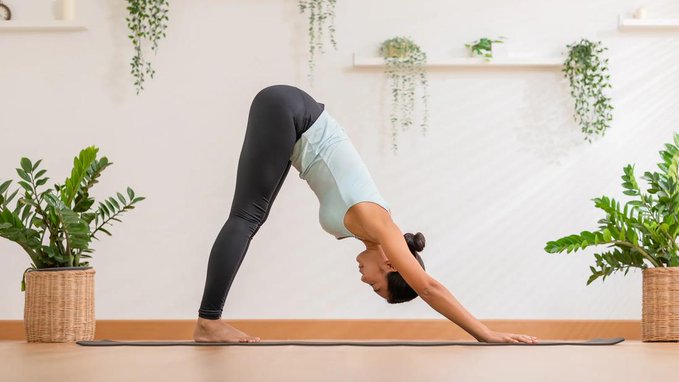
You do downward facing dog by putting your body into an inverted V-shape (or pyramid), as if there were a straight line that runs through the top of your head up your spine and out of your butt toward the ceiling.
How to properly do downward facing dog
Facing dog pose won’t usually be your first movement when doing yoga. Before trying it, it’s best to loosen up your muscles and joints and find ways to work it into your overall yoga practice.
Once you’re warmed up and ready to go, follow these steps:
- Start on all fours with your hands shoulder-width apart and your knees in line directly behind your hips.
- Spreading your fingers wide, press down into your hands and tuck your toes (almost like you’re using them to grip the floor beneath you).
- As you exhale, bring your hips up and back, as if there’s a string pulling your butt toward the ceiling, so your body creates an inverted V-shape (or pyramid).
- Focus on straightening your back, not rounding it, so your head and neck are relaxed between your upper arms. It helps to focus on pressing through your arms to “push” the ground away from you and keep your arms active.
- Engage your core muscles and pull your tummy in.
- Keep your legs straight and, if it’s comfortable for you to do so, try to drop your heels down to the floor.
- Adjust your posture by shifting your weight between your hands and feet until you sink comfortably into the position.
- Hold this pose for 10 to 15 seconds at a time, making sure to breathe throughout.
- For a more relaxed stretch, bend your knees a little and readjust your posture as needed.
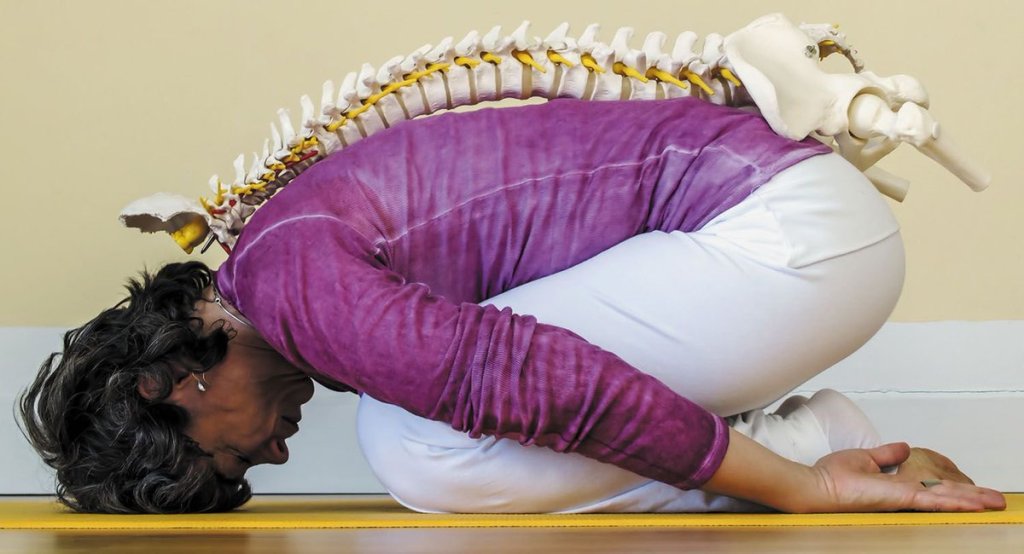
- When you’re done, exhale and move into your next pose or slowly lower yourself to the floor to enter child’s pose.
“Downward facing dog isn’t about keeping your heels on the ground or holding it for long periods of time,” clarifies Lorring. “It’s really about making sure you’re going to a place that’s comfortable for you, so you can adjust your body as often as you need in this pose.”
Facing dog pose variations
If you have a hard time getting down on your hands and knees, try this wall variation:
- Face the wall and place both your hands out in front of you so your palms are flat and your fingers are stretched out.
- Keeping your head and back straight and your hands on the wall in front of you, slowly walk your legs backward.
- As you move, walk your hands down the wall so you hinge at your hips and look directly at the floor.
- Keeping your head and neck relaxed, hold this pose for 10 to 15 seconds before slowly returning to stand.
- If you feel stress or discomfort in your wrists, you can modify by rolling up a towel or the edge of your yoga mat and placing the roll under the heels of your hands. This will decrease some of that pressure.
For a more challenging stretch that deeply engages your hips and hamstrings:
- While in the downward facing dog position, lift one leg up and stretch it toward the ceiling.
- For a deeper stretch, bend your outstretched leg back and over your body, so your knee is facing away from you.
- Repeat this process with the other leg, holding the pose for as long as you feel comfortable on either side.
Downward dog benefits
Downward facing dog provides a full body stretch, while also strengthening and working your:
Adho Mukha Svanasana helps improve your flexibility and control, and provides you a moment of active rest. It also increases blood flow to your head and upper body when you’re in the inverted V position. But because of this, you should talk to your yoga instructor, athletic trainer or healthcare provider before starting this position if you have:
“Facing dog pose tries to improve flexibility but also builds the strength to control that flexibility,” says Lorring. “If you’re feeling excessive stress to a certain part of your body, then you’re probably holding the pose for too long or you’re trying to go into a range that you’re not ready for. We can help you get there.”