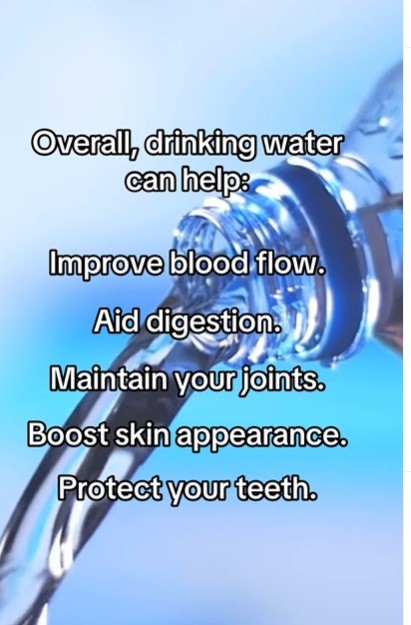
Staying hydrated is essential, but how much water do you really need each day? While the general goal is around 100 ounces for men and 73 ounces for women, your actual needs depend on factors like activity, weather and metabolism. Water isn’t just about quenching thirst—it supports blood flow, glowing skin and even your teeth. Learn more in the Cleveland Clinic Diet App, located in the app store today!5d
Here’s a medical news story that combines a common habit (drinking coffee) with a common skin condition (rosacea) — and it even has a happy ending.
What is rosacea?
Rosacea is probably something you’ve seen plenty of times and didn’t know what it was — or perhaps you have it yourself. It’s that pink or red discoloration on the cheeks some people have, especially fair-haired women. Sometimes there are small bumps that may look a bit like acne. If you look closely (after asking nicely for permission, of course), you’ll see tiny blood vessels just under the surface of the skin. In more severe cases it may involve the chin, forehead, nose, ears, and other skin surfaces. It may affect the eyes, eyelids, and cause thickening of the skin over the nose.
We don’t know what causes rosacea. However, there are theories that it may be, at least in part, a genetic condition, as it can run in families. Because the immune system seems to be involved in the inflammation of rosacea, and because other autoimmune conditions (such as type 1 diabetes and multiple sclerosis) may accompany rosacea, abnormal immune function may play a role. Medications (such as topical anti-inflammatory drugs) and antibiotics can reduce redness and inflammation but there is no cure. Many people seem to be able to reduce signs of rosacea by modifying their diet to avoid foods that trigger it.
Rosacea affects more than 14 million people in the US, including some celebrities, such as Bill Clinton and the late Diana, Princess of Wales. And while it’s not dangerous, it can have a significant cosmetic impact. Caffeine, sun exposure, spicy foods, and hormonal factors are thought to be able to trigger rosacea’s development or make it worse once present. Yet, a new study challenges the connection between caffeine and rosacea.
More coffee, less rosacea?
A recent study analyzed health data from surveys provided to nearly 83,000 women over more than a decade and found that:
Those drinking four or more cups of coffee per day were significantly less likely to report a diagnosis of rosacea than those who drank little or no coffee.
Those drinking less than four cups of coffee each day were also less likely to have rosacea, though the protective effect was smaller.
Consumption of decaffeinated coffee was not linked to a lower incidence of rosacea.
Caffeine intake from other foods or beverages (such as chocolate or tea) had no impact on the likelihood of developing rosacea.
Why is this important?
These results of this study are more than just interesting observations. If other research can confirm the findings, it could lead to a better understanding of why rosacea develops in some people and not in others. Because inflammation driven by the immune system is thought to play an important role in rosacea, insights into the development of this disease could extend to advances in other autoimmune disorders. Finally, many people with rosacea (or a family history of the disease) who like coffee may avoid it because of the widespread notion that coffee will make it worse. The findings of this study suggest that’s not true.
There are always caveats
As with all research of this type, there are limitations to consider. For example, this study
only included women, most of whom were white — we’ll need additional studies of men and other ethnic groups to know if the findings extend widely.
relied on health surveys and study participants’ memories regarding past diagnoses and diet; such survey data may not always be accurate.
found a link between higher coffee consumption with lower risk of rosacea, but it cannot determine whether coffee consumption actually caused a reduction in rosacea.
The bottom line
Coffee is one of the mostly widely consumed beverages on the planet, and it’s also among the most widely studied. While it can cause problems for some people (such as heartburn, tremor, or palpitations), it’s a source of pleasure and enjoyment for millions. In addition, coffee has been linked with a number of health benefits, ranging from reductions in type 2 diabetes and liver cancer to greater longevity. From this latest research, it appears that you can add the possible prevention of rosacea to the list.
About the Author
Robert H. Shmerling, MD, Senior Faculty Editor, Harvard Health Publishing; Editorial Advisory Board Member, Harvard Health Publishing
Dr. Robert H. Shmerling is the former clinical chief of the division of rheumatology at Beth Israel Deaconess Medical Center (BIDMC), and is a current member of the corresponding faculty in medicine at Harvard Medical School. … See Full Bio
Staying hydrated is essential, but how much water do you really need each day? While the general goal is around 100 ounces for men and 73 ounces for women, your actual needs depend on factors like activity, weather and metabolism. Water isn’t just about quenching thirst—it supports blood flow, glowing skin and even your teeth. Learn more in the Cleveland Clinic Diet App, located in the app store today!5d
Here’s a medical news story that combines a common habit (drinking coffee) with a common skin condition (rosacea) — and it even has a happy ending.
What is rosacea?
Rosacea is probably something you’ve seen plenty of times and didn’t know what it was — or perhaps you have it yourself. It’s that pink or red discoloration on the cheeks some people have, especially fair-haired women. Sometimes there are small bumps that may look a bit like acne. If you look closely (after asking nicely for permission, of course), you’ll see tiny blood vessels just under the surface of the skin. In more severe cases it may involve the chin, forehead, nose, ears, and other skin surfaces. It may affect the eyes, eyelids, and cause thickening of the skin over the nose.
We don’t know what causes rosacea. However, there are theories that it may be, at least in part, a genetic condition, as it can run in families. Because the immune system seems to be involved in the inflammation of rosacea, and because other autoimmune conditions (such as type 1 diabetes and multiple sclerosis) may accompany rosacea, abnormal immune function may play a role. Medications (such as topical anti-inflammatory drugs) and antibiotics can reduce redness and inflammation but there is no cure. Many people seem to be able to reduce signs of rosacea by modifying their diet to avoid foods that trigger it.
Rosacea affects more than 14 million people in the US, including some celebrities, such as Bill Clinton and the late Diana, Princess of Wales. And while it’s not dangerous, it can have a significant cosmetic impact. Caffeine, sun exposure, spicy foods, and hormonal factors are thought to be able to trigger rosacea’s development or make it worse once present. Yet, a new study challenges the connection between caffeine and rosacea.
More coffee, less rosacea?
A recent study analyzed health data from surveys provided to nearly 83,000 women over more than a decade and found that:
Those drinking four or more cups of coffee per day were significantly less likely to report a diagnosis of rosacea than those who drank little or no coffee.
Those drinking less than four cups of coffee each day were also less likely to have rosacea, though the protective effect was smaller.
Consumption of decaffeinated coffee was not linked to a lower incidence of rosacea.
Caffeine intake from other foods or beverages (such as chocolate or tea) had no impact on the likelihood of developing rosacea.
Why is this important?
These results of this study are more than just interesting observations. If other research can confirm the findings, it could lead to a better understanding of why rosacea develops in some people and not in others. Because inflammation driven by the immune system is thought to play an important role in rosacea, insights into the development of this disease could extend to advances in other autoimmune disorders. Finally, many people with rosacea (or a family history of the disease) who like coffee may avoid it because of the widespread notion that coffee will make it worse. The findings of this study suggest that’s not true.
There are always caveats
As with all research of this type, there are limitations to consider. For example, this study
only included women, most of whom were white — we’ll need additional studies of men and other ethnic groups to know if the findings extend widely.
relied on health surveys and study participants’ memories regarding past diagnoses and diet; such survey data may not always be accurate.
found a link between higher coffee consumption with lower risk of rosacea, but it cannot determine whether coffee consumption actually caused a reduction in rosacea.
The bottom line
Coffee is one of the mostly widely consumed beverages on the planet, and it’s also among the most widely studied. While it can cause problems for some people (such as heartburn, tremor, or palpitations), it’s a source of pleasure and enjoyment for millions. In addition, coffee has been linked with a number of health benefits, ranging from reductions in type 2 diabetes and liver cancer to greater longevity. From this latest research, it appears that you can add the possible prevention of rosacea to the list.
About the Author
Robert H. Shmerling, MD, Senior Faculty Editor, Harvard Health Publishing; Editorial Advisory Board Member, Harvard Health Publishing
Dr. Robert H. Shmerling is the former clinical chief of the division of rheumatology at Beth Israel Deaconess Medical Center (BIDMC), and is a current member of the corresponding faculty in medicine at Harvard Medical School. … See Full Bio
You’re putting your skin at risk of sunburn and even skin cancer when you pour on the beer
There’s a good chance you think a golden tan makes you look more youthful, healthier and more attractive. And while there are many ways to achieve a faux bronzed glow — think bronzers and sunless tanners — you might be tempted to try an unsafe way to get a suntan.
One of those dangerous trends is beer tanning (yes, you read that right!). The idea is that slathering your skin with beer will help you achieve a darker, richer color.
You can thank social media for spreading the concept of beer tanning. But just because TikTok or Instagram influencers are touting the results of something, doesn’t mean it’s not without its risks (Exhibit A: nasal tanning sprays).
Dermatologist Shilpi Khetarpal, MD, explains how beer tanning can harm your skin and why it’s so important to protect your skin.
What is beer tanning?
Instead of using sunscreen, people use the alcoholic beverage like a tanning lotion. The thought process is that hops — one of the main ingredients in beer — increase your skin’s melatonin.
But Dr. Khetarpal wants to be very clear: There’s no scientific evidence to support this theory. And you’re leaving your skin in a vulnerable state with no SPF protection at all.
“There are many issues with this idea of beer tanning,” she continues. “The first is that if you’re not applying sunscreen, the skin is not protected. It can also increase the chance of getting a sunburn and lead to an increased risk of skin cancer.”
The dangers of beer tanning
Just like tanning beds and using tanning oil, beer tanning is NOT good for you or your skin.
Beer tanning essentially leaves your skin unprotected. Exposure to the sun’s harmful ultraviolet (UV) rays can lead to:
And what might be most concerning is who is following this unsafe idea.
“The age groups that are following these trends are 15- to 34-year-olds — and it’s also the same age group that has a disproportionately high incidence of skin cancer and that’s on the rise,” says Dr. Khetarpal. “We’re going to see that number go up as this population ages.”
The facts on skin cancer — the most commonly diagnosed cancer in the U.S. — paint a scary picture. Here are just some of the alarming stats:
In 2024, the number of deaths from melanoma is expected to increase by 3.8%.
“We get most of our sun exposure during childhood, so it’s important to wear sunscreen every day even if you’re not outdoors,” stresses Dr. Khetarpal. “The increase in UV exposure and tanning beds is why there is an increase in skin cancer that we’re seeing today.”
Wear UPF clothing. UPF stands for “ultraviolet protection factor,” and certain clothing is made with UPF fabric.
Wear a hat and sunglasses. These items can help protect your face, the back of your neck and your eyes.
Seek out shady areas when you can. Not only can this help protect your skin, but getting a break from the hot sun can also reduce your chance of dehydration and heat stroke. Consider an umbrella when you’re at the beach.
“Protect your skin by wearing an SPF 30 or higher daily, regardless of the weather and reapply every 2 hours when outdoors,” reiterates Dr. Khetarpal. “You can also look for UPF-protected clothing and seek shade during peak sun hours, which are typically 10 a.m. to 2 p.m.”
Bottom line?
Sure, we get it — our society is somewhat obsessed with suntans and having a bronzed look. But as with most viral trends, beer tanning can do more harm than good. Ask yourself: Is having a tan worth the potential for skin cancer down the road?
And if you’re like us and Dr. Khetarpal, not only is it not worth the risk of sunburn, heat exhaustion and skin cancer, but it’s also not worth the mess it creates.
“Besides everything we know about ultraviolet exposure and putting yourself outside without sunscreen, why would you want to put something sticky and messy all over your body?” asks Dr. Khetarpal.
You’re putting your skin at risk of sunburn and even skin cancer when you pour on the beer
There’s a good chance you think a golden tan makes you look more youthful, healthier and more attractive. And while there are many ways to achieve a faux bronzed glow — think bronzers and sunless tanners — you might be tempted to try an unsafe way to get a suntan.
One of those dangerous trends is beer tanning (yes, you read that right!). The idea is that slathering your skin with beer will help you achieve a darker, richer color.
You can thank social media for spreading the concept of beer tanning. But just because TikTok or Instagram influencers are touting the results of something, doesn’t mean it’s not without its risks (Exhibit A: nasal tanning sprays).
Dermatologist Shilpi Khetarpal, MD, explains how beer tanning can harm your skin and why it’s so important to protect your skin.
What is beer tanning?
Instead of using sunscreen, people use the alcoholic beverage like a tanning lotion. The thought process is that hops — one of the main ingredients in beer — increase your skin’s melatonin.
But Dr. Khetarpal wants to be very clear: There’s no scientific evidence to support this theory. And you’re leaving your skin in a vulnerable state with no SPF protection at all.
“There are many issues with this idea of beer tanning,” she continues. “The first is that if you’re not applying sunscreen, the skin is not protected. It can also increase the chance of getting a sunburn and lead to an increased risk of skin cancer.”
The dangers of beer tanning
Just like tanning beds and using tanning oil, beer tanning is NOT good for you or your skin.
Beer tanning essentially leaves your skin unprotected. Exposure to the sun’s harmful ultraviolet (UV) rays can lead to:
And what might be most concerning is who is following this unsafe idea.
“The age groups that are following these trends are 15- to 34-year-olds — and it’s also the same age group that has a disproportionately high incidence of skin cancer and that’s on the rise,” says Dr. Khetarpal. “We’re going to see that number go up as this population ages.”
The facts on skin cancer — the most commonly diagnosed cancer in the U.S. — paint a scary picture. Here are just some of the alarming stats:
In 2024, the number of deaths from melanoma is expected to increase by 3.8%.
“We get most of our sun exposure during childhood, so it’s important to wear sunscreen every day even if you’re not outdoors,” stresses Dr. Khetarpal. “The increase in UV exposure and tanning beds is why there is an increase in skin cancer that we’re seeing today.”
Wear UPF clothing. UPF stands for “ultraviolet protection factor,” and certain clothing is made with UPF fabric.
Wear a hat and sunglasses. These items can help protect your face, the back of your neck and your eyes.
Seek out shady areas when you can. Not only can this help protect your skin, but getting a break from the hot sun can also reduce your chance of dehydration and heat stroke. Consider an umbrella when you’re at the beach.
“Protect your skin by wearing an SPF 30 or higher daily, regardless of the weather and reapply every 2 hours when outdoors,” reiterates Dr. Khetarpal. “You can also look for UPF-protected clothing and seek shade during peak sun hours, which are typically 10 a.m. to 2 p.m.”
Bottom line?
Sure, we get it — our society is somewhat obsessed with suntans and having a bronzed look. But as with most viral trends, beer tanning can do more harm than good. Ask yourself: Is having a tan worth the potential for skin cancer down the road?
And if you’re like us and Dr. Khetarpal, not only is it not worth the risk of sunburn, heat exhaustion and skin cancer, but it’s also not worth the mess it creates.
“Besides everything we know about ultraviolet exposure and putting yourself outside without sunscreen, why would you want to put something sticky and messy all over your body?” asks Dr. Khetarpal.
WebMD@WebMD·2h Both the juice and the peel of lemons or limes could help lower blood pressure. Squeeze some in your water before and after you go for a walk. 🍋 https://wb.md/3rYF7JC








 Healthaware