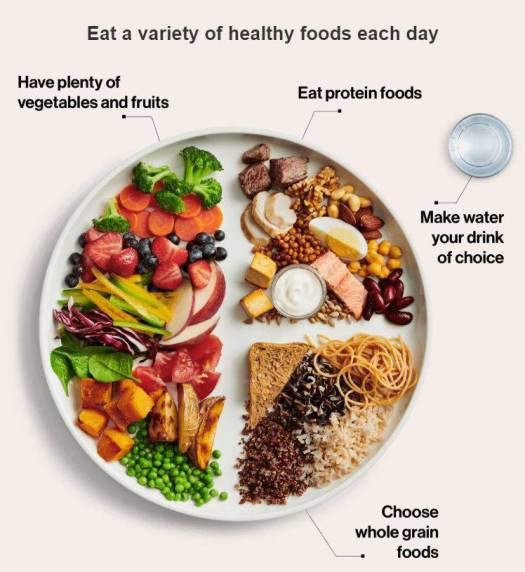
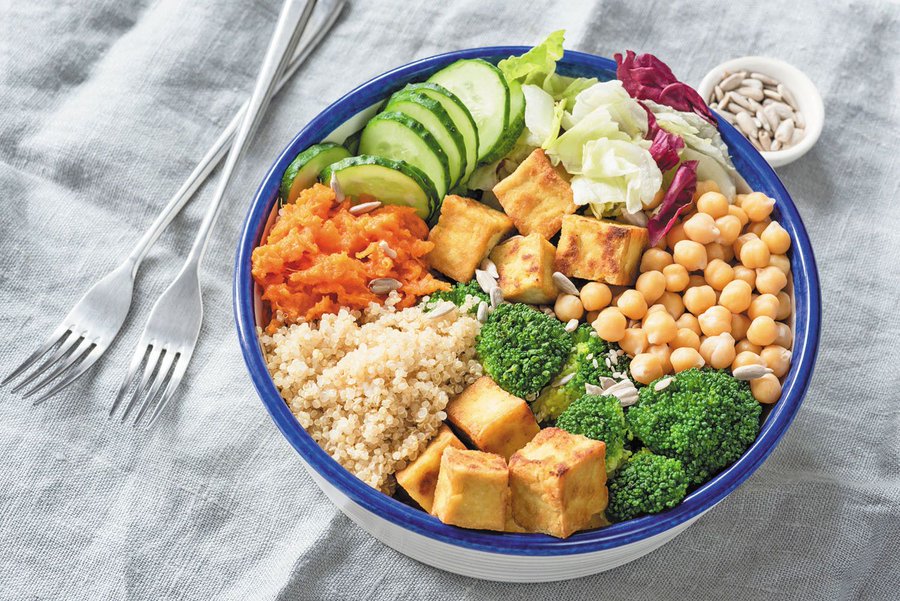
JUST RELEASED: Canada’s long-anticipated revised food guide! Specifically, the new food guide suggests eating plenty of vegetables and fruits, choosing whole grains, and eating “protein foods.” The image is an example recommended daily diet. Learn more: https://food-guide.canada.ca/en/
There is something special about using fresh peas straight out of the pod. This recipe was inspired by our root-to-stem philosophy of cooking: It always seems like such a waste to throw away the pea pods, but they are relatively inedible. To make use of the pods, we’ve pureed them into a spring-fresh pasta sauce. Remember: Pasta for breakfast is a great choice, especially when it’s loaded with healthful pea protein.
Ingredients
Kosher salt 1 pound fresh English peas in pods (yields about 1 cup shelled peas and about 3 ½ cups pods) ½ cup water ¼ cup extra-virgin olive oil 2 small spring onions or 2 large shallots, chopped 2 small spring garlic (whites) or 3 garlic cloves, minced 2 tablespoons Greek yogurt (optional) 12 ounces whole grain pasta, such as linguine, rigatoni or small shells Freshly ground black pepper ¼ cup fresh mint (peppermint preferred), thinly sliced Espelette pepper to taste (optional) Grated Parmigiano Reggiano cheese (optional)
Directions
Bring a large pot of water to boil and add enough salt to make it salty like the sea.
Meanwhile, wash the peas. Pull off the stem ends: remove the peas and place in a small bowl. Reserve the pods.
Fill a bowl with cold water. Set aside. Add the empty pea pods to the pot of boiling water and cook for 5 minutes. Using a slotted spoon or spider, remove the pods from the boiling water and transfer to the bowl of cold water to cool quickly. Drain the pea pods and add to a Vitamix or high-speed blender. Add ½ cup water. Puree for 2 to 3 minutes.
Place a fine strainer over a bowl and add the pea pod puree to the strainer, pressing on the solids to release as much puree as possible into the bowl. Discard the solids in the strainer. Reserve the puree in the bowl; season to taste with salt and pepper.
Cook the pasta in the pot of boiling water until al dente, stirring occasionally.
Meanwhile, in a large skillet, heat the olive oil over medium heat. Add the onions and garlic and sauté until softened, 3 to 4 minutes. Add the peas and cook 2 minutes. Stir in the reserved pea pod puree and Greek yogurt, if using, and cook just until heated through. (Don’t overcook the peas or puree as the sauce will turn brown).
Using tongs or a spider, transfer the pasta to the sauce in the skillet. Toss until combined. Season to taste with salt and pepper. Transfer the pasta to the serving bowl. Add the basil and mint. Serve with Espelette pepper and grated Parmigiano Reggiano cheese, if using.
Nutritional info (per serving)
Makes 4 servings.
Calories: 554 kcal Total fiber: 12 g Soluble fiber: 0.1 g Protein: 15.5 g Total fat: 16.7 g Saturated fat: 2.0 g Healthy fats: 12.1 g Carbohydrates: 84 g Sugars: 7.7 g Added sugars: 0 g Sodium: 178 mg Potassium: 433 mg Magnesium: 14 mg Calcium: 134 mg
Source: The What to Eat When Cookbook by Michael F. Roizen, MD, Michael Crupain, MD, MPH and Jim Perko, Sr, CEC, AAC.
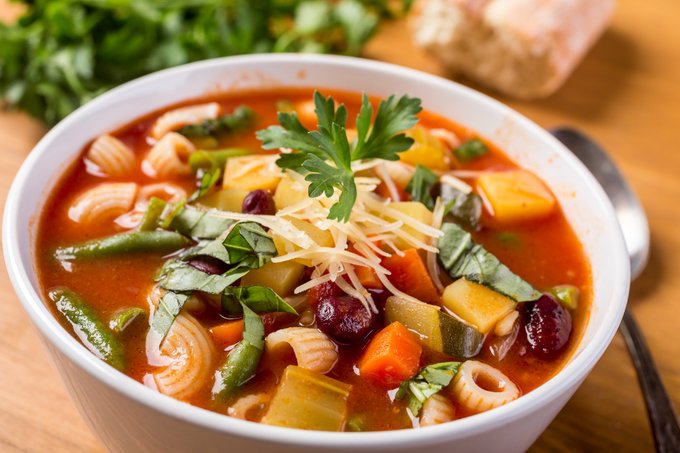
This tasty, filling Italian soup is packed with nutrient-rich veggies, heart-healthy olive oil and fiber-friendly legumes. Enjoy it all year long — let it warm you up in the fall and winter, and fill it with fresh vegetables from your garden in the summer.
Ingredients
¼ cup olive oil
1 clove garlic, minced (or 1/8 teaspoon garlic powder)
1-1/3 cups coarsely chopped onion
1-1/2 cups coarsely chopped celery and leaves
1 can (6 ounces) tomato paste
1 tablespoon chopped fresh parsley
1 cup sliced carrots, fresh or frozen
4-3/4 cups shredded cabbage
1 can (16 ounces) tomatoes, cut up
1 cup canned red kidney beans, drained and rinsed
1-1/2 cups frozen peas
1-1/2 cups fresh green beans
Dash hot sauce
11 cups water
2 cups uncooked spaghetti noodles
Directions
Heat oil in a 4-quart saucepan.
Add garlic, onion and celery, and sauté about 5 minutes.
Add all remaining ingredients except spaghetti, and stir until ingredients are well-mixed.
Bring to a boil. Reduce heat, cover and simmer about 45 minutes or until vegetables are tender.
Add uncooked spaghetti and simmer 2-3 minutes only.
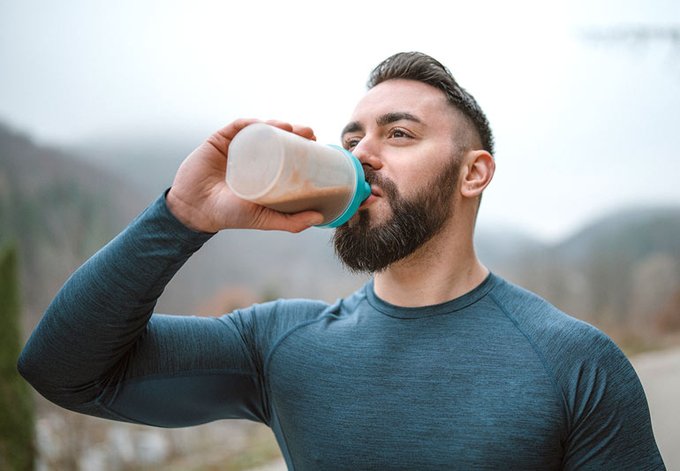
Protein is ideal for the repair and growth of your muscles. So whether you’re focused on building muscle or losing weight, protein shakes can help supplement your diet and achieve your wellness goals.
While how much protein you need to consume varies based on your goals, the recommended daily allowance is 0.8 grams per kilogram of body weight or about 20 grams per meal. If you’re looking to build muscle you may need to up that amount by almost double.
But there are different beliefs on when to drink a protein shake: pre-workout or post-workout?
Registered dietitian Kate Patton, MEd, RD, CCSD, LD, explains why timing matters and what to consider when using protein shakes.
Why timing matters
Your body is primed after a workout to use any protein you consume. It comes down to understanding your body’s metabolism and knowing whether your body is in a catabolic or anabolic state.
If your body is in a catabolic state, this is when it’s breaking down your muscles. Your body will be in this state while you’re exercising or working out.
And then when your body is in an anabolic state — or post-workout — your body is rebuilding and refueling.
“That window of time after you exercise is when your body is just a little bit more efficient at utilizing that protein to help build that muscle, versus while you’re exercising and you’re breaking down the muscle and stressing the muscle.”
It’s key to get enough protein after exercising to help repair your muscles, which are worn down.
“And if you’re trying to build muscle, then you need that protein to help you,” explains Patton. “The building blocks of our cells are amino acids and we get amino acids from protein.”
Should you drink a protein shake before or after a workout?
While there’s a lot of debates on the best time to drink your protein shake, Patton recommends that you drink it after your workout.
“You’re going to get the most bang for your buck,” she says. “Your body is going to utilize more of that protein. It’s fast and easy to consume so it gets into your body to really help you recover and refuel.”
Ideally, you want to consume your protein shake within an hour after exercise.
When to drink for weight loss
If you’re looking to lose weight, you still want to drink your protein shake after your workout.
“The benefit of the protein shake is that it takes longer to digest so it tends to keep you feeling full,” says Patton. “If you’re trying to lose weight, your body is going to use that protein efficiently to preserve your muscle and break down body fat instead for energy.”
Can you drink a shake on an empty stomach?
In most cases, drinking a protein shake on an empty stomach won’t cause you any harm.
“If it’s a tough workout, try hydrating with water during the workout first and then drink the protein shake after,” says Patton.
If you’re lactose-intolerant, you will want to pay attention to the amount of lactose that may be added to shakes and powders before you consume.
“Protein shakes that are specially formulated more for weight loss are low in carbs,” says Patton. “Those may have what are called sugar alcohols and those can potentially cause bloating and gas. Be sure to read the ingredient list.”
Are protein shakes healthy?
Yes, a protein shake can be a great option to replace a snack between your meals and to drink after a workout.
There are different forms of protein shakes. Here are a few examples:
Whey protein. “If you’re lactose-intolerant, there’s a form of whey protein called whey protein isolate,” says Patton. “The isolate is almost 100% lactose-free so it’s really tolerable for people with a lactose intolerance.”
Soy protein. Patton says this is a good choice to use if you’re vegan because it’s a complete protein, meaning it has all the essential amino acids.
Pea protein. You may want to opt for a plant-based version like pea protein if you’re vegan or vegetarian.
Hemp protein. Another plant-based version, this one is also great for vegans and vegetarians.
Protein shakes, as with any other dietary supplement, aren’t regulated by the Food and Drug Administration. So Patton says it’s important to make sure whatever protein shake you use is clean and safe. There are a few third-party companies like NSF International and Informed Choice that test ingredients.
“Some protein shakes use a proprietary blend and the manufacturer doesn’t list what the ingredients are,” says Patton. “I would avoid any brand that uses the phrase ‘proprietary blend.’”
Whatever your goals, it’s best to focus on the amount of protein you need each day. You want to space out your protein intake throughout the day for maximum results — and adding a protein shake to your routine post-workout can be a good way to reach that target.
This bright, lemony salad is best made with farm-fresh asparagus, which is dressed and eaten raw here. Look for stalks that are bright green with firm, tight tips. Buy it in season from your local farmer’s market.
Ingredients
1 pound fresh asparagus 1 tablespoon fresh lemon juice 1 tablespoon extra virgin olive oil 1/8 teaspoon kosher salt 1/8 teaspoon freshly ground black pepper 1 tablespoon shaved Parmesan 8 fresh chives
Directions
Break off the tough ends of the asparagus and discard.
Use a vegetable peeler to make long thin ribbons of asparagus. Add to a large bowl.
In a small bowl, whisk together the lemon juice, oil, salt and pepper. Drizzle over the asparagus ribbons and toss well.
Use the vegetable peeler to shave thin strips from a piece of fresh Parmesan (about 1 tablespoon) and scatter over the salad.
Use kitchen shears to cut the chives into small pieces directly over the salad.
Nutritional information (per serving)
Makes 4 servings
Calories: 70 Total fat: 4 g Saturated fat: 1 g Trans fat: 0 g Protein: 4 g Total carbohydrate: 7 g Fiber: 3 g Sugar: 2 g Cholesterol: 0 mg Sodium: 95 mg
—Developed by Sara Quessenberry for Cleveland Clinic Wellness.
There is something special about using fresh peas straight out of the pod. This recipe was inspired by our root-to-stem philosophy of cooking: It always seems like such a waste to throw away the pea pods, but they are relatively inedible. To make use of the pods, we’ve pureed them into a spring-fresh pasta sauce. Remember: Pasta for breakfast is a great choice, especially when it’s loaded with healthful pea protein.
Ingredients
Kosher salt 1 pound fresh English peas in pods (yields about 1 cup shelled peas and about 3 ½ cups pods) ½ cup water ¼ cup extra-virgin olive oil 2 small spring onions or 2 large shallots, chopped 2 small spring garlic (whites) or 3 garlic cloves, minced 2 tablespoons Greek yogurt (optional) 12 ounces whole grain pasta, such as linguine, rigatoni or small shells Freshly ground black pepper ¼ cup fresh mint (peppermint preferred), thinly sliced Espelette pepper to taste (optional) Grated Parmigiano Reggiano cheese (optional)
Directions
Bring a large pot of water to boil and add enough salt to make it salty like the sea.
Meanwhile, wash the peas. Pull off the stem ends: remove the peas and place in a small bowl. Reserve the pods.
Fill a bowl with cold water. Set aside. Add the empty pea pods to the pot of boiling water and cook for 5 minutes. Using a slotted spoon or spider, remove the pods from the boiling water and transfer to the bowl of cold water to cool quickly. Drain the pea pods and add to a Vitamix or high-speed blender. Add ½ cup water. Puree for 2 to 3 minutes.
Place a fine strainer over a bowl and add the pea pod puree to the strainer, pressing on the solids to release as much puree as possible into the bowl. Discard the solids in the strainer. Reserve the puree in the bowl; season to taste with salt and pepper.
Cook the pasta in the pot of boiling water until al dente, stirring occasionally.
Meanwhile, in a large skillet, heat the olive oil over medium heat. Add the onions and garlic and sauté until softened, 3 to 4 minutes. Add the peas and cook 2 minutes. Stir in the reserved pea pod puree and Greek yogurt, if using, and cook just until heated through. (Don’t overcook the peas or puree as the sauce will turn brown).
Using tongs or a spider, transfer the pasta to the sauce in the skillet. Toss until combined. Season to taste with salt and pepper. Transfer the pasta to the serving bowl. Add the basil and mint. Serve with Espelette pepper and grated Parmigiano Reggiano cheese, if using.
Nutritional info (per serving)
Makes 4 servings.
Calories: 554 kcal Total fiber: 12 g Soluble fiber: 0.1 g Protein: 15.5 g Total fat: 16.7 g Saturated fat: 2.0 g Healthy fats: 12.1 g Carbohydrates: 84 g Sugars: 7.7 g Added sugars: 0 g Sodium: 178 mg Potassium: 433 mg Magnesium: 14 mg Calcium: 134 mg
Source: The What to Eat When Cookbook by Michael F. Roizen, MD, Michael Crupain, MD, MPH and Jim Perko, Sr, CEC, AAC.
Did you know Greek yogurt has almost twice as much protein as other yogurts? It takes longer to leave your stomach, keeping you satisfied longer. Plus, you burn more calories digesting protein than carbs. https://wb.md/3BbzYB7
Did you know Greek yogurt has almost twice as much protein as other yogurts? It takes longer to leave your stomach, keeping you satisfied longer. Plus, you burn more calories digesting protein than carbs. https://wb.md/3BbzYB7





 Healthaware