Strong core muscles help you maintain good posture.@ClevelandClinic

cleveland evrything starts wit your core

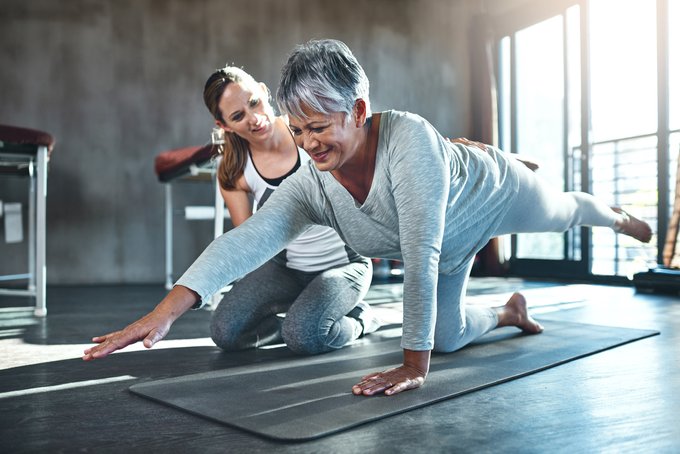
If you’re planning to start an exercise program and wondering where to begin, start with your core first, says physical therapist Brittany Smith, DPT. People often think of the core muscles as being the abdominal muscles, but the core includes the muscles in the abdomen, back and hips, all working together as a group.

“The core muscles provide stability for the entire body as it moves,” says Smith. “These muscles are activated when you stand up, turn, bend, reach, twist, stoop and move in most other ways. Everything starts with your core.”

Strong core muscles help you maintain good posture, while weak ones can lead to slouching and slumping. Poor posture can be a cause of aches and pain, especially in the back.

Getting started with your core

To get your core muscles in shape, you need to exercise.

“Our bodies were made to move, so any physical activity is really important,” says Smith.

She recommends these specific core-strengthening exercises below.

The first one engages the deep muscles in the abdomen, called the transverse abdominis. “These muscles help hold us in a better position to stabilize our core, thereby stabilizing our arms and legs,” says Smith.

“The more you work on these muscles, the more it will become second nature to hold these muscles tight when you’re lifting grocery bags, doing yard work or any other kind of physical activity,” says Smith. This will help support your body.

Other muscles that tend to be weak are the gluteus maximus in the buttocks, and the gluteus medius and gluteus minimus on the side of the hip. The bridge and clamshell exercises can help strengthen these muscles.

Smith emphasizes that getting the proper position of these exercises correct is more important than the number of repetitions you do. “It’s better to take your time, maybe do fewer reps, but with better quality,” she says. For that reason, it can be helpful to have the guidance of a physical therapist to get started.

Move on from the core

Core exercises are the starting point of overall fitness because you need to hold those muscles engaged while you strengthen other muscles, such as the biceps in the arms or the quadriceps in the legs.

Smith suggests setting short-term goals (for about a month) and then more long-term goals. Once you have achieved short-term goals, such as getting around more easily, add other types of weight-training or resistance exercises to build muscle elsewhere.

With any exercise you do, always listen to your body, warns Smith. If you have pain other than muscle burn, take it easy. Reduce the number of repetitions, the weight or the duration of the exercises. Then build up gradually. “You don’t have to be in pain to make gains,” she says.

Beginner exercises for core strength

For each of the following, work up to one to two sets of 10 to 15 repetitions once a day.

Abdominal bracing

Lie on your back with your knees bent and feet flat on the floor. Contract your abdominal muscles, and press the arch of your back down toward the floor, pulling your belly button toward your spine. Hold for 5 to 10 seconds. Make sure your lower back stays flat on the floor. Relax and repeat.

Bridge

Lie on your back with your knees bent and feet flat on the floor with your arms at your sides. Squeeze your abdominal and buttocks muscles, push your heels into the floor and slowly lift your buttocks and hips off the floor. Keep your back straight. Hold for 5 to 10 seconds.

Clamshell

Lie on your side with knees bent in line with your hips and back, draw up the top knee while keeping contact of your feet together as shown. Don’t let your pelvis roll back during the lifting movement. Hold for 5 seconds.

https://health.clevelandclinic.org/planning-to-start-exercising-start-with-your-core-first/?utm_medium=social&utm_source=twitter&utm_campaign=cc+tweets

Movement is Life 🧬@HealthBlackrock 💜❤️

Blackrock Health

@HealthBlackrock

·

Risk Factors For Heart Disease & Stroke

A risk factor is anything that raises a person’s chance of developing heart disease and stroke. There are two types of risk factor, those you cannot change and, thankfully, those you can change. Up to 80% of the incidence of heart disease can be prevented by modifying risk factors such as high cholesterol, high blood pressure and smoking. The more risk factors you have, the more likely it is that you will develop heart disease and stroke. Focus on the risk factors you can change, because even if you have a family history, there is a lot you can do to reduce your risk.

Risk Factors You Can Change

The risk factors for heart disease and stroke that you can change are all related to your lifestyle. Simple changes, for example what you eat, can help reduce high cholesterol. Taking more exercise can help reduce your blood pressure and your weight. You should be aware of your risk factors for heart disease and stroke and take the necessary steps to reduce them.

Recipe: Decadent Chocolate Soufflé @ClevelandClinic

Recipe: Decadent Chocolate Soufflé

Only 130 calories per serving, this dessert deserves your attention

These delicious chocolate soufflés are perfect to share with someone you love. With rich chocolate flavor, strawberries, cinnamon and even a little Cognac, they’re only 130 calories per serving.

Ingredients

  • 1 1/2 teaspoons oil-based butter spread
  • 1/4 cup plus 1 teaspoon sugar
  • 1 tablespoon ground toasted almonds
  • 3 tablespoons plus 1 teaspoon good-quality cocoa
  • 4 large egg whites, at room temperature
  • 1 tablespoon Cognac
  • 1/2 teaspoon ground cinnamon
  • 1 teaspoon confectioners’ sugar
  • 12 strawberries, thinly sliced

Directions

  1. Preheat the oven to 375 F. Grease/flour 6-ounce soufflé cups with the butter spread.
  2. Mix 1 teaspoon of the sugar with the almonds and 1 teaspoon of the cocoa. Coat the insides and bottom of the soufflé cups, tapping the sides to make sure they’re coated.
  3. Heat 2 tablespoons water with the remaining sugar in a nonstick small pot. Bring to a simmer and cook until the mixture becomes thick, about 3 minutes. Don’t allow the syrup to color. Brush down the sugar crystals on the sides of the pot with a wet pastry brush as the syrup thickens. It will be quite hot so be careful.
  4. While the sugar and water are simmering, beat the egg whites until stiff in the bowl of an electric mixer. While continuing to beat, slowly and carefully pour the hot sugar syrup into the egg whites. Add the 3 tablespoons cocoa, the Cognac and cinnamon.
  5. Spoon the mixture into the soufflé cups, tapping each cup to make sure there aren’t any bubbles. Bake for 10 minutes, or until the soufflés are puffed and set. Immediately place the soufflés on dessert plates. Sift the confectioners’ sugar over the tops and decorate each plate with 3 strawberries. Serve immediately.

Nutrition information (per serving)

Makes 4 servings

Calories: 130
Total fat: 2.5g
Saturated fat: 0.5g
Protein: 5g
Carbohydrates: 24g
Dietary fiber: 3g
Cholesterol: 0mg
Sodium: 70mg
Potassium: 260mg

 Cleveland Clinic Healthy Heart Lifestyle Guide and Cookbook (© 2007 Broadway Books).

Recipe: Oats and Honey Bread @ClevelandClinic

A homemade loaf that’s sure to impress and please

Whether you prefer to knead and bake it in the oven or use your bread machine, this recipe will be a family favorite. Oats and honey add flavor to traditional bread, giving it an extra kick your family will love. The quick oats are healthy and add texture, and the slight honey-sweet taste is sure to please!

Ingredients

  • 2 teaspoons of olive oil
  • 1 3/4 cups warm unsweetened almond milk (directions below)
  • 2 packets of active dry yeast (or 1 1/2 tablespoons)
  • 3/4 cup quick-cooking oats and additional for garnish
  • 1/3 cup honey
  • 3 tablespoons vegetable oil
  • 2 1/2 teaspoon salt
  • 5 cups (approximately) all-purpose flour, or try a 50/50 white and wheat blend for added flavor
  • 1 large egg

Directions

  1. In a microwave, heat the almond milk for 1 minute and 40 seconds to be very hot. Let sit to reduce temperature to 100 to 110 F.
  2. In a stand mixer or large bowl, add the hot milk. Stir in beaten egg, honey, oil and salt. Add the yeast until fully mixed.
  3. Slowly add in the flour and oats to the large bowl of liquid mixture and mix on low. You should use a bread attachment if using a stand mixer.
  4. Coat another large bowl with oil. Transfer the dough to the bowl and turn it to coat.
  5. Cover with plastic wrap (spray with cooking spray first to keep it from sticking to the dough), then cover with a kitchen towel and let rise at room temperature until doubled in volume, about 1 hour.
  6. Oil two 8 1/2-inch x 4 1/2-inch x 2 1/2-inch loaf pans.
  7. Punch down the dough; shape into two loaves. Place one loaf in each pan. Cover and let rise in a warm, draft-free area until almost doubled in volume, about 20 minutes.
  8. Preheat oven to 350 F.
  9. Sprinkle with additional oats for garnish.
  10. Bake until brown on top and tester inserted into center comes out clean, about 40 minutes. Cool completely.

Ingredient health benefits

  • Olive oil: This cooking oil is as ancient as it is nutritious! Olive oil is loaded with unsaturated fats that help raise your “good” (HDL) cholesterol while lowering your “bad” (LDL) cholesterol. And they’re not the only heart-healthy compounds in town: Polyphenols help lower inflammation that can lead to certain health conditions in the long term, like cancer and heart disease. Olive oil also has fat-soluble vitamins like vitamins D and K for strong bones and muscles and healthy blood cells.
  • Almond milk: A vegan-friendly dairy alternative, almond milk is a good source of vitamin E. This essential vitamin is famous for promoting your skin health, but it protects your eyes and immune system from disease as well. Almond milk is also a lower-calorie option compared to cow’s milk, if that’s something you want to keep an eye on.
  • Oats: When it comes to whole grains, oats just may be the GOAT (grain of all time). They’re packed with digestion-friendly fiber and vitamin B5 (pantothenic acid) to help lower your cholesterol levels, making them a smart choice for your heart. Oats also have magnesium, phosphorus, iron and copper, and they’re high in manganese. These minerals are important for supporting the health of your bones and blood cells. You can also count on vitamin B1 (thiamine) and zinc to keep your immune cells in peak condition.
  • Honey: It’s not just a sweet deal for your taste buds! Honey is full of antioxidants like polyphenols and flavonoids, which help protect your cells from harm. They do this by fighting inflammation and free radicals, tiny particles that damage your cells and contribute to disease if left unchecked.
  • Eggs: They’re easy to add to just about any recipe, but are eggs really all they’re cracked up to be? The answer is yes! Scrambled or sunny side up, eggs are a meat-free complete protein, meaning that they have you covered for all the amino acids you need and can’t make by yourself. They also have luteinvitamin A, vitamin E and vitamin B12 — all of which are excellent for your eyes and vision! And last but not least, there’s vitamin B9 (folate) for head-to-toe health.

Nutrition information (per serving)

Serving = 2 slices
Each loaf makes about 16 slices

Calories: 100
Protein: 2.2 g
Carbohydrates: 16 g
Fat: 2.2 g (0.7 g saturated fat)
Calcium: 6 mg

From beginner’s yoga to more advanced practices, downward dog is one of the most popular poses. Physical therapist Dawn Lorring, PT, MPT @ClevelandClinic

Take a ‘Paws’ With Downward Dog

This transitional and restorative yoga pose provides a full-body stretch

Physical therapist Dawn Lorring, PT, MPT, walks through the steps of how to do downward dog correctly and shares its many benefits.

From beginner’s yoga to more advanced practices, downward dog is one of the most popular poses…with a few common misconceptions.

Rounding your back, placing your feet too far apart or putting too much weight into your wrists can all create a deeper stretch than intended — which increases your risk of injury.

Physical therapist Dawn Lorring, PT, MPT, walks through the steps of how to do downward dog correctly and shares its many benefits.

What is downward dog?

Downward dog (also known as downward facing dog, facing dog pose or Adho Mukha Svanasana in Sanskrit) is a foundational yoga pose. It’s often used as a transition between movements, like sun salutations. It’s also a form of active resting, active stretching and strengthening. This allows you to check in with yourself and re-evaluate your intentions during your practice.

You do downward facing dog by putting your body into an inverted V-shape (or pyramid), as if there were a straight line that runs through the top of your head up your spine and out of your butt toward the ceiling.

How to properly do downward facing dog

Facing dog pose won’t usually be your first movement when doing yoga. Before trying it, it’s best to loosen up your muscles and joints and find ways to work it into your overall yoga practice.

Once you’re warmed up and ready to go, follow these steps:

  1. Start on all fours with your hands shoulder-width apart and your knees in line directly behind your hips.
  2. Spreading your fingers wide, press down into your hands and tuck your toes (almost like you’re using them to grip the floor beneath you).
  3. As you exhale, bring your hips up and back, as if there’s a string pulling your butt toward the ceiling, so your body creates an inverted V-shape (or pyramid).
  4. Focus on straightening your back, not rounding it, so your head and neck are relaxed between your upper arms. It helps to focus on pressing through your arms to “push” the ground away from you and keep your arms active.
  5. Engage your core muscles and pull your tummy in.
  6. Keep your legs straight and, if it’s comfortable for you to do so, try to drop your heels down to the floor.
  7. Adjust your posture by shifting your weight between your hands and feet until you sink comfortably into the position.
  8. Hold this pose for 10 to 15 seconds at a time, making sure to breathe throughout.
  9. For a more relaxed stretch, bend your knees a little and readjust your posture as needed.
  10. When you’re done, exhale and move into your next pose or slowly lower yourself to the floor to enter child’s pose.

“Downward facing dog isn’t about keeping your heels on the ground or holding it for long periods of time,” clarifies Lorring. “It’s really about making sure you’re going to a place that’s comfortable for you, so you can adjust your body as often as you need in this pose.”

Facing dog pose variations

If you have a hard time getting down on your hands and knees, try this wall variation:

  1. Face the wall and place both your hands out in front of you so your palms are flat and your fingers are stretched out.
  2. Keeping your head and back straight and your hands on the wall in front of you, slowly walk your legs backward.
  3. As you move, walk your hands down the wall so you hinge at your hips and look directly at the floor.
  4. Keeping your head and neck relaxed, hold this pose for 10 to 15 seconds before slowly returning to stand.
  5. If you feel stress or discomfort in your wrists, you can modify by rolling up a towel or the edge of your yoga mat and placing the roll under the heels of your hands. This will decrease some of that pressure.

For a more challenging stretch that deeply engages your hips and hamstrings:

  1. While in the downward facing dog position, lift one leg up and stretch it toward the ceiling.
  2. For a deeper stretch, bend your outstretched leg back and over your body, so your knee is facing away from you.
  3. Repeat this process with the other leg, holding the pose for as long as you feel comfortable on either side.

Downward dog benefits

Downward facing dog provides a full body stretch, while also strengthening and working your:

Adho Mukha Svanasana helps improve your flexibility and control, and provides you a moment of active rest. It also increases blood flow to your head and upper body when you’re in the inverted V position. But because of this, you should talk to your yoga instructor, athletic trainer or healthcare provider before starting this position if you have:

“Facing dog pose tries to improve flexibility but also builds the strength to control that flexibility,” says Lorring. “If you’re feeling excessive stress to a certain part of your body, then you’re probably holding the pose for too long or you’re trying to go into a range that you’re not ready for. We can help you get there.”

.@highgrovegarden at @the_rhs Chelsea #chelseaflowershow

https://www.instagram.com/reel/C3-KNCtKl3M/?igsh=MWRhNHQza214c3FvMg==

highgrovegarden's profile picture

highgrovegarden

🌷🌼 Garden Tour tickets are now available to book!🌼🌷🌻

Join one of our experienced guides and discover the history, inspiration, and unique organic management behind this incredible series of gardens.

Tours take place on selected dates between April and September. You can choose from a classic Garden Tour, an extra-special Champagne Afternoon Tea Tour, a more exclusive Private Tour for up to eight guests, or a Private Champagne Tea Tour.

Book now: link in bio

The sale of Highgrove products, garden tours and events support and enable the work of The King’s Foundation, a charity founded by King Charles III.

Formed in 1986, the Foundation is inspired by His Majesty’s vision to build communities where people, places and the planet can coexist in harmony.


****
#highgrove #highgrovegardens #kingsfoundation #kingcharlesIII #princesfoundation #thecotswolds #visitglosuk #discovergloucestershire #royalgarden #englishgarden #visitbritain #explore_britain #uktourism #gardentours #highgrovegardentours #gardentours2024 #champagnetea #privategardentour #gardeninspiration #gardensofinstagram