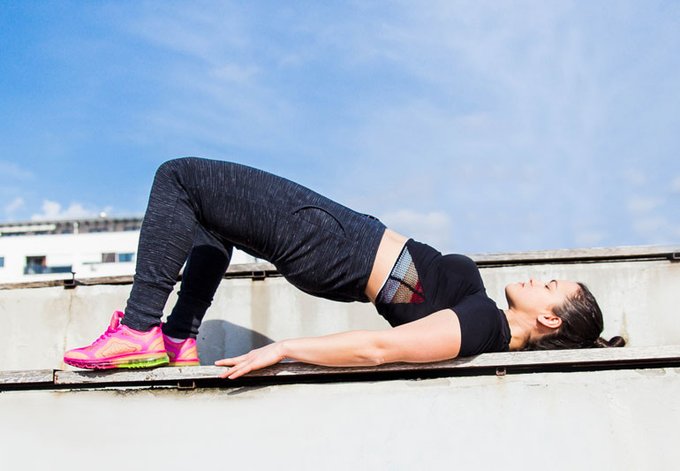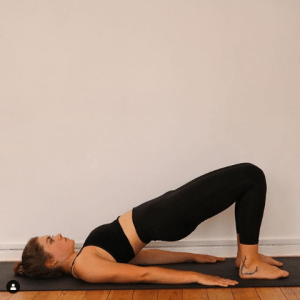
BRIDGING: one of a physiotherapist’s staple exercises #healthaware #movement

cesca.physio's profile picture

BRIDGING
This is the one of a physiotherapist’s staple exercises, if in doubt…bridge 😂
Often when children are growing, they come up against muscle imbalances, which can lead to aches and pains. A great way to protect the body from these is by keeping a good strong core!
A tip my top #pilates friend showed me was rolling the spine up and down, like a Mexican wave 👋🏽! Go follow @excellencepilates @excellence_physio for much more specialist knowledge than I can offer 😁

HOW TO INCORPORATE INTO PLAY
Get some lovely little cars or animals on one side of your child, and help them create a BRIDGE (!) so you can drive those little toys under their bottom!
….a traffic jam can always help you keep their bottom up for little longer 😏

#physio #pilateslovers #physiotherapy #physiotherapist #yoga #yogateacher #paediatricphysiotherapy #childrensphysio #normaldevelopment #strongcore #therapyplay

Physiotherapy helps us move better. 💪#health #mobility

thementorgroupofficial

Follow

Liked by kannu_18v

Movement is life, and physical therapy helps us move better. 💪#health #mobility #thementorgroup

thementorgroupofficial

Follow

Liked by kannu_18v

A Strong Core is Your Best Guard Against Back Pain @ClevelandClinic

A group of adults are taking a fitness class together at the gym. They are working out on exercise mats and are holding a high plank.

A physical therapist answers your questions

If you suffer from back pain, you’ve probably heard that strengthening your core can bring you some relief. But is this always true? And if so, how do you do it? We spoke with Cleveland Clinic physical therapist Patti Mariano, DPT, to find out.

Q: What is your core?

When most people think about the core of the body they think of the abdominal or six-pack area just below the ribs. While the abdominal muscles are an important part of the core, we consider other areas important, too.

Your core includes:

  • Front abdominal muscles — the rectus abdominis
  • Muscles along the side of your body — the internal and external obliques
  • A deep muscle that wraps around the front — the transverse abdominis
  • Muscles in your back that are located between your spine bones and run along your spine — the erector spinae and multifidi

Your core also includes the diaphragm and muscles of the pelvic floor. I also consider the gluteal muscles as core muscles.

Q: What is the relationship between core strength and back pain?

Theoretically, if your muscles around the low back are weak, your body will rely more on passive structures, including ligaments — the tissue that connects bone to bone — as well as the spinal bones or discs, which lie between the spinal bones, for stability, which can cause pain.

But some studies have shown that specific core exercises are not any more beneficial than general exercise for low back pain. What we know is that exercise in general can help, and focusing on core muscles may provide some additional benefit.

Q: What are some exercises for the core that can help with back pain?

Here are my top five:

  • Side plank — Sit on the floor with your right hand below your right shoulder and feet stacked. Lift your body, keeping your legs long, abdominals engaged and feet stacked. Hold. Repeat on the other side. You can modify this pose by dropping your bottom knee to the floor for extra support.
  • Plank — Kneel on all fours. Pull in your abdomen and step your feet behind you until your legs are straight. Keep your hands directly under your shoulders and your neck straight. Hold your abdomen and legs tight and avoid letting your lower back sag. Hold and breathe for 30 seconds. You can modify this pose by lowering your knees.
  • Bird dog — Kneel  on all fours. Reach one arm out in front of you, draw in your abdomen, and extend the opposite leg long behind you. Repeat on the other side.
  • Scissors — Lie on your back with your arms at your sides and legs pointed straight into the air above your hips. Press your lower back into the mat and tighten your abdomen. Lower your right leg until it’s a few inches from the floor. Raise your right leg up and begin lowering your left leg the same way. Continue switching right and left.
  • Upward dog — Lie face down with head slightly lifted and hands palm-down under your shoulders. Point your toes. Exhale, then press through your hands and the tops of your feet and raise your body and legs up until your arms are straight and your body and legs are off the ground. Keep your neck relaxed and long and thigh muscles tight as you hold and breathe.

For the plank exercises, start by holding them for 15 seconds to 30 seconds. For bird dog and scissors, try three sets of eight or 10 repetitions. For upward dog, do one set of 10 repetitions.

Q: Can you injure your back by trying to strengthen your core?

Any exercise performed incorrectly, whether it is core-strengthening or otherwise, has the potential to cause discomfort.

Twisting exercises or even incorrectly completing the exercises cited above can cause pain in the low back. But it’s highly unlikely that one repetition of an exercise will seriously harm your body, unless it’s an exercise using a very heavy weight.

The best way to keep your body safe is to listen to body cues such as pain during and immediately after an exercise, and the next day after exercising.

Q: When should you talk to a doctor about your back pain?

If any of the following is going on you should consult with your doctor:

  • Your pain has been going on for longer than a month, despite resting from activities that make it worse.
  • Your pain is getting worse.
  • Your pain wakes you from sleep.
  • Your pain is in your low back but also is going down one or both of your legs.
  • You notice that one leg is becoming weaker than the other.

Q: Where should you turn if you want help in creating a plan to address back pain?

Physical therapists train as musculoskeletal experts — they are the experts on muscles, bones and human movement. These professionals are the most qualified, aside from an orthopedic doctor, to assess back problems.

Since there are many factors that impact low back pain and many types of low back pain, it is a good idea to visit at least one time with a physical therapist for an evaluation and subsequent plan of care. This will give you an individually tailored plan with exercises that progress safely.

The idea of core strengthening, while beneficial, is just one piece of the low back pain puzzle.

https://health.clevelandclinic.org/2016/07/strong-core-best-guard-back-pain/


Movement is life, and physical therapy helps us move better. Happy World Physical Therapy Day! 💪#physiotherapy

thementorgroupofficial

Follow

Liked by kannu_18v

A Strong Core is Your Best Guard Against Back Pain @ClevelandClinic

A group of adults are taking a fitness class together at the gym. They are working out on exercise mats and are holding a high plank.

A physical therapist answers your questions

If you suffer from back pain, you’ve probably heard that strengthening your core can bring you some relief. But is this always true? And if so, how do you do it? We spoke with Cleveland Clinic physical therapist Patti Mariano, DPT, to find out.

Q: What is your core?

When most people think about the core of the body they think of the abdominal or six-pack area just below the ribs. While the abdominal muscles are an important part of the core, we consider other areas important, too.

Your core includes:

  • Front abdominal muscles — the rectus abdominis
  • Muscles along the side of your body — the internal and external obliques
  • A deep muscle that wraps around the front — the transverse abdominis
  • Muscles in your back that are located between your spine bones and run along your spine — the erector spinae and multifidi

Your core also includes the diaphragm and muscles of the pelvic floor. I also consider the gluteal muscles as core muscles.

Q: What is the relationship between core strength and back pain?

Theoretically, if your muscles around the low back are weak, your body will rely more on passive structures, including ligaments — the tissue that connects bone to bone — as well as the spinal bones or discs, which lie between the spinal bones, for stability, which can cause pain.

But some studies have shown that specific core exercises are not any more beneficial than general exercise for low back pain. What we know is that exercise in general can help, and focusing on core muscles may provide some additional benefit.

Q: What are some exercises for the core that can help with back pain?

Here are my top five:

  • Side plank — Sit on the floor with your right hand below your right shoulder and feet stacked. Lift your body, keeping your legs long, abdominals engaged and feet stacked. Hold. Repeat on the other side. You can modify this pose by dropping your bottom knee to the floor for extra support.
  • Plank — Kneel on all fours. Pull in your abdomen and step your feet behind you until your legs are straight. Keep your hands directly under your shoulders and your neck straight. Hold your abdomen and legs tight and avoid letting your lower back sag. Hold and breathe for 30 seconds. You can modify this pose by lowering your knees.
  • Bird dog — Kneel  on all fours. Reach one arm out in front of you, draw in your abdomen, and extend the opposite leg long behind you. Repeat on the other side.
  • Scissors — Lie on your back with your arms at your sides and legs pointed straight into the air above your hips. Press your lower back into the mat and tighten your abdomen. Lower your right leg until it’s a few inches from the floor. Raise your right leg up and begin lowering your left leg the same way. Continue switching right and left.
  • Upward dog — Lie face down with head slightly lifted and hands palm-down under your shoulders. Point your toes. Exhale, then press through your hands and the tops of your feet and raise your body and legs up until your arms are straight and your body and legs are off the ground. Keep your neck relaxed and long and thigh muscles tight as you hold and breathe.

For the plank exercises, start by holding them for 15 seconds to 30 seconds. For bird dog and scissors, try three sets of eight or 10 repetitions. For upward dog, do one set of 10 repetitions.

Q: Can you injure your back by trying to strengthen your core?

Any exercise performed incorrectly, whether it is core-strengthening or otherwise, has the potential to cause discomfort.

Twisting exercises or even incorrectly completing the exercises cited above can cause pain in the low back. But it’s highly unlikely that one repetition of an exercise will seriously harm your body, unless it’s an exercise using a very heavy weight.

The best way to keep your body safe is to listen to body cues such as pain during and immediately after an exercise, and the next day after exercising.

Q: When should you talk to a doctor about your back pain?

If any of the following is going on you should consult with your doctor:

  • Your pain has been going on for longer than a month, despite resting from activities that make it worse.
  • Your pain is getting worse.
  • Your pain wakes you from sleep.
  • Your pain is in your low back but also is going down one or both of your legs.
  • You notice that one leg is becoming weaker than the other.

Q: Where should you turn if you want help in creating a plan to address back pain?

Physical therapists train as musculoskeletal experts — they are the experts on muscles, bones and human movement. These professionals are the most qualified, aside from an orthopedic doctor, to assess back problems.

Since there are many factors that impact low back pain and many types of low back pain, it is a good idea to visit at least one time with a physical therapist for an evaluation and subsequent plan of care. This will give you an individually tailored plan with exercises that progress safely.

The idea of core strengthening, while beneficial, is just one piece of the low back pain puzzle.

https://health.clevelandclinic.org/2016/07/strong-core-best-guard-back-pain/


Injuries from falls can have a big impact on elderly adults’ ability to remain independent. A few simple PT exercises can improve strength and balance to reduce the risk.@HopkinsMedicine

Lora Durkin, Physical Therapist

Lora Stutzman, PT

Falls can have very serious consequences as we age. Each year, more than 25 percent of adults 65 or older have a fall, and 3 million are treated in emergency departments for fall injuries, according to the Centers for Disease Control and Prevention.

Fall Risks

The risk of falling in older adults is usually related to combination of factors, including:

  • Balance and/or walking problems. Balance can be affected by vision changes, vestibular problems and altered sensation in the feet.
  • The use of multiple medications. Studies indicate that when individuals take five or more medicines, the risk of falls increases.
  • Home hazards (including dim lighting and trip hazards)
  • Positional low blood pressure (such as orthostatic hypotension, when blood pressure drops upon standing.
  • Feet and footwear issues

Falls often occur in the bathroom when sitting or standing from the toilet or shower, or at night in a dark bedroom when getting up quickly and tripping on the way to the bathroom.

Exercises to Prevent Falls

While it’s not possible to completely prevent a fall, exercises that focus on balance and strength training can reduce the risk of falling. “We treat elderly adults for injuries sustained from falls, and other patients who feel unsteady while walking or standing and are fearful of falling,” says Lora Stutzman, a physical therapist with the Johns Hopkins Rehabilitation Network. “These exercises can help improve balance and build strength to help prevent future falls.”

For older adults, activities such as squatting, standing up from a chair and walking may be difficult or cause them to feel unsteady, which increases their risk of falling. The following exercises are intended for those who have a low risk of fall and are able to stand on their own without support from others. Always talk to your doctor or physical therapist first before starting new exercises, especially if you have weak balance.

Stutzman demonstrates two exercises below.

Sit-to-Stand Exercise

The sit-to-stand exercise builds leg strength and improves body mechanics and balance, which are all important in reducing falls.

1. Start by sitting on a sturdy chair of standard height, and make sure that it won’t slide or roll. You should be able to sit comfortably with your feet flat on the ground. Have a sturdy support surface in front of you, such as a countertop, so that you can reach to it for support if you start to feel unsteady when standing. Scoot forward so your buttocks is positioned at the front of the seat.

2. Lean your chest forward over your toes, shifting your body weight forward. Squeeze your gluteal muscles and slowly rise to a stable standing position.

Physical therapist showing exercises for fall prevention

3. Slowly sit back down to the starting position and repeat 10 times.

4. If necessary, place your hands on the arms or seat of the chair and push through your hands to help stand and sit. The goal is to not use your hands at all.

Physical therapist showing exercises for fall prevention

Perform 10 repetitions, twice a day. For an advanced version, hold hand weights to add resistance.

If you have pain in your knees, back or hips, discontinue and talk to your doctor or physical therapist.

Balance Exercise

This series of exercises helps if your balance is unsteady. Make sure you have someone with you in case you lose balance.

To begin, stand in a corner or have a kitchen counter in front of you to reach out to in case you start losing balance.

1. Feet apart: Stand with feet about shoulder-width apart, eyes open, and hold steady for 10 seconds, working your way up to 30 seconds.

If you find yourself swaying or reaching for the wall or counter frequently, just keep working on this exercise until you can do it with minimal swaying or support. Once you can hold this position firmly for 30 seconds, move on to the next exercise.

2. Feet together: Stand with feet together, eyes open, and hold steady 10 seconds, working your way up to 30 seconds.

Physical therapist showing exercises for fall prevention

Once you can do this exercise for 30 seconds with minimal swaying or support, move on to the next one.

3. One foot: Stand on one foot, eyes open, and hold steady 10 seconds, working up to 30 seconds. Switch to the other foot.

4. Eyes closed: If you can perform the first three exercises safely and with little support, try to do each one with your eyes closed. Hold for 10 seconds, working up to 30 seconds.

Physical therapist showing exercises for fall prevention

The goal for each exercise is to hold the position for 10 seconds and progress to 30 seconds, five repetitions (including five per leg on the one-foot exercise), two times a day.

Additional Steps to Prevent Falls

Remember, it’s important to talk to your doctor or physical therapist about fall prevention.

  • Discuss medications and changes in your exercise routine.
  • Tell your doctor if you fall.
  • Ask a friend or family member to help check your home for trip hazards.

“Keep in mind,” adds Stutzman, “it is always best to have company at home with you while exercising for safety and supervision and in case you need help.”