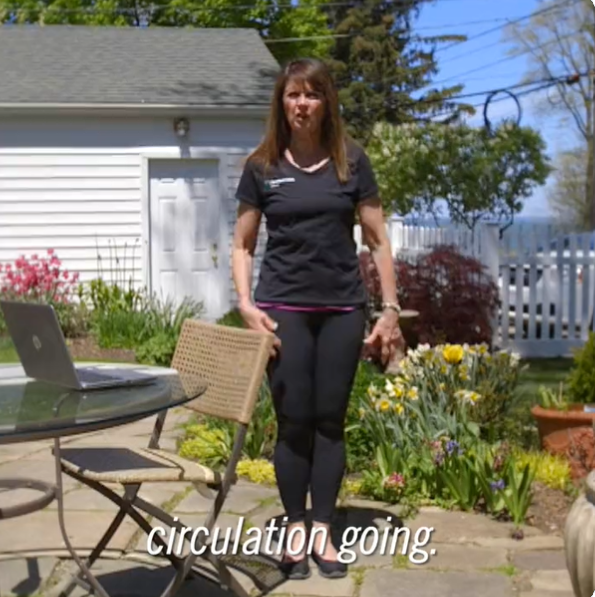
Taking short breaks throughout the day is beneficial for your mental health. Cleveland Clinic Yoga Program Manager, Judi Bar, shares stretches you can do wherever you are. #NationalYogaMonthpic.twitter.com/hIdb9GQkQO
Walking is key to reducing the risk of death, according to a new study
By Annabel Rackham
BBC News
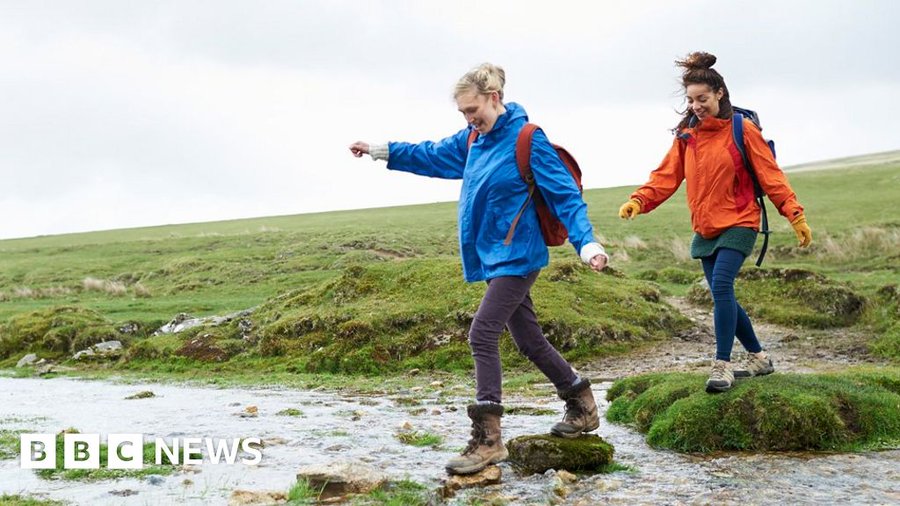
It has long been touted that 10,000 steps a day is the magic number you need to stay fit and healthy – but a new study shows fewer than 5,000 may be enough to see a benefit.
The analysis of more than 226,000 people around the world showed 4,000 was enough to start reducing the risk of dying prematurely of any cause.
Just over 2,300 is enough to benefit the heart and blood vessels.
The more you do, the more health benefits are seen, researchers said.
Every extra 1,000 steps beyond the 4,000 reduced the risk of dying early by 15% up to 20,000 steps.
The team from the Medical University of Lodz in Poland and Johns Hopkins University School of Medicine in the US found the walking benefits applied to all genders and ages, regardless of where they lived.
However, the biggest benefits were seen among the under-60s.
Prof Maciej Banach, from the Lodz university, said that while the number of advanced drugs for treatment was growing, they were not the only answer.
“I believe we should always emphasise that lifestyle changes, including diet and exercise, which was a main hero of our analysis, might be at least as, or even more, effective in reducing cardiovascular risk and prolonging lives,” he said.
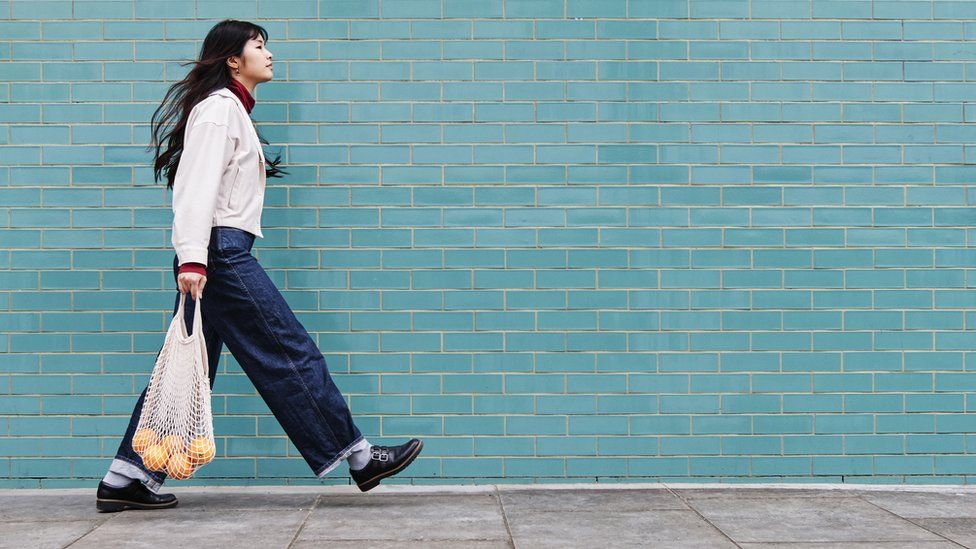
Image caption, Walking to the shops instead of driving, or getting off the bus a couple of stops early could be enough to make a difference
According to World Health Organization data, insufficient physical activity is responsible for 3.2 million deaths each year – the fourth most frequent cause worldwide.
Honey Fine, a personal trainer and instructor for global fitness company Barry’s, emphasises the problems that come from sitting down too much.
“It can slow your metabolism and affect muscle growth and strength, which can cause aches and pains,” she tells the BBC.
“Sitting down for too long can also cause all sorts of back problems, we find this a lot with people with office jobs, that their backs are constantly put in a stressed compressed position which causes a lot more problems later on in life.”
She explains the importance of non-exercise activity thermogenesis – also known as Neat, “which in simple terms is everything we do that uses energy and burns calories”.
“Tasks like standing, carrying shopping, washing the floors, hoovering, pacing whilst walking on the phone – it’s all the little things that make us more active that help us to burn calories more efficiently,” she said.
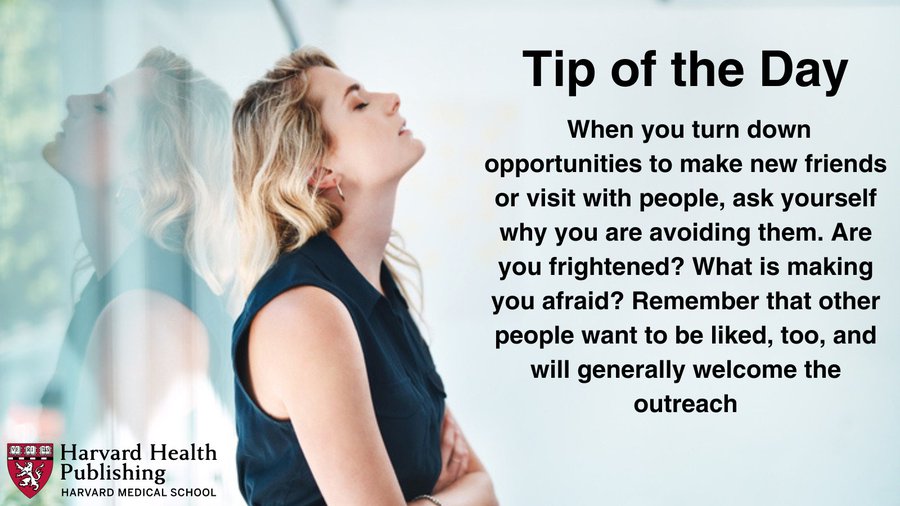
Overcome social apprehensions: When you turn down opportunities to make new friends or visit people, ask yourself why you are avoiding them. Remember that other people want to be liked, too, and will generally welcome the outreach. — #HarvardHealthTipoftheDay#HarvardHealth
Overcome social apprehensions: When you turn down opportunities to make new friends or visit people, ask yourself why you are avoiding them. Remember that other people want to be liked, too, and will generally welcome the outreach. — #HarvardHealthTipoftheDay#HarvardHealth
Falls can have very serious consequences as we age. Each year, more than 25 percent of adults 65 or older have a fall, and 3 million are treated in emergency departments for fall injuries, according to the Centers for Disease Control and Prevention.
Fall Risks
The risk of falling in older adults is usually related to combination of factors, including:
Balance and/or walking problems. Balance can be affected by vision changes, vestibular problems and altered sensation in the feet.
The use of multiple medications. Studies indicate that when individuals take five or more medicines, the risk of falls increases.
Home hazards (including dim lighting and trip hazards)
Positional low blood pressure (such as orthostatic hypotension, when blood pressure drops upon standing.
Feet and footwear issues
Falls often occur in the bathroom when sitting or standing from the toilet or shower, or at night in a dark bedroom when getting up quickly and tripping on the way to the bathroom.
Exercises to Prevent Falls
While it’s not possible to completely prevent a fall, exercises that focus on balance and strength training can reduce the risk of falling. “We treat elderly adults for injuries sustained from falls, and other patients who feel unsteady while walking or standing and are fearful of falling,” says Lora Stutzman, a physical therapist with the Johns Hopkins Rehabilitation Network. “These exercises can help improve balance and build strength to help prevent future falls.”
For older adults, activities such as squatting, standing up from a chair and walking may be difficult or cause them to feel unsteady, which increases their risk of falling. The following exercises are intended for those who have a low risk of fall and are able to stand on their own without support from others. Always talk to your doctor or physical therapist first before starting new exercises, especially if you have weak balance.
Stutzman demonstrates two exercises below.
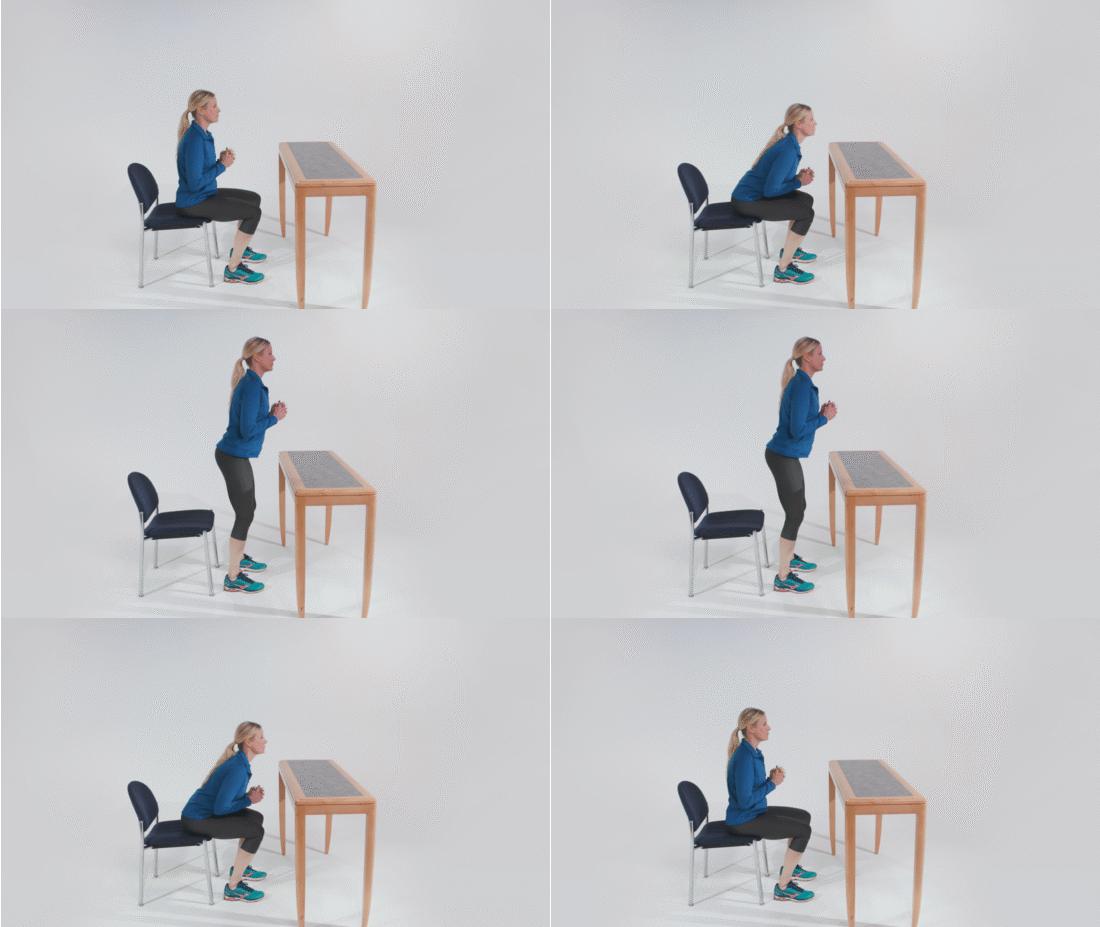
Sit-to-Stand Exercise
The sit-to-stand exercise builds leg strength and improves body mechanics and balance, which are all important in reducing falls.
1. Start by sitting on a sturdy chair of standard height, and make sure that it won’t slide or roll. You should be able to sit comfortably with your feet flat on the ground. Have a sturdy support surface in front of you, such as a countertop, so that you can reach to it for support if you start to feel unsteady when standing. Scoot forward so your buttocks is positioned at the front of the seat.
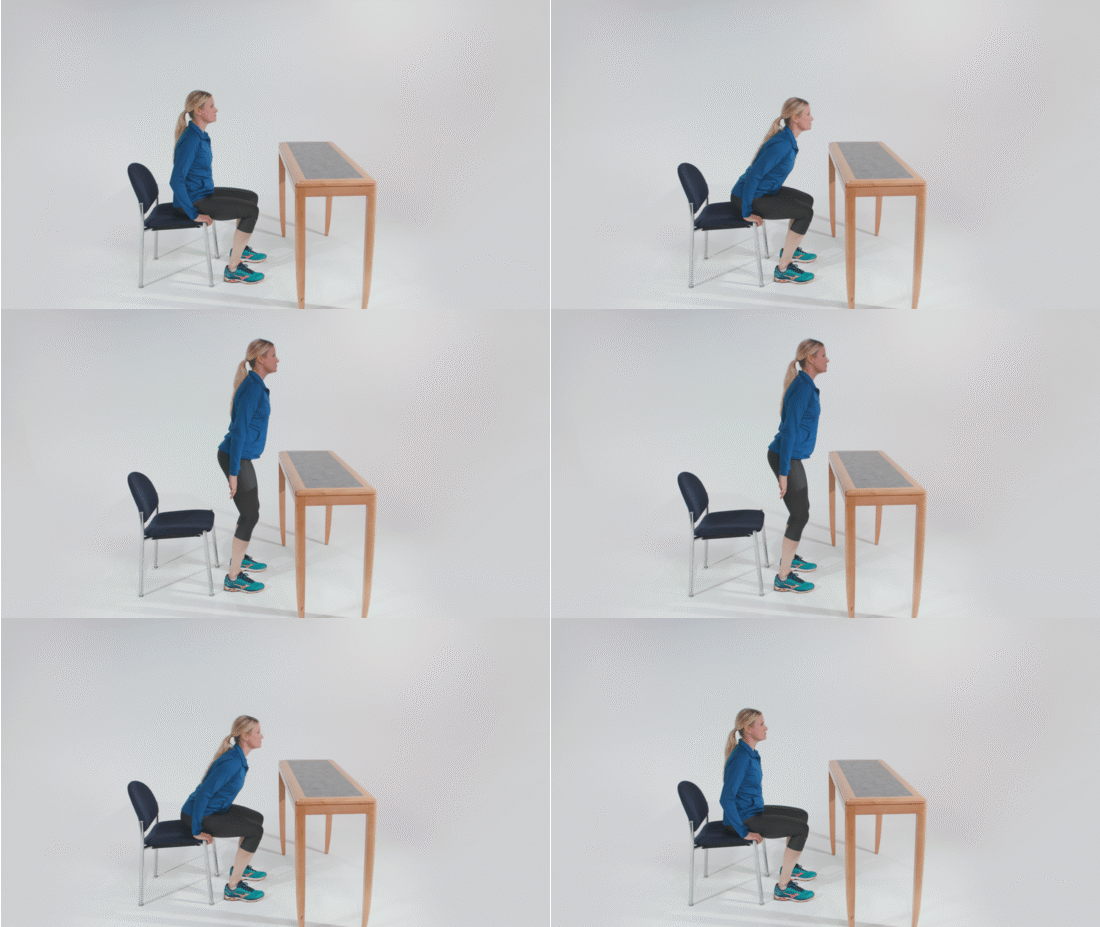
2. Lean your chest forward over your toes, shifting your body weight forward. Squeeze your gluteal muscles and slowly rise to a stable standing position.
3. Slowly sit back down to the starting position and repeat 10 times.
4. If necessary, place your hands on the arms or seat of the chair and push through your hands to help stand and sit. The goal is to not use your hands at all.
Perform 10 repetitions, twice a day. For an advanced version, hold hand weights to add resistance.
If you have pain in your knees, back or hips, discontinue and talk to your doctor or physical therapist.
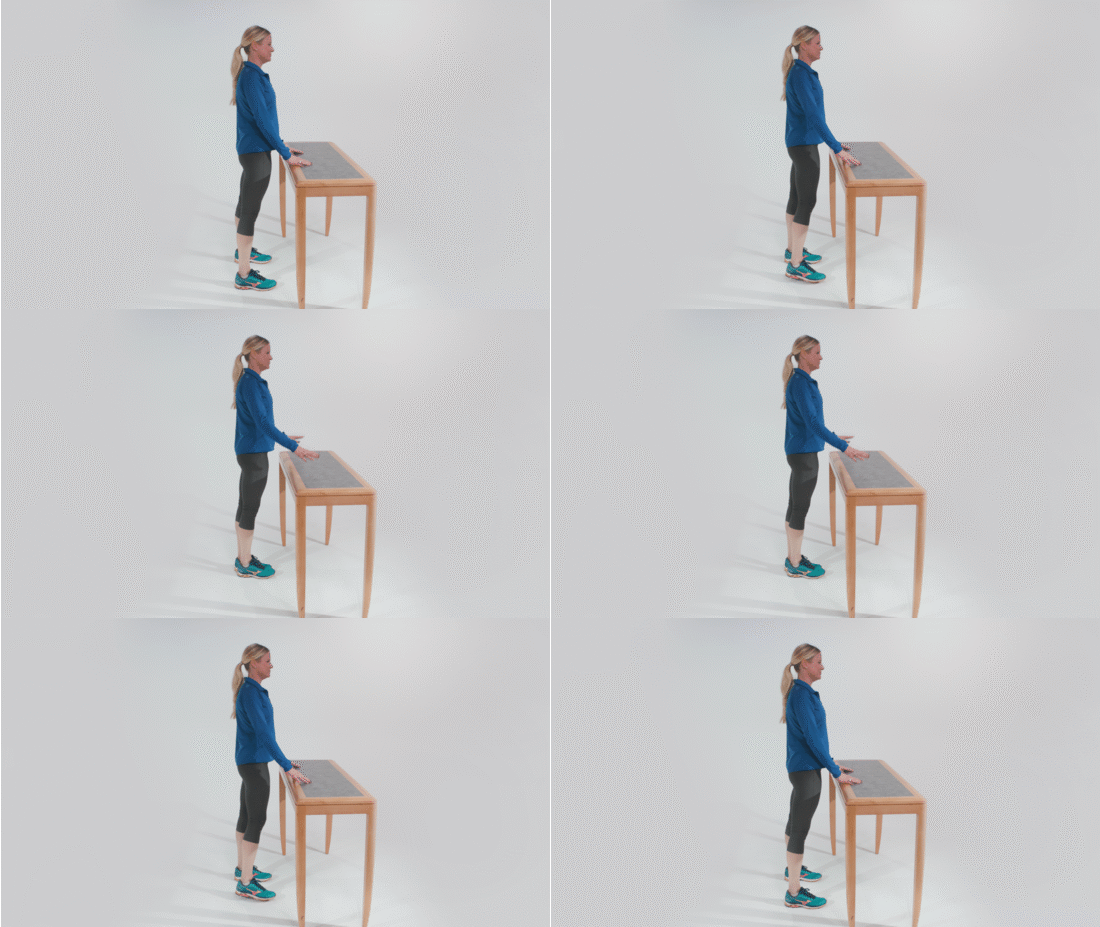
Balance Exercise
This series of exercises helps if your balance is unsteady. Make sure you have someone with you in case you lose balance.
To begin, stand in a corner or have a kitchen counter in front of you to reach out to in case you start losing balance.
1. Feet apart: Stand with feet about shoulder-width apart, eyes open, and hold steady for 10 seconds, working your way up to 30 seconds.
If you find yourself swaying or reaching for the wall or counter frequently, just keep working on this exercise until you can do it with minimal swaying or support. Once you can hold this position firmly for 30 seconds, move on to the next exercise.
2. Feet together: Stand with feet together, eyes open, and hold steady 10 seconds, working your way up to 30 seconds.
Once you can do this exercise for 30 seconds with minimal swaying or support, move on to the next one.
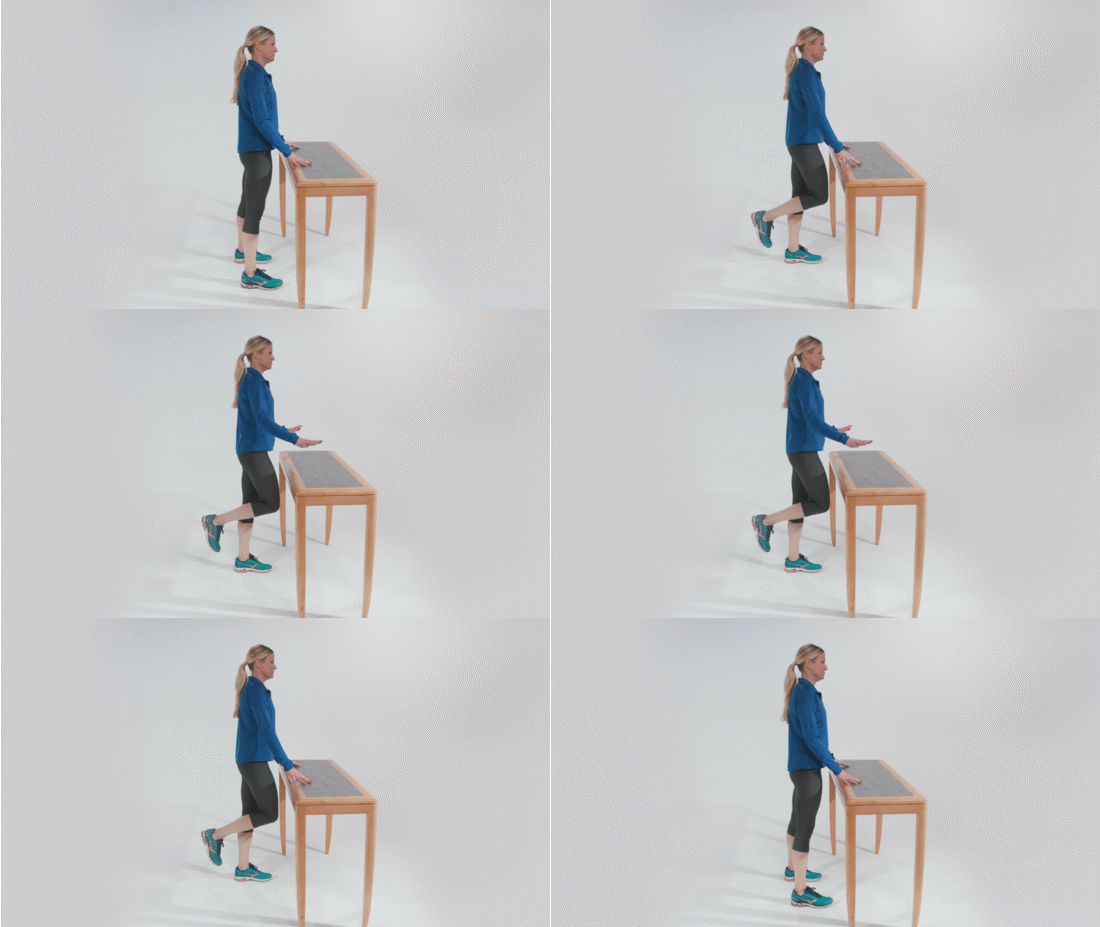
3. One foot: Stand on one foot, eyes open, and hold steady 10 seconds, working up to 30 seconds. Switch to the other foot.
4. Eyes closed: If you can perform the first three exercises safely and with little support, try to do each one with your eyes closed. Hold for 10 seconds, working up to 30 seconds.
The goal for each exercise is to hold the position for 10 seconds and progress to 30 seconds, five repetitions (including five per leg on the one-foot exercise), two times a day.
Additional Steps to Prevent Falls
Remember, it’s important to talk to your doctor or physical therapist about fall prevention.
Discuss medications and changes in your exercise routine.
Tell your doctor if you fall.
Ask a friend or family member to help check your home for trip hazards.
“Keep in mind,” adds Stutzman, “it is always best to have company at home with you while exercising for safety and supervision and in case you need help.”






 Healthaware