Learn how to do a glute bridge for leg and butt strength from exercise physiologist Katie Lawton, MEd. pic.twitter.com/AZbMSdsjFZ
— Cleveland Clinic (@ClevelandClinic) July 29, 2025


Health is Wealth

Take a ‘Paws’ With Downward Dog
This transitional and restorative yoga pose provides a full-body stretch
Physical therapist Dawn Lorring, PT, MPT, walks through the steps of how to do downward dog correctly and shares its many benefits.
From beginner’s yoga to more advanced practices, downward dog is one of the most popular poses…with a few common misconceptions.
Rounding your back, placing your feet too far apart or putting too much weight into your wrists can all create a deeper stretch than intended — which increases your risk of injury.
Physical therapist Dawn Lorring, PT, MPT, walks through the steps of how to do downward dog correctly and shares its many benefits.
Downward dog (also known as downward facing dog, facing dog pose or Adho Mukha Svanasana in Sanskrit) is a foundational yoga pose. It’s often used as a transition between movements, like sun salutations. It’s also a form of active resting, active stretching and strengthening. This allows you to check in with yourself and re-evaluate your intentions during your practice.
You do downward facing dog by putting your body into an inverted V-shape (or pyramid), as if there were a straight line that runs through the top of your head up your spine and out of your butt toward the ceiling.
Facing dog pose won’t usually be your first movement when doing yoga. Before trying it, it’s best to loosen up your muscles and joints and find ways to work it into your overall yoga practice.
Once you’re warmed up and ready to go, follow these steps:
“Downward facing dog isn’t about keeping your heels on the ground or holding it for long periods of time,” clarifies Lorring. “It’s really about making sure you’re going to a place that’s comfortable for you, so you can adjust your body as often as you need in this pose.”
If you have a hard time getting down on your hands and knees, try this wall variation:
For a more challenging stretch that deeply engages your hips and hamstrings:
Downward facing dog provides a full body stretch, while also strengthening and working your:
Adho Mukha Svanasana helps improve your flexibility and control, and provides you a moment of active rest. It also increases blood flow to your head and upper body when you’re in the inverted V position. But because of this, you should talk to your yoga instructor, athletic trainer or healthcare provider before starting this position if you have:
“Facing dog pose tries to improve flexibility but also builds the strength to control that flexibility,” says Lorring. “If you’re feeling excessive stress to a certain part of your body, then you’re probably holding the pose for too long or you’re trying to go into a range that you’re not ready for. We can help you get there.”

There is something special about using fresh peas straight out of the pod. This recipe was inspired by our root-to-stem philosophy of cooking: It always seems like such a waste to throw away the pea pods, but they are relatively inedible. To make use of the pods, we’ve pureed them into a spring-fresh pasta sauce. Remember: Pasta for breakfast is a great choice, especially when it’s loaded with healthful pea protein.
Kosher salt
1 pound fresh English peas in pods (yields about 1 cup shelled peas and about 3 ½ cups pods)
½ cup water
¼ cup extra-virgin olive oil
2 small spring onions or 2 large shallots, chopped
2 small spring garlic (whites) or 3 garlic cloves, minced
2 tablespoons Greek yogurt (optional)
12 ounces whole grain pasta, such as linguine, rigatoni or small shells
Freshly ground black pepper
¼ cup fresh mint (peppermint preferred), thinly sliced
Espelette pepper to taste (optional)
Grated Parmigiano Reggiano cheese (optional)
Makes 4 servings.
Calories: 554 kcal
Total fiber: 12 g
Soluble fiber: 0.1 g
Protein: 15.5 g
Total fat: 16.7 g
Saturated fat: 2.0 g
Healthy fats: 12.1 g
Carbohydrates: 84 g
Sugars: 7.7 g
Added sugars: 0 g
Sodium: 178 mg
Potassium: 433 mg
Magnesium: 14 mg
Calcium: 134 mg
Source: The What to Eat When Cookbook by Michael F. Roizen, MD, Michael Crupain, MD, MPH and Jim Perko, Sr, CEC, AAC.
Full of superfoods to power your day


·
A baby who can self-soothe will fall asleep on their own and play calmly without your intervention. It’s a process, and a skill, that will help throughout their lives. Follow these tips to get started.
It’s naptime — thank goodness. But your baby isn’t having it. They cry. They fuss. So, you bounce them, rock them or even drive around town until they fall asleep.
It’s the question on the top of your mind (and you’re not alone): When — and how — will my baby learn to self-soothe and calm down without so much effort?
Pediatrician Matthew Badgett, MD, answers this important question, and shares ways to help your baby learn to self-soothe.
When your baby self-soothes, they can calm down on their own and they:
But self-soothing isn’t just for little ones. It’s an important skill throughout your life. Whether you realize it or not, you use your own self-soothing methods to feel better when you’re stressed or anxious.
“Self-soothing is a way of regulating your emotions,” Dr. Badgett explains. “Babies might suck their thumb or hold a stuffed animal. Adults might listen to music, take a walk or do yoga. The type of self-soothing you use changes throughout your life, but it’s a key part of your emotional health.”
Every exhausted parent wants to know: When will my baby lie in their crib and drift off to sleep without my help? Or When can I put them in their bouncy seat for five minutes without screams of protest?
“In general, don’t try to teach your baby to self-soothe before they are 3 months old,” advises Dr. Badgett. “Newborns need you to help soothe them because they don’t have the ability to control their emotions. Learning emotional control is a process that takes years, so don’t expect too much from an infant or toddler.”
And self-soothing is a gradual process — not a switch you can flip. “Self-soothing is really co-soothing because the parent is still involved,” says Dr. Badgett. “Your baby plays a more active role in soothing, but you set them up for success. You figure out how your baby can calm down with less of your help.”
If your baby is past the newborn stage but still cries relentlessly when you put them down, there is hope. These tips can help your baby gain self-soothing skills:
Before you assume that your baby is just cranky, review their list of needs. Your baby won’t be able to self-soothe if:
After you’ve ruled out those issues, move on to the next steps.
Babies love routine. Try to put your baby to bed at the same time every day. Don’t skip naps or keep your baby up late. A schedule keeps them from becoming overtired — that’s when any hope of self-soothing goes out the window.
“If your baby goes to bed at the same times each day, their body clock will get used to it,” Dr. Badgett notes. “Then, they will start to feel sleepy right at naptime or bedtime. Babies that are drowsy, but not exhausted, are better able to fall asleep on their own.”
The sound of a fan or a white noise machine can be music to your baby’s ears. “Many babies prefer a steady sound over a perfectly quiet room,” Dr. Badgett says. “It helps drown out other sounds that could startle them, and it has a calming effect.”
Turn on the white noise machine when it’s bedtime. This can serve as a cue for your baby to learn when it’s time for dreamland.
After you place your baby in their crib or seat, don’t leave right away.
“If you give your baby some attention without holding them, they learn that being put down isn’t a bad thing,” Dr. Badgett explains. “Talk to them, or gently put your hand on their belly. After a few minutes, calmly leave the room.”
Pacifiers are a useful tool for babies under the age of 1. But use caution. It can be hard to take the paci away from a baby who can’t calm down without it.
“Pacifiers help young babies learn to self-soothe before they learn other techniques,” Dr. Badgett says. “But limit pacifier use to naptime and bedtime. Use them with other methods, like white noise and a consistent routine. That way, your baby won’t learn to rely on the pacifier alone.”
It’s normal for young babies to fall asleep at the bottle or breast. But as your baby grows, they need to learn other ways to drift off.
“Don’t feed your older baby right at naptime with the sole purpose of getting them to sleep,” Dr. Badgett suggests. “They might end up overeating or relying on the nipple even when they’re already full.”
You can avoid the feed-to-sleep method if you:
With a little persistence, perseverance and patience on your end, your little one could be self-soothing to sleep in no time.

The natural at-home remedy can soothe irritation and decrease inflammation
t feels faint at first — there’s a little tickle or scratch at the back of your throat.
Then, it hurts or even burns when you swallow.
Ugh, you’ve got a sore throat, and a cough isn’t far behind.
You’re taking cough syrup and lozenges in an attempt to get some relief. But what about using honey for sore throat symptoms? Does this natural home remedy actually work to soothe a sore throat and cough?
Yes, says family medicine physician Elizabeth Rainbolt, MD.
Dr. Rainbolt explains how honey works and when and how to use it.
It’s common to get a sore throat every now and then. You may have a sore throat due to the following:
In addition to having other symptoms like nasal congestion, fatigue and fever, you may develop a cough.
Honey has a long history of being used as a natural remedy. And one remedy is to soothe sore throats and help alleviate a cough.
“Research shows that honey has some antimicrobial and anti-inflammation properties. Honey can help by decreasing inflammation and irritation in your throat,” explains Dr. Rainbolt. “Another study shows that honey may reduce mucus secretion. So, you can use honey for cough symptoms as well, whether it’s a wet or dry cough.”
Giving honey to a child under 1-year-old isn’t recommended, warns Dr. Rainbolt.
“There’s concern for an infant botulism, a serious illness that’s caused by Clostridium botulinum,” she continues. “While it’s a rare occurrence, honey can contain spores that cause botulism. It attacks the body’s nervous system and children under one are more vulnerable.”
Most sore throats tend to get better within a week, but during that time, adults can take a spoonful (about 1 teaspoon) of honey for a cough and sore throat.
You can also dilute half a teaspoon to 1 teaspoon of honey in warm water or tea. This method is also recommended for children older than 1.
“You can use it with any kind of herbal tea or warm water with lemon juice, which can be soothing as well,” says Dr. Rainbolt.
So, how often can you use this home remedy? Dr. Rainbolt recommends using honey no more than four or five times a day.
And part of that reasoning is that honey does contain sugar.
“If you’re concerned about your sugar intake, then I recommend using honey more sparingly,” she says. “I would just use it at night to give you some relief before you go to bed.”
And can you use both honey and traditional cold medicine?
Yes, says Dr. Rainbolt.
“If it seems like the honey isn’t helping on its own, then you can certainly do both honey and medication, if medicine is something that you are able to take,” she notes.
Honey can be a helpful tool for those who can’t take traditional cold medications — for example, children under 6 years old or individuals with health conditions like high blood pressure or cardiovascular disease.
Overall, honey can be a good way to help soothe your sore throat and cough. It doesn’t come with some of the side effects that over-the-counter medications have like drowsiness.
So, can you just buy any honey you see on the grocery store shelf?
Yes, but you might want to make sure it’s been pasteurized. The pasteurization process removes any crystallization and unwanted yeast. It also improves honey’s texture and color, while extending its shelf life.
Dr. Rainbolt also mentions that some people think using local honey, which tends to be unpasteurized or raw, can come with extra benefits.
“There’s a thought that if you use local honey, you are exposed to some of the area’s natural allergens in a positive way,” she explains. “The idea is that it will help with allergies you have.”
The next time your throat starts to tickle, reach for honey and see if it helps.
“Think of honey as a first line of defense for those over 1 year old,” says Dr. Rainbolt. “Honey is something that pretty much everyone can try. And it’s been shown to work as well as some cough suppressant medications. It’s a nice alternative.”

How Stress Is Linked to High Blood Pressure
Daily stressors can increase BP in the moment, as well as contribute to habits that can feed long-term hypertension
Feeling stressed? If so, you’re hardly alone, given that stress has been called the health epidemic of the 21st century. But have you ever wondered what all this stress means for your blood pressure?
The answer, it turns out, is more complex than you might think. Let’s take a closer look with preventive cardiologist Luke Laffin, MD.
Stressful moments can totally send your blood pressure (BP) skyrocketing. You feel it deep in your core, too, as your heart thumps harder and your nerves jangle with a fight-or-flight response.
“If we’re in a stressful situation, the normal physiologic response is to increase blood pressure,” explains Dr. Laffin. “But your body can handle these sorts of acute changes in blood pressure pretty well.”
And once the immediate stressor is gone, your BP should return to its typical level.
Of course, not all stress clocks out like it’s a shift worker. Chronic stress tends to linger — and that can contribute to a long list of physical symptoms, including high blood pressure (hypertension).
Researchers don’t know as much about the direct effects of long-term stress on blood pressure. But they do know that stress can impact lifestyle habits and increase your risk of heart disease and other chronic health issues.
“Stress itself doesn’t necessarily cause sustained elevations in blood pressure,” says Dr. Laffin. “But it often has an impact on lifestyle factors, which can absolutely contribute to long-term elevations in blood pressure.”
When you’re chronically stressed, you can fall into habits that can lead to higher blood pressure and increase your risk of heart disease. These include:
It can be difficult to see when acute stress transitions to chronic stress. But seemingly “temporary” stressors that last for weeks can turn into chronic stressors that need to be addressed for the sake of your heart health.
“What we’re really worried about is chronically elevated blood pressure,” states Dr. Laffin.
Finding ways to better manage your stress can help keep your blood pressure from rising and staying at elevated levels, suggests Dr. Laffin. He suggests:
Medications like beta-blockers may also be an option if stress seems to be driving blood pressure into danger zones. Antihypertensives can help bring down high blood pressure, too.
“But managing stress-related hypertension usually comes down to lifestyle,” clarifies Dr. Laffin. “Diet, exercise, sleep — those are all factors that play a big role in keeping your heart healthy.”
https://x.com/ClevelandClinic/status/1930268250262384800?t=heV6_yXW0FzsnyHB6XhCcg&s=09
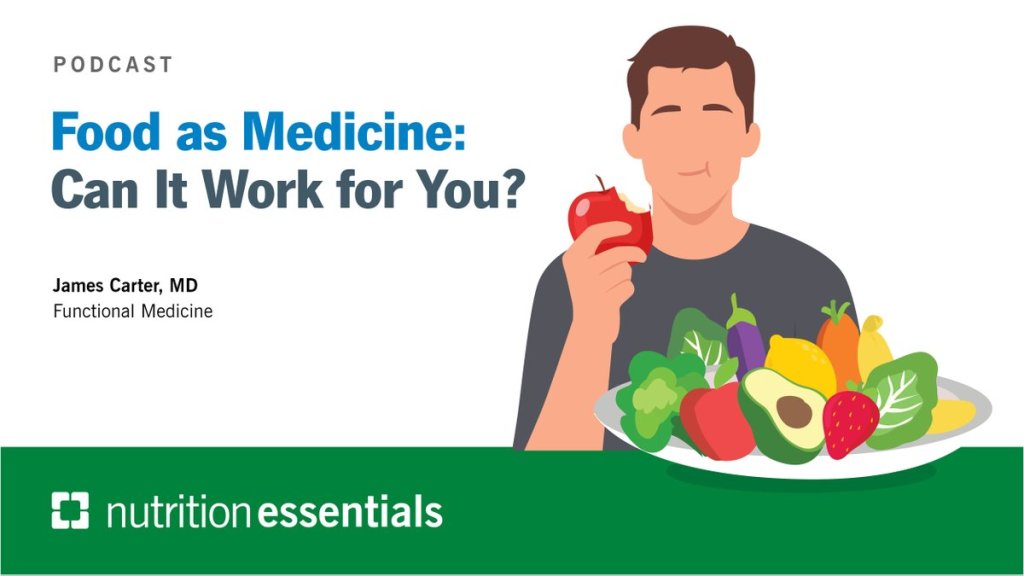
A nutritious diet can help your body from head to toe and help prevent many health issues. Explore the concept of using food as medicine in this podcast with Dr. James Carter, medical director at our Cleveland Clinic Center for Functional Medicine, and registered dietitian Julia Zumpano. https://my.clevelandclinic.org/podcasts/health-essentials/nutrition-essentials-food-as-medicine-can-it-work-for-you
Subscribe: Apple Podcasts | Podcast Addict | Spotify | Buzzsprout
Nutrition Essentials | Food as Medicine: Can It Work for You? with James Carter, MD
John Horton:
Hey there, and welcome to another episode of Nutrition Essentials, a spinoff of our Popular Health Essentials podcast. I’m John Horton, your host. If you’re a regular listener, you know the general premise behind the show. Certain foods can improve your health. That’s the foundational belief behind everything we’ve talked about since day one, and despite that heavy emphasis, it seems we’ve been underselling the full impact of a healthy diet on your body. That’s what the podcast team was left feeling after a recent mesmerizing chat with Dr. James Carter. He took what we’ve been talking about and somehow elevated it to a completely different level, which is why he’s with us today. Who is this Dr. Carter that absolutely blew our minds? Let’s get a more proper introduction from Julia Zumpano, our resident dietitian on Nutrition Essentials.
Julia Zumpano:
Thanks, John. Dr. Carter began his career as an interventional cardiologist before finding his way to functional medicine. He now serves as the Medical Director for Cleveland Clinic’s Center for Functional Medicine. He’s a big believer in the concept of using food as medicine to keep people as healthy and vibrant as possible. I’m looking forward to talking with him about how we can all ben:efit from that prescription.
John Horton:
Oh, absolutely, Julia, so let’s get started. Welcome to the podcast, Dr. Carter. I have to tell you, we have been looking forward to this day ever since we first spoke. You’ve just got such a powerful message that needs to be shared.
Dr. James Carter:
Thank you for inviting me. It’s a pleasure to be here. I always like talking about issues that sometimes are not talked about enough, so I applaud you for the work you’re doing.
John Horton:
Well, to get us started, Dr. Carter, can you walk us through your career path, from the surgical suites of cardiology to the world of functional medicine, and maybe share how that journey opened your eyes to what you called a different truth?
Dr. James Carter:
Well, I started out loving invasive cardiology. I still remember the first coronary angiogram I ever did. I was like, “Oh, wow. This is what I want to do the rest of my life. I want to be the one that helps decide what should happen for a patient and do this comprehensive care,” but I was always a little different because I didn’t want to just be in the cath lab. I liked the opportunity to help people in critical moments like when they’re having a heart attack but I also liked keeping them out of my cath lab suite, so I was always a little different. I like the clinic, I like meeting people, I like being in the community. Along the way, along my journey, I met a nutritionist who sent me an article on leaky gut.
Back then, as a relatively arrogant interventional cardiologist, I opened the email and I said, “This is quackery. Why is she sending me this?” But I read it, to my credit, I guess, and I realized there was a lot in there that I didn’t know. That led to an online functional nutrition course and that led me to functional medicine. My first week of training there blew me away because I actually expected to hear quackery. When I got there, I heard science, and it was evidence-based, and a lot of it turned out to be in my literature, my cardiovascular literature, just de-emphasized or neglected.
John Horton:
Wow. It is amazing, I know you talk a lot about how there are things that can be done ahead of time so, that way, somebody wouldn’t have to meet you in the cath lab.
Dr. James Carter:
Well, I always knew that, but my view of it was, in retrospect, a little simplistic. I would give community lectures, identifying people who were obese and emphasizing the importance of smoking cessation, and controlling blood pressure, and eating right, eating healthy, and back then, I focused on salt and fat. It was a pretty limited view of what actually nutrition is.
John Horton:
Yeah. Now, this whole theory of food as medicine isn’t exactly new. I mean, we talk about it and it dates back supposedly to Hippocrates and Ancient Greece. If we knew this way back then, why does this advice still seem so difficult for folks to swallow today?
Dr. James Carter:
I like the pun. That was very good.
John Horton:
You try to have a little fun. You got to have a good time.
Dr. James Carter:
That was good. I’m going to steal that. That’s good. I actually don’t think it is. I think people want this. When they come in the door to me, they want to know how they can participate in their healthcare journey. There has been this misconception that it’s hard to have conversations about nutrition and that we have to be precise in order to have the conversation, and I think that’s a mistake, but I actually find people want to know. I think when clinicians educate themselves, they will find that it’s easy to deliver the message.
Julia Zumpano:
One thing I want to add to that is there’s a lot of conflicting information, where I think then it sometimes can degrade really good sound nutrition advice that we may have, because there may be a study that says eggs are bad, and then eggs are good, and olive oil is good, and seed oils are bad. Really, what is the true answer to some of these questions? I think that’s where we lose a good portion of people, is the fact that there’s so much information out there that can commonly be conflicting, that people put their hands up as like, “You know what? I don’t even know what to eat, so I’m just going to eat whatever I want and be done with it.”
I think that’s one of the biggest challenges in my opinion, but I do agree with Dr. Carter that people do want to know. They do want to heal their bodies with nutrition and it is possible. But another challenge I find is that, as a society, our food industry is very driven by large companies that provide food products that are most likely not healthy and are marketed as being healthy. I think that is also where some of that confusion lies, is that there’s tons of brands, and food companies, and food products out there that are clouding people’s understanding of what is truly healthy for our bodies.
Dr. James Carter:
I think that’s a very important point. The way that I try to address that is with simplicity. I often start the conversation with patients, “Well, what do you think you should eat?” After we drill down, usually they’re pretty close. I do think there’s an opportunity to do first things first. Let’s do the basics first. Sometimes there’s context why people want convenience, but very often, if we simplify it, we don’t need to get into a fad diet for most people. If we incorporate the basic elements of what the science says about cardiovascular health and nutrition, I think people will find importantly that it’s joyful to do that, so I do try to emphasize the reimagining the joy of eating and just doing it in a different way. I think they’ll find that it’s effective, and it’s quickly effective. The other misconception is that it takes months and months to see an effect, and most of the science doesn’t suggest that. My clinical experience is that you can find very quick improvements just by cleaning up the food plant.
John Horton:
I’m really struck by how both of you have kind of mentioned it, that people have these visions of what they think is healthy. I’m laughing, I’m thinking of the discussion we had right ahead of this. I was talking about what I like to eat for breakfast, thinking I’m making a good choice, and both of you are a little like, “I don’t quite know.” Are people just, I guess, unknowingly making bad choices or is it a case where maybe they can just get a little bit better by tweaking it and start making some small advances?
Julia Zumpano:
I mean, I think it’s a matter of education. Educating yourself on what is considered healthy and why, why we include those nutrients into our bodies. I think the why is the big piece, because if you understand what it does to your body and the insides, then you’re more likely to make better decisions. As I mentioned, I do think that there’s a lot of food noise around from nonmedical professionals that might be providing some confusion. Again, even just food companies or non-professionals that are giving you ideas of what might be healthy and truly may not be. I think it’s also a matter of where you’re getting your education from and making sure you’re going to really science-backed nutrition information and data.
John Horton:
It sounds like you’re telling me the little heart on the front of the cereal box might not be the best medical information I could be getting.
Julia Zumpano:
Absolutely. That’s exactly what I’m saying.
Dr. James Carter:
Yeah. It’s not just the food companies. I think that it’s complicated. I even have patients who say, “Well, I’ve been drinking this soda since I was hospitalized because they served it to me in the hospital so I figured it was okay.” I’m not so sure it’s only the food companies, but I do agree that it’s a humanitarian issue. Do we want to all work together to keep ourselves as healthy as we would like to be? There’s a financial argument for it, there’s a functional argument for it, so I think, very often, we can appeal to those things in patients. When I ask patients what their goals are, what their goals of life are, I can work back to, “Well, maybe stopping at that fast food restaurant every day doesn’t align with that goal, and maybe having boxed ice cream in your freezer doesn’t align with that.”
When I really want to be effective, we have a dual monitor, so I’ll pull up what they eat. I said, “Tell me what you eat. What do you snack on?” They tell me, I said, “Okay, let’s look at it.”I pull it up and I’ll show them the ingredients, and I said, “So how does that sound to you?” They look at it like, “I don’t want to eat that.” It’s something they eat all the time, so it’s quite an exercise. Sometimes it’s just people just don’t take the time to really think it through. That’s to your point, Julia, that it’s out there. It’s convenient. It’s easy to do it without thinking.
Julia Zumpano:
I think, Dr. Carter, you couldn’t have said it any better. It’s complicated. There’s so many influencing factors, it’s so complicated. But to simplify, as you mentioned before, is really key, really making it as simple as possible, because eating healthy is quite simple, really.
John Horton:
Dr. Carter, your background is in cardiology, as we kind of discussed here, so I want to spend some time talking about our tickers. To kind of quote what you told us when we spoke earlier, you said a proper diet can have a miraculous effect on cardiovascular health. Can you walk us through how that happens?
Dr. James Carter:
Well, the reason for it is because of what I learned in functional medicine. It was a different way of looking at systems biology. I learned to focus on what the body is trying to do, and the body’s trying to assimilate the things we get to use it to our advantage, as building blocks to communicate between cells and between the organs, to transport things throughout the body, to repair us, to be resilient so we can be protected from things. It’s fairly complicated, and importantly, we need nutrients for all of those things. When things go a little awry, we need nutrients to turn off inflammation so that we don’t stay inflamed. I used to think of getting injured and having an inflamed joint and I say, “Okay, it just goes away on its own,” and then later to find out that it’s actually a triggered event and we need nutrients for those things. The food helps us through every aspect, and the heart is very complicated. We have to move fluid. We have to get blood and oxygen to the heart arteries.
We have to be the key hub to get all the things transported around the body. The key aspect is how food helps tamper down inflammation and how it helps our immune system work properly. I tell patients 70% of the immune system is located in the gut. Nowadays, a few know that, but most still don’t, and the food helps the immune system, which is a big part of hardening the arteries. I used to think it was just LDL cholesterol or bad cholesterol, as some people call it, but it’s actually what happens when that LDL gets into the vessel wall. It stimulates this whole process of the immune cells getting activated. These are the same immune cells that react when we get a cold or if we get pneumonia, and those immune cells talk to our inflammatory pathways and tell our organs what to do.
I try to simplify that concept graphically so that people understand that the chemicals in the food, for example, the colors of the food that have what we call phytochemicals, they fight inflammation and they help the immune system um um. We know that there’s a connection between the gut and every organ in the body, including the heart, but also the brain kidneys, so we talk about all those things. That gives people.
John Horton:
When you’re talking about colors, you’re not talking about red dye number two. You’re talking about the actual mother nature’s colors here, right? Blueberries.
Dr. James Carter:
I’m talking about red apples, purple carrots. I tell people there are purple carrots, there’s black rice.
Julia Zumpano:
Blackberries, yep.
Dr. James Carter:
Blackberries, blueberries.
Julia Zumpano:
All those beets. All those sharp-
Dr. James Carter:
Red beets, golden beets.
Julia Zumpano:
… bright colors.
Dr. James Carter:
Yeah. I said, “That’s where the joy is hiding. The joy is hiding in the rainbow.”
Julia Zumpano:
That’s for sure.
John Horton:
Julia always talks about the rainbow and inflammation. I’ve heard that from her over and over again, and I know how strongly she feels about all of that and how important it is.
Julia Zumpano:
Absolutely. I mean, those go hand in hand. We’re eating the rainbow to suppress inflammation. It’s really the key there. As you know, Dr. Carter, we’ve seen an enormous increase in the use of statins in recent years to help people lower cholesterol and reduce their heart disease risk. Can more of a functional medicine approach make us a little less reliant on this sort of medication?
Dr. James Carter:
It’s a strong word, reliant. I had a patient once who, after he was put on statins, and he came in with an event, and talked to me about what he was eating, and I explained the biology we just talked about, and he said, “I thought all I had to do was take a statin.” I said, “Well, the science actually doesn’t say that. The guidelines don’t even say that.” I think it’s an opportunity to focus on all of the guidelines and all of the evidence and not just focus on a small amount of it, a small part. I think we already know that statins don’t prevent everyone from having heart attacks, so there’s a small absolute risk reduction of preventing heart attacks. There’s a very significant relative risk reduction, but we also have data on the power of food to do that, and the data is quite compelling of how effective it is. I do focus on that data and that science, and I make sure people understand that it’s the guidelines, actually, that say to do all of it.
John Horton:
It sounds like, in a lot of ways, people should look at food as really a tool that they can use to just improve their health. I think, like you said, too many people, they look at a pill as just the solution. It may help a little bit, but it’s not going to solve everything. You have a responsibility on your own to make some proactive decisions to really better your health.
Dr. James Carter:
As long as people have that information, so we have to tell them that that’s what the science says.
Julia Zumpano:
Yeah, I couldn’t agree more. I think there’s definitely room for medications and they do great things, although what I don’t like is when patients are using that as their means of controlling their risk factor and that alone. I think it’s really a key form of education, of really allowing people the opportunity to have the power of their own choices to really lower their risk. It can be in combination with medication, but changing their diet, getting good sleep, not smoking, exercising, reducing stress, and obviously, maximizing nutrient intake to really support healthy insides from head to toe, so decreasing inflammation, and reducing cell damage, and providing antioxidants, and building your immune system. I mean, every single body system is intertwined and connected.
Dr. James Carter:
That connection is all part of having heart attacks and strokes. In fact, this is a really good point, what you just brought up. When patients come to me and they’re focused on the target number, I ask them why. Most of the time, they can’t tell me. They said, “Oh, I want to get my LDL down. Do I need to take a statin to do that?” I said, “Well, why do you want to get your LDL down?” They just look at me and they’re like, “Well, because it’s supposed to be low.”
John Horton:
We all have a number. We have a number we know we all have a number.
Dr. James Carter:
That always opens the path for me to discuss how heart attacks occur and how strokes occur. Once they hear that, the complicated physiology that you just described, they’re more open.
John Horton:
Is it not as easy as just looking at those LDL and HDL numbers? Are we just fixated on those and it’s just we’re only seeing one little part of the story?
Dr. James Carter:
Well, I’m not sure who you mean by we.
John Horton:
We, the general public.
Dr. James Carter:
Okay. But yeah, we already know that. We have a lot of randomized clinical trials that tell us that lowering LDL is not enough.
John Horton:
Clearly, our hearts love a healthy diet from everything you just laid out, but I know when we spoke before, you emphasized how the positive effects of eating healthy extend basically from the hair on our heads down to our toenails. You even mentioned how diet can help wounds heal, which I’d say I’m still blown away by a little bit just trying to think of that. Can you just expand a little bit on just all of these benefits that we might see by just eating a little better?
Dr. James Carter:
Some years ago, I decided, partly because of my work trying to open up clogged arteries, once I learned about the importance of nutrition, I decided to become a wound care doctor. The secret was I realized that if I could get a wound to heal, that I was going to prevent heart attacks and strokes. Now, I did not tell people that upfront. It was just my secret to get people to understand the importance of nutrition. No one could argue with me. If I used the nutrition in prescription and the big hole in the leg went away in four weeks when it had been there for a year, who’s going to argue? That was the way I started to build a reputation for this, and then it expanded to cardiovascular. I said, “Well, what about this person who’s about to have open heart surgery? What about this person who’s about to have a transaortic valve implantation? Is there a way to help them?” It was pretty fascinating. Often in wound care, believe it or not, the only thing I would do different would be to change what someone ate.
John Horton:
That’s amazing.
Dr. James Carter:
It was stunning. We called it miracles. It’s time for miracles. Is everyone ready for a miracle?
Julia Zumpano:
Would you have a target, Dr. Carter, on what you would really focus on when it comes to wound healing, wound care?
Dr. James Carter:
Yeah, gut health and micro and macronutrients. People had been mistakenly focused on protein and calories for wound healing, and that’s ineffective. It’s the quality of the protein, so it’s not just any protein. Good fat is actually very necessary as building blocks, and making sure people aren’t deficient in critical micronutrients like zinc, and copper, and selenium, and making sure they have a process to repair the gut with prebiotic food, so that’s the fiber that the gut bugs eat to be healthy, and probiotic foods, things like kombucha. I don’t use kombucha as much anymore, but kimchi, sauerkraut.
Julia Zumpano:
Kefir.
Dr. James Carter:
Kefir was my number one.
Julia Zumpano:
Is it? That’s one of my favorites.
Dr. James Carter:
I gave it to every single patient in wound care and they healed.
Julia Zumpano:
Now, did you do any testing to check the condition of the gut to begin with or the micronutrient deficiencies?
Dr. James Carter:
I do now. Back when I was at a different institution, I wasn’t allowed to do it a lot. I did a little bit, but mostly, it was by good history taking. I could tell. I would give them a quick questionnaire. Based on the questionnaire, I could tell their gut was impaired, and so I would just restore it or help them restore it.
John Horton:
The wound care part just sounds so sci-fi to me. I picture these movies we watch where somebody just heals instantly, and I know some probiotics aren’t going to make that happen that quickly, but it sounds like you really saw some just amazing results when there just wasn’t much advancement maybe going on before that.
Dr. James Carter:
Cellular biology is like sci-fi. It actually is. When you think about what it takes to fold and unfold proteins inside the factory that’s called our cells, and using the battery called the mitochondria to do that, and then having to have a process to dispose of the waste that’s created from those factories, and how interconnected that process is and how to move those waste products, either get it out through the urine, or get it out through the stool, or get it out through the sweat, it is like science fiction.
Julia Zumpano:
One thing that you mentioned that was fascinating is we can do this without testing, without really knowing what’s going on on the inside specifically, but being able to know what nutrients are needed for that wound healing and to do it through food versus supplements. There’s always room for supplemental support, if needed, but I think the key here is that if you’re eating this nutrient-rich diet, you don’t have room or time to consume some of those unhealthy foods. If you just focus on what nutrients you need to get in, what high-quality protein you need to get in, what micronutrients you’re focusing on. Did I get enough zinc today? Did I get enough vitamin C? Did I get enough healthy omega fats? Did I get enough high-quality protein? Have I consumed enough prebiotic foods? That will consume your day and your intake so greatly that you don’t even have time to think about unhealthy foods, and you won’t need supplemental forms of these. You can certainly do it through food alone in most cases.
Dr. James Carter:
Yeah, I think of food first. There are times that people need a little boost. When I do prescribe supplements, I try to make it short course, one month, two months, three months. There are a few supplements because of the quality of the food that sometimes we keep longer. People struggle to get the right amount of magnesium in, and there’s of course-
Julia Zumpano:
Omega-3 fatty acids, I find.
Dr. James Carter:
Omega-3 fatty acids, high-quality ones. Yeah. But I agree with you, I think it’s a food first strategy. I do more of the testing now because people want some perspective, and so I was trained to do diagnostic testing. “What am I going to tell you to do?” kind of testing. “Do you have this or don’t have this? What surgery do you need?” kind of testing, but now I do more perspective testing. Generally speaking, your gut looks a little off based on this, so this is supporting why we’re taking this more aggressive approach. This is the sign that maybe your cells are struggling a little bit. There’s some oxidative stress, it’s called, which is just the stress on the cells that produces that toxic waste. We can measure that some, and sometimes I do do that, but we do a lot without testing. Patients do come in expecting testing, so we have to say, “Hey, why don’t we try eating first?”
John Horton:
Dr. Carter, one of the things that I really love about your perspective is just how you’ve obviously been on the one side, where you’re doing these hardcore surgeries and, like you said, the more invasive sort of medicine. Now, you’re obviously very in with the functional side. How do we blend those two together to get the max benefits out of both?
Dr. James Carter:
Having conversations like this is a good start. Leading with empathy and kindness and not starting with animosity is a good start. Being open-minded, being willing to accept that there’s a lot of uncertainty in what we do, and so we’re trying to move forward in the same direction. I think most people I talk to want to collaborate and they want to know how to have these conversations, and I think we should be… Those of us who have the conversations every day should kindly share how we do it. I have found it to be warmly received when I take that approach, as opposed to back in the day, my approach was like, “Don’t you know what atherosclerosis is?” That used to be my approach. I don’t do that anymore. I just gently say, “Maybe we could affect the endothelial function and the detoxification that we all know as part of having a heart attack.”
John Horton:
We spent a lot of time talking about the good that can come from eating, so now let’s kind of put some food on our plates. Julia, let’s lay out some kind of potential meals for folks, starting with a healthy breakfast and working our way through the day. Dr. Carter, feel free to jump in, too, because I’m guessing that you probably eat a pretty healthy diet.
Dr. James Carter:
I’m pretty intentional about it. I wasn’t always that way. I had a lot of food addictions and I had to develop my own strategy. I tried every diet. Almost every diet known to man, I tried and it didn’t work, so there were certain things that I had to incorporate to get myself out of that rut of being unhealthy. The nudge of almost dying a few times helped.
John Horton:
Pretty big incentive. Yeah.
Dr. James Carter:
That was good incentive.
Julia Zumpano:
Wow.
Dr. James Carter:
But to be truthful, actually, I had already started the journey before almost dying. I believe that I would’ve died if I hadn’t already been eating healthy.
John Horton:
Wow. All right. Well, I can’t think of a better intro to what we should be eating for our meals. Let’s start with the breakfast that is going to keep us alive.
Julia Zumpano:
Well, as I think Dr. Carter mentioned, is just finding your own path of what you enjoy. We know there’s several great options for breakfast. My personal favorite is a chia seed pudding. I think just starting off with a high fiber, high protein breakfast, loading that up with some fresh berries. Also, if dairy’s in your daily routine, you could do a Greek yogurt for some high protein, and overnight oats is another great option with berries and nuts on top. Those are three of my top breakfast options. I think they’re filling, high in fiber, have some good quality protein in there. Lunch ideas, I really think leftovers are a great lunch, especially if you’re cooking really great dinners. I usually recommend my patients batch cook, cook extra for dinners so they have extra for lunches, because I think people struggle with lunch more than anything. I love stews and soups, especially hearty ones with a ton of great warm vegetables, a lot of colorful vegetables, some beans and some protein in there. Those are definitely a fan favorite.
Especially during the winter months when you just can’t warm up, those stews really, really help. They’re very filling, more comfort-based in this time of year. Summertime is great for fresh salads and fresh veggies too. Dinner, I do focus on balance, so protein, complex carbohydrate, plate full of veggies. You can kind of vary those. Of course, one of my favorites is wild salmon with some quinoa and various roasted veggies are one of my favorite dinners. For snacks, I do recommend whole foods, of course, so like nuts, fresh fruit, any seeds we can throw in there like pumpkin seeds, any kind of various different nuts and seeds. I will make little type of desserts, so like energy balls or date balls, something like if you do want something a little more sweet that’s naturally sweetened with fruit would be nice too to have on hand to avoid you from reaching for those other commercial-baked desserts.
Dr. James Carter:
Yeah, I like those. I’ve discovered that I personally do better with protein in the morning, and I think that matches some of the science, especially people who are trying to lose weight, and so opportunities to get protein in that also has fiber early in the day actually can work for a lot of people, keeps you feeling full through that morning, gives you energy. For certain texture, I actually use red lentils in the morning because it has that same texture that I grew up with from grits and wheat-based cereals, so I will use red lentils and I’ll add tempeh on the side to that. I always believe in throwing in some greens, so I think greens are mixed with everything to me. I always just mix it in and it’s easy to prepare. I do agree with meal prepping, although I advocate for prep to the freezer and not to the refrigerator. I ask people to, “If you’re going to make one meal, then make it six or eight. Get your labeler out and label it, put it in the freezer, and then that can be your varied lunch later on.”
Lunch, I agree. Meal-prepped lunches are the way. I used to buy those box lunches. I’m so happy that I found a path away from that. Breakfast, so often, if I don’t do that type of breakfast I described, I’ll do smoothie bowls or smoothies with kefir, which is, as you mentioned, a fermented milk probiotic drink and mixing fresh greens, frozen or fresh berries. I do do that. I like your idea of snacks and thinking about snacks ahead of time. What’s become my favorite tool is a scale. Now I weigh out my nuts and seeds so I know that I’m having a serving. 28 grams, I have pumpkin seeds and almonds.
Julia Zumpano:
Another thing you can use if you don’t have a scale handy would be just a quarter cup measuring cup, which would be about the same.
Dr. James Carter:
About the same, yeah.
Julia Zumpano:
Yeah, just if you don’t have that scale around.
Dr. James Carter:
Yeah, if you don’t have the scale. But if you can afford it, the scale’s great because it gave me-
Julia Zumpano:
It’s great, it’s great.
Dr. James Carter:
For some reason, it resonated with me to see it weighed, because I was stunned at how little it was and so I had to get used to savoring my food. Instead of taking a handful of pistachios, I think I’m going to eat one at a time so that it will last.
Julia Zumpano:
Another thing that I found fascinating was tracking your food. I’ve always kind of visually mentally tracked it. I just have that running number in my head anyway. But when I actually went to write down every single thing I ate and looked at it, it was fascinating. Even I was shocked. I was like, wow, I didn’t realize how many servings of nuts I have in a day or nut butter or how it adds up. It also really helped me meet my fiber target goals and my protein target goals. It helps you target towards what you’re looking for, so if you’re trying to meet a specific fiber-protein goal, whatever, zinc goal, whatever your goal is, tracking can really help. There’s a lot of great apps. I mean, we have the Cleveland Clinic Diet App, which is the one I use, and I found it to be extremely helpful.
Dr. James Carter:
I think tracking is very important for what I call the try-to crowd. “I try to eat right, I try not to eat this, I try to eat that,” and they lose track of how often the try-to doesn’t work. When they lead with, “Well, I try to do this,” well, how often? They can’t tell me, so the tracking really helps.
Julia Zumpano:
Absolutely.
John Horton:
I’m struck by everything that you just said. It seems like how much of it comes down to just planning out what you’re going to eat, and I think a lot of us are guilty of life just gets busy sometimes. All of a sudden, it’s, 6:00, 6:30, you’ve got to eat, and it becomes really easy to just order that pizza and call it a night. It’s something, if you put a little thought into it, you can really make some just incredible changes to your diet that can just help your body and how you function.
Julia Zumpano:
I mean, we all have those busy nights. I mean, we’re all busy, but it’s that meal prep piece that really helps. Having something available in the freezer, grab and go, you know you prepared it, you know everything in it, and it’s already set for you. You don’t have to worry. You don’t have to try to scramble to find something healthy to consume. I always tell people to have an inventory of basics, that if you find yourself in a pinch, have a quick, easy, healthy meal that you can throw together in 10 to 15 minutes too.
Dr. James Carter:
Yeah, yeah. Today, for lunch, that’s what I had to do because I didn’t plan properly. I had quinoa and roasted vegetables from my freezer for lunch.
Julia Zumpano:
Perfect.
John Horton:
Well, unfortunately, I did not plan properly last night and I had pizza, and then I had leftover pizza today for lunch. As anyone who watches this podcast knows I am a work in progress, and so I’m slowly getting there through discussions like these.
Dr. James Carter:
One of the confusing things is people think that it’s all about weight, and it’s not even all about fitness. I’ve seen many, many people who are at their optimal weight, who are fit, who have heart attacks and strokes because these foods are reaching their havoc on a cellular level and at a gut level, we don’t know what’s happening. I do think that the intentionality is the key. You have to be taught how important it is, and then people have the opportunity to slowly or quickly, depending on their point of view, make a shift.
John Horton:
I’m sure none of what we’ve just gone over, which would on the best foods maybe to eat or just suggested foods to eat, I don’t think any of this stuff’s going to shock people, as you’ve kind of said. I mean, deep down, we all know that carrots are just… They’re going to be a little better for us than cookies. But Dr. Carter, I know you mentioned seeing folks experience a light bulb moment when they finally adjust their diet and they really see those changes take place in their bodies and just how they feel.
Dr. James Carter:
Oh, and it varies. It can be they come in and they report, “I’m sleeping better. I used to have this ache in the morning. I don’t have the ache anymore.” It could be that, “I’m not irritable like I was before.” It’s so varied because food touches so many different parts of the body. The benefit is vast. Even importantly, just the experience of cooking for yourself and realizing that you love yourself enough to do it, and how affirming that is and reassuring that is to realize that you’ve made this step and know that it’s a good one.
Julia Zumpano:
And then I think extending that step upon. If you’re preparing meals for yourself and then a family, you’re also serving all that you touch, all your family members, your children, your spouse, your parents, whoever you’re preparing meals for. You’re really also improving their health and their food choices, so I think it really extends upon who you touch and who you bring in with you on the journey. I think it’s those who do have young children like myself, I also think it’s a great way to educate. Educate starting with the youth and educating on what foods are healthy for our bodies, why they’re healthy for our bodies. I’m always educating them to read labels and turn the food around and see. They’re running up to me with something bright red and they say, “Can we buy this?” I’m like, “Well, why don’t you figure it out. Turn it around and see if there’s anything on there that I don’t like.” It’s just a matter of educating yourself and educating those around you, those that you love, that you care about.
Dr. James Carter:
Yeah, it’s not the easiest thing to do. I’ve learned to ask permission for that. “Is it okay if we talk about what you’re bringing to my pantry?” I try to have those discussions. I agree. I mean, I have guilt from… My kids are older, so I carry some guilt with me because even as a cardiologist, I didn’t know what I was doing to them, and so I worry about that. I know how important gut health is for brain health, and anxiety, and infections, and things like that, so I do try to flip it as an opportunity for the next generation, the next group of people, whether it’s grandchildren, or cousins, or nephews, nieces, and try to pay it forward that way. Even community engagement, getting out into the community. You can have one conversation with one person. You don’t know who they’re going to go talk to. They may talk to 10, and those 10 may talk to 100, so we’re never going to give up having this type of conversation.
Julia Zumpano:
Right.
John Horton:
Let me ask you this. If somebody does make some changes in their diet, if they really make a dedicated effort to make some better choices, to eat more whole foods, all the things that we’ve been talking about, how quickly do you start to see results? Is this just kind of a gradual thing where we’re talking weeks, or months, or years? Or is it something where you almost feel something within a few days, you might feel a little more pep in your step?
Dr. James Carter:
I personally see it within weeks. I’ve seen it within two weeks. I was very surprised when I started to see that because I was taught that it wasn’t true, then I dug into the literature and said, “Oh, there’s plenty of studies that show it happens within weeks.” Yeah, I see it within weeks.
Julia Zumpano:
Yeah, I usually tell people, “Give me two weeks. Give me two weeks. Just try it for two weeks.” Even 10 days, I like the number 10 days. People can manage 10, for some reason, but I’m usually like, “Just try these things for 10 days,” and then I’m like, “Okay, well let’s try for two weeks and let’s see how.” Usually, they’re feeling a little better in some form. Whatever form of inflammation that’s being decreased is kind of the symptoms that they see go down, whether it might be headaches, or fluid retention, whatever, breathing a little easier, whatever it might be, but I would agree with Dr. Carter.
John Horton:
All right, Julia. I have to say, I see a future podcast for us here, where you can lay out my diet for 10 days and we can see what happens. It would be fascinating.
Julia Zumpano:
I’m ready for the challenge. Dr. Carter, I may need to call you in for backup.
John Horton:
I have to tell you that this conversation is exactly why we wanted you on the podcast, Dr. Carter. I felt like you and Julia, you’ve explained things in a way that just really drives home the reality, that we’ve all got some control over our health with the choices that we make every time we sit down for a meal or grab a snack. But I guess before we say goodbye here, if there’s one thing you want people to take away from today’s chat, what would it be?
Dr. James Carter:
That there’s joy to be had with being intentional.
Julia Zumpano:
Mine would be that you have the power to change-
John Horton:
All right. Well, those are-
Julia Zumpano:
… your choices.
John Horton:
Yeah, those are great sentiments. I think it really does just sum up everything that we’ve talked about and gives us all a little reason to do things differently, going ahead and make ourselves feel better, so thank you both so much for the time today and what has just been an incredible conversation.
Dr. James Carter:
Thank you for having me.
Julia Zumpano:
Dr. Carter, I just want to say your wisdom, and your approach, and your compassion is very contagious.I really want to thank you for the time you’ve taken to join us today.
Dr. James Carter:
Thank you for having me. I’ve learned a lot from you today.
Julia Zumpano:
Thank you.
John Horton:
“Let food be thy medicine and medicine be thy food.” It’s said that Hippocrates spoke those words a few millennia ago and they still ring true today. What you eat affects everything in your body. Making healthier choices at mealtime can make you healthier overall. Give it a try and odds are you’ll feel the difference. If you liked what you heard today, please hit the subscribe button and leave a comment to share your thoughts. Till next time, eat well.
Speaker 4:
Thank you for listening to Health Essentials, brought to you by Cleveland Clinic and Cleveland Clinic Children’s. To make sure you never miss an episode, subscribe wherever you get your podcasts or visit clevelandclinic.org/hepodcast. This podcast is for informational purposes only and is not intended to replace the advice of your own physician.

This savory Greek appetizer is usually made with a lot of butter and a lot of feta cheese, which is delicious, but not really heart-healthy. Our just-as-delicious recipe offers a lighter, heart-healthier alternative!
Makes 20 pieces (10 servings/2 pieces serving)
Calories: 50
Total fat: 1.5 g
Protein: 3 g
Carbohydrate: 7 g
Dietary fiber: 0 g
Cholesterol: 0 mg
Sodium: 180 mg
Potassium: 60 mg
— Cleveland Clinic Healthy Heart Lifestyle Guide and Cookbook (© 2007 Broadway Books).


