
Yoga JournalVerified account @Yoga_Journal 2 hours ago
Sleep-Better Yoga: This twisting, hip-opening, feel-good flow will melt the stress of the day. #yogaforsleep #yogaforstress http://ow.ly/zOLo30jbWXP


Health is Wealth
Yoga JournalVerified account @Yoga_Journal 2 hours ago
Sleep-Better Yoga: This twisting, hip-opening, feel-good flow will melt the stress of the day. #yogaforsleep #yogaforstress http://ow.ly/zOLo30jbWXP
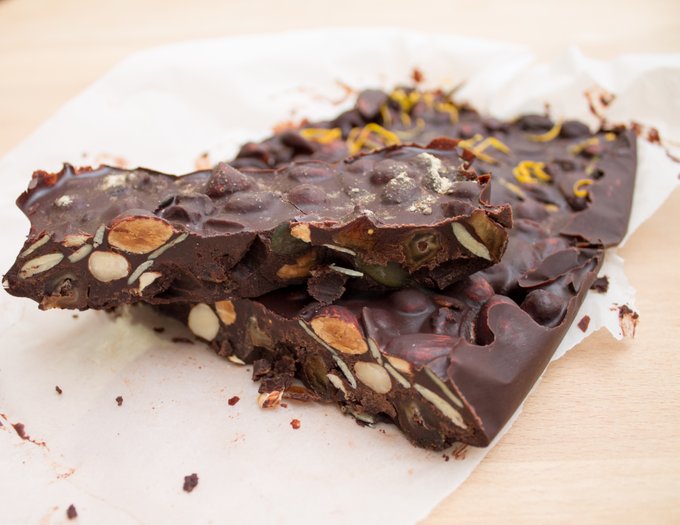

This deliciously indulgent chocolate bark recipe offers heart-healthy dark chocolate with toasted walnuts, pecans and almonds — and no added sugar! And each serving contains only 70 calories.
Makes 35 servings
Serving = 1/2 ounce
Calories: 70
Sodium: 15 mg
Sugar: 4 g
Cholesterol: 0 mg
Saturated fat: 2 g
Fiber: 1 g
Protein: 1 g
Carbohydrate: 5 g


Learning to control stress is your best defense against these anxiety-ridden dreams
Contributors: Michelle Drerup, PsyD, DBSM and Alexa Kane, PsyD.
There are a lot of areas of sleep that science and medicine can understand and explain. But dreams are an entirely different territory, as the question ‘why we dream’ remains largely unanswered.
Vivid and frequent dreaming is often left open to interpretation through things like dream dictionaries and discussing with friends. Did that dream about your ex-boss really mean you have pent-up guilt and anxiety about your last job? Frequently having stress or anxiety-ridden dreams is usually a red flag for real life stress and the role it’s playing on your body. If you’re constantly waking up panicking in a cold sweat over a dream, it’s time to get your thoughts and stress in order.
Stress is an emotional, physical or mental tension that results from something that’s outside of us.
Some of the bigger stressors or stressful life events include moving to a new place, changing roles at school or work, relationship issues or losing a family member. Stress can cause sleep difficulties, including insomnia, by making it difficult to fall asleep and stay asleep. This impacts the quality of rest. Stress can also cause hyperarousal, which can upset the balance between sleep and wakefulness.
Being stressed is associated with poor sleep in general, and may trigger more frequent dreams. So it’s not uncommon to experience a distressing dream prior to a big event like a job interview, taking an exam or an important appointment.
And although there’s limited research about controlling the content of dreams, anxiety dreams can generally be a result of increased stress during our day-to-day lives. Daily stress can also increase the frequency of these dreams.
The good news? You have a great deal of control over your stress. If you learn to better manage stress in your life, you’ll likely decrease anxiety-ridden dreams and improve your sleep.
Here are four simple strategies to help your mind and body relax before turning in for the night:
We’ve all been there – a nightmare or stress dream causes you to wake up. The next thing you know you’re lying there overthinking your finances and everything you have to do the next day.
When this happens, what can you do to get back to sleep?
Since dreams obviously aren’t measurable, there’s no real answer to what meaning they hold in our day-to-day life. But we do know that we generally have control over daily stress, which can trigger weird or anxiety-clad dreams. Learning to control the crazy and manage your stress is your best defense to help you sleep peacefully



Harvard HealthVerified account @HarvardHealth
Recent study: Running decreases the risk of death, and potentially prolong life. But any exercise is good exercise. http://hvrd.me/j2EM30c0Kde



There is something special about using fresh peas straight out of the pod. This recipe was inspired by our root-to-stem philosophy of cooking: It always seems like such a waste to throw away the pea pods, but they are relatively inedible. To make use of the pods, we’ve pureed them into a spring-fresh pasta sauce. Remember: Pasta for breakfast is a great choice, especially when it’s loaded with healthful pea protein.
Kosher salt
1 pound fresh English peas in pods (yields about 1 cup shelled peas and about 3 ½ cups pods)
½ cup water
¼ cup extra-virgin olive oil
2 small spring onions or 2 large shallots, chopped
2 small spring garlic (whites) or 3 garlic cloves, minced
2 tablespoons Greek yogurt (optional)
12 ounces whole grain pasta, such as linguine, rigatoni or small shells
Freshly ground black pepper
¼ cup fresh mint (peppermint preferred), thinly sliced
Espelette pepper to taste (optional)
Grated Parmigiano Reggiano cheese (optional)
Makes 4 servings.
Calories: 554 kcal
Total fiber: 12 g
Soluble fiber: 0.1 g
Protein: 15.5 g
Total fat: 16.7 g
Saturated fat: 2.0 g
Healthy fats: 12.1 g
Carbohydrates: 84 g
Sugars: 7.7 g
Added sugars: 0 g
Sodium: 178 mg
Potassium: 433 mg
Magnesium: 14 mg
Calcium: 134 mg
Source: The What to Eat When Cookbook by Michael F. Roizen, MD, Michael Crupain, MD, MPH and Jim Perko, Sr, CEC, AAC.