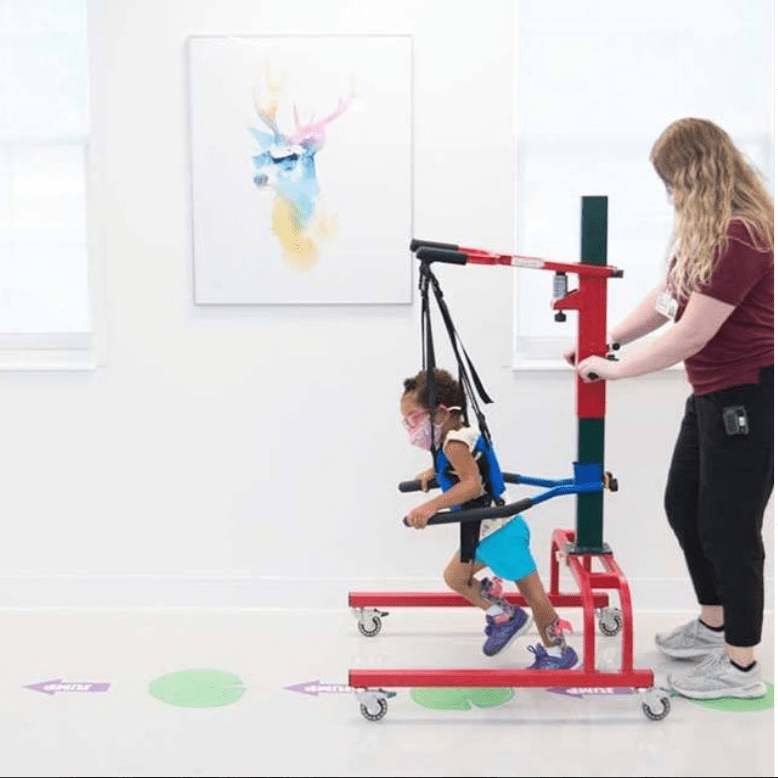
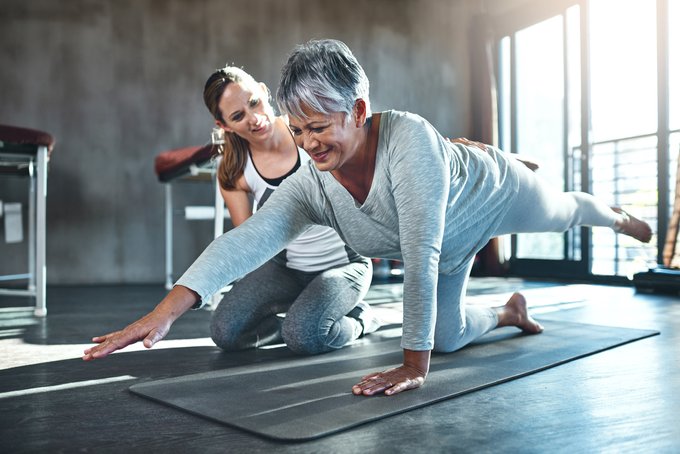
Therapeutic massage targets specific health concerns by working on muscles and soft tissue to reduce pain, improve mobility and support recovery. It's often used alongside other treatments and tailored to your individual needs. pic.twitter.com/YT0ubKJMRj
As you move throughout your day, the joints in your ankles and surrounding muscles absorb a lot of force. And that can take a toll. The good news: You can work to strengthen your ankle muscles and adjoining ligaments. This will help ward off injuries and improve your stability… pic.twitter.com/hgpHIH62l8
As you move throughout your day, the joints in your ankles and surrounding muscles absorb a lot of force. And that can take a toll. The good news: You can work to strengthen your ankle muscles and adjoining ligaments. This will help ward off injuries and improve your stability and mobility. Mary Hamker, PT and Amanda George, PT share some easy balance exercises to try.
Therapeutic massage targets specific health concerns by working on muscles and soft tissue to reduce pain, improve mobility and support recovery. It's often used alongside other treatments and tailored to your individual needs. pic.twitter.com/YT0ubKJMRj
As you move throughout your day, the joints in your ankles and surrounding muscles absorb a lot of force. And that can take a toll. The good news: You can work to strengthen your ankle muscles and adjoining ligaments. This will help ward off injuries and improve your stability and mobility. Mary Hamker, PT and Amanda George, PT share some easy balance exercises to try.
5 surprising benefits of #walking: Any physical activity is a boon to your overall health. But walking in particular comes with a host of benefits. https://bit.ly/3uyNvhI#HarvardHealth
The next time you have a check-up, don’t be surprised if your doctor hands you a prescription to walk. Yes, this simple activity that you’ve been doing since you were about a year old is now being touted as “the closest thing we have to a wonder drug,” in the words of Dr. Thomas Frieden, former director of the Centers for Disease Control and Prevention.
Of course, you probably know that any physical activity, including walking, is a boon to your overall health. But walking in particular comes with a host of benefits. Here’s a list of five that may surprise you.
1. It counteracts the effects of weight-promoting genes. Harvard researchers looked at 32 obesity-promoting genes in over 12,000 people to determine how much these genes actually contribute to body weight. They then discovered that, among the study participants who walked briskly for about an hour a day, the effects of those genes were cut in half.
2. It helps tame a sweet tooth. A pair of studies from the University of Exeter found that a 15-minute walk can curb cravings for chocolate and even reduce the amount of chocolate you eat in stressful situations. And the latest research confirms that walking can reduce cravings and intake of a variety of sugary snacks.
3. It reduces the risk of developing breast cancer. Researchers already know that any kind of physical activity blunts the risk of breast cancer. But an American Cancer Society study that zeroed in on walking found that women who walked seven or more hours a week had a 14% lower risk of breast cancer than those who walked three hours or fewer per week. And walking provided this protection even for the women with breast cancer risk factors, such as being overweight or using supplemental hormones.
4. It eases joint pain. Several studies have found that walking reduces arthritis-related pain, and that walking five to six miles a week can even prevent arthritis from forming in the first place. Walking protects the joints — especially the knees and hips, which are most susceptible to osteoarthritis — by lubricating them and strengthening the muscles that support them.
5. It boosts immune function. Walking can help protect you during cold and flu season. A study of over 1,000 men and women found that those who walked at least 20 minutes a day, at least 5 days a week, had 43% fewer sick days than those who exercised once a week or less. And if they did get sick, it was for a shorter duration, and their symptoms were milder.

Muscle flexibility is important for your body. But according to sports medicine experts at Mayo Clinic, the old way of stretching before you exercise isn't the right approach. Learn more: https://t.co/zI1ZzXANQ7pic.twitter.com/Ho9yMdiAca
Muscle flexibility is important for your body. But according to sports medicine experts at Mayo Clinic, the old way of stretching before you exercise isn’t the right approach. Learn more: https://mayocl.in/3y0QTEf
Signs It’s Time To Lower Your Baby’s Crib Mattress
There’s no magical age or height — it’s all a matter of your baby’s mobility
Funny how quickly things change when it comes to babies, right? One day it’s all swaddles and burp cloths and tummy time. Then, before you know it, they’re crawling around trying to drink out of the dog’s water bowl.
Babies hit new milestones faster than you can say, That’s one for the baby book. And while you’re looking for a pen, you might want to grab a screwdriver, too. Because as your baby becomes more mobile, it’s a cue that it’s time to lower their crib.
“Lowering the crib isn’t so much about age, it’s about your baby’s abilities,” says pediatrician Laura O’Connor, MD. “The more mobile your baby gets, the lower the crib should go.”
So, if you can’t plan on your calendar when the right time is, how will you know when to lower the crib mattress? Dr. O’Connor shares some tips for what to look for.
When to lower the crib mattress
Sure, back in the day, cribs with drop-down sides were all the rage. But they’ve been banned after they were found to result in serious injuries and even deaths.
Most cribs these days come with high, middle and low settings for the mattress. That’s for both parents’ comfort and baby’s safety.
Think about it: If your newborn’s crib mattress was down below your knees, you’d be reaching awfully low to place them in bed. And it would be just about impossible to get them back out without crawling in yourself. (Don’t do that. Your crib isn’t meant to hold an adult’s weight.)
On the other hand, a baby who can stand would be in danger of taking a big tumble if their mattress was only a few inches below the crib rail.
But all those different height settings can be confusing. You’ll rest easier knowing your little tot is safe in their crib. Dr. O’Connor helps us take the guesswork out of each crib setting with this quick reference guide:
Developmental stage
Sleeping arrangement
Approximate age
Newborn.
Bassinet or crib’s highest setting.
Under 4 months.
Baby who can roll over.
Crib’s highest setting.
4 months old.
Baby who can sit up, “commando crawl” or get up on their hands and knees.
Crib’s middle setting.
6 months old.
Baby who can stand up or pull themselves up to standing.
Crib’s lowest setting.
9 months old.
Baby who can climb out of the crib or has outgrown the crib.
Big-kid bed.
Anywhere from 18 months to about 3 years old.
Consult your crib’s instruction manual for specifics on how to lower the crib mattress. Most manufacturers provide them online if you can’t find yours. Be sure to tighten all screws securely.
Highest crib setting
If your infant has been sleeping in a bassinet, they should be moved to a crib by the time they can roll over, Dr. O’Connor says. For many babies, that happens somewhere around 4 months old.
But bassinets have different height and weight restrictions. Even if your little one isn’t yet rolling, if they’ve reached the maximum height or weight for the bassinet, it’s time to move to a crib to make sure they have the stability and protection they need.
The highest setting on your crib is the right place for babies who can’t sit up.
“Infants have so little control over their bodies, it’s important for their safety, and for everyone’s comfort, if parents don’t have to bend too far to lay them down or pick them up,” O’Connor explains.
Middle crib setting
After rolling over, other mobility milestones come fast. And with baby’s new moves comes another shift in crib height.
Dr. O’Connor says you should plan to move your crib mattress to the middle height before your baby can crawl. Move the crib down when your baby can start to do any of these pre-crawling actions:
Sit up on their own.
Crawl “commando style” (inch forward by pulling with their arms with their bellies on the ground).
Assume a crawling position, by getting up on their hands and knees.
Many babies begin to hit these milestones around 6 months old. But they may come even earlier, so let your baby’s abilities be your guide.
Lowest crib setting
Standing and walking are probably two of the most exciting milestones in your baby’s first year. And they’re signs that it’s time for the crib to be lowered for its last time.
“By the time your baby can stand up or pull themselves up, their crib should be at its lowest setting,” Dr. O’Connor notes. “If the crib mattress is too high, it becomes a big fall risk.”
Some babies may start off standing by using furniture (or whatever’s handy … say, your leg) to pull themselves up. And the rails on their crib can be perfect for pulling up.
So, even if your baby doesn’t stand up independently yet, any standing is a sign that it’s time to move the crib mattress to its lowest point.
And don’t let sleep sacks or other swaddles lull you into a false sense of security. Sure, they can make standing harder. But even with a sleep sack on, your baby can try to pull themselves to standing. So, if they can get up on their own two feet without the sleep sack, it’s time to make the crib at low as it goes.
Time for a big-kid bed
After the crib reaches its lowest point, it can stay there for a while, Dr. O’Connor says. Most toddlers should sleep in a crib until they’re at least 18 months old. Some may not need to move to a toddler bed until well after their third birthday.
The American Academy of Pediatrics recommends toddlers move to a bed if:
They’re 35 inches tall.
The crib rail is in line with the middle of their chest (at their nipples) when they stand in their crib.
They climb out of the crib.
“If your baby is climbing out of their crib or has outgrown it and causing a dangerous situation, it’s time to move to a bed. If not, it’s better to save the bed for a while,” Dr. O’Connor advises. “Beds come with a lot of autonomy and responsibility for your child, so the longer you can wait, the better for most people.”
Keep safety first
Of course, crib height is just one part of making sure your baby has a safe sleep environment. You also want to make sure you’re following these other safe sleep practices during your baby’s first year:
Use the firm side of the crib mattress.
Keep pillows, blankets, stuffed animals and other soft items out of the crib.
If you have any questions about crib safety or safe sleep, Dr. O’Connor says to talk with your child’s healthcare provider. They can help you understand the best ways to keep your baby safe and sleeping soundly
5 surprising benefits of #walking: Any physical activity is a boon to your overall health. But walking in particular comes with a host of benefits. https://bit.ly/3uyNvhI#HarvardHealth
The next time you have a check-up, don’t be surprised if your doctor hands you a prescription to walk. Yes, this simple activity that you’ve been doing since you were about a year old is now being touted as “the closest thing we have to a wonder drug,” in the words of Dr. Thomas Frieden, former director of the Centers for Disease Control and Prevention.
Of course, you probably know that any physical activity, including walking, is a boon to your overall health. But walking in particular comes with a host of benefits. Here’s a list of five that may surprise you.
1. It counteracts the effects of weight-promoting genes. Harvard researchers looked at 32 obesity-promoting genes in over 12,000 people to determine how much these genes actually contribute to body weight. They then discovered that, among the study participants who walked briskly for about an hour a day, the effects of those genes were cut in half.
2. It helps tame a sweet tooth. A pair of studies from the University of Exeter found that a 15-minute walk can curb cravings for chocolate and even reduce the amount of chocolate you eat in stressful situations. And the latest research confirms that walking can reduce cravings and intake of a variety of sugary snacks.
3. It reduces the risk of developing breast cancer. Researchers already know that any kind of physical activity blunts the risk of breast cancer. But an American Cancer Society study that zeroed in on walking found that women who walked seven or more hours a week had a 14% lower risk of breast cancer than those who walked three hours or fewer per week. And walking provided this protection even for the women with breast cancer risk factors, such as being overweight or using supplemental hormones.
4. It eases joint pain. Several studies have found that walking reduces arthritis-related pain, and that walking five to six miles a week can even prevent arthritis from forming in the first place. Walking protects the joints — especially the knees and hips, which are most susceptible to osteoarthritis — by lubricating them and strengthening the muscles that support them.
5. It boosts immune function. Walking can help protect you during cold and flu season. A study of over 1,000 men and women found that those who walked at least 20 minutes a day, at least 5 days a week, had 43% fewer sick days than those who exercised once a week or less. And if they did get sick, it was for a shorter duration, and their symptoms were milder.