
The 5 pillars of longevity: Movement, nutrition, sleep, stress reduction, and social connection. Dr. David Barzilai,Harvard Health

If you hear the term “longevity” and think only about living longer, you’re missing half the point.

“What we actually want is both more years and more of those years lived in good health,” says Dr. David Barzilai, a longevity physician and the medical editor of Harvard Health Publishing’s Special Health Report Pathways to Longevity. “Almost no one wants additional years of frailty and dependence; they want more years of feeling well, moving freely, thinking clearly, and staying engaged with the people and work they love.”

To that end, recent years have seen an explosion in interest in longevity and healthy aging, largely driven by “science that’s genuinely more exciting than it was a decade ago,” says Dr. Barzilai, also a lecturer at Harvard Medical School.

Lifestyle integral to longevity

While it’s clear that genetics play a role in living longer and staying healthy, lifestyle appears to be just as important. Five lifestyle patterns consistently show up in longevity research: movement, nutrition, sleep, stress management, and social connection.

“Good health is surprisingly unglamorous,” Dr. Barzilai says. “What matters most are the basics people already know about but rarely execute consistently over decades. There is no magic to it.”

Here, Dr. Barzilai expands on each of the five pillars of longevity.

Movement

Movement is the closest thing people have to a “master signal,” he says. “It improves nearly every system at once, from insulin sensitivity to brain health to bone density. And cardiorespiratory fitness is one of the strongest predictors of mortality we have ever measured.”

Dr. Barzilai recommends combining various forms of movement to maximize health, including twice-weekly resistance training and 150 minutes of moderate or 75 minutes of vigorous aerobic activity each week. “And everyday movement counts on its own,” he says. “Breaking up long stretches of sitting with two to three minutes of light activity measurably improves glucose and blood-pressure responses.”

Nutrition

Nutrition shapes the metabolic environment our cells live in day to day, governing blood glucose, inflammation, and the raw materials for muscle and repair, Dr. Barzilai says.

Healthspan vs. Lifespan

We’re living longer than ever—but are we living well?

Harvard Medical School’s Special Health Report, Pathways to Longevity, looks beyond “anti aging” hype to share what science really says about extending your healthspan—the years you stay strong, independent, and mentally sharp.

From nutrition and movement to sleep, stress, social connection, and the latest longevity drugs, this report turns complex research into clear, practical steps you can start now.

“The principles that have held up across decades of research are unglamorous and durable: build meals around whole foods,” he explains. “Get enough protein, which becomes more important, not less, as you age. And avoid the large blood glucose spikes you get from refined carbohydrate eaten on its own, which in practice means anchoring meals with protein, healthy fats, and fiber.”

Sleep

Sleep is fundamental to longevity because that’s when the body takes care of essential maintenance — clearing metabolic waste from the brain, consolidating memory, and resetting the hormones that govern appetite and stress, Dr. Barzilai says.

Experts recommend adults get seven to eight hours each night. Research also shows that consistency matters more than quantity. “That is encouraging,” he says, “because a steady wake time, weekends included, is something most people can actually manage.”

Stress reduction

Stress itself isn’t a problem, since our body’s acute stress response — which sharpens focus and fuels energy levels — can protect us from genuine threats.

“The trouble comes when it never switches off,” Dr. Barzilai says. “Chronic stress holds the body in a low-grade alarm state that, over years, wears on the cardiovascular and immune systems, disrupts sleep and metabolism, and appears to accelerate several of the underlying processes of aging.”

The most dependable ways to regulate stress are physical and social rather than purely mental, he says. “People reach for a relaxation app and overlook that movement, sufficient sleep, exposure to daylight, and time with people they trust are often the more powerful levers. Regular exercise in particular is one of the best-validated stress and mood interventions we have.”

Social connection

Social connection is probably the longevity pillar people neglect most, Dr. Barzilai says. “People will track their macros and their step count to the decimal and never think to protect their friendships with the same intentionality, even though the survival data on relationships rival the data on much of what they are measuring,” he says.

If you’re feeling isolated, try to make connecting with others a regular commitment rather than a grand gesture, he says. “Begin with one recurring, low-pressure point of contact: a standing weekly call with one person, a class or volunteer commitment that puts you in the same room with the same faces again and again, a daily walk somewhere you will see neighbors. Pick one recurring contact and protect it like an appointment, and treat a few real relationships with the same seriousness you would give your blood pressure or your exercise.”

Which pillar of longevity is most important?The habits most strongly linked to living a longer, healthier life are also some of the simplest: move regularly, eat well, sleep sufficiently, manage stress, and stay connected to others. But which one counts most? It’s impossible to gauge, says Dr. David Barzilai, a longevity physician and lecturer at Harvard Medical School.“How much each pillar matters depends heavily on where a given person is starting from,” he says. “For someone sedentary, adding movement is transformative. For someone running on five ragged hours of sleep, fixing sleep will do more than another workout. For someone isolated, rebuilding connection may be the highest-yield change of all.”“What I can say with confidence is that the most underrated pillar is social connection, and the most foundational day to day are sleep, physical activity, and nutrition, since they are the ground the others stand on,” Dr. Barzilai adds. “But the useful question is not which pillar wins in the abstract. It is which one you are personally weakest in right now, because that is where your next improvement will pay off most.”

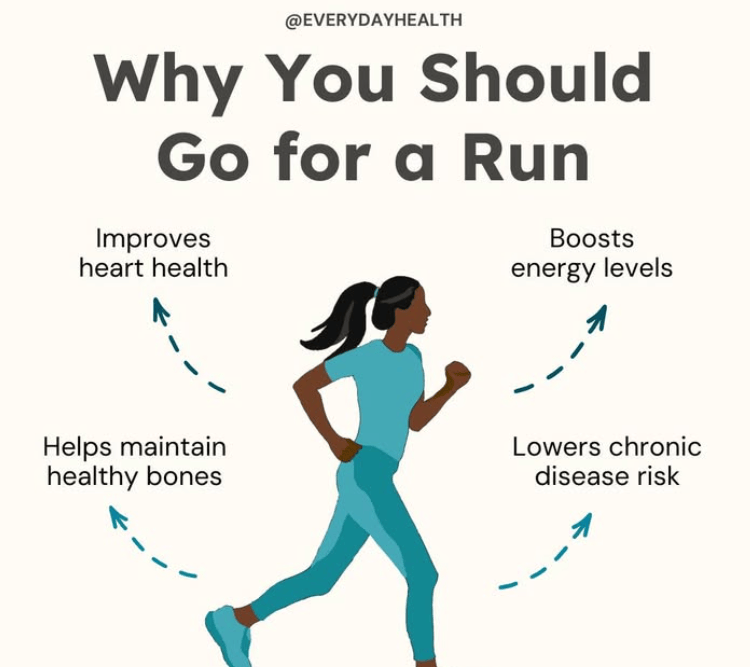
7 Potential Health Benefits of Running @EverydayHealth

Experts share the top ways running boosts health, from preventing chronic disease to strengthening bones.

By

Elizabeth Millard

Published on February 23, 2024Medically Reviewed

by

Kara Andrew, RDN, LDN

Add us on Google

Explore This Topic

There’s a reason running remains a popular form of cardio: The health benefits — mental and physical — are numerous.

Even medical professionals are fans: “Running is how I find peace and relaxation. Although I’ve done multiple marathons, it’s really on the everyday runs that I see the most benefits emotionally, and it just keeps me healthy overall,” says Bryant Walrod, MD, a sports medicine specialist at the Ohio State University Wexner Medical Center in Columbus.

If you’re not running currently and you want to get started, Dr. Walrod emphasizes the importance of integrating the sport gradually into your exercise routine to build up stamina and strength — and avoid injury.

And if you have any health conditions, particularly heart issues, talk to your doctor before starting, Walrod adds.

Learn what health perks running offers and why it’s a worthwhile addition to your fitness routine.

RELATED: 5 Weird Things Running Does to Your Body

1. Running Builds Cardiovascular Fitness

One of running’s biggest claims to fame is its ability to boost aerobic or cardiovascular fitness, which the Cleveland Clinic defines as how well your heart and lungs can supply the oxygen you need to exercise at medium to high intensity.

[1]

Aerobic fitness is often measured by VO2 max, or the maximum amount of oxygen a person can utilize during intense exercise.

[2] A higher VO2 max typically is a sign of greater fitness.

Running, like other forms of cardio, forces your heart and lungs to deliver more oxygen to the bloodstream and muscles than they do at rest. The more you run, the more efficient your heart and lungs become.

[3] This not only helps you run longer and faster but also makes everyday aerobic activities like walking and climbing stairs feel more effortless.

2. Running Improves Heart Health

Building your cardiovascular fitness can pay off in heart health benefits.

For example, a systematic review and meta-analysis of 22 trials found that running can help lower blood pressure in people with chronic high blood pressure (hypertension). However, the greatest results were from running at a moderate pace and lower volume (total running time or mileage).

[4]

In addition, a large-scale study that used data collected from more 55,000 adults over the course of 15 years found that runners were 45 percent less likely to die from a heart attack or stroke than nonrunners. Even running fewer than six miles per week was enough to lower risk, compared with not running.

[5]

3. Running Improves Mood and Energy Levels

Running is a proven mood- and energy-booster.

For example, one study found that jogging for only 15 minutes (approximately one to two miles) improved perceived energy levels in undergraduate students and was more effective than meditation, deep breathing, progressive muscle relaxation, or guided imagery.

[6]

Exercise releases feel-good brain chemicals known as endorphins.

[7] Endorphins act as natural painkillers, create a general feeling of well-being, and are most effectively released by moderate-intensity aerobic exercise like running, notes Harvard Health.

[8]

Some runners are even lucky enough to experience a “runner’s high,” a relatively rare sensation often described as a feeling of bliss. Research suggests this sensation happens when the endocannabinoid system (which helps regulate pain perception, memory, mood, appetite, and many other bodily systems) gets triggered.

[9]

“When you run, it stimulates the release of endocannabinoids, which are your body’s natural pain relief medications, and that’s what gives you that ‘runner’s high’ feeling,” says Jordan Tishler, MD, an internal medicine physician at Brigham and Women’s Hospital in Boston, Massachusetts, who specializes in endocannabinoid medicine.

4. Running Maintains Healthy Bones

Running is a high-impact activity, which means there’s a moment when both feet leave the ground. That tends to generate concern about whether running places too much stress on your joints and bones, especially in older runners.

But research suggests that usually the opposite is true.

For example, a study published in 2021 in JBMR Plus assessed bone mineral density scans taken 10 years apart in sprinters between the ages of 40 and 85. Researchers found that those who ran regularly maintained — and even improved — their bone density over time. Meanwhile, those who reduced their training saw a decline in bone health.

[10]

The stress of running spurs your bones to adapt and become stronger, explains the study’s lead author Tuuli Suominen, PhD, a researcher at the University of Jyväskylä in Finland.

However, it’s important to start with less intense exercises and progress your running slowly, she adds. If you ramp up your mileage and intensity too quickly, your bones may not adapt quickly enough, increasing injury risk. Research suggests that incorporating strength training with foam rolling into your routine can help lower injury risk, too.

[11]

5. Running May Lower Chronic Disease Risk

As a form of physical activity, running can help prevent chronic conditions like obesity, type 2 diabetes, heart disease, and many types of cancer, per the Centers for Disease Control and Prevention.

[12]

Research in more than 1,000 adults showed that runners had a 28 percent lower risk of developing type 2 diabetes during an average follow-up period of 6.5 years, compared with nonrunners.

[13]

“Regular running can also be useful for weight management,” Walrod adds. “That often creates a beneficial ripple effect on your health.”

6. Running May Help You Live Longer

Running may prolong your life by improving your health and lowering your risk of chronic disease. In fact, research shows that runners generally have a 25 to 40 percent reduced risk of early death, compared with nonrunners. Moreover, runners tend to live three years longer than their nonrunning counterparts.

[14]

RELATED: The Last Word: Do You Really Need to Take 10,000 Steps a Day?

7. Running May Help With Weight Loss

Aerobic activities like running can burn many calories — between 240 and 336 in 30 minutes at a 5-miles-per-hour pace, per estimates from Harvard Health.

[15] Boosting your intensity also boosts your calorie burn.

By increasing the number of calories you burn during the day, you may be able to create a calorie deficit for weight loss. But know that exercise is only part of the weight loss equation; dietary changes are needed, too.

For example, one study involving 538 new runners found that those who ran five kilometers (approximately 3.1 miles) per week without changing their diet had an average weight loss of 5.6 kilograms (approximately 12.3 pounds) over one year. Meanwhile, those who ran and made dietary changes lost roughly 9.4 kilograms (20.7 pounds).

[16]

RELATED: Everyday Health Special Report: Weight Loss Reframed

The Takeaway

Running offers many health benefits, ranging from improved cardiovascular fitness and heart health to enhancing mood and boosting energy. Running can also promote healthier bones, help manage or prevent chronic diseases, and potentially extend your lifespan. When starting out, it is important to ease into a running routine gradually to build strength and endurance while avoiding injury.

The 5 pillars of longevity: Movement, nutrition, sleep, stress reduction, and social connection. Dr. David Barzilai,Harvard Health

If you hear the term “longevity” and think only about living longer, you’re missing half the point.

“What we actually want is both more years and more of those years lived in good health,” says Dr. David Barzilai, a longevity physician and the medical editor of Harvard Health Publishing’s Special Health Report Pathways to Longevity. “Almost no one wants additional years of frailty and dependence; they want more years of feeling well, moving freely, thinking clearly, and staying engaged with the people and work they love.”

To that end, recent years have seen an explosion in interest in longevity and healthy aging, largely driven by “science that’s genuinely more exciting than it was a decade ago,” says Dr. Barzilai, also a lecturer at Harvard Medical School.

Lifestyle integral to longevity

While it’s clear that genetics play a role in living longer and staying healthy, lifestyle appears to be just as important. Five lifestyle patterns consistently show up in longevity research: movement, nutrition, sleep, stress management, and social connection.

“Good health is surprisingly unglamorous,” Dr. Barzilai says. “What matters most are the basics people already know about but rarely execute consistently over decades. There is no magic to it.”

Here, Dr. Barzilai expands on each of the five pillars of longevity.

Movement

Movement is the closest thing people have to a “master signal,” he says. “It improves nearly every system at once, from insulin sensitivity to brain health to bone density. And cardiorespiratory fitness is one of the strongest predictors of mortality we have ever measured.”

Dr. Barzilai recommends combining various forms of movement to maximize health, including twice-weekly resistance training and 150 minutes of moderate or 75 minutes of vigorous aerobic activity each week. “And everyday movement counts on its own,” he says. “Breaking up long stretches of sitting with two to three minutes of light activity measurably improves glucose and blood-pressure responses.”

Nutrition

Nutrition shapes the metabolic environment our cells live in day to day, governing blood glucose, inflammation, and the raw materials for muscle and repair, Dr. Barzilai says.

Healthspan vs. Lifespan

We’re living longer than ever—but are we living well?

Harvard Medical School’s Special Health Report, Pathways to Longevity, looks beyond “anti aging” hype to share what science really says about extending your healthspan—the years you stay strong, independent, and mentally sharp.

From nutrition and movement to sleep, stress, social connection, and the latest longevity drugs, this report turns complex research into clear, practical steps you can start now.

“The principles that have held up across decades of research are unglamorous and durable: build meals around whole foods,” he explains. “Get enough protein, which becomes more important, not less, as you age. And avoid the large blood glucose spikes you get from refined carbohydrate eaten on its own, which in practice means anchoring meals with protein, healthy fats, and fiber.”

Sleep

Sleep is fundamental to longevity because that’s when the body takes care of essential maintenance — clearing metabolic waste from the brain, consolidating memory, and resetting the hormones that govern appetite and stress, Dr. Barzilai says.

Experts recommend adults get seven to eight hours each night. Research also shows that consistency matters more than quantity. “That is encouraging,” he says, “because a steady wake time, weekends included, is something most people can actually manage.”

Stress reduction

Stress itself isn’t a problem, since our body’s acute stress response — which sharpens focus and fuels energy levels — can protect us from genuine threats.

“The trouble comes when it never switches off,” Dr. Barzilai says. “Chronic stress holds the body in a low-grade alarm state that, over years, wears on the cardiovascular and immune systems, disrupts sleep and metabolism, and appears to accelerate several of the underlying processes of aging.”

The most dependable ways to regulate stress are physical and social rather than purely mental, he says. “People reach for a relaxation app and overlook that movement, sufficient sleep, exposure to daylight, and time with people they trust are often the more powerful levers. Regular exercise in particular is one of the best-validated stress and mood interventions we have.”

Social connection

Social connection is probably the longevity pillar people neglect most, Dr. Barzilai says. “People will track their macros and their step count to the decimal and never think to protect their friendships with the same intentionality, even though the survival data on relationships rival the data on much of what they are measuring,” he says.

If you’re feeling isolated, try to make connecting with others a regular commitment rather than a grand gesture, he says. “Begin with one recurring, low-pressure point of contact: a standing weekly call with one person, a class or volunteer commitment that puts you in the same room with the same faces again and again, a daily walk somewhere you will see neighbors. Pick one recurring contact and protect it like an appointment, and treat a few real relationships with the same seriousness you would give your blood pressure or your exercise.”

Which pillar of longevity is most important?The habits most strongly linked to living a longer, healthier life are also some of the simplest: move regularly, eat well, sleep sufficiently, manage stress, and stay connected to others. But which one counts most? It’s impossible to gauge, says Dr. David Barzilai, a longevity physician and lecturer at Harvard Medical School.“How much each pillar matters depends heavily on where a given person is starting from,” he says. “For someone sedentary, adding movement is transformative. For someone running on five ragged hours of sleep, fixing sleep will do more than another workout. For someone isolated, rebuilding connection may be the highest-yield change of all.”“What I can say with confidence is that the most underrated pillar is social connection, and the most foundational day to day are sleep, physical activity, and nutrition, since they are the ground the others stand on,” Dr. Barzilai adds. “But the useful question is not which pillar wins in the abstract. It is which one you are personally weakest in right now, because that is where your next improvement will pay off most.”

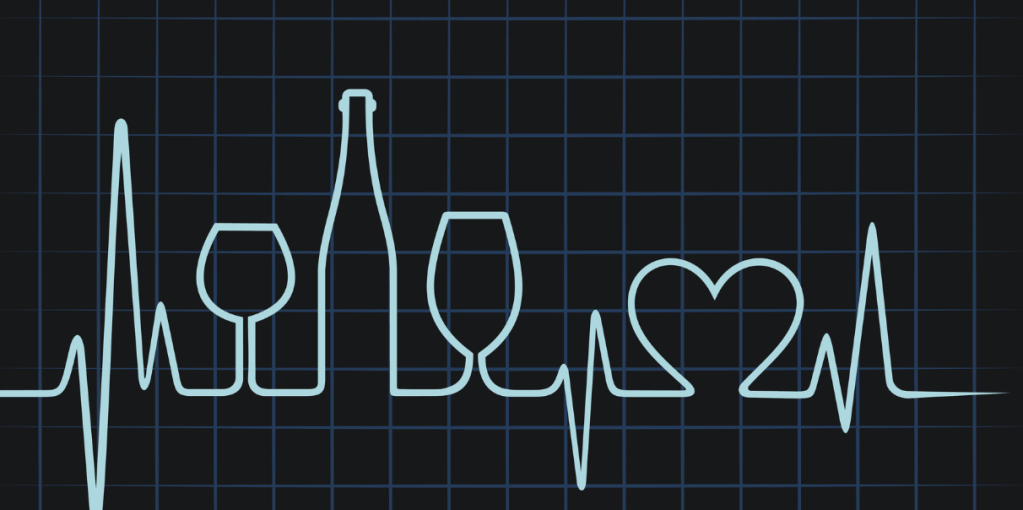
The real story behind alcohol and your heart health @HarvardHealth

July 6, 2018By Matthew Solan, Former Executive Editor, Harvard Men’s Health Watch

I’m not a regular drinker, nor a teetotaler. But like many people, I enjoy the occasional glass of wine with dinner, and nothing tastes better than an ice-cold beer on a sweaty summer day. Besides, some alcohol is a toast to my long-term heart health. At least that’s what the science says, right? Not really. When it comes to alcohol and heart health, the existing research is quite conflicting — some studies say alcohol improves heart health, while others imply the opposite.

Alcohol and heart health: What’s the real story?

The problem with most alcohol-related research is that it consists almost entirely of observational studies that only show an association, according to Dr. J. Michael Gaziano, a preventive cardiologist with Harvard-affiliated Brigham and Women’s Hospital’s Division of Aging and VA Boston.

So far, the strongest evidence with heart health has shown that alcohol can increase levels of HDL (good) cholesterol. HDL works to keep LDL (bad) cholesterol from clogging your arteries by moving it to the liver, where it’s broken down and removed from the body. Many studies have found that the combination of high HDL and low LDL levels protects against heart attacks and stroke. “However, this is not the most important factor in preventing heart disease, and there are other ways to increase HDL than drinking alcohol, such as regular exercise,” says Dr. Gaziano.

Quantity is a key factor when it comes to alcohol and heart health

While moderate amounts of alcohol can offer some heart benefits, too much can have damaging effects.

For instance, the more alcohol you drink at one time, the higher your heart rate gets, according to research from the European Society of Cardiology. A sudden spike in heart rate is potentially dangerous to people with heart conditions, as it could trigger arrhythmias (irregular heartbeats).

A study in the April 14, 2018, issue of The Lancet looked at the drinking habits of almost 600,000 people without heart disease, and found that people who had 10 or more drinks per week died one to two years earlier compared with those who drank five drinks or fewer per week. Having 18 drinks or more per week cut life expectancy by four to five years.

Focus on moderation

The lack of consistent data means that the takeaway message here is moderation — and the importance of avoiding excessive and binge drinking.

How much is considered moderate? A safe amount is no more than a drink per day, says Dr. Gaziano. “In terms of heart health, there does not appear to be more benefit beyond one daily drink.”

Of course, alcohol content can vary with the type and size of drink. In the United States, a standard drink is approximately 14 grams of pure alcohol, which equates to any one of these:

  • 12 ounces of regular beer
  • 5 ounces of wine
  • 1.5 ounces of 80-proof distilled spirits
  • 1 ounce of 100-proof spirits.

To get a more accurate analysis of your drink in terms of alcohol content per serving size, use this drink calculator from the National Institutes of Health.

One type of drink isn’t better than another, as your body reacts to alcohol the same whether it’s from beer, wine, or spirits, according to Dr. Gaziano.

About the Author

photo of Matthew Solan

Matthew Solan, Former Executive Editor, Harvard Men’s Health Watch

Matthew Solan is the former executive editor of Harvard Men’s Health Watch. He previously served as executive editor for UCLA Health’s Healthy Years and as a contributor to Duke Medicine’s Health News and Weill Cornell Medical … See Full Bio

View all posts by Matthew Solan

The 5 pillars of longevity: Movement, nutrition, sleep, stress reduction, and social connection. Dr. David Barzilai,Harvard Health

If you hear the term “longevity” and think only about living longer, you’re missing half the point.

“What we actually want is both more years and more of those years lived in good health,” says Dr. David Barzilai, a longevity physician and the medical editor of Harvard Health Publishing’s Special Health Report Pathways to Longevity. “Almost no one wants additional years of frailty and dependence; they want more years of feeling well, moving freely, thinking clearly, and staying engaged with the people and work they love.”

To that end, recent years have seen an explosion in interest in longevity and healthy aging, largely driven by “science that’s genuinely more exciting than it was a decade ago,” says Dr. Barzilai, also a lecturer at Harvard Medical School.

Lifestyle integral to longevity

While it’s clear that genetics play a role in living longer and staying healthy, lifestyle appears to be just as important. Five lifestyle patterns consistently show up in longevity research: movement, nutrition, sleep, stress management, and social connection.

“Good health is surprisingly unglamorous,” Dr. Barzilai says. “What matters most are the basics people already know about but rarely execute consistently over decades. There is no magic to it.”

Here, Dr. Barzilai expands on each of the five pillars of longevity.

Movement

Movement is the closest thing people have to a “master signal,” he says. “It improves nearly every system at once, from insulin sensitivity to brain health to bone density. And cardiorespiratory fitness is one of the strongest predictors of mortality we have ever measured.”

Dr. Barzilai recommends combining various forms of movement to maximize health, including twice-weekly resistance training and 150 minutes of moderate or 75 minutes of vigorous aerobic activity each week. “And everyday movement counts on its own,” he says. “Breaking up long stretches of sitting with two to three minutes of light activity measurably improves glucose and blood-pressure responses.”

Nutrition

Nutrition shapes the metabolic environment our cells live in day to day, governing blood glucose, inflammation, and the raw materials for muscle and repair, Dr. Barzilai says.

Healthspan vs. Lifespan

We’re living longer than ever—but are we living well?

Harvard Medical School’s Special Health Report, Pathways to Longevity, looks beyond “anti aging” hype to share what science really says about extending your healthspan—the years you stay strong, independent, and mentally sharp.

From nutrition and movement to sleep, stress, social connection, and the latest longevity drugs, this report turns complex research into clear, practical steps you can start now.

“The principles that have held up across decades of research are unglamorous and durable: build meals around whole foods,” he explains. “Get enough protein, which becomes more important, not less, as you age. And avoid the large blood glucose spikes you get from refined carbohydrate eaten on its own, which in practice means anchoring meals with protein, healthy fats, and fiber.”

Sleep

Sleep is fundamental to longevity because that’s when the body takes care of essential maintenance — clearing metabolic waste from the brain, consolidating memory, and resetting the hormones that govern appetite and stress, Dr. Barzilai says.

Experts recommend adults get seven to eight hours each night. Research also shows that consistency matters more than quantity. “That is encouraging,” he says, “because a steady wake time, weekends included, is something most people can actually manage.”

Stress reduction

Stress itself isn’t a problem, since our body’s acute stress response — which sharpens focus and fuels energy levels — can protect us from genuine threats.

“The trouble comes when it never switches off,” Dr. Barzilai says. “Chronic stress holds the body in a low-grade alarm state that, over years, wears on the cardiovascular and immune systems, disrupts sleep and metabolism, and appears to accelerate several of the underlying processes of aging.”

The most dependable ways to regulate stress are physical and social rather than purely mental, he says. “People reach for a relaxation app and overlook that movement, sufficient sleep, exposure to daylight, and time with people they trust are often the more powerful levers. Regular exercise in particular is one of the best-validated stress and mood interventions we have.”

Social connection

Social connection is probably the longevity pillar people neglect most, Dr. Barzilai says. “People will track their macros and their step count to the decimal and never think to protect their friendships with the same intentionality, even though the survival data on relationships rival the data on much of what they are measuring,” he says.

If you’re feeling isolated, try to make connecting with others a regular commitment rather than a grand gesture, he says. “Begin with one recurring, low-pressure point of contact: a standing weekly call with one person, a class or volunteer commitment that puts you in the same room with the same faces again and again, a daily walk somewhere you will see neighbors. Pick one recurring contact and protect it like an appointment, and treat a few real relationships with the same seriousness you would give your blood pressure or your exercise.”

Which pillar of longevity is most important?The habits most strongly linked to living a longer, healthier life are also some of the simplest: move regularly, eat well, sleep sufficiently, manage stress, and stay connected to others. But which one counts most? It’s impossible to gauge, says Dr. David Barzilai, a longevity physician and lecturer at Harvard Medical School.“How much each pillar matters depends heavily on where a given person is starting from,” he says. “For someone sedentary, adding movement is transformative. For someone running on five ragged hours of sleep, fixing sleep will do more than another workout. For someone isolated, rebuilding connection may be the highest-yield change of all.”“What I can say with confidence is that the most underrated pillar is social connection, and the most foundational day to day are sleep, physical activity, and nutrition, since they are the ground the others stand on,” Dr. Barzilai adds. “But the useful question is not which pillar wins in the abstract. It is which one you are personally weakest in right now, because that is where your next improvement will pay off most.”

Alcohol increases cortisol, our body’s stress hormone

longevitylibrary

•

Follow

RUBII•Loner (interlude)

Liked by morgand_73 and others

  • longevitylibrary's profile picturelongevitylibrary
  • A reminder that the research shows that alcohol makes stress WORSE (not better). That’s because it increases cortisol levels, and raises them for up to 7 days before they normalise. This means that even if you drink once a week, alcohol is worsening your stress hormone levels.

    Some research even shows that increases in cortisol from alcohol can also help predict future binge drinking behavior. High stress levels might make you MORE likely to binge drink.

    What a vicious cycle!

    Instead, make this the year that you prioritise your stress reduction through healthier means — like activity, healthy eating, meditation, self-care, spending time with loved ones, and even simply resting!

    What are your favorite ways to cope with stress? Let me know in the comments below

    Sign up to our newsletter for free ⬇️

    Comment ‘news’ or click the newsletter link in our bio for weekly insights on key anti-aging, biohacking & longevity insights and actionable tips.

    Follow @longevitylibrary to age slower and live happier, healthier & longer 💪🙏

    #Stress #AffectsOfAlcohol #Cortisol