New Study: No Level of Alcohol Is Entirely Safe @ClevelandClinic


Cleveland Clinic

@ClevelandClinic
·


Even casual drinking can put your long-term health at risk. Our liver specialist explains the findings of this study.

New Study: No Level of Alcohol — Even Casual Drinking — Is Entirely Safe

Leading cause of death of those age 15-49

Stopping for happy hour with colleagues after work. Cracking open a cold beer (or two) while watching the game. Meeting up with girlfriends for a glass of pinot noir. Having an alcoholic beverage of choice is a common way to unwind. But according to a recent study, even casual drinking can put your long-term health at risk.

Liver specialist Jamile Wakim-Fleming, MD, did not take part in the study, but says the research found that alcohol was a leading risk factor for both disease and premature death.

“They found that alcohol was the seventh leading cause of death worldwide,” she says. “But even more alarming, is that it was the first leading cause of death of people between the ages of 15-49.”

What the study examined

The study looked at global data from hundreds of previous studies and found that for all ages, alcohol was associated with 2.8 million deaths each year.

Researchers found that alcohol-related cancer and heart disease, infectious diseases, intentional injury, traffic accidents and accidental injury were some of the leading causes of alcohol-related deaths.

But isn’t alcohol good for your heart?

Dr. Wakim-Fleming says people often believe that a little bit of alcohol, wine in particular, may be good for their heart. But the study results didn’t show any health benefit to drinking any amount of alcohol.

She says this information, along with previous research that has shown more young people are dying from alcohol-related liver disease, indicates that excessive drinking among young adults is a growing problem.

The damage grows over time

And like any substance-abuse problem, Dr. Wakim-Fleming says the damage to the body from alcohol increases over your lifespan.

“It’s a cumulative effect,” she explains. “If you do it all at once, then you’re going to have the effect now. If you drink on a regular basis, over years it’s going to be cumulative and you will end up with a problem later on.”

Dr. Wakim-Fleming notes that anything we do in life involves risk, but it’s important to know what the risks are so that we can make the best decisions for our health.

Complete results of the study can be found in The Lancet. Facebook Twitter Linkedin Pinterest alcoholalcohol and healthalcohol-related liver disease

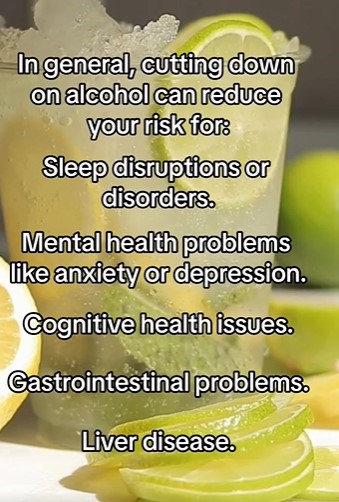
As more people are drinking less, here’s some of the benefits: better sleep, less anxiety/depression, memory’s better, fewer tummy problems @ClevelandClinic

Square profile picture

Cleveland Clinic

@ClevelandClinic

·

As more people are drinking less, there’s been an uptick in more drink companies creating nonalcoholic options. But it can still be tough to figure out which of these options are healthy. Keep an eye on ingredients like sugar, artificial sweeteners and caffeine. If you’re choosing nonalcoholic alternatives, consider options that are low in added sugars and free from unnecessary additives. Consulting a healthcare provider can help ensure your choices support your overall well-being.

Show more

Brownout vs. Blackout from drinking @ClevelandClinic #encephalopathy

Excess alcohol and substance use can cause temporary and permanent memory loss

What are blackouts and brownouts?

Blackouts involve complete memory loss caused by your brain’s inability to record new memories for a period of time due to the effects of excessive alcohol, substance misuse or some other condition.

But sometimes, auditory or visual cues can help a person piece together memories of what happened during a blackout. These cues could come in the form of texts, pictures or conversations with people who were present while you were blacked out. The medical term for blackouts is called transient loss of consciousness (TLOC).

The difference between a brownout and a blackout is that brownouts involve partial memory loss. With a brownout, you may be able to remember certain details from the period of time you were affected, but other portions of time can’t be recalled.

“The hippocampus is a part of your brain that takes our experiences and the awareness of all our senses and processes those into memories,” explains Dr. Streem. “It’s sensitive, and it’s the same part of the brain that deteriorates in people with Alzheimer’s disease.”

Excessive alcohol use isn’t the only thing that can cause blackouts or brownouts. Substance misuse on its own or with alcohol can increase your likelihood of experiencing a blackout. Hypnotics or sedatives and benzodiazepines like flunitrazepam (also known as Rohypnol or roofies) can also lead to blackouts or brownouts.

There are other medical conditions that cause blackouts or brownouts, too, including:

“Anything that causes damage to the brain, whether temporary or permanent, can cause memory loss if the damage is in the right spot,” states Dr. Streem.

Is a blackout the same as passing out?

Blackouts are not the same as passing out. When you pass out or faint, you experience a temporary loss of consciousness.

“When you’re passed out, you’re not awake. A blackout happens to someone who’s still conscious but they’re not coding any new memories,” explains Dr. Streem. “A person who has a blackout is still awake and they have some ability to think, but other parts of their brain may not be working well enough. Often, this is because of intoxication.”

Understanding these definitions and the difference between blackouts and passing out is incredibly important, as it may be difficult for other people to recognize someone is having a blackout because of their seemingly aware state.

How much alcohol can cause a blackout?

How much alcohol or substance use is needed to cause a blackout varies based on a person’s height, weight, sensitivity and assigned sex at birth.

“We know females absorb more alcohol in their bloodstream than males,” says Dr. Streem. “But for most people, it’s going to involve more than the legal blood alcohol limit. In almost all states in the U.S., the blood alcohol limit for driving is .08. Blackouts usually appear at blood alcohol levels that are twice the legal limit or higher.”

Studies have shown that young adults under the age of 25 are particularly vulnerable to experiencing blackouts. Additionally, blackouts may occur at far lower thresholds among younger populations. That’s largely because the parts of your brain responsible for decision-making aren’t fully matured until around age 25. Despite this, intentional binge drinking has been a common practice among young adults.

Regardless of age, recent studies show more frequent blackout experiences are related to an increase in memory lapse and cognitive difficulties even after alcohol misuse is corrected. This means that even after a blackout occurs, you can continue to experience memory loss and other difficulties recalling memories.

Blackout effects on your body

If you’re experiencing a blackout or brownout, you’re at higher risk for falling, injury and unwanted or unsafe sexual experiences. A person who is blacked out may also throw up while sleeping, which could lead to an increased risk of choking or suffocating.

It can be hard to determine when you’re going to have a blackout or brownout. But some signs it may be happening to you in the moment include:

  • Difficulty standing.
  • Nausea.
  • Lightheadedness.
  • Loss of vision or shrinking of your field of view.

Other signs of substance-related blackouts, specifically blackouts caused by sedatives, hypnotics or benzodiazepines, include:

  • Loss of bowel or bladder control.
  • Difficulty breathing.
  • Feeling drunk when you haven’t consumed alcohol or consumed less than your usual amount.
  • Sudden body temperature changes.
  • Sudden increase in dizziness, disorientation, loss of vision or difficulty speaking.

“Hypnotic drugs are prone to cause this kind of impairment and memory loss,” states Dr. Streem. “Sadly, people sometimes use them to take advantage of other people.”

Strategies for managing blackouts

A blackout ends when your body has absorbed the alcohol you consumed and your brain is able to make memories again. Sleep often helps this process along.

Alcohol is dehydrating by nature, so making sure you’re drinking plenty of water and staying hydrated is important. Being aware of potential signs of intoxication can also be helpful in understanding your limitations.

But what if you end up having a blackout anyway?

“The experience of a blackout can sometimes be an opportunity to learn about our bodies and our brains, and what we can and can’t handle,” says Dr. Streem. “But the most important thing to do when you have a blackout is to try and piece together as best we can what happened and whether we were injured. It also might be necessary to try to assess whether you’ve been taken advantage of in some way.”

If you think you’ve been injured, sexually or physically assaulted, it’s important that you get medical attention immediately and talk to the police about everything you can remember.

Other measures you can take to reduce the likelihood of blackouts and brownouts and increase your own safety include:

  • Drinking with people you trust.
  • Pairing up with a close friend or group of friends and leaving together.
  • Not drinking on an empty stomach.
  • Not taking drinks from other people.
  • Opening containers yourself or watching your drink being poured.
  • Taking your drink with you when leaving a room.
  • Not drinking anything that tastes or smells odd.
  • Asking for help when you start to feel drunk or intoxicated.

“There’s no way to prevent a blackout or brownout from happening other than to stop consuming so much alcohol or other substances that cause them,” says Dr. Streem. “Beyond that, safety and general physical care can be very helpful in making sure this doesn’t happen to you.”

Brownout vs. blackout from drinking @ClevelandClinic #encephalopathy

Excess alcohol and substance use can cause temporary and permanent memory loss

What are blackouts and brownouts?

Blackouts involve complete memory loss caused by your brain’s inability to record new memories for a period of time due to the effects of excessive alcohol, substance misuse or some other condition.

But sometimes, auditory or visual cues can help a person piece together memories of what happened during a blackout. These cues could come in the form of texts, pictures or conversations with people who were present while you were blacked out. The medical term for blackouts is called transient loss of consciousness (TLOC).

The difference between a brownout and a blackout is that brownouts involve partial memory loss. With a brownout, you may be able to remember certain details from the period of time you were affected, but other portions of time can’t be recalled.

“The hippocampus is a part of your brain that takes our experiences and the awareness of all our senses and processes those into memories,” explains Dr. Streem. “It’s sensitive, and it’s the same part of the brain that deteriorates in people with Alzheimer’s disease.”

Excessive alcohol use isn’t the only thing that can cause blackouts or brownouts. Substance misuse on its own or with alcohol can increase your likelihood of experiencing a blackout. Hypnotics or sedatives and benzodiazepines like flunitrazepam (also known as Rohypnol or roofies) can also lead to blackouts or brownouts.

There are other medical conditions that cause blackouts or brownouts, too, including:

“Anything that causes damage to the brain, whether temporary or permanent, can cause memory loss if the damage is in the right spot,” states Dr. Streem.

Is a blackout the same as passing out?

Blackouts are not the same as passing out. When you pass out or faint, you experience a temporary loss of consciousness.

“When you’re passed out, you’re not awake. A blackout happens to someone who’s still conscious but they’re not coding any new memories,” explains Dr. Streem. “A person who has a blackout is still awake and they have some ability to think, but other parts of their brain may not be working well enough. Often, this is because of intoxication.”

Understanding these definitions and the difference between blackouts and passing out is incredibly important, as it may be difficult for other people to recognize someone is having a blackout because of their seemingly aware state.

How much alcohol can cause a blackout?

How much alcohol or substance use is needed to cause a blackout varies based on a person’s height, weight, sensitivity and assigned sex at birth.

“We know females absorb more alcohol in their bloodstream than males,” says Dr. Streem. “But for most people, it’s going to involve more than the legal blood alcohol limit. In almost all states in the U.S., the blood alcohol limit for driving is .08. Blackouts usually appear at blood alcohol levels that are twice the legal limit or higher.”

Studies have shown that young adults under the age of 25 are particularly vulnerable to experiencing blackouts. Additionally, blackouts may occur at far lower thresholds among younger populations. That’s largely because the parts of your brain responsible for decision-making aren’t fully matured until around age 25. Despite this, intentional binge drinking has been a common practice among young adults.

Regardless of age, recent studies show more frequent blackout experiences are related to an increase in memory lapse and cognitive difficulties even after alcohol misuse is corrected. This means that even after a blackout occurs, you can continue to experience memory loss and other difficulties recalling memories.

Blackout effects on your body

If you’re experiencing a blackout or brownout, you’re at higher risk for falling, injury and unwanted or unsafe sexual experiences. A person who is blacked out may also throw up while sleeping, which could lead to an increased risk of choking or suffocating.

It can be hard to determine when you’re going to have a blackout or brownout. But some signs it may be happening to you in the moment include:

  • Difficulty standing.
  • Nausea.
  • Lightheadedness.
  • Loss of vision or shrinking of your field of view.

Other signs of substance-related blackouts, specifically blackouts caused by sedatives, hypnotics or benzodiazepines, include:

  • Loss of bowel or bladder control.
  • Difficulty breathing.
  • Feeling drunk when you haven’t consumed alcohol or consumed less than your usual amount.
  • Sudden body temperature changes.
  • Sudden increase in dizziness, disorientation, loss of vision or difficulty speaking.

“Hypnotic drugs are prone to cause this kind of impairment and memory loss,” states Dr. Streem. “Sadly, people sometimes use them to take advantage of other people.”

Strategies for managing blackouts

A blackout ends when your body has absorbed the alcohol you consumed and your brain is able to make memories again. Sleep often helps this process along.

Alcohol is dehydrating by nature, so making sure you’re drinking plenty of water and staying hydrated is important. Being aware of potential signs of intoxication can also be helpful in understanding your limitations.

But what if you end up having a blackout anyway?

“The experience of a blackout can sometimes be an opportunity to learn about our bodies and our brains, and what we can and can’t handle,” says Dr. Streem. “But the most important thing to do when you have a blackout is to try and piece together as best we can what happened and whether we were injured. It also might be necessary to try to assess whether you’ve been taken advantage of in some way.”

If you think you’ve been injured, sexually or physically assaulted, it’s important that you get medical attention immediately and talk to the police about everything you can remember.

Other measures you can take to reduce the likelihood of blackouts and brownouts and increase your own safety include:

  • Drinking with people you trust.
  • Pairing up with a close friend or group of friends and leaving together.
  • Not drinking on an empty stomach.
  • Not taking drinks from other people.
  • Opening containers yourself or watching your drink being poured.
  • Taking your drink with you when leaving a room.
  • Not drinking anything that tastes or smells odd.
  • Asking for help when you start to feel drunk or intoxicated.

“There’s no way to prevent a blackout or brownout from happening other than to stop consuming so much alcohol or other substances that cause them,” says Dr. Streem. “Beyond that, safety and general physical care can be very helpful in making sure this doesn’t happen to you.”

Brownout vs. blackout from drinking @ClevelandClinic #encephalopathy

Excess alcohol and substance use can cause temporary and permanent memory loss

What are blackouts and brownouts?

Blackouts involve complete memory loss caused by your brain’s inability to record new memories for a period of time due to the effects of excessive alcohol, substance misuse or some other condition.

But sometimes, auditory or visual cues can help a person piece together memories of what happened during a blackout. These cues could come in the form of texts, pictures or conversations with people who were present while you were blacked out. The medical term for blackouts is called transient loss of consciousness (TLOC).

The difference between a brownout and a blackout is that brownouts involve partial memory loss. With a brownout, you may be able to remember certain details from the period of time you were affected, but other portions of time can’t be recalled.

“The hippocampus is a part of your brain that takes our experiences and the awareness of all our senses and processes those into memories,” explains Dr. Streem. “It’s sensitive, and it’s the same part of the brain that deteriorates in people with Alzheimer’s disease.”

Excessive alcohol use isn’t the only thing that can cause blackouts or brownouts. Substance misuse on its own or with alcohol can increase your likelihood of experiencing a blackout. Hypnotics or sedatives and benzodiazepines like flunitrazepam (also known as Rohypnol or roofies) can also lead to blackouts or brownouts.

There are other medical conditions that cause blackouts or brownouts, too, including:

“Anything that causes damage to the brain, whether temporary or permanent, can cause memory loss if the damage is in the right spot,” states Dr. Streem.

Is a blackout the same as passing out?

Blackouts are not the same as passing out. When you pass out or faint, you experience a temporary loss of consciousness.

“When you’re passed out, you’re not awake. A blackout happens to someone who’s still conscious but they’re not coding any new memories,” explains Dr. Streem. “A person who has a blackout is still awake and they have some ability to think, but other parts of their brain may not be working well enough. Often, this is because of intoxication.”

Understanding these definitions and the difference between blackouts and passing out is incredibly important, as it may be difficult for other people to recognize someone is having a blackout because of their seemingly aware state.

How much alcohol can cause a blackout?

How much alcohol or substance use is needed to cause a blackout varies based on a person’s height, weight, sensitivity and assigned sex at birth.

“We know females absorb more alcohol in their bloodstream than males,” says Dr. Streem. “But for most people, it’s going to involve more than the legal blood alcohol limit. In almost all states in the U.S., the blood alcohol limit for driving is .08. Blackouts usually appear at blood alcohol levels that are twice the legal limit or higher.”

Studies have shown that young adults under the age of 25 are particularly vulnerable to experiencing blackouts. Additionally, blackouts may occur at far lower thresholds among younger populations. That’s largely because the parts of your brain responsible for decision-making aren’t fully matured until around age 25. Despite this, intentional binge drinking has been a common practice among young adults.

Regardless of age, recent studies show more frequent blackout experiences are related to an increase in memory lapse and cognitive difficulties even after alcohol misuse is corrected. This means that even after a blackout occurs, you can continue to experience memory loss and other difficulties recalling memories.

Blackout effects on your body

If you’re experiencing a blackout or brownout, you’re at higher risk for falling, injury and unwanted or unsafe sexual experiences. A person who is blacked out may also throw up while sleeping, which could lead to an increased risk of choking or suffocating.

It can be hard to determine when you’re going to have a blackout or brownout. But some signs it may be happening to you in the moment include:

  • Difficulty standing.
  • Nausea.
  • Lightheadedness.
  • Loss of vision or shrinking of your field of view.

Other signs of substance-related blackouts, specifically blackouts caused by sedatives, hypnotics or benzodiazepines, include:

  • Loss of bowel or bladder control.
  • Difficulty breathing.
  • Feeling drunk when you haven’t consumed alcohol or consumed less than your usual amount.
  • Sudden body temperature changes.
  • Sudden increase in dizziness, disorientation, loss of vision or difficulty speaking.

“Hypnotic drugs are prone to cause this kind of impairment and memory loss,” states Dr. Streem. “Sadly, people sometimes use them to take advantage of other people.”

Strategies for managing blackouts

A blackout ends when your body has absorbed the alcohol you consumed and your brain is able to make memories again. Sleep often helps this process along.

Alcohol is dehydrating by nature, so making sure you’re drinking plenty of water and staying hydrated is important. Being aware of potential signs of intoxication can also be helpful in understanding your limitations.

But what if you end up having a blackout anyway?

“The experience of a blackout can sometimes be an opportunity to learn about our bodies and our brains, and what we can and can’t handle,” says Dr. Streem. “But the most important thing to do when you have a blackout is to try and piece together as best we can what happened and whether we were injured. It also might be necessary to try to assess whether you’ve been taken advantage of in some way.”

If you think you’ve been injured, sexually or physically assaulted, it’s important that you get medical attention immediately and talk to the police about everything you can remember.

Other measures you can take to reduce the likelihood of blackouts and brownouts and increase your own safety include:

  • Drinking with people you trust.
  • Pairing up with a close friend or group of friends and leaving together.
  • Not drinking on an empty stomach.
  • Not taking drinks from other people.
  • Opening containers yourself or watching your drink being poured.
  • Taking your drink with you when leaving a room.
  • Not drinking anything that tastes or smells odd.
  • Asking for help when you start to feel drunk or intoxicated.

“There’s no way to prevent a blackout or brownout from happening other than to stop consuming so much alcohol or other substances that cause them,” says Dr. Streem. “Beyond that, safety and general physical care can be very helpful in making sure this doesn’t happen to you.”

9 Ways Alcohol Affects Your Health @ClevelandClinic

February 15, 2024

What Does Alcohol Do to Your Body? 9 Ways Alcohol Affects Your Health

Alcohol affects your whole body, from your liver and immune system to your brain and mental health

You probably already know that excessive drinking can affect you in more ways than one.

There are the empty calories that can lead to weight gain. There’s the potential for injury and regrettable choices. And don’t forget about the hangovers of course.

Heavy drinking can also lead to a host of health concerns, like brain damage, heart disease, cirrhosis of the liver and even certain kinds of cancer.

And that’s on top of the toll that alcohol use can take on relationships, not to mention the potential for financial strain and legal troubles.

But even moderate alcohol use changes the way your body functions.

We talked with hepatologist Shreya Sengupta, MD, about how alcohol use affects your body and your emotional health.

“Some people think of the effects of alcohol as only something to be worried about if you’re living with alcohol use disorder, which was formerly called alcoholism,” Dr. Sengupta says.

“But when you consider how alcohol is metabolized and used by your body, we can start to see that even moderate and social drinking affects our health to some degree.”

Dr. Sengupta shares some of the not-so-obvious effects that alcohol has on your body.

Liver

Your liver detoxifies and removes alcohol from your blood through a process known as oxidation. When your liver finishes that process, alcohol gets turned into water and carbon dioxide.

But when you ingest too much alcohol for your liver to process in a timely manner, a buildup of toxic substances begins to take a toll on your liver.

If alcohol continues to accumulate in your system, it can destroy cells and, eventually, damage your organs.

“When your liver is overwhelmed by oxidizing alcohol, it generates molecules that inhibit fat oxidation,” Dr. Sengupta explains. “The fats build up. Over time, it can lead to a condition known as steatotic liver disease.”

Steatotic liver disease used to go by the name fatty liver disease.

Steatotic liver disease develops in about 90% of people who drink more than 1.5 to 2 ounces of alcohol per day. That’s about one shot glass worth.

With continued alcohol use, steatotic liver disease can lead to liver fibrosis. Eventually, you can develop permanent and irreversible scarring in your liver, which is called cirrhosis.

“The good news is that earlier stages of steatotic liver disease are usually completely reversible in about four to six weeks if you abstain from drinking alcohol,” Dr. Sengupta assures.

Cirrhosis, on the other hand, is irreversible and can lead to liver failure and liver cancer, even if you abstain from alcohol.

Metabolism

You probably are keenly aware of the so-called “beer belly.” That’s shorthand for a round midsection that some people associate with drinking too much beer.

In reality, there’s no evidence that drinking beer (or your alcoholic beverages of choice) actually contributes to belly fat.

But there’s plenty of research to back up the notion that alcohol does lead to weight gain in general. Even for people who aren’t particularly heavy drinkers.

“Drinking gives your body work to do that keeps it from going about its other processes,” Dr. Sengupta notes. “Alcohol distracts your system from its regularly scheduled duties, including things like metabolizing carbohydrates and fats.”

Once you take a drink, your body makes metabolizing alcohol a priority — above processing anything else.

That’s because your body already has processes in place that allow it to store excess proteins, carbohydrates and fats. But there isn’t a storage tank for alcohol. So, your system prioritizes getting rid of alcohol before it can turn its attention to its other work.

That allows excess calories from the foods you eat to sit around, leading to weight gain.

Gut health

Your gut microbiome is a hotbed of bacteria that help keep your digestive system happy and healthy. The trillions of microbes in your colon and large and small intestines are critical to proper digestion. They also help fend off inflammation and support healthy metabolism.

When you drink too much alcohol, it can throw off the balance of good and bad bacteria in your gut.

“Alcohol can kill the good bacteria that live in your gut, allowing bad bacteria to grow unchecked,” Dr. Sengupta explains. “That can lead to problems with digestion, inflammation and even organ damage.”

Having a glass of wine with dinner or a beer at a party here and there isn’t going to destroy your gut. But even low amounts of daily drinking and prolonged and heavy use of alcohol can lead to significant problems for your digestive system.

Heart health

Too much alcohol is bad for your heart. Alcohol can cause:

  • Increased heart rate.
  • Spikes in blood pressure.
  • Irregular heartbeats (arrhythmia).
  • A weakening in your heart (cardiomyopathy).

Warnings from the World Heart Federation go so far as to state that no amount of alcohol is safe for your ticker.

But wait, you may be thinking, what about those headlines that claim red wine is supposed to be good for my heart?

There are a few studies that associate red wine with improved heart health in lab tests. But no research proves that red wine causes any improvements in heart health in people.

“The reality is that alcohol causes more health troubles than it could ever help,” Dr. Sengupta reinforces. “And that goes for your heart, as well as the rest of your body.”

Pancreas

Your pancreas helps your body digest food and manage your blood sugar. Drinking alcohol changes how your pancreas works.

“Your pancreas secretes fluids. Alcohol use can thicken those fluids, which can clog the ducts that those fluids flow out of,” Dr. Sengupta explains.

Like a clog in a drain, those thickened fluids can jam up your ducts. That can lead to pancreatitis, which is inflammation of the pancreas.

Pancreatitis can be a short-term (acute) condition that clears up in a few days. But prolonged alcohol abuse can lead to chronic (long-term) pancreatitis, which can be severe.

Cancer risk

The U.S. Centers for Disease Control and Prevention (CDC) has a clear warning regarding the connection between drinking and cancer: “The less alcohol you drink, the lower your risk for cancer.”

Why?

Your body breaks alcohol down into a chemical called acetaldehyde, which damages your DNA. Damaged DNA can cause a cell to grow out of control, which results in cancerous tumors.

Alcohol use has been shown to raise your risk for several kinds of cancer. That includes cancers of the:

  • Mouth.
  • Esophagus.
  • Throat.
  • Liver.
  • Breast.
  • Colon and rectum.

Immune system

If you drink every day, or almost every day, you might notice that you catch colds, flu or other illnesses more frequently than people who don’t drink. That’s because alcohol can weaken your immune system and make your body more susceptible to infection.

“We see lower levels of a specific kind of white blood cells called lymphocytes in people who drink heavily for long periods of time,” Dr. Sengupta reports. “That can leave them more vulnerable to infectious diseases.”

Brain

The morning after a night of over-imbibing can cause some temporary effects on your brain. Things like trouble concentration, slow reflexes and sensitivity to bright lights and loud sounds are standard signs of a hangover, and evidence of alcohol’s effects on your brain.

Long-term alcohol use can change your brain’s wiring in much more significant ways. Ways that your standard hangover cures won’t even begin to touch.

“Excessive alcohol consumption can cause nerve damage and irreversible forms of dementia,” Dr. Sengupta warns.

Mental health

Alcohol is a depressant. And prolonged alcohol use can lead to mental health conditions like anxiety and depression. Chronic misuse can also lead to paranoia and hallucinations.

Even drinking a little too much (binge drinking) on occasion can set off a chain reaction that affects your well-being. Lowered inhibitions can lead to poor choices with lasting repercussions — like the end of a relationship, an accident or legal woes. Each of those consequences can cause turmoil that can negatively affect your long-term emotional health.

“Alcohol tends to cause more problems than it solves for a lot of people,” Dr. Sengupta emphasizes. “If drinking is affecting your health, your relationships, your work, your finances, it’s time to make some serious changes.”

Ready to stop drinking and improve your health? These tips may help.

If you need more guidance to quit drinking, the Substance Abuse and Mental Health Services Administration (SAMHSA) offers a hotline, 24/7, 365 days a year. Call 1.800.662.HELP (4357).

Alcoholics Anonymous is available almost everywhere and provides a place to openly and nonjudgmentally discuss alcohol issues with others who have alcohol use disorder.