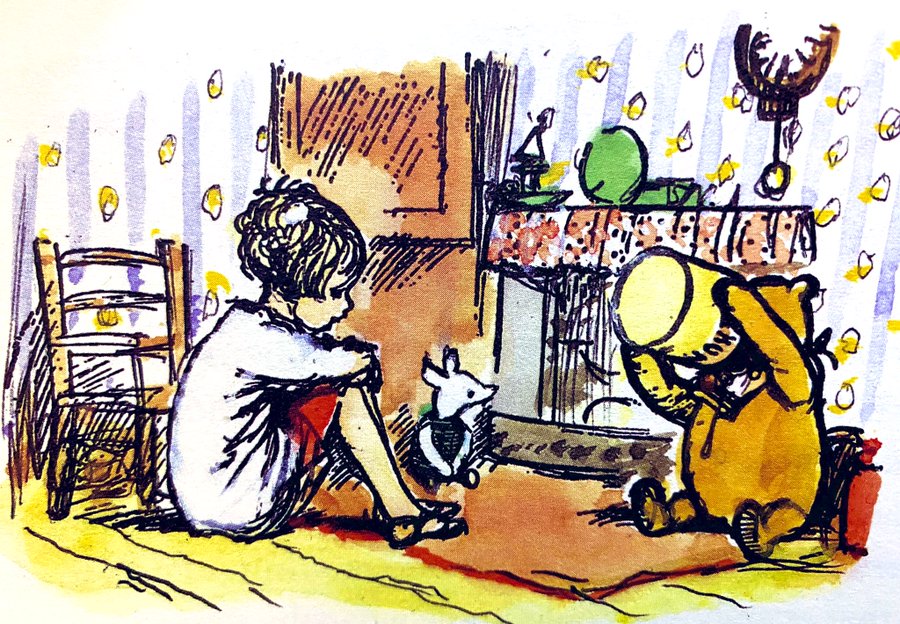
Tanita Tikaram💙 Retweeted A.A.Milne@A_AMilne·2h “What do you like doing best in the world, Pooh?” Pooh had to stop and think. Because although Eating Honey WAS a very good thing to do, there was a moment just before you began to eat it which was better than when you were, but he didn’t know what it was called. ~A.A.Milne
You’re taking cough syrup and lozenges in an attempt to get some relief. But what about using honey for sore throat symptoms? Does this natural home remedy actually work to soothe a sore throat and cough?
In addition to having other symptoms like nasal congestion, fatigue and fever, you may develop a cough.
Honey has a long history of being used as a natural remedy. And one remedy is to soothe sore throats and help alleviate a cough.
“Research shows that honey has some antimicrobial and anti-inflammation properties. Honey can help by decreasing inflammation and irritation in your throat,” explains Dr. Rainbolt. “Another study shows that honey may reduce mucus secretion. So, you can use honey for cough symptoms as well, whether it’s a wet or dry cough.”
Is it safe for children?
Giving honey to a child under 1-year-old isn’t recommended, warns Dr. Rainbolt.
“There’s concern for an infant botulism, a serious illness that’s caused by Clostridium botulinum,” she continues. “While it’s a rare occurrence, honey can contain spores that cause botulism. It attacks the body’s nervous system and children under one are more vulnerable.”
How to use for a sore throat
Most sore throats tend to get better within a week, but during that time, adults can take a spoonful (about 1 teaspoon) of honey for a cough and sore throat.
You can also dilute half a teaspoon to 1 teaspoon of honey in warm water or tea. This method is also recommended for children older than 1.
“You can use it with any kind of herbal tea or warm water with lemon juice, which can be soothing as well,” says Dr. Rainbolt.
So, how often can you use this home remedy? Dr. Rainbolt recommends using honey no more than four or five times a day.
And part of that reasoning is that honey does contain sugar.
“If you’re concerned about your sugar intake, then I recommend using honey more sparingly,” she says. “I would just use it at night to give you some relief before you go to bed.”
And can you use both honey and traditional cold medicine?
Yes, says Dr. Rainbolt.
“If it seems like the honey isn’t helping on its own, then you can certainly do both honey and medication, if medicine is something that you are able to take,” she notes.
Is honey safe to use?
Honey can be a helpful tool for those who can’t take traditional cold medications — for example, children under 6 years old or individuals with health conditions like high blood pressure or cardiovascular disease.
Overall, honey can be a good way to help soothe your sore throat and cough. It doesn’t come with some of the side effects that over-the-counter medications have like drowsiness.
So, can you just buy any honey you see on the grocery store shelf?
Yes, but you might want to make sure it’s been pasteurized. The pasteurization process removes any crystallization and unwanted yeast. It also improves honey’s texture and color, while extending its shelf life.
Dr. Rainbolt also mentions that some people think using local honey, which tends to be unpasteurized or raw, can come with extra benefits.
“There’s a thought that if you use local honey, you are exposed to some of the area’s natural allergens in a positive way,” she explains. “The idea is that it will help with allergies you have.”
The next time your throat starts to tickle, reach for honey and see if it helps.
“Think of honey as a first line of defense for those over 1 year old,” says Dr. Rainbolt. “Honey is something that pretty much everyone can try. And it’s been shown to work as well as some cough suppressant medications. It’s a nice alternative.”
Whether you prefer to knead and bake it in the oven or use your bread machine, this recipe will be a family favorite. Oats and honey add flavor to traditional bread, giving it an extra kick your family will love. The quick oats are healthy and add texture, and the slight honey-sweet taste is sure to please!
2 packets of active dry yeast (or 1 1/2 tablespoons)
3/4 cup quick-cooking oats and additional for garnish
1/3 cup honey
3 tablespoons vegetable oil
2 1/2 teaspoon salt
5 cups (approximately) all-purpose flour, or try a 50/50 white and wheat blend for added flavor
1 large egg
Directions
In a microwave, heat the almond milk for 1 minute and 40 seconds to be very hot. Let sit to reduce temperature to 100 to 110 F.
In a stand mixer or large bowl, add the hot milk. Stir in beaten egg, honey, oil and salt. Add the yeast until fully mixed.
Slowly add in the flour and oats to the large bowl of liquid mixture and mix on low. You should use a bread attachment if using a stand mixer.
Coat another large bowl with oil. Transfer the dough to the bowl and turn it to coat.
Cover with plastic wrap (spray with cooking spray first to keep it from sticking to the dough), then cover with a kitchen towel and let rise at room temperature until doubled in volume, about 1 hour.
Oil two 8 1/2-inch x 4 1/2-inch x 2 1/2-inch loaf pans.
Punch down the dough; shape into two loaves. Place one loaf in each pan. Cover and let rise in a warm, draft-free area until almost doubled in volume, about 20 minutes.
Preheat oven to 350 F.
Sprinkle with additional oats for garnish.
Bake until brown on top and tester inserted into center comes out clean, about 40 minutes. Cool completely.
Ingredient health benefits
Olive oil: This cooking oil is as ancient as it is nutritious! Olive oil is loaded with unsaturated fats that help raise your “good” (HDL) cholesterol while lowering your “bad” (LDL) cholesterol. And they’re not the only heart-healthy compounds in town: Polyphenols help lower inflammation that can lead to certain health conditions in the long term, like cancer and heart disease. Olive oil also has fat-soluble vitamins like vitamins D and K for strong bones and muscles and healthy blood cells.
Almond milk: A vegan-friendly dairy alternative, almond milk is a good source of vitamin E. This essential vitamin is famous for promoting your skin health, but it protects your eyes and immune system from disease as well. Almond milk is also a lower-calorie option compared to cow’s milk, if that’s something you want to keep an eye on.
Oats: When it comes to whole grains, oats just may be the GOAT (grain of all time). They’re packed with digestion-friendly fiber and vitamin B5 (pantothenic acid) to help lower your cholesterol levels, making them a smart choice for your heart. Oats also have magnesium, phosphorus, iron and copper, and they’re high in manganese. These minerals are important for supporting the health of your bones and blood cells. You can also count on vitamin B1 (thiamine) and zinc to keep your immune cells in peak condition.
Honey: It’s not just a sweet deal for your taste buds! Honey is full of antioxidants like polyphenols and flavonoids, which help protect your cells from harm. They do this by fighting inflammation and free radicals, tiny particles that damage your cells and contribute to disease if left unchecked.
Eggs: They’re easy to add to just about any recipe, but are eggs really all they’re cracked up to be? The answer is yes! Scrambled or sunny side up, eggs are a meat-free complete protein, meaning that they have you covered for all the amino acids you need and can’t make by yourself. They also have lutein, vitamin A, vitamin E and vitamin B12 — all of which are excellent for your eyes and vision! And last but not least, there’s vitamin B9 (folate) for head-to-toe health.
Nutrition information (per serving)
Serving = 2 slices Each loaf makes about 16 slices
Calories: 100 Protein: 2.2 g Carbohydrates: 16 g Fat: 2.2 g (0.7 g saturated fat) Calcium: 6 mg
You’re taking cough syrup and lozenges in an attempt to get some relief. But what about using honey for sore throat symptoms? Does this natural home remedy actually work to soothe a sore throat and cough?
In addition to having other symptoms like nasal congestion, fatigue and fever, you may develop a cough.
Honey has a long history of being used as a natural remedy. And one remedy is to soothe sore throats and help alleviate a cough.
“Research shows that honey has some antimicrobial and anti-inflammation properties. Honey can help by decreasing inflammation and irritation in your throat,” explains Dr. Rainbolt. “Another study shows that honey may reduce mucus secretion. So, you can use honey for cough symptoms as well, whether it’s a wet or dry cough.”
Is it safe for children?
Giving honey to a child under 1-year-old isn’t recommended, warns Dr. Rainbolt.
“There’s concern for an infant botulism, a serious illness that’s caused by Clostridium botulinum,” she continues. “While it’s a rare occurrence, honey can contain spores that cause botulism. It attacks the body’s nervous system and children under one are more vulnerable.”
How to use for a sore throat
Most sore throats tend to get better within a week, but during that time, adults can take a spoonful (about 1 teaspoon) of honey for a cough and sore throat.
You can also dilute half a teaspoon to 1 teaspoon of honey in warm water or tea. This method is also recommended for children older than 1.
“You can use it with any kind of herbal tea or warm water with lemon juice, which can be soothing as well,” says Dr. Rainbolt.
So, how often can you use this home remedy? Dr. Rainbolt recommends using honey no more than four or five times a day.
And part of that reasoning is that honey does contain sugar.
“If you’re concerned about your sugar intake, then I recommend using honey more sparingly,” she says. “I would just use it at night to give you some relief before you go to bed.”
And can you use both honey and traditional cold medicine?
Yes, says Dr. Rainbolt.
“If it seems like the honey isn’t helping on its own, then you can certainly do both honey and medication, if medicine is something that you are able to take,” she notes.
Is honey safe to use?
Honey can be a helpful tool for those who can’t take traditional cold medications — for example, children under 6 years old or individuals with health conditions like high blood pressure or cardiovascular disease.
Overall, honey can be a good way to help soothe your sore throat and cough. It doesn’t come with some of the side effects that over-the-counter medications have like drowsiness.
So, can you just buy any honey you see on the grocery store shelf?
Yes, but you might want to make sure it’s been pasteurized. The pasteurization process removes any crystallization and unwanted yeast. It also improves honey’s texture and color, while extending its shelf life.
Dr. Rainbolt also mentions that some people think using local honey, which tends to be unpasteurized or raw, can come with extra benefits.
“There’s a thought that if you use local honey, you are exposed to some of the area’s natural allergens in a positive way,” she explains. “The idea is that it will help with allergies you have.”
The next time your throat starts to tickle, reach for honey and see if it helps.
“Think of honey as a first line of defense for those over 1 year old,” says Dr. Rainbolt. “Honey is something that pretty much everyone can try. And it’s been shown to work as well as some cough suppressant medications. It’s a nice alternative.”
Whether you prefer to knead and bake it in the oven or use your bread machine, this recipe will be a family favorite. Oats and honey add flavor to traditional bread, giving it an extra kick your family will love. The quick oats are healthy and add texture, and the slight honey-sweet taste is sure to please!
2 packets of active dry yeast (or 1 1/2 tablespoons)
3/4 cup quick-cooking oats and additional for garnish
1/3 cup honey
3 tablespoons vegetable oil
2 1/2 teaspoon salt
5 cups (approximately) all-purpose flour, or try a 50/50 white and wheat blend for added flavor
1 large egg
Directions
In a microwave, heat the almond milk for 1 minute and 40 seconds to be very hot. Let sit to reduce temperature to 100 to 110 F.
In a stand mixer or large bowl, add the hot milk. Stir in beaten egg, honey, oil and salt. Add the yeast until fully mixed.
Slowly add in the flour and oats to the large bowl of liquid mixture and mix on low. You should use a bread attachment if using a stand mixer.
Coat another large bowl with oil. Transfer the dough to the bowl and turn it to coat.
Cover with plastic wrap (spray with cooking spray first to keep it from sticking to the dough), then cover with a kitchen towel and let rise at room temperature until doubled in volume, about 1 hour.
Oil two 8 1/2-inch x 4 1/2-inch x 2 1/2-inch loaf pans.
Punch down the dough; shape into two loaves. Place one loaf in each pan. Cover and let rise in a warm, draft-free area until almost doubled in volume, about 20 minutes.
Preheat oven to 350 F.
Sprinkle with additional oats for garnish.
Bake until brown on top and tester inserted into center comes out clean, about 40 minutes. Cool completely.
Ingredient health benefits
Olive oil: This cooking oil is as ancient as it is nutritious! Olive oil is loaded with unsaturated fats that help raise your “good” (HDL) cholesterol while lowering your “bad” (LDL) cholesterol. And they’re not the only heart-healthy compounds in town: Polyphenols help lower inflammation that can lead to certain health conditions in the long term, like cancer and heart disease. Olive oil also has fat-soluble vitamins like vitamins D and K for strong bones and muscles and healthy blood cells.
Almond milk: A vegan-friendly dairy alternative, almond milk is a good source of vitamin E. This essential vitamin is famous for promoting your skin health, but it protects your eyes and immune system from disease as well. Almond milk is also a lower-calorie option compared to cow’s milk, if that’s something you want to keep an eye on.
Oats: When it comes to whole grains, oats just may be the GOAT (grain of all time). They’re packed with digestion-friendly fiber and vitamin B5 (pantothenic acid) to help lower your cholesterol levels, making them a smart choice for your heart. Oats also have magnesium, phosphorus, iron and copper, and they’re high in manganese. These minerals are important for supporting the health of your bones and blood cells. You can also count on vitamin B1 (thiamine) and zinc to keep your immune cells in peak condition.
Honey: It’s not just a sweet deal for your taste buds! Honey is full of antioxidants like polyphenols and flavonoids, which help protect your cells from harm. They do this by fighting inflammation and free radicals, tiny particles that damage your cells and contribute to disease if left unchecked.
Eggs: They’re easy to add to just about any recipe, but are eggs really all they’re cracked up to be? The answer is yes! Scrambled or sunny side up, eggs are a meat-free complete protein, meaning that they have you covered for all the amino acids you need and can’t make by yourself. They also have lutein, vitamin A, vitamin E and vitamin B12 — all of which are excellent for your eyes and vision! And last but not least, there’s vitamin B9 (folate) for head-to-toe health.
Nutrition information (per serving)
Serving = 2 slices Each loaf makes about 16 slices
Calories: 100 Protein: 2.2 g Carbohydrates: 16 g Fat: 2.2 g (0.7 g saturated fat) Calcium: 6 mg
You’re taking cough syrup and lozenges in an attempt to get some relief. But what about using honey for sore throat symptoms? Does this natural home remedy actually work to soothe a sore throat and cough?
In addition to having other symptoms like nasal congestion, fatigue and fever, you may develop a cough.
Honey has a long history of being used as a natural remedy. And one remedy is to soothe sore throats and help alleviate a cough.
“Research shows that honey has some antimicrobial and anti-inflammation properties. Honey can help by decreasing inflammation and irritation in your throat,” explains Dr. Rainbolt. “Another study shows that honey may reduce mucus secretion. So, you can use honey for cough symptoms as well, whether it’s a wet or dry cough.”
Is it safe for children?
Giving honey to a child under 1-year-old isn’t recommended, warns Dr. Rainbolt.
“There’s concern for an infant botulism, a serious illness that’s caused by Clostridium botulinum,” she continues. “While it’s a rare occurrence, honey can contain spores that cause botulism. It attacks the body’s nervous system and children under one are more vulnerable.”
How to use for a sore throat
Most sore throats tend to get better within a week, but during that time, adults can take a spoonful (about 1 teaspoon) of honey for a cough and sore throat.
You can also dilute half a teaspoon to 1 teaspoon of honey in warm water or tea. This method is also recommended for children older than 1.
“You can use it with any kind of herbal tea or warm water with lemon juice, which can be soothing as well,” says Dr. Rainbolt.
So, how often can you use this home remedy? Dr. Rainbolt recommends using honey no more than four or five times a day.
And part of that reasoning is that honey does contain sugar.
“If you’re concerned about your sugar intake, then I recommend using honey more sparingly,” she says. “I would just use it at night to give you some relief before you go to bed.”
And can you use both honey and traditional cold medicine?
Yes, says Dr. Rainbolt.
“If it seems like the honey isn’t helping on its own, then you can certainly do both honey and medication, if medicine is something that you are able to take,” she notes.
Is honey safe to use?
Honey can be a helpful tool for those who can’t take traditional cold medications — for example, children under 6 years old or individuals with health conditions like high blood pressure or cardiovascular disease.
Overall, honey can be a good way to help soothe your sore throat and cough. It doesn’t come with some of the side effects that over-the-counter medications have like drowsiness.
So, can you just buy any honey you see on the grocery store shelf?
Yes, but you might want to make sure it’s been pasteurized. The pasteurization process removes any crystallization and unwanted yeast. It also improves honey’s texture and color, while extending its shelf life.
Dr. Rainbolt also mentions that some people think using local honey, which tends to be unpasteurized or raw, can come with extra benefits.
“There’s a thought that if you use local honey, you are exposed to some of the area’s natural allergens in a positive way,” she explains. “The idea is that it will help with allergies you have.”
The next time your throat starts to tickle, reach for honey and see if it helps.
“Think of honey as a first line of defense for those over 1 year old,” says Dr. Rainbolt. “Honey is something that pretty much everyone can try. And it’s been shown to work as well as some cough suppressant medications. It’s a nice alternative.”
You’re taking cough syrup and lozenges in an attempt to get some relief. But what about using honey for sore throat symptoms? Does this natural home remedy actually work to soothe a sore throat and cough?
In addition to having other symptoms like nasal congestion, fatigue and fever, you may develop a cough.
Honey has a long history of being used as a natural remedy. And one remedy is to soothe sore throats and help alleviate a cough.
“Research shows that honey has some antimicrobial and anti-inflammation properties. Honey can help by decreasing inflammation and irritation in your throat,” explains Dr. Rainbolt. “Another study shows that honey may reduce mucus secretion. So, you can use honey for cough symptoms as well, whether it’s a wet or dry cough.”
Is it safe for children?
Giving honey to a child under 1-year-old isn’t recommended, warns Dr. Rainbolt.
“There’s concern for an infant botulism, a serious illness that’s caused by Clostridium botulinum,” she continues. “While it’s a rare occurrence, honey can contain spores that cause botulism. It attacks the body’s nervous system and children under one are more vulnerable.”
How to use for a sore throat
Most sore throats tend to get better within a week, but during that time, adults can take a spoonful (about 1 teaspoon) of honey for a cough and sore throat.
You can also dilute half a teaspoon to 1 teaspoon of honey in warm water or tea. This method is also recommended for children older than 1.
“You can use it with any kind of herbal tea or warm water with lemon juice, which can be soothing as well,” says Dr. Rainbolt.
So, how often can you use this home remedy? Dr. Rainbolt recommends using honey no more than four or five times a day.
And part of that reasoning is that honey does contain sugar.
“If you’re concerned about your sugar intake, then I recommend using honey more sparingly,” she says. “I would just use it at night to give you some relief before you go to bed.”
And can you use both honey and traditional cold medicine?
Yes, says Dr. Rainbolt.
“If it seems like the honey isn’t helping on its own, then you can certainly do both honey and medication, if medicine is something that you are able to take,” she notes.
Is honey safe to use?
Honey can be a helpful tool for those who can’t take traditional cold medications — for example, children under 6 years old or individuals with health conditions like high blood pressure or cardiovascular disease.
Overall, honey can be a good way to help soothe your sore throat and cough. It doesn’t come with some of the side effects that over-the-counter medications have like drowsiness.
So, can you just buy any honey you see on the grocery store shelf?
Yes, but you might want to make sure it’s been pasteurized. The pasteurization process removes any crystallization and unwanted yeast. It also improves honey’s texture and color, while extending its shelf life.
Dr. Rainbolt also mentions that some people think using local honey, which tends to be unpasteurized or raw, can come with extra benefits.
“There’s a thought that if you use local honey, you are exposed to some of the area’s natural allergens in a positive way,” she explains. “The idea is that it will help with allergies you have.”
The next time your throat starts to tickle, reach for honey and see if it helps.
“Think of honey as a first line of defense for those over 1 year old,” says Dr. Rainbolt. “Honey is something that pretty much everyone can try. And it’s been shown to work as well as some cough suppressant medications. It’s a nice alternative.”
Tanita Tikaram💙 Retweeted A.A.Milne@A_AMilne·2h “What do you like doing best in the world, Pooh?” Pooh had to stop and think. Because although Eating Honey WAS a very good thing to do, there was a moment just before you began to eat it which was better than when you were, but he didn’t know what it was called. ~A.A.Milne
You’re taking cough syrup and lozenges in an attempt to get some relief. But what about using honey for sore throat symptoms? Does this natural home remedy actually work to soothe a sore throat and cough?
In addition to having other symptoms like nasal congestion, fatigue and fever, you may develop a cough.
Honey has a long history of being used as a natural remedy. And one remedy is to soothe sore throats and help alleviate a cough.
“Research shows that honey has some antimicrobial and anti-inflammation properties. Honey can help by decreasing inflammation and irritation in your throat,” explains Dr. Rainbolt. “Another study shows that honey may reduce mucus secretion. So, you can use honey for cough symptoms as well, whether it’s a wet or dry cough.”
Is it safe for children?
Giving honey to a child under 1-year-old isn’t recommended, warns Dr. Rainbolt.
“There’s concern for an infant botulism, a serious illness that’s caused by Clostridium botulinum,” she continues. “While it’s a rare occurrence, honey can contain spores that cause botulism. It attacks the body’s nervous system and children under one are more vulnerable.”
How to use for a sore throat
Most sore throats tend to get better within a week, but during that time, adults can take a spoonful (about 1 teaspoon) of honey for a cough and sore throat.
You can also dilute half a teaspoon to 1 teaspoon of honey in warm water or tea. This method is also recommended for children older than 1.
“You can use it with any kind of herbal tea or warm water with lemon juice, which can be soothing as well,” says Dr. Rainbolt.
So, how often can you use this home remedy? Dr. Rainbolt recommends using honey no more than four or five times a day.
And part of that reasoning is that honey does contain sugar.
“If you’re concerned about your sugar intake, then I recommend using honey more sparingly,” she says. “I would just use it at night to give you some relief before you go to bed.”
And can you use both honey and traditional cold medicine?
Yes, says Dr. Rainbolt.
“If it seems like the honey isn’t helping on its own, then you can certainly do both honey and medication, if medicine is something that you are able to take,” she notes.
Is honey safe to use?
Honey can be a helpful tool for those who can’t take traditional cold medications — for example, children under 6 years old or individuals with health conditions like high blood pressure or cardiovascular disease.
Overall, honey can be a good way to help soothe your sore throat and cough. It doesn’t come with some of the side effects that over-the-counter medications have like drowsiness.
So, can you just buy any honey you see on the grocery store shelf?
Yes, but you might want to make sure it’s been pasteurized. The pasteurization process removes any crystallization and unwanted yeast. It also improves honey’s texture and color, while extending its shelf life.
Dr. Rainbolt also mentions that some people think using local honey, which tends to be unpasteurized or raw, can come with extra benefits.
“There’s a thought that if you use local honey, you are exposed to some of the area’s natural allergens in a positive way,” she explains. “The idea is that it will help with allergies you have.”
The next time your throat starts to tickle, reach for honey and see if it helps.
“Think of honey as a first line of defense for those over 1 year old,” says Dr. Rainbolt. “Honey is something that pretty much everyone can try. And it’s been shown to work as well as some cough suppressant medications. It’s a nice alternative.”
You’re taking cough syrup and lozenges in an attempt to get some relief. But what about using honey for sore throat symptoms? Does this natural home remedy actually work to soothe a sore throat and cough?
In addition to having other symptoms like nasal congestion, fatigue and fever, you may develop a cough.
Honey has a long history of being used as a natural remedy. And one remedy is to soothe sore throats and help alleviate a cough.
“Research shows that honey has some antimicrobial and anti-inflammation properties. Honey can help by decreasing inflammation and irritation in your throat,” explains Dr. Rainbolt. “Another study shows that honey may reduce mucus secretion. So, you can use honey for cough symptoms as well, whether it’s a wet or dry cough.”
Is it safe for children?
Giving honey to a child under 1-year-old isn’t recommended, warns Dr. Rainbolt.
“There’s concern for an infant botulism, a serious illness that’s caused by Clostridium botulinum,” she continues. “While it’s a rare occurrence, honey can contain spores that cause botulism. It attacks the body’s nervous system and children under one are more vulnerable.”
How to use for a sore throat
Most sore throats tend to get better within a week, but during that time, adults can take a spoonful (about 1 teaspoon) of honey for a cough and sore throat.
You can also dilute half a teaspoon to 1 teaspoon of honey in warm water or tea. This method is also recommended for children older than 1.
“You can use it with any kind of herbal tea or warm water with lemon juice, which can be soothing as well,” says Dr. Rainbolt.
So, how often can you use this home remedy? Dr. Rainbolt recommends using honey no more than four or five times a day.
And part of that reasoning is that honey does contain sugar.
“If you’re concerned about your sugar intake, then I recommend using honey more sparingly,” she says. “I would just use it at night to give you some relief before you go to bed.”
And can you use both honey and traditional cold medicine?
Yes, says Dr. Rainbolt.
“If it seems like the honey isn’t helping on its own, then you can certainly do both honey and medication, if medicine is something that you are able to take,” she notes.
Is honey safe to use?
Honey can be a helpful tool for those who can’t take traditional cold medications — for example, children under 6 years old or individuals with health conditions like high blood pressure or cardiovascular disease.
Overall, honey can be a good way to help soothe your sore throat and cough. It doesn’t come with some of the side effects that over-the-counter medications have like drowsiness.
So, can you just buy any honey you see on the grocery store shelf?
Yes, but you might want to make sure it’s been pasteurized. The pasteurization process removes any crystallization and unwanted yeast. It also improves honey’s texture and color, while extending its shelf life.
Dr. Rainbolt also mentions that some people think using local honey, which tends to be unpasteurized or raw, can come with extra benefits.
“There’s a thought that if you use local honey, you are exposed to some of the area’s natural allergens in a positive way,” she explains. “The idea is that it will help with allergies you have.”
The next time your throat starts to tickle, reach for honey and see if it helps.
“Think of honey as a first line of defense for those over 1 year old,” says Dr. Rainbolt. “Honey is something that pretty much everyone can try. And it’s been shown to work as well as some cough suppressant medications. It’s a nice alternative.”





 Healthaware