Walking is key to reducing the risk of death, according to a new study
By Annabel Rackham
BBC News
It has long been touted that 10,000 steps a day is the magic number you need to stay fit and healthy – but a new study shows fewer than 5,000 may be enough to see a benefit.
The analysis of more than 226,000 people around the world showed 4,000 was enough to start reducing the risk of dying prematurely of any cause.
Just over 2,300 is enough to benefit the heart and blood vessels.
The more you do, the more health benefits are seen, researchers said.
Every extra 1,000 steps beyond the 4,000 reduced the risk of dying early by 15% up to 20,000 steps.
The team from the Medical University of Lodz in Poland and Johns Hopkins University School of Medicine in the US found the walking benefits applied to all genders and ages, regardless of where they lived.
However, the biggest benefits were seen among the under-60s.
Prof Maciej Banach, from the Lodz university, said that while the number of advanced drugs for treatment was growing, they were not the only answer.
“I believe we should always emphasise that lifestyle changes, including diet and exercise, which was a main hero of our analysis, might be at least as, or even more, effective in reducing cardiovascular risk and prolonging lives,” he said.
Image caption, Walking to the shops instead of driving, or getting off the bus a couple of stops early could be enough to make a difference
According to World Health Organization data, insufficient physical activity is responsible for 3.2 million deaths each year – the fourth most frequent cause worldwide.
Honey Fine, a personal trainer and instructor for global fitness company Barry’s, emphasises the problems that come from sitting down too much.
“It can slow your metabolism and affect muscle growth and strength, which can cause aches and pains,” she tells the BBC.
“Sitting down for too long can also cause all sorts of back problems, we find this a lot with people with office jobs, that their backs are constantly put in a stressed compressed position which causes a lot more problems later on in life.”
She explains the importance of non-exercise activity thermogenesis – also known as Neat, “which in simple terms is everything we do that uses energy and burns calories”.
“Tasks like standing, carrying shopping, washing the floors, hoovering, pacing whilst walking on the phone – it’s all the little things that make us more active that help us to burn calories more efficiently,” she said.
Moderate-to-vigorous exercise appears to boost cardiorespiratory fitness, which quantifies how well the heart & lungs supply oxygen to the muscles. Higher CRF during midlife is linked to a lower risk of heart disease later: https://bit.ly/3rEwvXe#HarvardHealth
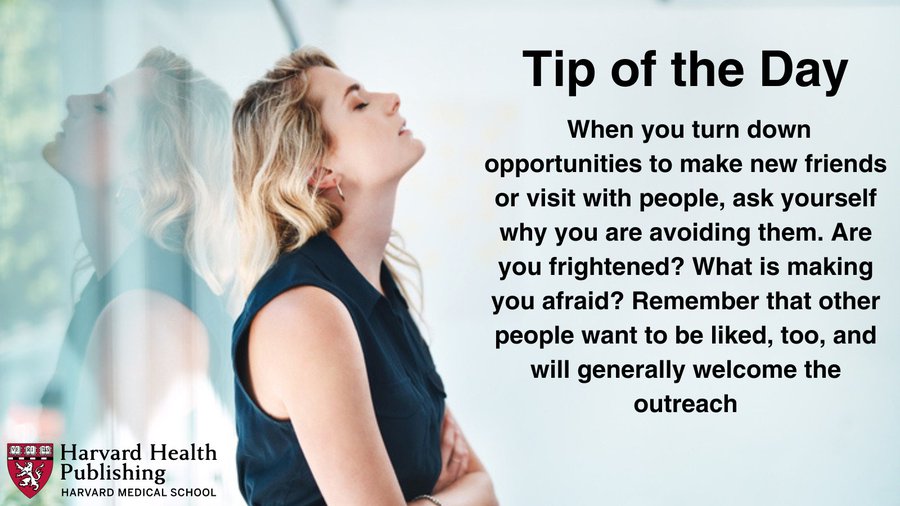
Overcome social apprehensions: When you turn down opportunities to make new friends or visit people, ask yourself why you are avoiding them. Remember that other people want to be liked, too, and will generally welcome the outreach. — #HarvardHealthTipoftheDay#HarvardHealth
Overcome social apprehensions: When you turn down opportunities to make new friends or visit people, ask yourself why you are avoiding them. Remember that other people want to be liked, too, and will generally welcome the outreach. — #HarvardHealthTipoftheDay#HarvardHealth
You go to the store to pick up some apples. Seems simple enough — until you’re faced with a dozen different varieties in the produce aisle. You want the healthiest apple, so which one will keep the doctor away? Dietitian Mira Ilic, RD, LD, reveals the juicy details about this popular fruit. Big difference in taste, not nutrition Apples have slightly different nutrients depending on their type and color. For instance, Red Delicious apples have polyphenols that are exclusively found in dark red fruits. Polyphenols are plant compounds that may help prevent cancer, heart disease and other conditions. But if the thought of biting into a Red Delicious isn’t appealing, don’t worry. Any apple you buy will deliver a punch of health-boosting nutrients. “The nutritional differences among apple varieties are small,” says Ilic. “But the taste differences are big. Don’t choose an apple based on a small nutrient difference if you don’t like the taste.” Choose fresh and local apples Whatever apple variety you pick, make sure it’s fresh. Old apples aren’t as nutritious, don’t taste as good and could be rotten. “Choose a firm apple with no bruises,” says Ilic. “Look for bright color, keeping in mind that some apple varieties are naturally more colorful. Fresh apples usually have a nice aroma, too.” Whenever possible, go with local apples. The less your apple had to travel, the more nutritious it is when it gets to you. July through October is prime apple season in the U.S. During these months, local apples are easy to find. When you choose apples in the off-season, check the sticker for its country of origin. If your apple traveled a long distance, it probably lost some of its nutrition in transport. Try to choose apples that come from a nearby country. “We don’t have the option to eat local apples year-round,” Ilic says. “In the off-season, we have to get apples from other parts of the world. No matter where they come from, wash them thoroughly.” You don’t need any chemicals or tools to wash your apples. Wash your hands first. Then wash your apple with running water. Gently scrub the skin with a cloth or brush. Are organic apples healthier? Some organic fruits may be slightly more nutritious than conventionally grown ones. But you don’t need to buy organic apples. They tend to cost more, which can be a downside if you’re sticking to a grocery budget. “Growers use different growing practices for organic apples and while pesticides are used on conventionally grown apples, some organic growers may actually use pesticides approved for organic farming,” explains Ilic. “The government has guidelines about what pesticides growers can use. Both types are safe and nutritious. Just wash them well if you’re still concerned about pesticide residue or you can peel your apples, but you’ll lose some nutrients and fiber found in the skin.” Have fun with apple sampling With so many apple varieties, you’re bound to find one you like. Hold an apple sampling by picking a few different types. Cut them into bite-sized pieces, put them on a plate and label them. Have your family members try the different apples and choose their favorite. An apple sampling can be a fun way to get kids to eat more apples, too. Kids often like having some control over the types of foods they eat. All apples are amazing Whether your favorite is a sour Granny Smith or a sweet Honeycrisp, you can’t go wrong with apples. “All apples are a good source of fiber, including pectin, which may help lower cholesterol,” Ilic says. “They also contain phytochemicals like polyphenols, which are antioxidants linked to multiple health benefits. Some studies have suggested that apples may also help reduce the risk of some cancers.” Bottom line: An apple a day is a healthy habit, so don’t stress about picking the right one. “Eat the apples you like because they’re all healthy,” Ilic says. FACEBOOK TWITTER LINKEDIN PINTEREST Email applesfiber
Exercise is a vital part of a healthy lifestyle. But if you’ve gotten out of the habit of being active — or have never found an exercise routine that works — it might feel like an impossible task to get started. Luckily, it’s never too late to figure out a workout routine. Here’s how to start exercising — and tips to stay motivated when all you want to do is hang out on the couch instead. What should I include in my exercise program? Every exercise session should include a warm-up, a conditioning phase and a cool-down phase. The warm-up In a nutshell, a warm-up helps your body adjust slowly from rest to exercise. Making this part of your routine reduces the stress on your heart and muscles, and slowly increases your breathing, circulation (heart rate) and body temperature. A warm-up can also help improve your flexibility and reduce muscle soreness. The best warm-up includes stretching, range of motion activities and beginning the activity at a low-intensity level. Conditioning phase The conditioning phase follows the warm-up and is the time when you’re burning calories and moving and grooving. During the conditioning phase, you should monitor the intensity of your activity. The intensity is how hard you’re exercising, which can be measured by checking your heart rate. Over time, you can work on increasing the duration of the activity. The duration is how long you exercise during one session. Cool-down phase The cool-down phase is the last phase of your exercise session. It allows your body to gradually recover from the conditioning phase. Your heart rate and blood pressure will return to near-resting values. However, a cool down does not mean tosit down. In fact, for safety reasons, don’t sit, stand still or lie down right after exercise. This might cause you to feel dizzy, lightheaded or have heart palpitations (fluttering in your chest). The best cool down is to slowly decrease the intensity of your activity. You might also do some of the same stretching activities you did in the warm up. General exercise guidelines In general, experts recommend doing a five-minute warm up, including stretching exercises, before any aerobic activity, and include a five- to 10-minute cool down after the activity. Stretching can be done while standing or sitting. Here are some other things to keep in mind when starting a workout routine: Determine the best exercise routine for your lifestyle Not everybody likes to hop out of bed in the morning and go for a run. Figuring out a routine that fits your lifestyle can help you be more successful. Here are some questions you can think about before choosing a routine: What physical activities do I enjoy? Do I prefer group or individual activities? What programs best fit my schedule? Do I have physical conditions that limit my choice of exercise? What goals do I have in mind? (These might include losing weight, strengthening muscles or improving flexibility, for example.) Don’t try and exercise too much too fast Gradually increase your activity level, especially if you haven’t been exercising regularly. Guidelines around how often to exercise also differ depending on your age, any health conditions you have and your fitness history. Set big and small goals — and be specific If you’re looking to reach a particular goal, exercise specialist Ben Kuharik suggests setting mini goals to achieve along the way. This ensures your motivation stays strong over the long haul. Setting a specific goal is also important. “For example, if you want to lose some weight, it’s hard to be motivated or stick to a plan,” he says. “That’s because you don’t have the excitement in knowing you are getting closer to achieving it.” Having smaller goals or milestones to reach in between the big ones keeps you on track. “If you want to lose 8 pounds in two months — and you set a mini goal of losing 1 pound a week in the process — you get the sense of accomplishment that reaffirms your efforts,” Kuharik says. “And this can snowball into achieving even greater goals.” This also applies if you fall short of your goal. “If you only lose 7 pounds in two months, you’re still 7 pounds down than when you started,” Kuharik affirms. “You’ll feel great about the progress you’ve already made.” Schedule exercise into your daily routine Plan to exercise at the same time every day, such as in the mornings when you have more energy or right after work. Add a variety of exercises so you don’t get bored. Where exercise is concerned, something is also always better than nothing. “Not every day will go as planned,” Kuharik notes. “If you unexpectedly have a tight schedule or are even just having an off day, doing half of your planned workout that day is much more rewarding and beneficial than skipping it altogether.” Exercise at a steady pace Keep a pace that allows you to still talk during the activity. Be sure not to overdo it! You can measure the intensity of your exercise using the Rated Perceived Exertion (RPE) scale. The RPE scale runs from 0 to 10 and rates how easy or difficult you find an activity. For example, 0 (nothing at all) would be how you feel when sitting in a chair; 10 (very, very heavy) is how you feel at the end of an exercise stress test or after a very difficult activity. In most cases, you should exercise at a level that feels 3 (moderate) to 4 (somewhat heavy). Keep an exercise record Keep a record of how much and when you exercise. This can help you look at goal-setting, as well as get a sense of how much activity you’re doing in a given week. Time your eating and drinking properly Wait at least one and a half hours after eating a meal before exercising. When drinking liquids during exercise, remember to follow any fluid restriction guidelines you might have. Only buy what you need Exercise doesn’t have to put a strain on your wallet. Avoid buying expensive equipment or health club memberships unless you’re sure you’ll use them regularly. But you’ll want to dress for the weather (if working out outside) and wear protective footwear. Sneakers are the one thing you should prioritize, as you want to make sure your feet are protected. Stick with it If you exercise regularly, it’ll soon become part of your lifestyle. Make exercise a lifetime commitment. Finding an exercise “buddy” can also help you stay motivated. Don’t forget to have fun Exercising should be fun and not feel like a chore. “Consistency is key — but to do something consistently, it’s important to find a way to enjoy it,” Kuharik says. So, above all, choose an activity you enjoy! You’ll be more likely to stick with an exercise program if you don’t dread working out. “Try to look at exercise as an opportunity to get away from stress, clear your mind and leave nagging thoughts at the door,” Kuharik encourages. “With this in mind, over time, you will look forward to giving your mind a break and feeling good after a great workout session!” Exercise: Where To Start You should always talk to your doctor before starting an exercise routine. Together, you can figure out a plan to ease into regular physical activity. And walking and climbing stairs are two easy ways to start an exercise program. Walking guidelines Start with a short walk. See how far you can go before you become breathless. Stop and rest whenever you’re short of breath. Count the number of steps you take while you inhale. Then exhale for twice as many steps. For example, if you inhale while taking two steps, exhale through pursed lips while taking the next four steps. Learn to walk so breathing in and exhaling out become a habit once you find a comfortable breathing rate. Try to increase your walking distance. When setting specific goals, you might find you can go farther every day. Many people find that an increase of 10 feet a day is a good goal. Set reasonable goals. Don’t walk so far that you can’t get back to your starting point without difficulty breathing. Remember, if you’re short of breath after limited walking, stop and rest. Never overdo it. Always stop and rest for two or three minutes when you start to become short of breath. Stair climbing Hold the handrail lightly to keep your balance and help yourself climb. Take your time. Step up while exhaling or breathing out with pursed lips. Place your whole foot flat on each step. Go up two steps with each exhalation. Inhale or breathe in while taking a rest before the next step. Going downstairs is much easier. Hold the handrail and place each foot flat on the step. Count the number of steps you take while inhaling, and take twice as many steps while exhaling. Whichever activity you choose, remember, even a little exercise is better than none! FACEBOOK TWITTER LINKEDIN PINTEREST Email aerobic exerciseexerciseexercise and heart healthexercise planmoderate exercise