https://www.instagram.com/reel/C3-KNCtKl3M/?igsh=MWRhNHQza214c3FvMg==



Health is Wealth
https://www.instagram.com/reel/C3-KNCtKl3M/?igsh=MWRhNHQza214c3FvMg==
https://www.instagram.com/reel/Cs38Vg2AMYT/?igshid=MTc4MmM1YmI2Ng==
 clevelandclinic



·
Mayo Clinic study: What standing on one leg can tell you. Good balance, muscle strength and an efficient gait contribute to people’s independence and well-being as they age. https://newsnetwork.mayoclinic.org/discussion/mayo-clinic-study-what-standing-on-one-leg-can-tell-you/ #aging #balance #physicaltherapy #agingwell #health #mayoclinicpmr

By Audrey Noble
January 13, 2026
Cabbage often—and unfairly—gets overlooked, with flashier veggies and protein-dense superfoods getting all the attention. But as far as nutritional food options go, the leafy green is pretty hard to beat. A staple in different cuisines (American coleslaw! Middle Eastern malfouf! Chinese suan la bai cai!), cabbage has been a longtime favorite amongst global chefs.
“Much of this stems from its versatility,” Woldy Reyes, chef and author of the cookbook In the Kusina: My Seasonal Filipino Cooking, tells Vogue. “We are seeing a growing trend of chefs utilizing it as a centerpiece, such as cabbage steaks, rather than as a side dish. The culinary appeal has never been stronger.”
“Its popularity stems from its ability to transform,” adds Tatiana Mora, chef of plant-based Michelin star restaurant Mita. “It can be eaten raw, fermented, steamed, roasted, or sautéed, consistently providing flavor, texture, and nutrition. I love it because it is a noble vegetable that grows easily, keeps well, and can be used almost entirely, making it perfect for a conscious and respectful approach to cooking.”
It’s accessible, easy to cook, and delicious. Here are all the reasons cabbage deserves a seat at your table (get it?) in 2026.
Cabbage is a leafy green that is part of the brassica plant family (which also includes broccoli, cauliflower, brussels sprouts, and kale), says Amy Shapiro, RD, registered dietitian and founder of Real Nutrition. It comes in several varieties, but the most common ones you’ll see are green, red (or purple), and savoy. What makes cabbage different from other leafy greens is its density and durability. “It’s heartier, stores longer, and holds up well to cooking, fermenting, and shredding,” Shapiro says. “Nutritionally, it shares many benefits with other cruciferous vegetables, but it’s often milder in flavor and more versatile across cuisines.”
Besides its versatility, one of the main benefits of cabbage is its many nutrients. Shapiro lists other main benefits of the leafy green:
Supports Gut Health
Shapiro says that, because cabbage contains fiber and other compounds that support digestion, eating this leafy green can benefit the gut bacteria and boost gut health.
Anti-Inflammatory Properties
Cabbage is also rich in antioxidants and phytonutrients that studies have shown can reduce inflammation, she says.
Boosts Heart Health
Along with fiber, cabbage has potassium, which supports healthy cholesterol levels and blood pressure. Cabbage also has vitamin K, which is essential for blood clotting (and bone health). Shapiro points to red cabbage in particular, which she says contains antioxidants called anthocyanins that studies have shown can improve brain and heart health.
Regulates Blood Sugar
Cabbage is low in calories and carbs while being high in fiber, which can help stabilize glucose levels in the body.
Boosts Immune System
Shapiro says that cabbage is rich in sulfur-containing compounds to help strengthen your immune system’s defences—and vitamin C, which studies have shown can provide antioxidant protection and support immune health.

•
Follow
Liked by raychelley8 and others
 motherandbaby
 ahappyhome__So hard to choose! I want them all! Maybe a week without making decisions 🙌

Here’s a fact that may surprise you: By the year 2020, depression is projected to be a leading social and economic burden worldwide — second only to coronary artery disease! Psychotherapy and antidepressants are effective but aren’t for everyone.
But there’s another treatment for depression that’s free and available to everyone: exercise. It will also lower your blood pressure, improve your cholesterol profile, help control blood sugar, and reduce your risk of heart disease, diabetes and common cancers. And, of course, help you achieve or maintain a healthy weight.
https://health.clevelandclinic.org/2016/03/get-happy-exercise-can-lift-mood-infographic/?

Registered dietitian Lara Whitson, RD, LD, shares how watermelon is actually healthy for you, along with five watermelon recipes.
Watermelon is 92% water. No surprise there, considering it’s in the name. But more than keeping you hydrated during hot summer days, watermelon has a number of other health benefits. It’s packed with antioxidants like lycopene that can help protect against chronic diseases like diabetes and cardiovascular disease.
And when eaten regularly as part of a healthy balanced diet, it can help make you feel fuller longer. With a low amount of calories, sodium and cholesterol, alongside higher amounts of calcium, vitamin C and magnesium, watermelon is one fruit you don’t want to miss out on year-round. Even the rind and its seeds offer some benefits.
“You can stir-fry the rinds with other vegetables and add spices to the seeds, like you might do with pumpkin seeds, for an easy and healthful snack,” says Whitson.
This shaved ice dessert gets a fruity twist with watermelon chunks. It also pulls in star ingredients like fresh lime juice and basil leaves, which offer their own health benefits for a refreshing mid-afternoon sweet escape.

Calorie-conscious dishes can still go big on flavor. This refreshing salad, perfect for picnics and cookouts, pairs watermelon with tomatoes bountiful in benefits, alongside red wine vinegar, fresh mint, almonds and feta cheese.

This is just one of several ways to crank up your chill summer drinks: Puree 1-1 1/2 cups chopped watermelon with 1 cup ice and a little water or fresh juice for a sip-worthy smoothie as you soak in the sun.

This recipe doubles down on the use of veggies by incorporating beefsteak tomatoes, cucumber, a fresh ear of corn and basil, along with a hearty serving of watermelon for a subtly sweet finish.

Not only is this sweet snack filling, but it also puts a dessert-like twist on classic Vietnamese and Thai spring rolls. By wrapping julienned watermelon, green apple and pineapple in spring roll wrappers made from rice paper, and creating a dipping sauce with Greek yogurt and tahini, this recipe makes for a great palate cleanser for any summer cookout.
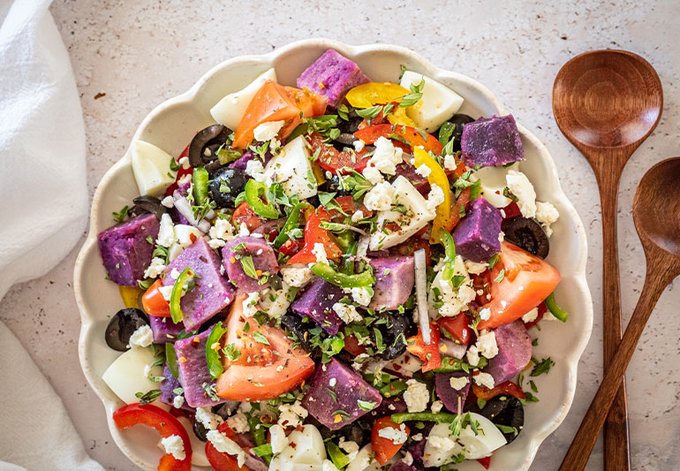
Peru has been cultivating potatoes for more than 6,000 years in the high Andean slopes near Lake Titicaca.
A stroll through the public markets reveals a startling number of sizes, shapes and colors — including the famous Peruvian blue potatoes with their purplish-blue skin and flesh.
It’s fun to use these blue potatoes, but if your market doesn’t carry them or if you prefer other potatoes, you can always use small red or white potatoes.
Kosher salt
1 1/4 pounds small Peruvian blue potatoes
1/4 cup minced red onions
1 red bell pepper, seeded and diced
1 yellow bell pepper, seeded and diced
1 large tomato, seeded and chopped
1 jalepeño, seeded and minced
3 tablespoons red wine vinegar
3 tablespoons extra virgin olive oil
1 teaspoon sugar substitute
2 hard-boiled egg whites, chopped
2 tablespoons chopped fresh oregano
1/2 cup crumbled reduced-fat feta cheese
2 tablespoons sliced black olives, optional
Makes 8 servings
Calories: 200 calories (31% from fat)
Total fat: 7 g
Saturated fat: 1.5 g
Protein: 7 g
Carbohydrate: 31 g
Dietary fiber: 2 g
Cholesterol: 5 mg
Sodium: 95 mg
Potassium: 109 mg
Source: Cleveland Clinic Healthy Heart Lifestyle Guide and Cookbook (© 2007 Broadway Books).