Cardiovascular #exercise, which gets the #heart pumping, the muscles moving, and the sweat glands working, is one of the best medicines for overall health. And what’s good for the body also benefits the brain: https://bit.ly/3sln7dp#HarvardHealth
5 surprising benefits of #walking: Any physical activity is a boon to your overall health. But walking in particular comes with a host of benefits. https://bit.ly/3uyNvhI#HarvardHealth
The next time you have a check-up, don’t be surprised if your doctor hands you a prescription to walk. Yes, this simple activity that you’ve been doing since you were about a year old is now being touted as “the closest thing we have to a wonder drug,” in the words of Dr. Thomas Frieden, former director of the Centers for Disease Control and Prevention.
Of course, you probably know that any physical activity, including walking, is a boon to your overall health. But walking in particular comes with a host of benefits. Here’s a list of five that may surprise you.
1. It counteracts the effects of weight-promoting genes. Harvard researchers looked at 32 obesity-promoting genes in over 12,000 people to determine how much these genes actually contribute to body weight. They then discovered that, among the study participants who walked briskly for about an hour a day, the effects of those genes were cut in half.
2. It helps tame a sweet tooth. A pair of studies from the University of Exeter found that a 15-minute walk can curb cravings for chocolate and even reduce the amount of chocolate you eat in stressful situations. And the latest research confirms that walking can reduce cravings and intake of a variety of sugary snacks.
3. It reduces the risk of developing breast cancer. Researchers already know that any kind of physical activity blunts the risk of breast cancer. But an American Cancer Society study that zeroed in on walking found that women who walked seven or more hours a week had a 14% lower risk of breast cancer than those who walked three hours or fewer per week. And walking provided this protection even for the women with breast cancer risk factors, such as being overweight or using supplemental hormones.
4. It eases joint pain. Several studies have found that walking reduces arthritis-related pain, and that walking five to six miles a week can even prevent arthritis from forming in the first place. Walking protects the joints — especially the knees and hips, which are most susceptible to osteoarthritis — by lubricating them and strengthening the muscles that support them.
5. It boosts immune function. Walking can help protect you during cold and flu season. A study of over 1,000 men and women found that those who walked at least 20 minutes a day, at least 5 days a week, had 43% fewer sick days than those who exercised once a week or less. And if they did get sick, it was for a shorter duration, and their symptoms were milder.
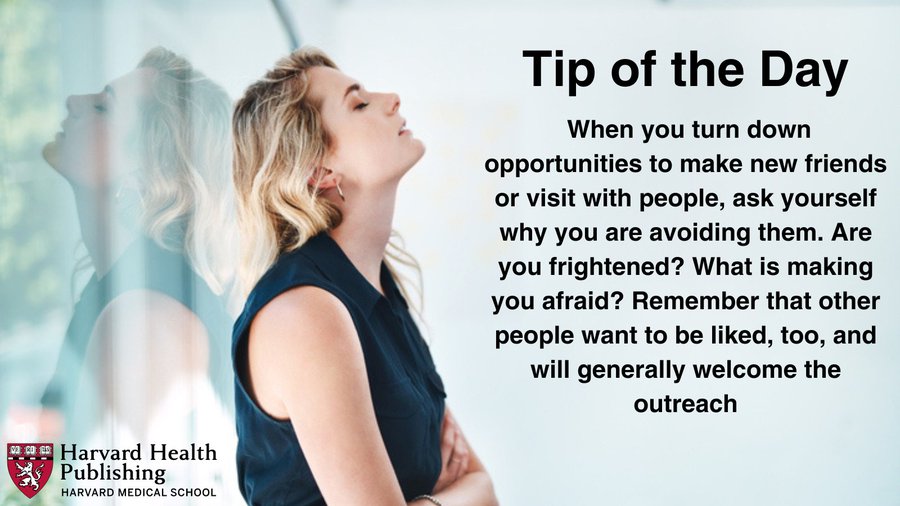
Overcome social apprehensions: When you turn down opportunities to make new friends or visit people, ask yourself why you are avoiding them. Remember that other people want to be liked, too, and will generally welcome the outreach. — #HarvardHealthTipoftheDay#HarvardHealth
Stretching promotes flexibility and helps your joints maintain a healthy range of motion—and in doing so, also lowers the chances of joint and muscle strain. https://bit.ly/2YZRu8Y#HarvardHealth
Skimping on sleep can raise the risk of many health problems and leave you prone to accidents.
Sleep experts say we should get at least seven hours of slumber each night. But as many as one in three Americans routinely sleeps for less than six hours—a trend that can have serious health ramifications.
A single night of poor sleep can leave you feeling cranky and unmotivated. You may be too tired to work efficiently, to exercise, or to eat healthfully. And over time, continued sleep deprivation raises the risk for a number of chronic health problems, including obesity, diabetes, high blood pressure, and heart disease. Insufficient sleep can also leave you more vulnerable to mental health issues such as depression and anxiety. There’s even some evidence that insufficient sleep makes your more prone to the common cold if you’re exposed to the cold virus.
In rare cases, insufficient sleep can even more dangerous. A sleep shortfall can lead to daytime drowsiness and “microsleeps.” Microsleeps are brief bouts of sleep that occur during the day that usually last just a few seconds. If you’ve ever briefly nodded off while sitting through a lecture, you’ve experienced a microsleep. They usually last just a few seconds but can go on for 10 or 15 seconds—and pose a grave danger if they happen while you’re driving.
During a microsleep, your brain does not respond to noise or other sensory inputs, and you don’t react to things happening around you. Because people are poor judges of when microsleeps will occur (and are equally poor at preventing them), they’re a major factor in many motor vehicle accidents. One in 24 American drivers admitted to falling asleep while driving at least once in the previous month, according to a government report. The National Department of Transportation estimates that each year, drowsy driving is responsible for 1,550 fatalities and 40,000 nonfatal injuries in the United States.
So how do you combat insuficient sleep? The best solution is to figure out how many hours of sleep are right for you and then stick with it—even on weekends, holidays, and vacations. Basic lifestyle changes that promote sleep can also help. Exercise, avoiding caffeine, and practicing good sleep hygiene are some of the ways to get your best rest.