
Skip to content
Healthaware

Healthaware

Health is Wealth

  • Home

Tag: core stability

Posted on August 26, 2024

Looking to firm up your abs and strengthen your core? @ClevelandClinic

health.clevelandclinic.org
Try These Ab Workouts to Strengthen Your Core
Break a sweat with these ab exercises

Posted on August 7, 2024

There are many myths surrounding back pain, read our guide ’10 Things You Need To Know About Your Back’ with the latest physio advice: @thecsp #physiotherapy

physio network

Chartered Society of Physiotherapy‏Verified account @thecsp 37m37 minutes ago

There are many myths surrounding back pain, read our guide ’10 things you need to know about your back’ with the latest physio advice: http://www.csp.org.uk/yourback  #LiveWellforLonger

Posted on June 27, 2024

Stretching and Strengthening #HarvardHealth #physiotherapy

Stretching and back pain: Stretching and strengthening your back and abdominal muscles can help relieve back pain and keep it from returning. #HarvardHealth #TipoftheDay pic.twitter.com/DR7EpJpFkl

— Harvard Health (@HarvardHealth) June 26, 2024
Posted on May 18, 2024

Strong core muscles help you maintain good posture. Why a strong core is important + exercises to try. @ClevelandClinic

cleveland evrything starts wit your core

If you’re planning to start an exercise program and wondering where to begin, start with your core first, says physical therapist Brittany Smith, DPT. People often think of the core muscles as being the abdominal muscles, but the core includes the muscles in the abdomen, back and hips, all working together as a group.

“The core muscles provide stability for the entire body as it moves,” says Smith. “These muscles are activated when you stand up, turn, bend, reach, twist, stoop and move in most other ways. Everything starts with your core.”

Strong core muscles help you maintain good posture, while weak ones can lead to slouching and slumping. Poor posture can be a cause of aches and pain, especially in the back.

Getting started with your core

To get your core muscles in shape, you need to exercise.

“Our bodies were made to move, so any physical activity is really important,” says Smith.

She recommends these specific core-strengthening exercises below.

The first one engages the deep muscles in the abdomen, called the transverse abdominis. “These muscles help hold us in a better position to stabilize our core, thereby stabilizing our arms and legs,” says Smith.

“The more you work on these muscles, the more it will become second nature to hold these muscles tight when you’re lifting grocery bags, doing yard work or any other kind of physical activity,” says Smith. This will help support your body.

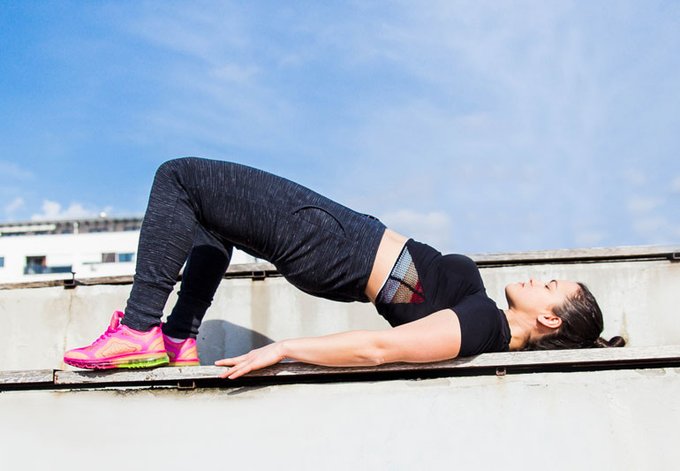
Other muscles that tend to be weak are the gluteus maximus in the buttocks, and the gluteus medius and gluteus minimus on the side of the hip. The bridge and clamshell exercises can help strengthen these muscles.

Smith emphasizes that getting the proper position of these exercises correct is more important than the number of repetitions you do. “It’s better to take your time, maybe do fewer reps, but with better quality,” she says. For that reason, it can be helpful to have the guidance of a physical therapist to get started.

Move on from the core

Core exercises are the starting point of overall fitness because you need to hold those muscles engaged while you strengthen other muscles, such as the biceps in the arms or the quadriceps in the legs.

Smith suggests setting short-term goals (for about a month) and then more long-term goals. Once you have achieved short-term goals, such as getting around more easily, add other types of weight-training or resistance exercises to build muscle elsewhere.

With any exercise you do, always listen to your body, warns Smith. If you have pain other than muscle burn, take it easy. Reduce the number of repetitions, the weight or the duration of the exercises. Then build up gradually. “You don’t have to be in pain to make gains,” she says.

Beginner exercises for core strength

For each of the following, work up to one to two sets of 10 to 15 repetitions once a day.

Abdominal bracing

Lie on your back with your knees bent and feet flat on the floor. Contract your abdominal muscles, and press the arch of your back down toward the floor, pulling your belly button toward your spine. Hold for 5 to 10 seconds. Make sure your lower back stays flat on the floor. Relax and repeat.

Bridge

Lie on your back with your knees bent and feet flat on the floor with your arms at your sides. Squeeze your abdominal and buttocks muscles, push your heels into the floor and slowly lift your buttocks and hips off the floor. Keep your back straight. Hold for 5 to 10 seconds.

Clamshell

Lie on your side with knees bent in line with your hips and back, draw up the top knee while keeping contact of your feet together as shown. Don’t let your pelvis roll back during the lifting movement. Hold for 5 seconds.

https://health.clevelandclinic.org/planning-to-start-exercising-start-with-your-core-first/?utm_medium=social&utm_source=twitter&utm_campaign=cc+tweets

Posted on March 28, 2024

Get the power 💪 of your physiotherapist to sort out your back problems 😊😊@thecsp #LiveWellForLonger

physio network

Chartered Society of Physiotherapy‏Verified account @thecsp 37m37 minutes ago

There are many myths surrounding back pain, read our guide ’10 things you need to know about your back’ with the latest physio advice: http://www.csp.org.uk/yourback  #LiveWellforLonger

Posted on March 1, 2024

Get the power 💪 of your physiotherapist to sort out your back problems 😊😊@thecsp #LiveWellForLonger

physio network

Chartered Society of Physiotherapy‏Verified account @thecsp 37m37 minutes ago

There are many myths surrounding back pain, read our guide ’10 things you need to know about your back’ with the latest physio advice: http://www.csp.org.uk/yourback  #LiveWellforLonger

Posted on January 4, 2024

There are many myths surrounding back pain, read our guide ’10 things you need to know about your back’ with the latest physio advice: @thecsp #physiotherapy

physio network

Chartered Society of Physiotherapy‏Verified account @thecsp 37m37 minutes ago

There are many myths surrounding back pain, read our guide ’10 things you need to know about your back’ with the latest physio advice: http://www.csp.org.uk/yourback  #LiveWellforLonger

Posted on October 12, 2023July 7, 2025

It’s the care and attention you receive from the experienced physiotherapist that is so therapeutic 😀@thecsp

physio network

Chartered Society of Physiotherapy‏Verified account @thecsp 37m37 minutes ago

There are many myths surrounding back pain, read our guide ’10 things you need to know about your back’ with the latest physio advice: http://www.csp.org.uk/yourback  #LiveWellforLonger

Posted on October 1, 2023

A Strong Core is Your Best Guard Against Back Pain @ClevelandClinic

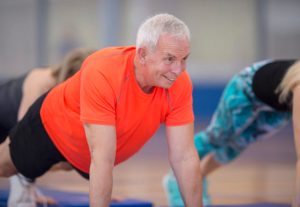
A group of adults are taking a fitness class together at the gym. They are working out on exercise mats and are holding a high plank.

A physical therapist answers your questions

If you suffer from back pain, you’ve probably heard that strengthening your core can bring you some relief. But is this always true? And if so, how do you do it? We spoke with Cleveland Clinic physical therapist Patti Mariano, DPT, to find out.

Q: What is your core?

When most people think about the core of the body they think of the abdominal or six-pack area just below the ribs. While the abdominal muscles are an important part of the core, we consider other areas important, too.

Your core includes:

  • Front abdominal muscles — the rectus abdominis
  • Muscles along the side of your body — the internal and external obliques
  • A deep muscle that wraps around the front — the transverse abdominis
  • Muscles in your back that are located between your spine bones and run along your spine — the erector spinae and multifidi

Your core also includes the diaphragm and muscles of the pelvic floor. I also consider the gluteal muscles as core muscles.

Q: What is the relationship between core strength and back pain?

Theoretically, if your muscles around the low back are weak, your body will rely more on passive structures, including ligaments — the tissue that connects bone to bone — as well as the spinal bones or discs, which lie between the spinal bones, for stability, which can cause pain.

But some studies have shown that specific core exercises are not any more beneficial than general exercise for low back pain. What we know is that exercise in general can help, and focusing on core muscles may provide some additional benefit.

Q: What are some exercises for the core that can help with back pain?

Here are my top five:

  • Side plank — Sit on the floor with your right hand below your right shoulder and feet stacked. Lift your body, keeping your legs long, abdominals engaged and feet stacked. Hold. Repeat on the other side. You can modify this pose by dropping your bottom knee to the floor for extra support.
  • Plank — Kneel on all fours. Pull in your abdomen and step your feet behind you until your legs are straight. Keep your hands directly under your shoulders and your neck straight. Hold your abdomen and legs tight and avoid letting your lower back sag. Hold and breathe for 30 seconds. You can modify this pose by lowering your knees.
  • Bird dog — Kneel  on all fours. Reach one arm out in front of you, draw in your abdomen, and extend the opposite leg long behind you. Repeat on the other side.
  • Scissors — Lie on your back with your arms at your sides and legs pointed straight into the air above your hips. Press your lower back into the mat and tighten your abdomen. Lower your right leg until it’s a few inches from the floor. Raise your right leg up and begin lowering your left leg the same way. Continue switching right and left.
  • Upward dog — Lie face down with head slightly lifted and hands palm-down under your shoulders. Point your toes. Exhale, then press through your hands and the tops of your feet and raise your body and legs up until your arms are straight and your body and legs are off the ground. Keep your neck relaxed and long and thigh muscles tight as you hold and breathe.

For the plank exercises, start by holding them for 15 seconds to 30 seconds. For bird dog and scissors, try three sets of eight or 10 repetitions. For upward dog, do one set of 10 repetitions.

Q: Can you injure your back by trying to strengthen your core?

Any exercise performed incorrectly, whether it is core-strengthening or otherwise, has the potential to cause discomfort.

Twisting exercises or even incorrectly completing the exercises cited above can cause pain in the low back. But it’s highly unlikely that one repetition of an exercise will seriously harm your body, unless it’s an exercise using a very heavy weight.

The best way to keep your body safe is to listen to body cues such as pain during and immediately after an exercise, and the next day after exercising.

Q: When should you talk to a doctor about your back pain?

If any of the following is going on you should consult with your doctor:

  • Your pain has been going on for longer than a month, despite resting from activities that make it worse.
  • Your pain is getting worse.
  • Your pain wakes you from sleep.
  • Your pain is in your low back but also is going down one or both of your legs.
  • You notice that one leg is becoming weaker than the other.

Q: Where should you turn if you want help in creating a plan to address back pain?

Physical therapists train as musculoskeletal experts — they are the experts on muscles, bones and human movement. These professionals are the most qualified, aside from an orthopedic doctor, to assess back problems.

Since there are many factors that impact low back pain and many types of low back pain, it is a good idea to visit at least one time with a physical therapist for an evaluation and subsequent plan of care. This will give you an individually tailored plan with exercises that progress safely.

The idea of core strengthening, while beneficial, is just one piece of the low back pain puzzle.

https://health.clevelandclinic.org/2016/07/strong-core-best-guard-back-pain/


Posted on August 14, 2023

A Strong Core is Your Best Guard Against Back Pain @ClevelandClinic

A group of adults are taking a fitness class together at the gym. They are working out on exercise mats and are holding a high plank.

A physical therapist answers your questions

If you suffer from back pain, you’ve probably heard that strengthening your core can bring you some relief. But is this always true? And if so, how do you do it? We spoke with Cleveland Clinic physical therapist Patti Mariano, DPT, to find out.

Q: What is your core?

When most people think about the core of the body they think of the abdominal or six-pack area just below the ribs. While the abdominal muscles are an important part of the core, we consider other areas important, too.

Your core includes:

  • Front abdominal muscles — the rectus abdominis
  • Muscles along the side of your body — the internal and external obliques
  • A deep muscle that wraps around the front — the transverse abdominis
  • Muscles in your back that are located between your spine bones and run along your spine — the erector spinae and multifidi

Your core also includes the diaphragm and muscles of the pelvic floor. I also consider the gluteal muscles as core muscles.

Q: What is the relationship between core strength and back pain?

Theoretically, if your muscles around the low back are weak, your body will rely more on passive structures, including ligaments — the tissue that connects bone to bone — as well as the spinal bones or discs, which lie between the spinal bones, for stability, which can cause pain.

But some studies have shown that specific core exercises are not any more beneficial than general exercise for low back pain. What we know is that exercise in general can help, and focusing on core muscles may provide some additional benefit.

Q: What are some exercises for the core that can help with back pain?

Here are my top five:

  • Side plank — Sit on the floor with your right hand below your right shoulder and feet stacked. Lift your body, keeping your legs long, abdominals engaged and feet stacked. Hold. Repeat on the other side. You can modify this pose by dropping your bottom knee to the floor for extra support.
  • Plank — Kneel on all fours. Pull in your abdomen and step your feet behind you until your legs are straight. Keep your hands directly under your shoulders and your neck straight. Hold your abdomen and legs tight and avoid letting your lower back sag. Hold and breathe for 30 seconds. You can modify this pose by lowering your knees.
  • Bird dog — Kneel  on all fours. Reach one arm out in front of you, draw in your abdomen, and extend the opposite leg long behind you. Repeat on the other side.
  • Scissors — Lie on your back with your arms at your sides and legs pointed straight into the air above your hips. Press your lower back into the mat and tighten your abdomen. Lower your right leg until it’s a few inches from the floor. Raise your right leg up and begin lowering your left leg the same way. Continue switching right and left.
  • Upward dog — Lie face down with head slightly lifted and hands palm-down under your shoulders. Point your toes. Exhale, then press through your hands and the tops of your feet and raise your body and legs up until your arms are straight and your body and legs are off the ground. Keep your neck relaxed and long and thigh muscles tight as you hold and breathe.

For the plank exercises, start by holding them for 15 seconds to 30 seconds. For bird dog and scissors, try three sets of eight or 10 repetitions. For upward dog, do one set of 10 repetitions.

Q: Can you injure your back by trying to strengthen your core?

Any exercise performed incorrectly, whether it is core-strengthening or otherwise, has the potential to cause discomfort.

Twisting exercises or even incorrectly completing the exercises cited above can cause pain in the low back. But it’s highly unlikely that one repetition of an exercise will seriously harm your body, unless it’s an exercise using a very heavy weight.

The best way to keep your body safe is to listen to body cues such as pain during and immediately after an exercise, and the next day after exercising.

Q: When should you talk to a doctor about your back pain?

If any of the following is going on you should consult with your doctor:

  • Your pain has been going on for longer than a month, despite resting from activities that make it worse.
  • Your pain is getting worse.
  • Your pain wakes you from sleep.
  • Your pain is in your low back but also is going down one or both of your legs.
  • You notice that one leg is becoming weaker than the other.

Q: Where should you turn if you want help in creating a plan to address back pain?

Physical therapists train as musculoskeletal experts — they are the experts on muscles, bones and human movement. These professionals are the most qualified, aside from an orthopedic doctor, to assess back problems.

Since there are many factors that impact low back pain and many types of low back pain, it is a good idea to visit at least one time with a physical therapist for an evaluation and subsequent plan of care. This will give you an individually tailored plan with exercises that progress safely.

The idea of core strengthening, while beneficial, is just one piece of the low back pain puzzle.

https://health.clevelandclinic.org/2016/07/strong-core-best-guard-back-pain/


Posts pagination

Previous page Page 1 … Page 4 Page 5 Page 6 … Page 13 Next page

Tags

  • Alcohol
  • Cleveland Clinic
  • Depression
  • diet
  • exercise
  • Female health
  • fitness
  • Harvard Health
  • Healthaware
  • heartaware
  • heart health
  • nutrition
  • physical activity
  • physiotherapy
  • yoga

Recent Posts

  • 50 Ways To Take Care of Your Mental Health #WorldMentalHealth
  • Measuring how well a person is aging can be as simple as standing on one leg @MayoClinic #neuromuscular
  • Does honey work to soothe a sore throat and cough? Yes, says family medicine physician Elizabeth Rainbolt, MD.@ClevelandClinic 🍯
  • New Study: No Level of Alcohol Is Entirely Safe @ClevelandClinic #healthaware
  • Our sports medicine physician shares how temperature can affect physical fitness and which temps are best for your workouts. @ClevelandClinic Matthew Kampert, DO,
  • A Healthy Protein Guide: What To Eat and Limit: Julia Zumpano RD,LD. @ClevelandClinic
  • Walking even at a “casual” pace five days a week may lower the odds of high blood pressure..@HarvardHealth
  • 50 Ways To Take Care of Your Mental Health #WorldMentalHealthDay
  • Tai chi is a form of gentle #exercise @HarvardHealth
  • Injuries from falls can have a big impact on elderly adults’ ability to remain independent. A few simple PT exercises can improve strength and balance to reduce the risk.@HopkinsMedicine
  • Strong, Steady and Straight – An Expert Consensus Statement on Physical Activity and Exercise for Osteoporosis
  • Stretching and strenghtening your back can help relieve back pain #HarvardHealth #physiotherapy
  • Classic Irish Dish -Shepherd’s Pie @MayoClinic
  • Physiotherapy improves physical function, general health and mental health for people with CVD ❤️ @worldphysio1951 #WorldPTDay
  • Improves physical function, general health and mental health @worldphysio1951 #WorldPTDay
  • To get a clear 20/20 view of just how special eyes are, take a peek at these 11 facts! @ClevelandClinic
  • “Walking, cycling or swimming and some form of strength training is critically important” Dr. Nathan LeBrasseur @MayoClinic #agingprocess
  • Muscles in your body are a use-or-lose proposition. You need to use them to keep them strong! @ClevelandClinic – Susan Williams, MD. endocrinologist
  • Movement is life, and physical therapy helps us move better. Happy World Physical Therapy Day! 💪#physiotherapy
  • Planks 😭 #WorldPTDay2021. @DelaPhysio
Blog at WordPress.com.
  • Subscribe Subscribed
    • Healthaware
    • Join 1,701 other subscribers
    • Already have a WordPress.com account? Log in now.
    • Healthaware
    • Subscribe Subscribed
    • Sign up
    • Log in
    • Report this content
    • View site in Reader
    • Manage subscriptions
    • Collapse this bar
Loading Comments...