BRIDGING
This is the one of a physiotherapist’s staple exercises, if in doubt…bridge 😂
Often when children are growing, they come up against muscle imbalances, which can lead to aches and pains. A great way to protect the body from these is by keeping a good strong core!
A tip my top #pilates friend showed me was rolling the spine up and down, like a Mexican wave 👋🏽! Go follow @excellencepilates@excellence_physio for much more specialist knowledge than I can offer 😁
HOW TO INCORPORATE INTO PLAY
Get some lovely little cars or animals on one side of your child, and help them create a BRIDGE (!) so you can drive those little toys under their bottom!
….a traffic jam can always help you keep their bottom up for little longer 😏
Many older adults focus on exercise and diet to stay healthy. But one of the worst offenders to health—poor balance—is often an afterthought. “I see a lot of older adults who are nonchalant about balance,” says Liz Moritz, a physical therapist at Harvard-affiliated Brigham and Women’s Hospital.
Unfortunately, imbalance is a common cause of falls, which send millions of people in the United States to emergency departments each year with broken hips and head injuries. But there are many things you can do to improve your balance. The strategies below are some of the most effective.
Physical therapy
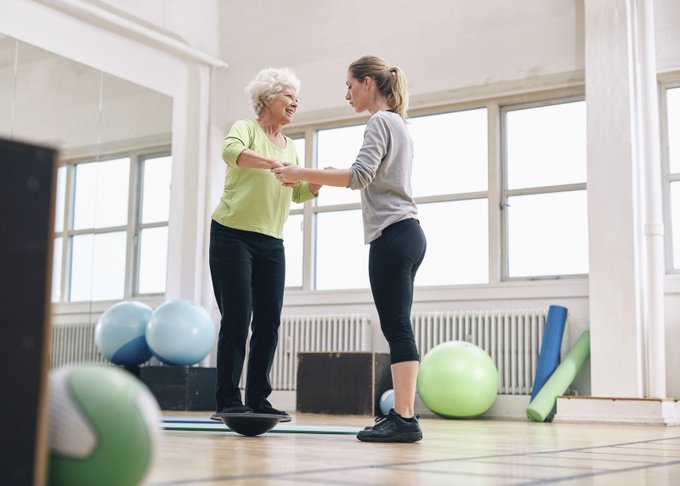
Physical therapy for balance focuses on the ability of the joints and brain to communicate, the balance system in the ear (the vestibular system), and vision. “We coordinate all three with exercises such as standing on one foot, first with the eyes open, and then with the eyes closed. We also work on joint flexibility, walking, and lower-extremity exercises on one or two legs,” says Moritz. Other exercises that boost balance include chair stands (see “Move of the month”) and squats. Make sure you get training before attempting these exercises at home.
Muscle strengthening
“Core strength is very important for balance. If the abdominal muscles in your core are weak, they cannot support your limbs, especially when you’re walking. If the gluteal muscles in your buttocks and hips aren’t strong, they won’t be able to propel you forward,” says Moritz. Muscle strengthening can help. Moritz suggests starting with gentle core exercises like a pelvic tilt (lie on the floor with your knees bent up, then roll your pelvis up) and then moving to more intense exercises such as wall planks (stand six inches from a wall, keeping your body rigid, then lean forward with your forearms flat against the wall, and hold the position for 20 seconds). Leg lifts will strengthen the gluteal muscles, and adding resistance bands to leg lifts makes the exercise even more effective.
Tai chi and yoga
“Tai chi and yoga are exercises that make you pay attention to the control and quality of movement, rather than the quantity, which improves your balance,” says Moritz. In tai chi, you practice slow, flowing motions and shift your weight from one limb to another. Yoga incorporates a series of focused postures and breathing. Both exercises increase flexibility, range of motion, leg and core strength, and reflexes. The result: you become better at balancing in a number of different positions, which helps you avoid falling if you encounter uneven pavement or obstacles in your path.
Vision correction
“If you can’t see where you’re going, your fall risk goes up,” says Moritz. “A lot of people I treat for balance are here be-cause they tripped when they didn’t see something on the floor.” The fix may be as simple as a new eyeglasses prescription. Get a comprehensive, dilated eye exam every one or two years if you’re 65 or older, every one to three years if you’re age 55 to 64, and every two to four years if you’re 40 to 54. If you have an increased risk for other eye conditions, you may need an eye exam more often.
Assistive walking devices
A cane or a walker can complement your balance and give you more stability and confidence walking. But don’t buy a device on your own. “If it’s too high or too low, that can cause a fall. You need to get it measured, and you need training to learn how to use it,” says Moritz. Training takes just a few physical therapy sessions. Walkers are available with wheels intended for different terrain, lockable brakes, seats, baskets, and other features such as headlights. Canes are available with various handgrips and bases.
#MondayMotivation: Albert Einstein said… ‘Life is like riding a bicycle. To keep your balance, you must keep moving.’ Sign up for our #LoveActivity resources to get the nation moving: http://bit.ly/2WrzXD9
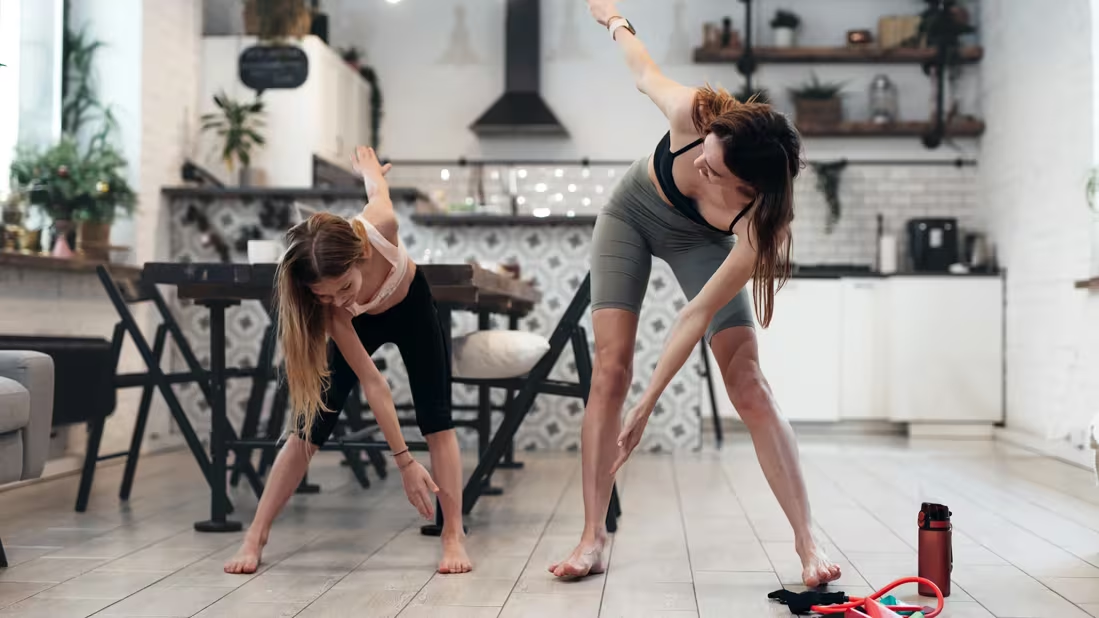
Want to tone your midsection? You can start by standing up to do ab exercises.
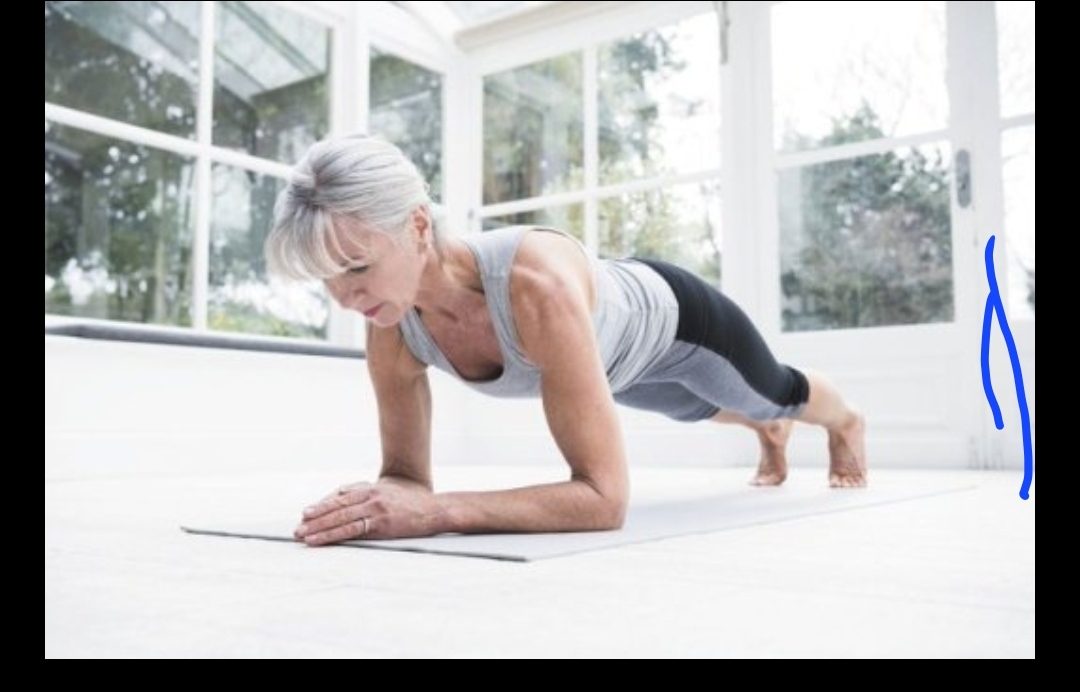
Surprised? That’s understandable. After all, most of us think of a few classic on-the-floor exercises when it comes to strengthening our abdominals. Crunches and sit-ups, for instance. Planks, too.
But it turns out, you can get a deeper and more thorough core workout while on your feet, says exercise physiologist Katie Lawton, MEd. Here’s how.
Standing ab exercises
The pursuit of “six-pack abs” explains the devotion to crunches and similar floor exercises. “You completely isolate the rectus abdominis muscles when you lie down and do that motion,” says Lawton. “It’s very targeted.”
That’s great for creating washboard abs. But it doesn’t do much to enhance other muscles in your middle that play an important role in day-to-day movements.
Standing ab exercises, on the other hand, engage a network of muscles within your core that you use all the time, whether it’s picking laundry up off the floor or putting cans on the top shelf in the pantry.
“Think of your core as a chain of muscles that needs to work together to get the job done,” illustrates Lawton. “When you do an ab workout from a standing position, you’re working more of the muscles in that system.”
Strengthening your core can help you:
Improve your balance
Maintain good posture
Protect your back from aches and pains
Better handle day-to-day movements that require bending, lifting and twisting
Incorporate these exercises in a standing abs workout to see those benefits.
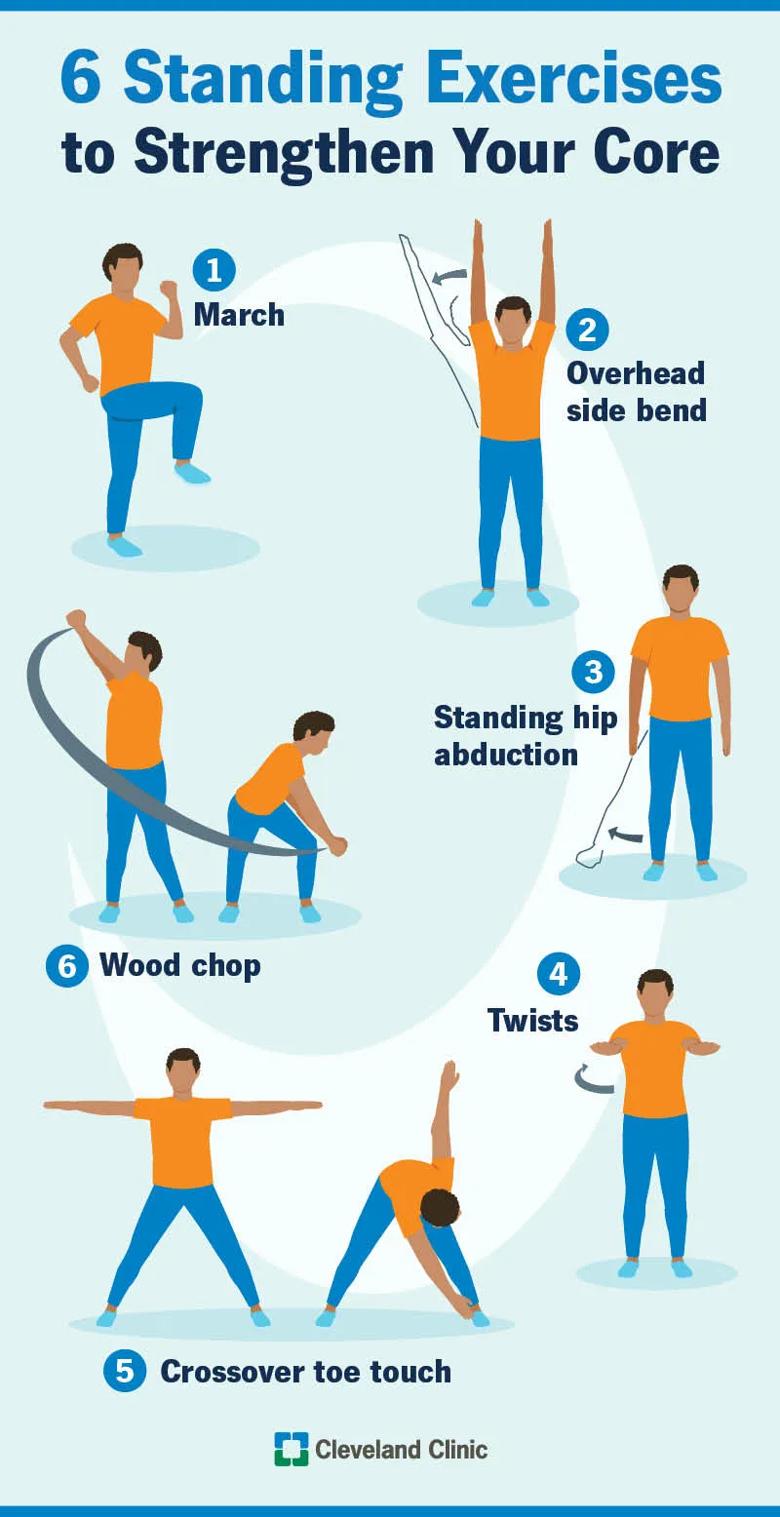
1. March
Muscles targeted: Rectus abdominis, transverse abdominis, erector spinae and hip flexors
Start in a standing position with your feet about hip-width apart.
In an exaggerated marching motion, bring your right knee straight up and move it toward your chest until your thigh is parallel to the floor.
Return to a standing position and repeat the motion with your left leg for one set.
Continue for 10 to 15 sets.
Pro tip: Want to make the march more challenging? Then add a “twist” to your motion by moving your right knee toward your left side when you raise it. (Your left knee would go toward your right side.)
2. Overhead side bend
Muscles targeted: External and internal obliques, quadratus lumborum, deltoids and erector spinae
Stand tall with your feet hip-width apart.
Extend your arms up, palms facing each other (as if you’re signaling a touchdown).
Tilt to the right while keeping your torso and arms straight. You’ll feel a stretch on the left side of your body as your waist bends to the right.
Return to the center position and repeat the motion to the left for one set.
Continue for 10 to 15 sets.
Pro tip: “As you bend to each side, focus on engaging your core muscles to work them properly,” advises Lawton. “You’re just going to the side, too. Your torso shouldn’t lean forward at all.”
Begin in an upright position with your feet about hip-width apart.
Kick your right leg out to the side, keeping it straight. Your toes should point forward during the motion as your leg scissors out and back. “Keep the movement smooth and consistent both ways,” instructs Lawton.
Repeat 10 to 15 times and then do the same with your left leg.
Pro tip: Use a chair to steady yourself if balance is an issue. “You always want to make sure these exercises are done in the safest way possible,” emphasizes Lawton.
4. Twists
Muscles targeted: Internal and external obliques, rectus abdominis, transverse abdominis and erector spinae
Stand and plant your feet about shoulder-width apart.
Extend your arms straight out in front of you, parallel to the floor.
Rotate your upper body to the right from your midsection while trying to keep your hips facing forward.
Return to the center. Then, rotate to the left to complete one set.
Repeat 10 times.
Pro tip: Twists should be done in a slow and controlled manner. “You don’t want to be whipping back and forth,” cautions Lawton.
5. Crossover toe touch
Muscles targeted: Internal and external obliques, rectus abdominis, transverse abdominis, erector spinae, hamstrings and glutes
Begin in a standing position with your feet slightly wider than shoulder-width apart.
Extend your arms out to your side, as if forming the letter T.
Rotate your torso to the right while reaching your left hand down to tap your right foot. Most of the movement should be in your core, not your legs.
Return to the T position and repeat the motion in the opposite direction (with your right hand touching your left foot) to complete a full set.
Repeat 10 to 15 times.
Pro tip: Skip this exercise if you sometimes get lightheaded when raising your head and up and down.
6. Wood chop
Muscles targeted: Internal and external obliques, rectus abdominis, transverse abdominis, erector spinae, deltoids and latissimus dorsi
Stand with your feet positioned shoulder-width apart.
Clasp your hands together (as if holding an ax) and bring them up over your head to the right. Your torso will rotate slightly to the right as you twist.
Bring your hands down and to the left in a “chopping” motion that swings across your chest toward your left leg. Rotate your torso to the left as you take the swing. Bend your knees slightly and pivot your feet, too.
Return to the raised position. Take 10 chops.
Repeat with your hands, starting to the left and swinging to the right.
Pro tip: Tailor these exercises to your range of motion. “Move the best you can within the parameters you have,” advises Lawton. “When you start to feel that tension in your muscles, stop there. If it hurts, you’ve gone too far.”
Final thoughts
The simplicity of standing ab exercises just … well, stands out. That’s because the exercises build on natural movements that we do all the time. “That’s a big reason why they’re so effective,” says Lawton.
It’s important to safely progress these exercises as they become easier. Resistance bands, cable machines, medicine balls or free weights are all tools that can help you increase the intensity of the movements.
Dedicating a few minutes a day to these exercises can help you build core strength that supports everything you do, from walking the dog to lifting groceries.
“Standing ab exercises really don’t take a lot of time,” emphasizes Lawton.
Plus, you won’t need to find your floor mat to do them.
Plank exercises, in which you assume a position and hold it, are the gold standard for working your #core while classic sit-ups and crunches have fallen out of favor. Why the shift?
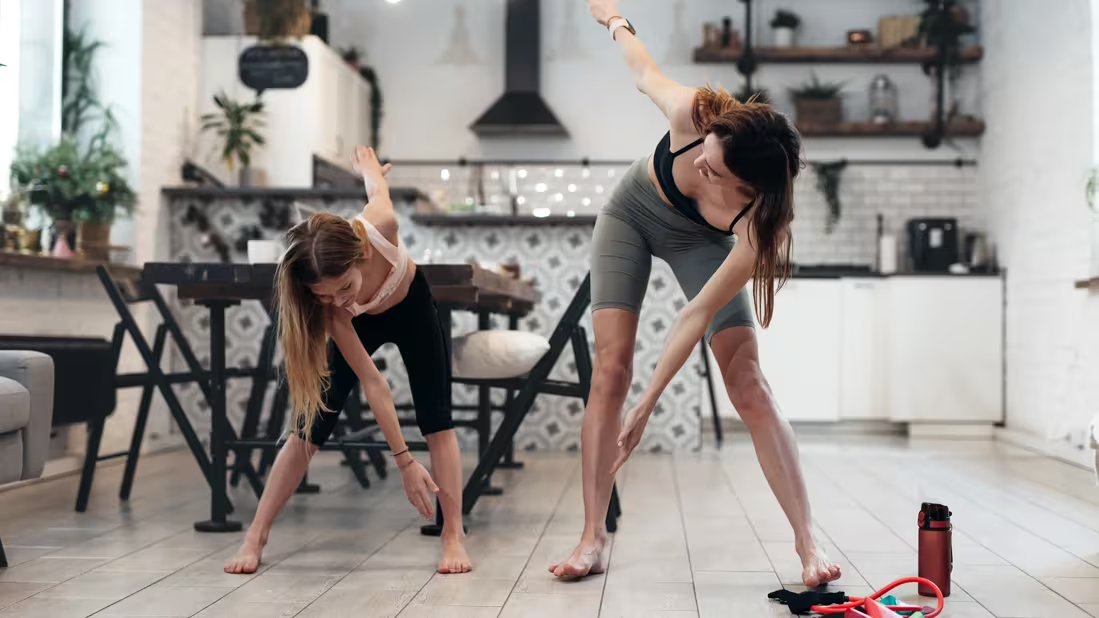
Want to tone your midsection? You can start by standing up to do ab exercises.
Surprised? That’s understandable. After all, most of us think of a few classic on-the-floor exercises when it comes to strengthening our abdominals. Crunches and sit-ups, for instance. Planks, too.
But it turns out, you can get a deeper and more thorough core workout while on your feet, says exercise physiologist Katie Lawton, MEd. Here’s how.
Standing ab exercises
The pursuit of “six-pack abs” explains the devotion to crunches and similar floor exercises. “You completely isolate the rectus abdominis muscles when you lie down and do that motion,” says Lawton. “It’s very targeted.”
That’s great for creating washboard abs. But it doesn’t do much to enhance other muscles in your middle that play an important role in day-to-day movements.
Standing ab exercises, on the other hand, engage a network of muscles within your core that you use all the time, whether it’s picking laundry up off the floor or putting cans on the top shelf in the pantry.
“Think of your core as a chain of muscles that needs to work together to get the job done,” illustrates Lawton. “When you do an ab workout from a standing position, you’re working more of the muscles in that system.”
Strengthening your core can help you:
Improve your balance
Maintain good posture
Protect your back from aches and pains
Better handle day-to-day movements that require bending, lifting and twisting
Incorporate these exercises in a standing abs workout to see those benefits.
1. March
Muscles targeted: Rectus abdominis, transverse abdominis, erector spinae and hip flexors
Start in a standing position with your feet about hip-width apart.
In an exaggerated marching motion, bring your right knee straight up and move it toward your chest until your thigh is parallel to the floor.
Return to a standing position and repeat the motion with your left leg for one set.
Continue for 10 to 15 sets.
Pro tip: Want to make the march more challenging? Then add a “twist” to your motion by moving your right knee toward your left side when you raise it. (Your left knee would go toward your right side.)
2. Overhead side bend
Muscles targeted: External and internal obliques, quadratus lumborum, deltoids and erector spinae
Stand tall with your feet hip-width apart.
Extend your arms up, palms facing each other (as if you’re signaling a touchdown).
Tilt to the right while keeping your torso and arms straight. You’ll feel a stretch on the left side of your body as your waist bends to the right.
Return to the center position and repeat the motion to the left for one set.
Continue for 10 to 15 sets.
Pro tip: “As you bend to each side, focus on engaging your core muscles to work them properly,” advises Lawton. “You’re just going to the side, too. Your torso shouldn’t lean forward at all.”
Begin in an upright position with your feet about hip-width apart.
Kick your right leg out to the side, keeping it straight. Your toes should point forward during the motion as your leg scissors out and back. “Keep the movement smooth and consistent both ways,” instructs Lawton.
Repeat 10 to 15 times and then do the same with your left leg.
Pro tip: Use a chair to steady yourself if balance is an issue. “You always want to make sure these exercises are done in the safest way possible,” emphasizes Lawton.
4. Twists
Muscles targeted: Internal and external obliques, rectus abdominis, transverse abdominis and erector spinae
Stand and plant your feet about shoulder-width apart.
Extend your arms straight out in front of you, parallel to the floor.
Rotate your upper body to the right from your midsection while trying to keep your hips facing forward.
Return to the center. Then, rotate to the left to complete one set.
Repeat 10 times.
Pro tip: Twists should be done in a slow and controlled manner. “You don’t want to be whipping back and forth,” cautions Lawton.
5. Crossover toe touch
Muscles targeted: Internal and external obliques, rectus abdominis, transverse abdominis, erector spinae, hamstrings and glutes
Begin in a standing position with your feet slightly wider than shoulder-width apart.
Extend your arms out to your side, as if forming the letter T.
Rotate your torso to the right while reaching your left hand down to tap your right foot. Most of the movement should be in your core, not your legs.
Return to the T position and repeat the motion in the opposite direction (with your right hand touching your left foot) to complete a full set.
Repeat 10 to 15 times.
Pro tip: Skip this exercise if you sometimes get lightheaded when raising your head and up and down.
6. Wood chop
Muscles targeted: Internal and external obliques, rectus abdominis, transverse abdominis, erector spinae, deltoids and latissimus dorsi
Stand with your feet positioned shoulder-width apart.
Clasp your hands together (as if holding an ax) and bring them up over your head to the right. Your torso will rotate slightly to the right as you twist.
Bring your hands down and to the left in a “chopping” motion that swings across your chest toward your left leg. Rotate your torso to the left as you take the swing. Bend your knees slightly and pivot your feet, too.
Return to the raised position. Take 10 chops.
Repeat with your hands, starting to the left and swinging to the right.
Pro tip: Tailor these exercises to your range of motion. “Move the best you can within the parameters you have,” advises Lawton. “When you start to feel that tension in your muscles, stop there. If it hurts, you’ve gone too far.”
Final thoughts
The simplicity of standing ab exercises just … well, stands out. That’s because the exercises build on natural movements that we do all the time. “That’s a big reason why they’re so effective,” says Lawton.
It’s important to safely progress these exercises as they become easier. Resistance bands, cable machines, medicine balls or free weights are all tools that can help you increase the intensity of the movements.
Dedicating a few minutes a day to these exercises can help you build core strength that supports everything you do, from walking the dog to lifting groceries.
“Standing ab exercises really don’t take a lot of time,” emphasizes Lawton.
Plus, you won’t need to find your floor mat to do them.
Want to tone your midsection? You can start by standing up to do ab exercises.
Surprised? That’s understandable. After all, most of us think of a few classic on-the-floor exercises when it comes to strengthening our abdominals. Crunches and sit-ups, for instance. Planks, too.
But it turns out, you can get a deeper and more thorough core workout while on your feet, says exercise physiologist Katie Lawton, MEd. Here’s how.
Standing ab exercises
The pursuit of “six-pack abs” explains the devotion to crunches and similar floor exercises. “You completely isolate the rectus abdominis muscles when you lie down and do that motion,” says Lawton. “It’s very targeted.”
That’s great for creating washboard abs. But it doesn’t do much to enhance other muscles in your middle that play an important role in day-to-day movements.
Standing ab exercises, on the other hand, engage a network of muscles within your core that you use all the time, whether it’s picking laundry up off the floor or putting cans on the top shelf in the pantry.
“Think of your core as a chain of muscles that needs to work together to get the job done,” illustrates Lawton. “When you do an ab workout from a standing position, you’re working more of the muscles in that system.”
Strengthening your core can help you:
Improve your balance
Maintain good posture
Protect your back from aches and pains
Better handle day-to-day movements that require bending, lifting and twisting
Incorporate these exercises in a standing abs workout to see those benefits.
1. March
Muscles targeted: Rectus abdominis, transverse abdominis, erector spinae and hip flexors
Start in a standing position with your feet about hip-width apart.
In an exaggerated marching motion, bring your right knee straight up and move it toward your chest until your thigh is parallel to the floor.
Return to a standing position and repeat the motion with your left leg for one set.
Continue for 10 to 15 sets.
Pro tip: Want to make the march more challenging? Then add a “twist” to your motion by moving your right knee toward your left side when you raise it. (Your left knee would go toward your right side.)
2. Overhead side bend
Muscles targeted: External and internal obliques, quadratus lumborum, deltoids and erector spinae
Stand tall with your feet hip-width apart.
Extend your arms up, palms facing each other (as if you’re signaling a touchdown).
Tilt to the right while keeping your torso and arms straight. You’ll feel a stretch on the left side of your body as your waist bends to the right.
Return to the center position and repeat the motion to the left for one set.
Continue for 10 to 15 sets.
Pro tip: “As you bend to each side, focus on engaging your core muscles to work them properly,” advises Lawton. “You’re just going to the side, too. Your torso shouldn’t lean forward at all.”
Begin in an upright position with your feet about hip-width apart.
Kick your right leg out to the side, keeping it straight. Your toes should point forward during the motion as your leg scissors out and back. “Keep the movement smooth and consistent both ways,” instructs Lawton.
Repeat 10 to 15 times and then do the same with your left leg.
Pro tip: Use a chair to steady yourself if balance is an issue. “You always want to make sure these exercises are done in the safest way possible,” emphasizes Lawton.
4. Twists
Muscles targeted: Internal and external obliques, rectus abdominis, transverse abdominis and erector spinae
Stand and plant your feet about shoulder-width apart.
Extend your arms straight out in front of you, parallel to the floor.
Rotate your upper body to the right from your midsection while trying to keep your hips facing forward.
Return to the center. Then, rotate to the left to complete one set.
Repeat 10 times.
Pro tip: Twists should be done in a slow and controlled manner. “You don’t want to be whipping back and forth,” cautions Lawton.
5. Crossover toe touch
Muscles targeted: Internal and external obliques, rectus abdominis, transverse abdominis, erector spinae, hamstrings and glutes
Begin in a standing position with your feet slightly wider than shoulder-width apart.
Extend your arms out to your side, as if forming the letter T.
Rotate your torso to the right while reaching your left hand down to tap your right foot. Most of the movement should be in your core, not your legs.
Return to the T position and repeat the motion in the opposite direction (with your right hand touching your left foot) to complete a full set.
Repeat 10 to 15 times.
Pro tip: Skip this exercise if you sometimes get lightheaded when raising your head and up and down.
6. Wood chop
Muscles targeted: Internal and external obliques, rectus abdominis, transverse abdominis, erector spinae, deltoids and latissimus dorsi
Stand with your feet positioned shoulder-width apart.
Clasp your hands together (as if holding an ax) and bring them up over your head to the right. Your torso will rotate slightly to the right as you twist.
Bring your hands down and to the left in a “chopping” motion that swings across your chest toward your left leg. Rotate your torso to the left as you take the swing. Bend your knees slightly and pivot your feet, too.
Return to the raised position. Take 10 chops.
Repeat with your hands, starting to the left and swinging to the right.
Pro tip: Tailor these exercises to your range of motion. “Move the best you can within the parameters you have,” advises Lawton. “When you start to feel that tension in your muscles, stop there. If it hurts, you’ve gone too far.”
Final thoughts
The simplicity of standing ab exercises just … well, stands out. That’s because the exercises build on natural movements that we do all the time. “That’s a big reason why they’re so effective,” says Lawton.
It’s important to safely progress these exercises as they become easier. Resistance bands, cable machines, medicine balls or free weights are all tools that can help you increase the intensity of the movements.
Dedicating a few minutes a day to these exercises can help you build core strength that supports everything you do, from walking the dog to lifting groceries.
“Standing ab exercises really don’t take a lot of time,” emphasizes Lawton.
Plus, you won’t need to find your floor mat to do them.






 Healthaware