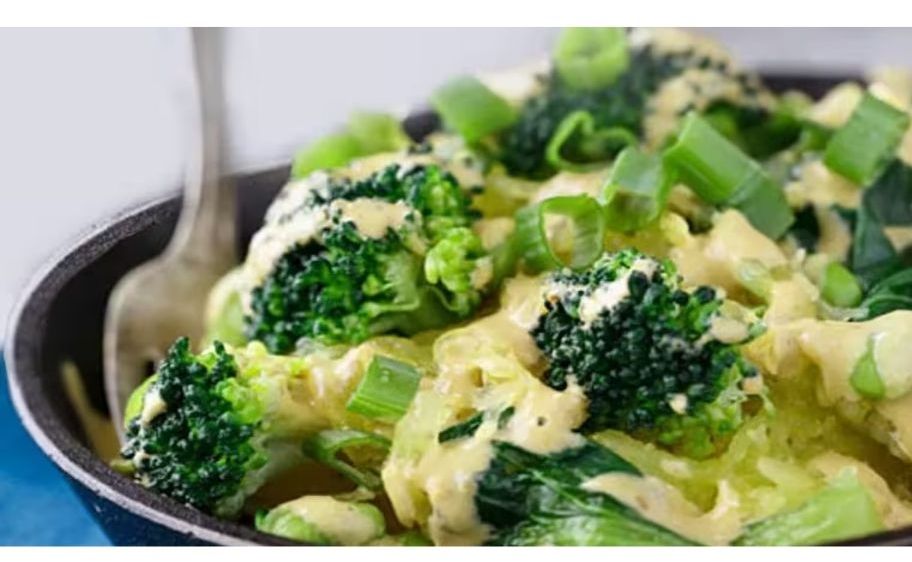
A healthy, Asian spin on your usual weeknight pasta dish
Luxurious coconut milk and peanut butter make a silky sauce — and a savory sweet topping for squash, edamame and broccoli.
Ingredients
1 large spaghetti squash 1 tablespoon olive oil Sea salt and freshly ground black pepper 1/2 cup no-added-sugar peanut butter 1 cup canned light coconut milk, plus more if needed 2 garlic cloves 1 1/2 teaspoons ground ginger 1 tablespoon soy sauce 1 1/2 teaspoons rice vinegar 1 large head broccoli, cut into bite-sized florets and steamed 2 bunches Swiss chard, roughly chopped and steamed 1 cup cooked edamame 1 bunch green onions or scallions, chopped, for garnish 1/2 cup chopped peanuts, for garnish
Directions
Preheat the oven to 400° F.
Line a baking sheet with foil and set aside.
Carefully cut the spaghetti squash in half lengthwise, using a large, sharp knife. Remove the seeds and stringy guts and discard or compost.
Brush the cut insides of the squash with 1 tablespoon of the olive oil. Season with salt and pepper.
Place the spaghetti squash, cut side down, on the prepared baking sheet and roast until tender, 45 to 60 minutes. When it’s done, the strands of the squash should fall off easily when scraped with a fork.
Remove from the oven and let the cooked spaghetti squash cool for about 5 minutes, then scrape all the flesh into a pile of strands in a large bowl.
Taste and season with more salt and pepper, if needed.
Place the peanut butter, coconut milk, garlic, ginger, soy sauce and rice vinegar in a blender, and blend on high speed until completely smooth; add a little more coconut milk if a thinner consistency is desired.
Mix the squash with the cooked broccoli, Swiss chard and edamame.
Divide equally among four bowls. Drizzle with the peanut sauce and sprinkle with the green onions and peanuts.
Nutrition information (per serving)
Makes 4 servings
Calories: 591 Total fat: 40.5 g Saturated fat: 7.9 g Trans fat: 0 g Cholesterol: 0 mg Sodium: 1121.1 mg Total Carbohydrate: 40.5 g Fiber: 14.1 g Sugar: 11.2 g Protein: 27.3 g
Two friends share laughter and wine during a relaxed evening at home.
Note: While research on alcohol is evolving, the World Health Organization says drinking less or not at all is better for your health.
If you’ve noticed your hair thinning or that you’re losing hair more rapidly, you may be wondering whether your alcohol consumption is to blame. After all, alcohol is tied to a wide range of health issues, from liver disease to nutrient deficiencies and cardiovascular conditions — more than 200 health conditions in all.
[1] Could it also be contributing to your hair loss?
The short answer: Alcohol itself isn’t a direct, proven cause of hair loss. But excessive drinking may contribute to factors that negatively affect hair health, such as nutritional deficiencies, dehydration, hormonal disturbances, and immune system impairment.
[1]
“There’s no direct causal relationship that’s been defined. What we see instead is a suggested link, especially with androgenic alopecia, or pattern hair loss. And it may depend on the type and amount of alcohol consumed,” says Chris Adigun, MD, a dermatologist in private practice in Chapel Hill, North Carolina.
Here’s a closer look at what the science says if you’re worried about the potential role of alcohol in your hair health.
Alcohol and Hair Loss: What the Science Shows
Currently, there’s no strong evidence that alcohol directly causes hair loss. But researchers have studied how drinking causes ripple effects on overall health, including indirectly influencing hair loss.
One research review that included 17 studies and more than 61,000 participants — mostly women — found that consuming higher amounts of sugary drinks and alcohol was linked to more hair shedding. The researchers even suggest that limiting alcohol may be beneficial in supporting hair health, though further research is needed to confirm the findings.
[2]
The research review isn’t able to determine the two are linked, but some clear factors are at play, says Julia Zumpano, RD, a registered dietitian at Cleveland Clinic’s Digestive Disease & Surgery Institute in Ohio.
“One probable cause could be the role these beverages play in the gut microbiome and nutrient absorption,” Zumpano says.
Excessive drinkers may also eat less nutrient-dense foods and may be deficient in nutrients crucial to hair health, such as vitamin D, iron, protein, and B12, she says. Chronic nutrient deficiency can weaken the hair’s structure and cause thinning.
[3]
Both theories are backed by research. It’s been established that chronic alcohol use is tied to malnutrition via alcohol’s effects on the small intestine’s ability to absorb key nutrients.
[4]
Genetics are another key factor, according to research. One study that looked at more than 1,100 men who were diagnosed with androgenetic alopecia found that regular drinkers had a 61 percent increased risk that their pattern hair loss would advance to moderate or severe stages.
[5]
In this case, the researchers said doctors should consider counselling patients with a genetic predisposition to hair loss to steer away from alcohol as a preventive measure.
[5]
And then there’s the stress on the body that alcohol may cause, Dr. Adigun says. Excessive drinking can disrupt sleep, trigger dehydration, and weaken the immune system, all of which can indirectly affect hair health.
[6]Should You Drink if You Have Hair Loss?
If you’re already dealing with hair thinning or shedding, do you need to stop drinking altogether? The answer depends on how much you drink and your overall health.
Based on the research, if you’re genetically predisposed to hair loss, Adigun suggests limiting alcohol consumption to avoid accelerating the process. “If someone has a family history of androgenic alopecia, for example, adding alcohol as another risk factor is inadvisable if they want to keep their hair,” she says.
But for most adults, moderate drinking — up to one drink per day for women and two for men, according to U.S. dietary guidelines — is unlikely to directly trigger hair loss, Adigun says.
[7]
If you drink excessively, cutting back may support your hair health indirectly by lessening the negative impact on your sleep, immune system, and your ability to absorb nutrients.
The term “excessive drinking” typically refers to binge drinking or heavy drinking. Binge drinking consists of consuming multiple drinks on a single occasion — 4 or more for women, 5 or more for men. Heavy drinking is defined as consuming 8 or more drinks per week for women, or 15 or more for men.
[8]
Your best bet is to meet with a dermatologist, who can help sort out the underlying causes of your hair loss — whether they’re genetic, hormonal, nutritional, or related to other health conditions. A dermatologist can run tests, identify the type of hair loss, and create a treatment approach that may combine medications, supplements, and lifestyle changes.
[9]
“Hair loss doesn’t happen in a vacuum, it’s complex. Alcohol is one piece of the puzzle, but we also need to look at genetics, lifestyle, and other contributing factors,” Adigun says.
Does Alcohol Interact With Hair Loss Medications?
If you’re taking medication for hair loss, you may wonder whether alcohol is safe. Some hair regrowth treatments don’t interact with alcohol, but others may increase your risk of side effects when combined with drinking.
Always ask your doctor or pharmacist before combining the two.
Here’s a look at some common treatments for hair loss and their potential interactions.
Minoxidil (Rogaine)
Topical application of minoxidil has no known alcohol interactions, but oral minoxidil may increase the risk of severe hangovers in people who are drinking heavily while taking the medication.
[10]
[11]
Finasteride (Propecia)
There are no major interactions with alcohol while taking this medication.
[12]
Spironolactone (Aldactone)
This medication is used off-label for female pattern hair loss. While taking it, women should stick within recommended guidelines for daily alcohol consumption — one drink per day or less. Alcohol can make some people feel dizzy or sleepy. If this happens to you, try not to drink alcohol while taking spironolactone.
[13]
[7]
Adigun also reminds people who are already exploring hair restoration options, such as topical and oral medications or injections, to try not to undermine their progress by drinking.
“If you’re doing treatments like minoxidil or [platelet-rich plasma injections] and at the same time, [you’re] drinking moderately or heavily, you’re adding a risk factor that we know increases [hair loss] severity,” she says. “Why continue a habit that worsens the condition you’re trying to treat?”
The Takeaway
Alcohol hasn’t been proven to directly cause hair loss, but excessive drinking can worsen hair shedding indirectly by disrupting sleep, hydration, and nutrient absorption — all of which can affect hair health.
Genetics play a key role in pattern baldness — and if you’re predisposed to androgenic alopecia, research suggests that alcohol may accelerate the process.
If you’re treating hair loss with medications or procedures, cutting back on alcohol can help you get the best results and avoid undermining your progress. Work with a dermatologist to understand what may be causing your hair loss.
What to know before grabbing an ice-cold beer to beat the heat:
It’s a warm summer day and you’re hanging out with friends and family for the first time in over a year, celebrating being vaccinated and just being together. And to help beat the heat, you reach in the cooler for an ice-cold beer.
While that might be refreshing at the moment, though, there’s good reason to grab some water, too. The heat of summer can be brutal, sometimes, and its effects are amplified when you’ve had a little too much alcohol.
To better understand the risks you face when drinking alcohol during this hot vaccine summer, we spoke with registered dietitian Julia Zumpano, RD.
The biggest danger: dehydration
Whenever you’re outside in the heat for prolonged periods – like at the beach or picnic – you’re at risk of dehydration. Consuming alcohol only heightens that risk.
Alcohol reduces the release of the hormone vasopressin, which keeps your body fluids balanced. At the same time, alcohol is also a diuretic which means more urinating and that can lead to dehydration even without the heat. Add in all that sweat from the hot sun and it’s a recipe for dehydration disaster.
One thing Zumprano points out, too, is that caffeine – whether via coffee, soda or as a mixer for liquor – heightens that dehydration risk even further.
Dehydration can also compound certain aspects of intoxication, she notes. “Altered thinking, altered abilities to drive and make reasonable decisions or even just to have conversations are all things that intoxication can cause.”
Liquor versus beer: Is one worse than the other in the heat?
Given that alcohol content is usually higher in spirits than in your average beer, it makes sense that drinking beer instead of mixed drinks might help you avoid dehydration. But the reality is a little more complex, according to Zumpano.
“If you’re consuming liquor at a volume equivalent to the volume of beer, like 12 ounces of margaritas compared to 12 ounces of an average beer, you will get drunk a lot quicker,” she says. “But if you’re drinking what’s considered an alcoholic drink equivalent, there’s not much of a difference because your alcohol intake is the same.”
According to the National Institute of Health, one alcoholic drink equivalent, also referred to as a “standard drink,” contains around 14 grams of pure alcohol. By those measurements, an average 12-ounce can of beer contains the same amount of alcohol as a 5-ounce glass of wine or a typical shot of distilled spirits like rum, vodka, gin or whiskey.
One thing to keep an eye on, though, is the alcoholic content of your beer. While major brands generally run between 4% and 5% alcohol per 12-ounce can or bottle, certain styles of craft beer are as much as 9% alcohol per the same volume. In other words, one can of your favorite local IPA delivers almost twice the amount of alcohol to your system.
Beware a false sense of hydration
Another mistake you should avoid, Zumpano says, is thinking that drinking all that liquid rehydrates you. “If you’re drinking a lot of beer or alcoholic seltzer, it can feel like you’re drinking a lot of liquid and staying hydrated, but the alcohol offsets that because it’s the dehydrating factor,” she points out.
Not that drinking mixed drinks is any better, according to Zumpano. “If you’re drinking a sugary, sweet mixed drink, you run into the same thing. It feels like you’re staying hydrated because they go down so much smoother than drinking spirits on the rocks. But it’s the same effect as with beer: The alcohol is still dehydrating you unless you’re also drinking enough water.”
Sugar, the hidden villain
All of these drinks have other adverse health effects, too. They can pack a bunch of calories into a single serving – as many as 400 to 500 calories in some mixed drinks and craft beers – and they can come loaded with carbs.
There’s more, though. “If you’re drinking high sugar, high caloric intake beverages and you’re drinking a lot of them, they can be very filling,” Zumpano says. If you’re feeling full, you might not eat any food which can otherwise help absorb some of the alcohol.
How to counter dehydration: water, water, water
So what can you do to avoid dehydration troubles when you’re sipping your favorite boozy beverage by the pool? “To counteract the dehydration risk of alcohol,” Zumpano says, “drink 8 to 12 ounces of water for every alcoholic drink. It slows your intake, keeps you hydrated and can mitigate negative hangover effects.”
She suggests keeping a reusable water bottle with you that you can refill as the day goes on, taking time to drink the necessary water between beers or margaritas. Another option is to buy a pack of 8-ounce bottles of water and alternate with your booze. And you can always infuse your water with fruit to keep it flavorful.
“It’s also important to know what your trigger for over-consumption is,” she adds. “If you’re triggered by over-consuming beer or alcoholic seltzer, you want to be mindful of that. Try to switch a drink you have better control of and keep the water bottle handy.”
Up to 85% of people in the U.S. experience back pain in their lifetime. And 28% of people with chronic pain turn to alcohol for relief. So, it can be helpful to understand possible connections between the two. There are many reasons you may experience back pain, and alcohol can… pic.twitter.com/BmRjRJpPgQ
Two friends share laughter and wine during a relaxed evening at home.
Note: While research on alcohol is evolving, the World Health Organization says drinking less or not at all is better for your health.
If you’ve noticed your hair thinning or that you’re losing hair more rapidly, you may be wondering whether your alcohol consumption is to blame. After all, alcohol is tied to a wide range of health issues, from liver disease to nutrient deficiencies and cardiovascular conditions — more than 200 health conditions in all.
[1] Could it also be contributing to your hair loss?
The short answer: Alcohol itself isn’t a direct, proven cause of hair loss. But excessive drinking may contribute to factors that negatively affect hair health, such as nutritional deficiencies, dehydration, hormonal disturbances, and immune system impairment.
[1]
“There’s no direct causal relationship that’s been defined. What we see instead is a suggested link, especially with androgenic alopecia, or pattern hair loss. And it may depend on the type and amount of alcohol consumed,” says Chris Adigun, MD, a dermatologist in private practice in Chapel Hill, North Carolina.
Here’s a closer look at what the science says if you’re worried about the potential role of alcohol in your hair health.
Alcohol and Hair Loss: What the Science Shows
Currently, there’s no strong evidence that alcohol directly causes hair loss. But researchers have studied how drinking causes ripple effects on overall health, including indirectly influencing hair loss.
One research review that included 17 studies and more than 61,000 participants — mostly women — found that consuming higher amounts of sugary drinks and alcohol was linked to more hair shedding. The researchers even suggest that limiting alcohol may be beneficial in supporting hair health, though further research is needed to confirm the findings.
[2]
The research review isn’t able to determine the two are linked, but some clear factors are at play, says Julia Zumpano, RD, a registered dietitian at Cleveland Clinic’s Digestive Disease & Surgery Institute in Ohio.
“One probable cause could be the role these beverages play in the gut microbiome and nutrient absorption,” Zumpano says.
Excessive drinkers may also eat less nutrient-dense foods and may be deficient in nutrients crucial to hair health, such as vitamin D, iron, protein, and B12, she says. Chronic nutrient deficiency can weaken the hair’s structure and cause thinning.
[3]
Both theories are backed by research. It’s been established that chronic alcohol use is tied to malnutrition via alcohol’s effects on the small intestine’s ability to absorb key nutrients.
[4]
Genetics are another key factor, according to research. One study that looked at more than 1,100 men who were diagnosed with androgenetic alopecia found that regular drinkers had a 61 percent increased risk that their pattern hair loss would advance to moderate or severe stages.
[5]
In this case, the researchers said doctors should consider counselling patients with a genetic predisposition to hair loss to steer away from alcohol as a preventive measure.
[5]
And then there’s the stress on the body that alcohol may cause, Dr. Adigun says. Excessive drinking can disrupt sleep, trigger dehydration, and weaken the immune system, all of which can indirectly affect hair health.
[6]Should You Drink if You Have Hair Loss?
If you’re already dealing with hair thinning or shedding, do you need to stop drinking altogether? The answer depends on how much you drink and your overall health.
Based on the research, if you’re genetically predisposed to hair loss, Adigun suggests limiting alcohol consumption to avoid accelerating the process. “If someone has a family history of androgenic alopecia, for example, adding alcohol as another risk factor is inadvisable if they want to keep their hair,” she says.
But for most adults, moderate drinking — up to one drink per day for women and two for men, according to U.S. dietary guidelines — is unlikely to directly trigger hair loss, Adigun says.
[7]
If you drink excessively, cutting back may support your hair health indirectly by lessening the negative impact on your sleep, immune system, and your ability to absorb nutrients.
The term “excessive drinking” typically refers to binge drinking or heavy drinking. Binge drinking consists of consuming multiple drinks on a single occasion — 4 or more for women, 5 or more for men. Heavy drinking is defined as consuming 8 or more drinks per week for women, or 15 or more for men.
[8]
Your best bet is to meet with a dermatologist, who can help sort out the underlying causes of your hair loss — whether they’re genetic, hormonal, nutritional, or related to other health conditions. A dermatologist can run tests, identify the type of hair loss, and create a treatment approach that may combine medications, supplements, and lifestyle changes.
[9]
“Hair loss doesn’t happen in a vacuum, it’s complex. Alcohol is one piece of the puzzle, but we also need to look at genetics, lifestyle, and other contributing factors,” Adigun says.
Does Alcohol Interact With Hair Loss Medications?
If you’re taking medication for hair loss, you may wonder whether alcohol is safe. Some hair regrowth treatments don’t interact with alcohol, but others may increase your risk of side effects when combined with drinking.
Always ask your doctor or pharmacist before combining the two.
Here’s a look at some common treatments for hair loss and their potential interactions.
Minoxidil (Rogaine)
Topical application of minoxidil has no known alcohol interactions, but oral minoxidil may increase the risk of severe hangovers in people who are drinking heavily while taking the medication.
[10]
[11]
Finasteride (Propecia)
There are no major interactions with alcohol while taking this medication.
[12]
Spironolactone (Aldactone)
This medication is used off-label for female pattern hair loss. While taking it, women should stick within recommended guidelines for daily alcohol consumption — one drink per day or less. Alcohol can make some people feel dizzy or sleepy. If this happens to you, try not to drink alcohol while taking spironolactone.
[13]
[7]
Adigun also reminds people who are already exploring hair restoration options, such as topical and oral medications or injections, to try not to undermine their progress by drinking.
“If you’re doing treatments like minoxidil or [platelet-rich plasma injections] and at the same time, [you’re] drinking moderately or heavily, you’re adding a risk factor that we know increases [hair loss] severity,” she says. “Why continue a habit that worsens the condition you’re trying to treat?”
The Takeaway
Alcohol hasn’t been proven to directly cause hair loss, but excessive drinking can worsen hair shedding indirectly by disrupting sleep, hydration, and nutrient absorption — all of which can affect hair health.
Genetics play a key role in pattern baldness — and if you’re predisposed to androgenic alopecia, research suggests that alcohol may accelerate the process.
If you’re treating hair loss with medications or procedures, cutting back on alcohol can help you get the best results and avoid undermining your progress. Work with a dermatologist to understand what may be causing your hair loss.
A healthy, Asian spin on your usual weeknight pasta dish
Luxurious coconut milk and peanut butter make a silky sauce — and a savory sweet topping for squash, edamame and broccoli.
Ingredients
1 large spaghetti squash 1 tablespoon olive oil Sea salt and freshly ground black pepper 1/2 cup no-added-sugar peanut butter 1 cup canned light coconut milk, plus more if needed 2 garlic cloves 1 1/2 teaspoons ground ginger 1 tablespoon soy sauce 1 1/2 teaspoons rice vinegar 1 large head broccoli, cut into bite-sized florets and steamed 2 bunches Swiss chard, roughly chopped and steamed 1 cup cooked edamame 1 bunch green onions or scallions, chopped, for garnish 1/2 cup chopped peanuts, for garnish
Directions
Preheat the oven to 400° F.
Line a baking sheet with foil and set aside.
Carefully cut the spaghetti squash in half lengthwise, using a large, sharp knife. Remove the seeds and stringy guts and discard or compost.
Brush the cut insides of the squash with 1 tablespoon of the olive oil. Season with salt and pepper.
Place the spaghetti squash, cut side down, on the prepared baking sheet and roast until tender, 45 to 60 minutes. When it’s done, the strands of the squash should fall off easily when scraped with a fork.
Remove from the oven and let the cooked spaghetti squash cool for about 5 minutes, then scrape all the flesh into a pile of strands in a large bowl.
Taste and season with more salt and pepper, if needed.
Place the peanut butter, coconut milk, garlic, ginger, soy sauce and rice vinegar in a blender, and blend on high speed until completely smooth; add a little more coconut milk if a thinner consistency is desired.
Mix the squash with the cooked broccoli, Swiss chard and edamame.
Divide equally among four bowls. Drizzle with the peanut sauce and sprinkle with the green onions and peanuts.
Nutrition information (per serving)
Makes 4 servings
Calories: 591 Total fat: 40.5 g Saturated fat: 7.9 g Trans fat: 0 g Cholesterol: 0 mg Sodium: 1121.1 mg Total Carbohydrate: 40.5 g Fiber: 14.1 g Sugar: 11.2 g Protein: 27.3 g
Any extra calorie burn from exercising in cold or hot temps is minimal
Everyone has their preferences for how they want to exercise. Some like to wear layers and turn up the heat when pumping iron. Others like to run for miles, no matter how cold it is outside. But have you ever given any thought to how many calories you’re burning when it’s cold or hot — and if one burns more calories than the other?
Sports medicine physician Matthew Kampert, DO, shares how temperature can affect physical fitness and which temps are best for your workouts.
Is cold or hot weather better for burning calories?
It takes a lot of energy — in the form of calories — to keep you alive. Even when you’re at rest, your body is constantly burning calories to do vital things like keep your heart beating.
It also takes calories to keep your core body temperature at about 98.6 degrees Fahrenheit (37 degrees Celsius). If your body gets too hot or too cold, it burns extra calories to get your core body temperature back to a healthy range. This process is called thermoregulation.
“The harder your muscles work, the more calories you burn,” says Dr. Kampert. “So, if you’re exercising in hotter or colder weather, your body has to work harder to regulate its temperature while you’re exercising.”
Both cold and hot weather can slightly increase the number of calories your body burns. But for most people, the difference is so small that it won’t have much impact on weight loss. It’s the workout itself that’s responsible for burning most of your calories.
Dr. Kampert explains how calorie burn changes in both cold and hot environments.
Burning calories in the cold
In colder environments, your body works to keep your core temperature from dropping. To do that, it first tries to conserve heat. If that’s not enough, it starts generating more heat. This process involves several different mechanisms, such as:
Vasoconstriction: Your blood vessels narrow and send less warm blood to the surface of your skin to help reduce heat loss.
Shivering: When you’ve got the chills, your muscles automatically burn calories and generate heat by rapidly contracting and relaxing.
“Your muscles require energy every time they move, even when it’s an involuntary action like shivering,” explains Dr. Kampert. “You may burn a few extra calories when you’re cold, but the increase is small and isn’t enough to make exercising in cold weather a weight-loss strategy.”
Plus, without proper protection and enough layering, long-term exposure to cold weather could lead to injury and impact dexterity, flexibility and muscle strength.
Burning calories in the heat
Some people intentionally exercise in the heat or wear extra layers to make themselves sweat more, thinking it will help them burn more calories. But sweating doesn’t always equal an increase in calorie burn. It’s simply your body’s way of cooling itself down through thermoregulation.
When your body overheats, it works to lower your core temperature to healthy levels. It does this primarily through:
Vasodilation: Your blood vessels widen to send more warm blood to the surface of your skin, allowing heat to escape.
Sweating: Sweat evaporates from your skin, carrying heat away from your body and helping prevent overheating.
“Sweat evaporates more easily in hot, dry environments,” says Dr. Kampert. “In humid environments, the air is already saturated with water vapor, so it becomes harder for your body to cool itself down and harder to exercise.”
Trying to make yourself sweat more by exercising in extreme heat or wearing heavy clothing isn’t an effective weight-loss strategy. Instead, it can increase your risk of:
Dehydration
Heat cramps
Heat exhaustion
Heatstroke
A better approach to working out in any temp
Working out in extreme temperatures poses significant risk for older adults, young children and others with a reduced ability to regulate body temperature.
Check in with your healthcare provider before exercising in cold or hot temps if you:
Have cardiovascular disease
Have diabetes
Have obesity
Take certain medications, like blood thinners
“If your goal is to burn more calories, the intensity, duration and consistency of your workout matter far more than the temperature of your surroundings,” stresses Dr. Kampert. “When exercising, focus on training safely and be prepared for inclement weather.”
Avoid wearing too many layers or accessories on your next cold run. Excess sweat can cool your body too quickly after exercising, making you feel colder. Instead, Dr. Kampert suggests wearing:
A synthetic moisture-wicking base layer, like nylon or polyester
An insulating middle layer, like fleece or wool
A windproof or weatherproof outer layer
When it comes to the heat, stick to clothing that’s:
Lightweight
Light-colored
Loose fitting
In either case, you want to stay hydrated and take things slow. If you feel dizzy or distressed, or if something doesn’t feel right, stop what you’re doing and head inside for recovery.
“Exercising in extreme temperatures increases the intensity of a workout, but it comes with its own set of risks and won’t increase how many calories you’re burning in any significant way,” reiterates Dr. Kampert. “If you’re looking to burn more calories, try progressing your workouts by increasing the amount of sets, reps or weight you’re lifting.”
A group of adults are taking a fitness class together at the gym. They are working out on exercise mats and are holding a high plank.
A physical therapist answers your questions
If you suffer from back pain, you’ve probably heard that strengthening your core can bring you some relief. But is this always true? And if so, how do you do it? We spoke with Cleveland Clinic physical therapist Patti Mariano, DPT, to find out.
Q: What is your core?
When most people think about the core of the body they think of the abdominal or six-pack area just below the ribs. While the abdominal muscles are an important part of the core, we consider other areas important, too.
Your core includes:
Front abdominal muscles — the rectus abdominis
Muscles along the side of your body — the internal and external obliques
A deep muscle that wraps around the front — the transverse abdominis
Muscles in your back that are located between your spine bones and run along your spine — the erector spinae and multifidi
Your core also includes the diaphragm and muscles of the pelvic floor. I also consider the gluteal muscles as core muscles.
Q: What is the relationship between core strength and back pain?
Theoretically, if your muscles around the low back are weak, your body will rely more on passive structures, including ligaments — the tissue that connects bone to bone — as well as the spinal bones or discs, which lie between the spinal bones, for stability, which can cause pain.
But some studies have shown that specific core exercises are not any more beneficial than general exercise for low back pain. What we know is that exercise in general can help, and focusing on core muscles may provide some additional benefit.
Q: What are some exercises for the core that can help with back pain?
Here are my top five:
Side plank — Sit on the floor with your right hand below your right shoulder and feet stacked. Lift your body, keeping your legs long, abdominals engaged and feet stacked. Hold. Repeat on the other side. You can modify this pose by dropping your bottom knee to the floor for extra support.
Plank — Kneel on all fours. Pull in your abdomen and step your feet behind you until your legs are straight. Keep your hands directly under your shoulders and your neck straight. Hold your abdomen and legs tight and avoid letting your lower back sag. Hold and breathe for 30 seconds. You can modify this pose by lowering your knees.
Bird dog — Kneel on all fours. Reach one arm out in front of you, draw in your abdomen, and extend the opposite leg long behind you. Repeat on the other side.
Scissors — Lie on your back with your arms at your sides and legs pointed straight into the air above your hips. Press your lower back into the mat and tighten your abdomen. Lower your right leg until it’s a few inches from the floor. Raise your right leg up and begin lowering your left leg the same way. Continue switching right and left.
Upward dog — Lie face down with head slightly lifted and hands palm-down under your shoulders. Point your toes. Exhale, then press through your hands and the tops of your feet and raise your body and legs up until your arms are straight and your body and legs are off the ground. Keep your neck relaxed and long and thigh muscles tight as you hold and breathe.
For the plank exercises, start by holding them for 15 seconds to 30 seconds. For bird dog and scissors, try three sets of eight or 10 repetitions. For upward dog, do one set of 10 repetitions.
Q: Can you injure your back by trying to strengthen your core?
Any exercise performed incorrectly, whether it is core-strengthening or otherwise, has the potential to cause discomfort.
Twisting exercises or even incorrectly completing the exercises cited above can cause pain in the low back. But it’s highly unlikely that one repetition of an exercise will seriously harm your body, unless it’s an exercise using a very heavy weight.
The best way to keep your body safe is to listen to body cues such as pain during and immediately after an exercise, and the next day after exercising.
Q: When should you talk to a doctor about your back pain?
If any of the following is going on you should consult with your doctor:
Your pain has been going on for longer than a month, despite resting from activities that make it worse.
Your pain is getting worse.
Your pain wakes you from sleep.
Your pain is in your low back but also is going down one or both of your legs.
You notice that one leg is becoming weaker than the other.
Q: Where should you turn if you want help in creating a plan to address back pain?
Physical therapists train as musculoskeletal experts — they are the experts on muscles, bones and human movement. These professionals are the most qualified, aside from an orthopedic doctor, to assess back problems.
Since there are many factors that impact low back pain and many types of low back pain, it is a good idea to visit at least one time with a physical therapist for an evaluation and subsequent plan of care. This will give you an individually tailored plan with exercises that progress safely.
The idea of core strengthening, while beneficial, is just one piece of the low back pain puzzle.
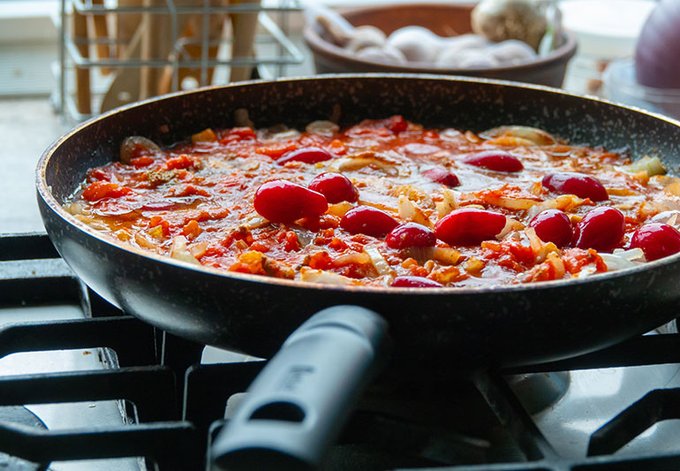
Why not try your hand at making homemade tomato sauce? The freshness of the tomatoes and the smokiness of the roasted vegetables make this a great topping for spaghetti. If you don’t have your own garden, use canned Roma tomatoes for a tasty dish that includes roasted mushrooms, broccoli and peppers.
Ingredients
Tomato sauce
Olive oil cooking spray 2 garlic cloves, minced 1 small carrot, minced 1 shallot, minced 4 cups peeled, seeded, and diced ripe tomatoes or one 28-ounce can no-salt-added diced tomatoes, drained 1/4 cup dry red wine 1 1/2 tablespoons balsamic vinegar 1/4 teaspoon crushed red pepper flakes, optional 1/4 cup chopped fresh basil
Pasta
1/2 pound whole wheat spaghetti 3/4 pound broccoli florets and stalks, peeled and cut into bite-size pieces 2 portobello mushrooms, halved and thinly sliced 1 red, yellow or orange bell pepper, seeded and coarsely chopped 1 1/2 tablespoons extra-virgin olive oil 1 1/2 tablespoons balsamic vinegar Freshly grated pepper 2 tablespoons freshly grated Parmesan cheese
Directions
Preheat oven to 400° F. Line a rimmed baking sheet with aluminum foil.
To make the sauce, coat a large pot with cooking spray and saute the garlic, carrot and shallot over low heat until they begin to wilt, about 5 minutes. Stir in the tomatoes, wine, vinegar and red pepper flakes (if using). Cover and simmer slowly for 30 minutes.
Stir in the basil and simmer for 10 minutes more. (To make a smoother sauce, cool and process in batches in either a blender or food processor.) Set aside.
Place the broccoli, mushrooms and bell pepper on the prepared pan. Toss with oil and vinegar. Roast about 10 minutes until crisp or done to your taste. Sprinkle with pepper.
Cook the pasta according to package directions. Drain.
In a large serving bowl, toss the pasta with 2 cups tomato sauce. Top with the roasted vegetables and sprinkle with Parmesan cheese.
Nutrition information (per serving)
Makes 4 servings
Calories: 363 Total fat: 4 g Protein: 15 g Carbohydrate: 71 g Dietary fiber: 4 g Cholesterol: 0 mg Sodium: 100 mg Potassium: 93 mg
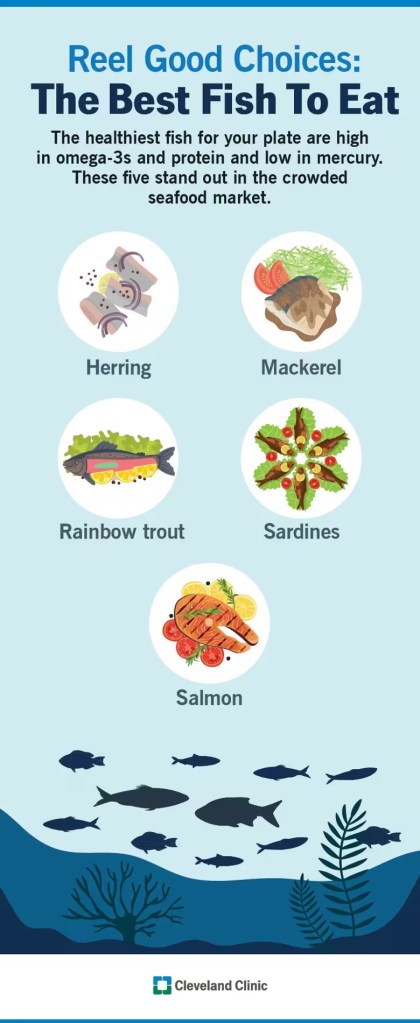
The best choices are high in omega-3s and protein and low in mercury
Fish has earned its reputation as one of the healthiest proteins you can put on your plate. But with so many options in the seafood case, it can be hard to know which ones deserve a spot in your shopping cart.
“It can get overwhelming sometimes with so many choices,” says registered dietitian Julia Zumpano, RD, LD. “The key is choosing fish that give you the most nutritional benefit while limiting your mercury exposure.”
The 5 best fish to eat
Fish is packed with lean protein, but its biggest nutritional advantage is omega-3 fatty acids. These healthy fats can help support heart and brain health and lower inflammation, among other benefits.
Zumpano’s top choices for fish are all high in omega-3s and protein, as well as other vitamins and nutrients.
They’re also low in mercury, a toxic metal that brings health concerns in high amounts.
Here are five fish choices to search out at the market.
1. Sardines
Don’t let their tiny size fool you: “Sardines offer big health benefits,” says Zumpano.
A 3-ounce serving provides about 2 grams of omega-3 fatty acids — one of the highest amounts of any fish. They’re also a good source of calcium and vitamin D, essential nutrients your body needs to work right.
Another perk? They’re inexpensive and easy to keep on hand. You can buy sardines packed in olive oil or tomato sauce and add them to:
Salads
Pasta dishes
Grain bowls
Toast
If you’re watching your sodium intake, compare nutrition labels and choose lower-sodium varieties when possible.
2. Herring
Herring is another oily fish loaded with omega-3s. While it contains slightly less omega-3 than sardines, herring still delivers plenty of heart-healthy fats. It’s also swimming in vitamin B12 and vitamin D.
Depending on your preferences, herring can be eaten:
Cooked fresh
Smoked
Pickled
Canned
“Herring has a stronger, fishier flavor because it’s rich in those healthy oils,” Zumpano notes. “If you’re trying it for the first time, using mustard and dill is a traditional preparation that’s a great place to start.”
3. Mackerel
Mackerel is another excellent source of omega-3s and lean protein, but there’s one important catch: Not all mackerel is created equal.
It’s best to choose the smaller Atlantic or Spanish mackerel, which are relatively low in mercury, clarifies Zumpano. And pass on king mackerel, a larger predator fish that contains much higher mercury levels.
Mackerel is tasty grilled, baked or poached. The fish pairs well with vegetables, salads and whole grains for a balanced meal.
4. Salmon
No list of healthy fish would be complete without salmon. Popular with diners for its rich and meaty texture, salmon is another excellent source of protein, omega-3 fatty acids and key vitamins.
When it comes to nutritional value, wild salmon holds a slight edge over responsibly raised farmed salmon, notes Zumpano. But both are excellent choices.
“If you have the opportunity to choose wild Pacific salmon, it’s a great option,” she adds. “But don’t be afraid to eat farm-raised Atlantic salmon if that’s what’s available or fits your budget.”
5. Rainbow trout
Rainbow trout is another option in the seafood case that checks a lot of good-for-your-health boxes. It’s rich in lean protein and omega-3 fatty acids while also providing important key vitamins and nutrients.
“Rainbow trout has a mild flavor and soft texture, too, so it’s easy to work into meals,” says Zumpano. Try it baked, grilled or pan-seared. It goes nicely with veggies, salads or whole grains for a balanced plate.
Fish to limit
No fish is completely “bad” for you, given the protein and other nutrients they offer. But some are worth eating less often because they’re lower in omega-3s or potentially higher in mercury or other contaminants.
This list includes:
Tilapia: While tilapia is a lean source of protein, it lacks the omega-3 content of other fish. “Most people don’t get enough omega-3s in their diet, so if you’re going to enjoy fish, try to choose fish that are highest in that nutrient,” suggests Zumpano.
Tuna: Both fresh and canned tuna provide protein and omega-3s. The concern is mercury. Larger fish tend to accumulate more mercury over time, so Zumpano recommends limiting tuna to about 6 ounces per week. If you buy canned tuna, chunk light varieties generally contain less mercury than albacore.
Imported catfish: Most catfish sold in the United States is imported, which brings concerns about potential contaminants, cautions Zumpano. If catfish is a favorite, look for farm-raised fish from the U.S.
Larger fish: Mercury concerns typically rise with the size of the fish. The reason? Big fish (like marlin, shark and swordfish) eat smaller fish and absorb the mercury that accumulates in their bodies over time.
Final thoughts
While fish consumption in the United States has risen in recent years, most Americans still don’t eat from the seas often enough, says Zumpano. That adds up to a lot of people missing out on an important source of omega-3 fatty acids.
In general, health experts recommend that adults eat two 4-ounce servings of fish per week as part of a healthy and balanced diet. (Pregnant or breastfeeding women should limit it to one serving per week, given the mentioned mercury concerns.)
Zumpano recommends adding a variety of seafood to your meals. If you’re looking for choices other than the fish cited here, check out the “best choices” list put together by the U.S. Food and Drug Administration (FDA).
“Fish is one of the healthiest sources of protein you can eat,” reiterates Zumpano. “When you choose fish that’s high in omega-3s and lower in mercury, you’re getting the greatest nutritional benefit.”